Marine Ecology
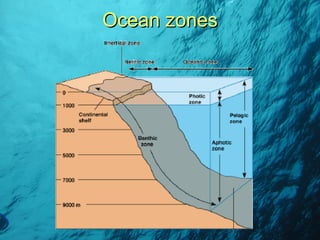
Ocean zones
Benthic  (living on the bottom – crawling, burrowing or sessile) OR Pelagic  (living in the water – swimming or drifting) Plankton (cannot swim against ocean currents) Nekton (can swim against currents) Marine organisms
Organisms that cannot swim against currents Some are photosynthetic (phytoplankton) Some eat other organisms (zooplankton) Some do both! Plankton
Photosynthetic… create most of Earth’s oxygen! Must stay in photic zone to survive Common name: algae Several types: Diatoms Dinoflagellates Cyanobacteria Phytoplankton
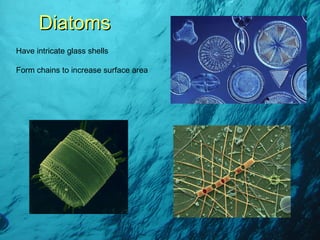
Diatoms Have intricate glass shells Form chains to increase surface area
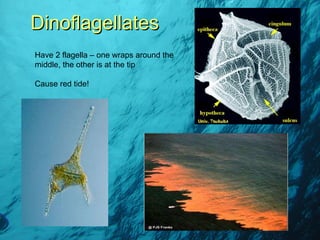
Dinoflagellates Have 2 flagella – one wraps around the middle, the other is at the tip Cause red tide!
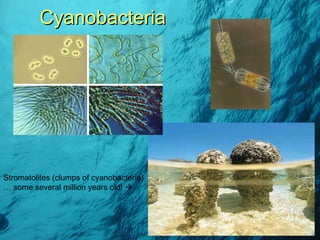
Cyanobacteria Stromatolites (clumps of cyanobacteria) … some several million years old!  
Eat other organisms Can be very tiny or quite large Includes many phyla, from jellyfish to crustaceans Also includes larvae of some benthic organisms Zooplankton
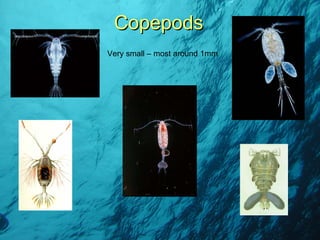
Copepods Very small – most around 1mm
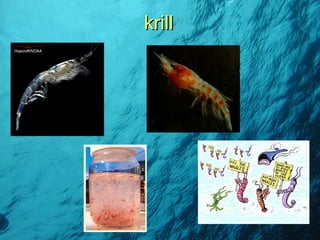
krill
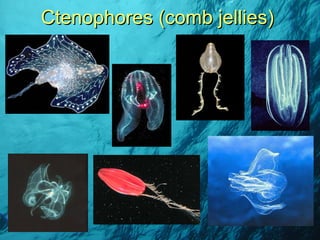
Ctenophores (comb jellies)
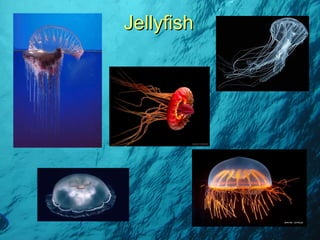
Jellyfish
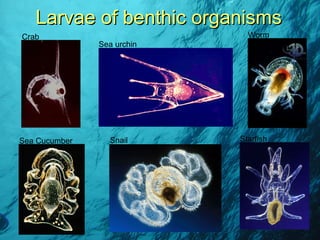
Larvae of benthic organisms Crab Sea Cucumber Sea urchin Snail Worm Starfish
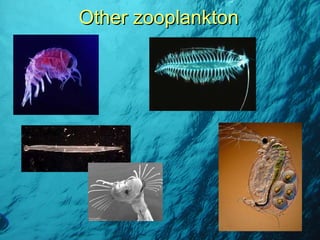
Other zooplankton
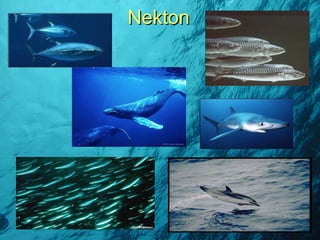
Nekton
Watch Seasonal Seas Playlist
Rocky intertidal Estuary Coral reef Open ocean  Deep sea Hydrothermal vent Marine ecosystems
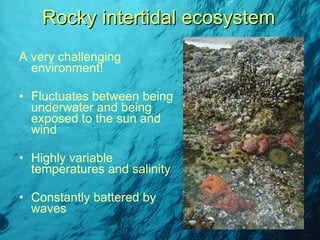
A very challenging environment! Fluctuates between being underwater and being exposed to the sun and wind Highly variable temperatures and salinity Constantly battered by waves Rocky intertidal ecosystem
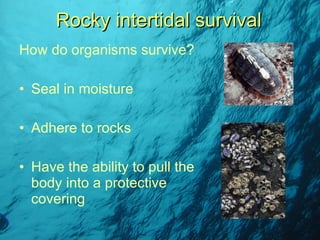
How do organisms survive? Seal in moisture Adhere to rocks Have the ability to pull the body into a protective covering Rocky intertidal survival
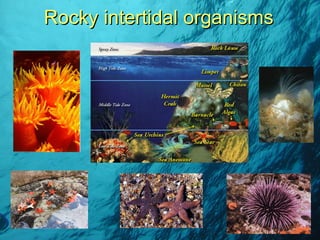
Rocky intertidal organisms
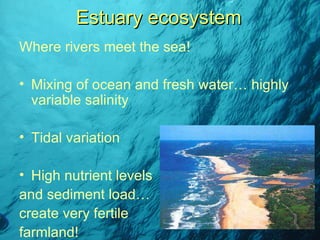
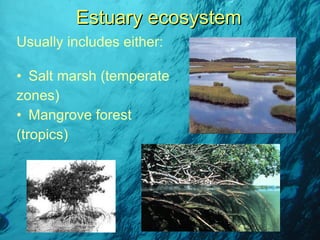
Estuary ecosystem Where rivers meet the sea! Mixing of ocean and fresh water… highly variable salinity Tidal variation High nutrient levels  and sediment load… create very fertile farmland!
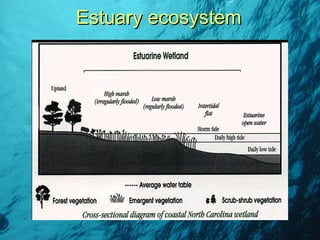
Estuary ecosystem
Usually includes either: Salt marsh (temperate  zones) Mangrove forest (tropics) Estuary ecosystem
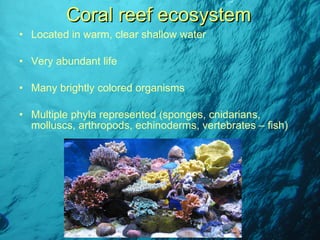
Located in warm, clear shallow water Very abundant life Many brightly colored organisms Multiple phyla represented (sponges, cnidarians, molluscs, arthropods, echinoderms, vertebrates – fish) Coral reef ecosystem
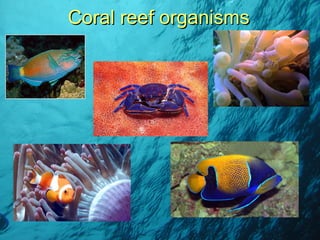
Coral reef organisms
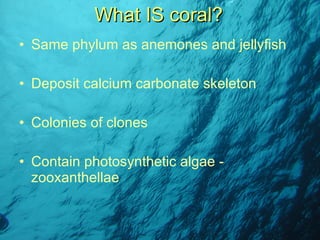
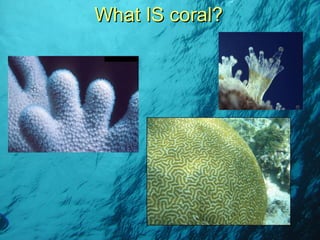
Same phylum as anemones and jellyfish Deposit calcium carbonate skeleton Colonies of clones Contain photosynthetic algae - zooxanthellae What IS coral?
What IS coral?
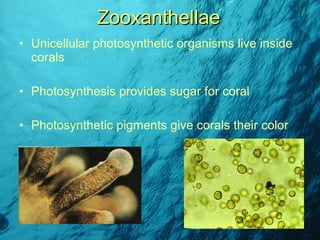
Unicellular photosynthetic organisms live inside corals Photosynthesis provides sugar for coral Photosynthetic pigments give corals their color Zooxanthellae
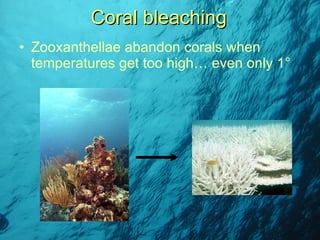
Zooxanthellae abandon corals when temperatures get too high… even only 1 ° Coral bleaching
Watch Coral Seas Playlist
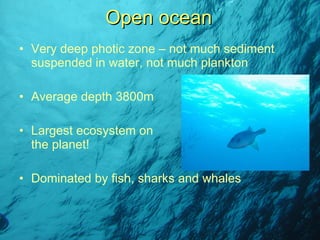
Very deep photic zone – not much sediment suspended in water, not much plankton Average depth 3800m Largest ecosystem on  the planet! Dominated by fish, sharks and whales Open ocean
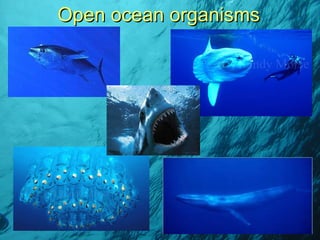
Open ocean organisms
Watch Open Ocean Playlist
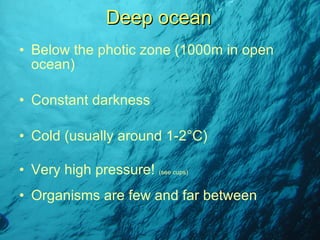
Below the photic zone (1000m in open ocean) Constant darkness Cold (usually around 1-2 °C) Very high pressure!  (see cups) Organisms are few and far between Deep ocean
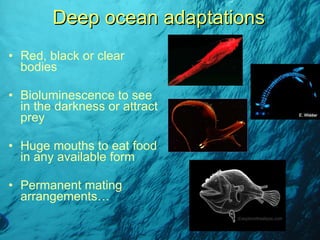
Red, black or clear bodies Bioluminescence to see in the darkness or attract prey Huge mouths to eat food in any available form Permanent mating arrangements… Deep ocean adaptations
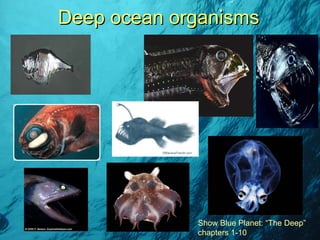
Deep ocean organisms Show Blue Planet: “The Deep” chapters 1-10
Watch The Deep Playlist
Marine Ecology show The Deep
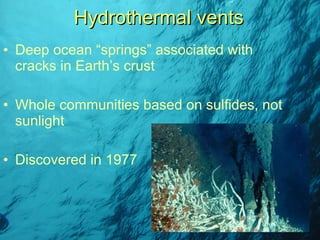
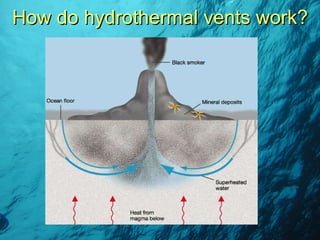
Deep ocean “springs” associated with cracks in Earth’s crust Whole communities based on sulfides, not sunlight Discovered in 1977 Hydrothermal vents
How do hydrothermal vents work?
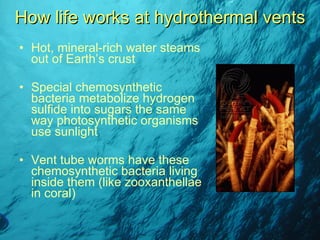
Hot, mineral-rich water steams out of Earth’s crust Special chemosynthetic bacteria metabolize hydrogen sulfide into sugars the same way photosynthetic organisms use sunlight Vent tube worms have these chemosynthetic bacteria living inside them (like zooxanthellae in coral) How life works at hydrothermal vents
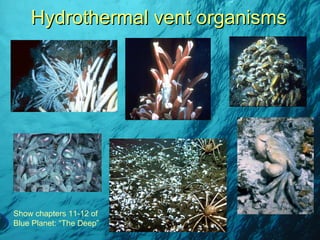
Hydrothermal vent organisms Show chapters 11-12 of Blue Planet: “The Deep”
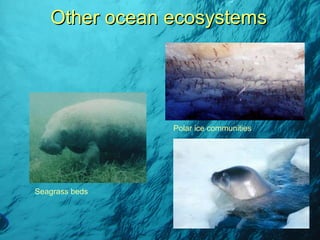
Other ocean ecosystems Seagrass beds Polar ice communities

Marine Ecosystems