Safety
Safety Hazards in the
Health Care setting
• Fire, Electrical, Chemical
• Infectious disease related
• Medication related
• Physical Injury due to moving
patients or supplies
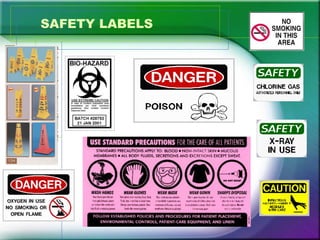
SAFETY LABELS
Fire Safety!
• Prevent:
– Monitor electrical outlets and
equipment for damage
– Keep flammable objects away
for sources of heat or electricity
– Take extra care near
concentrated oxygen supplies
Fire Safety!
• Prepare:
– Know the fire drill procedure
– Locate fire exits
– Locate oxygen shut of valves
– Locate fire alarms
– Know the contact info for site
safety, security
Fire Safety!
• Act:
• RACE
– Rescue patients
– Alarm
– Contain the fire
– Extinguish or Escape
• PASS (fire extinguisher)
– Pull pin, Aim, Squeeze, Spread
Electrical Safety
• Fire Hazard – use with care.
• Inspect for damage regularly
• Ensure the cords and non-
waterproof items are not
exposed to water.
Chemical Hazards
• Only use when necessary and
when you have been properly
instructed.
• Follow label precautions.
• Keep secure when not in use
• Dispose of properly
Infectious Disease
• Stay home when sick
• Use proper hand hygiene
• Use proper precautions with
biohazardous waste
– NEVER recap a needle that has
been used
• Use appropriate PPE
(personal protection
equipment)
PPE’s: Personal Protection Devices
• Barriers that are used when an
employee will come in contact with
body fluids:
• Gloves: any contact with patient
during procedures
• Goggles: splashing, droplet's
• Gowns: splashing, droplets, blood
• Masks: respiratory protection,
splashing
• Paper hats/Shoes: Use in surgery
Medication Safety
• Confirm the 5 Rights
– Right Patient
– Right Medication
– Right Time
– Right Dose
– Right Route
• Waste leftover medications
properly, and secure all
medication when unattended
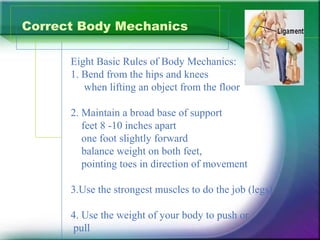
Correct Body Mechanics
Eight Basic Rules of Body Mechanics:
1. Bend from the hips and knees
when lifting an object from the floor
2. Maintain a broad base of support
feet 8 -10 inches apart
one foot slightly forward
balance weight on both feet,
pointing toes in direction of movement
3.Use the strongest muscles to do the job (legs)
4. Use the weight of your body to push or
pull
Preparedness
Emergency
EMERGENCY CODES:
• Are used to alert staff /employees
of danger and a need for response
• Examples:
• Fire
• Inclement weather
• Tornado
• Pt out of Control
• Hurricane
• Cardiac Arrest
• Bomb Threat
• Intruder/Kidnapping
• Sniper
Sometimes Colors are used:
Code Blue: Cardiac Arrest(Code)
Code Red: Fire
Code Yellow: Bomb
Code Pink: Infant/Child abduction
Code Green: Evacuation
Codes are different in each hospital. It is necessary to
learn the codes in your work place .
Disaster plans for each code have been written and are
located in a disaster policy manual in your work area.
All employees must know their role in a disaster should
one occur.
Letters or Signals:
T: train casualty F: Fire D:Disaster
Disaster Plans
• Tell you:
– who to call
– where to be
– what your to be doing
– who is in charge (who you
answer to)
– how to handle patient
– how to handle situation
– what to do at end of situation
At home and in the
community
Emergencies
Types of Emergencies
• Natural
– Tornados, hurricanes, severe
storms, floods, wildfire, winter
storms, earthquake, volcano, etc.
– Pandemic
• Manmade
– Accidental: toxic spills, industrial
accidents
– Terrorism and War activity
Preparing
• Have an emergency plan and
supplies for you and your family
• Establish skills that will help you,
your family, and the community
• Consider being a part of CERT
• Review resources to help you
prepare:
– American Red Cross
– Dept. Homeland Security
– Etc.

Safety and Emergency Preparedness

  • 1.
  • 2.
    Safety Hazards inthe Health Care setting • Fire, Electrical, Chemical • Infectious disease related • Medication related • Physical Injury due to moving patients or supplies
  • 3.
  • 4.
    Fire Safety! • Prevent: –Monitor electrical outlets and equipment for damage – Keep flammable objects away for sources of heat or electricity – Take extra care near concentrated oxygen supplies
  • 5.
    Fire Safety! • Prepare: –Know the fire drill procedure – Locate fire exits – Locate oxygen shut of valves – Locate fire alarms – Know the contact info for site safety, security
  • 6.
    Fire Safety! • Act: •RACE – Rescue patients – Alarm – Contain the fire – Extinguish or Escape • PASS (fire extinguisher) – Pull pin, Aim, Squeeze, Spread
  • 7.
    Electrical Safety • FireHazard – use with care. • Inspect for damage regularly • Ensure the cords and non- waterproof items are not exposed to water.
  • 8.
    Chemical Hazards • Onlyuse when necessary and when you have been properly instructed. • Follow label precautions. • Keep secure when not in use • Dispose of properly
  • 9.
    Infectious Disease • Stayhome when sick • Use proper hand hygiene • Use proper precautions with biohazardous waste – NEVER recap a needle that has been used • Use appropriate PPE (personal protection equipment)
  • 10.
    PPE’s: Personal ProtectionDevices • Barriers that are used when an employee will come in contact with body fluids: • Gloves: any contact with patient during procedures • Goggles: splashing, droplet's • Gowns: splashing, droplets, blood • Masks: respiratory protection, splashing • Paper hats/Shoes: Use in surgery
  • 11.
    Medication Safety • Confirmthe 5 Rights – Right Patient – Right Medication – Right Time – Right Dose – Right Route • Waste leftover medications properly, and secure all medication when unattended
  • 12.
    Correct Body Mechanics EightBasic Rules of Body Mechanics: 1. Bend from the hips and knees when lifting an object from the floor 2. Maintain a broad base of support feet 8 -10 inches apart one foot slightly forward balance weight on both feet, pointing toes in direction of movement 3.Use the strongest muscles to do the job (legs) 4. Use the weight of your body to push or pull
  • 13.
  • 14.
    EMERGENCY CODES: • Areused to alert staff /employees of danger and a need for response • Examples: • Fire • Inclement weather • Tornado • Pt out of Control • Hurricane • Cardiac Arrest • Bomb Threat • Intruder/Kidnapping • Sniper
  • 15.
    Sometimes Colors areused: Code Blue: Cardiac Arrest(Code) Code Red: Fire Code Yellow: Bomb Code Pink: Infant/Child abduction Code Green: Evacuation Codes are different in each hospital. It is necessary to learn the codes in your work place . Disaster plans for each code have been written and are located in a disaster policy manual in your work area. All employees must know their role in a disaster should one occur. Letters or Signals: T: train casualty F: Fire D:Disaster
  • 16.
    Disaster Plans • Tellyou: – who to call – where to be – what your to be doing – who is in charge (who you answer to) – how to handle patient – how to handle situation – what to do at end of situation
  • 17.
    At home andin the community Emergencies
  • 18.
    Types of Emergencies •Natural – Tornados, hurricanes, severe storms, floods, wildfire, winter storms, earthquake, volcano, etc. – Pandemic • Manmade – Accidental: toxic spills, industrial accidents – Terrorism and War activity
  • 19.
    Preparing • Have anemergency plan and supplies for you and your family • Establish skills that will help you, your family, and the community • Consider being a part of CERT • Review resources to help you prepare: – American Red Cross – Dept. Homeland Security – Etc.