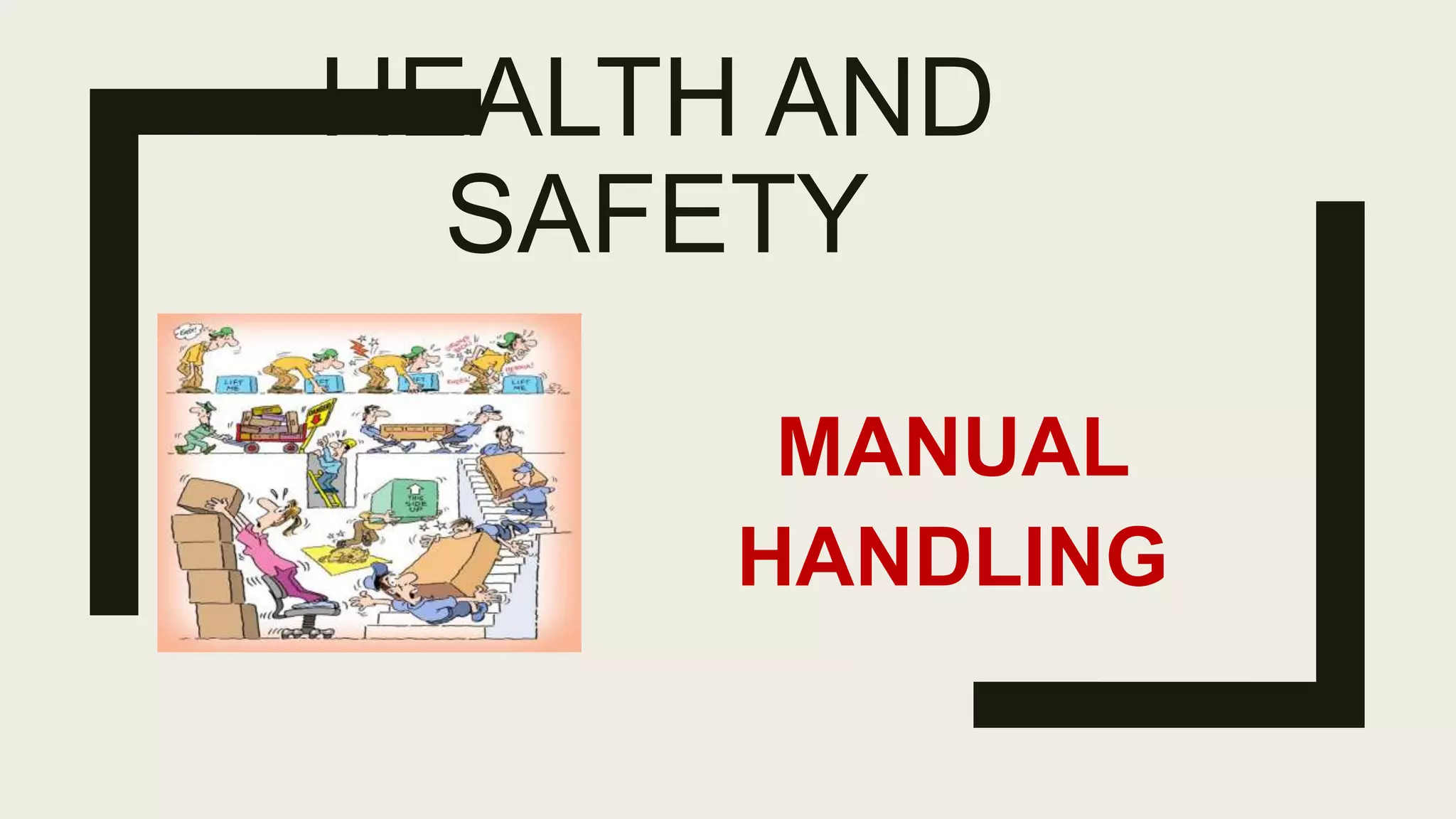
HEALTH AND
SAFETY
MANUAL
HANDLING
What is manual handling:
Any transporting or supporting of a
load including the lifting, pushing,
pulling, carrying or moving by hand or
by bodily force.
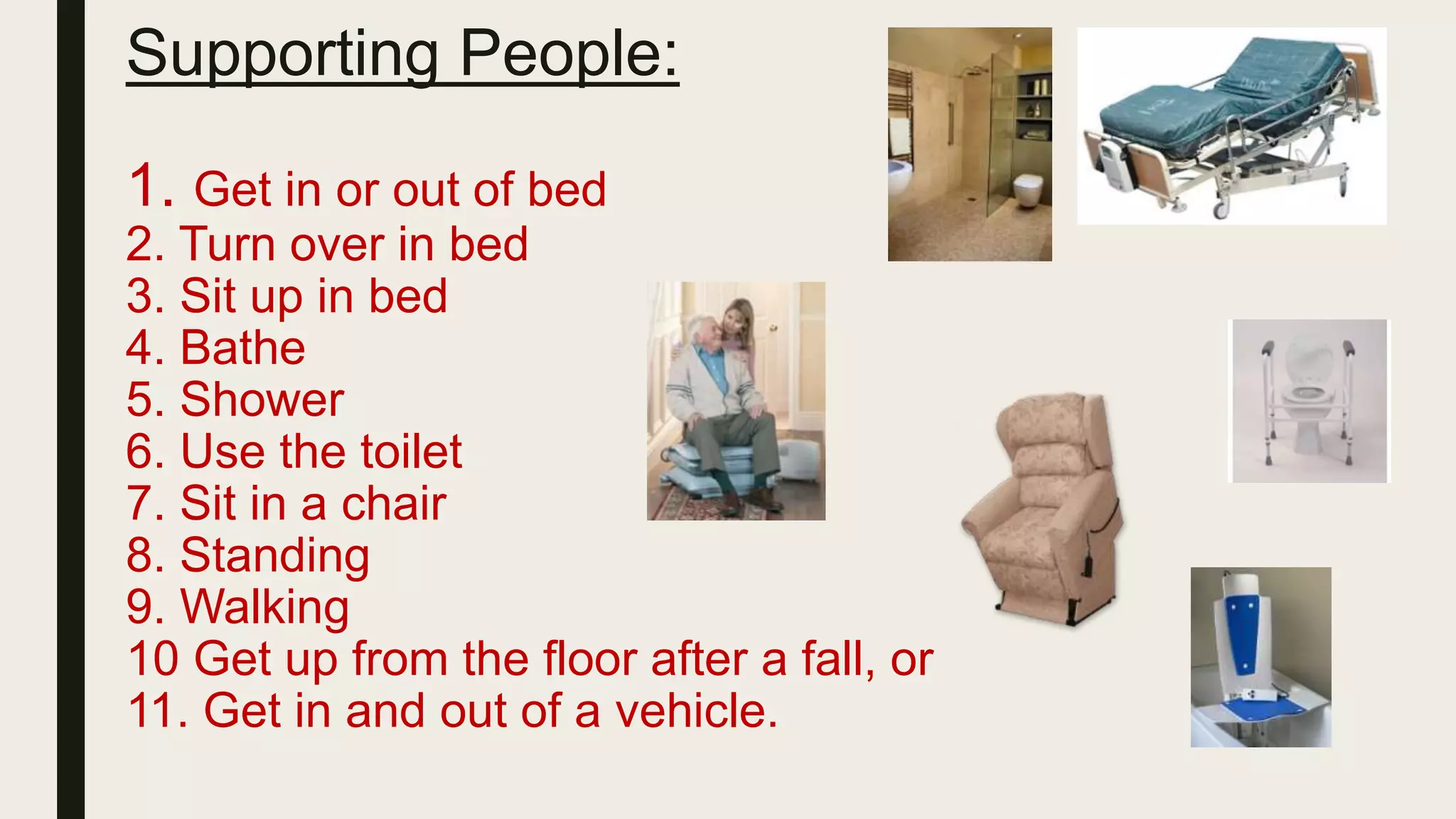
Supporting People:
1. Get in or out of bed
2. Turn over in bed
3. Sit up in bed
4. Bathe
5. Shower
6. Use the toilet
7. Sit in a chair
8. Standing
9. Walking
10 Get up from the floor after a fall, or
11. Get in and out of a vehicle.
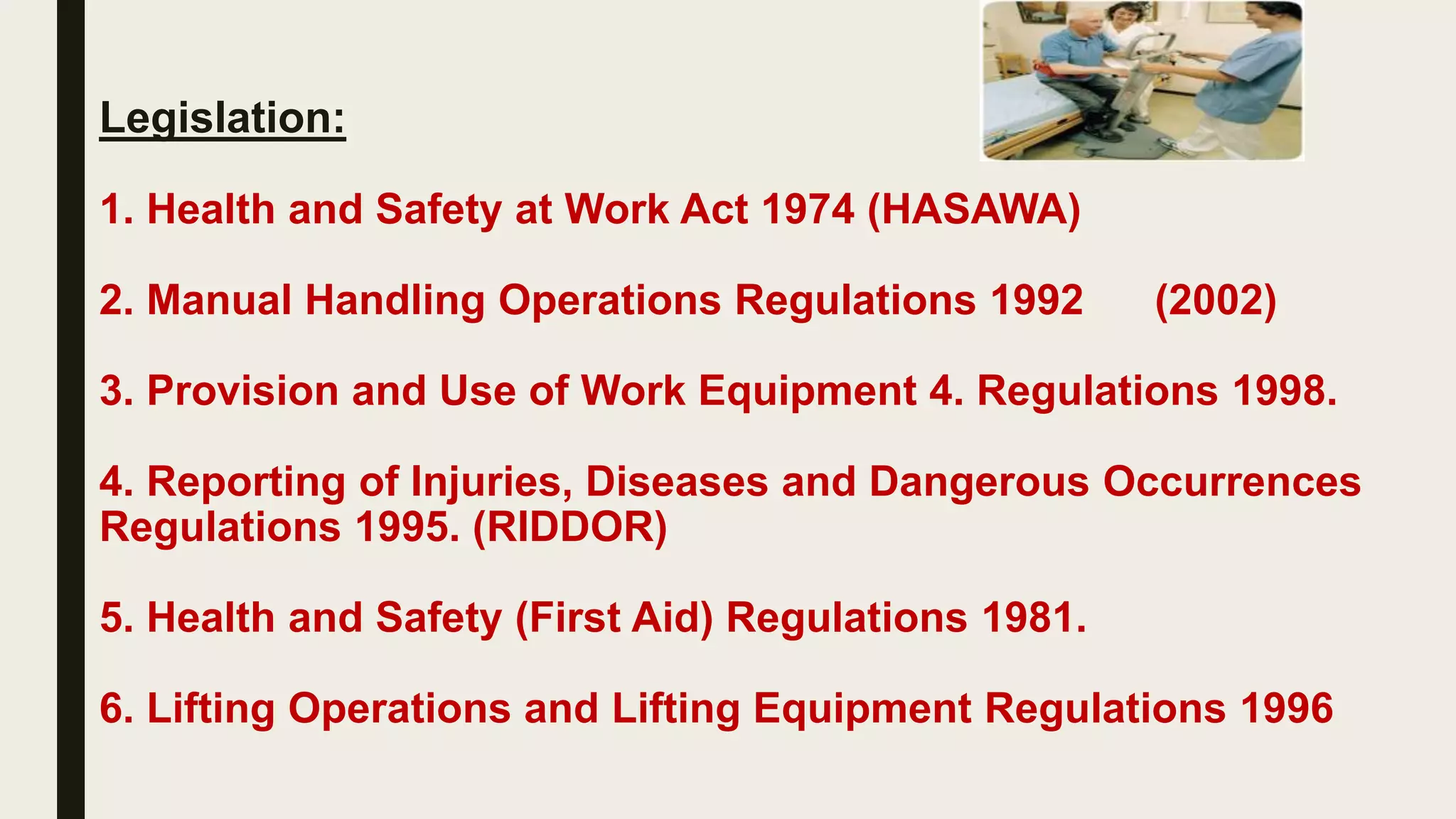
Legislation:
1. Health and Safety at Work Act 1974 (HASAWA)
2. Manual Handling Operations Regulations 1992 (2002)
3. Provision and Use of Work Equipment 4. Regulations 1998.
4. Reporting of Injuries, Diseases and Dangerous Occurrences
Regulations 1995. (RIDDOR)
5. Health and Safety (First Aid) Regulations 1981.
6. Lifting Operations and Lifting Equipment Regulations 1996
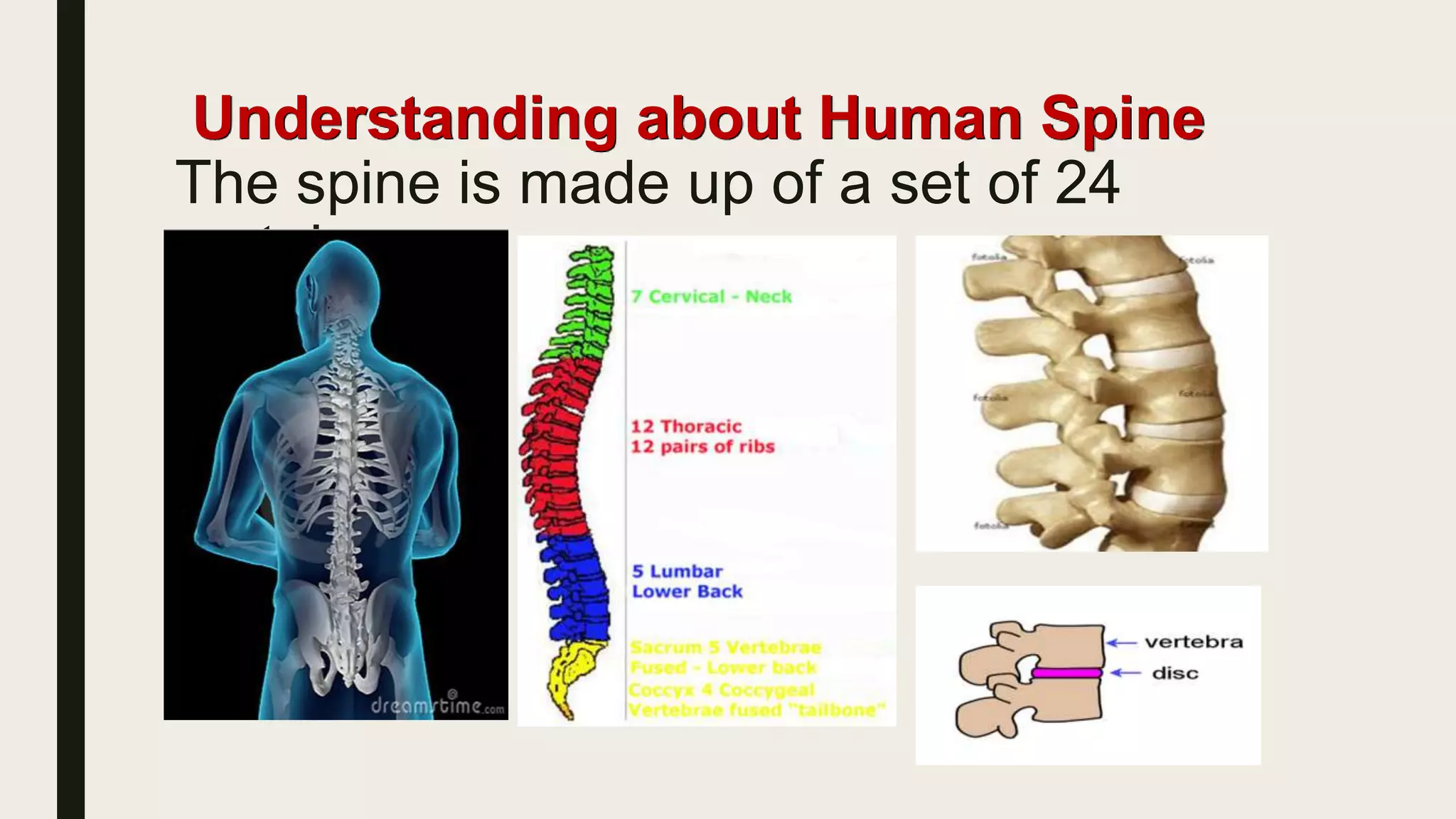
Understanding about Human Spine
The spine is made up of a set of 24
vertebrae
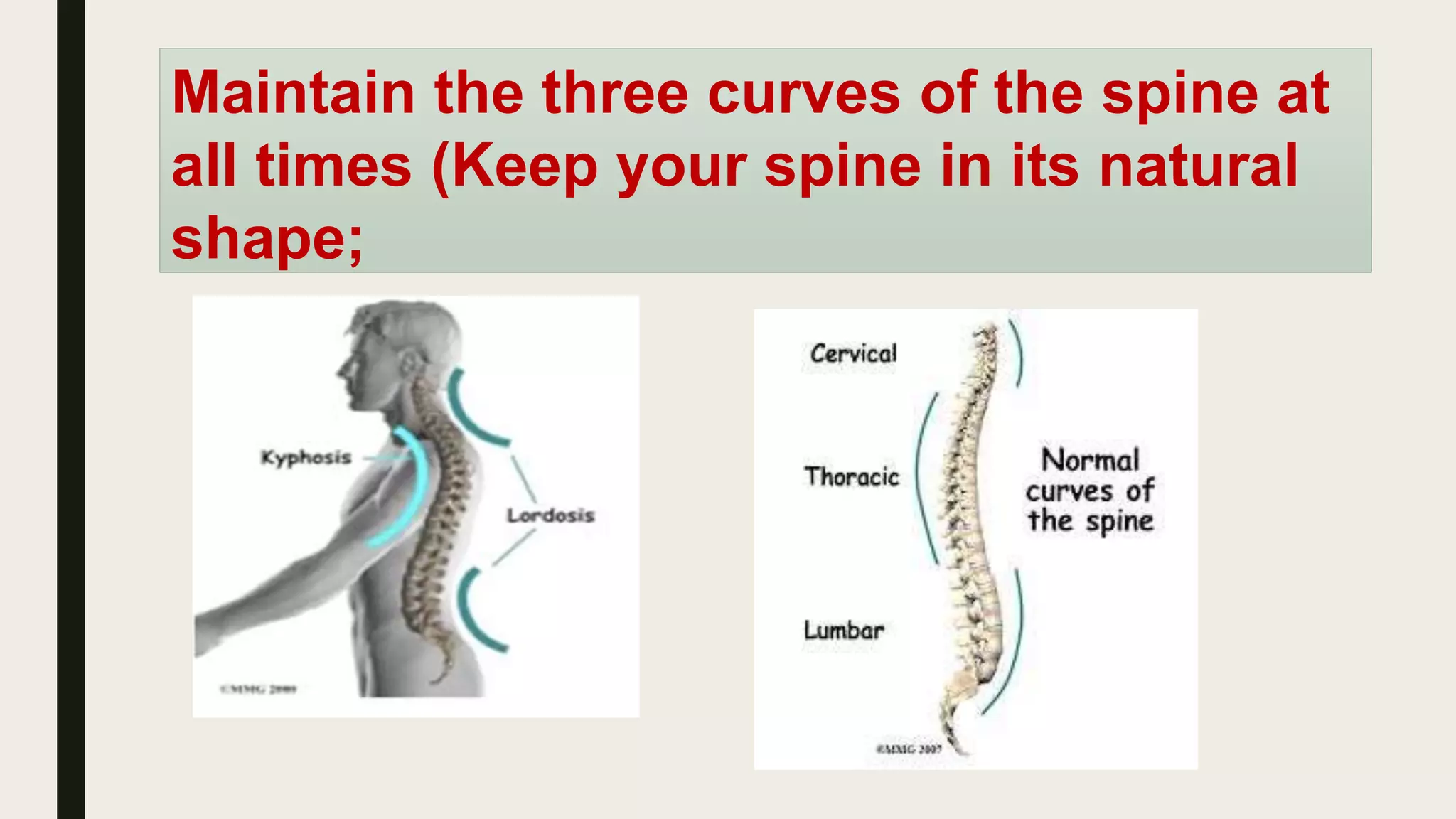
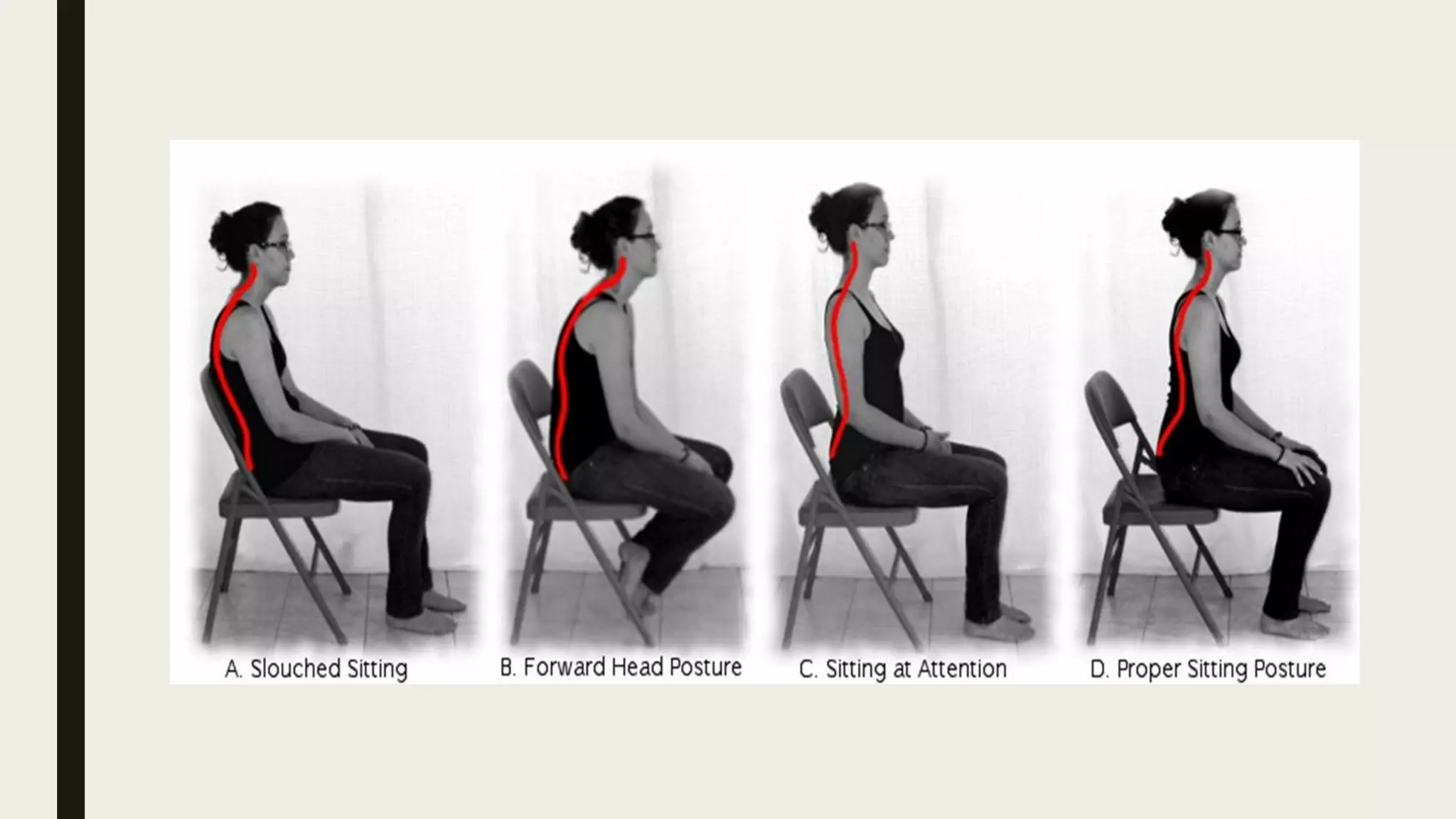
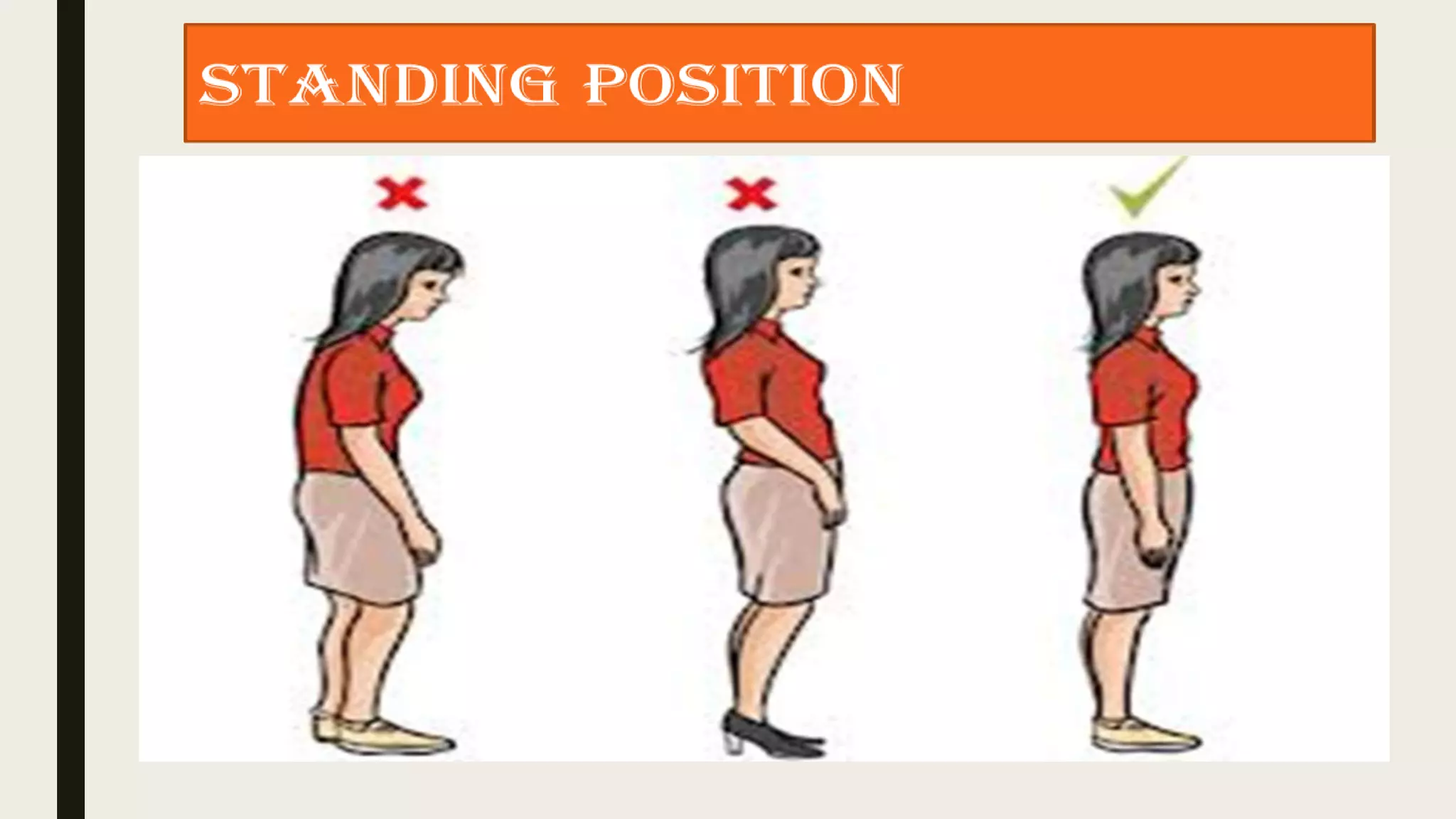
Maintain the three curves of the spine at
all times (Keep your spine in its natural
shape;
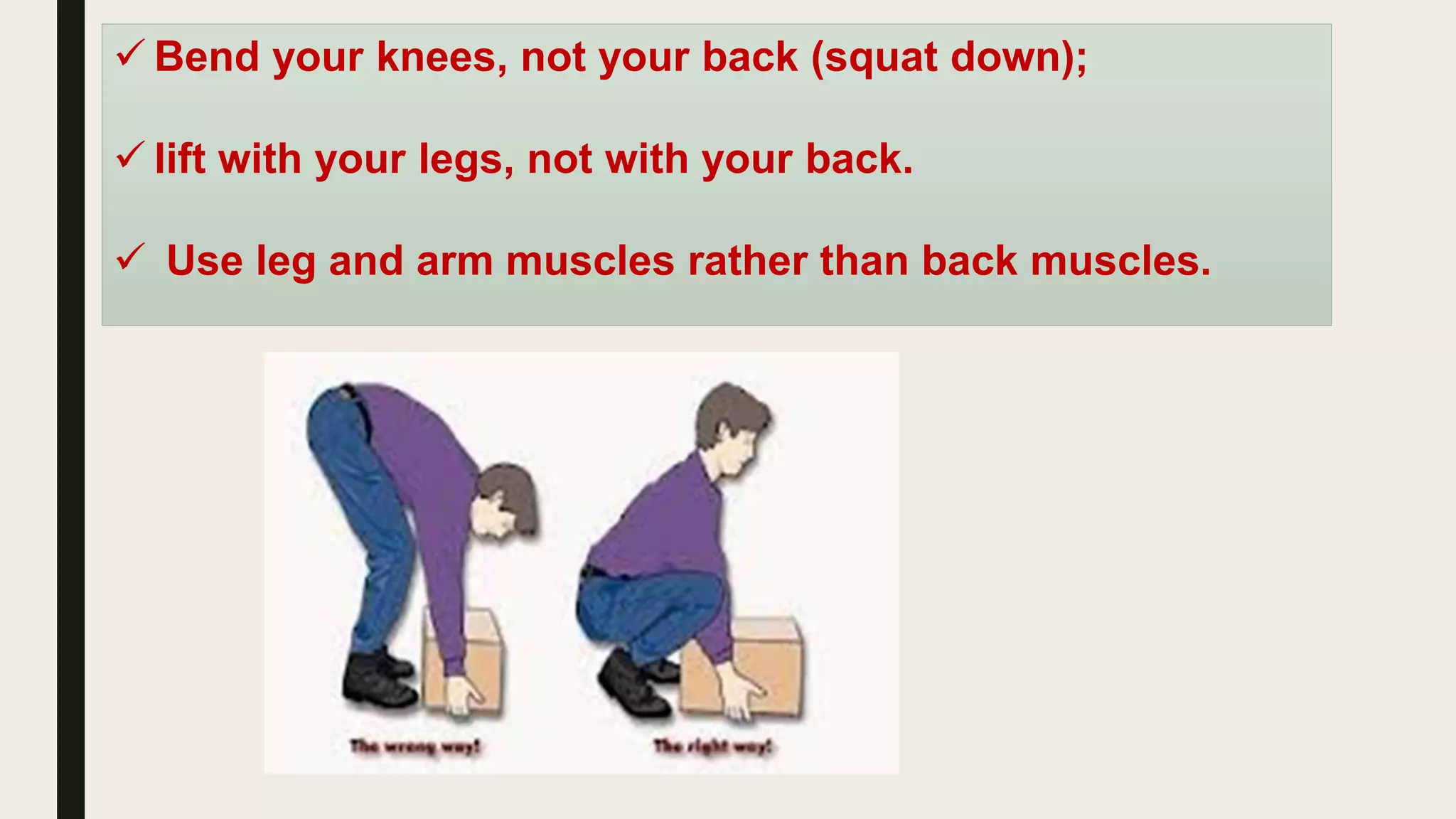
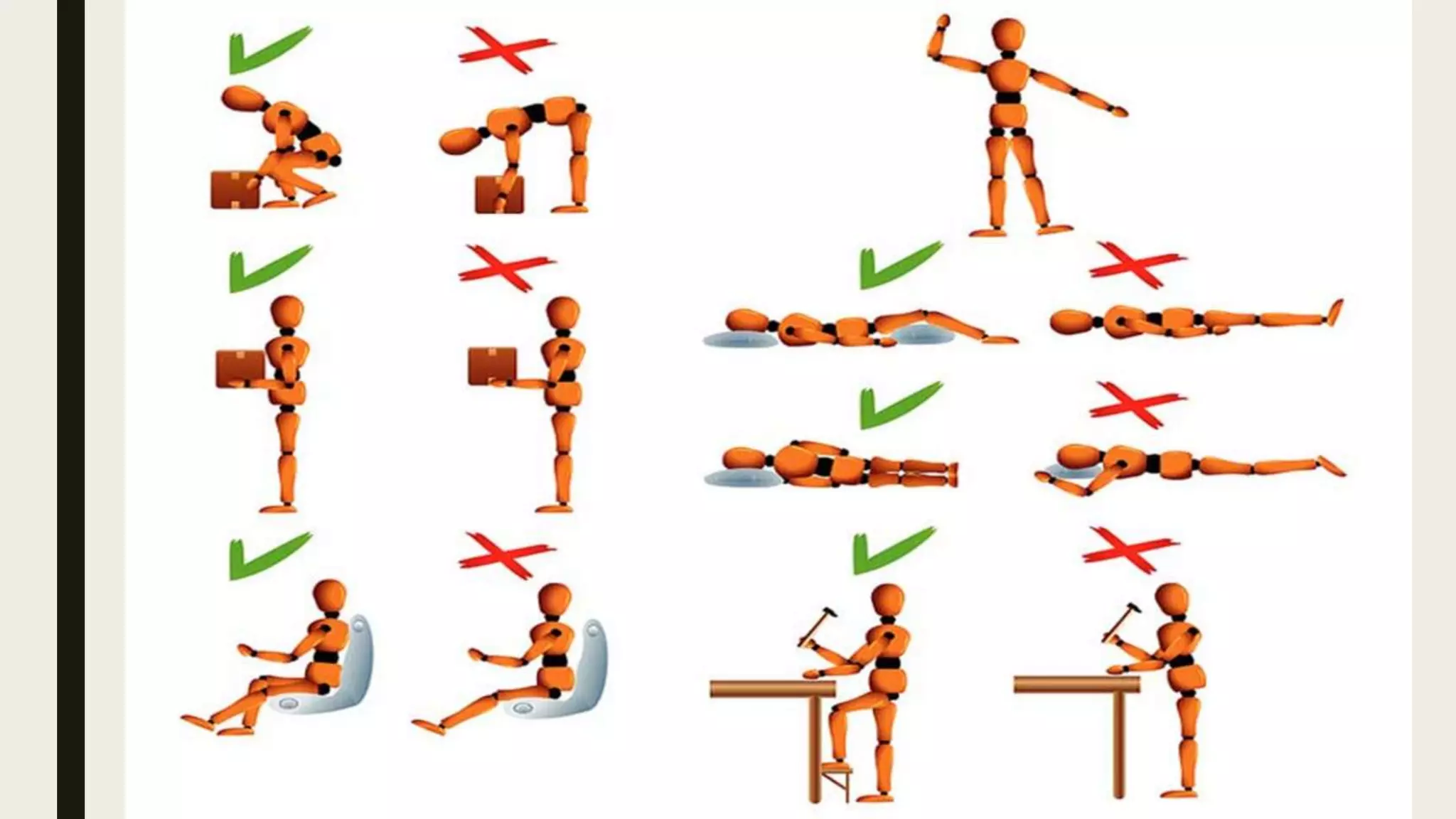
 Bend your knees, not your back (squat down);
 lift with your legs, not with your back.
 Use leg and arm muscles rather than back muscles.
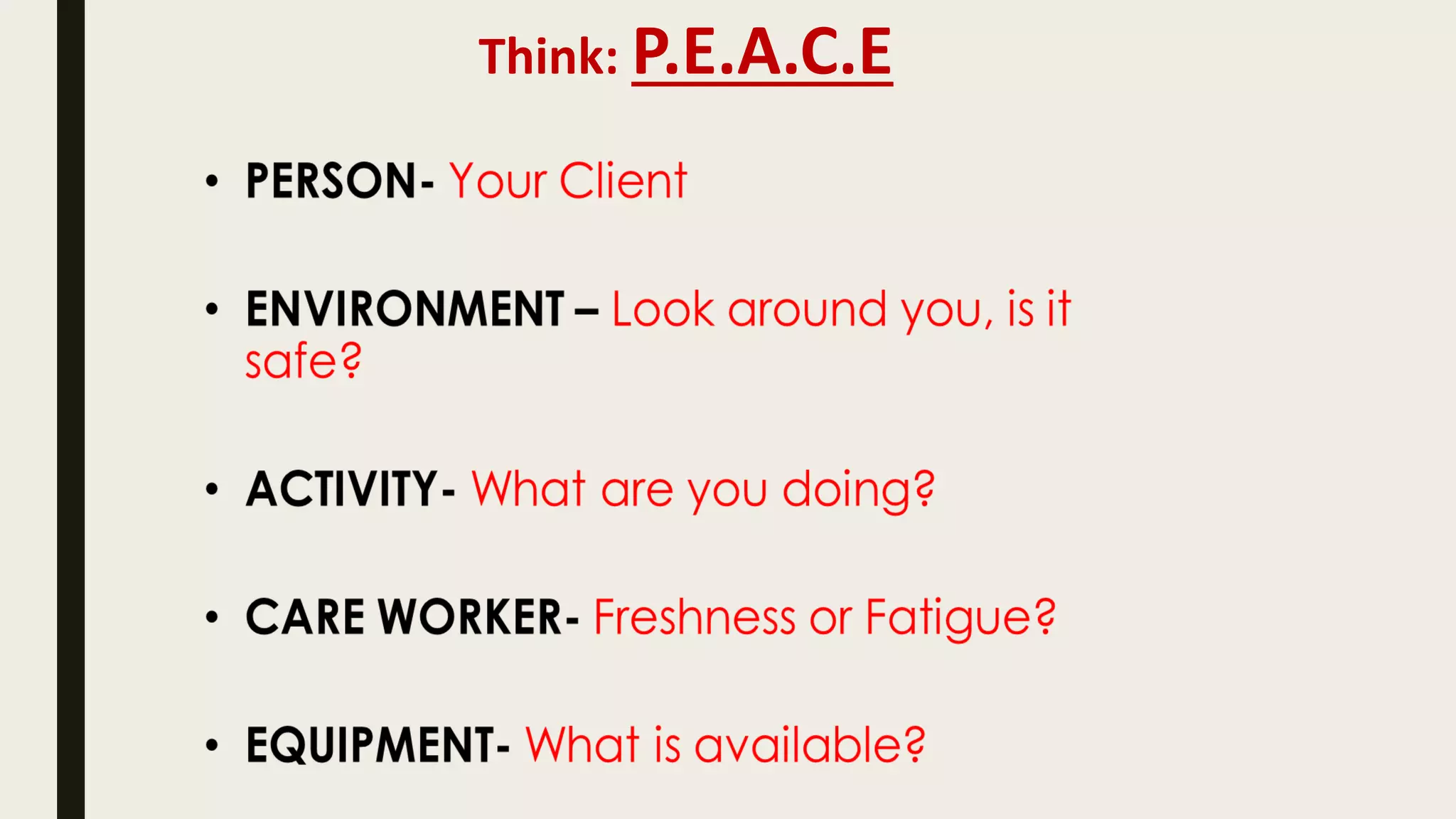
Think: P.E.A.C.E
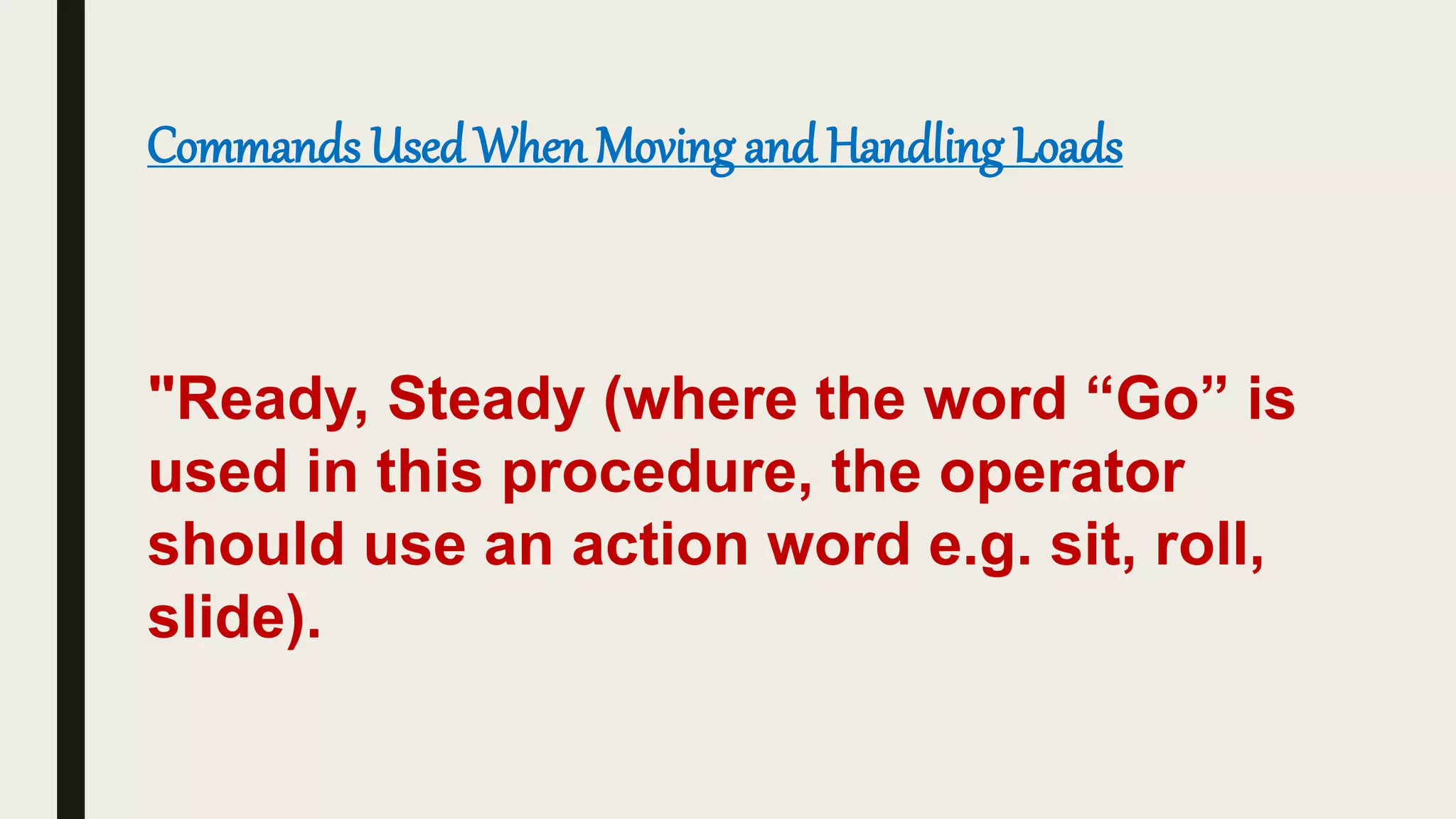
"Ready, Steady (where the word “Go” is
used in this procedure, the operator
should use an action word e.g. sit, roll,
slide).
Commands Used When Moving and Handling Loads
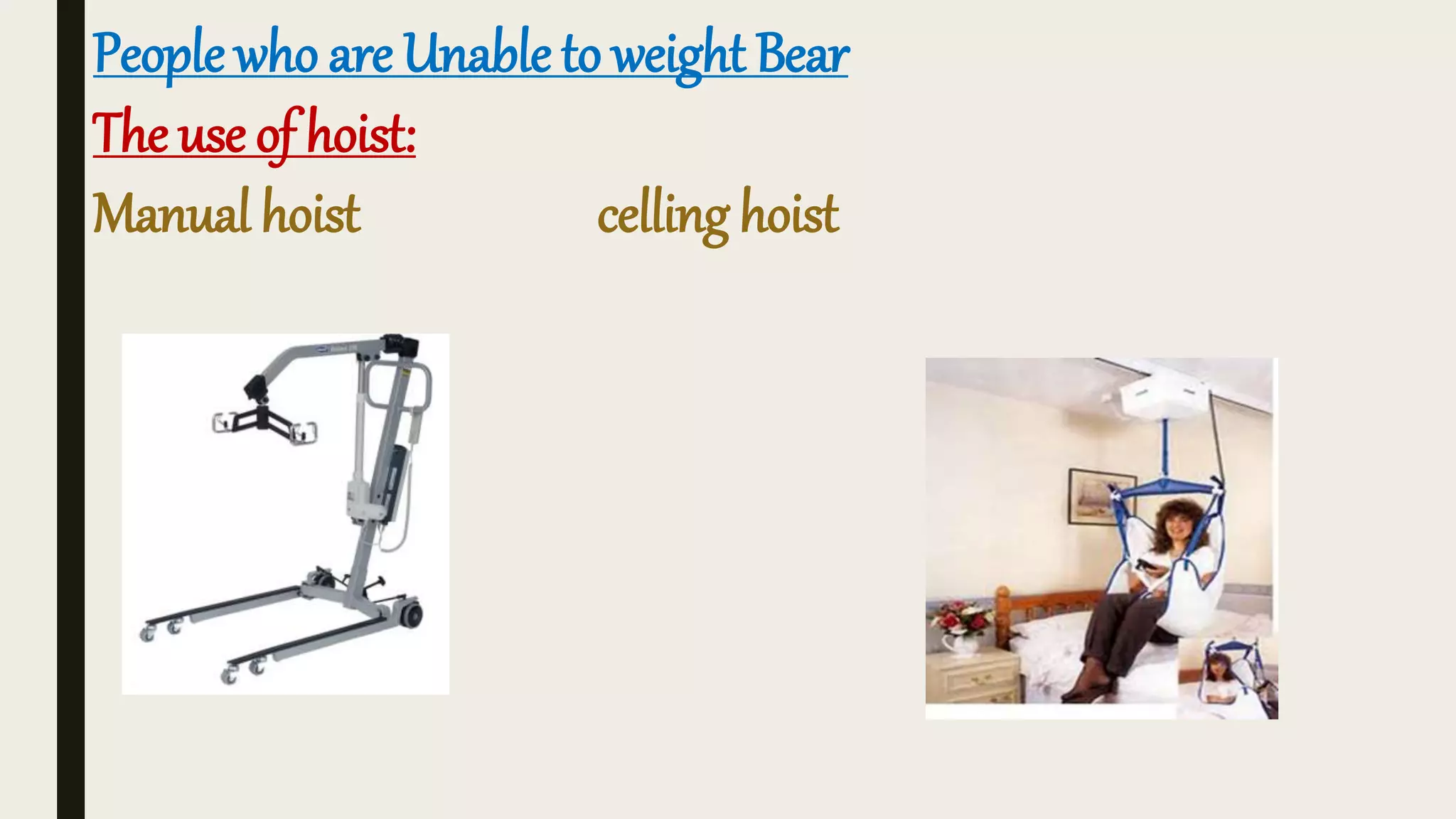
People who are Unable to weight Bear
The use of hoist:
Manual hoist celling hoist
1. Unless otherwise dictated by the patient’s risk assessment/care plan,
use a minimum of two carers when hoisting.
2. Mobile hoists are designed to transfer patients not to transport
patients.
3. when the hoist is not in use, ensure the brakes are on and electric
hoists are left on charge
4. Safe Working Load
5. Protect the patient’s head from potential injury.
6. Break should be off
7. Give oral instruction
HOISTING PRINCIPLES
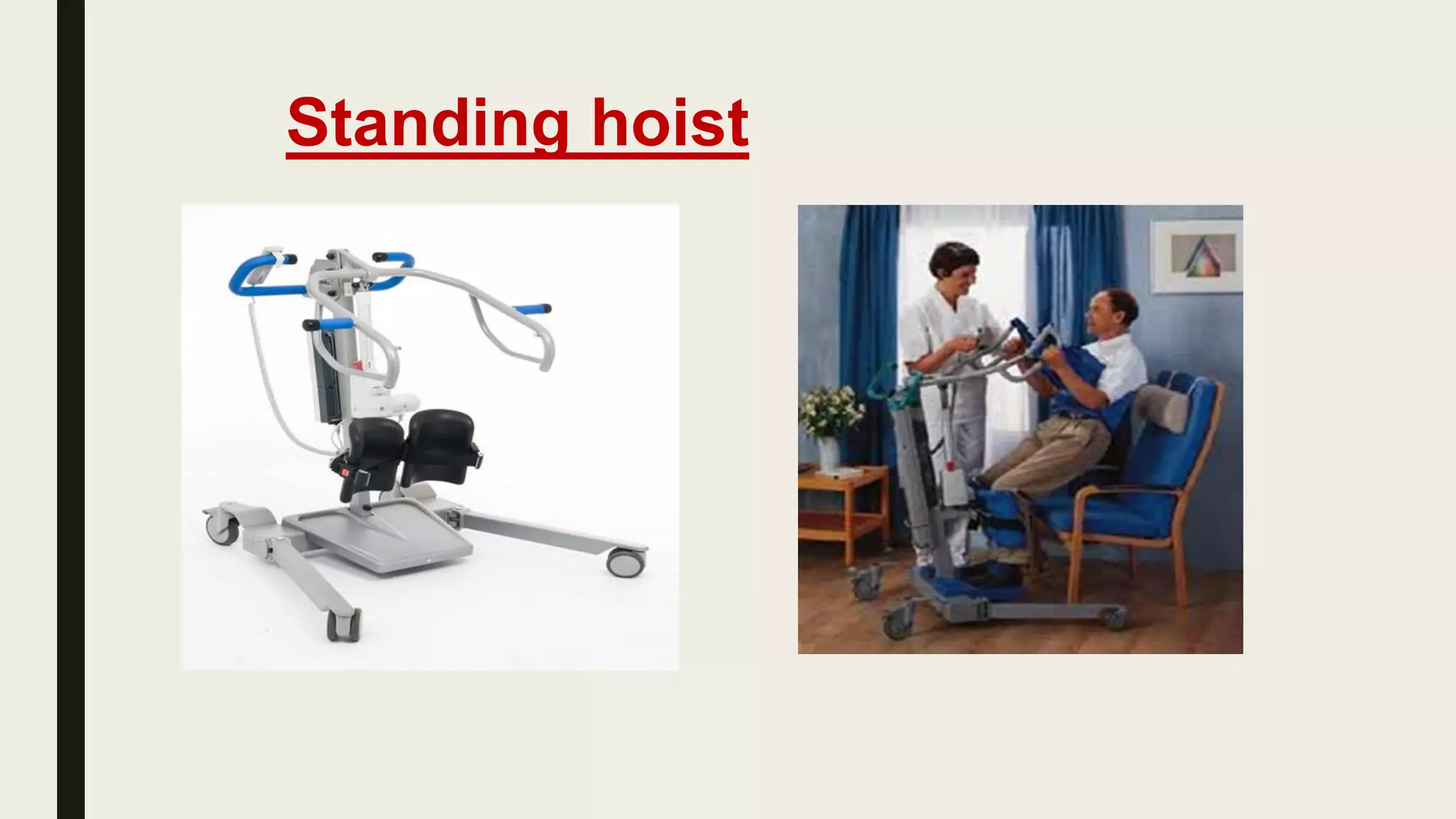
Standing hoist
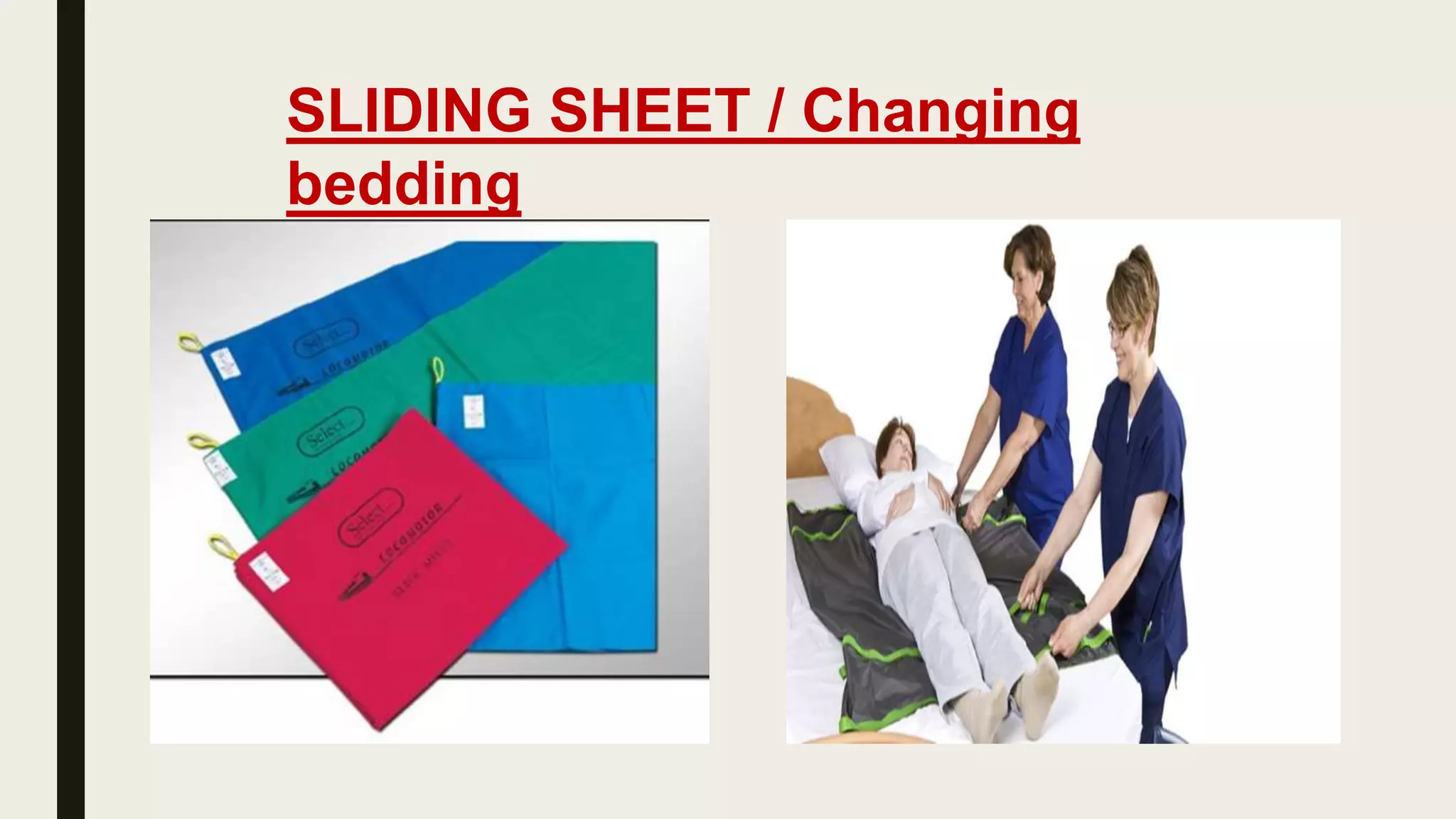
SLIDING SHEET / Changing
bedding
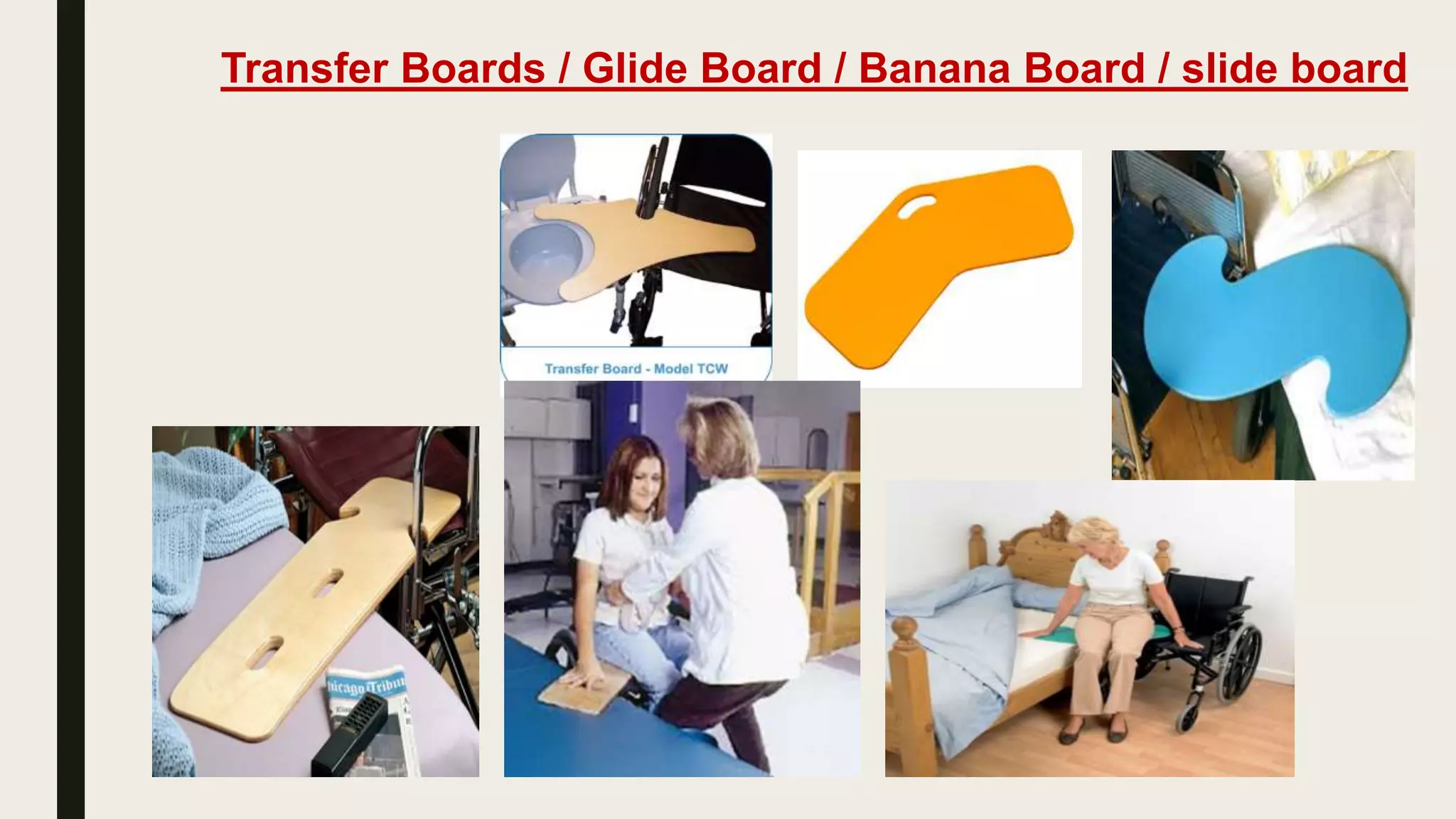
Transfer Boards / Glide Board / Banana Board / slide board
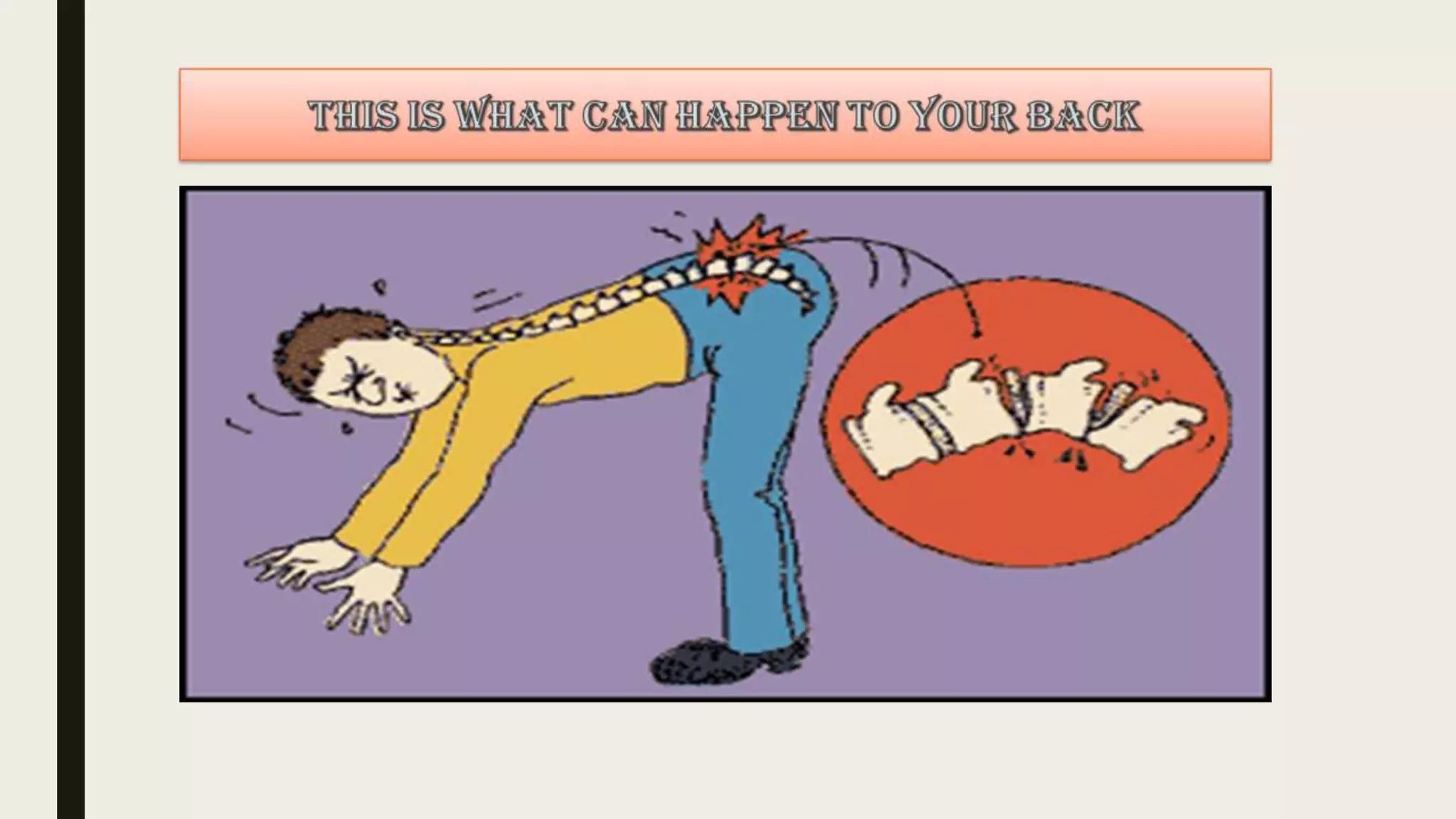
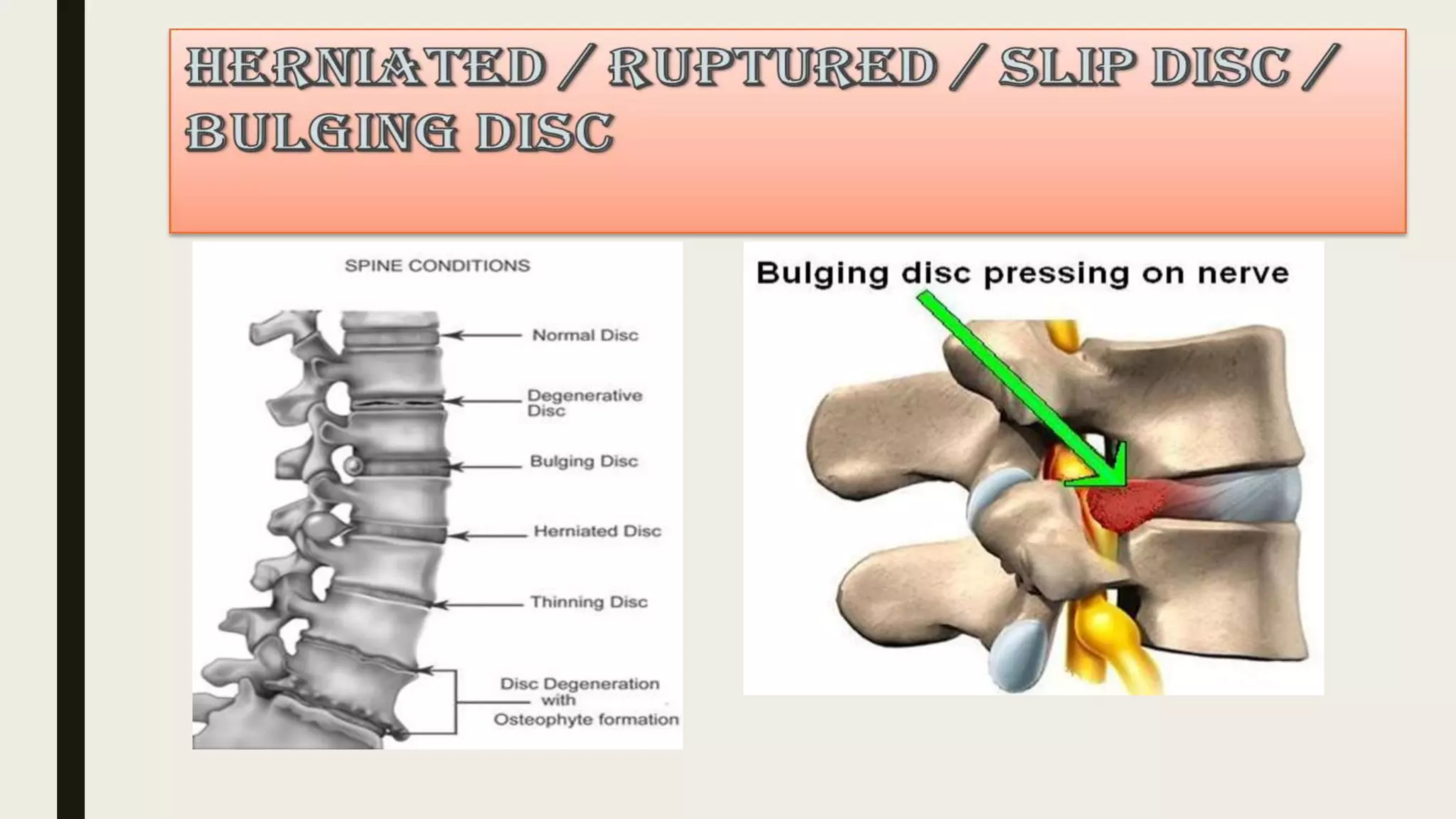
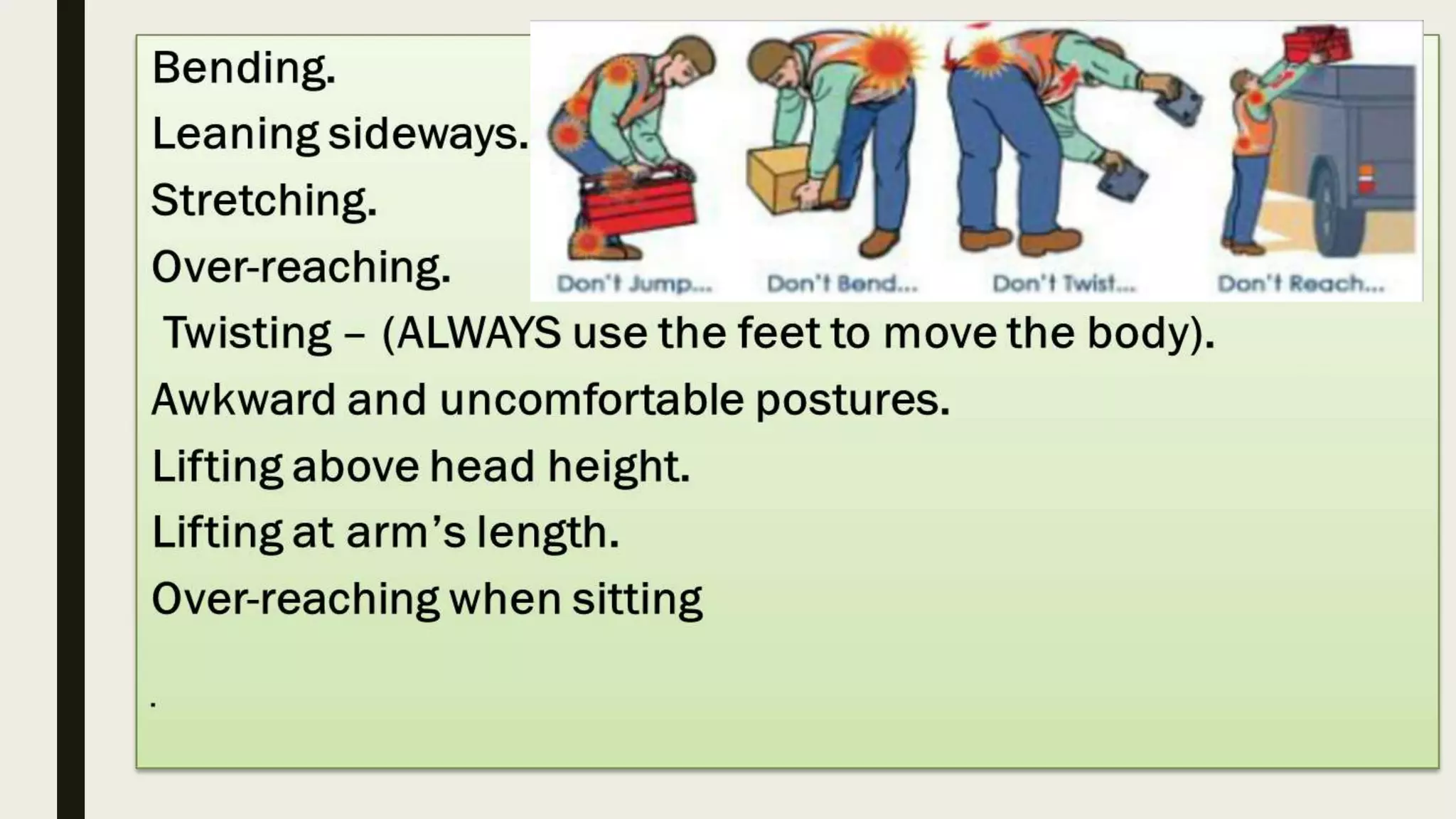
Poor moving and handling practice
can lead to:
What are the possible negative
health effects of manual handling?
1)Cuts, bruises, fractures etc. due to sudden,
unexpected events such as accidents
2) Damage to the musculoskeletal system of the
body
Manual handling presentation

Manual handling presentation

  • 1.
  • 2.
    What is manualhandling: Any transporting or supporting of a load including the lifting, pushing, pulling, carrying or moving by hand or by bodily force.
  • 3.
    Supporting People: 1. Getin or out of bed 2. Turn over in bed 3. Sit up in bed 4. Bathe 5. Shower 6. Use the toilet 7. Sit in a chair 8. Standing 9. Walking 10 Get up from the floor after a fall, or 11. Get in and out of a vehicle.
  • 4.
    Legislation: 1. Health andSafety at Work Act 1974 (HASAWA) 2. Manual Handling Operations Regulations 1992 (2002) 3. Provision and Use of Work Equipment 4. Regulations 1998. 4. Reporting of Injuries, Diseases and Dangerous Occurrences Regulations 1995. (RIDDOR) 5. Health and Safety (First Aid) Regulations 1981. 6. Lifting Operations and Lifting Equipment Regulations 1996
  • 5.
    Understanding about HumanSpine The spine is made up of a set of 24 vertebrae
  • 8.
    Maintain the threecurves of the spine at all times (Keep your spine in its natural shape;
  • 9.
     Bend yourknees, not your back (squat down);  lift with your legs, not with your back.  Use leg and arm muscles rather than back muscles.
  • 19.
  • 20.
    "Ready, Steady (wherethe word “Go” is used in this procedure, the operator should use an action word e.g. sit, roll, slide). Commands Used When Moving and Handling Loads
  • 21.
    People who areUnable to weight Bear The use of hoist: Manual hoist celling hoist
  • 22.
    1. Unless otherwisedictated by the patient’s risk assessment/care plan, use a minimum of two carers when hoisting. 2. Mobile hoists are designed to transfer patients not to transport patients. 3. when the hoist is not in use, ensure the brakes are on and electric hoists are left on charge 4. Safe Working Load 5. Protect the patient’s head from potential injury. 6. Break should be off 7. Give oral instruction HOISTING PRINCIPLES
  • 23.
  • 24.
    SLIDING SHEET /Changing bedding
  • 25.
    Transfer Boards /Glide Board / Banana Board / slide board
  • 26.
    Poor moving andhandling practice can lead to:
  • 27.
    What are thepossible negative health effects of manual handling? 1)Cuts, bruises, fractures etc. due to sudden, unexpected events such as accidents 2) Damage to the musculoskeletal system of the body