FIRE & EARTHQUAKE DRILL
BACOLOR FIRE STATION
TEL NO
(045) 436 – 18 – 28
0923- 103-8363
WHAT IS FIRE???
FIRE is a rapid, self –
sustaining oxidation process
accompanied by the
evolution of heat & light
with varying intensities.
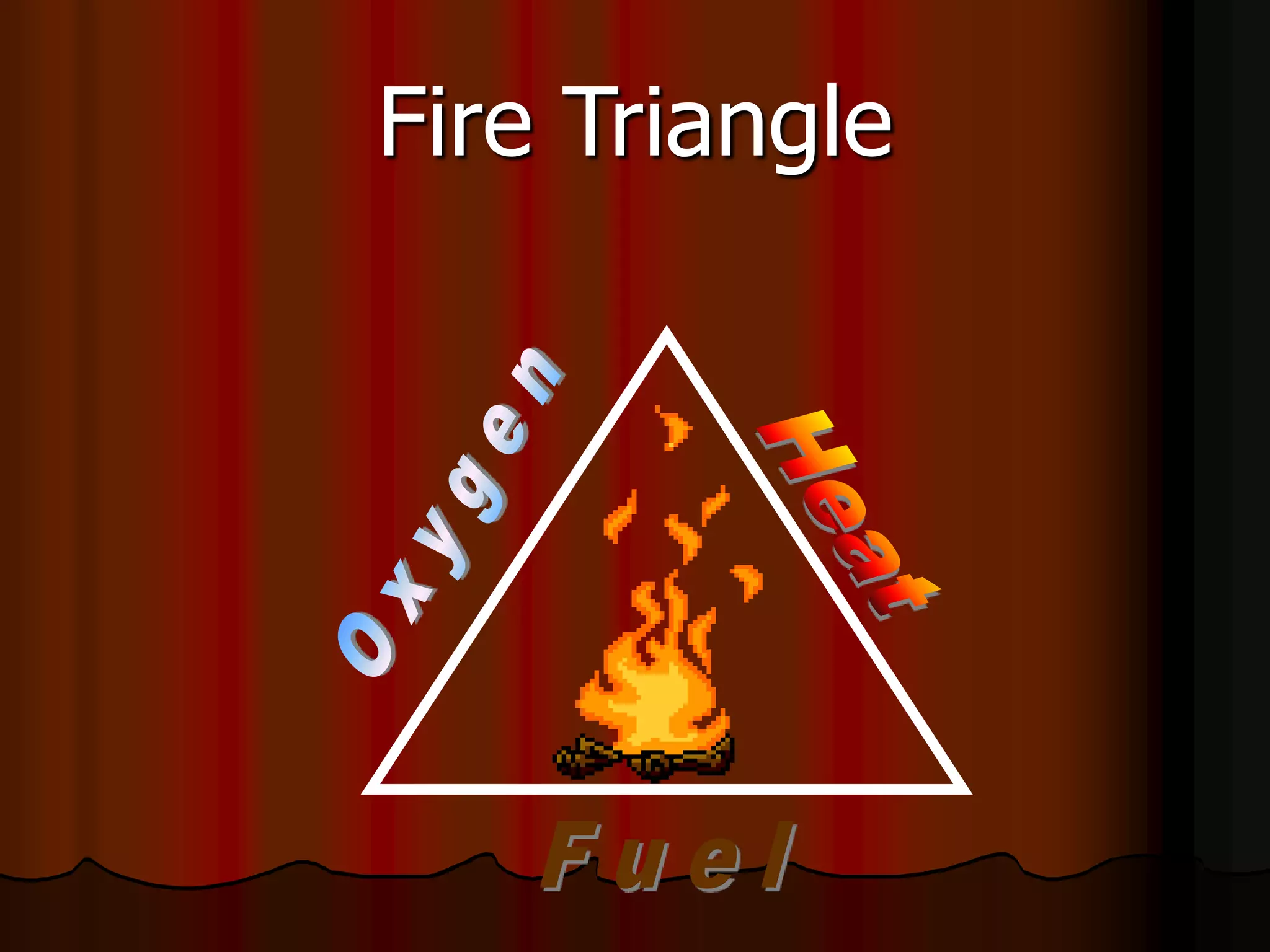
Fire Triangle
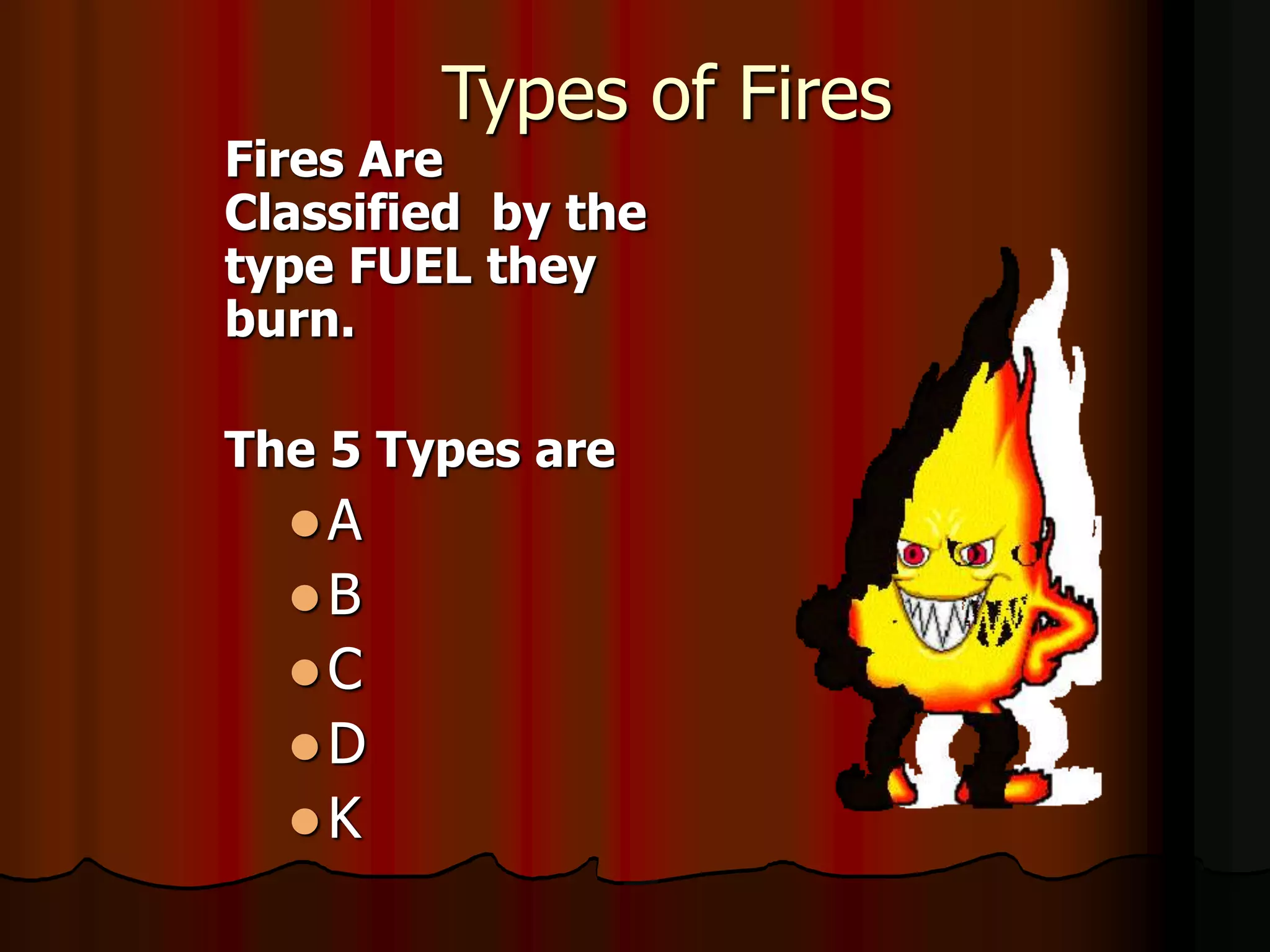
Types of Fires
Fires Are
Classified by the
type FUEL they
burn.
The 5 Types are
A
B
C
D
K
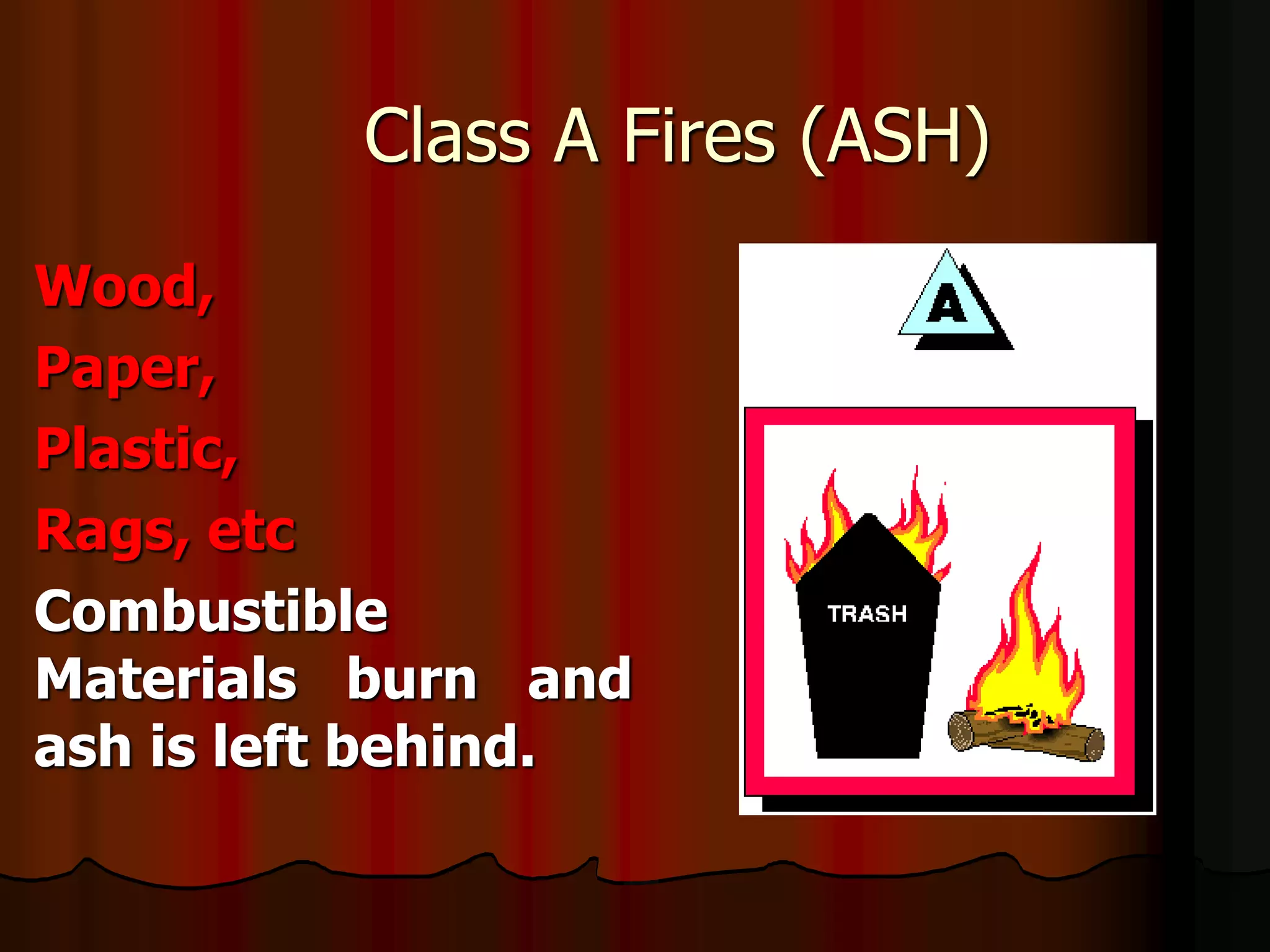
Class A Fires (ASH)
Wood,
Paper,
Plastic,
Rags, etc
Combustible
Materials burn and
ash is left behind.
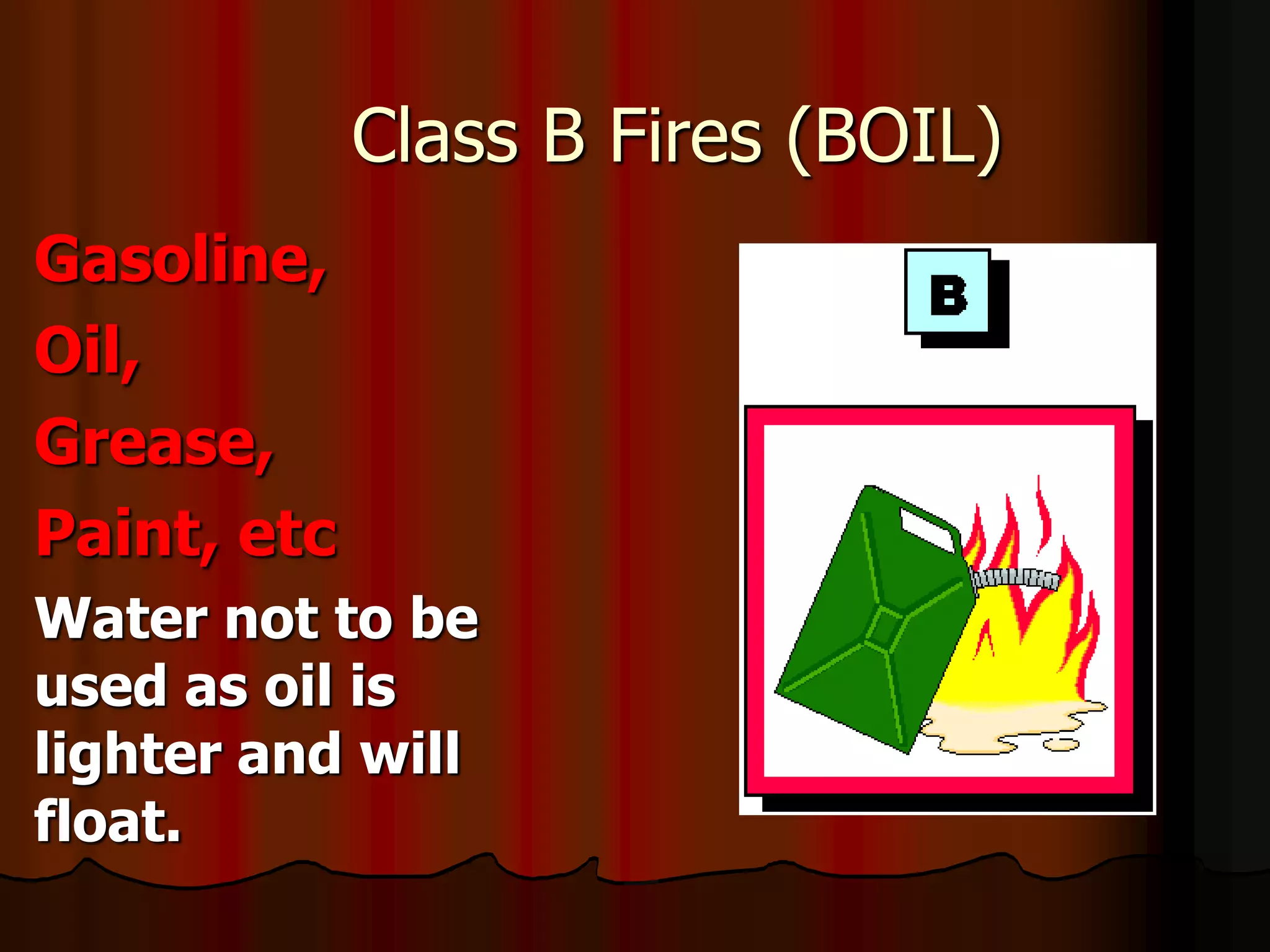
Class B Fires (BOIL)
Gasoline,
Oil,
Grease,
Paint, etc
Water not to be
used as oil is
lighter and will
float.
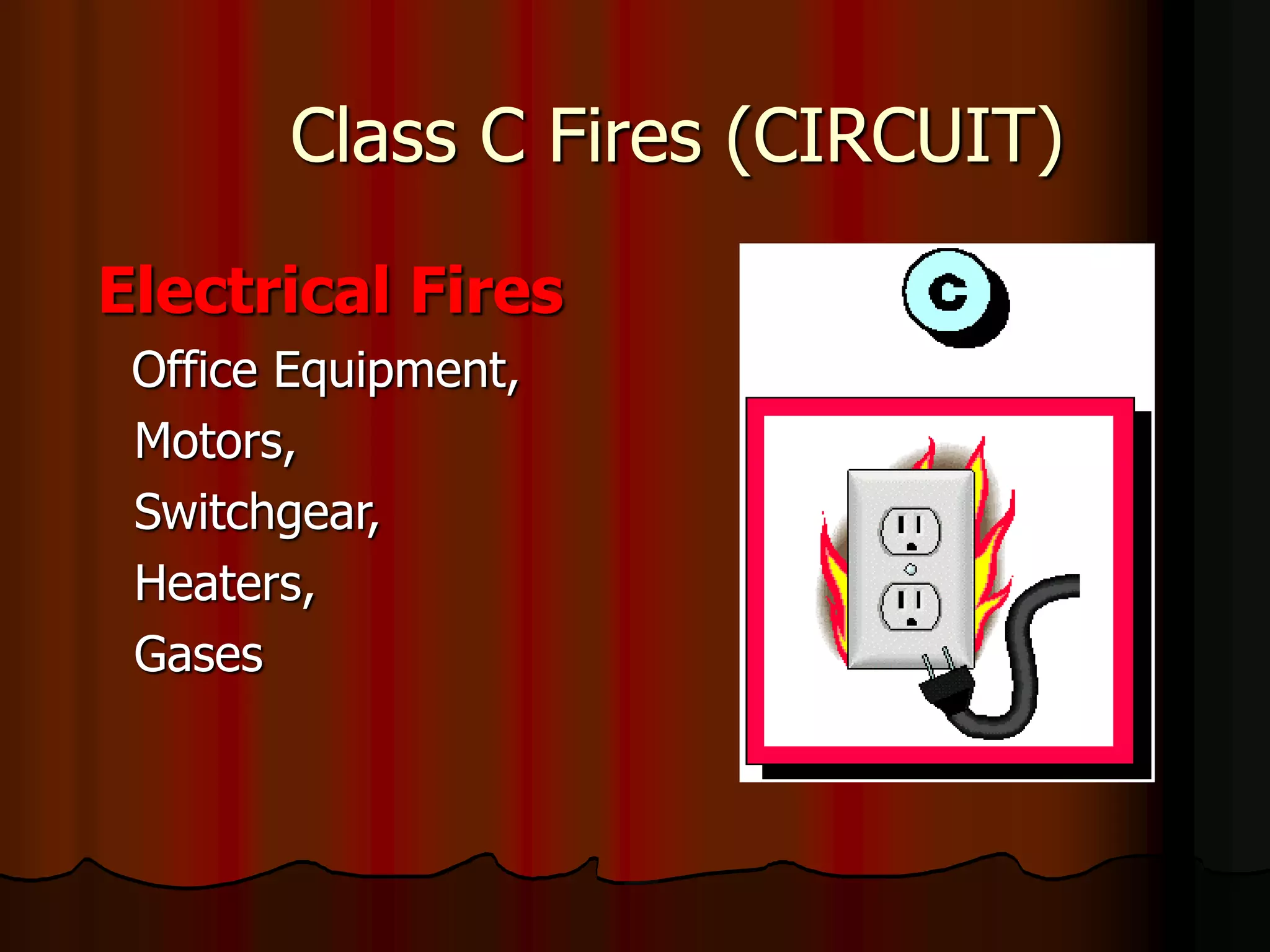
Class C Fires (CIRCUIT)
Electrical Fires
Office Equipment,
Motors,
Switchgear,
Heaters,
Gases
Class D Fires (DONG)
Metals
 Potassium
 Sodium
 Aluminum
 Magnesium
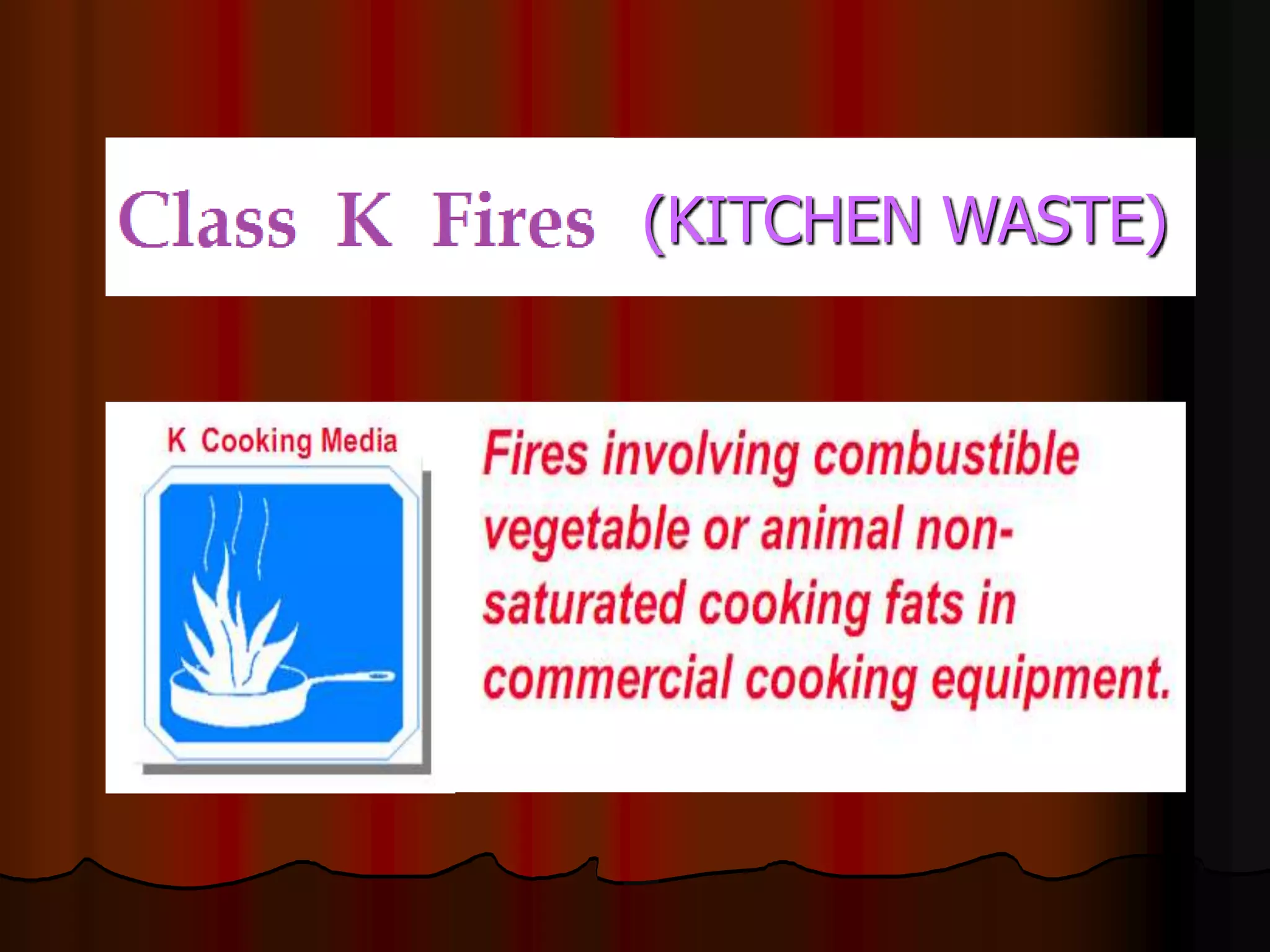
(KITCHEN WASTE)
FIRE EXTINGUISHER
A fire extinguisher is an active fire
protection device used to extinguish or control
small fires, often in emergency situations. It is
not intended for use on an out-of-control fire,
such as one which has reached the ceiling,
endangers the user or otherwise requires the
expertise of a fire department.
PARTS OF A FIRE EXTINGUISHER
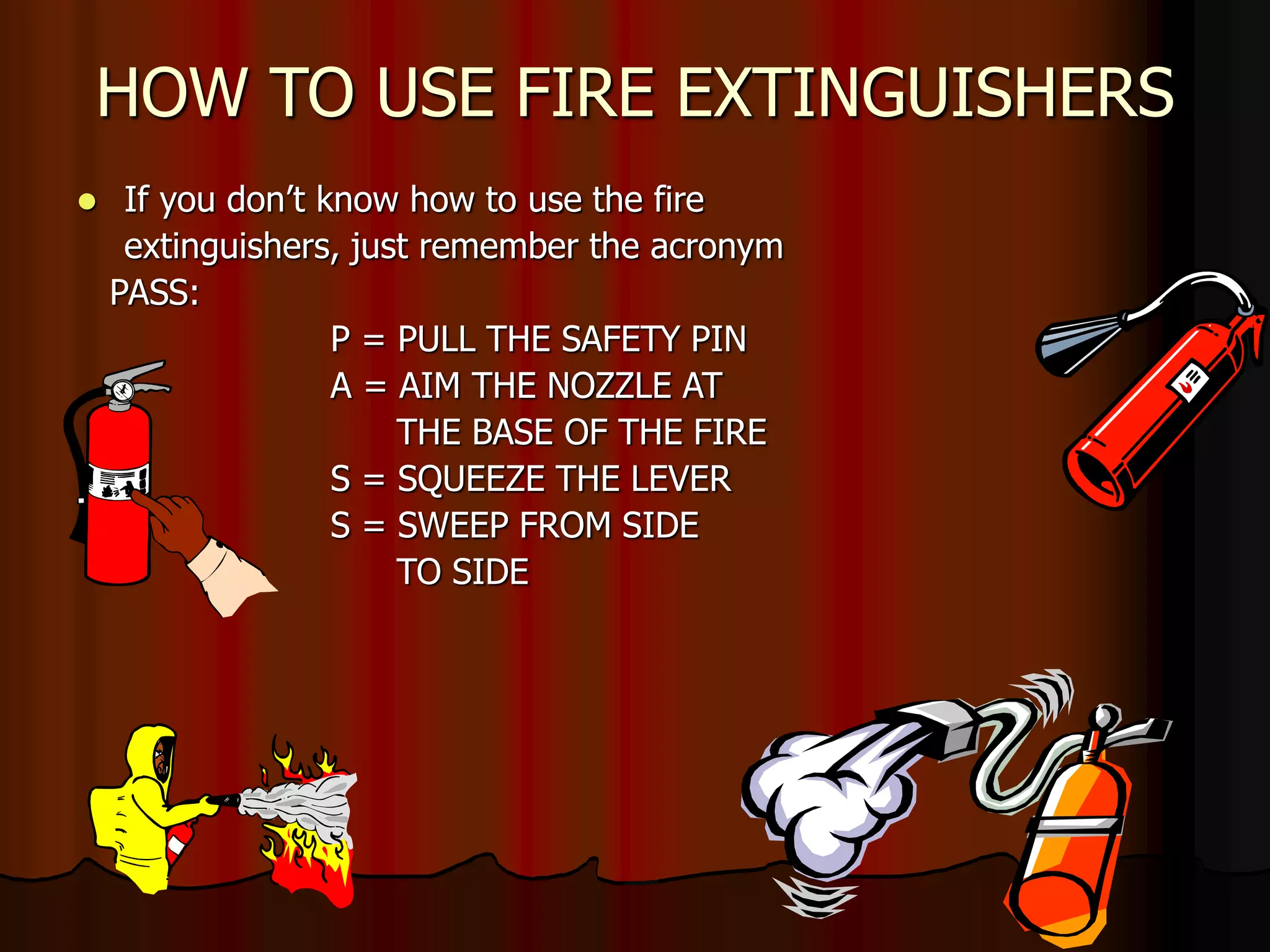
HOW TO USE FIRE EXTINGUISHERS
 If you don’t know how to use the fire
extinguishers, just remember the acronym
PASS:
P = PULL THE SAFETY PIN
A = AIM THE NOZZLE AT
THE BASE OF THE FIRE
S = SQUEEZE THE LEVER
S = SWEEP FROM SIDE
TO SIDE
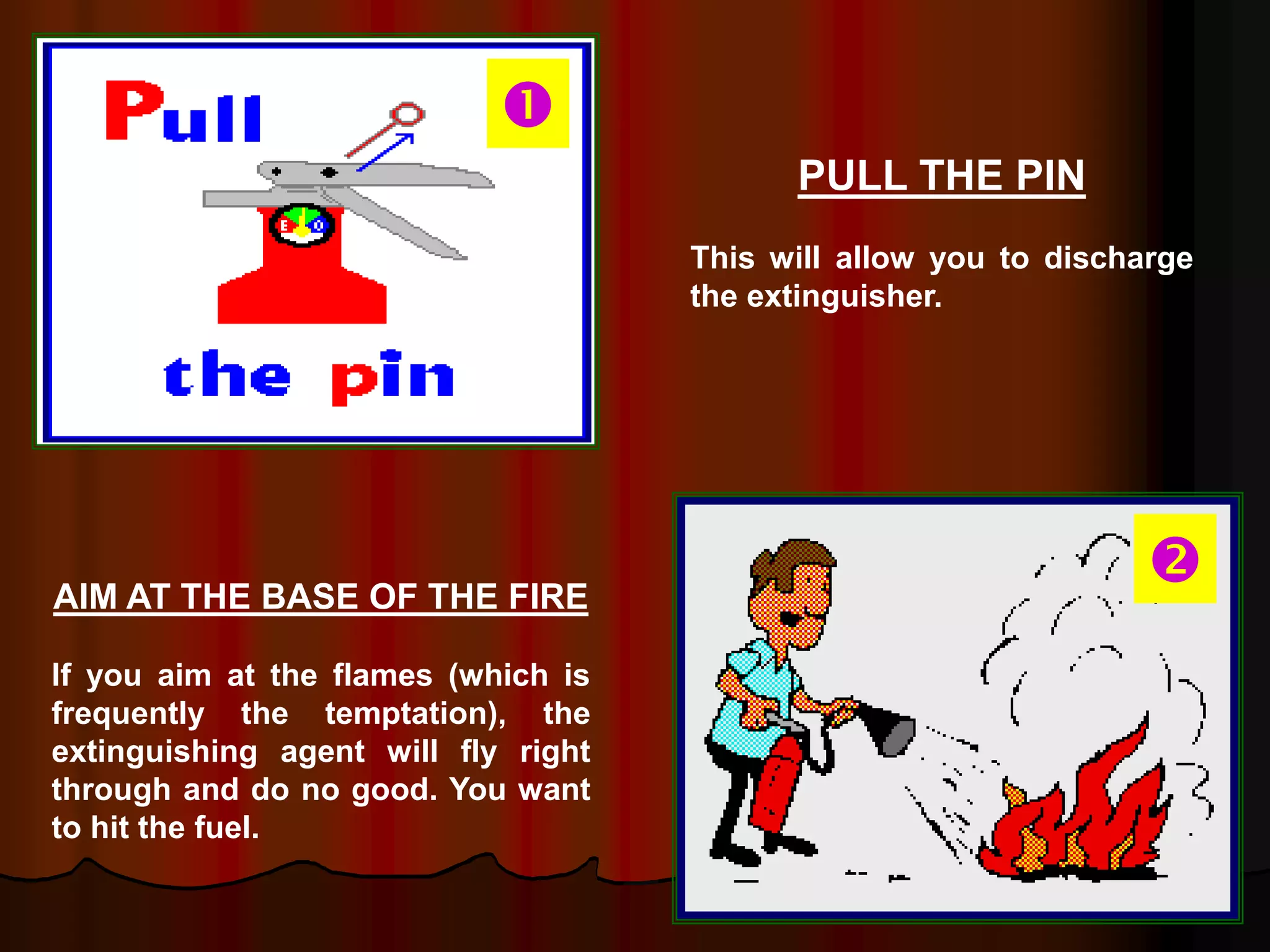
PULL THE PIN
This will allow you to discharge
the extinguisher.
AIM AT THE BASE OF THE FIRE
If you aim at the flames (which is
frequently the temptation), the
extinguishing agent will fly right
through and do no good. You want
to hit the fuel.


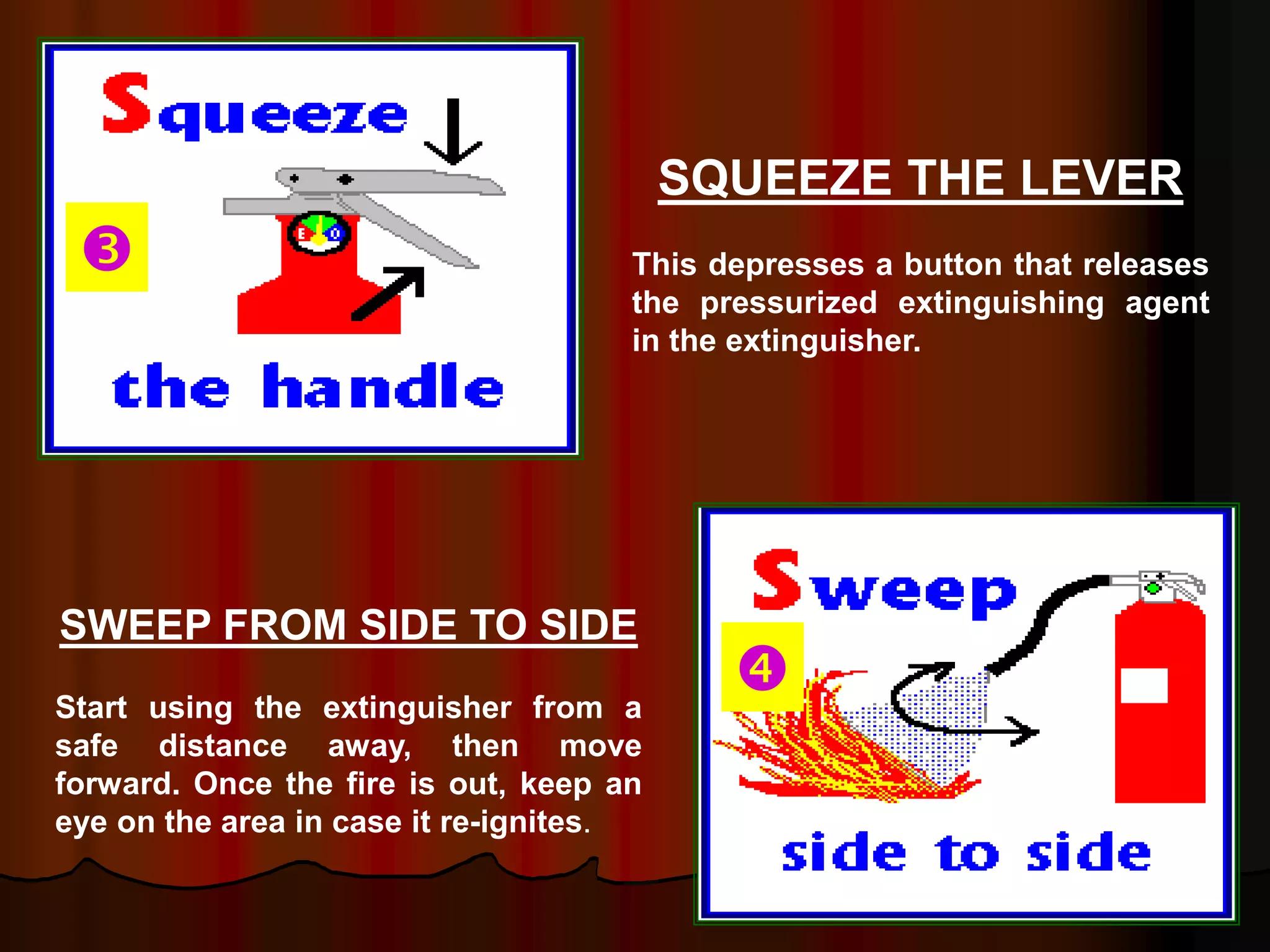
SQUEEZE THE LEVER
This depresses a button that releases
the pressurized extinguishing agent
in the extinguisher.
SWEEP FROM SIDE TO SIDE
Start using the extinguisher from a
safe distance away, then move
forward. Once the fire is out, keep an
eye on the area in case it re-ignites.


EMERGENCY PROCEDURE DURING FIRE
 B. What to do in case of fire
3. If you have no designated responsibilities, do as your FIRE
BRIGADE members tell you or leave the building quickly and
quietly by the indicated route. DO NOT TRY TO USE THE
ELEVATORS.
2. If you hear the building’s fire alarm, prepare to leave
immediately according to previously established evacuation
plan.
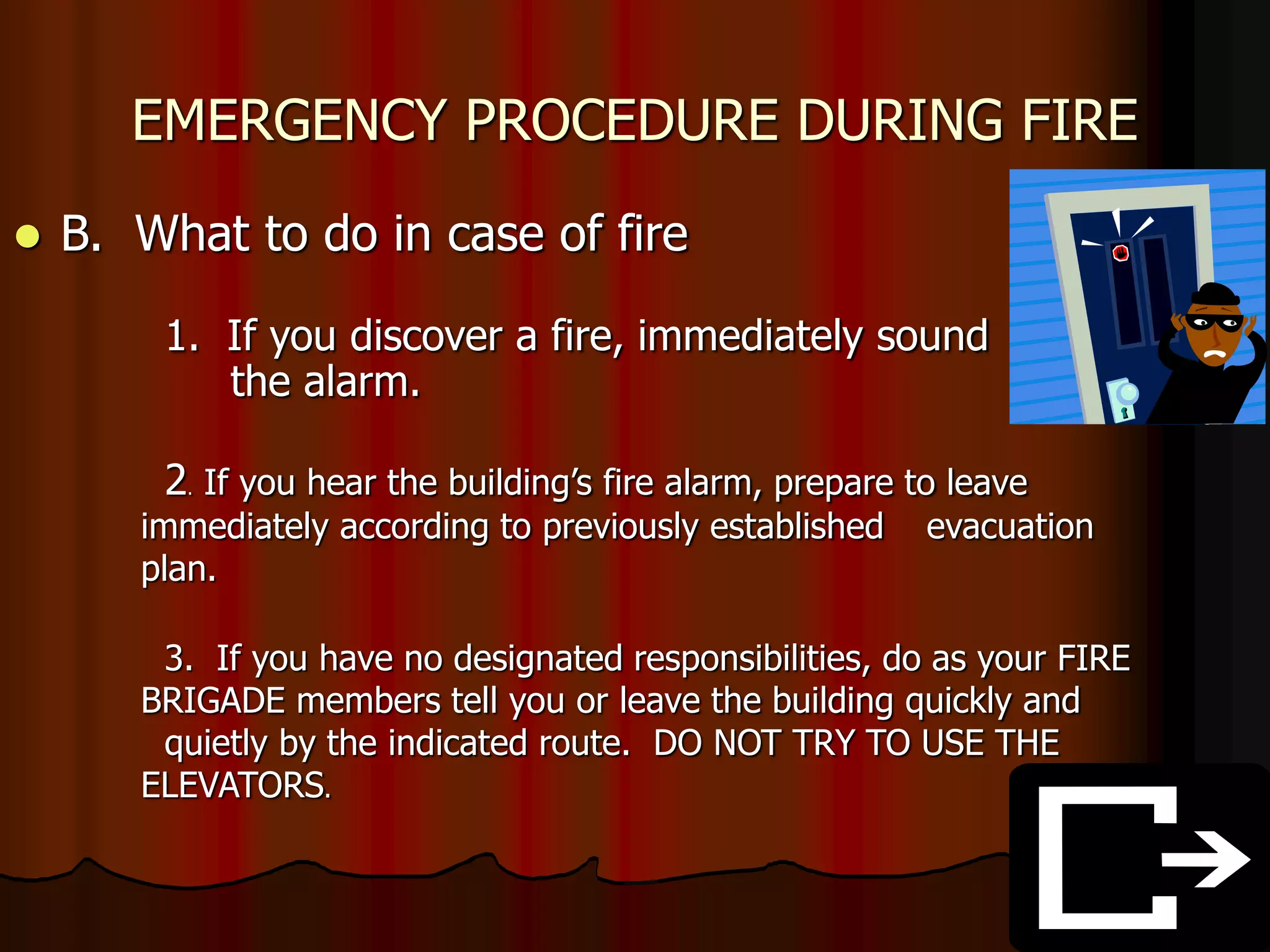
1. If you discover a fire, immediately sound
the alarm.
EMERGENCY PROCEDURE DURING FIRE
4. Try to close doors and windows as you make your
way to the fire exits.
6. If you have to dash through smoke
or flame,
5. If smoke is thick or heavy crawl to the
nearest fire exit. The air from the floors
and 15 inches above is smoke free.
hold your breath.
EMERGENCY PROCEDURE DURING FIRE
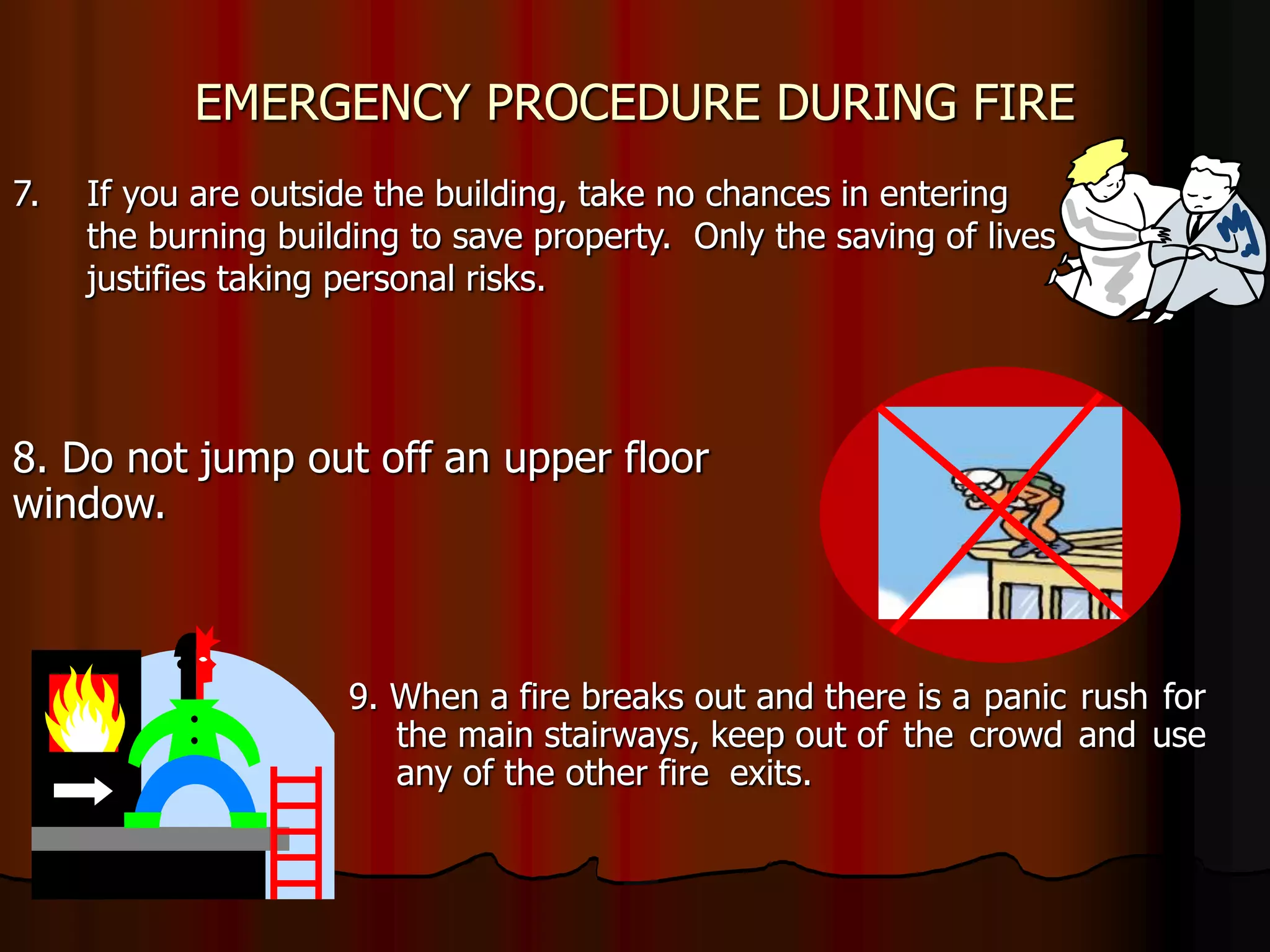
7. If you are outside the building, take no chances in entering
the burning building to save property. Only the saving of lives
justifies taking personal risks.
8. Do not jump out off an upper floor
window.
9. When a fire breaks out and there is a panic rush for
the main stairways, keep out of the crowd and use
any of the other fire exits.
EMERGENCY PROCEDURE DURING
FIRE
 10. If all your escape routes are cut off. DON’T
PANIC, close the door or the room you are in and
go out to a window and wait to be rescued, make a
lot of noise to draw the attention of rescuers.
 11. NEVER USE THE ELEVATORS.
EMERGENCY PROCEDURE
DURING FIRE
 12. If you are injured, seek medical treatment as soon
as you can. Many burns or smoke inhalations, which at
first do not appear serious can be fatal.
THINGS TO DO IN CASE OF FIRE
 In case of fire, just remember the acronym SAFETY to be
able to respond properly:
 S = SOUND THE ALARM
 A
 F
 E
=ADVISE FIRE DEPARTMENT
=FIGHT FIRE WHILE
IT IS STILL SMALL
=EVACUATE IMMEDIATELY
 T =TELL OTHER OCCUPANTS
 Y = YIELD TO FIREFIGHTERS
STOP, DROP and ROLL.
Stop - where you are, do not run.
Drop - immediately drop to the ground and cover your face with
your hands.
Roll - over and over to smother the flames.
PHASES OF AN
EARTHQUAKE DRILL
Phase 1. ALARM
siren / bell rings for 1 minute
ongoing “ground shaking or earthquake”
Phase 2. RESPONSE
during the “shaking”
perform “DUCK, COVER and HOLD”
Remain in that position until “shaking” stops
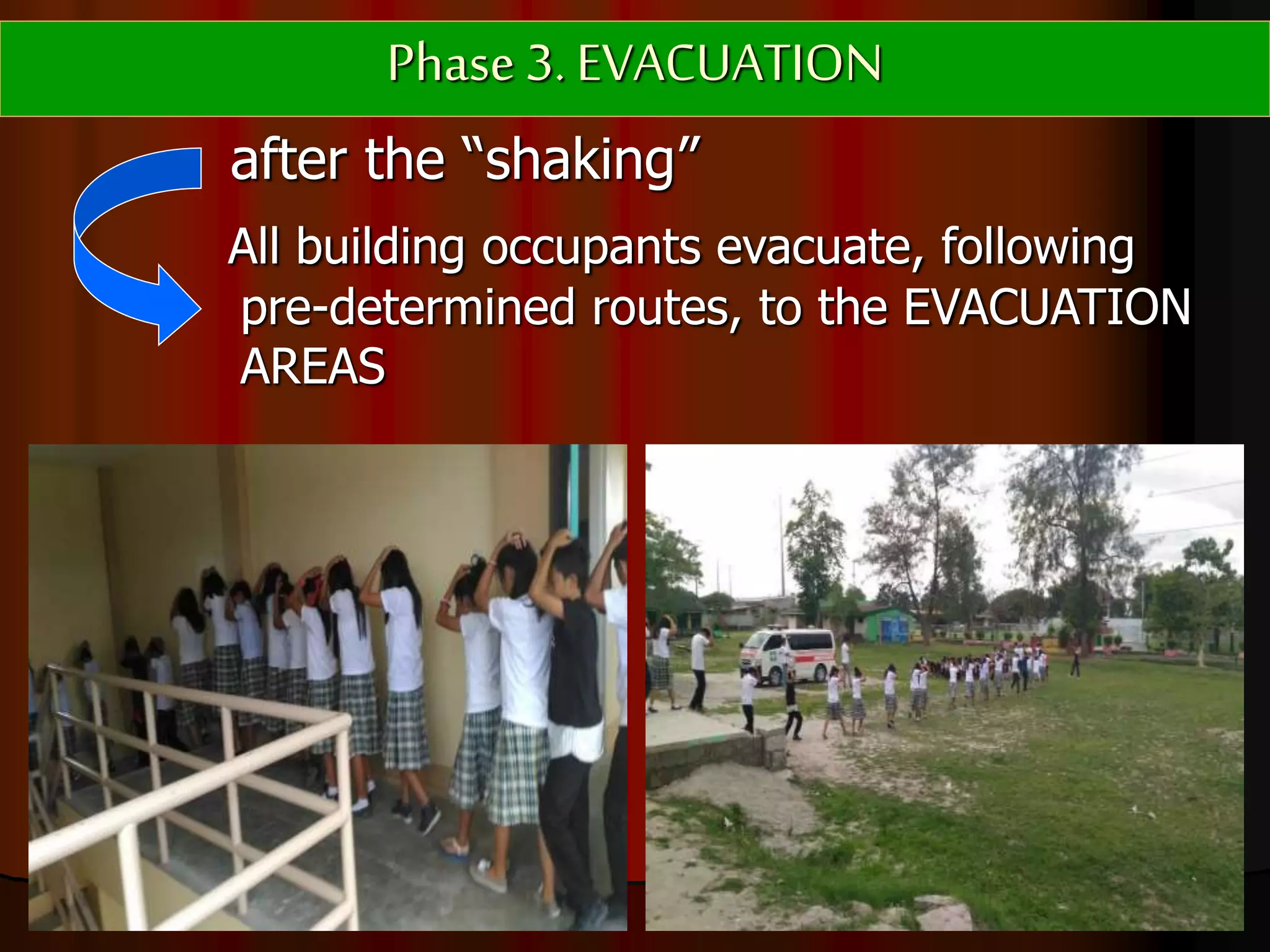
Phase 3. EVACUATION
after the “shaking”
All building occupants evacuate, following
pre-determined routes, to the EVACUATION
AREAS
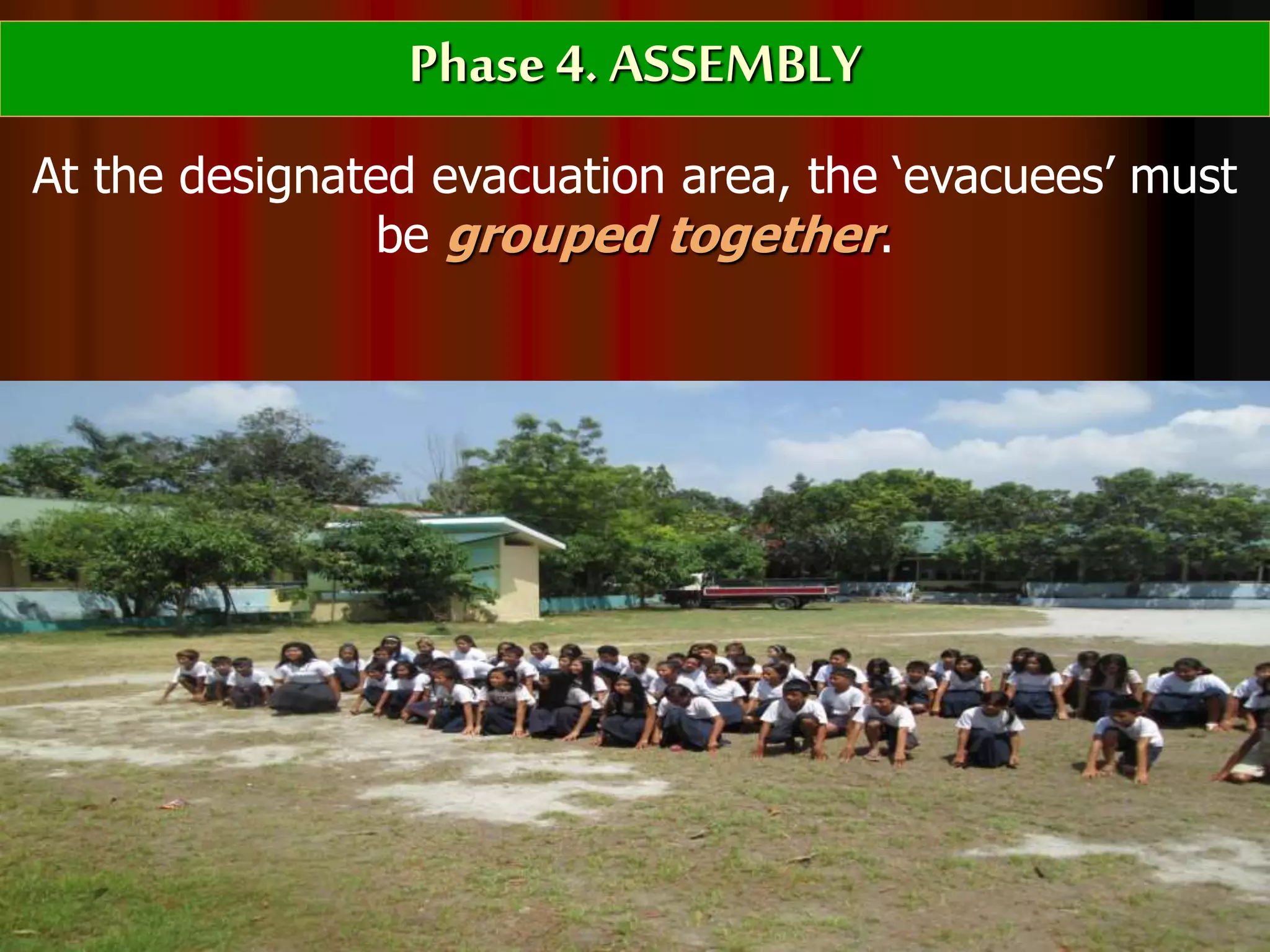
Phase 4. ASSEMBLY
At the designated evacuation area, the ‘evacuees’ must
be grouped together.
Phase 5. HEAD COUNT
Team leaders (Teachers) should check and make sure
all ‘evacuees’ are accounted for.
Phase 6. EVALUATION
An evaluation of the drill must be conducted to identify
problems encountered during the drill and how this can be
corrected in future earthquake drills.
Thank you!

FIRE & EARTHQUAKE DRILL.ppt

  • 1.
  • 2.
    BACOLOR FIRE STATION TELNO (045) 436 – 18 – 28 0923- 103-8363
  • 3.
    WHAT IS FIRE??? FIREis a rapid, self – sustaining oxidation process accompanied by the evolution of heat & light with varying intensities.
  • 4.
  • 5.
    Types of Fires FiresAre Classified by the type FUEL they burn. The 5 Types are A B C D K
  • 6.
    Class A Fires(ASH) Wood, Paper, Plastic, Rags, etc Combustible Materials burn and ash is left behind.
  • 7.
    Class B Fires(BOIL) Gasoline, Oil, Grease, Paint, etc Water not to be used as oil is lighter and will float.
  • 8.
    Class C Fires(CIRCUIT) Electrical Fires Office Equipment, Motors, Switchgear, Heaters, Gases
  • 9.
    Class D Fires(DONG) Metals  Potassium  Sodium  Aluminum  Magnesium
  • 10.
  • 11.
    FIRE EXTINGUISHER A fireextinguisher is an active fire protection device used to extinguish or control small fires, often in emergency situations. It is not intended for use on an out-of-control fire, such as one which has reached the ceiling, endangers the user or otherwise requires the expertise of a fire department.
  • 12.
    PARTS OF AFIRE EXTINGUISHER
  • 13.
    HOW TO USEFIRE EXTINGUISHERS  If you don’t know how to use the fire extinguishers, just remember the acronym PASS: P = PULL THE SAFETY PIN A = AIM THE NOZZLE AT THE BASE OF THE FIRE S = SQUEEZE THE LEVER S = SWEEP FROM SIDE TO SIDE
  • 14.
    PULL THE PIN Thiswill allow you to discharge the extinguisher. AIM AT THE BASE OF THE FIRE If you aim at the flames (which is frequently the temptation), the extinguishing agent will fly right through and do no good. You want to hit the fuel.  
  • 15.
    SQUEEZE THE LEVER Thisdepresses a button that releases the pressurized extinguishing agent in the extinguisher. SWEEP FROM SIDE TO SIDE Start using the extinguisher from a safe distance away, then move forward. Once the fire is out, keep an eye on the area in case it re-ignites.  
  • 16.
    EMERGENCY PROCEDURE DURINGFIRE  B. What to do in case of fire 3. If you have no designated responsibilities, do as your FIRE BRIGADE members tell you or leave the building quickly and quietly by the indicated route. DO NOT TRY TO USE THE ELEVATORS. 2. If you hear the building’s fire alarm, prepare to leave immediately according to previously established evacuation plan. 1. If you discover a fire, immediately sound the alarm.
  • 17.
    EMERGENCY PROCEDURE DURINGFIRE 4. Try to close doors and windows as you make your way to the fire exits. 6. If you have to dash through smoke or flame, 5. If smoke is thick or heavy crawl to the nearest fire exit. The air from the floors and 15 inches above is smoke free. hold your breath.
  • 18.
    EMERGENCY PROCEDURE DURINGFIRE 7. If you are outside the building, take no chances in entering the burning building to save property. Only the saving of lives justifies taking personal risks. 8. Do not jump out off an upper floor window. 9. When a fire breaks out and there is a panic rush for the main stairways, keep out of the crowd and use any of the other fire exits.
  • 19.
    EMERGENCY PROCEDURE DURING FIRE 10. If all your escape routes are cut off. DON’T PANIC, close the door or the room you are in and go out to a window and wait to be rescued, make a lot of noise to draw the attention of rescuers.  11. NEVER USE THE ELEVATORS.
  • 20.
    EMERGENCY PROCEDURE DURING FIRE 12. If you are injured, seek medical treatment as soon as you can. Many burns or smoke inhalations, which at first do not appear serious can be fatal.
  • 21.
    THINGS TO DOIN CASE OF FIRE  In case of fire, just remember the acronym SAFETY to be able to respond properly:  S = SOUND THE ALARM  A  F  E =ADVISE FIRE DEPARTMENT =FIGHT FIRE WHILE IT IS STILL SMALL =EVACUATE IMMEDIATELY  T =TELL OTHER OCCUPANTS  Y = YIELD TO FIREFIGHTERS
  • 22.
    STOP, DROP andROLL. Stop - where you are, do not run. Drop - immediately drop to the ground and cover your face with your hands. Roll - over and over to smother the flames.
  • 23.
  • 24.
    Phase 1. ALARM siren/ bell rings for 1 minute ongoing “ground shaking or earthquake”
  • 25.
    Phase 2. RESPONSE duringthe “shaking” perform “DUCK, COVER and HOLD” Remain in that position until “shaking” stops
  • 26.
    Phase 3. EVACUATION afterthe “shaking” All building occupants evacuate, following pre-determined routes, to the EVACUATION AREAS
  • 27.
    Phase 4. ASSEMBLY Atthe designated evacuation area, the ‘evacuees’ must be grouped together.
  • 28.
    Phase 5. HEADCOUNT Team leaders (Teachers) should check and make sure all ‘evacuees’ are accounted for.
  • 29.
    Phase 6. EVALUATION Anevaluation of the drill must be conducted to identify problems encountered during the drill and how this can be corrected in future earthquake drills.
  • 30.