FIRST AID
COURSE CONTENTS Introduction to First Aid Assessing Casualty Managing an Incident Unconscious Casualty and Respiratory Problems Wounds and Circulation Bone, joint and muscle injuries Emergency First Aid Bandaging  Removal of Casualty and Transportation
WHAT IS FIRST AID ? First aid is the skilled application of accepted principles of treatment on the occurrence of any injury or in the case of illness, using facilities or materials available at the time.  It is the approved method of treating a casualty until he is placed, if necessary, in the care of doctor or other skilled aid or removal to hospital
THE PURPOSE OF FIRST AID First aid is given to a casualty : To preserve life To prevent his condition deteriorating To promote recovery
FIRST AID PRIORITIES Assess an situation quickly and calmly Protect yourself and any casualties from danger (never put yourself at risk) Prevent cross infection between yourself and the casualty Comfort and reassure casualties at all times Assess the casualty (identify, as far as you can, the injury or nature of illness affecting a casualty Give early treatment and treat the casualties with the most serious (life threatening) conditions first Arrange for appropriate help Stay with a casualty until care is available
FIRST AIDER When responding to an emergency you should recognise both the emotional and physical needs of all involved, including your own The keys steps to being an effective first aider are – Be calm in your approach Be aware of risks (to yourself and others) Build and maintain trust (from the casualty and the bystanders) Give early treatment – treating the most serious or life threatening conditions first Call appropriate help Remember your own needs
PROTECTION FROM INFECTION It is important to protect yourself and the casualty from infection as well as injury. Take steps to avoid cross infection Minimising the risk of cross infection: Wash your hands  Wear disposable gloves Cover cuts and glazes on your hands with waterproof dressings Wear a plastic apron if dealing with large quantities of body fluids and wear plastic glasses to protect your eyes Dispose of all waste safely Do not touch a would with your bare hands and do not touch any part of a dressing that will come into contact with a wound Do not breath, cough or sneeze over a wound while you are treating a casualty
DEALING WITH A CASUALTY Building trust Establish trust by introducing yourself Find out what the person likes to be called  Crouch or kneel down to the same height  as the casualty Explain what is happening and why Inform the casualty what you are doing before you do it Treat casualty with dignity and respect
Listen carefully Make eye contact Use a calm, confidence voice that is loud enough to be heard but do not shout Do not speak too quickly Keep instructions simple Use affirming nods Check that the casualty understands what you mean Use simple hand gestures Do not interrupt the casualty  DEALING WITH A CASUALTY
ASSESSING THE SICK OR INJURED PRIMARY SURVEY SECONDARY SURVEY
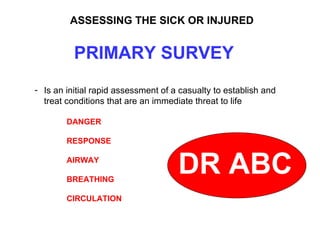
ASSESSING THE SICK OR INJURED Is an initial rapid assessment of a casualty to establish and treat conditions that are an immediate threat to life DANGER RESPONSE AIRWAY BREATHING CIRCULATION DR ABC PRIMARY SURVEY
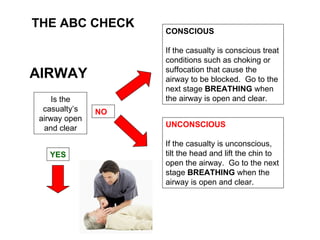
THE ABC CHECK AIRWAY Is the casualty’s airway open and clear NO YES CONSCIOUS If the casualty is conscious treat conditions such as choking or suffocation that cause the airway to be blocked.  Go to the next stage  BREATHING  when the airway is open and clear. UNCONSCIOUS If the casualty is unconscious, tilt the head and lift the chin to open the airway.  Go to the next stage  BREATHING  when the airway is open and clear.
Tongue Blocking AIRWAY Opened  AIRWAY
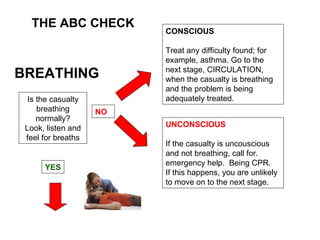
THE ABC CHECK BREATHING Is the casualty breathing normally? Look, listen and feel for breaths NO YES CONSCIOUS Treat any difficulty found; for example, asthma. Go to the next stage, CIRCULATION, when the casualty is breathing and the problem is being adequately treated. UNCONSCIOUS If the casualty is uncouscious and not breathing, call for.  emergency help.  Being CPR. If this happens, you are unlikely to move on to the next stage.
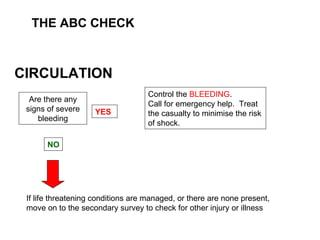
THE ABC CHECK CIRCULATION Are there any signs of severe bleeding YES NO Control the  BLEEDING . Call for emergency help.  Treat the casualty to minimise the risk of shock. If life threatening conditions are managed, or there are none present, move on to the secondary survey to check for other injury or illness
DR ABC SECONDARY SURVEY HEAD-TO-TOE EXAMINATION  Question the casualty and people around him Ideally the casualty should remain in the position found, at least until you are satisfied that it is safe to move into a more comfortable position
DR ABC SECONDARY SURVEY Include :- Disability – level of response Examine the casualty HISTORY  – What happened ? SYMPTOMS  – Information from  casualty SIGNS  – finding from  examination of casualty
SECONDARY SURVEY HISTORY EVENT HISTORY PREVIOUS MEDICAL HISTORY
SECONDARY SURVEY EVENT HISTORY To find out what happened or to discover the immediate events leading up to the incident  Accident Snake bite Fall
SECONDARY SURVEY PREVIOUS MEDICAL HISTORY To find out any previous medical history or problem that may lead to the incident : Medical bracelet  medication
SECONDARY SURVEY TAKING  HISTORY Ask what happened – establish whether incident due to illness or accident. Ask about medication – currently taking Ask about medical history – ongoing and previous conditions Find out if the casualty has any allergies  Check when the person last had something to eat or drink Note the presence of a medical warning bracelet  May indicate an ongoing medical condition, such as epilepsy, diabetes or anaphylaxis.
SECONDARY SURVEY SYMPTOMS Sensations that the casualty feels and describes to you.   - pain   - nausea   - giddiness   - heat   - cold    - thirst
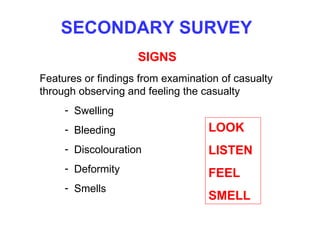
SECONDARY SURVEY SIGNS Features or findings from examination of casualty through observing and feeling the casualty Swelling Bleeding Discolouration Deformity Smells LOOK LISTEN FEEL SMELL
SECONDARY SURVEY Always compare the injured and uninjured sodes pf the body. You may also notice that the person is unable to perform normal functions, such moving his limbs or standing. SIGNS
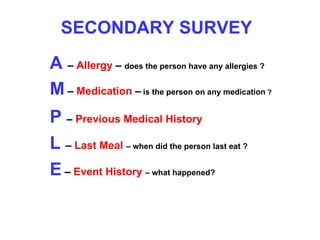
SECONDARY SURVEY A   –  Allergy  –  does the person have any allergies ? M  –  Medication  –   is the person on any medication  ? P   –  Previous Medical History L   –  Last Meal   – when did the person last eat ? E  –  Event History   – what happened?
MAKE DECISION What Action to be taken ??

First Aid

  • 1.
  • 2.
    COURSE CONTENTS Introductionto First Aid Assessing Casualty Managing an Incident Unconscious Casualty and Respiratory Problems Wounds and Circulation Bone, joint and muscle injuries Emergency First Aid Bandaging Removal of Casualty and Transportation
  • 3.
    WHAT IS FIRSTAID ? First aid is the skilled application of accepted principles of treatment on the occurrence of any injury or in the case of illness, using facilities or materials available at the time. It is the approved method of treating a casualty until he is placed, if necessary, in the care of doctor or other skilled aid or removal to hospital
  • 4.
    THE PURPOSE OFFIRST AID First aid is given to a casualty : To preserve life To prevent his condition deteriorating To promote recovery
  • 5.
    FIRST AID PRIORITIESAssess an situation quickly and calmly Protect yourself and any casualties from danger (never put yourself at risk) Prevent cross infection between yourself and the casualty Comfort and reassure casualties at all times Assess the casualty (identify, as far as you can, the injury or nature of illness affecting a casualty Give early treatment and treat the casualties with the most serious (life threatening) conditions first Arrange for appropriate help Stay with a casualty until care is available
  • 6.
    FIRST AIDER Whenresponding to an emergency you should recognise both the emotional and physical needs of all involved, including your own The keys steps to being an effective first aider are – Be calm in your approach Be aware of risks (to yourself and others) Build and maintain trust (from the casualty and the bystanders) Give early treatment – treating the most serious or life threatening conditions first Call appropriate help Remember your own needs
  • 7.
    PROTECTION FROM INFECTIONIt is important to protect yourself and the casualty from infection as well as injury. Take steps to avoid cross infection Minimising the risk of cross infection: Wash your hands Wear disposable gloves Cover cuts and glazes on your hands with waterproof dressings Wear a plastic apron if dealing with large quantities of body fluids and wear plastic glasses to protect your eyes Dispose of all waste safely Do not touch a would with your bare hands and do not touch any part of a dressing that will come into contact with a wound Do not breath, cough or sneeze over a wound while you are treating a casualty
  • 8.
    DEALING WITH ACASUALTY Building trust Establish trust by introducing yourself Find out what the person likes to be called Crouch or kneel down to the same height as the casualty Explain what is happening and why Inform the casualty what you are doing before you do it Treat casualty with dignity and respect
  • 9.
    Listen carefully Makeeye contact Use a calm, confidence voice that is loud enough to be heard but do not shout Do not speak too quickly Keep instructions simple Use affirming nods Check that the casualty understands what you mean Use simple hand gestures Do not interrupt the casualty DEALING WITH A CASUALTY
  • 10.
    ASSESSING THE SICKOR INJURED PRIMARY SURVEY SECONDARY SURVEY
  • 11.
    ASSESSING THE SICKOR INJURED Is an initial rapid assessment of a casualty to establish and treat conditions that are an immediate threat to life DANGER RESPONSE AIRWAY BREATHING CIRCULATION DR ABC PRIMARY SURVEY
  • 12.
    THE ABC CHECKAIRWAY Is the casualty’s airway open and clear NO YES CONSCIOUS If the casualty is conscious treat conditions such as choking or suffocation that cause the airway to be blocked. Go to the next stage BREATHING when the airway is open and clear. UNCONSCIOUS If the casualty is unconscious, tilt the head and lift the chin to open the airway. Go to the next stage BREATHING when the airway is open and clear.
  • 13.
  • 14.
    THE ABC CHECKBREATHING Is the casualty breathing normally? Look, listen and feel for breaths NO YES CONSCIOUS Treat any difficulty found; for example, asthma. Go to the next stage, CIRCULATION, when the casualty is breathing and the problem is being adequately treated. UNCONSCIOUS If the casualty is uncouscious and not breathing, call for. emergency help. Being CPR. If this happens, you are unlikely to move on to the next stage.
  • 15.
    THE ABC CHECKCIRCULATION Are there any signs of severe bleeding YES NO Control the BLEEDING . Call for emergency help. Treat the casualty to minimise the risk of shock. If life threatening conditions are managed, or there are none present, move on to the secondary survey to check for other injury or illness
  • 16.
    DR ABC SECONDARYSURVEY HEAD-TO-TOE EXAMINATION Question the casualty and people around him Ideally the casualty should remain in the position found, at least until you are satisfied that it is safe to move into a more comfortable position
  • 17.
    DR ABC SECONDARYSURVEY Include :- Disability – level of response Examine the casualty HISTORY – What happened ? SYMPTOMS – Information from casualty SIGNS – finding from examination of casualty
  • 18.
    SECONDARY SURVEY HISTORYEVENT HISTORY PREVIOUS MEDICAL HISTORY
  • 19.
    SECONDARY SURVEY EVENTHISTORY To find out what happened or to discover the immediate events leading up to the incident Accident Snake bite Fall
  • 20.
    SECONDARY SURVEY PREVIOUSMEDICAL HISTORY To find out any previous medical history or problem that may lead to the incident : Medical bracelet medication
  • 21.
    SECONDARY SURVEY TAKING HISTORY Ask what happened – establish whether incident due to illness or accident. Ask about medication – currently taking Ask about medical history – ongoing and previous conditions Find out if the casualty has any allergies Check when the person last had something to eat or drink Note the presence of a medical warning bracelet May indicate an ongoing medical condition, such as epilepsy, diabetes or anaphylaxis.
  • 22.
    SECONDARY SURVEY SYMPTOMSSensations that the casualty feels and describes to you. - pain - nausea - giddiness - heat - cold - thirst
  • 23.
    SECONDARY SURVEY SIGNSFeatures or findings from examination of casualty through observing and feeling the casualty Swelling Bleeding Discolouration Deformity Smells LOOK LISTEN FEEL SMELL
  • 24.
    SECONDARY SURVEY Alwayscompare the injured and uninjured sodes pf the body. You may also notice that the person is unable to perform normal functions, such moving his limbs or standing. SIGNS
  • 25.
    SECONDARY SURVEY A – Allergy – does the person have any allergies ? M – Medication – is the person on any medication ? P – Previous Medical History L – Last Meal – when did the person last eat ? E – Event History – what happened?
  • 26.
    MAKE DECISION WhatAction to be taken ??