Machine Code
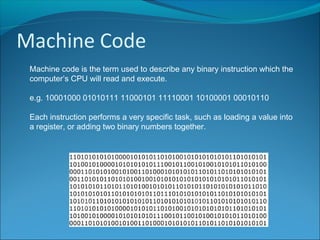
Machine code is the term used to describe any binary instruction which the
computer’s CPU will read and execute.
e.g. 10001000 01010111 11000101 11110001 10100001 00010110
Each instruction performs a very specific task, such as loading a value into
a register, or adding two binary numbers together.
Hexadecimal
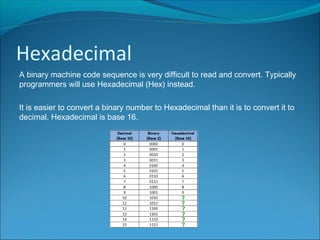
A binary machine code sequence is very difficult to read and convert. Typically
programmers will use Hexadecimal (Hex) instead.
It is easier to convert a binary number to Hexadecimal than it is to convert it to
decimal. Hexadecimal is base 16.
Hexadecimal
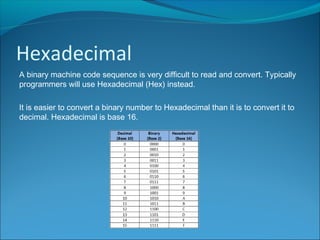
A binary machine code sequence is very difficult to read and convert. Typically
programmers will use Hexadecimal (Hex) instead.
It is easier to convert a binary number to Hexadecimal than it is to convert it to
decimal. Hexadecimal is base 16.
Hexadecimal
A binary machine code sequence is very difficult to read and convert. Typically
programmers will use Hexadecimal (Hex) instead.
It is easier to convert a binary number to Hexadecimal than it is to convert it to
decimal. Hexadecimal is base 16.
Hexadecimal
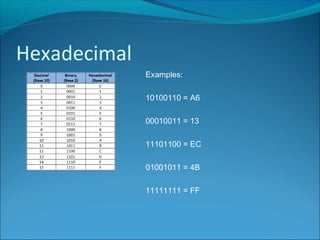
Examples:
10100110 = A6
00010011 = 13
11101100 = EC
01001011 = 4B
11111111 = FF
Hexadecimal
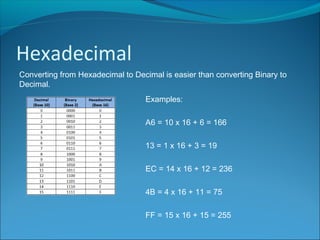
Converting from Hexadecimal to Decimal is easier than converting Binary to
Decimal.
Examples:
A6 = 10 x 16 + 6 = 166
13 = 1 x 16 + 3 = 19
EC = 14 x 16 + 12 = 236
4B = 4 x 16 + 11 = 75
FF = 15 x 16 + 15 = 255
Assembly Code
Assembly code is a low level language.
Assembly language is specific to a particular computer architecture. In other
words, different computer manufacturers will use different assembly code
instructions.
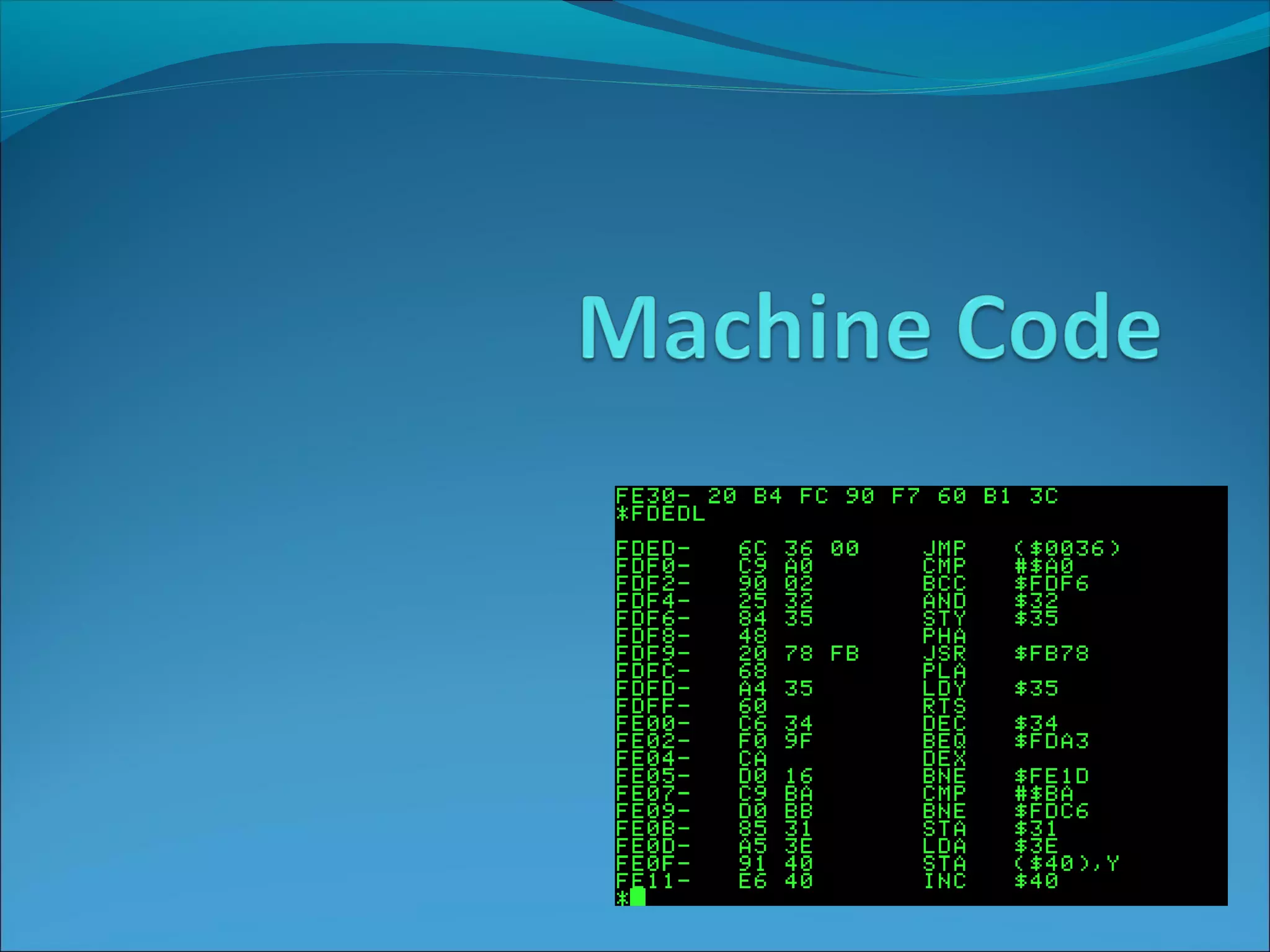
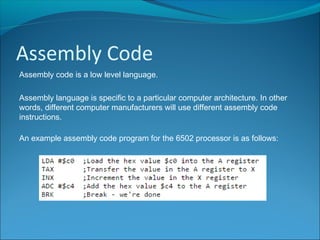
An example assembly code program for the 6502 processor is as follows:
Assembler
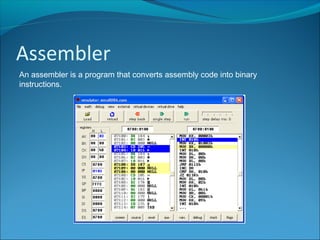
An assembler is a program that converts assembly code into binary
instructions.
Assembly Code
Advantages:
Very fast because of direct conversion from assembly language to
binary
Direct access to hardware features e.g. embedded computers in
home appliances
Disadvantages
Low level languages are difficult to learn
Lack of portability because assembly language is dependent on the
make of processor

S & D Machine code

  • 2.
    Machine Code Machine codeis the term used to describe any binary instruction which the computer’s CPU will read and execute. e.g. 10001000 01010111 11000101 11110001 10100001 00010110 Each instruction performs a very specific task, such as loading a value into a register, or adding two binary numbers together.
  • 3.
    Hexadecimal A binary machinecode sequence is very difficult to read and convert. Typically programmers will use Hexadecimal (Hex) instead. It is easier to convert a binary number to Hexadecimal than it is to convert it to decimal. Hexadecimal is base 16.
  • 4.
    Hexadecimal A binary machinecode sequence is very difficult to read and convert. Typically programmers will use Hexadecimal (Hex) instead. It is easier to convert a binary number to Hexadecimal than it is to convert it to decimal. Hexadecimal is base 16.
  • 5.
    Hexadecimal A binary machinecode sequence is very difficult to read and convert. Typically programmers will use Hexadecimal (Hex) instead. It is easier to convert a binary number to Hexadecimal than it is to convert it to decimal. Hexadecimal is base 16.
  • 6.
    Hexadecimal Examples: 10100110 = A6 00010011= 13 11101100 = EC 01001011 = 4B 11111111 = FF
  • 7.
    Hexadecimal Converting from Hexadecimalto Decimal is easier than converting Binary to Decimal. Examples: A6 = 10 x 16 + 6 = 166 13 = 1 x 16 + 3 = 19 EC = 14 x 16 + 12 = 236 4B = 4 x 16 + 11 = 75 FF = 15 x 16 + 15 = 255
  • 8.
    Assembly Code Assembly codeis a low level language. Assembly language is specific to a particular computer architecture. In other words, different computer manufacturers will use different assembly code instructions. An example assembly code program for the 6502 processor is as follows:
  • 9.
    Assembler An assembler isa program that converts assembly code into binary instructions.
  • 10.
    Assembly Code Advantages: Very fastbecause of direct conversion from assembly language to binary Direct access to hardware features e.g. embedded computers in home appliances Disadvantages Low level languages are difficult to learn Lack of portability because assembly language is dependent on the make of processor