COMPUTER LANGUAGE
LANGUAGE
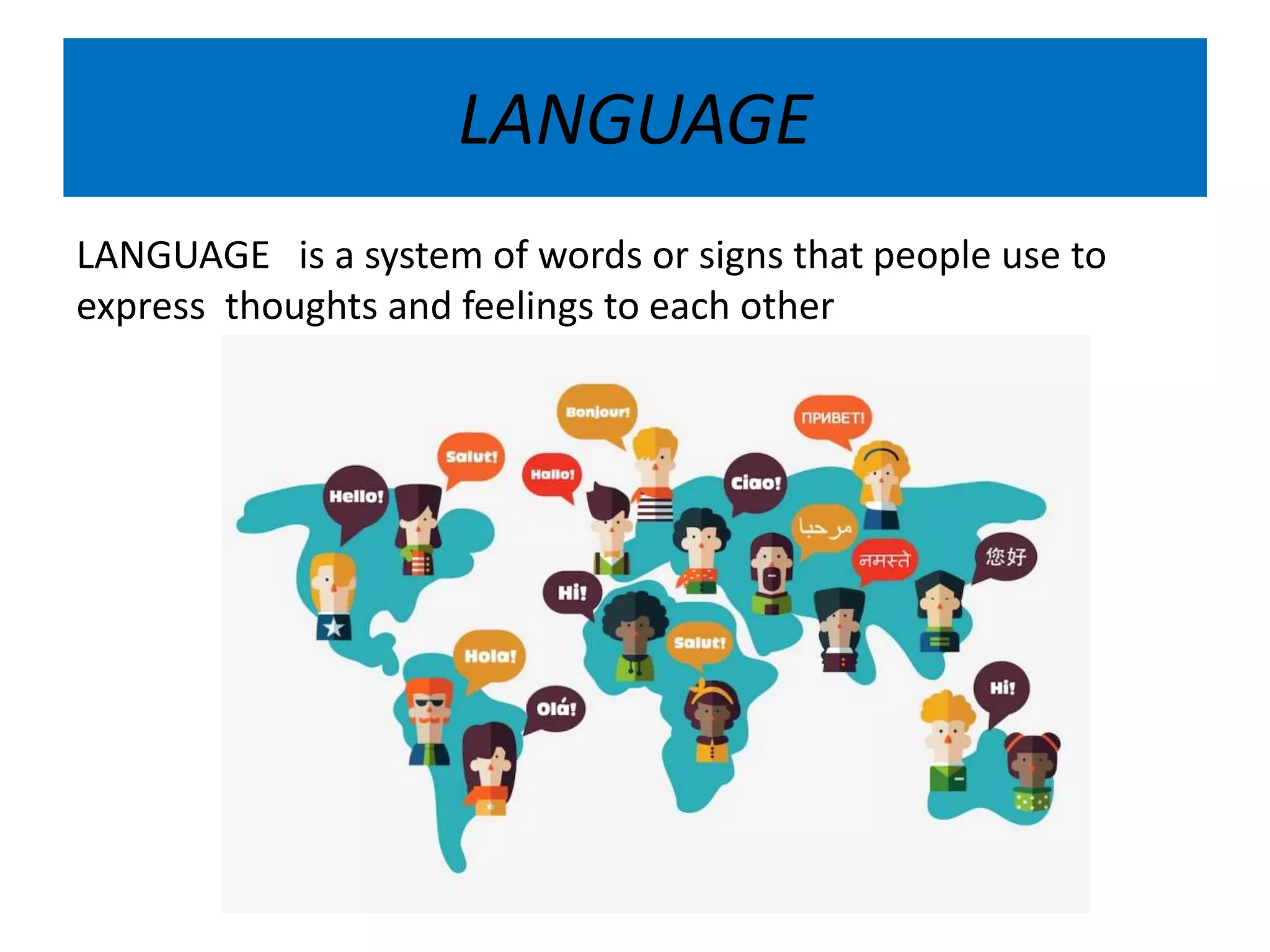
LANGUAGE is a system of words or signs that people use to
express thoughts and feelings to each other
COMPUTER LANGUAGE
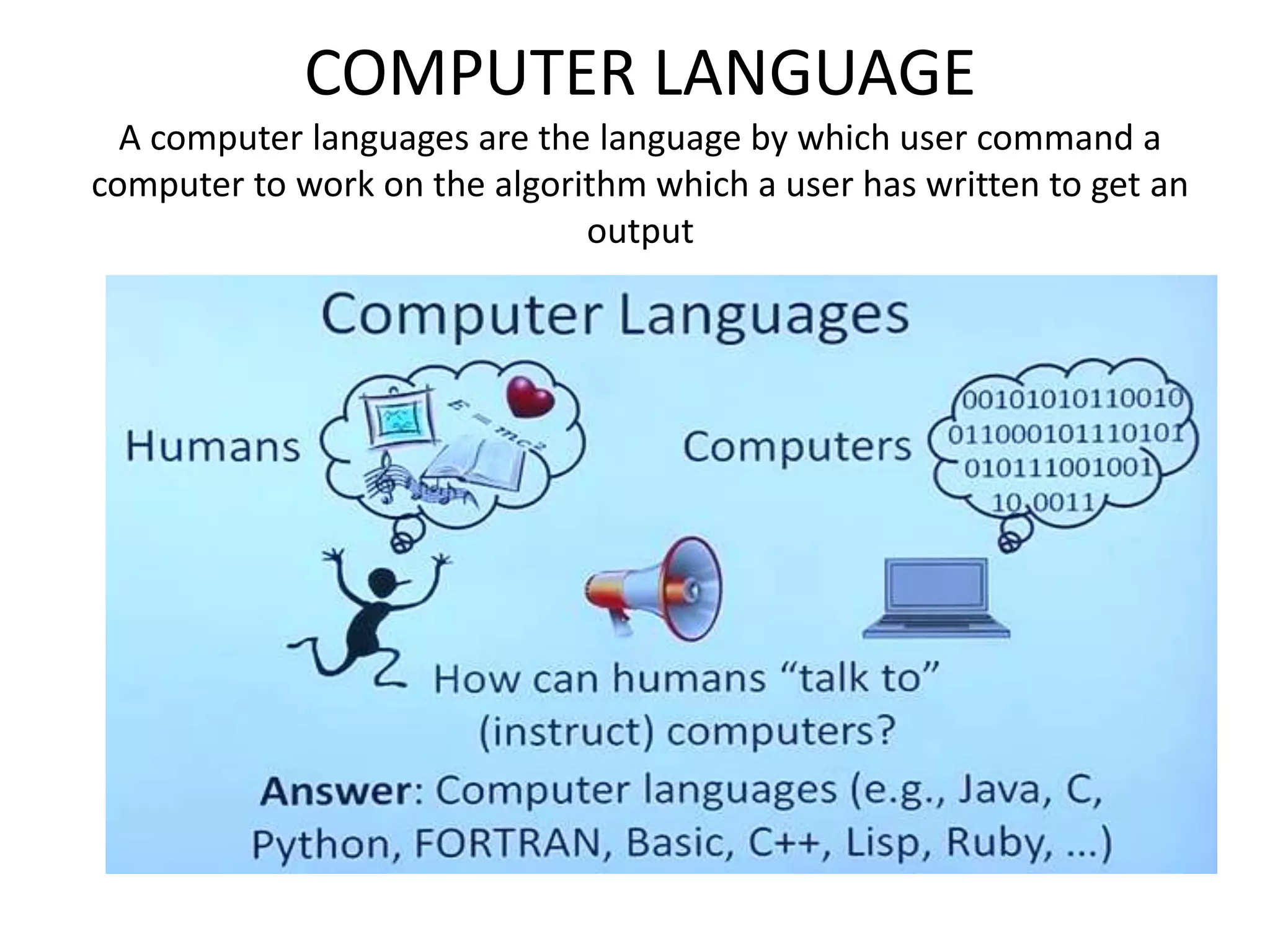
A computer languages are the language by which user command a
computer to work on the algorithm which a user has written to get an
output
TWO TYPES OF COMPUTER
LANGUAGES
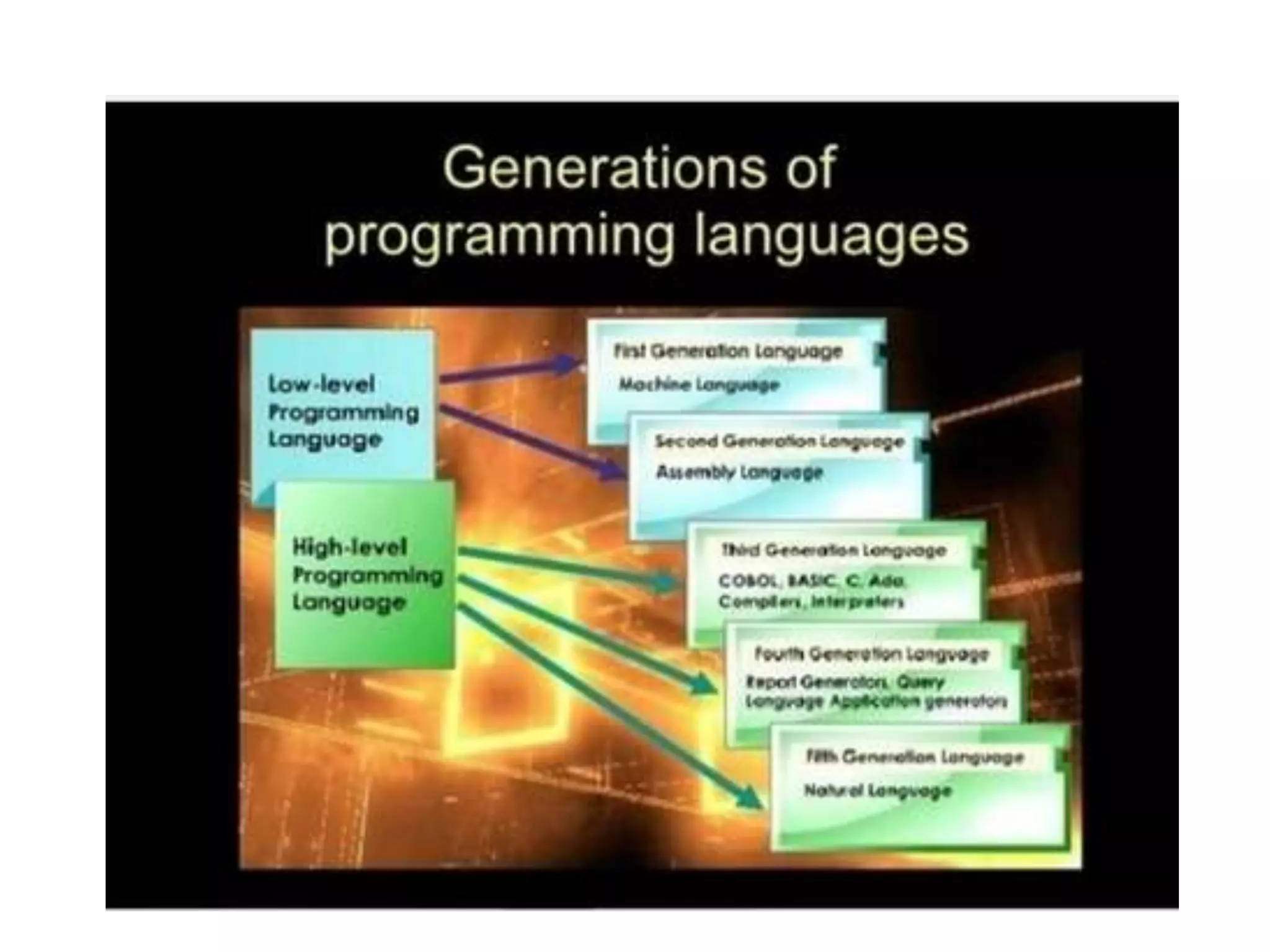
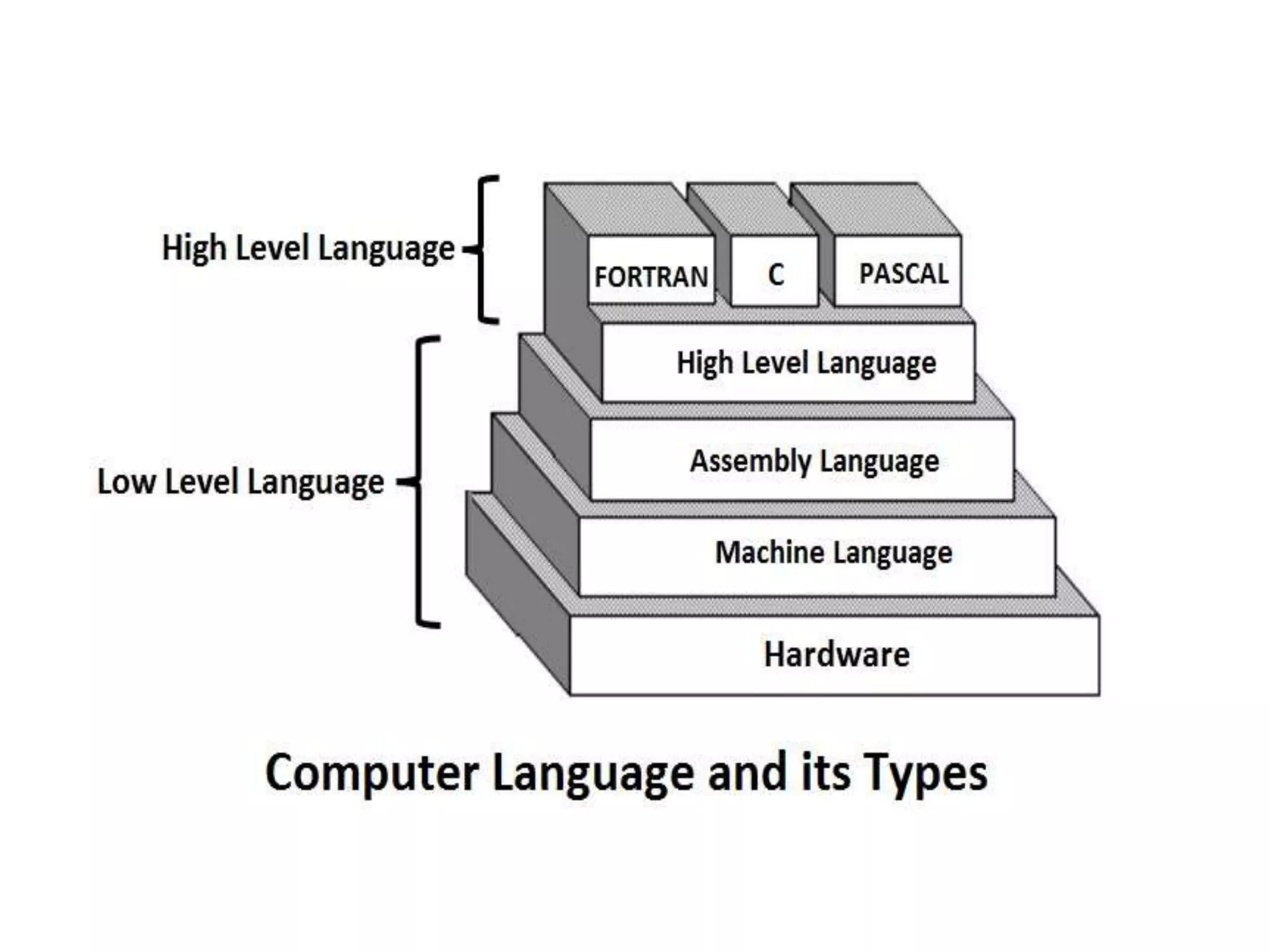
.LOW-level languages
.HIGH-level languages
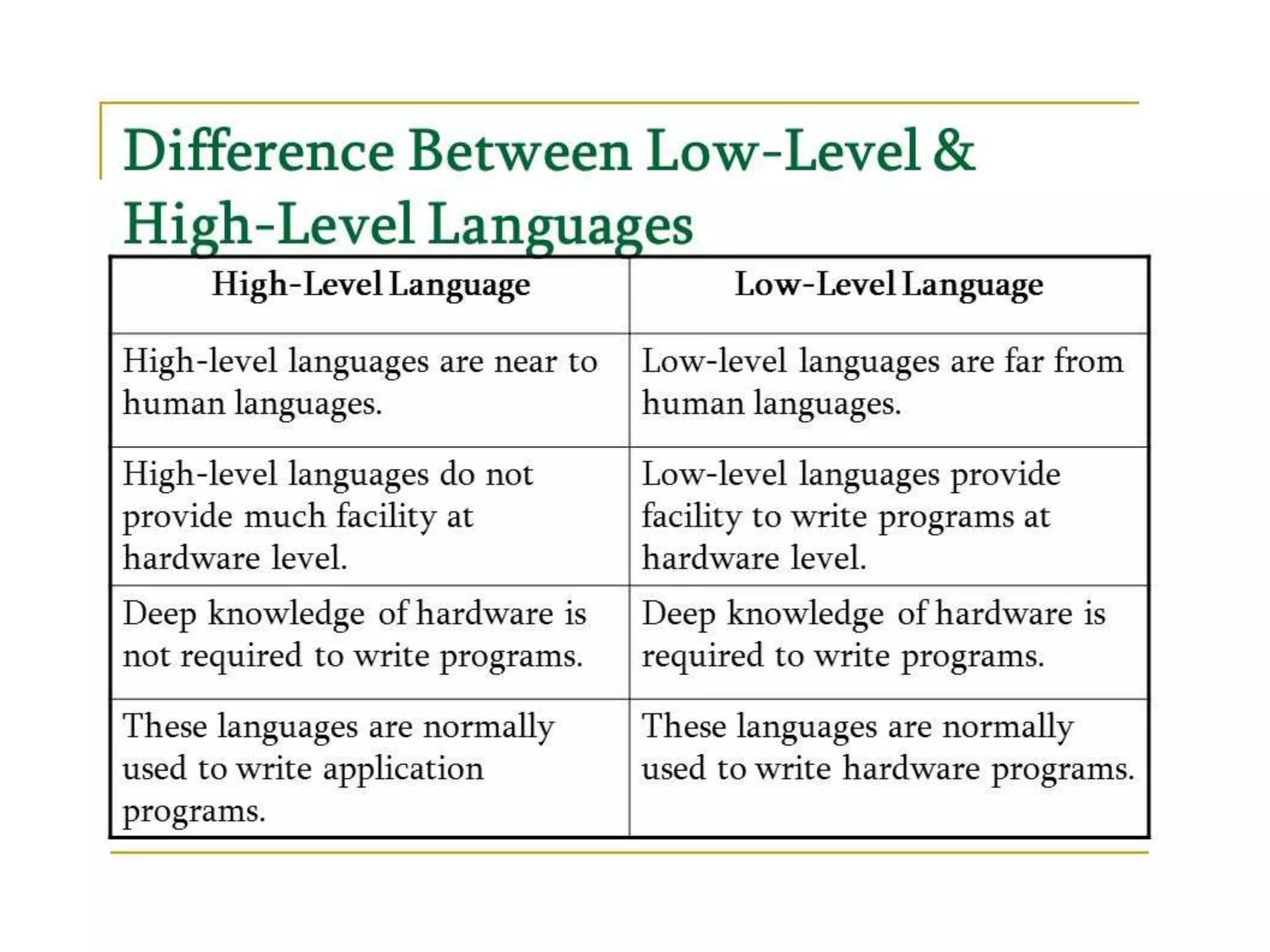
LOW LEVEL LANGUAGE
A low level programming language is a programming language
that provides little or no abstraction from a computers
instruction set architecture. It consist of numeric codes that is
0 and 1 . This codes are easily understandable to computer
but difficult to human
A low level language is used in two generations of computer
.First generation
.Second generation
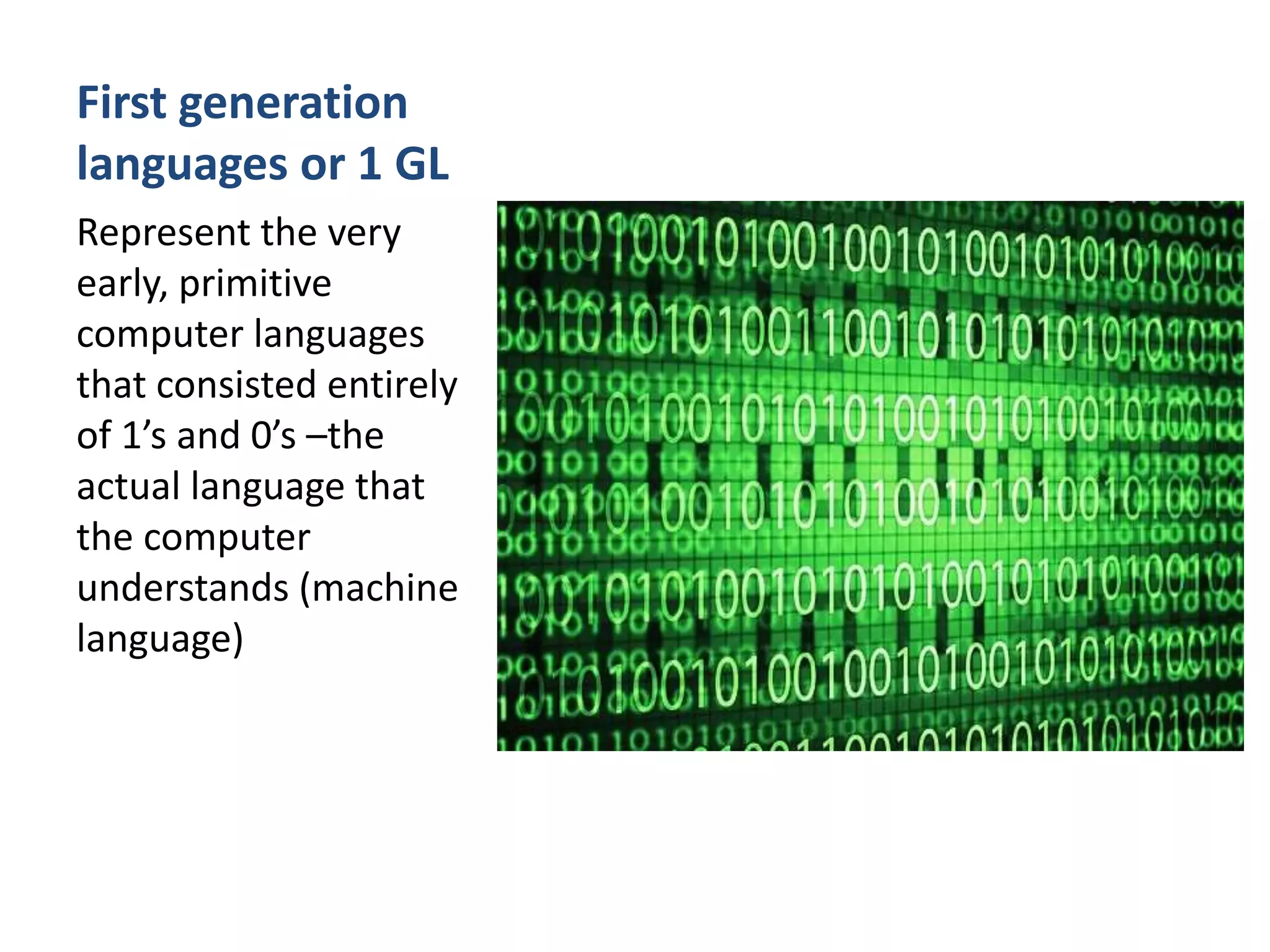
First generation
languages or 1 GL
Represent the very
early, primitive
computer languages
that consisted entirely
of 1’s and 0’s –the
actual language that
the computer
understands (machine
language)
Second
generation
language or 2 GL
Represent a step up
from the first generation
languages . Allow for the
use of symbolic name
instead of just numbers.
Second generation
languages are known as
assembly languages
.code written in an
assembly language is
converted into machine
language(1GL).
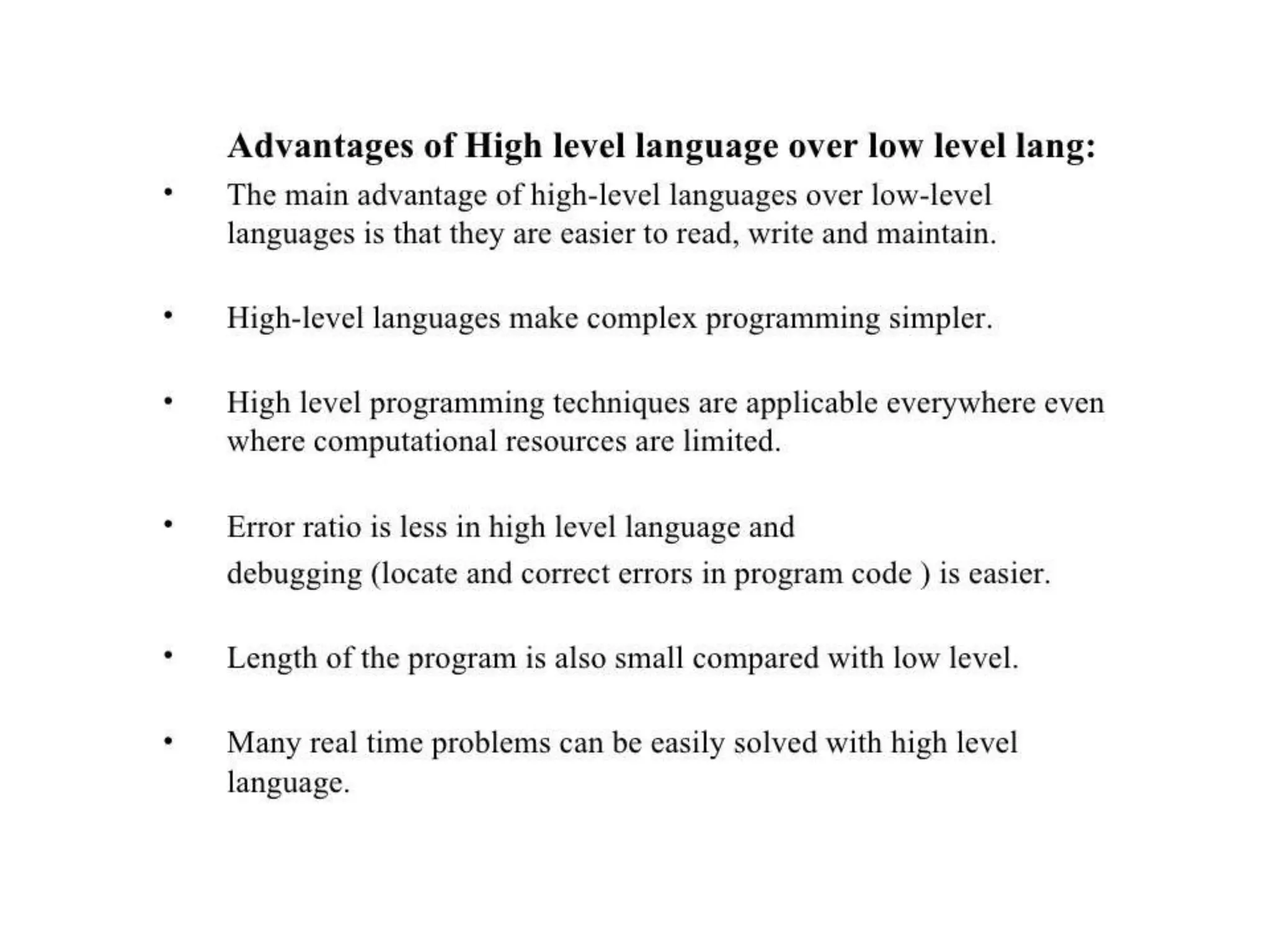
HIGH LEVEL LANGUAGE
A high level language is a programming language
design to simplify computer programming .high
level source code contains easy to read syntax that
is later converted into a low-level language ,which
can be recognized and run by a specific CPU .most
common programming languages are considered
high level languages
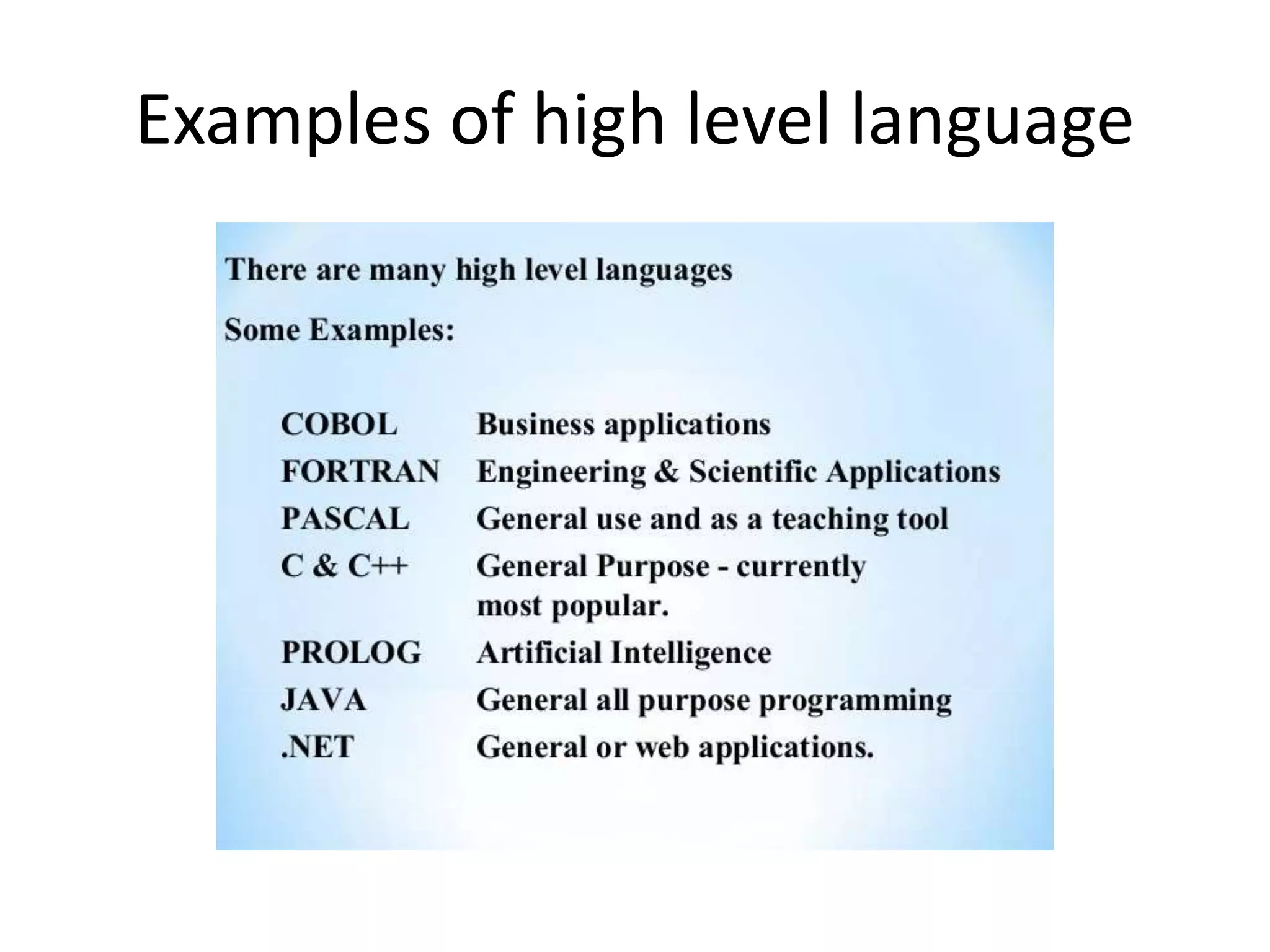
Examples of high level language
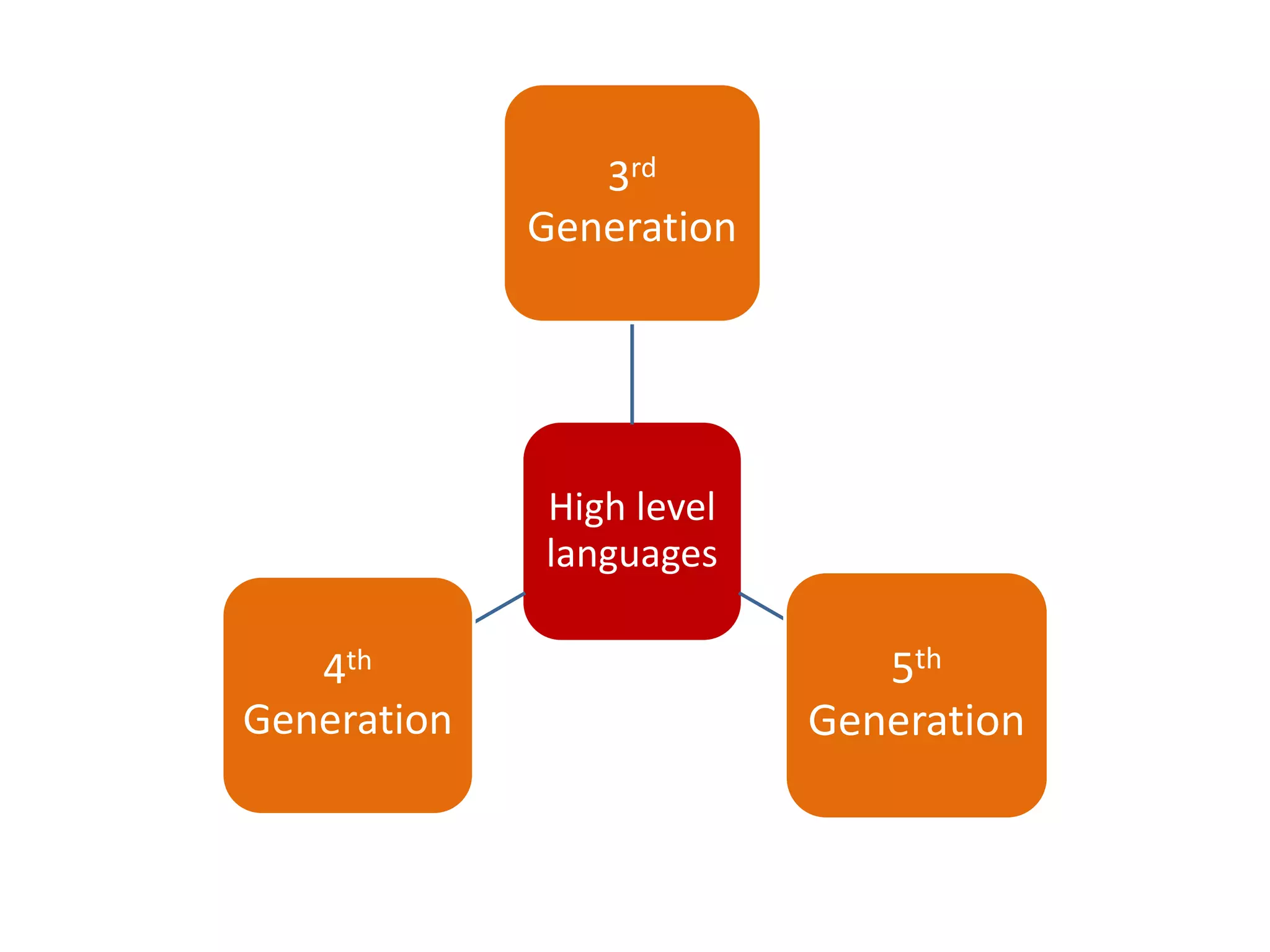
High level
languages
3rd
Generation
5th
Generation
4th
Generation
3rd GENERATION LANGUAGE
• A third generation( programming )language or 3GL is a
grouping of programming languages that introduced
significant enhancements to second generation
languages , primarily intended to make the
programming language more programmer – friendly
• Commonly known 3GLs are –
• 1. COBOL(COMMON BUSINESS ORIENTED LANGUAGE)
• 2. C++
• 3 . JAVA
• 4.BASIC
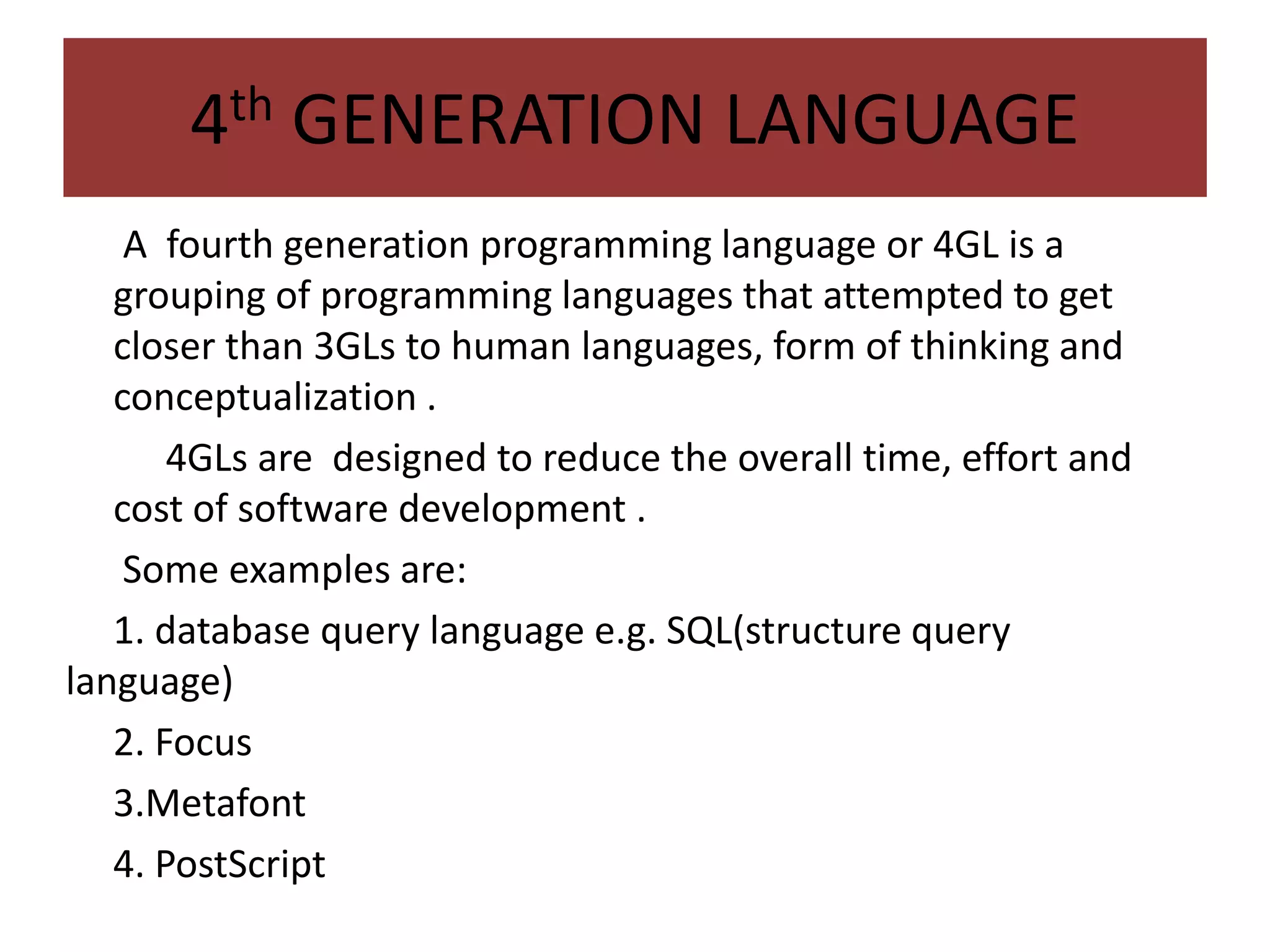
4th GENERATION LANGUAGE
• A fourth generation programming language or 4GL is a
grouping of programming languages that attempted to get
closer than 3GLs to human languages, form of thinking and
conceptualization .
• 444GLs are designed to reduce the overall time, effort and
cost of software development .
Some examples are:
1. database query language e.g. SQL(structure query
language)
2. Focus
3.Metafont
4. PostScript
5th GENERATION LANGUAGE
• A fifth- generation programming language or 5GL is a
programming language based on solving using constraints
given to the program , rather than using an algorithm written
by a programmer.
• Most constraint-based and logic programming languages and
some other declarative languages are 5th generation
languages.
• EXAMPLE-PROLOG( PROgramming LOGic) is an example of a
logic programming language.
• OPS5 and Mercury are other examples of 5GL .
TRANSLATOR
• A program written in high level language is called
source code .To convert the source code into
machine code translator are needed .
• A translator takes a program written in source
language as input and convert it into a program in
target language as output.
• It also detect and reports the error during
translation.
There are three types of translator
ASSEMBLER INTERPRETER COMPILER
ASSEMBLER
It is a translator which is used to translate the assembly
language(2nd generation) into machine language(1st generation).
ASSEMBLERAssembly language Machine language
INTERPRETER
It is a translator which is used to convert program in high level
language to low level language(1G) .
It translates line by line and report the error, once it encounter during
the translation process.
Interpreter stops when a line of code is reached that contain an error.
Source
program
Input
INTERPRETER OUTPUT
COMPILER
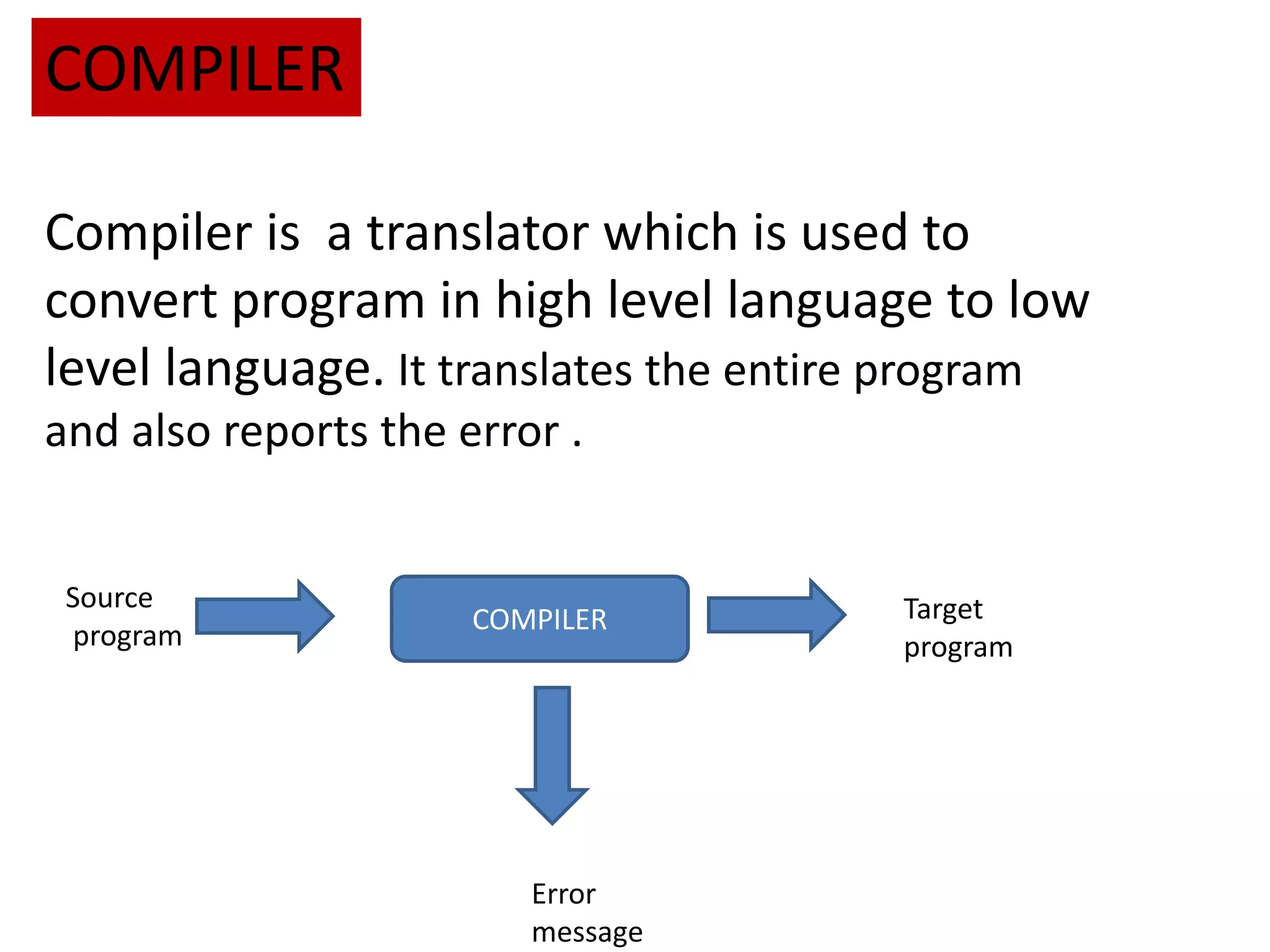
Compiler is a translator which is used to
convert program in high level language to low
level language. It translates the entire program
and also reports the error .
Source
program
COMPILER Target
program
Error
message
Computer Language

Computer Language

  • 1.
  • 2.
    LANGUAGE LANGUAGE is asystem of words or signs that people use to express thoughts and feelings to each other
  • 3.
    COMPUTER LANGUAGE A computerlanguages are the language by which user command a computer to work on the algorithm which a user has written to get an output
  • 4.
    TWO TYPES OFCOMPUTER LANGUAGES .LOW-level languages .HIGH-level languages
  • 6.
    LOW LEVEL LANGUAGE Alow level programming language is a programming language that provides little or no abstraction from a computers instruction set architecture. It consist of numeric codes that is 0 and 1 . This codes are easily understandable to computer but difficult to human A low level language is used in two generations of computer .First generation .Second generation
  • 7.
    First generation languages or1 GL Represent the very early, primitive computer languages that consisted entirely of 1’s and 0’s –the actual language that the computer understands (machine language)
  • 8.
    Second generation language or 2GL Represent a step up from the first generation languages . Allow for the use of symbolic name instead of just numbers. Second generation languages are known as assembly languages .code written in an assembly language is converted into machine language(1GL).
  • 9.
    HIGH LEVEL LANGUAGE Ahigh level language is a programming language design to simplify computer programming .high level source code contains easy to read syntax that is later converted into a low-level language ,which can be recognized and run by a specific CPU .most common programming languages are considered high level languages
  • 10.
    Examples of highlevel language
  • 11.
  • 12.
    3rd GENERATION LANGUAGE •A third generation( programming )language or 3GL is a grouping of programming languages that introduced significant enhancements to second generation languages , primarily intended to make the programming language more programmer – friendly • Commonly known 3GLs are – • 1. COBOL(COMMON BUSINESS ORIENTED LANGUAGE) • 2. C++ • 3 . JAVA • 4.BASIC
  • 13.
    4th GENERATION LANGUAGE •A fourth generation programming language or 4GL is a grouping of programming languages that attempted to get closer than 3GLs to human languages, form of thinking and conceptualization . • 444GLs are designed to reduce the overall time, effort and cost of software development . Some examples are: 1. database query language e.g. SQL(structure query language) 2. Focus 3.Metafont 4. PostScript
  • 14.
    5th GENERATION LANGUAGE •A fifth- generation programming language or 5GL is a programming language based on solving using constraints given to the program , rather than using an algorithm written by a programmer. • Most constraint-based and logic programming languages and some other declarative languages are 5th generation languages. • EXAMPLE-PROLOG( PROgramming LOGic) is an example of a logic programming language. • OPS5 and Mercury are other examples of 5GL .
  • 18.
    TRANSLATOR • A programwritten in high level language is called source code .To convert the source code into machine code translator are needed . • A translator takes a program written in source language as input and convert it into a program in target language as output. • It also detect and reports the error during translation.
  • 19.
    There are threetypes of translator ASSEMBLER INTERPRETER COMPILER
  • 20.
    ASSEMBLER It is atranslator which is used to translate the assembly language(2nd generation) into machine language(1st generation). ASSEMBLERAssembly language Machine language
  • 21.
    INTERPRETER It is atranslator which is used to convert program in high level language to low level language(1G) . It translates line by line and report the error, once it encounter during the translation process. Interpreter stops when a line of code is reached that contain an error. Source program Input INTERPRETER OUTPUT
  • 22.
    COMPILER Compiler is atranslator which is used to convert program in high level language to low level language. It translates the entire program and also reports the error . Source program COMPILER Target program Error message