1. Machine level language
2. Assembly language
3. High-level language
Classification of computer language
Machine level language
 Only language of a computer understand by it
without using a translation program.
 Normally written as strings of binary 1s and 0s
A typical language instruction
format
 OPCODE tells the computer which operation to
perform from the instruction set of the computer
 OPERAND tells the address of the data on which the
operation s to be performed
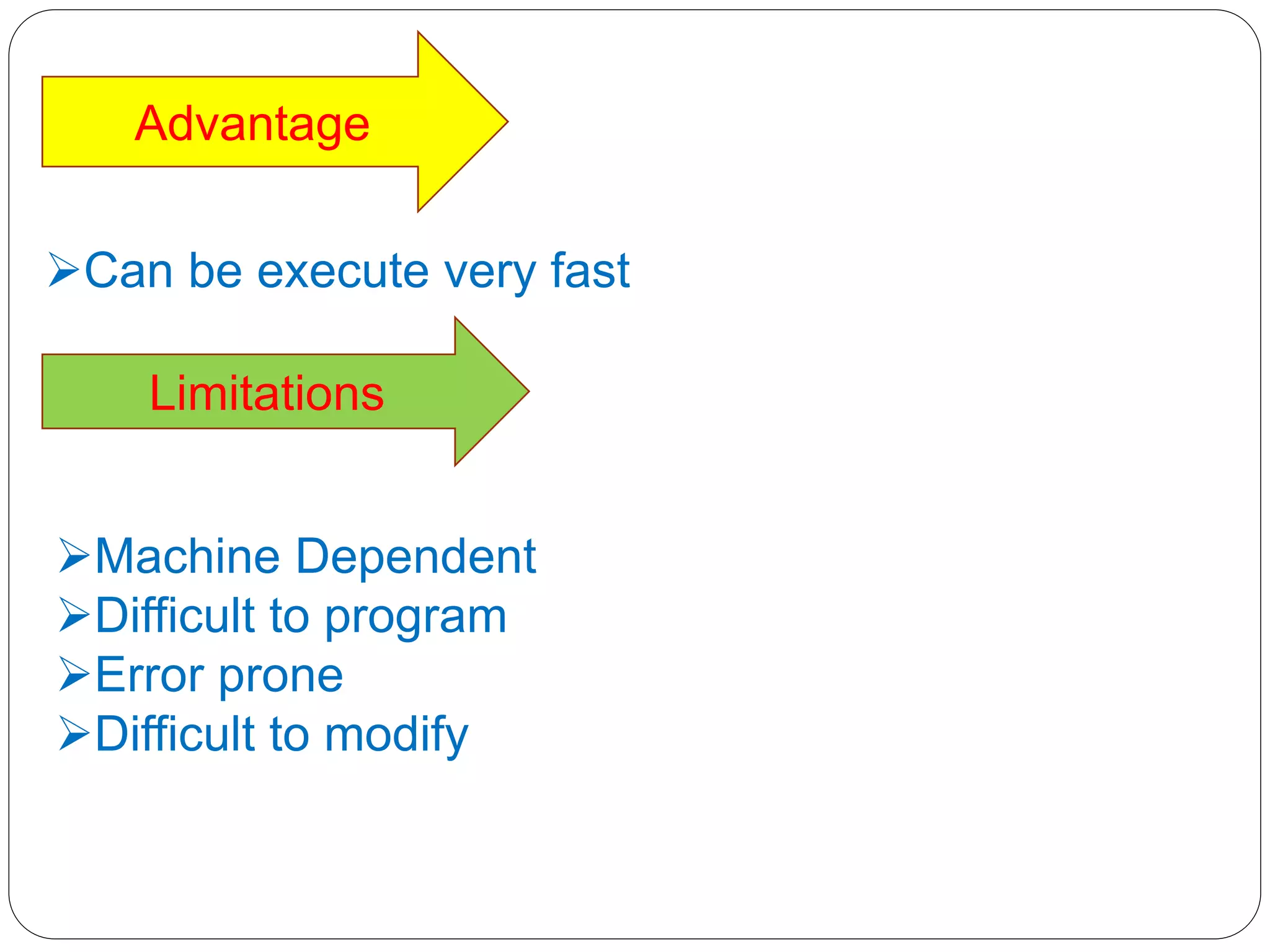
Advantage
Can be execute very fast
Limitations
Machine Dependent
Difficult to program
Error prone
Difficult to modify
Assembly / symbolic Language
 Using alphanumeric mnemonic codes instead of
numeric codes for the instruction in the instruction set.
E.g. using ADD instead of 1110(binary) or 14 (decimal)
for instruction to ADD .
 Allowing storage locations to be represented in the
form of alphanumeric addresses instead of numeric
addresses e.g. representing memory location
1000,1001 and 1002 as FRST, SCND and ANSR
respectively.
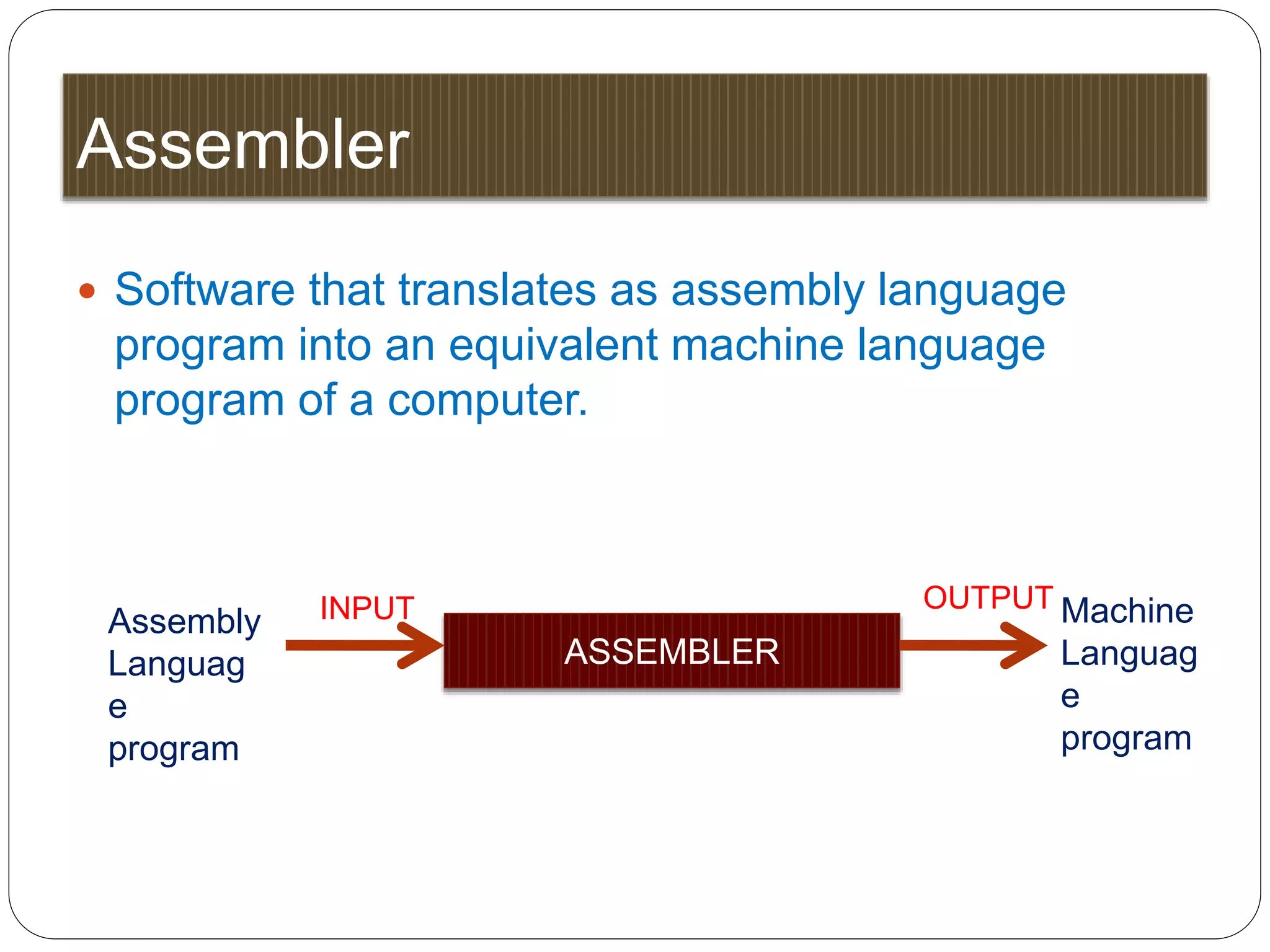
Assembler
 Software that translates as assembly language
program into an equivalent machine language
program of a computer.
ASSEMBLER
INPUT OUTPUT
Assembly
Languag
e
program
Machine
Languag
e
program
 Easier to understand and use.
 Easier to locate and correct errors.
 Easy to modify.
 No worry about addresses.
Advantages of Assembly language over Machine language
Disadvantages of Assembly language
• Machine dependent
•Knowledge of hardware required
 Machine independent.
Do not require programmers to know anything about
the internal structure of computer on which high-level
language programs will be executed.
Deal with high-level coding ,enabling the programmers
to write instruction using English words and familiar
mathematical symbols and expressions.
High-level language
Compiler
 Translator program (software) that translates a high
level language program into its equivalent machine
language program.
 Compiles a set o machine language instructions for
every program instruction in a high level language.
Interpreter
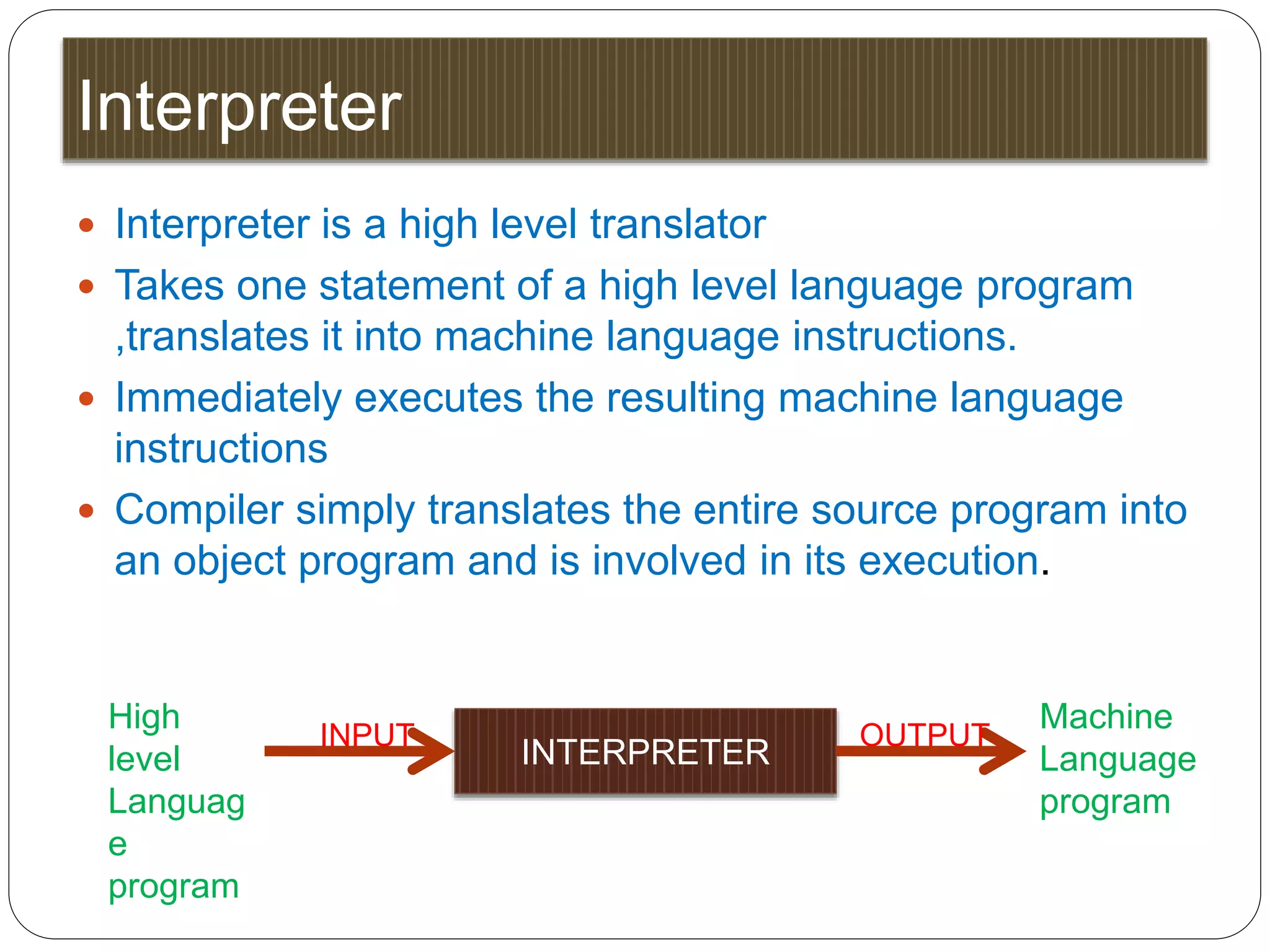
 Interpreter is a high level translator
 Takes one statement of a high level language program
,translates it into machine language instructions.
 Immediately executes the resulting machine language
instructions
 Compiler simply translates the entire source program into
an object program and is involved in its execution.
INTERPRETER
INPUT OUTPUT
High
level
Languag
e
program
Machine
Language
program
Advantages
 Machine independent.
 Easier to learn and use.
 Fever errors during program development.
 Better documentation.
 Easier to maintain.
Limitations
• Less flexibility to control the computer’s
CPU, memory and registers
THANK YOU

classification of computer language

  • 1.
    1. Machine levellanguage 2. Assembly language 3. High-level language Classification of computer language
  • 2.
    Machine level language Only language of a computer understand by it without using a translation program.  Normally written as strings of binary 1s and 0s
  • 3.
    A typical languageinstruction format  OPCODE tells the computer which operation to perform from the instruction set of the computer  OPERAND tells the address of the data on which the operation s to be performed
  • 4.
    Advantage Can be executevery fast Limitations Machine Dependent Difficult to program Error prone Difficult to modify
  • 5.
    Assembly / symbolicLanguage  Using alphanumeric mnemonic codes instead of numeric codes for the instruction in the instruction set. E.g. using ADD instead of 1110(binary) or 14 (decimal) for instruction to ADD .  Allowing storage locations to be represented in the form of alphanumeric addresses instead of numeric addresses e.g. representing memory location 1000,1001 and 1002 as FRST, SCND and ANSR respectively.
  • 6.
    Assembler  Software thattranslates as assembly language program into an equivalent machine language program of a computer. ASSEMBLER INPUT OUTPUT Assembly Languag e program Machine Languag e program
  • 7.
     Easier tounderstand and use.  Easier to locate and correct errors.  Easy to modify.  No worry about addresses. Advantages of Assembly language over Machine language Disadvantages of Assembly language • Machine dependent •Knowledge of hardware required
  • 8.
     Machine independent. Donot require programmers to know anything about the internal structure of computer on which high-level language programs will be executed. Deal with high-level coding ,enabling the programmers to write instruction using English words and familiar mathematical symbols and expressions. High-level language
  • 9.
    Compiler  Translator program(software) that translates a high level language program into its equivalent machine language program.  Compiles a set o machine language instructions for every program instruction in a high level language.
  • 10.
    Interpreter  Interpreter isa high level translator  Takes one statement of a high level language program ,translates it into machine language instructions.  Immediately executes the resulting machine language instructions  Compiler simply translates the entire source program into an object program and is involved in its execution. INTERPRETER INPUT OUTPUT High level Languag e program Machine Language program
  • 11.
    Advantages  Machine independent. Easier to learn and use.  Fever errors during program development.  Better documentation.  Easier to maintain. Limitations • Less flexibility to control the computer’s CPU, memory and registers
  • 12.