UNIT OPERATION 2

REPORTED BY: CANOY, CLAIRE
2B2- CHEMICAL ENGINEERING TECHNOLOGY
● The rotary dryer is a type of industrial dryer
employed to reduce or minimize the liquid
moisture content of the material by bringing it
in direct contact with a heated gas
• A cylindrical furnace slightly inclined to the
horizontal and rotated on suitable bearings;
moisture is removed by rising hot gases.
• rotary dryer for processing products with
high moisture content.
• Rotary dryers are suitable for drying a wide
range of materials
• It can be widely used to dry various
materials, and it is simple to be operated.
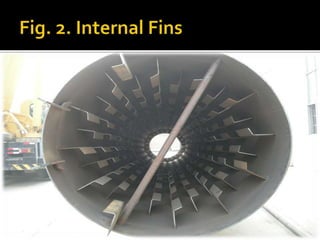
The dryer is made up of large rotating cylinder which
slopes slightly so that the discharged end is lower than the
material feed end in order to convey the material under
gravity. Material to be dried enters the dryer and as the dryer
rotates, the material is lifted up by a series of internal fins
lining the inner wall of the dryer. When materials fall back to
the bottom, it passes through the hot gas stream. In the
experiment , the gas stream moves towards the feed end from
the discharge end (counter current flow).Also the material
passes through the length of the dryer at nearly the wet - bulb
temperature.
A rotary dryer consists of a cylindrical shell, set
with its axis at a right angle to the horizontal and
mounted on rollers so that it can be rotated. The
material to be dried is fed to the high end of the dryer
and , by rotation of the dryer, usually assisted by
internal shelves of flight , is gradually advanced to the
lower end where it is discharged. The source of heat for
a rotary dryer is usually the hot air that circulates
through the using dryer.
The characteristic dimensions are :
● Rotary dryer ID = D =110 mm = 0.11 m
● Dryer length = 1500 mm = 1.5 m
● Pre - heating of air g 1.5 KW heater (2 nos)
● Air flow rate measurement by a pitot tube
● Solid feed : By a screw conveyor
● Inlet / Outlet air temperature by a hygrometer.
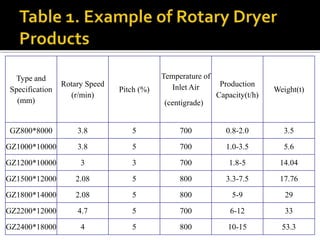
Type and
Specification
(mm)

Rotary Speed
(r/min)

GZ800*8000

3.8

5

GZ1000*10000

3.8

GZ1200*10000

Temperature of
Inlet Air

Production
Capacity(t/h)

Weight(t)

700

0.8-2.0

3.5

5

700

1.0-3.5

5.6

3

3

700

1.8-5

14.04

GZ1500*12000

2.08

5

800

3.3-7.5

17.76

GZ1800*14000

2.08

5

800

5-9

29

GZ2200*12000

4.7

5

700

6-12

33

GZ2400*18000

4

5

800

10-15

53.3

Pitch (%)

(centigrade)
Rotary Dryers have many applications
but are most commonly seen in the mineral
industry for drying sands, limestone, stones
and soil, ores, fertilizers, wood chips, coal,
iron sulphate, filter cakes, sewage sludge, etc

ROTARY DRYER

  • 1.
    UNIT OPERATION 2 REPORTEDBY: CANOY, CLAIRE 2B2- CHEMICAL ENGINEERING TECHNOLOGY
  • 2.
    ● The rotarydryer is a type of industrial dryer employed to reduce or minimize the liquid moisture content of the material by bringing it in direct contact with a heated gas
  • 3.
    • A cylindricalfurnace slightly inclined to the horizontal and rotated on suitable bearings; moisture is removed by rising hot gases. • rotary dryer for processing products with high moisture content.
  • 4.
    • Rotary dryersare suitable for drying a wide range of materials • It can be widely used to dry various materials, and it is simple to be operated.
  • 5.
    The dryer ismade up of large rotating cylinder which slopes slightly so that the discharged end is lower than the material feed end in order to convey the material under gravity. Material to be dried enters the dryer and as the dryer rotates, the material is lifted up by a series of internal fins lining the inner wall of the dryer. When materials fall back to the bottom, it passes through the hot gas stream. In the experiment , the gas stream moves towards the feed end from the discharge end (counter current flow).Also the material passes through the length of the dryer at nearly the wet - bulb temperature.
  • 6.
    A rotary dryerconsists of a cylindrical shell, set with its axis at a right angle to the horizontal and mounted on rollers so that it can be rotated. The material to be dried is fed to the high end of the dryer and , by rotation of the dryer, usually assisted by internal shelves of flight , is gradually advanced to the lower end where it is discharged. The source of heat for a rotary dryer is usually the hot air that circulates through the using dryer.
  • 7.
    The characteristic dimensionsare : ● Rotary dryer ID = D =110 mm = 0.11 m ● Dryer length = 1500 mm = 1.5 m ● Pre - heating of air g 1.5 KW heater (2 nos) ● Air flow rate measurement by a pitot tube ● Solid feed : By a screw conveyor ● Inlet / Outlet air temperature by a hygrometer.
  • 10.
    Type and Specification (mm) Rotary Speed (r/min) GZ800*8000 3.8 5 GZ1000*10000 3.8 GZ1200*10000 Temperatureof Inlet Air Production Capacity(t/h) Weight(t) 700 0.8-2.0 3.5 5 700 1.0-3.5 5.6 3 3 700 1.8-5 14.04 GZ1500*12000 2.08 5 800 3.3-7.5 17.76 GZ1800*14000 2.08 5 800 5-9 29 GZ2200*12000 4.7 5 700 6-12 33 GZ2400*18000 4 5 800 10-15 53.3 Pitch (%) (centigrade)
  • 11.
    Rotary Dryers havemany applications but are most commonly seen in the mineral industry for drying sands, limestone, stones and soil, ores, fertilizers, wood chips, coal, iron sulphate, filter cakes, sewage sludge, etc