UNIT OPERATION 3

PREPARED BY: CANOY, CLAIRE E.
YR & SEC.
: 2B2-CHEMICAL ENGINEERING TECHNOLOGY
INTRODUCTION
● A shell and tube heat exchanger is a
class of heat exchanger designs
● It is the most common type of heat
exchanger in oil refineries and other
large chemical processes, and is suited for
higher-pressure applications.
INTRODUCTION
● As its name implies, this type of heat
exchanger consists of a shell (a
large pressure vessel) with a bundle of
tubes inside it.
● The set of tubes is called a tube bundle,
and may be composed of several types of
tubes: plain, longitudinally finned, etc.
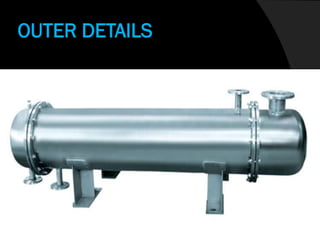
OUTER DETAILS
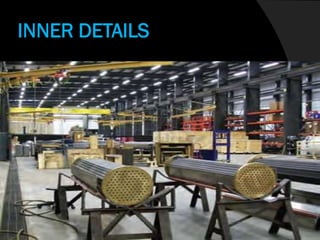
INNER DETAILS
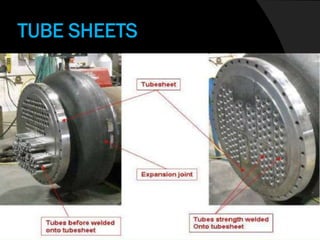
TUBE SHEETS
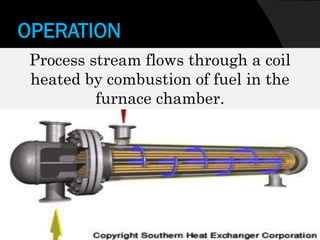
OPERATION
Process stream flows through a coil
heated by combustion of fuel in the
furnace chamber.
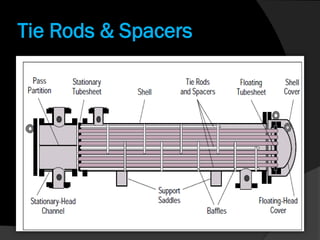
Tie Rods & Spacers
APPLICATION and USES
● The simple design of a shell and tube
heat exchanger makes it an ideal cooling
solution for a wide variety of applications.
●One of the most common applications is
the cooling of hydraulic fluid and oil in
engines, transmissions and hydraulic
power packs.
APPLICATION and USES
● With the right choice of materials they
can also be used to cool or heat other
mediums, such as swimming pool water or
charge air.

● One of the big advantages of using a shell
and tube heat exchanger is that they are
often easy to service, particularly with
models where a floating tube bundle (where
the tube plates are not welded to the outer
shell) is available.

SHELL & TUBE HEAT EXCHANGER

  • 1.
    UNIT OPERATION 3 PREPAREDBY: CANOY, CLAIRE E. YR & SEC. : 2B2-CHEMICAL ENGINEERING TECHNOLOGY
  • 2.
    INTRODUCTION ● A shelland tube heat exchanger is a class of heat exchanger designs ● It is the most common type of heat exchanger in oil refineries and other large chemical processes, and is suited for higher-pressure applications.
  • 3.
    INTRODUCTION ● As itsname implies, this type of heat exchanger consists of a shell (a large pressure vessel) with a bundle of tubes inside it. ● The set of tubes is called a tube bundle, and may be composed of several types of tubes: plain, longitudinally finned, etc.
  • 4.
  • 5.
  • 6.
  • 7.
    OPERATION Process stream flowsthrough a coil heated by combustion of fuel in the furnace chamber.
  • 8.
    Tie Rods &Spacers
  • 9.
    APPLICATION and USES ●The simple design of a shell and tube heat exchanger makes it an ideal cooling solution for a wide variety of applications. ●One of the most common applications is the cooling of hydraulic fluid and oil in engines, transmissions and hydraulic power packs.
  • 10.
    APPLICATION and USES ●With the right choice of materials they can also be used to cool or heat other mediums, such as swimming pool water or charge air. ● One of the big advantages of using a shell and tube heat exchanger is that they are often easy to service, particularly with models where a floating tube bundle (where the tube plates are not welded to the outer shell) is available.