Methods of Drying
DEFINITION
The removal of liquid from solids by vaporization with the aid of
heat
 Removal of water
 Or removal of other solvent
 By vaporization
 From a solid ,semisolid or liquid
IMPORTANCE OF DRYING IN AYURVEDA
 Sushka dravyas are invariably used in ayurveda
 Sushkam naveenam …
 Except --Guduchi kutajo vasa …….
APPLICATIONS
Raw drug
Storage
Preservation
Size reduction
Main formulations
Churna
Kalka etc
ANCIENT TIME
 Natural air drying
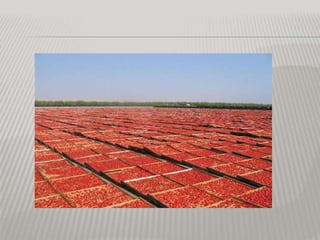
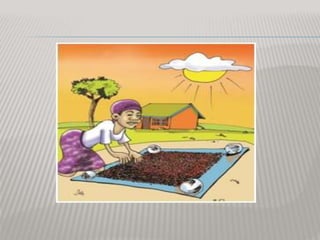
 Drying under sunlight
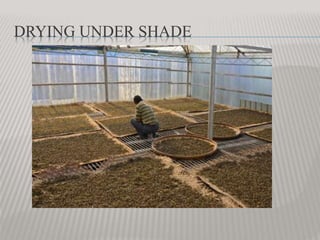
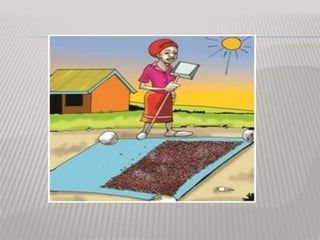
 Drying under shade
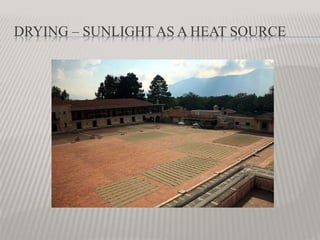
DRYING – SUNLIGHT AS A HEAT SOURCE
DRYING UNDER SHADE
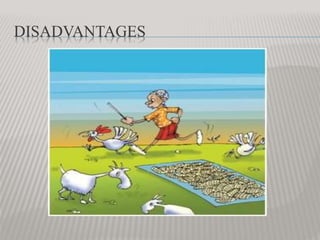
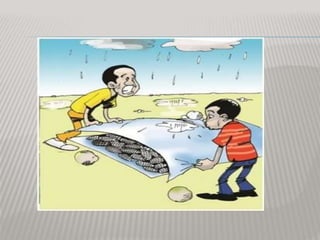
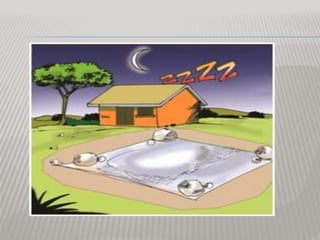
DISADVANTAGES
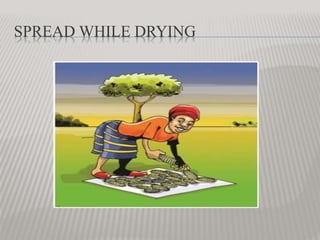
SPREAD WHILE DRYING
CLASSIFICATION OF DRYERS
 Convection/direct drying/Adiabatic dryers
 Indirect /contact drying /Non Adiabatic dryers
 Dielectric drying
 Freeze drying or lyophilization
 Super critical drying
 Natural air drying
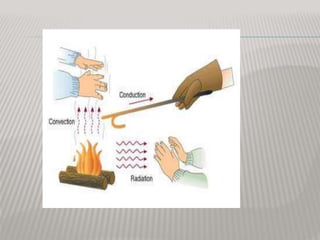
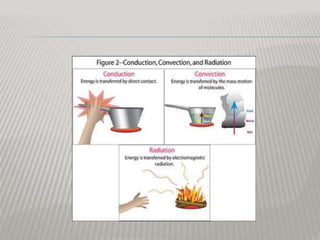
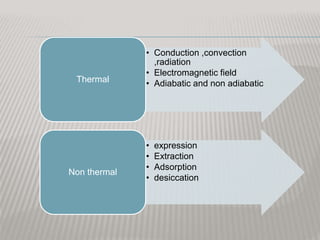
• Conduction ,convection
,radiation
• Electromagnetic field
• Adiabatic and non adiabaticThermal
• expression
• Extraction
• Adsorption
• desiccation
Non thermal
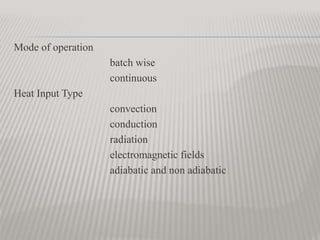
Mode of operation
batch wise
continuous
Heat Input Type
convection
conduction
radiation
electromagnetic fields
adiabatic and non adiabatic
State of material in dryer
stationary
moving ,agitated, dispersed
Operating pressure
vacuum
atmospheric
Drying medium
air
superheated steam
flue gases
Drying temperature
below boiling point
above boiling point
below freezing point
Relative motion between drying medium and drying solids
co-current
counter current
mixed flow
Number of stages
single
multistage
“Dried” – the final product must be solid
In the form of a continuous sheet
Long pieces (wood)
Particles (cornflakes)
Powder (sand , salt , milk powder)
EQUIPMENT USED IN DRYING PROCESSES
 Tray dryers
 Tunnel dryers
 Rotary dryers
 Fluidized bed dryers
 Vacuum dryers
 Freeze dryers
 Drum dryer
 Spray dryer
It is used for chemicals of all types
1. Pharmaceuticals
2. Biological materials
3. Foods
4. Detergents
5. Wood
6. Minerals
7. Industrial wastes.
THE MATERIALS DRIED MAY BE IN THE FORM OF
1. Thin solutions
2. Suspensions
3. Slurries
4. Pastes
5. Granular materials
6. Bulk objects
7. Fibers
8. Sheets.
 Drying evaporate
a few ounces/ hour - 10 tons / hour in a single dryer.
 Drying temperatures may be as high as
 1400°F (760°C),
 as low as -40°F (-40°C) in freeze drying
 Dryers range in size
 small cabinets to spray dryers
 steel towers 100 ft (30 m) high and
 30 ft (9 m) in diameter.
Removal of moisture from liquids -Distillation
done in distillation columns
Removal of moisture from gases – Adsorption
done in Adsorbers
PROCESS INVOLVED
1.A source of heat
2.An agent to remove vapour
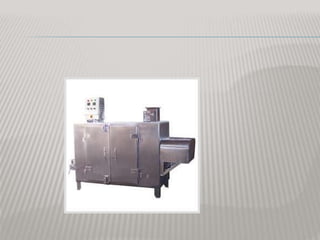
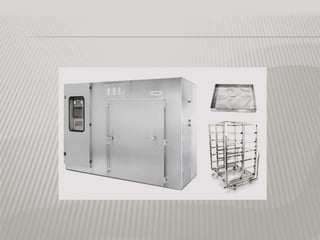
TRAY DRYER
Box dryer /Hot air Oven Dryer
Simplest form
A cabinet with a heater a the bottom
No control of heat transfer and humidity
TRAY DRYER
 when the production rate is small
 used to dry wide range of materials,
 but have high labor requirement for loading and unloading the
materials
 Drying operation is slow
 Requires several hours to complete drying of one batch.
 With indirect heating often the dryers may be operated under
vacuum.
 Vapor from the solid may be removed by an ejector or vacuum
pump
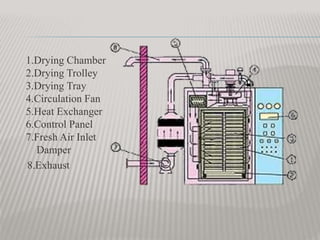
1.Drying Chamber
2.Drying Trolley
3.Drying Tray
4.Circulation Fan
5.Heat Exchanger
6.Control Panel
7.Fresh Air Inlet
Damper
8.Exhaust
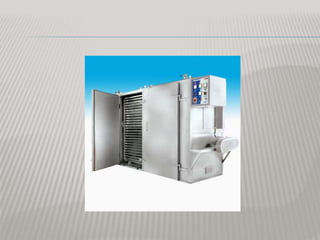
TUNNEL DRYER
 Modification of tray dryer
 Oven is replaced by a tunnel
 Receives damp material at one end and discharges the dried
product at the other end
 Batch wise or continuously
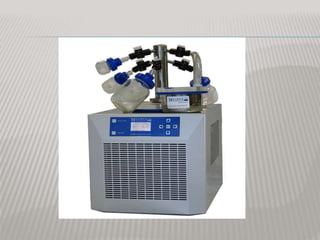
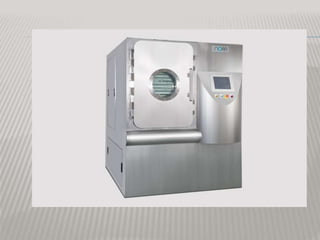
FREEZE DRYER
 Processing of food
 Pharmaceuticals
 Diagnostic kits
 Restoration of water
 Manufacture of sulfur coated vials
 Removal of water vapours from a frozen solution by sublimation
 Hence sublimation drying / lyophilization
COMPONENTS OF A FREEZE DRYER
1.A chamber for vacuum drying
2.A vacuum source
3.A heat source
4.A vapour removal system
4 STAGES
 Pretreatment
 Freezing
 Primary drying
 Secondary drying
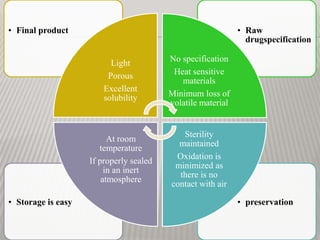
• preservation• Storage is easy
• Raw
drugspecification
• Final product
Light
Porous
Excellent
solubility
No specification
Heat sensitive
materials
Minimum loss of
volatile material
Sterility
maintained
Oxidation is
minimized as
there is no
contact with air
At room
temperature
If properly sealed
in an inert
atmosphere
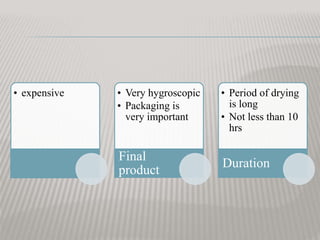
• expensive • Very hygroscopic
• Packaging is
very important
Final
product
• Period of drying
is long
• Not less than 10
hrs
Duration
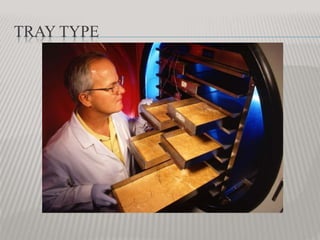
TRAY TYPE
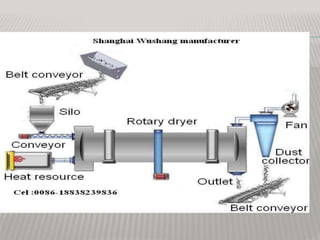
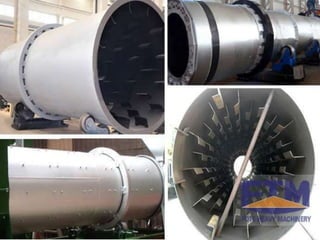
ROTARY DRYER
 Modified form of the tunnel dryer
 Material is passed through a rotating cylinder
 Consist of a cylindrical shell -10m
 10 rpm
 Heating is done by direct or indirect method
PRINCIPLE
 The sleeve column structure of the rotary drying machine or
rotary dryer shortens the dryer length in multiple times.
 As the heat delivery area is greatly reduced, so is the heat
consumption. However, the multiplication heat exchange area
increases the heat performance.
FEATURES
 High mechanization
 Strong production capability
 Continuous operation
 Excellent and simple structure
 Steady operating process under resistance of the drum
 Easy operation
 Little malfunction
 Low maintenance cost
 Power consumption
 Wide application range
 Good drying effect.
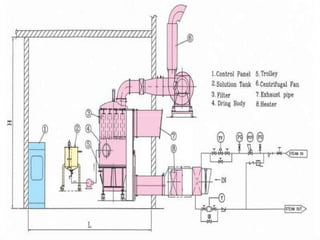
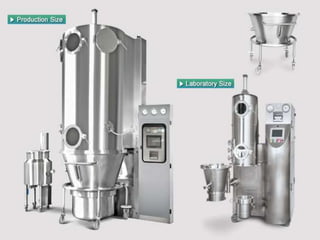
FLUIDISED BED DRYER
 Theory
 Gas is allowed to flow upward through a bed of solid particles
 At a velocity greater than the settling velocity of the particles
 The particles are partially suspended in the gas stream
 Resultant mixture of solid and gas behave like a liquid
 The solids are said to be fluidised
OPERATION
 Due to induced draft created by specially designed heavy-duty fan,
the atmospheric air is drawn through air filter
 The filtered air is then heated to the required temperature by
electric/ steam radiator
 The hot air passes through the product container and the product is
dried by air fluidization
 The air circulation is controlled by damper
 The filter bag prevents fine particles from carrying over to exhaust
air stream
SELECTION
 Selection of capacity of fluid bed dryer depends upon
 Bulk density,
 Drying temperature
 Moisture contents of wet material to be dried
 Pharmaceutical granules with 20-25% moisture can be dried in 30-
45 minutes at 800 C approximately
SALIENT FEATURES
 Better productivity and lesser drying time with less handling
 More hygienic
 Uniform drying at low temperature
 Models available from 2 Kg to 300 Kg capacity
DIELECTRIC DRYING
 Or microwave drying
 Microwaves are converted in to internal heat
 The heating effect produced –interaction of rapidly oscillating
electric field
 Lead to rapid heating
APPLICATION
 Drying of thermo labile materials
 Vitamins
 Enzymes
 Protein
 flavour
DRYERS USED FOR SOLUTIONS AND
SUSPENTIONS
1.Drum dryer
2.Spray dryer
ROTARY DRUM DRYER
 Rotary drum dryer/ dryer drum
 drum drying equipment or cylinder dryer, is the most common
and widely used drying equipment.
 There are two kinds of drum dryer:
 direct heat transmission rotary drum dryer
 indirect heat transmission rotary drum dryer.
PRINCIPLE
 Materials are sent from the higher section of the drum and contact
with hot air.
 With the rotation of cylinder, the material flow down to the lower
end with the effect of gravity
 discharge after drying.
 Since the rotary drum dryer is working under negative pressure
conditions, feeding and discharge end use seals to prevent air
leakage.
 1. High productivity.
 2. Easy operation.
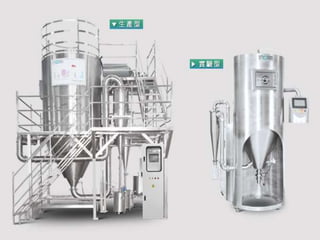
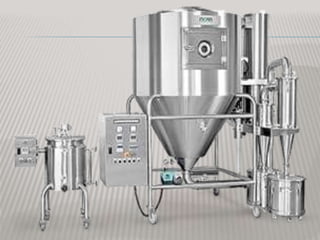
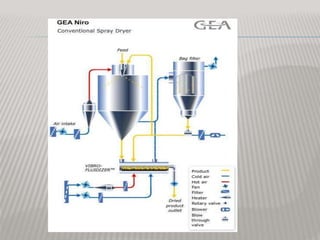
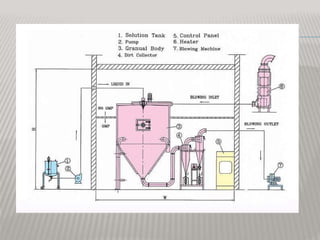
SPRAY DRYER
 Both for solutions and suspensions
 Useful for drying thermo labile substances
 Milk
 Soap
 Detergents
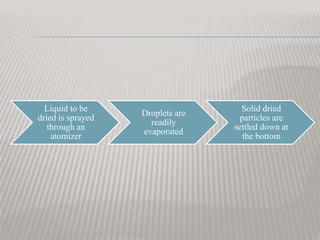
Liquid to be
dried is sprayed
through an
atomizer
Droplets are
readily
evaporated
Solid dried
particles are
settled down at
the bottom
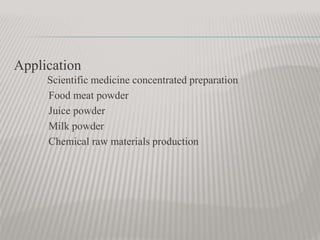
Application
Scientific medicine concentrated preparation
Food meat powder
Juice powder
Milk powder
Chemical raw materials production
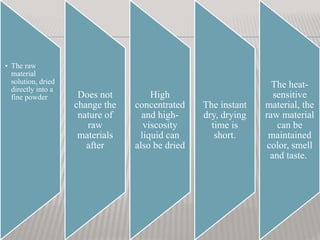
Features
• The raw
material
solution, dried
directly into a
fine powder Does not
change the
nature of
raw
materials
after
High
concentrated
and high-
viscosity
liquid can
also be dried
The instant
dry, drying
time is
short.
The heat-
sensitive
material, the
raw material
can be
maintained
color, smell
and taste.
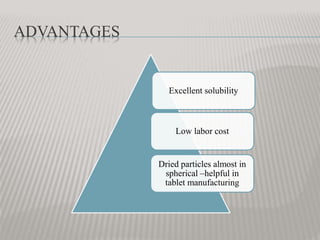
ADVANTAGES
Excellent solubility
Low labor cost
Dried particles almost in
spherical –helpful in
tablet manufacturing
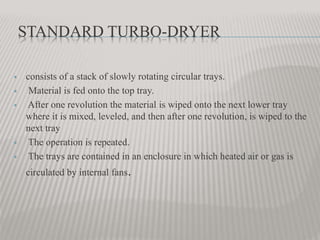
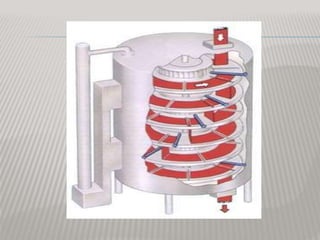
STANDARD TURBO-DRYER
 consists of a stack of slowly rotating circular trays.
 Material is fed onto the top tray.
 After one revolution the material is wiped onto the next lower tray
where it is mixed, leveled, and then after one revolution, is wiped to the
next tray
 The operation is repeated.
 The trays are contained in an enclosure in which heated air or gas is
circulated by internal fans.
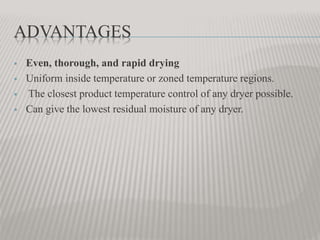
ADVANTAGES
 Even, thorough, and rapid drying
 Uniform inside temperature or zoned temperature regions.
 The closest product temperature control of any dryer possible.
 Can give the lowest residual moisture of any dryer.
 Easy startup and operation on different materials
 Low maintenance costs because of its unparalleled reliability
 Low energy costs.
 Low labor costs
 Can use any heating medium: steam, gas, electricity, oil, high
temperature oil or waste gas from other operations
.
 Does low temperature drying as low as 60°F without vacuum or
up to 1200°F
 Available in laboratory sizes, package units, and large field erected
sizes
 Manufactured in a wide range of materials
 Vertical construction, little space requirements.
Methods of dying 1 (1)

Methods of dying 1 (1)

  • 1.
  • 2.
    DEFINITION The removal ofliquid from solids by vaporization with the aid of heat
  • 3.
     Removal ofwater  Or removal of other solvent  By vaporization  From a solid ,semisolid or liquid
  • 4.
    IMPORTANCE OF DRYINGIN AYURVEDA  Sushka dravyas are invariably used in ayurveda  Sushkam naveenam …  Except --Guduchi kutajo vasa …….
  • 5.
  • 6.
    ANCIENT TIME  Naturalair drying  Drying under sunlight  Drying under shade
  • 7.
    DRYING – SUNLIGHTAS A HEAT SOURCE
  • 9.
  • 10.
  • 11.
  • 16.
    CLASSIFICATION OF DRYERS Convection/direct drying/Adiabatic dryers  Indirect /contact drying /Non Adiabatic dryers  Dielectric drying  Freeze drying or lyophilization  Super critical drying  Natural air drying
  • 19.
    • Conduction ,convection ,radiation •Electromagnetic field • Adiabatic and non adiabaticThermal • expression • Extraction • Adsorption • desiccation Non thermal
  • 20.
    Mode of operation batchwise continuous Heat Input Type convection conduction radiation electromagnetic fields adiabatic and non adiabatic
  • 21.
    State of materialin dryer stationary moving ,agitated, dispersed Operating pressure vacuum atmospheric Drying medium air superheated steam flue gases Drying temperature below boiling point above boiling point below freezing point
  • 22.
    Relative motion betweendrying medium and drying solids co-current counter current mixed flow Number of stages single multistage
  • 23.
    “Dried” – thefinal product must be solid In the form of a continuous sheet Long pieces (wood) Particles (cornflakes) Powder (sand , salt , milk powder)
  • 24.
    EQUIPMENT USED INDRYING PROCESSES  Tray dryers  Tunnel dryers  Rotary dryers  Fluidized bed dryers  Vacuum dryers  Freeze dryers  Drum dryer  Spray dryer
  • 25.
    It is usedfor chemicals of all types 1. Pharmaceuticals 2. Biological materials 3. Foods 4. Detergents 5. Wood 6. Minerals 7. Industrial wastes.
  • 26.
    THE MATERIALS DRIEDMAY BE IN THE FORM OF 1. Thin solutions 2. Suspensions 3. Slurries 4. Pastes 5. Granular materials 6. Bulk objects 7. Fibers 8. Sheets.
  • 27.
     Drying evaporate afew ounces/ hour - 10 tons / hour in a single dryer.  Drying temperatures may be as high as  1400°F (760°C),  as low as -40°F (-40°C) in freeze drying  Dryers range in size  small cabinets to spray dryers  steel towers 100 ft (30 m) high and  30 ft (9 m) in diameter.
  • 28.
    Removal of moisturefrom liquids -Distillation done in distillation columns Removal of moisture from gases – Adsorption done in Adsorbers
  • 29.
    PROCESS INVOLVED 1.A sourceof heat 2.An agent to remove vapour
  • 30.
    TRAY DRYER Box dryer/Hot air Oven Dryer Simplest form A cabinet with a heater a the bottom No control of heat transfer and humidity
  • 31.
    TRAY DRYER  whenthe production rate is small  used to dry wide range of materials,  but have high labor requirement for loading and unloading the materials  Drying operation is slow  Requires several hours to complete drying of one batch.  With indirect heating often the dryers may be operated under vacuum.  Vapor from the solid may be removed by an ejector or vacuum pump
  • 35.
    1.Drying Chamber 2.Drying Trolley 3.DryingTray 4.Circulation Fan 5.Heat Exchanger 6.Control Panel 7.Fresh Air Inlet Damper 8.Exhaust
  • 36.
    TUNNEL DRYER  Modificationof tray dryer  Oven is replaced by a tunnel  Receives damp material at one end and discharges the dried product at the other end  Batch wise or continuously
  • 37.
    FREEZE DRYER  Processingof food  Pharmaceuticals  Diagnostic kits  Restoration of water  Manufacture of sulfur coated vials
  • 40.
     Removal ofwater vapours from a frozen solution by sublimation  Hence sublimation drying / lyophilization
  • 41.
    COMPONENTS OF AFREEZE DRYER 1.A chamber for vacuum drying 2.A vacuum source 3.A heat source 4.A vapour removal system
  • 42.
    4 STAGES  Pretreatment Freezing  Primary drying  Secondary drying
  • 43.
    • preservation• Storageis easy • Raw drugspecification • Final product Light Porous Excellent solubility No specification Heat sensitive materials Minimum loss of volatile material Sterility maintained Oxidation is minimized as there is no contact with air At room temperature If properly sealed in an inert atmosphere
  • 44.
    • expensive •Very hygroscopic • Packaging is very important Final product • Period of drying is long • Not less than 10 hrs Duration
  • 45.
  • 46.
    ROTARY DRYER  Modifiedform of the tunnel dryer  Material is passed through a rotating cylinder  Consist of a cylindrical shell -10m  10 rpm  Heating is done by direct or indirect method
  • 49.
    PRINCIPLE  The sleevecolumn structure of the rotary drying machine or rotary dryer shortens the dryer length in multiple times.  As the heat delivery area is greatly reduced, so is the heat consumption. However, the multiplication heat exchange area increases the heat performance.
  • 50.
    FEATURES  High mechanization Strong production capability  Continuous operation  Excellent and simple structure  Steady operating process under resistance of the drum  Easy operation  Little malfunction  Low maintenance cost  Power consumption  Wide application range  Good drying effect.
  • 51.
    FLUIDISED BED DRYER Theory  Gas is allowed to flow upward through a bed of solid particles  At a velocity greater than the settling velocity of the particles  The particles are partially suspended in the gas stream  Resultant mixture of solid and gas behave like a liquid  The solids are said to be fluidised
  • 52.
    OPERATION  Due toinduced draft created by specially designed heavy-duty fan, the atmospheric air is drawn through air filter  The filtered air is then heated to the required temperature by electric/ steam radiator  The hot air passes through the product container and the product is dried by air fluidization  The air circulation is controlled by damper  The filter bag prevents fine particles from carrying over to exhaust air stream
  • 53.
    SELECTION  Selection ofcapacity of fluid bed dryer depends upon  Bulk density,  Drying temperature  Moisture contents of wet material to be dried  Pharmaceutical granules with 20-25% moisture can be dried in 30- 45 minutes at 800 C approximately
  • 54.
    SALIENT FEATURES  Betterproductivity and lesser drying time with less handling  More hygienic  Uniform drying at low temperature  Models available from 2 Kg to 300 Kg capacity
  • 57.
    DIELECTRIC DRYING  Ormicrowave drying  Microwaves are converted in to internal heat  The heating effect produced –interaction of rapidly oscillating electric field  Lead to rapid heating
  • 58.
    APPLICATION  Drying ofthermo labile materials  Vitamins  Enzymes  Protein  flavour
  • 60.
    DRYERS USED FORSOLUTIONS AND SUSPENTIONS 1.Drum dryer 2.Spray dryer
  • 61.
    ROTARY DRUM DRYER Rotary drum dryer/ dryer drum  drum drying equipment or cylinder dryer, is the most common and widely used drying equipment.  There are two kinds of drum dryer:  direct heat transmission rotary drum dryer  indirect heat transmission rotary drum dryer.
  • 62.
    PRINCIPLE  Materials aresent from the higher section of the drum and contact with hot air.  With the rotation of cylinder, the material flow down to the lower end with the effect of gravity  discharge after drying.  Since the rotary drum dryer is working under negative pressure conditions, feeding and discharge end use seals to prevent air leakage.  1. High productivity.  2. Easy operation.
  • 63.
    SPRAY DRYER  Bothfor solutions and suspensions  Useful for drying thermo labile substances  Milk  Soap  Detergents
  • 64.
    Liquid to be driedis sprayed through an atomizer Droplets are readily evaporated Solid dried particles are settled down at the bottom
  • 68.
    Application Scientific medicine concentratedpreparation Food meat powder Juice powder Milk powder Chemical raw materials production
  • 69.
  • 70.
    • The raw material solution,dried directly into a fine powder Does not change the nature of raw materials after High concentrated and high- viscosity liquid can also be dried The instant dry, drying time is short. The heat- sensitive material, the raw material can be maintained color, smell and taste.
  • 72.
    ADVANTAGES Excellent solubility Low laborcost Dried particles almost in spherical –helpful in tablet manufacturing
  • 73.
    STANDARD TURBO-DRYER  consistsof a stack of slowly rotating circular trays.  Material is fed onto the top tray.  After one revolution the material is wiped onto the next lower tray where it is mixed, leveled, and then after one revolution, is wiped to the next tray  The operation is repeated.  The trays are contained in an enclosure in which heated air or gas is circulated by internal fans.
  • 75.
    ADVANTAGES  Even, thorough,and rapid drying  Uniform inside temperature or zoned temperature regions.  The closest product temperature control of any dryer possible.  Can give the lowest residual moisture of any dryer.
  • 76.
     Easy startupand operation on different materials  Low maintenance costs because of its unparalleled reliability  Low energy costs.  Low labor costs  Can use any heating medium: steam, gas, electricity, oil, high temperature oil or waste gas from other operations .
  • 77.
     Does lowtemperature drying as low as 60°F without vacuum or up to 1200°F  Available in laboratory sizes, package units, and large field erected sizes  Manufactured in a wide range of materials  Vertical construction, little space requirements.