ALKADIENES
(diolefines, dienes)
 Acyclic

acid or unbranched hydrocarbons
having two carbon-carbon double bonds.

 Many

compounds contain two or more
double bonds and are known as
alkadienes, alkatrienes, alkatetraenes, and
so on, the suffix denoting the number of
double bonds.
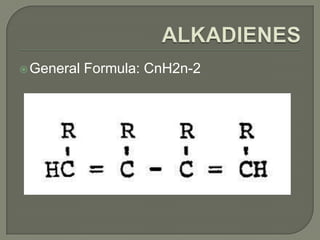
 General

Formula: CnH2n-2


Alkadienes are classified into three
categories on the basis of location of
two double bonds.
A

further classification is used for the
relationships of the double bonds to
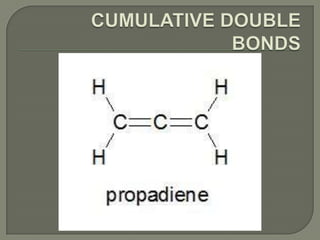
each other. Thus 1,2-alkadienes and
similar substances are said to have
cumulated double bonds:
1,3-Alkadienes

and other compounds
with alternating double and single
bonds are said to have conjugated
double bonds:
1,3-pentadiene


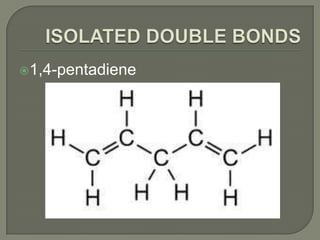
Molecules having two double bonds
separated by more than one single bond.

 Compounds

with double bonds that are
neither cumulated nor conjugated are
classified as having isolated double-bond
systems:
1,4-pentadiene
Botryococcus

braunii


Cumulated dienes- are reactive
compounds and their are in the
first place theoretical
importance.


Conjugated dienes-Physical properties of
the conjugated dienes are similar than
simple alkenes. Produce from diol for
example.
Chemical properties of the conjugated
dienes are similar than simple alkenes
too. So the first reaction the addition.


Isolated dienes- Similar
properties to monoolefins.
APPLICATIONS OF
ALKADIENES
APPLICATIONS OF ALKADIENES


Used in the production of tires
APPLICATIONS OF ALKADIENES


Used in the production of
plastics
SAFETY AND HAZARDS
SAFETY AND HAZARDS
Possible hazard: May cause cancer.
Rubber compounds generally do not pose
a health hazard unless heated. Under
normal conditions of processing and
use, exposure to the chemical
constituents in this product is unlikely. Skin
(dermal) contact is possible.
SAFETY AND HAZARDS
POTENTIAL HEALTH EFFECTS
HAZARDS
Inhalation: Dust may irritate throat and respiratory
system and cause coughing. Lower concentrations of fumes
from burning this material may cause respiratory irritation
with coughing, difficulty in breathing, or shortness of breath.
High concentrations may cause severe irritation, pulmonary
edema (body fluid in the lungs) with coughing, wheezing, and
abnormal lung sounds. Symptoms may progress to severe
shortness of breath, central nervous system effects, and
collapse. Symptoms may be delayed and progressively
worsen.
SAFETY AND HAZARDS
POTENTIAL HEALTH EFFECTS

SAFETY
Inhalation: If fumes from heated product are inhaled:
Move into fresh air and keep at rest. Move the
exposed person to fresh air at once. For breathing
difficulties oxygen may be necessary. If breathing
stops, provide artificial respiration. Consult a physician
for specific advice.
SAFETY AND HAZARDS
HAZARDS

Eye Contact:.
Decomposition products may cause eye irritation. Contact
with hot material can cause thermal burns which
may result in permanent damage.
SAFETY
Eye Contact: Dust in the eyes: Flush eyes thoroughly
with water, taking care to rinse under eyelids. If
irritation persists, continue flushing for 15
minutes, rinsing from time to time under eyelids. If
discomfort
continues, consult a physician.
SAFETY AND HAZARDS
HAZARDS
Skin Contact: Prolonged or repeated skin contact may
cause irritation. Individuals sensitive to small
amounts of curing agents present may develop a rash
(dermatitis). Contact with hot material can cause
thermal burns which may result in permanent damage.
SAFETY
Skin Contact: Remove contaminated clothing immediately
and wash skin with soap and water. If
irritation occurs, get medical assistance.

ALKADIENES

  • 1.
  • 2.
     Acyclic acid orunbranched hydrocarbons having two carbon-carbon double bonds.  Many compounds contain two or more double bonds and are known as alkadienes, alkatrienes, alkatetraenes, and so on, the suffix denoting the number of double bonds.
  • 3.
  • 4.
     Alkadienes are classifiedinto three categories on the basis of location of two double bonds.
  • 5.
    A further classification isused for the relationships of the double bonds to each other. Thus 1,2-alkadienes and similar substances are said to have cumulated double bonds:
  • 7.
    1,3-Alkadienes and other compounds withalternating double and single bonds are said to have conjugated double bonds:
  • 8.
  • 9.
     Molecules having twodouble bonds separated by more than one single bond.  Compounds with double bonds that are neither cumulated nor conjugated are classified as having isolated double-bond systems:
  • 10.
  • 11.
  • 12.
     Cumulated dienes- arereactive compounds and their are in the first place theoretical importance.
  • 13.
     Conjugated dienes-Physical propertiesof the conjugated dienes are similar than simple alkenes. Produce from diol for example. Chemical properties of the conjugated dienes are similar than simple alkenes too. So the first reaction the addition.
  • 14.
  • 16.
  • 17.
    APPLICATIONS OF ALKADIENES  Usedin the production of tires
  • 18.
    APPLICATIONS OF ALKADIENES  Usedin the production of plastics
  • 19.
  • 20.
    SAFETY AND HAZARDS Possiblehazard: May cause cancer. Rubber compounds generally do not pose a health hazard unless heated. Under normal conditions of processing and use, exposure to the chemical constituents in this product is unlikely. Skin (dermal) contact is possible.
  • 21.
    SAFETY AND HAZARDS POTENTIALHEALTH EFFECTS HAZARDS Inhalation: Dust may irritate throat and respiratory system and cause coughing. Lower concentrations of fumes from burning this material may cause respiratory irritation with coughing, difficulty in breathing, or shortness of breath. High concentrations may cause severe irritation, pulmonary edema (body fluid in the lungs) with coughing, wheezing, and abnormal lung sounds. Symptoms may progress to severe shortness of breath, central nervous system effects, and collapse. Symptoms may be delayed and progressively worsen.
  • 22.
    SAFETY AND HAZARDS POTENTIALHEALTH EFFECTS SAFETY Inhalation: If fumes from heated product are inhaled: Move into fresh air and keep at rest. Move the exposed person to fresh air at once. For breathing difficulties oxygen may be necessary. If breathing stops, provide artificial respiration. Consult a physician for specific advice.
  • 23.
    SAFETY AND HAZARDS HAZARDS EyeContact:. Decomposition products may cause eye irritation. Contact with hot material can cause thermal burns which may result in permanent damage. SAFETY Eye Contact: Dust in the eyes: Flush eyes thoroughly with water, taking care to rinse under eyelids. If irritation persists, continue flushing for 15 minutes, rinsing from time to time under eyelids. If discomfort continues, consult a physician.
  • 24.
    SAFETY AND HAZARDS HAZARDS SkinContact: Prolonged or repeated skin contact may cause irritation. Individuals sensitive to small amounts of curing agents present may develop a rash (dermatitis). Contact with hot material can cause thermal burns which may result in permanent damage. SAFETY Skin Contact: Remove contaminated clothing immediately and wash skin with soap and water. If irritation occurs, get medical assistance.