Rome: The Republic
Romulus and Remus Twin brothers are the sons of a princess and a god (Mars, god of war) Floated down the Tiber River, she-wolf finds them, cares for them When older they both decide to create their own cities They disagree on the location and Romulus killed Remus Therefore he is the first king of Rome (named after himself)
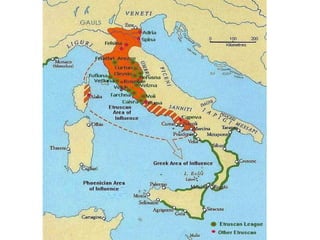
The Etruscans Learned their language from the Greeks, passed it on the Romans Very similar to the Greeks Evidence of some equality between men and women City-states Traded frequently, Rome developed as the center of trade
 
Republic Overthrow last king in 509BC Republic: People choose some officials to represent them Consists of 3 main groups: The Senate 300 men, originally only  patricians (landowners) Magistrates 2  consuls  (highest position)control army, 1 yr term The Assembly Made of common people called  plebeians
Republic continued… How did they all get chosen? Consuls (2) chosen by the Assembly (plebeians), Consuls were always members of the Senate Senators chosen by Consuls (whenever a seat was available
Conflict of the Orders This is the struggle for power between the two classes of people (patricians and plebeians) Plebeians often protested by  secession  (withdrawal from the Roman state during times of crisis) 494BC Plebeians secede, create their own assembly
More Conflict of Orders 450BC  Twelve Tables  created Over the next 200 years laws were passed that allowed plebeians and patricians to marry  Also, laws made it mandatory that many of the most important positions have a plebeian -ex: 1 of the consuls MUST be a plebeian
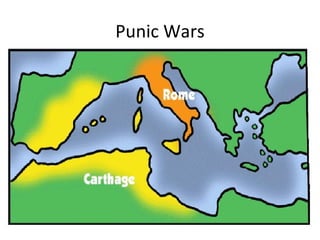
Punic Wars
First Punic War 264-241BC Carthage controlled three islands off the coast of Italy. That was too close for comfort. No one wins after 20 years  Rome will leave Carthage alone in exchange for Sicily (1 of the 3 islands) Rome says ok, also takes Corsica and Sardinia  Carthage is upset, they try to attack Spain Hannibal  is the son of that Carthaginian general
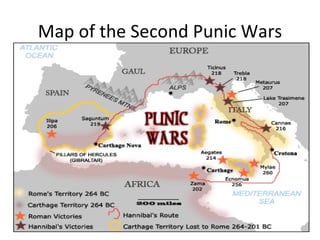
Map of the Second Punic Wars
Second Punic Wars 218-202BC Hannibal uses surprise attack, marches through the  Pyrenees and Alps  (90,000 men, 12,000 cavalry and 37 Elephants) Cost him 1/3 of army, but he wins battles all through Italy (never captures Rome!) Rome attacks Carthage without Hannibal there to defend it Carthage signs a peace treaty, then breaks it Rome is furious and destroys Carthage in 3 rd  war (pours salt in the Earth)
The Gracchi and Reform After fighting Carthage Rome is the master of the Mediterranean, they call it “Mare Nostrum” They believed in the idea of  imperialism , which is controlling foreign lands and people This created huge homes called  latifundias As the poor farmers lose their land two brothers stand up for them: Tiberius and Gaius Gracchus ( The Gracchi )
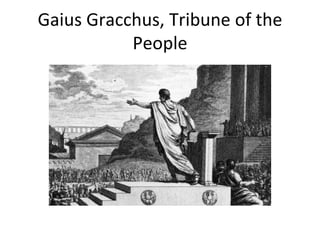
Gaius Gracchus, Tribune of the People
Gracchi Reform Around 133BC Tiberius calls for government to give more land to the plebeians This angered the Senate and violence erupts in the streets The Gracchi brothers were killed during this violence
Cicero Served as a consul, “Father of his Country” Traveled around Greece, North Africa and Asia “ Words cannot express…how bitterly we are hated among foreign nations because of the… outrageous conduct of the men whom we have sent to govern them.” Determined to save the Republic, so became an ally with  Pompey , a powerful general
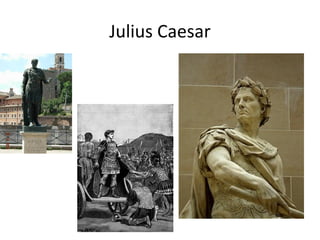
Julius Caesar
Caesar He was a powerful general in the army His first big accomplishment was the  conquest of Gaul  (modern day France) 58-50BC Another important general, Pompey is upset Caesar does not disband his army when Senate asks, he attacks Rome instead Caesar defeats Pompey ( Veni, vidi, vici! ) After this victory the Senate must make him a  dictator  (48-44BC)
Caesar’s Reforms Caesar decided to change the government by: Employing the jobless Giving land to the poor Making provinces Granting citizenship to more people Creating the Roman/Julian calendar
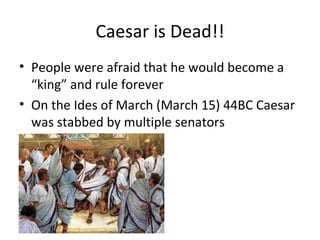
Caesar is Dead!! People were afraid that he would become a “king” and rule forever On the Ides of March (March 15) 44BC Caesar was stabbed by multiple senators
Rome is in Chaos Marc Antony (general) and Octavian (grandnephew) fight over control of Rome 31BC  Octavian wins and takes the name of  Augustus (the Exalted One) This marks the end of the Republic and is the beginning of the Roman Empire.
Journal 10/17/08 What are the 12 Tables? What were the Gracchi concerned with? How was Julius Caesar killed? What date is considered the end of the Roman Republic? Explain the significance of “Veni, Vidi, Vici”
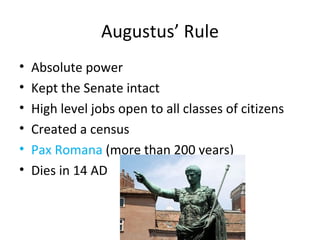
Augustus’ Rule Absolute power Kept the Senate intact High level jobs open to all classes of citizens Created a census Pax Romana  (more than 200 years) Dies in 14 AD
Expanding the Empire Romans ruled their citizens with Civil Law Law of Nations used for both citizens and non-citizens “ Innocent until proven guilty” Rome continues to fight other people, expand empire
 
 
Jews and Romans Jews attack Jerusalem, Romans then destroy Galilee, take slaves  4 years later Romans destroy the Temple Many Jews leaving Judea This is the beginning of an almost 2000 year assault against Jews
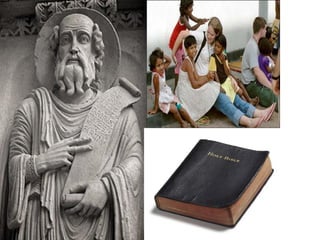
- Was a Jew  -Called himself the Son of God -Was betrayed and arrested -Then crucified and rose from the dead
 
Christianity Grows The religion appeals to the sick, the poor and oppressed “ The blood of the martyrs is the seed of the Church.” In 313 AD emperor  Constantine  issued  Edict of Milan Can to be Christian or pagan, not religious freedom He also creates a new capital in  Constantinople
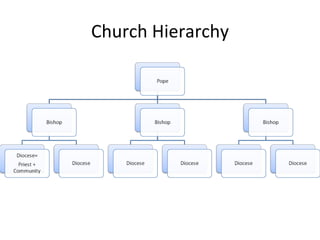
Church Hierarchy
Decline of Rome
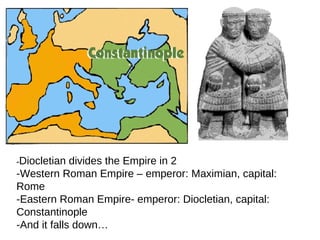
- Diocletian divides the Empire in 2 -Western Roman Empire – emperor: Maximian, capital: Rome -Eastern Roman Empire- emperor: Diocletian, capital: Constantinople -And it falls down…
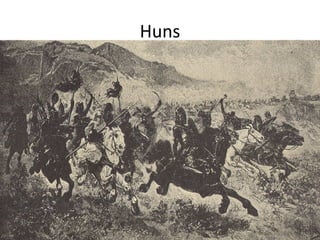
Huns
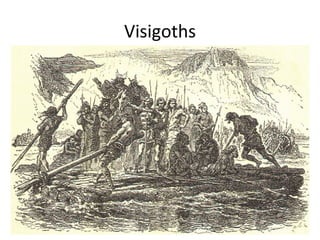
Visigoths
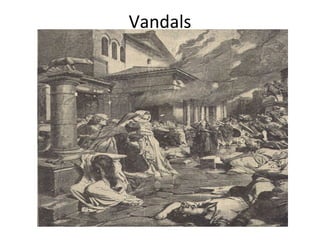
Vandals
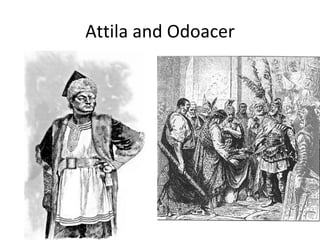
Attila and Odoacer
476 AD Fall of Roman Empire (Western Rome)

Rome

  • 1.
  • 2.
    Romulus and RemusTwin brothers are the sons of a princess and a god (Mars, god of war) Floated down the Tiber River, she-wolf finds them, cares for them When older they both decide to create their own cities They disagree on the location and Romulus killed Remus Therefore he is the first king of Rome (named after himself)
  • 3.
    The Etruscans Learnedtheir language from the Greeks, passed it on the Romans Very similar to the Greeks Evidence of some equality between men and women City-states Traded frequently, Rome developed as the center of trade
  • 4.
  • 5.
    Republic Overthrow lastking in 509BC Republic: People choose some officials to represent them Consists of 3 main groups: The Senate 300 men, originally only patricians (landowners) Magistrates 2 consuls (highest position)control army, 1 yr term The Assembly Made of common people called plebeians
  • 6.
    Republic continued… Howdid they all get chosen? Consuls (2) chosen by the Assembly (plebeians), Consuls were always members of the Senate Senators chosen by Consuls (whenever a seat was available
  • 7.
    Conflict of theOrders This is the struggle for power between the two classes of people (patricians and plebeians) Plebeians often protested by secession (withdrawal from the Roman state during times of crisis) 494BC Plebeians secede, create their own assembly
  • 8.
    More Conflict ofOrders 450BC Twelve Tables created Over the next 200 years laws were passed that allowed plebeians and patricians to marry Also, laws made it mandatory that many of the most important positions have a plebeian -ex: 1 of the consuls MUST be a plebeian
  • 9.
  • 10.
    First Punic War264-241BC Carthage controlled three islands off the coast of Italy. That was too close for comfort. No one wins after 20 years Rome will leave Carthage alone in exchange for Sicily (1 of the 3 islands) Rome says ok, also takes Corsica and Sardinia Carthage is upset, they try to attack Spain Hannibal is the son of that Carthaginian general
  • 11.
    Map of theSecond Punic Wars
  • 12.
    Second Punic Wars218-202BC Hannibal uses surprise attack, marches through the Pyrenees and Alps (90,000 men, 12,000 cavalry and 37 Elephants) Cost him 1/3 of army, but he wins battles all through Italy (never captures Rome!) Rome attacks Carthage without Hannibal there to defend it Carthage signs a peace treaty, then breaks it Rome is furious and destroys Carthage in 3 rd war (pours salt in the Earth)
  • 13.
    The Gracchi andReform After fighting Carthage Rome is the master of the Mediterranean, they call it “Mare Nostrum” They believed in the idea of imperialism , which is controlling foreign lands and people This created huge homes called latifundias As the poor farmers lose their land two brothers stand up for them: Tiberius and Gaius Gracchus ( The Gracchi )
  • 14.
  • 15.
    Gracchi Reform Around133BC Tiberius calls for government to give more land to the plebeians This angered the Senate and violence erupts in the streets The Gracchi brothers were killed during this violence
  • 16.
    Cicero Served asa consul, “Father of his Country” Traveled around Greece, North Africa and Asia “ Words cannot express…how bitterly we are hated among foreign nations because of the… outrageous conduct of the men whom we have sent to govern them.” Determined to save the Republic, so became an ally with Pompey , a powerful general
  • 17.
  • 18.
    Caesar He wasa powerful general in the army His first big accomplishment was the conquest of Gaul (modern day France) 58-50BC Another important general, Pompey is upset Caesar does not disband his army when Senate asks, he attacks Rome instead Caesar defeats Pompey ( Veni, vidi, vici! ) After this victory the Senate must make him a dictator (48-44BC)
  • 19.
    Caesar’s Reforms Caesardecided to change the government by: Employing the jobless Giving land to the poor Making provinces Granting citizenship to more people Creating the Roman/Julian calendar
  • 20.
    Caesar is Dead!!People were afraid that he would become a “king” and rule forever On the Ides of March (March 15) 44BC Caesar was stabbed by multiple senators
  • 21.
    Rome is inChaos Marc Antony (general) and Octavian (grandnephew) fight over control of Rome 31BC Octavian wins and takes the name of Augustus (the Exalted One) This marks the end of the Republic and is the beginning of the Roman Empire.
  • 22.
    Journal 10/17/08 Whatare the 12 Tables? What were the Gracchi concerned with? How was Julius Caesar killed? What date is considered the end of the Roman Republic? Explain the significance of “Veni, Vidi, Vici”
  • 23.
    Augustus’ Rule Absolutepower Kept the Senate intact High level jobs open to all classes of citizens Created a census Pax Romana (more than 200 years) Dies in 14 AD
  • 24.
    Expanding the EmpireRomans ruled their citizens with Civil Law Law of Nations used for both citizens and non-citizens “ Innocent until proven guilty” Rome continues to fight other people, expand empire
  • 25.
  • 26.
  • 27.
    Jews and RomansJews attack Jerusalem, Romans then destroy Galilee, take slaves 4 years later Romans destroy the Temple Many Jews leaving Judea This is the beginning of an almost 2000 year assault against Jews
  • 28.
    - Was aJew -Called himself the Son of God -Was betrayed and arrested -Then crucified and rose from the dead
  • 29.
  • 30.
    Christianity Grows Thereligion appeals to the sick, the poor and oppressed “ The blood of the martyrs is the seed of the Church.” In 313 AD emperor Constantine issued Edict of Milan Can to be Christian or pagan, not religious freedom He also creates a new capital in Constantinople
  • 31.
  • 32.
  • 33.
    - Diocletian dividesthe Empire in 2 -Western Roman Empire – emperor: Maximian, capital: Rome -Eastern Roman Empire- emperor: Diocletian, capital: Constantinople -And it falls down…
  • 34.
  • 35.
  • 36.
  • 37.
  • 38.
    476 AD Fallof Roman Empire (Western Rome)