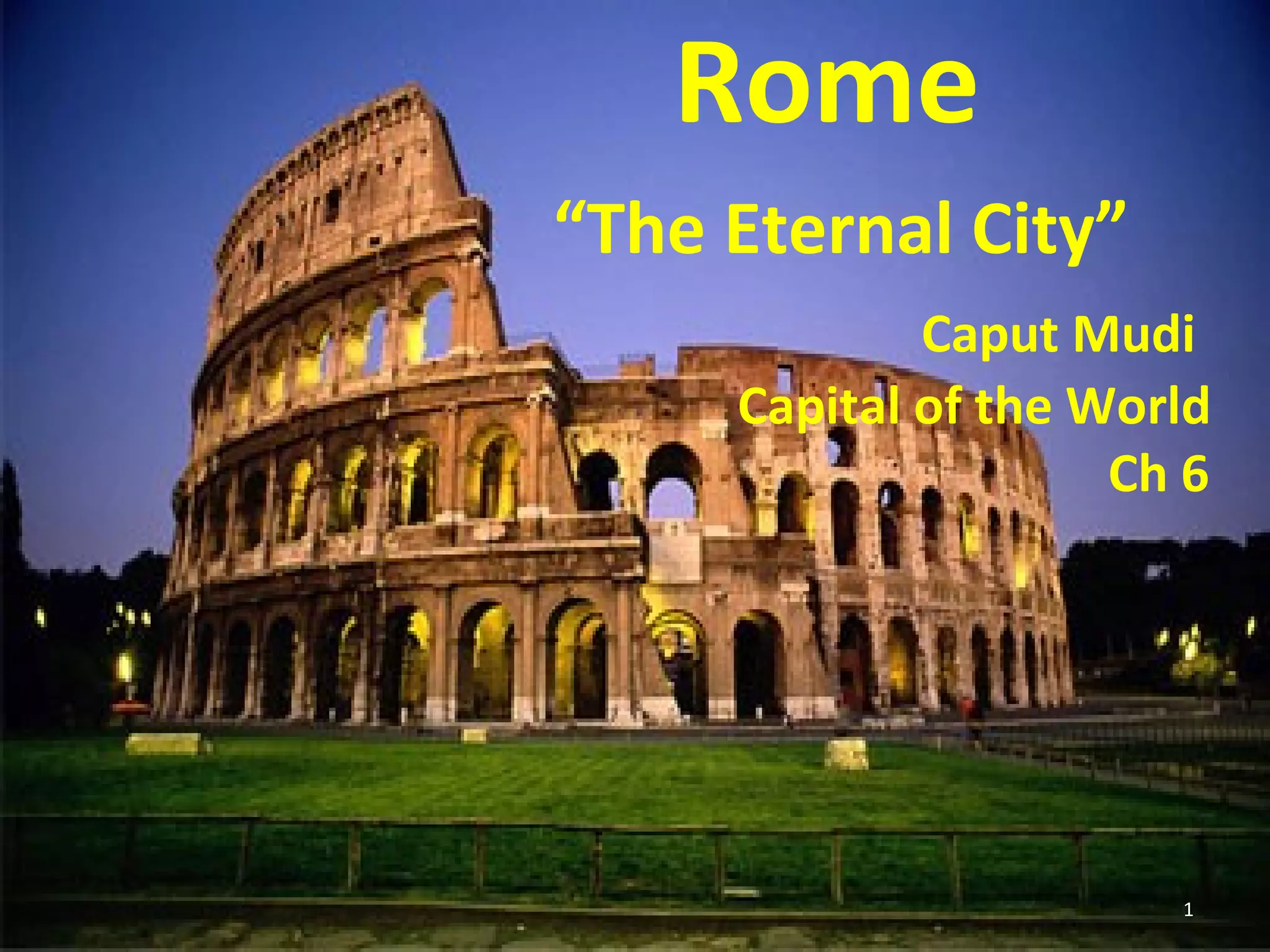
Rome
“The Eternal City”
Caput Mudi
Capital of the World
Ch 6

1
Famous Roman Sights
Buildings / Architecture
The Romans were the Great Builders of the Ancient World
Look these Sights up Online

Explain & find at least one fact about the famous structure

•
•
•
•
•
•
•
•

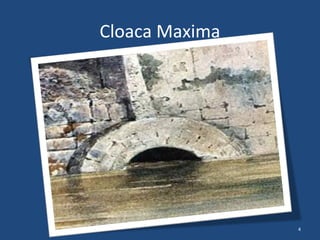
The Cloaca Maxima
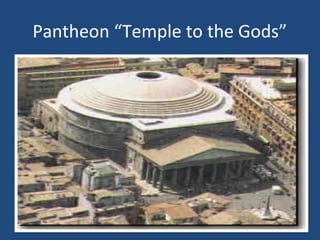
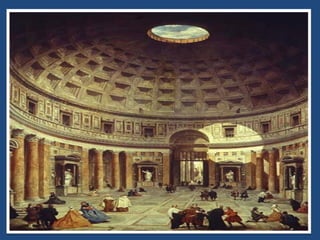
The Pantheon
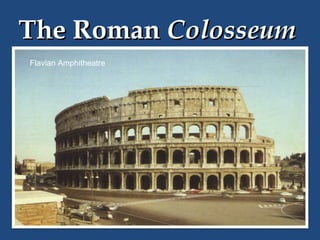
Flavian Amphitheatre – Colosseum
Circus Maximus
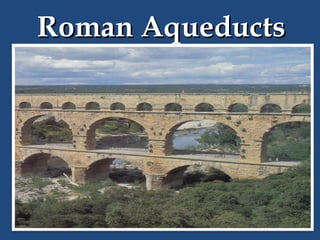
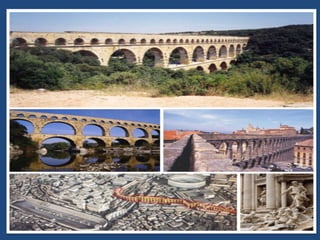
Aqueducts
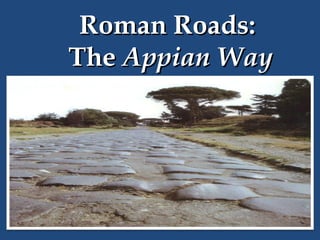
The Appian Way – Via Appia
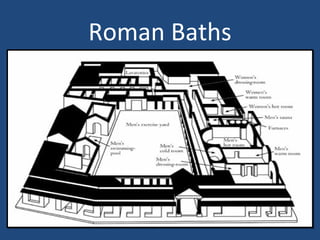
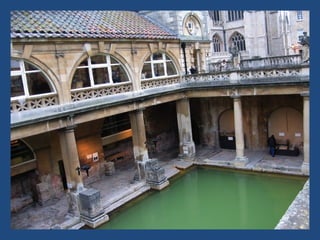
Roman Baths
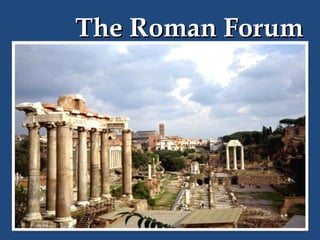
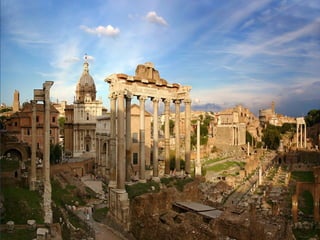
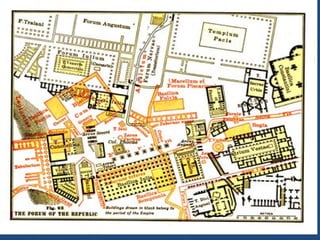
The Forum
3
Cloaca Maxima

4
Pantheon “Temple to the Gods”
The Roman Colosseum
Flavian Amphitheatre
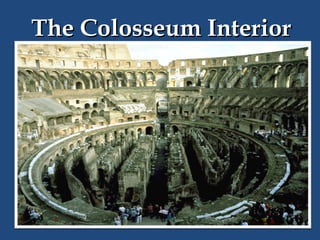
The Colosseum Interior
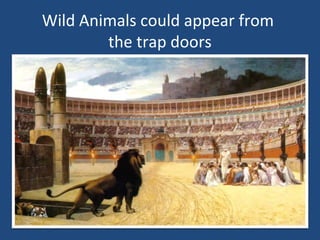
Wild Animals could appear from
the trap doors
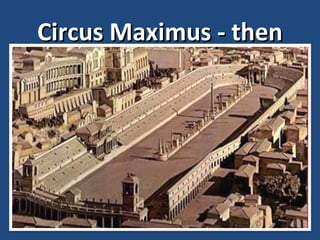
Circus Maximus - then
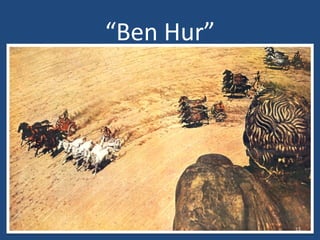
“Ben Hur”

11
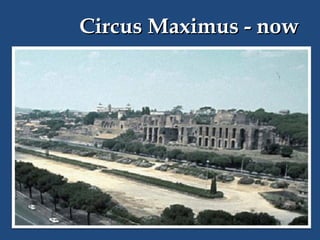
Circus Maximus - now
Roman Aqueducts
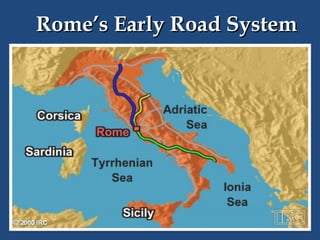
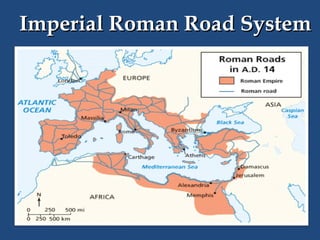
Rome’s Early Road System
Roman Roads:
The Appian Way
Roman Baths
The Roman Forum
20
21
Roman Society &
The End of the Republic
PART 1 --- # 32
- Government of the Republic
- Roman Society
- Civil Wars
- Julius Caesar
Roman Republic : 509 – 27 BCE
22
Gaius Julius Caesar
• Gaius – Name
• Julius – Clan Name
groups of families with a:
Common Mythological Ancestor
• Caesar – Family Name
The Individual wasn’t important
- Family / Clan / State : That was Important

23
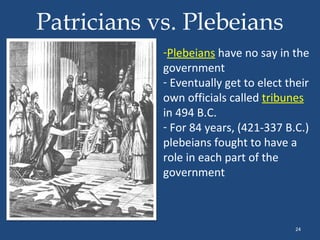
Patricians vs. Plebeians
-Plebeians have no say in the
government
- Eventually get to elect their
own officials called tribunes
in 494 B.C.
- For 84 years, (421-337 B.C.)
plebeians fought to have a
role in each part of the
government

24
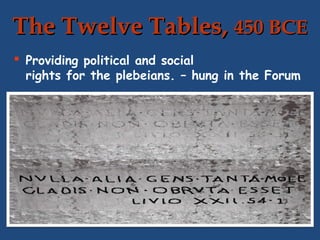
The Twelve Tables, 450 BCE
 Providing political and social
rights for the plebeians. – hung in the Forum
Social Structures

-A man was the head of the household and his wife
and children did not question his authority
- Paterfamilias: Family Father
-Over centuries, women received more rights.
These included:
-Owning property
-Running businesses
-All children were taught to learn to read and write
-Wealthy had private tutors for their children
26
Economics
-Conquests brought much wealth to Rome
-Wealthy families bought huge estates called latifundia.
-Romans forced the people they conquered to work as
slaves on the latifundia
-Slave labor hurt the small farmers because it cost them
more to produce food, and the price was driven down by
the immense quantities coming into Rome
-Farmers fell into debt, sold their land, and moved to the
city looking for work
-gap between rich and poor widens=riots and chaos
27
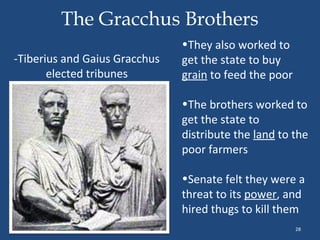
The Gracchus Brothers
-Tiberius and Gaius Gracchus
elected tribunes

•They also worked to
get the state to buy
grain to feed the poor
•The brothers worked to
get the state to
distribute the land to the
poor farmers
•Senate felt they were a
threat to its power, and
hired thugs to kill them
28
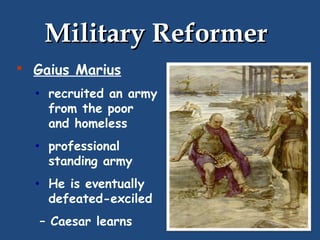
Military Reformer
 Gaius Marius

•

recruited an army
from the poor
and homeless

•

professional
standing army

•

He is eventually
defeated-exciled

– Caesar learns
Republic to Empire
-Civil wars break out to decide who should hold power.
The senate wanted to keep the status quo; political
leaders wanted to weaken the senate and enact reforms
-Slave uprisings throughout the republic “Spartacus”
-Armies became loyal to their commanders because they
gave them benefits such as captured land / Paid them
Personally - Caesar

30
The First Triumvirate
 Julius Caesar
 Marcus Licinius Crassus
 Gaius Magnus Pompey
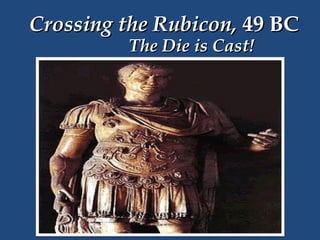
Crossing the Rubicon, 49 BC
The Die is Cast!
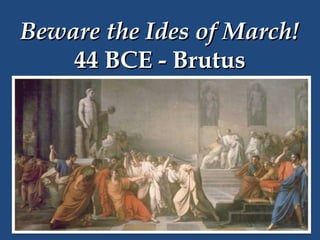
Beware the Ides of March!
44 BCE - Brutus
The Second Triumvirate
 Octavian
 Marc Antony
 Marcus Lepidus

Battle of Philippi
Battle of Actium
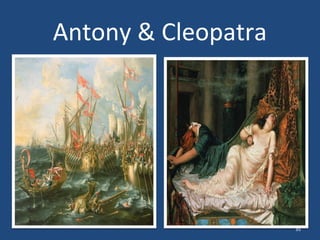
Antony & Cleopatra

35
The Pax Romana
“Roman Peace”
27 BCE – 180 AD
PART 2
- Period of Unprecedented Stability & Prosperity
- Initiated by Octavian (Caesar Augustus)
- The Principate
- Princips “First among Equals”
- “I found Rome Brick & I turned it Marble”
37
38
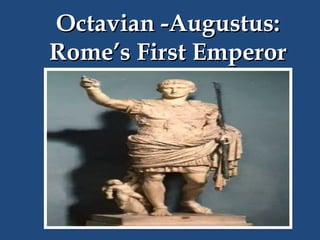
Octavian -Augustus:
Rome’s First Emperor
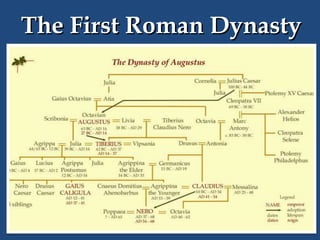
The First Roman Dynasty
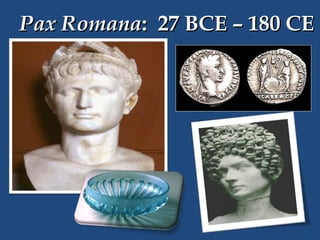
Pax Romana: 27 BCE – 180 CE
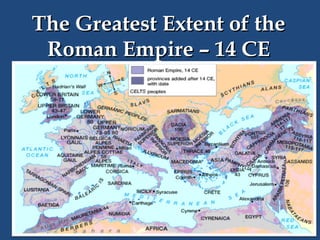
The Greatest Extent of the
Roman Empire – 14 CE
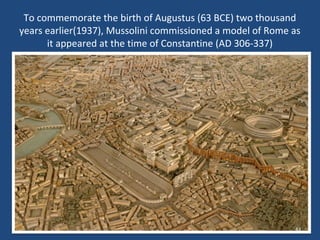
To commemorate the birth of Augustus (63 BCE) two thousand
years earlier(1937), Mussolini commissioned a model of Rome as
it appeared at the time of Constantine (AD 306-337)

43
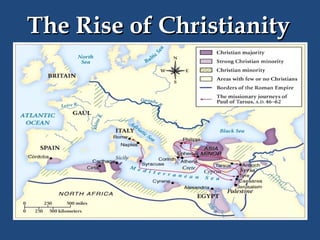
The Rise of Christianity
PART 3
•Jesus / St. Paul

44
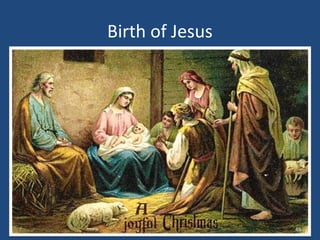
Birth of Jesus

45
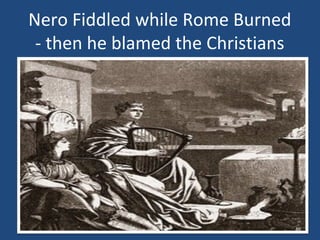
Nero Fiddled while Rome Burned
- then he blamed the Christians

46
The Rise of Christianity
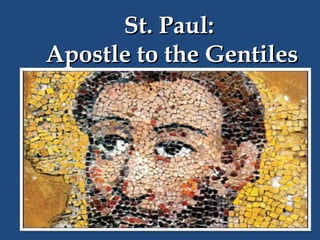
St. Paul:
Apostle to the Gentiles
Imperial Roman Road System
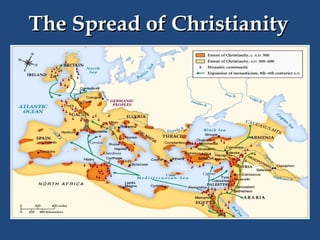
The Spread of Christianity
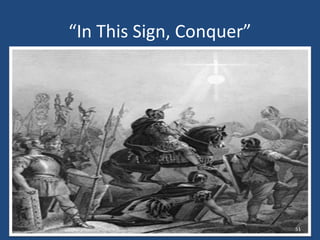
“In This Sign, Conquer”

51
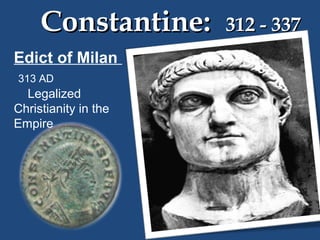
Constantine:
Edict of Milan
313 AD

Legalized
Christianity in the
Empire

312 - 337
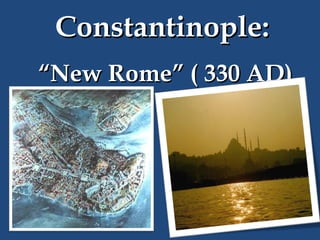
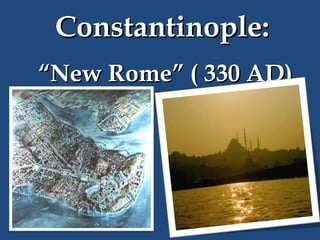
Constantinople:
“New Rome” ( 330 AD)
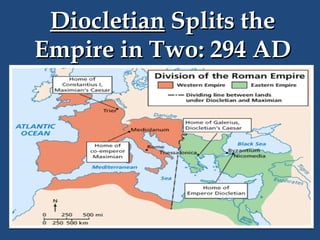
Diocletian Splits the
Empire in Two: 294 AD
Constantinople:
“New Rome” ( 330 AD)
The Later Roman Empire
PART 4
The Fall of Rome & The Legacy of Rome

56
Reasons for the Fall of Rome
1. War with the Germanic Tribes & Huns
- Germans were pushed by the Huns
- the still glowing splendor of Rome
Maximus “Rome is the Light, the rest of the
World is Darkness”
2. Internal Strife in Rome
- civil war / unstable & poor leadership(corruption)

3. Loss of Moral Standards & Virtues
- Commodus

57
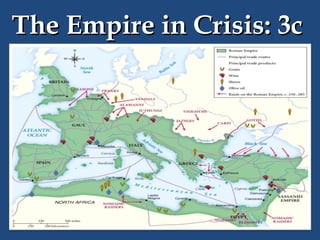
The Empire in Crisis: 3c
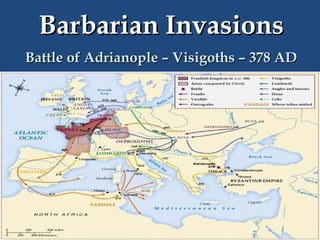
Barbarian Invasions
Battle of Adrianople – Visigoths – 378 AD
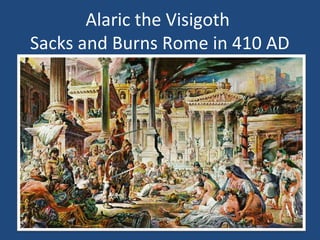
Alaric the Visigoth
Sacks and Burns Rome in 410 AD

60
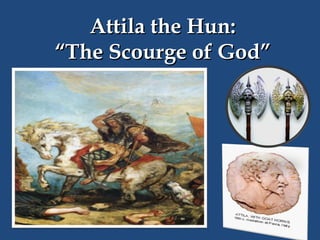
Attila the Hun:
“The Scourge of God”
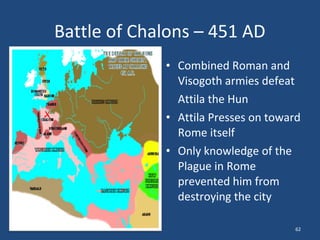
Battle of Chalons – 451 AD
• Combined Roman and
Visogoth armies defeat
Attila the Hun
• Attila Presses on toward
Rome itself
• Only knowledge of the
Plague in Rome
prevented him from
destroying the city
62
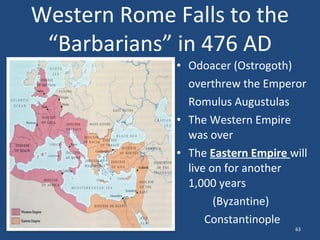
Western Rome Falls to the
“Barbarians” in 476 AD
• Odoacer (Ostrogoth)
overthrew the Emperor
Romulus Augustulas
• The Western Empire
was over
• The Eastern Empire will
live on for another
1,000 years
(Byzantine)
Constantinople
63
The Legacy of Rome
Life of Brian – 1:30

Republic Government
Roman Law – Rule of Law
Latin Language – Romance Languages
Roman Catholic Church – Preserving &
Spreading Christianity
 City Planning & Road Building
 Romanesque Architectural Style
 Roman Engineering & Building
• Aqueducts / Sewage systems
• Dams / Cement / Bridges / Arch




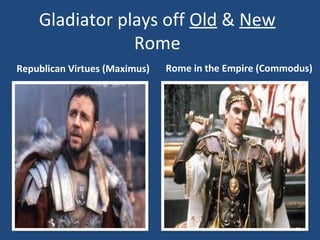
Gladiator plays off Old & New
Rome
Republican Virtues (Maximus)

Rome in the Empire (Commodus)

65
Typical Roman virtues shown by
Maximus
1.Farmer / Soldier --- like Cincinnatus
2.Simplistic Living – “Spartan Lifestyle”
3.Religious Devotion
4.Obedience
These are prized virtues during the Republic
Period
66
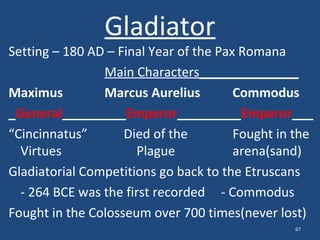
Gladiator

Setting – 180 AD – Final Year of the Pax Romana
Main Characters______________
Maximus
Marcus Aurelius
Commodus
_General_________Emperor_________Emperor___
“Cincinnatus”
Died of the
Fought in the
Virtues
Plague
arena(sand)
Gladiatorial Competitions go back to the Etruscans
- 264 BCE was the first recorded - Commodus
Fought in the Colosseum over 700 times(never lost)
67

Roman Republic and Empire

  • 1.
    Rome “The Eternal City” CaputMudi Capital of the World Ch 6 1
  • 2.
    Famous Roman Sights Buildings/ Architecture The Romans were the Great Builders of the Ancient World
  • 3.
    Look these Sightsup Online Explain & find at least one fact about the famous structure • • • • • • • • The Cloaca Maxima The Pantheon Flavian Amphitheatre – Colosseum Circus Maximus Aqueducts The Appian Way – Via Appia Roman Baths The Forum 3
  • 4.
  • 5.
  • 7.
  • 8.
  • 9.
    Wild Animals couldappear from the trap doors
  • 10.
  • 11.
  • 12.
  • 13.
  • 15.
  • 16.
  • 17.
  • 19.
  • 20.
  • 21.
  • 22.
    Roman Society & TheEnd of the Republic PART 1 --- # 32 - Government of the Republic - Roman Society - Civil Wars - Julius Caesar Roman Republic : 509 – 27 BCE 22
  • 23.
    Gaius Julius Caesar •Gaius – Name • Julius – Clan Name groups of families with a: Common Mythological Ancestor • Caesar – Family Name The Individual wasn’t important - Family / Clan / State : That was Important 23
  • 24.
    Patricians vs. Plebeians -Plebeianshave no say in the government - Eventually get to elect their own officials called tribunes in 494 B.C. - For 84 years, (421-337 B.C.) plebeians fought to have a role in each part of the government 24
  • 25.
    The Twelve Tables,450 BCE  Providing political and social rights for the plebeians. – hung in the Forum
  • 26.
    Social Structures -A manwas the head of the household and his wife and children did not question his authority - Paterfamilias: Family Father -Over centuries, women received more rights. These included: -Owning property -Running businesses -All children were taught to learn to read and write -Wealthy had private tutors for their children 26
  • 27.
    Economics -Conquests brought muchwealth to Rome -Wealthy families bought huge estates called latifundia. -Romans forced the people they conquered to work as slaves on the latifundia -Slave labor hurt the small farmers because it cost them more to produce food, and the price was driven down by the immense quantities coming into Rome -Farmers fell into debt, sold their land, and moved to the city looking for work -gap between rich and poor widens=riots and chaos 27
  • 28.
    The Gracchus Brothers -Tiberiusand Gaius Gracchus elected tribunes •They also worked to get the state to buy grain to feed the poor •The brothers worked to get the state to distribute the land to the poor farmers •Senate felt they were a threat to its power, and hired thugs to kill them 28
  • 29.
    Military Reformer  GaiusMarius • recruited an army from the poor and homeless • professional standing army • He is eventually defeated-exciled – Caesar learns
  • 30.
    Republic to Empire -Civilwars break out to decide who should hold power. The senate wanted to keep the status quo; political leaders wanted to weaken the senate and enact reforms -Slave uprisings throughout the republic “Spartacus” -Armies became loyal to their commanders because they gave them benefits such as captured land / Paid them Personally - Caesar 30
  • 31.
    The First Triumvirate Julius Caesar  Marcus Licinius Crassus  Gaius Magnus Pompey
  • 32.
    Crossing the Rubicon,49 BC The Die is Cast!
  • 33.
    Beware the Idesof March! 44 BCE - Brutus
  • 34.
    The Second Triumvirate Octavian  Marc Antony  Marcus Lepidus Battle of Philippi Battle of Actium
  • 35.
  • 37.
    The Pax Romana “RomanPeace” 27 BCE – 180 AD PART 2 - Period of Unprecedented Stability & Prosperity - Initiated by Octavian (Caesar Augustus) - The Principate - Princips “First among Equals” - “I found Rome Brick & I turned it Marble” 37
  • 38.
  • 39.
  • 40.
  • 41.
    Pax Romana: 27BCE – 180 CE
  • 42.
    The Greatest Extentof the Roman Empire – 14 CE
  • 43.
    To commemorate thebirth of Augustus (63 BCE) two thousand years earlier(1937), Mussolini commissioned a model of Rome as it appeared at the time of Constantine (AD 306-337) 43
  • 44.
    The Rise ofChristianity PART 3 •Jesus / St. Paul 44
  • 45.
  • 46.
    Nero Fiddled whileRome Burned - then he blamed the Christians 46
  • 47.
    The Rise ofChristianity
  • 48.
  • 49.
  • 50.
    The Spread ofChristianity
  • 51.
    “In This Sign,Conquer” 51
  • 52.
    Constantine: Edict of Milan 313AD Legalized Christianity in the Empire 312 - 337
  • 53.
  • 54.
  • 55.
  • 56.
    The Later RomanEmpire PART 4 The Fall of Rome & The Legacy of Rome 56
  • 57.
    Reasons for theFall of Rome 1. War with the Germanic Tribes & Huns - Germans were pushed by the Huns - the still glowing splendor of Rome Maximus “Rome is the Light, the rest of the World is Darkness” 2. Internal Strife in Rome - civil war / unstable & poor leadership(corruption) 3. Loss of Moral Standards & Virtues - Commodus 57
  • 58.
    The Empire inCrisis: 3c
  • 59.
    Barbarian Invasions Battle ofAdrianople – Visigoths – 378 AD
  • 60.
    Alaric the Visigoth Sacksand Burns Rome in 410 AD 60
  • 61.
    Attila the Hun: “TheScourge of God”
  • 62.
    Battle of Chalons– 451 AD • Combined Roman and Visogoth armies defeat Attila the Hun • Attila Presses on toward Rome itself • Only knowledge of the Plague in Rome prevented him from destroying the city 62
  • 63.
    Western Rome Fallsto the “Barbarians” in 476 AD • Odoacer (Ostrogoth) overthrew the Emperor Romulus Augustulas • The Western Empire was over • The Eastern Empire will live on for another 1,000 years (Byzantine) Constantinople 63
  • 64.
    The Legacy ofRome Life of Brian – 1:30 Republic Government Roman Law – Rule of Law Latin Language – Romance Languages Roman Catholic Church – Preserving & Spreading Christianity  City Planning & Road Building  Romanesque Architectural Style  Roman Engineering & Building • Aqueducts / Sewage systems • Dams / Cement / Bridges / Arch    
  • 65.
    Gladiator plays offOld & New Rome Republican Virtues (Maximus) Rome in the Empire (Commodus) 65
  • 66.
    Typical Roman virtuesshown by Maximus 1.Farmer / Soldier --- like Cincinnatus 2.Simplistic Living – “Spartan Lifestyle” 3.Religious Devotion 4.Obedience These are prized virtues during the Republic Period 66
  • 67.
    Gladiator Setting – 180AD – Final Year of the Pax Romana Main Characters______________ Maximus Marcus Aurelius Commodus _General_________Emperor_________Emperor___ “Cincinnatus” Died of the Fought in the Virtues Plague arena(sand) Gladiatorial Competitions go back to the Etruscans - 264 BCE was the first recorded - Commodus Fought in the Colosseum over 700 times(never lost) 67