SOUND
KRIS ANN MAE YAP- BONILLA
GRADE 7 SCIENCE
SUBIC NATIONAL HIGH SCHOOL
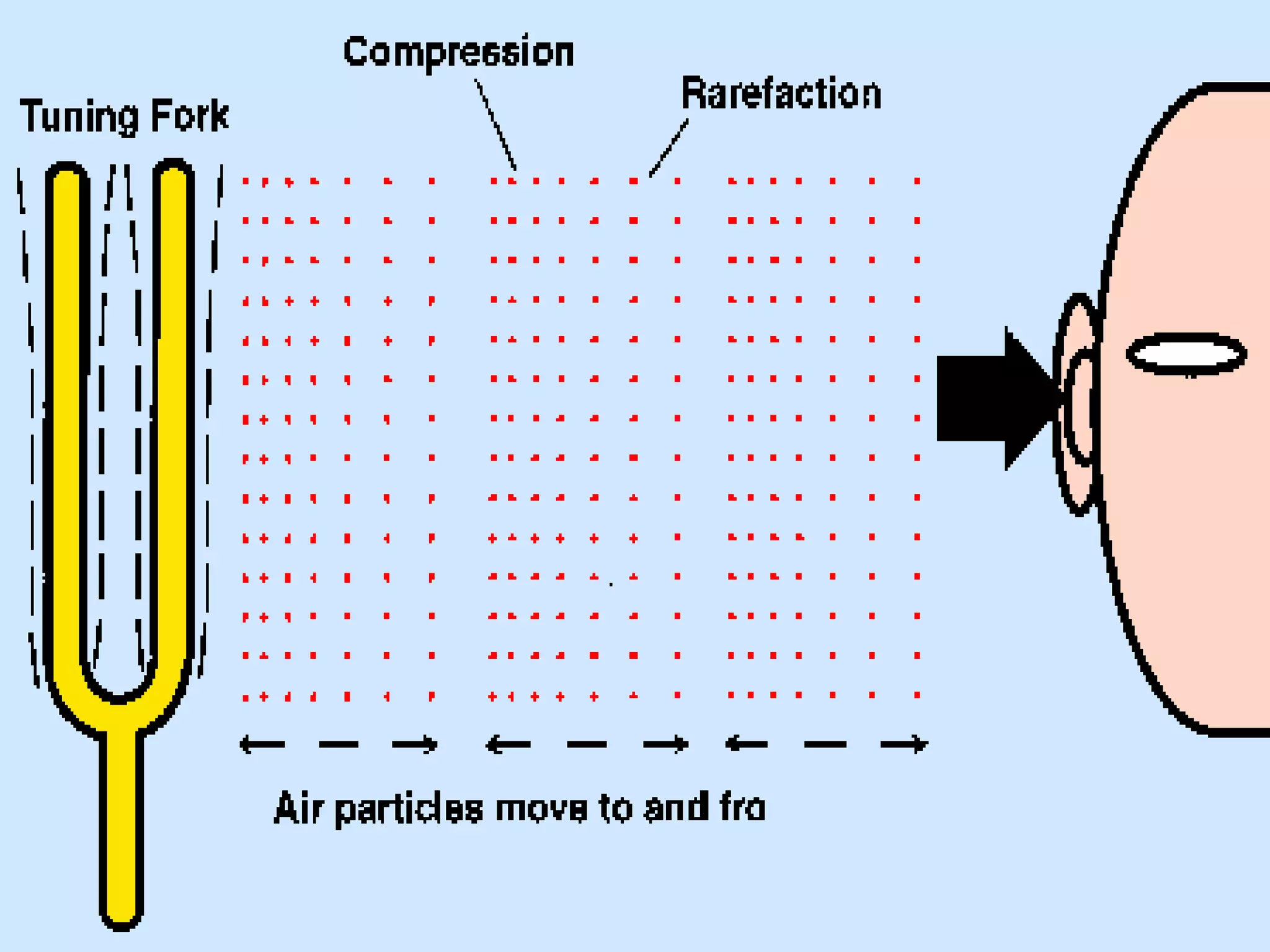
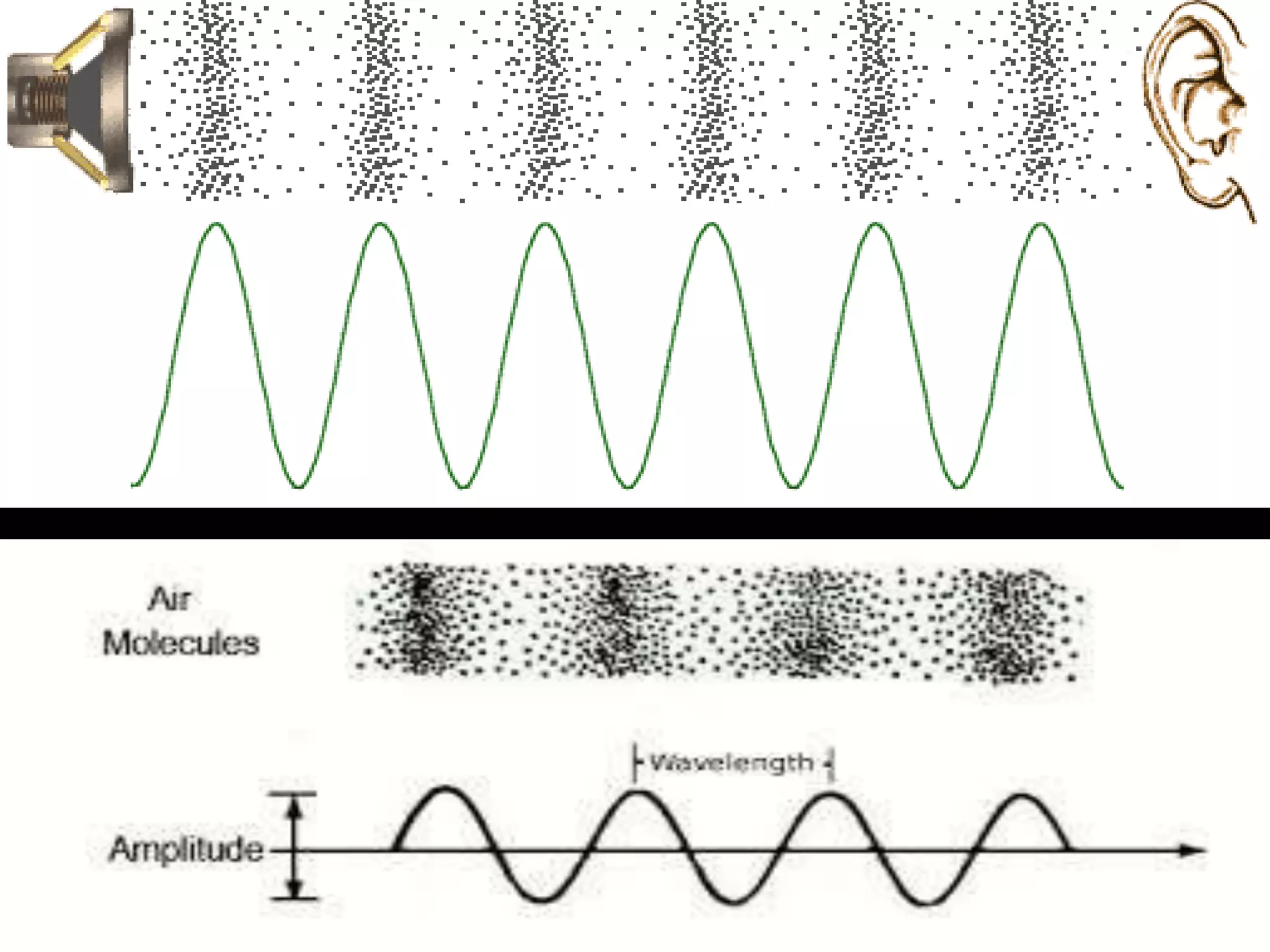
Sound is a mechanical
wave (requires a medium
to travel) and a
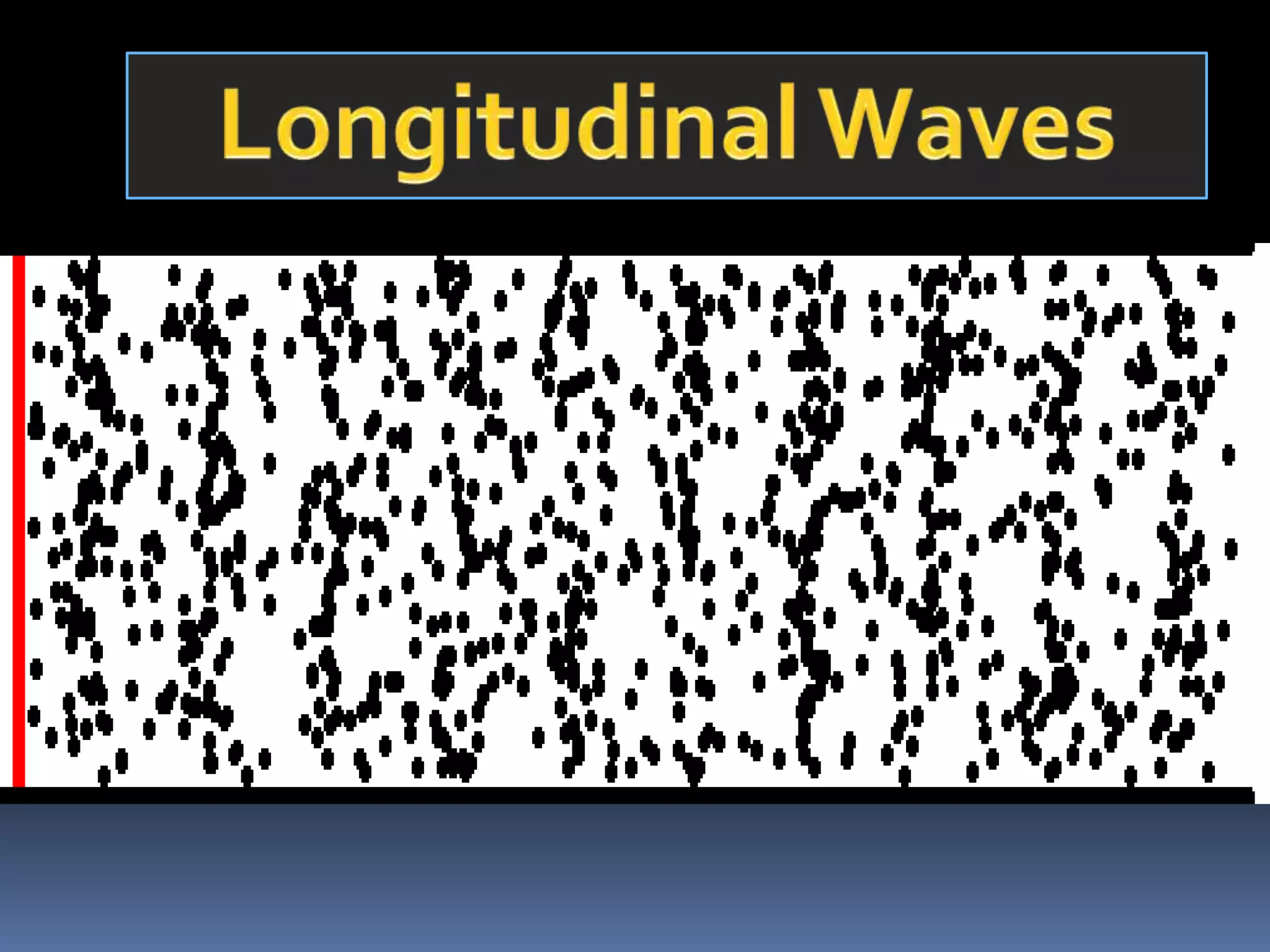
compressional/ longitudinal
wave (molecules colliding).
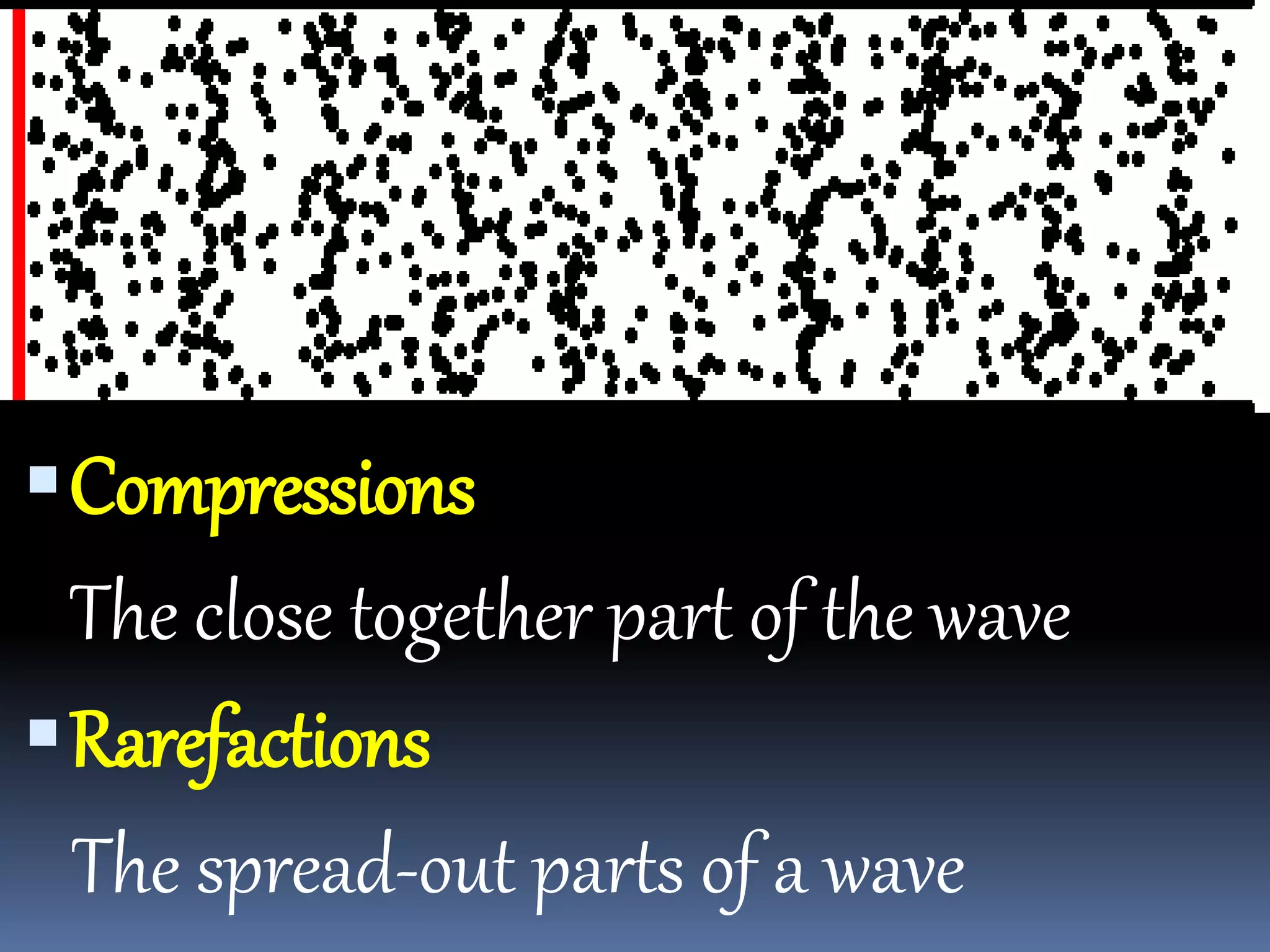
Compressions
The close together part of the wave
Rarefactions
The spread-out parts of a wave
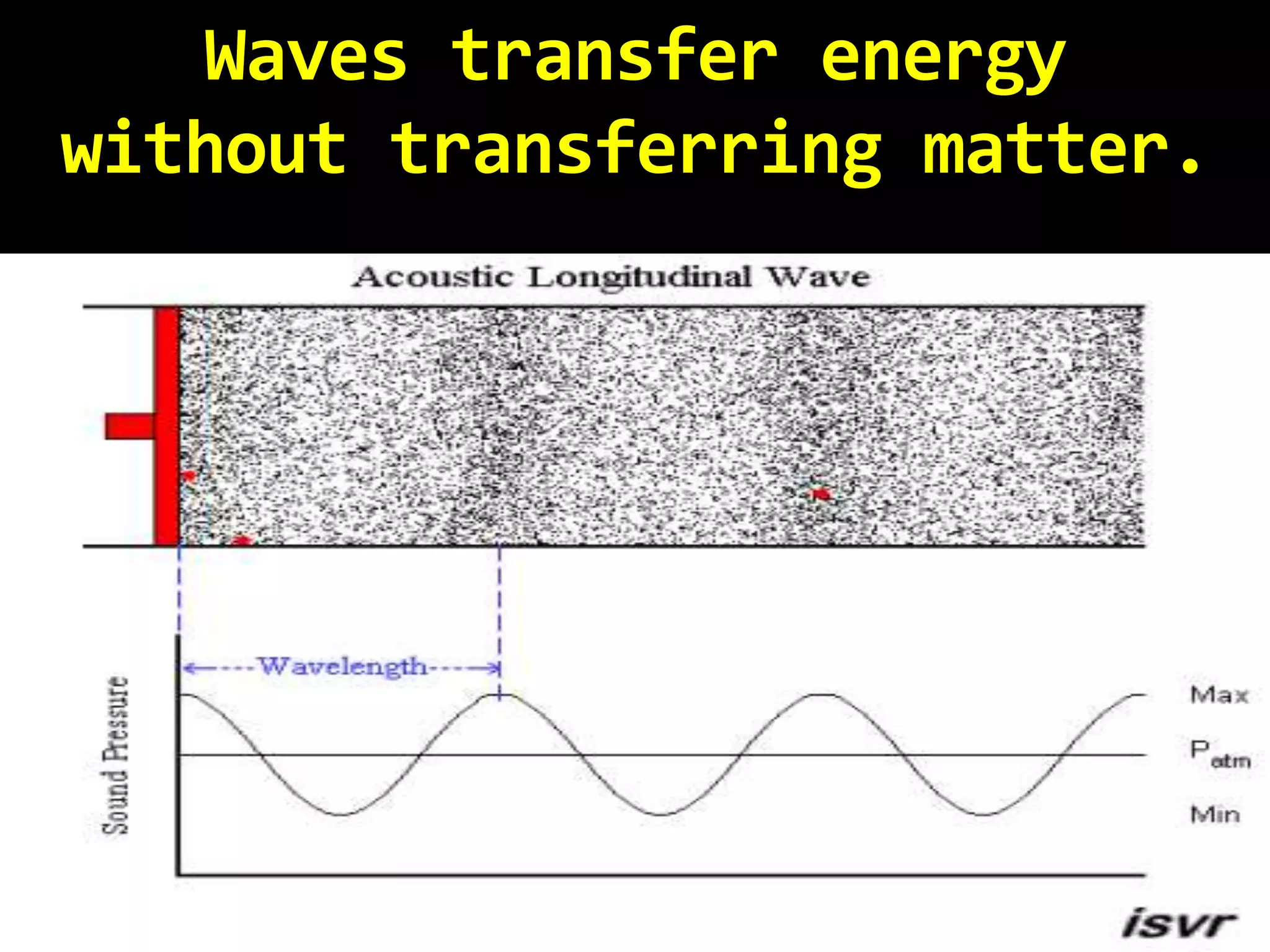
Waves transfer energy
without transferring matter.
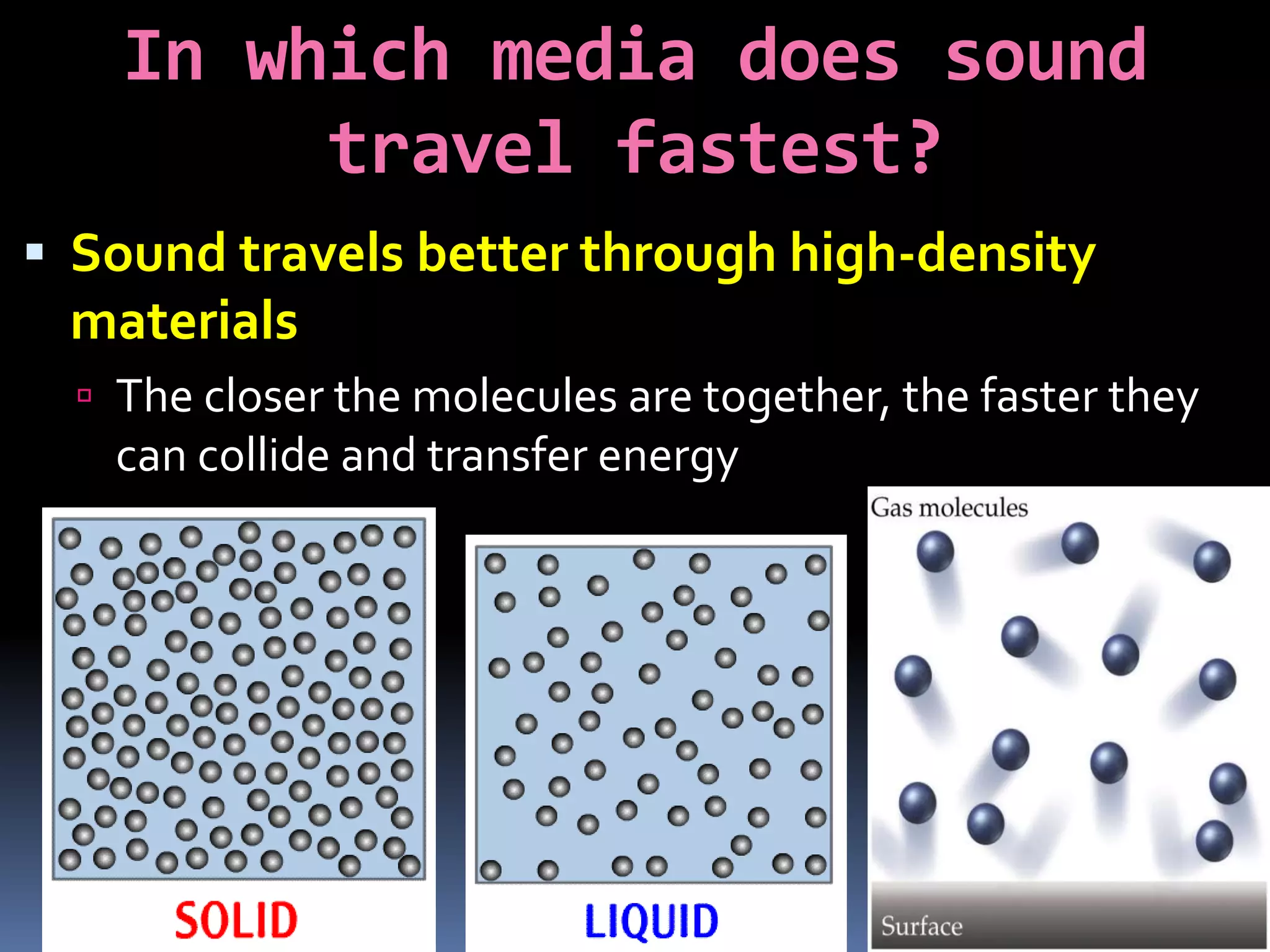
In which media does sound
travel fastest?
 Sound travels better through high-density
materials
 The closer the molecules are together, the faster they
can collide and transfer energy
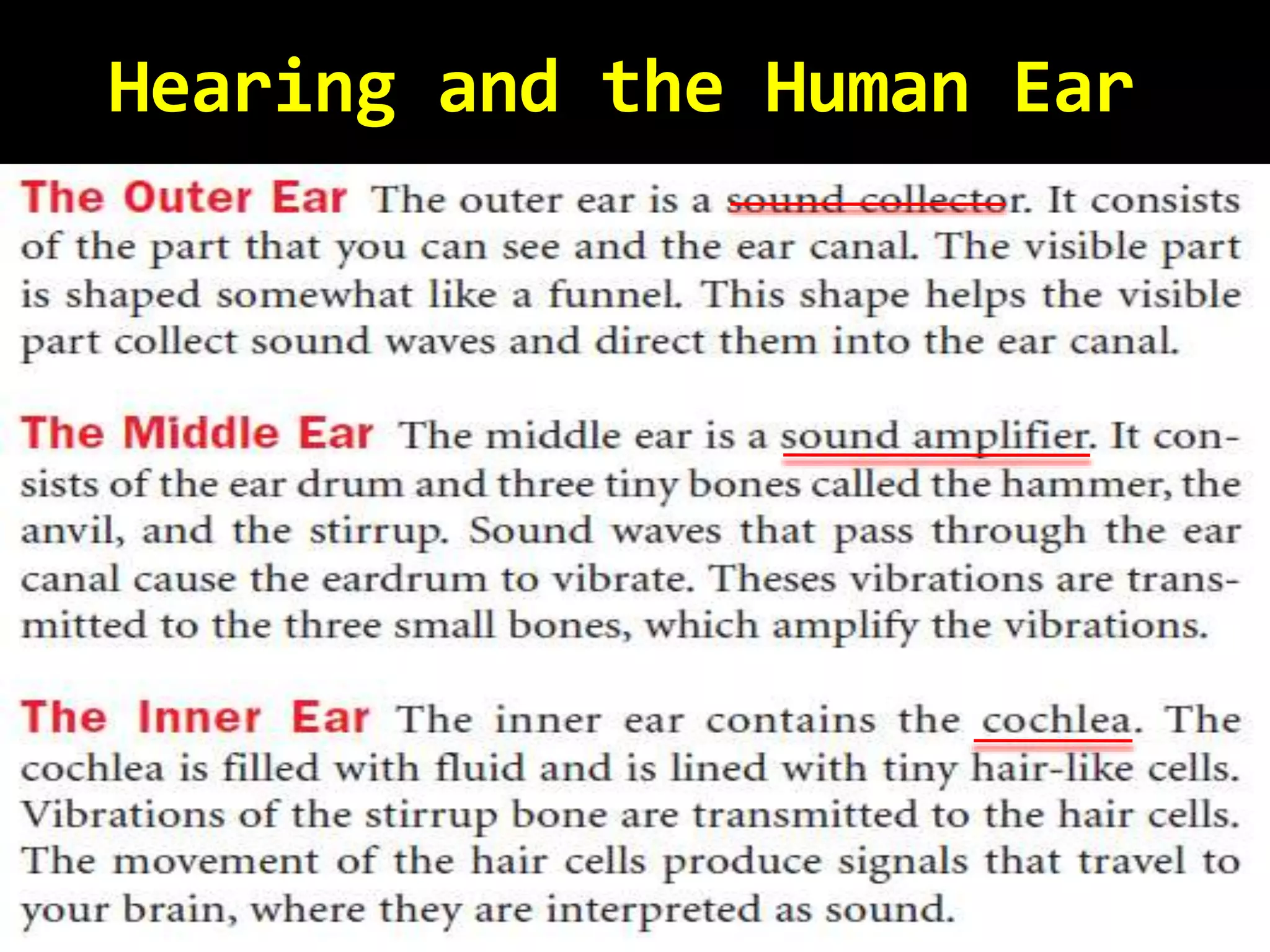
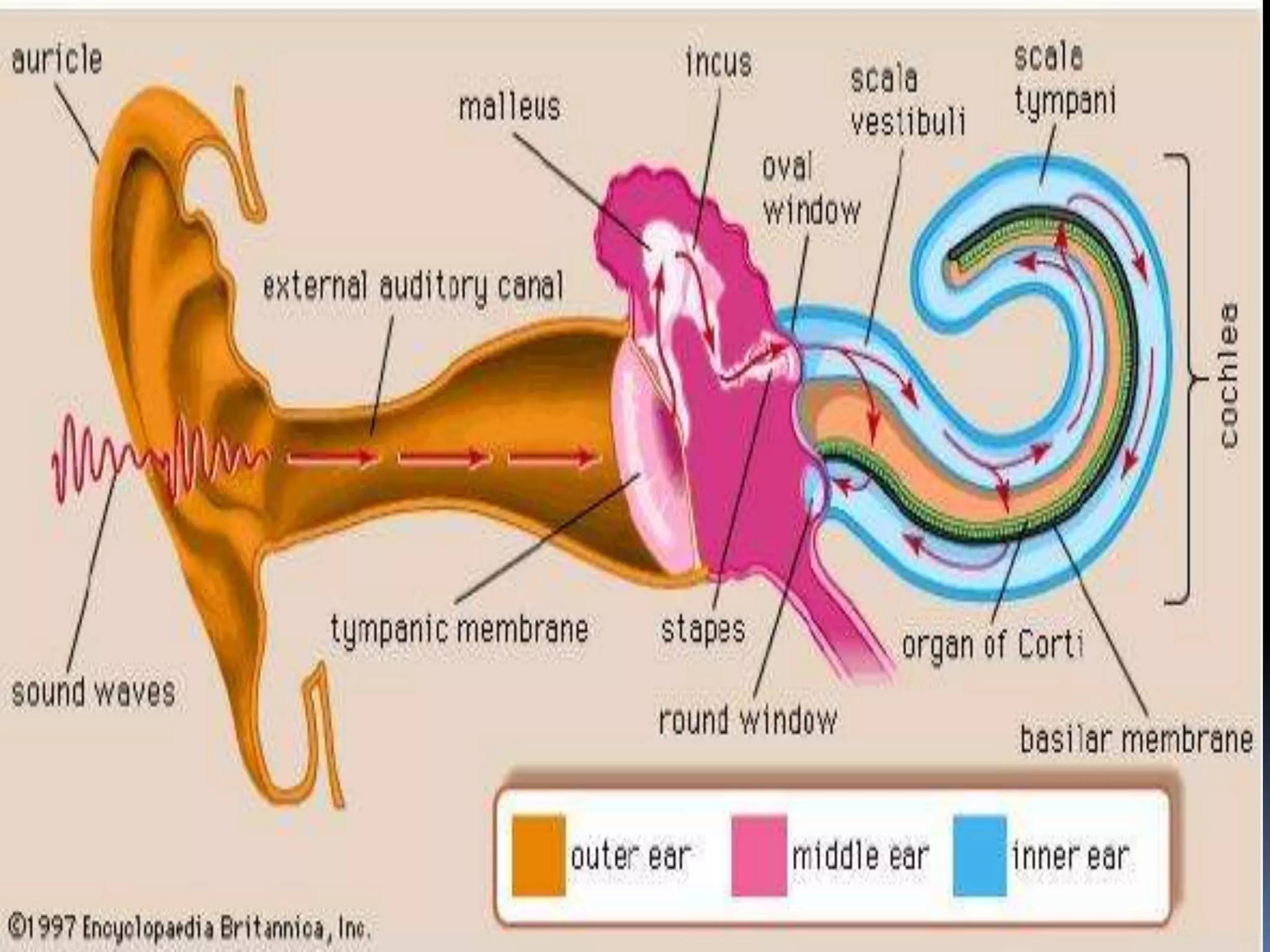
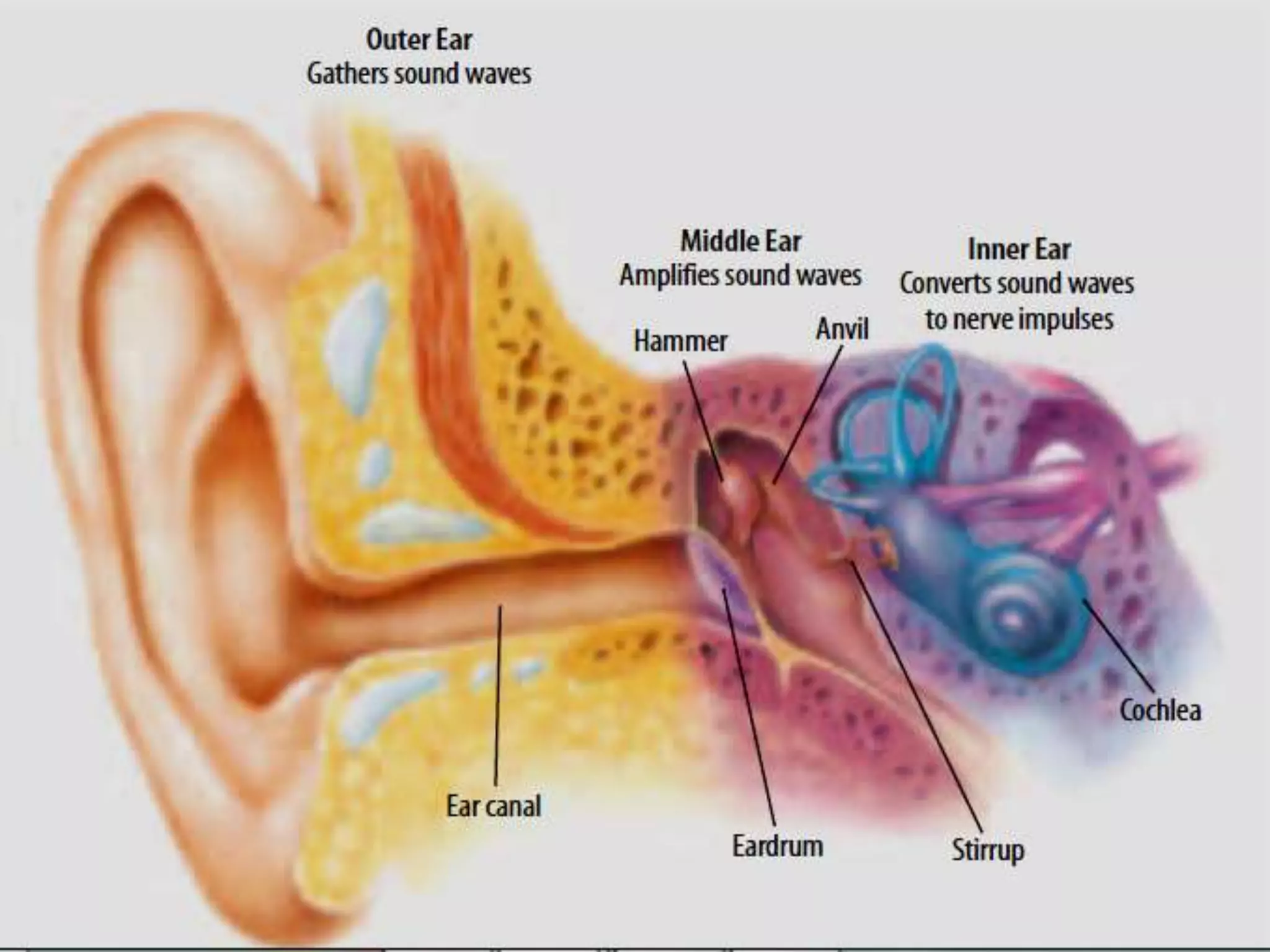
Hearing and the Human Ear
Properties of Sound
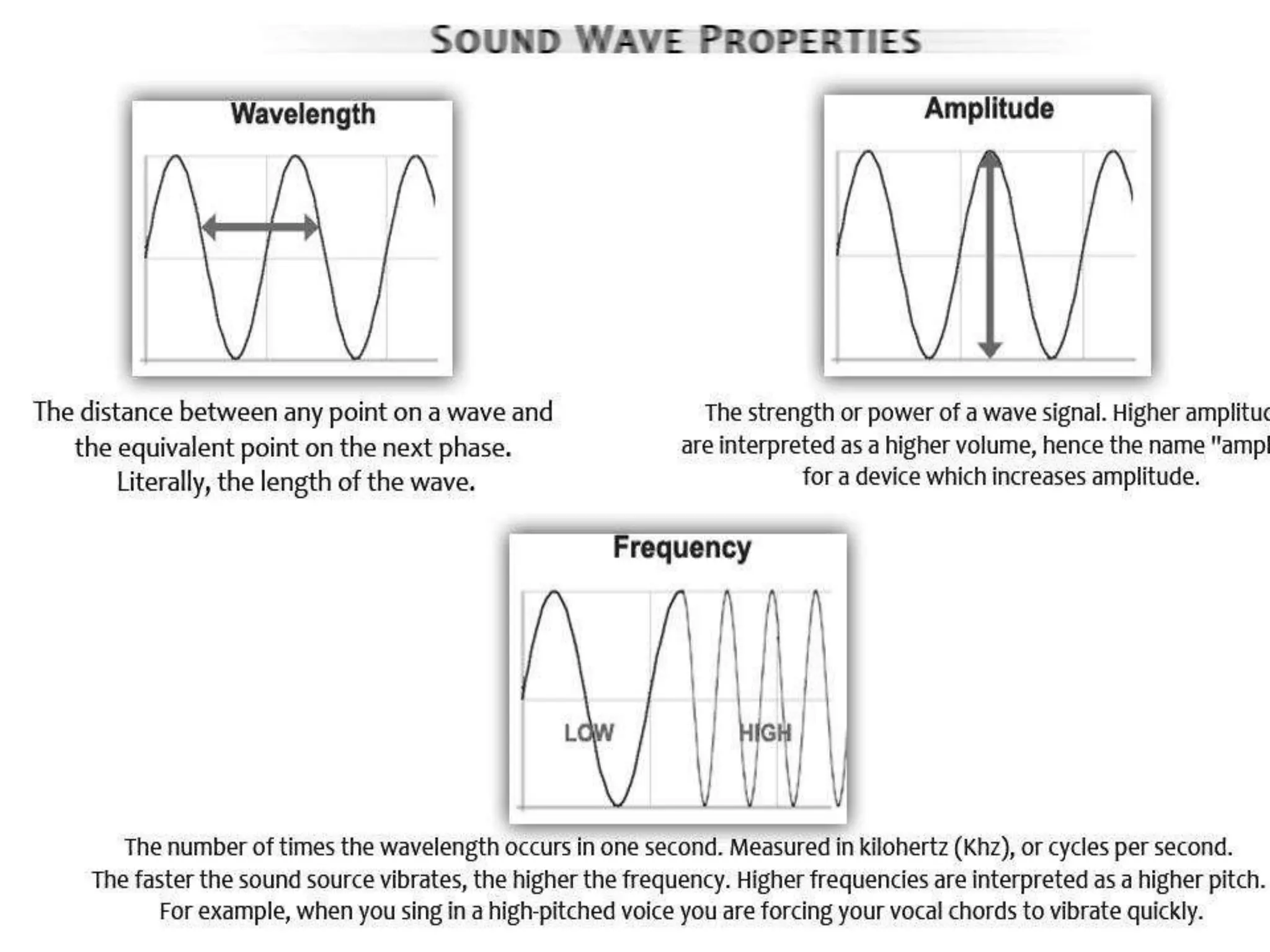
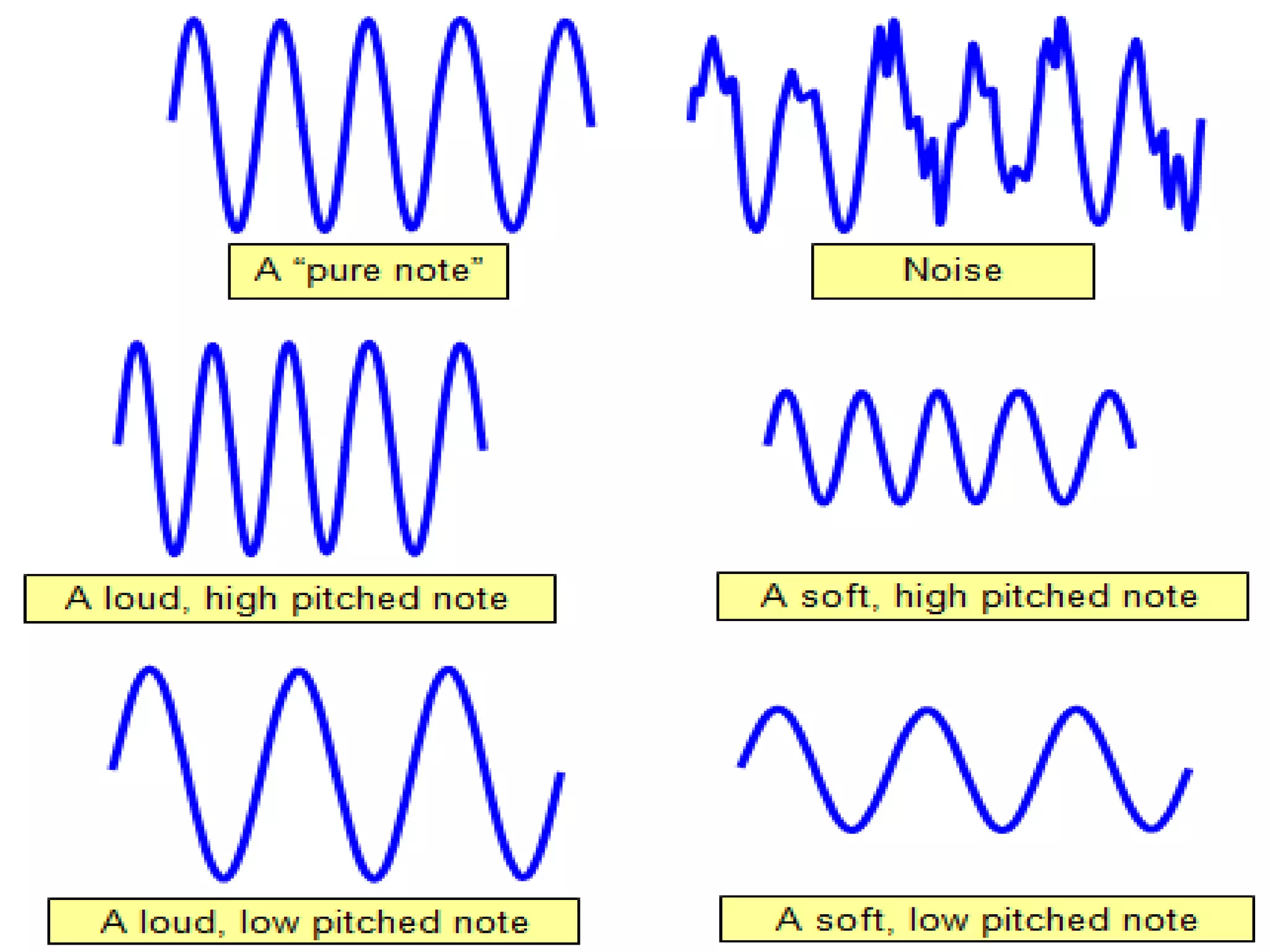
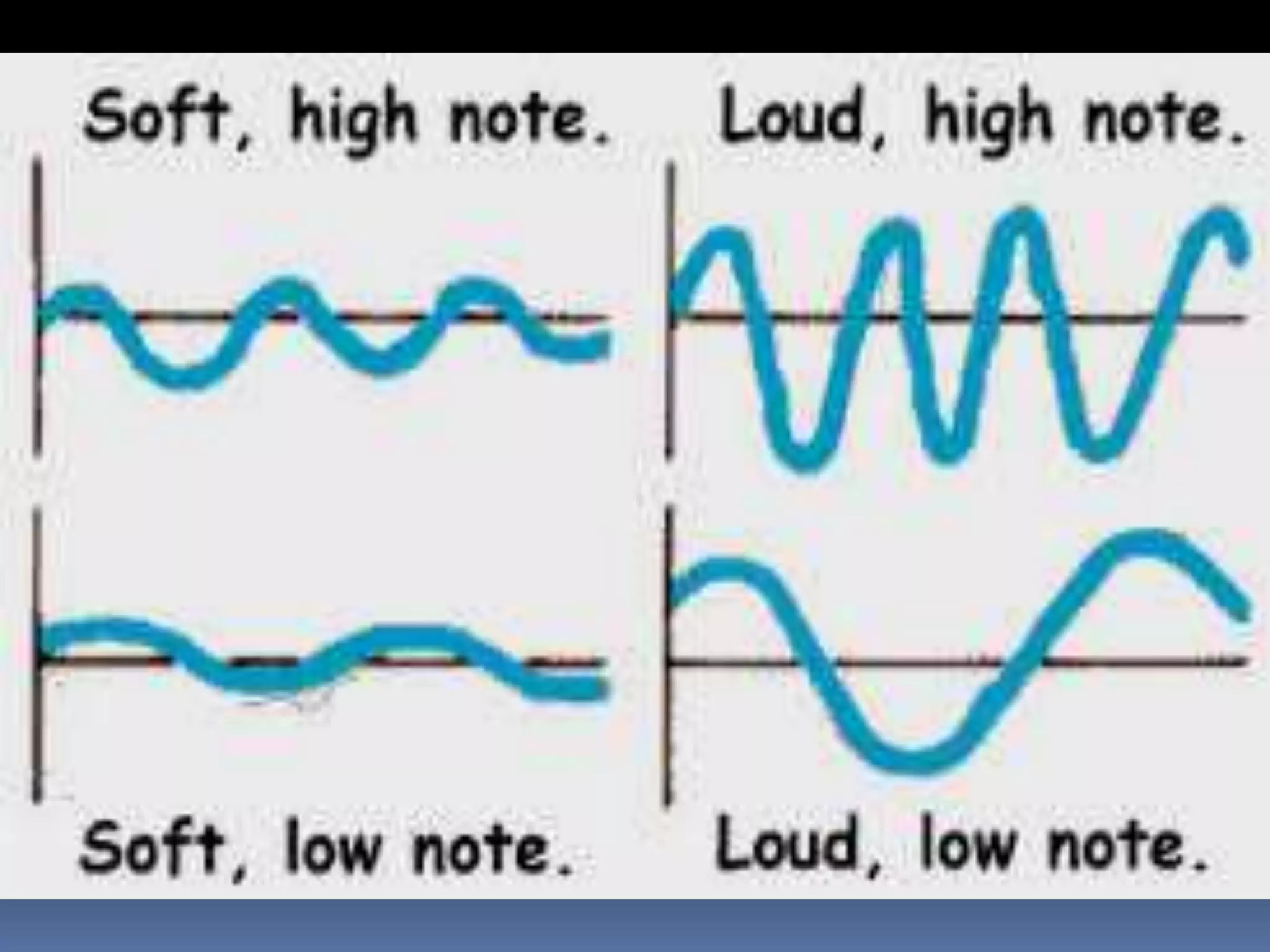
Pitch
-description of how high or low
the sound seems to a person
Loudness
how loud or soft a sound is
perceived to be.
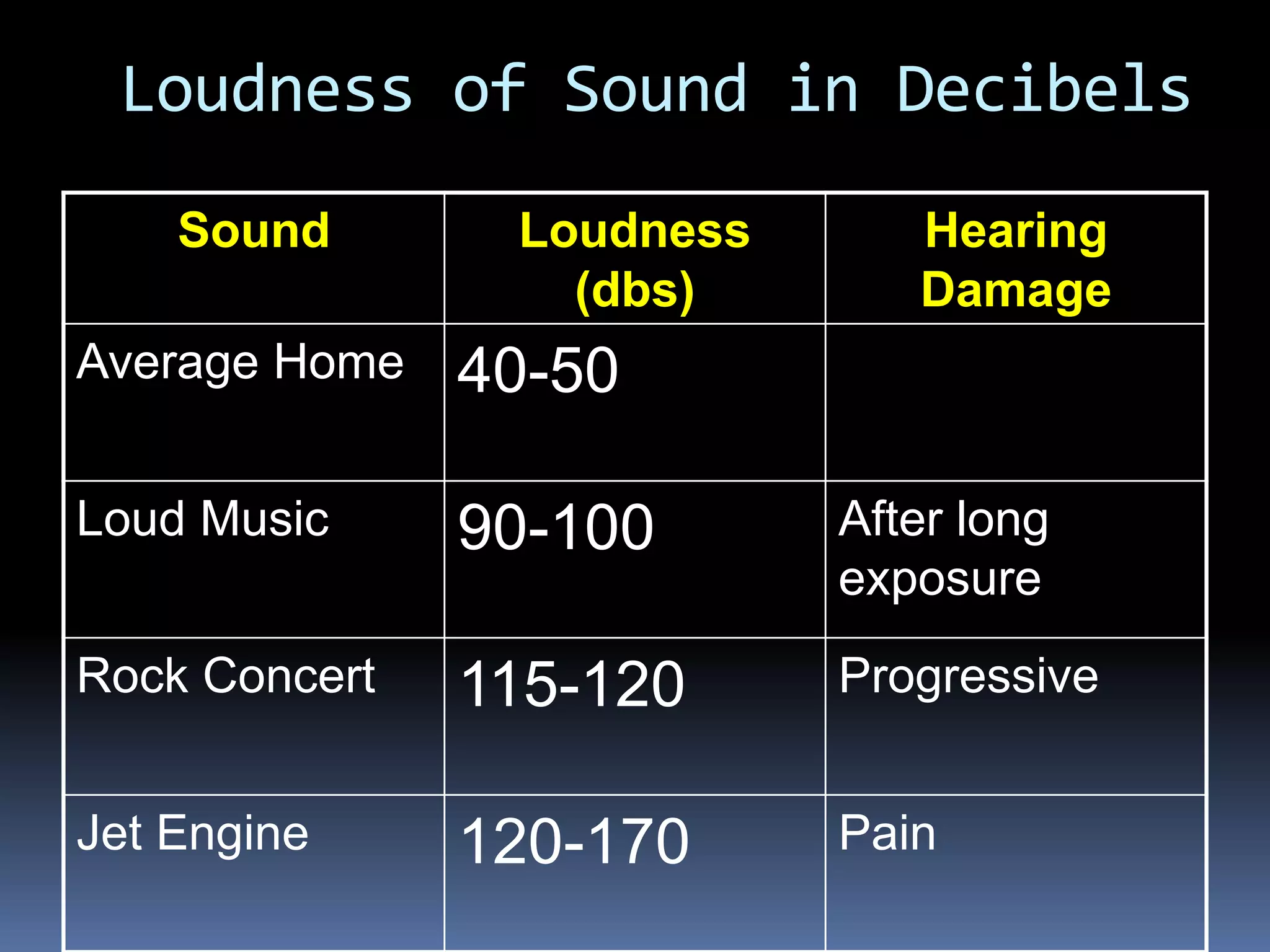
Loudness of Sound in Decibels
Sound Loudness
(dbs)
Hearing
Damage
Average Home 40-50
Loud Music 90-100 After long
exposure
Rock Concert 115-120 Progressive
Jet Engine 120-170 Pain
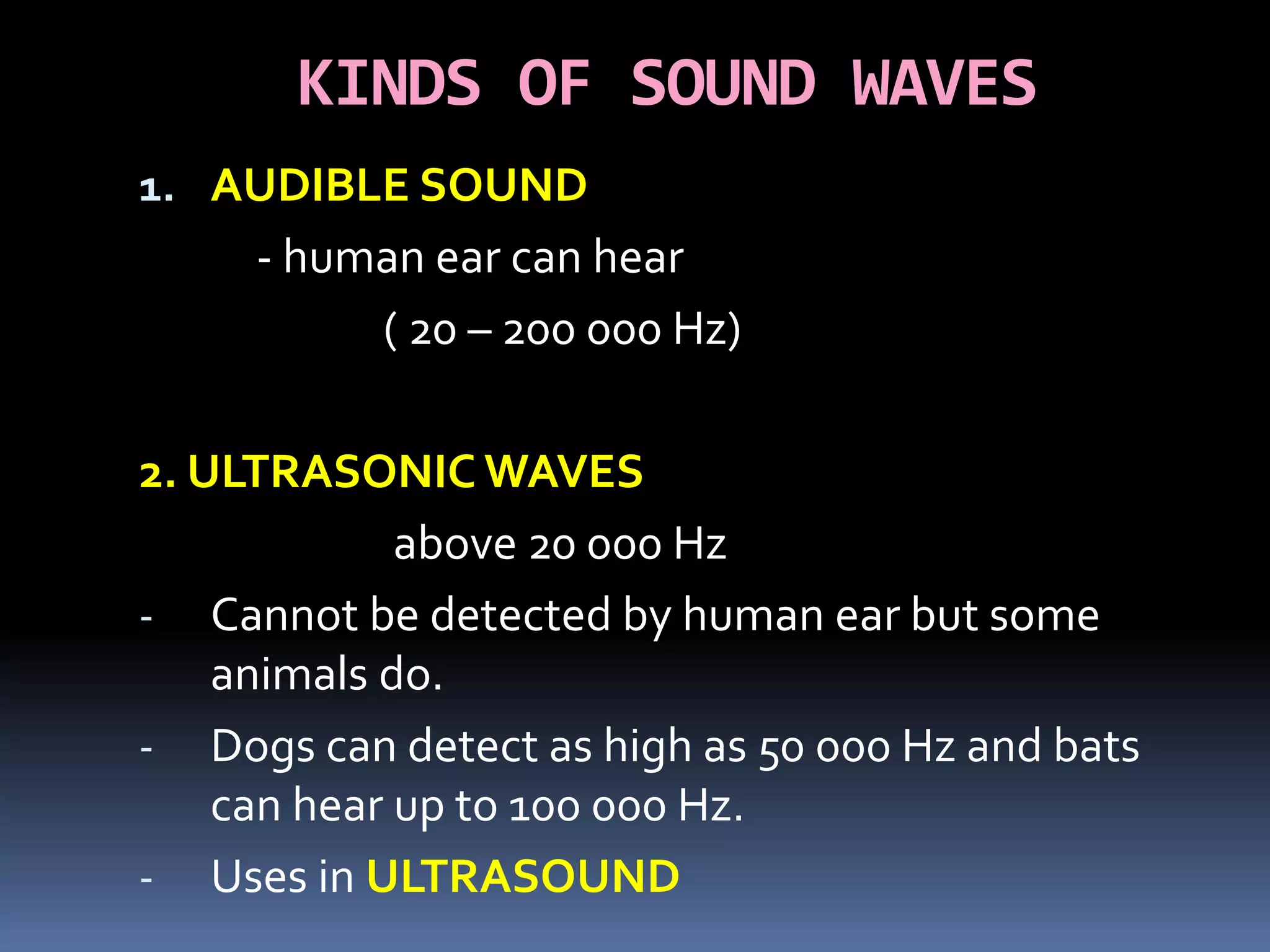
KINDS OF SOUND WAVES
1. AUDIBLE SOUND
- human ear can hear
( 20 – 200 000 Hz)
2. ULTRASONIC WAVES
above 20 000 Hz
- Cannot be detected by human ear but some
animals do.
- Dogs can detect as high as 50 000 Hz and bats
can hear up to 100 000 Hz.
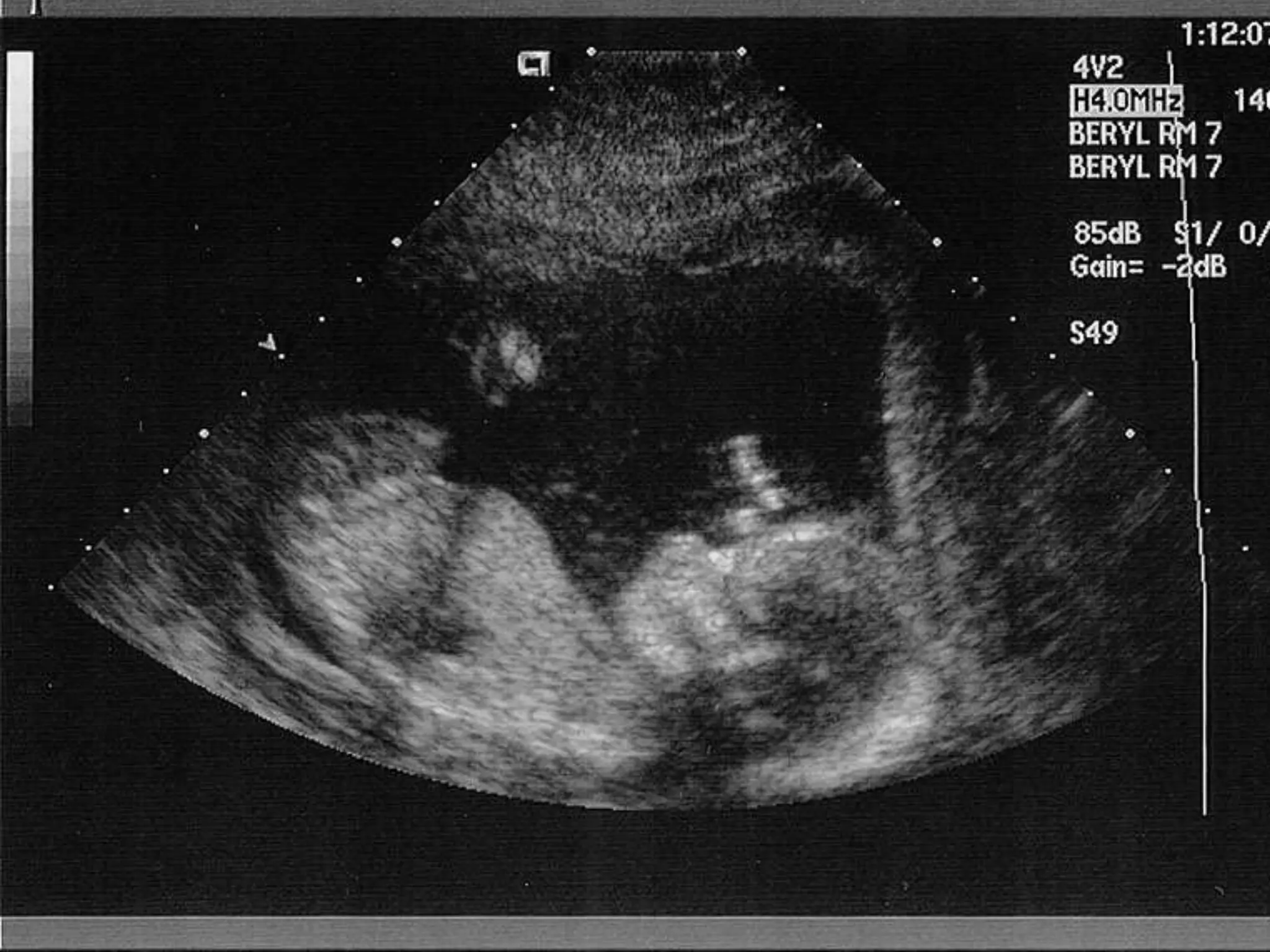
- Uses in ULTRASOUND
- Sound below 20 Hz.
SOURCES OF INFRASOUND:
- Vibrating heavy machines
- Earthquakes
- Thunder
- Volcanoes
- It cannot be heard by human ear but can cause
damage.
3. INFRASOUND WAVES
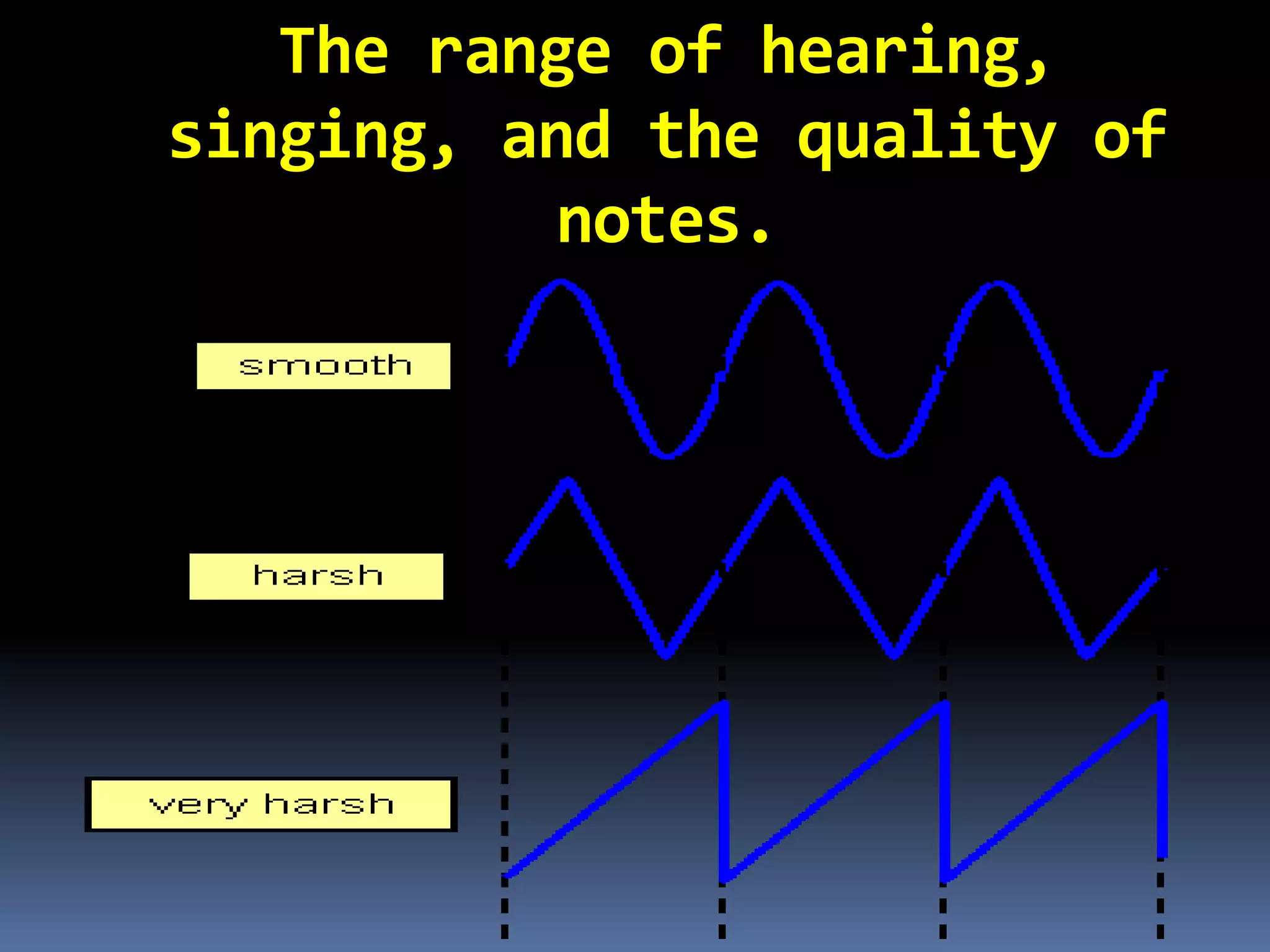
The range of hearing,
singing, and the quality of
notes.
 Sound is produced when an object
vibrates.
 When an object vibrates it exerts
a force on the surrounding air
 Loudness of a sound is recorded in
decibels
 As a sound gets louder, the
amplitude of the wave increases.
 The moving air mass carries the
sound of the vibration to your ear.
 The air is the MEDIA that it travels
through.
 Medium is what the wave travels
through (ex. solid, liquid, gas)
 NO MEDIUM NO SOUND!!!!
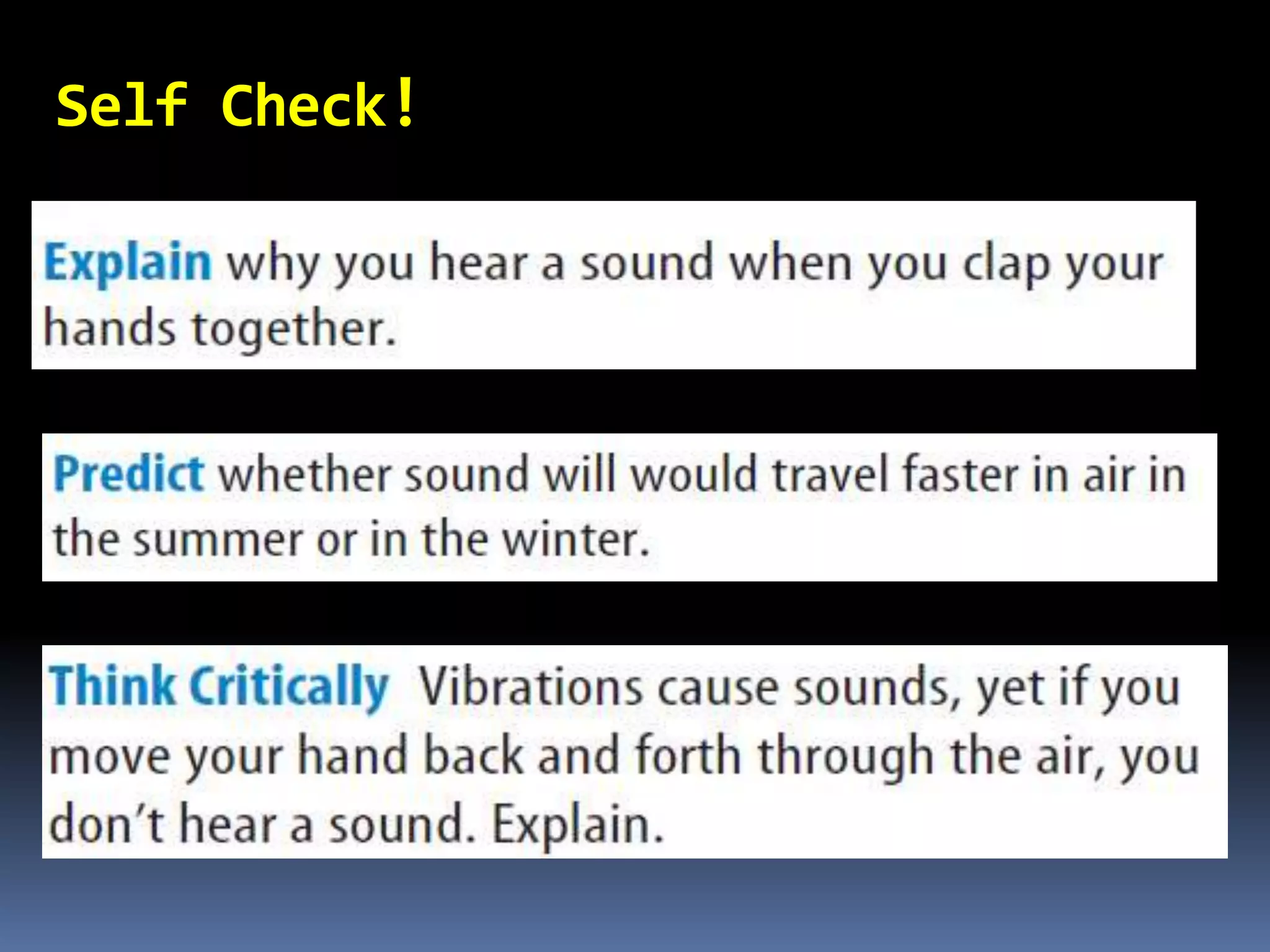
Self Check!

Sound grade 7

  • 1.
    SOUND KRIS ANN MAEYAP- BONILLA GRADE 7 SCIENCE SUBIC NATIONAL HIGH SCHOOL
  • 2.
    Sound is amechanical wave (requires a medium to travel) and a compressional/ longitudinal wave (molecules colliding).
  • 4.
    Compressions The close togetherpart of the wave Rarefactions The spread-out parts of a wave
  • 7.
    Waves transfer energy withouttransferring matter.
  • 9.
    In which mediadoes sound travel fastest?  Sound travels better through high-density materials  The closer the molecules are together, the faster they can collide and transfer energy
  • 10.
    Hearing and theHuman Ear
  • 13.
  • 14.
    Pitch -description of howhigh or low the sound seems to a person Loudness how loud or soft a sound is perceived to be.
  • 15.
    Loudness of Soundin Decibels Sound Loudness (dbs) Hearing Damage Average Home 40-50 Loud Music 90-100 After long exposure Rock Concert 115-120 Progressive Jet Engine 120-170 Pain
  • 16.
    KINDS OF SOUNDWAVES 1. AUDIBLE SOUND - human ear can hear ( 20 – 200 000 Hz) 2. ULTRASONIC WAVES above 20 000 Hz - Cannot be detected by human ear but some animals do. - Dogs can detect as high as 50 000 Hz and bats can hear up to 100 000 Hz. - Uses in ULTRASOUND
  • 18.
    - Sound below20 Hz. SOURCES OF INFRASOUND: - Vibrating heavy machines - Earthquakes - Thunder - Volcanoes - It cannot be heard by human ear but can cause damage. 3. INFRASOUND WAVES
  • 19.
    The range ofhearing, singing, and the quality of notes.
  • 24.
     Sound isproduced when an object vibrates.  When an object vibrates it exerts a force on the surrounding air  Loudness of a sound is recorded in decibels  As a sound gets louder, the amplitude of the wave increases.
  • 25.
     The movingair mass carries the sound of the vibration to your ear.  The air is the MEDIA that it travels through.  Medium is what the wave travels through (ex. solid, liquid, gas)  NO MEDIUM NO SOUND!!!!
  • 26.