,
:
Understanding the
Connections
Presented by: Pachica, Gerry B.
Presented to: Mrs. Mantawil, Bainorie A.
Desired Learning Outcomes
•Explain the connection of planning to
implementing in curriculum development.
•Explain the connection of implementing to
evaluating in curriculum development.
•Explain the connection of evaluating to planning
in curriculum development.
•Understand the connections between planning
and implementing and evaluating in the
curriculum process.
The Evaluation Cycle: The Connections
planning
implementing
evaluating
•Planning, implementing and assessing
are three processes in curriculum
development that are taken separately
but are connected to each other.
•The cycle continues as each imbedded
in a dynamic change that happens in
curriculum development.
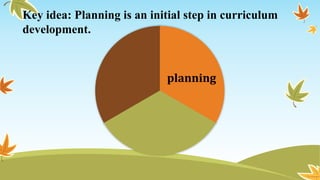
planning
Key idea: Planning is an initial step in curriculum
development.
•It includes determining the needs
through an assessment.
•Needs would include those of the
learners, teachers, the community
and the society as these relate the
curriculum.
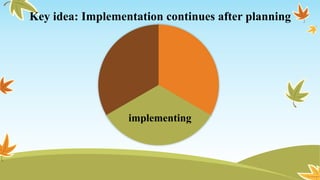
implementing
Key idea: Implementation continues after planning
•What would be implemented? The planned
curriculum which was written should be
implemented.
•It has to be put into action or used by a
curriculum implementor who is the teacher.
•Curriculum plans should not remain as a
written document. It will become useless.
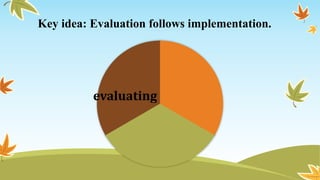
Key idea: Evaluation follows implementation.
evaluating
•The focus of this chapter is evaluation
after planning, and implementation was
done.
•It is very necessary to find out at this point,
if the planned or written curriculum was
implemented successfully and the desired
learning outcomes were achieved.
Key idea: what has been planned, should be
implemented and what has been implemented should
be evaluated.
•Finally the PIE. The cyclical flow of the three
processes in curriculum development is very easy
to remember and follow.
•As a curricularist, these guiding ideas clarify our
understanding that one cannot assess what was not
taught, nor implement what was not planned.
•PLAN then IMPLEMENT then EVALUATE and
the cycle begins.
Thank you
for
listening

Planning, implementing and evaluating: understanding connection

  • 1.
    , : Understanding the Connections Presented by:Pachica, Gerry B. Presented to: Mrs. Mantawil, Bainorie A.
  • 2.
    Desired Learning Outcomes •Explainthe connection of planning to implementing in curriculum development. •Explain the connection of implementing to evaluating in curriculum development. •Explain the connection of evaluating to planning in curriculum development. •Understand the connections between planning and implementing and evaluating in the curriculum process.
  • 3.
    The Evaluation Cycle:The Connections planning implementing evaluating
  • 4.
    •Planning, implementing andassessing are three processes in curriculum development that are taken separately but are connected to each other. •The cycle continues as each imbedded in a dynamic change that happens in curriculum development.
  • 5.
    planning Key idea: Planningis an initial step in curriculum development.
  • 6.
    •It includes determiningthe needs through an assessment. •Needs would include those of the learners, teachers, the community and the society as these relate the curriculum.
  • 7.
    implementing Key idea: Implementationcontinues after planning
  • 8.
    •What would beimplemented? The planned curriculum which was written should be implemented. •It has to be put into action or used by a curriculum implementor who is the teacher. •Curriculum plans should not remain as a written document. It will become useless.
  • 9.
    Key idea: Evaluationfollows implementation. evaluating
  • 10.
    •The focus ofthis chapter is evaluation after planning, and implementation was done. •It is very necessary to find out at this point, if the planned or written curriculum was implemented successfully and the desired learning outcomes were achieved.
  • 11.
    Key idea: whathas been planned, should be implemented and what has been implemented should be evaluated. •Finally the PIE. The cyclical flow of the three processes in curriculum development is very easy to remember and follow. •As a curricularist, these guiding ideas clarify our understanding that one cannot assess what was not taught, nor implement what was not planned. •PLAN then IMPLEMENT then EVALUATE and the cycle begins.
  • 12.