Rivers are more than water
Keith Le Matti
Young, Mature, and Old Age
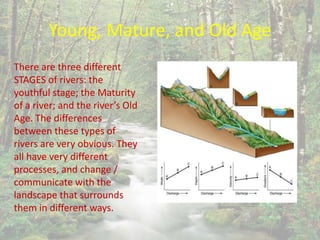
There are three different
STAGES of rivers: the
youthful stage; the Maturity
of a river; and the river’s Old
Age. The differences
between these types of
rivers are very obvious. They
all have very different
processes, and change /
communicate with the
landscape that surrounds
them in different ways.
Young, Mature, and Old Age
• Youth
• Another name for the
youth of a river is the
river’s source
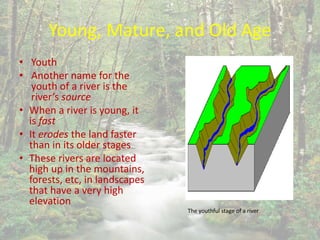
• When a river is young, it
is fast
• It erodes the land faster
than in its older stages
• These rivers are located
high up in the mountains,
forests, etc, in landscapes
that have a very high
elevation
The youthful stage of a river
Young, Mature, and Old Age
Maturity
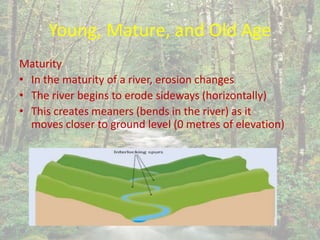
• In the maturity of a river, erosion changes
• The river begins to erode sideways (horizontally)
• This creates meaners (bends in the river) as it
moves closer to ground level (0 metres of elevation)
Young, Mature, and Old Age
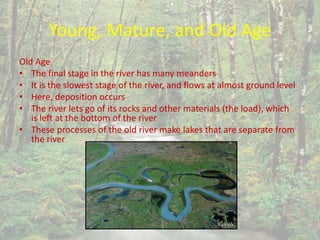
Old Age
• The final stage in the river has many meanders
• It is the slowest stage of the river, and flows at almost ground level
• Here, deposition occurs
• The river lets go of its rocks and other materials (the load), which
is left at the bottom of the river
• These processes of the old river make lakes that are separate from
the river
Other types of rivers
We can identify different landscapes created by
rivers:
• Estuary
• Delta
• Lake
• Rejuvenated river
• Bays
Back to business…
Rivers are a lot more interesting than just being
water running through the world
Rivers provide so much life everywhere, without
rivers, forests and parts of the countryside
wouldn’t survive to the extent that it does
Rivers give life to villages, towns, and cities
through the nutrients (like little pieces of life)
they give to the green landscape
People and Rivers
We interact or communicate with rivers
• We use rivers for transport, build bridges to
move across the landscape
• We use rivers for sport and athletics
• Rivers are used for tourism
• People visit countries to see these beautiful
landscapes, and this gives money to the
governments of those countries
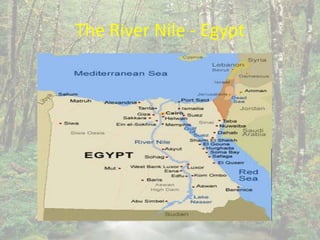
The River Nile - Egypt
• It’s 4,150miles long, and it’s the second
longest course of water in the world
• However, most of the tourism in Egypt is
centred on this phenomenon
Estuaries
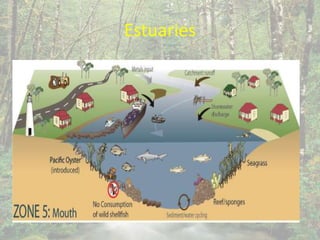
• Estuaries are bridge environments between
rivers and oceans
• They are influenced by river processes
• This includes deposition at the mature and old
age stages of a river, and erosion of the
youthful and mature stages
• They also see oceanic processes, for example
tidal waves, erosion of coastal areas, etc
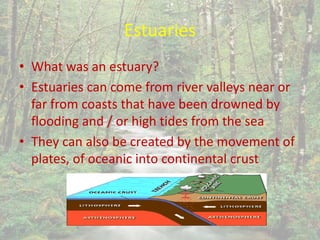
Estuaries
• What was an estuary?
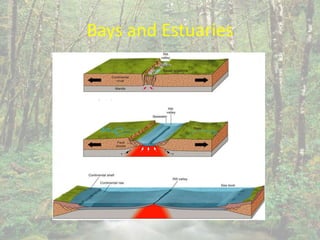
• Estuaries can come from river valleys near or
far from coasts that have been drowned by
flooding and / or high tides from the sea
• They can also be created by the movement of
plates, of oceanic into continental crust
Bays and estuaries
• https://www.youtube.com/watch?v=ryrXAGY1
dmE
Bays and estuaries
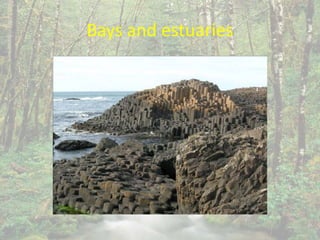
• The Giants Causeway was formed when the
North American plate and the Euroasian plate
moved apart millions of years ago
• From the core of the earth, magma spilled
across the ocean as lava, and deposited these
landscapes of basalt rock
Bays and estuaries
Estuaries
Bays and Estuaries
Bays
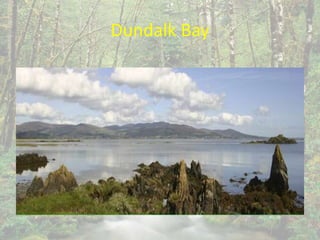
• A bay is a part of the sea/ocean, or a lake
which is between two pieces of land on the
coast
• Bays can be created by the processes of
glaciation (ice), volcanism (volcanoes), and
changes in the sea
• Bays can also be estuaries
Bays
• The water in bays is calm, tranquil
• Because of the land on either side of the
water, winds are not strong
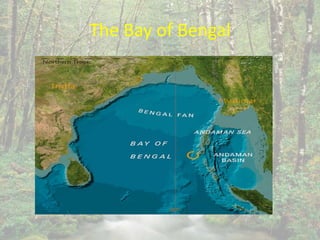
• The bay of Bengal is the world´s largest bay
• The land on either side is from two different
countries
• The continents moved apart, and the bay was
created
The Bay of Bengal
Dundalk Bay
Lakes
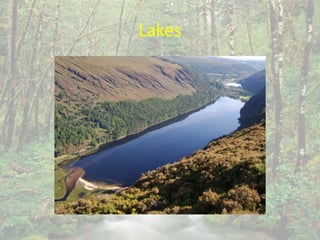
• A lake is a standing body of water
• What does this mean?
• It means that it has no connection with the
ocean
• They can be connected to rivers, that can
make the lakes bigger, or make them smaller
Lakes
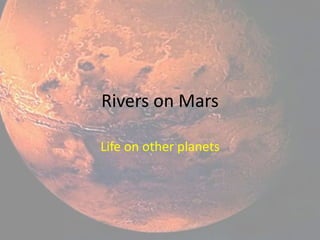
Rivers on Mars
Life on other planets
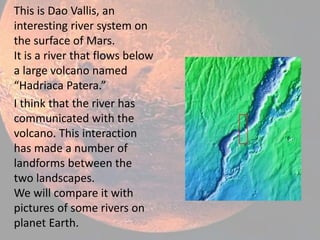
This is Dao Vallis, an
interesting river system on
the surface of Mars.
It is a river that flows below
a large volcano named
“Hadriaca Patera.”
I think that the river has
communicated with the
volcano. This interaction
has made a number of
landforms between the
two landscapes.
We will compare it with
pictures of some rivers on
planet Earth.
Dao Vallis and Earth
Similarities
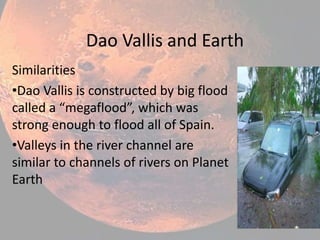
•Dao Vallis is constructed by big flood
called a “megaflood”, which was
strong enough to flood all of Spain.
•Valleys in the river channel are
similar to channels of rivers on Planet
Earth
Conclusions
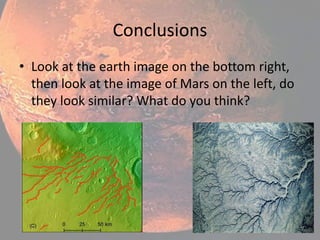
• Look at the earth image on the bottom right,
then look at the image of Mars on the left, do
they look similar? What do you think?

Rivers are more_than_water

  • 1.
    Rivers are morethan water Keith Le Matti
  • 2.
    Young, Mature, andOld Age There are three different STAGES of rivers: the youthful stage; the Maturity of a river; and the river’s Old Age. The differences between these types of rivers are very obvious. They all have very different processes, and change / communicate with the landscape that surrounds them in different ways.
  • 3.
    Young, Mature, andOld Age • Youth • Another name for the youth of a river is the river’s source • When a river is young, it is fast • It erodes the land faster than in its older stages • These rivers are located high up in the mountains, forests, etc, in landscapes that have a very high elevation The youthful stage of a river
  • 4.
    Young, Mature, andOld Age Maturity • In the maturity of a river, erosion changes • The river begins to erode sideways (horizontally) • This creates meaners (bends in the river) as it moves closer to ground level (0 metres of elevation)
  • 5.
    Young, Mature, andOld Age Old Age • The final stage in the river has many meanders • It is the slowest stage of the river, and flows at almost ground level • Here, deposition occurs • The river lets go of its rocks and other materials (the load), which is left at the bottom of the river • These processes of the old river make lakes that are separate from the river
  • 6.
    Other types ofrivers We can identify different landscapes created by rivers: • Estuary • Delta • Lake • Rejuvenated river • Bays
  • 7.
    Back to business… Riversare a lot more interesting than just being water running through the world Rivers provide so much life everywhere, without rivers, forests and parts of the countryside wouldn’t survive to the extent that it does Rivers give life to villages, towns, and cities through the nutrients (like little pieces of life) they give to the green landscape
  • 8.
    People and Rivers Weinteract or communicate with rivers • We use rivers for transport, build bridges to move across the landscape • We use rivers for sport and athletics • Rivers are used for tourism • People visit countries to see these beautiful landscapes, and this gives money to the governments of those countries
  • 9.
  • 10.
    The River Nile- Egypt • It’s 4,150miles long, and it’s the second longest course of water in the world • However, most of the tourism in Egypt is centred on this phenomenon
  • 11.
    Estuaries • Estuaries arebridge environments between rivers and oceans • They are influenced by river processes • This includes deposition at the mature and old age stages of a river, and erosion of the youthful and mature stages • They also see oceanic processes, for example tidal waves, erosion of coastal areas, etc
  • 12.
    Estuaries • What wasan estuary? • Estuaries can come from river valleys near or far from coasts that have been drowned by flooding and / or high tides from the sea • They can also be created by the movement of plates, of oceanic into continental crust
  • 13.
    Bays and estuaries •https://www.youtube.com/watch?v=ryrXAGY1 dmE
  • 14.
    Bays and estuaries •The Giants Causeway was formed when the North American plate and the Euroasian plate moved apart millions of years ago • From the core of the earth, magma spilled across the ocean as lava, and deposited these landscapes of basalt rock
  • 15.
  • 16.
  • 17.
  • 18.
    Bays • A bayis a part of the sea/ocean, or a lake which is between two pieces of land on the coast • Bays can be created by the processes of glaciation (ice), volcanism (volcanoes), and changes in the sea • Bays can also be estuaries
  • 19.
    Bays • The waterin bays is calm, tranquil • Because of the land on either side of the water, winds are not strong • The bay of Bengal is the world´s largest bay • The land on either side is from two different countries • The continents moved apart, and the bay was created
  • 20.
    The Bay ofBengal
  • 21.
  • 22.
    Lakes • A lakeis a standing body of water • What does this mean? • It means that it has no connection with the ocean • They can be connected to rivers, that can make the lakes bigger, or make them smaller
  • 23.
  • 24.
    Rivers on Mars Lifeon other planets
  • 25.
    This is DaoVallis, an interesting river system on the surface of Mars. It is a river that flows below a large volcano named “Hadriaca Patera.” I think that the river has communicated with the volcano. This interaction has made a number of landforms between the two landscapes. We will compare it with pictures of some rivers on planet Earth.
  • 26.
    Dao Vallis andEarth Similarities •Dao Vallis is constructed by big flood called a “megaflood”, which was strong enough to flood all of Spain. •Valleys in the river channel are similar to channels of rivers on Planet Earth
  • 27.
    Conclusions • Look atthe earth image on the bottom right, then look at the image of Mars on the left, do they look similar? What do you think?