RFID CHIPS
JAYOTI VIDYAPEETH WOMEN’S UNIVERSITY, JAIPUR , RAJASTHAN
PRESENTED BY-
Mugdha Kesh
B.Pharma(3rd Year)
What is RFID?
• RFID means Radio-frequency Identification.
• Uses electromagnetic field to automatically identify and track
tags attached to objects.
• A technology that employs a microchip with an antenna that
broadcasts its unique identifier and location to receivers.
• Refers to a wireless system comprised of two components:
i. Tags
ii. Readers
READER :
• a device that has one or more antennas that emit radio waves and
receive signals back from the RFID tag.
• can be mobile or they can be mounted on a post or overhead.
TAGS :
• which use radio waves to communicate their identity and other
information to nearby readers.
• can store a range of information from one serial number to several
pages of data.
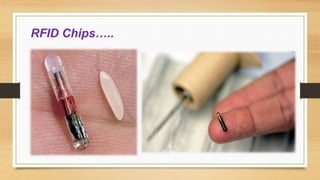
RFID Chips…..
RFID Chip Implant
• an identifying integrated circuit device encased in silicate glass.
• implanted in the body of a human being.
• subdermal implant typically contains a unique ID number that can
be linked to information contained in an external database, such
as personal identification, medical history, medications, allergies,
and contact information.
Medical Uses for RFID Chips
1) Inventory control
2) Equipment tracking
3) Out-of-bed detection and fall detection
4) Personnel tracking
5) Ensuring that patients receive the correct medications and
medical devices
6) Preventing the distribution of counterfeit drugs and medical
devices
7) Monitoring patients
8) Providing data for electronic medical records systems
Uses in the Medical Equipment Field
• can be used to track and locate medical devices.
• enables hospital staff to rapidly locate critical medical devices.
• tags can be used to inventory equipment and consumables used
in an operation.
• can reduce the amount of equipment investment needed.
• enhances patient safety.
Uses for Patients
• can also be used in patient identification.
• products are in the form of ID cards, wrist or ankle bands, or labels
applied to patient records.
• assure the right procedures and medications are applied.
• can be used to track patient movements within a facility.
• ensure they do not get lost or enter an area where they might harm
themselves.
Uses for Drug Discovery
• to automate the tracking and location of the millions of
pharmaceutical compounds.
• these very valuable assets are difficult to inventory, but it is
essential that it be done with a very high level of accuracy.
Advantage
• With access to an individual's medical history, doctors can quickly
reach intelligent decisions about medication and other treatments.
• Since the ID travels inside an individual, there's no risk of being
mis-identified in the hospital.
Disadvantage
• Like all small implantable devices, if care isn't taken they can
migrate within the body.
• And there's at least some question about the development of
tumors in regions around implanted RFID tags.
Medical
• Drug Counterfeiting
• Medical “Passports”
• Food Chain Precautions
Shopping
• Cashier-less check out and
payment
Household Technology
• Smart keys
• Intelligent washing
machines
• Monitoring refrigerators
• Intelligent
ovens/microwaves
The Future Of RFID
Thank You

RFID Chip

  • 1.
    RFID CHIPS JAYOTI VIDYAPEETHWOMEN’S UNIVERSITY, JAIPUR , RAJASTHAN PRESENTED BY- Mugdha Kesh B.Pharma(3rd Year)
  • 2.
    What is RFID? •RFID means Radio-frequency Identification. • Uses electromagnetic field to automatically identify and track tags attached to objects. • A technology that employs a microchip with an antenna that broadcasts its unique identifier and location to receivers. • Refers to a wireless system comprised of two components: i. Tags ii. Readers
  • 3.
    READER : • adevice that has one or more antennas that emit radio waves and receive signals back from the RFID tag. • can be mobile or they can be mounted on a post or overhead. TAGS : • which use radio waves to communicate their identity and other information to nearby readers. • can store a range of information from one serial number to several pages of data.
  • 4.
  • 5.
    RFID Chip Implant •an identifying integrated circuit device encased in silicate glass. • implanted in the body of a human being. • subdermal implant typically contains a unique ID number that can be linked to information contained in an external database, such as personal identification, medical history, medications, allergies, and contact information.
  • 6.
    Medical Uses forRFID Chips 1) Inventory control 2) Equipment tracking 3) Out-of-bed detection and fall detection 4) Personnel tracking 5) Ensuring that patients receive the correct medications and medical devices 6) Preventing the distribution of counterfeit drugs and medical devices 7) Monitoring patients 8) Providing data for electronic medical records systems
  • 7.
    Uses in theMedical Equipment Field • can be used to track and locate medical devices. • enables hospital staff to rapidly locate critical medical devices. • tags can be used to inventory equipment and consumables used in an operation. • can reduce the amount of equipment investment needed. • enhances patient safety.
  • 8.
    Uses for Patients •can also be used in patient identification. • products are in the form of ID cards, wrist or ankle bands, or labels applied to patient records. • assure the right procedures and medications are applied. • can be used to track patient movements within a facility. • ensure they do not get lost or enter an area where they might harm themselves.
  • 9.
    Uses for DrugDiscovery • to automate the tracking and location of the millions of pharmaceutical compounds. • these very valuable assets are difficult to inventory, but it is essential that it be done with a very high level of accuracy.
  • 10.
    Advantage • With accessto an individual's medical history, doctors can quickly reach intelligent decisions about medication and other treatments. • Since the ID travels inside an individual, there's no risk of being mis-identified in the hospital.
  • 11.
    Disadvantage • Like allsmall implantable devices, if care isn't taken they can migrate within the body. • And there's at least some question about the development of tumors in regions around implanted RFID tags.
  • 12.
    Medical • Drug Counterfeiting •Medical “Passports” • Food Chain Precautions Shopping • Cashier-less check out and payment Household Technology • Smart keys • Intelligent washing machines • Monitoring refrigerators • Intelligent ovens/microwaves The Future Of RFID
  • 14.