Biochip Technology
ITC 571 – Emerging Technology &
Innovation
 Study
Bio-chip: Doctor inside the body
 Done by
S.Sujanth(11527035)
 Supervisor
Dr. Ather Saeed
IT Coordinator / Lecturer
Charles Sturt University
Outline
 Introduction
 History & Development of biochips
 Architecture of the biochip
 Classification of biochips
 Applications of biochips
 Research & Hypothesis
 Future direction of biochips
Introduction
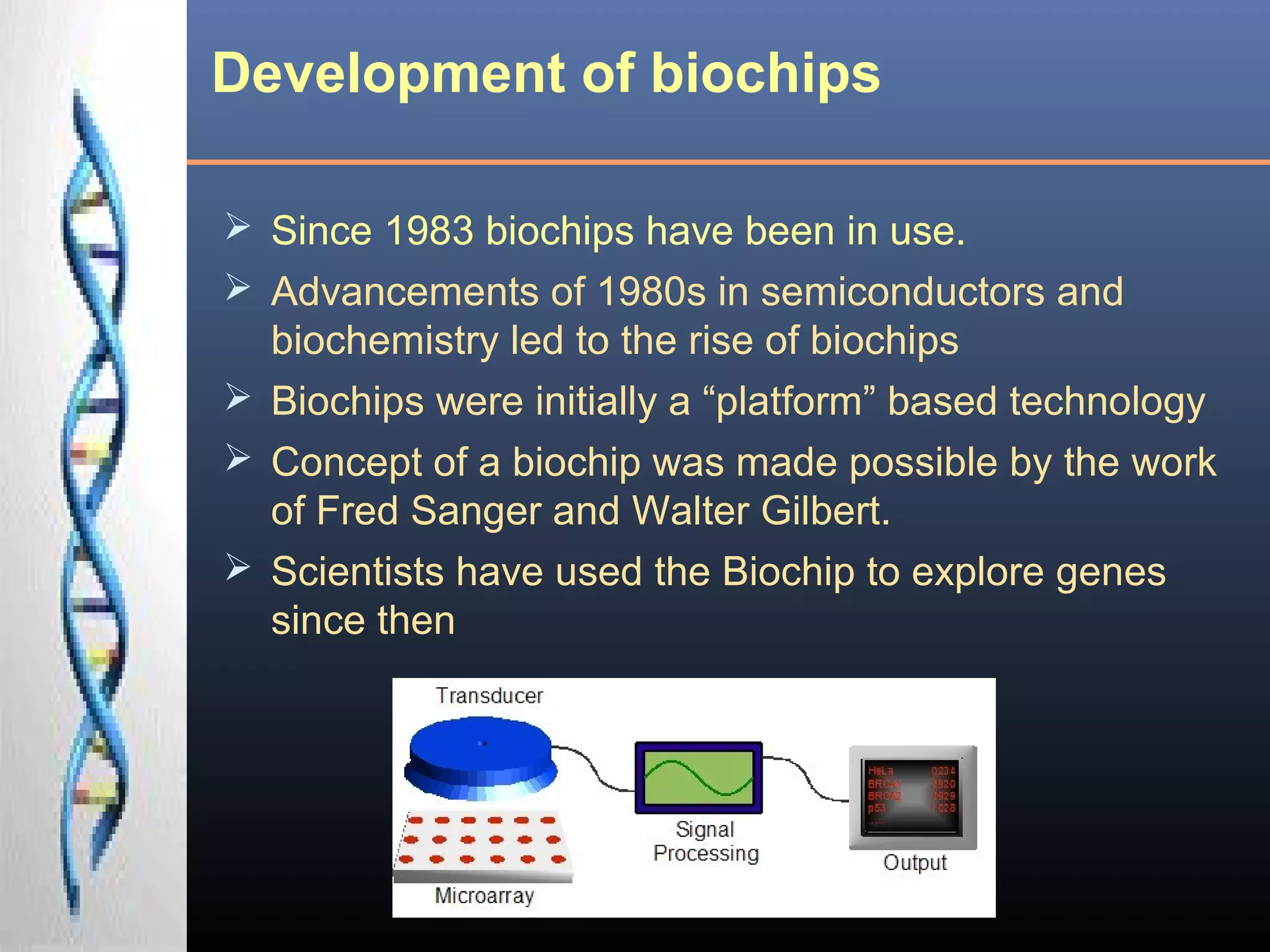
 Biochips are microscopic electronic devices
 Biochip requires microarray technology,
transduction and signal processing technology
 Made in a glass or Silicon wafer
 Biochips are capable to execute many hundred
operations simultaneously on a solid surface
 It combines genetics, molecular biology and
biochemistry
 Biochip Technology is the most significant
technology in biotechnology
 High throughput, mini size, automated and cost
effective
 Biochip is an important potential tool in life
science
Development of biochips
 Since 1983 biochips have been in use.
 Advancements of 1980s in semiconductors and
biochemistry led to the rise of biochips
 Biochips were initially a “platform” based technology
 Concept of a biochip was made possible by the work
of Fred Sanger and Walter Gilbert.
 Scientists have used the Biochip to explore genes
since then
Classification of Biochips
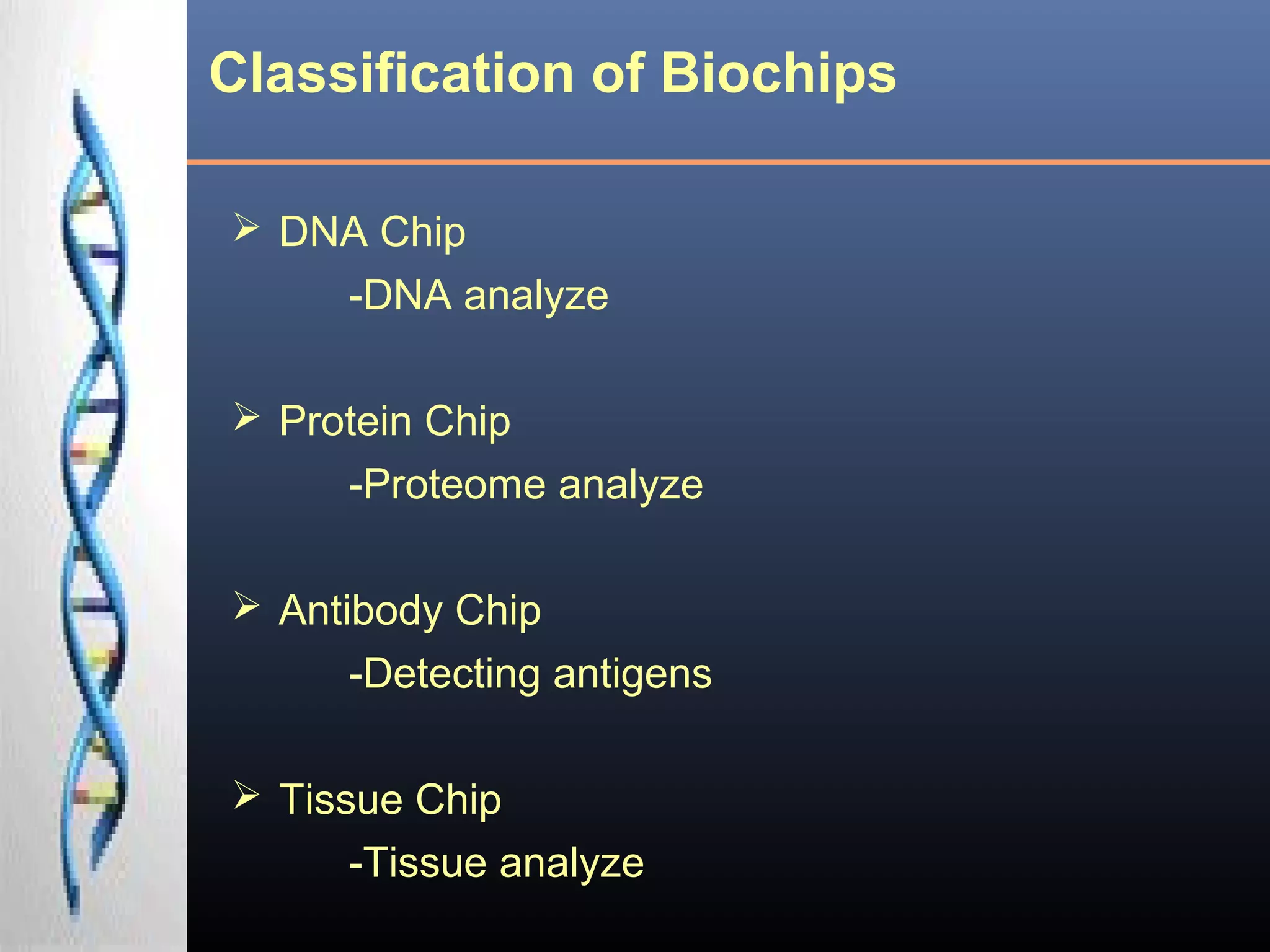
 DNA Chip
-DNA analyze
 Protein Chip
-Proteome analyze
 Antibody Chip
-Detecting antigens
 Tissue Chip
-Tissue analyze
Biochip Implant
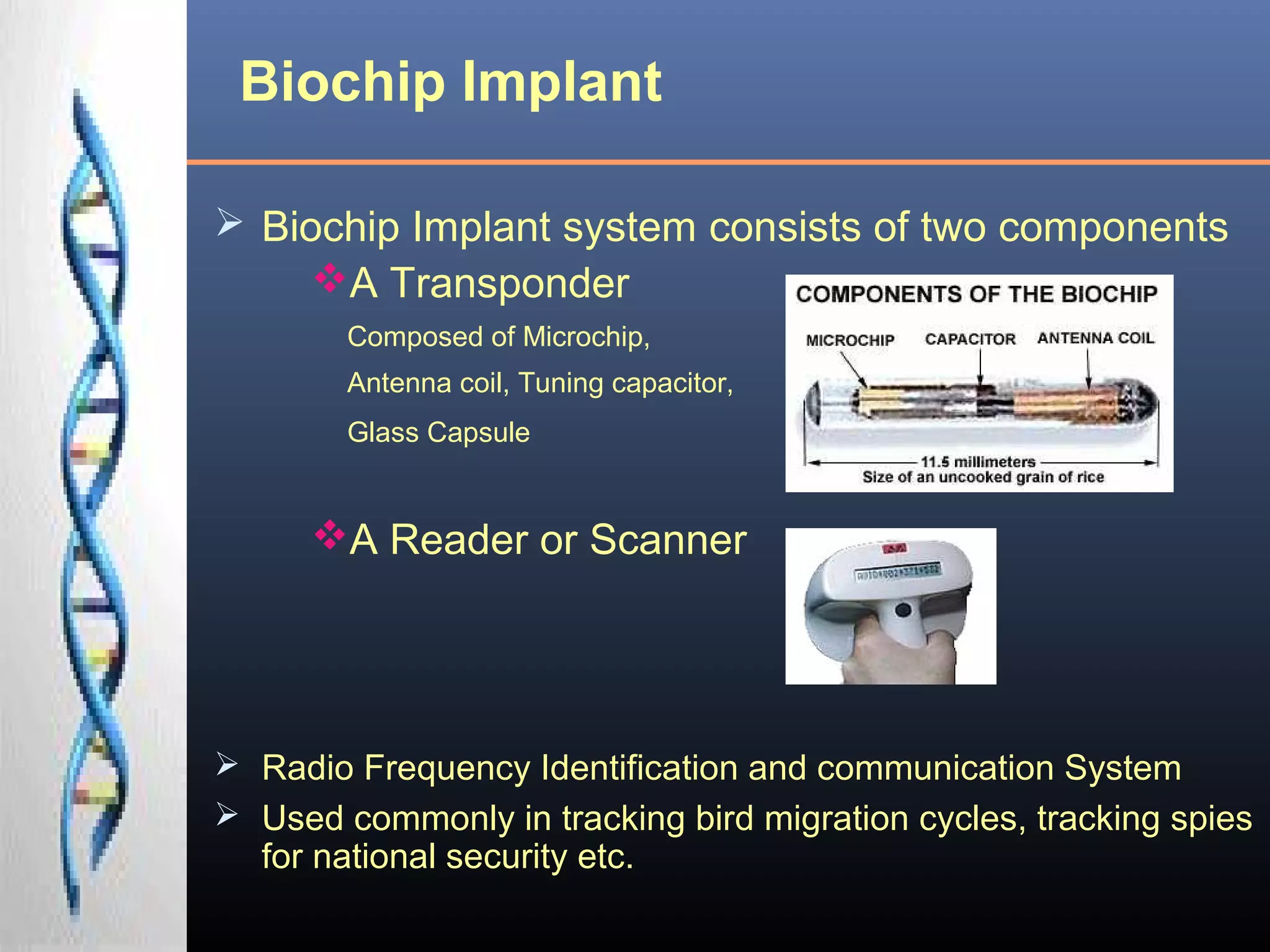
 Biochip Implant system consists of two components
A Transponder
Composed of Microchip,
Antenna coil, Tuning capacitor,
Glass Capsule
A Reader or Scanner
 Radio Frequency Identification and communication System
 Used commonly in tracking bird migration cycles, tracking spies
for national security etc.
Implant and Scanner
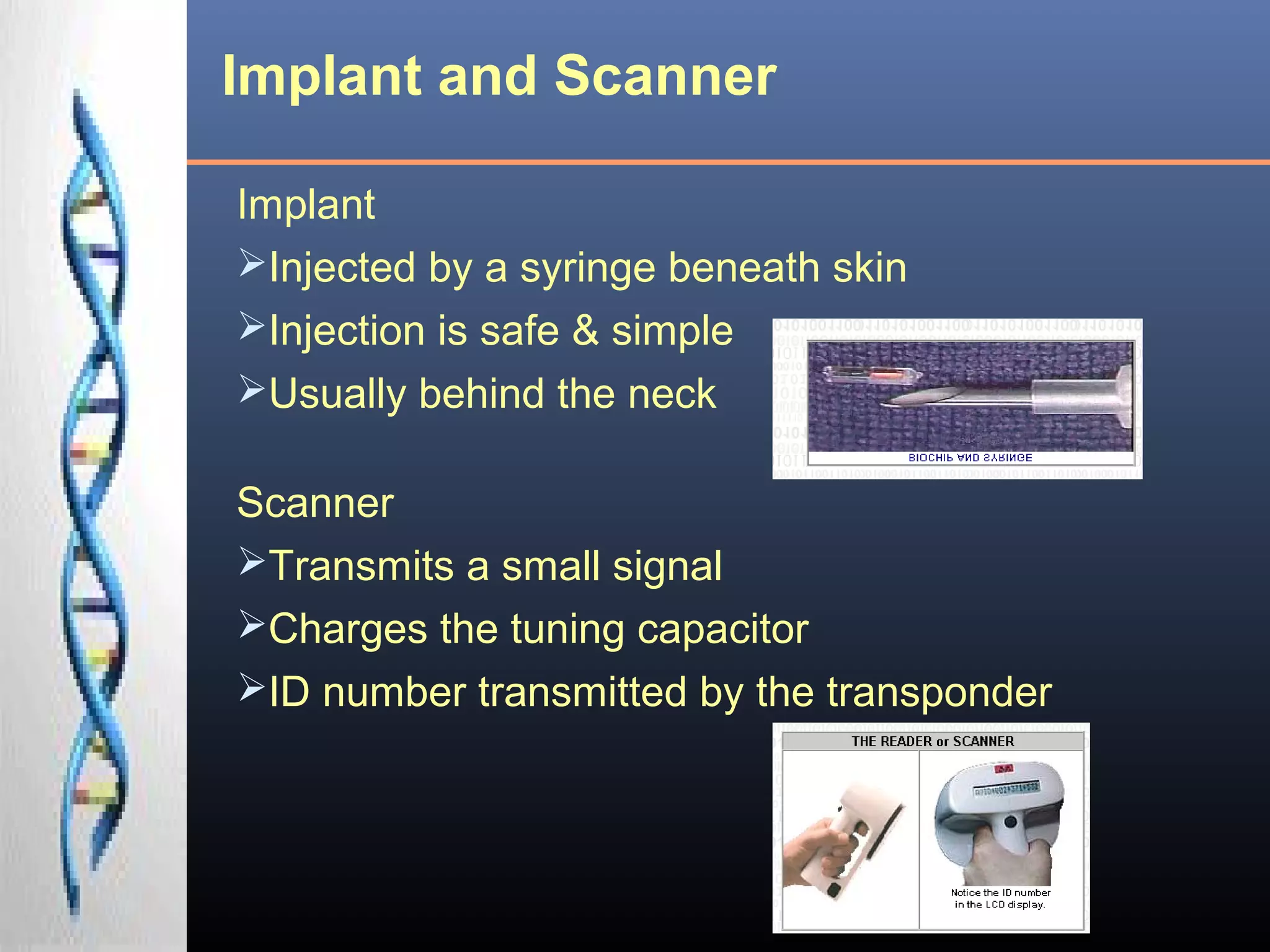
Implant
Injected by a syringe beneath skin
Injection is safe & simple
Usually behind the neck
Scanner
Transmits a small signal
Charges the tuning capacitor
ID number transmitted by the transponder
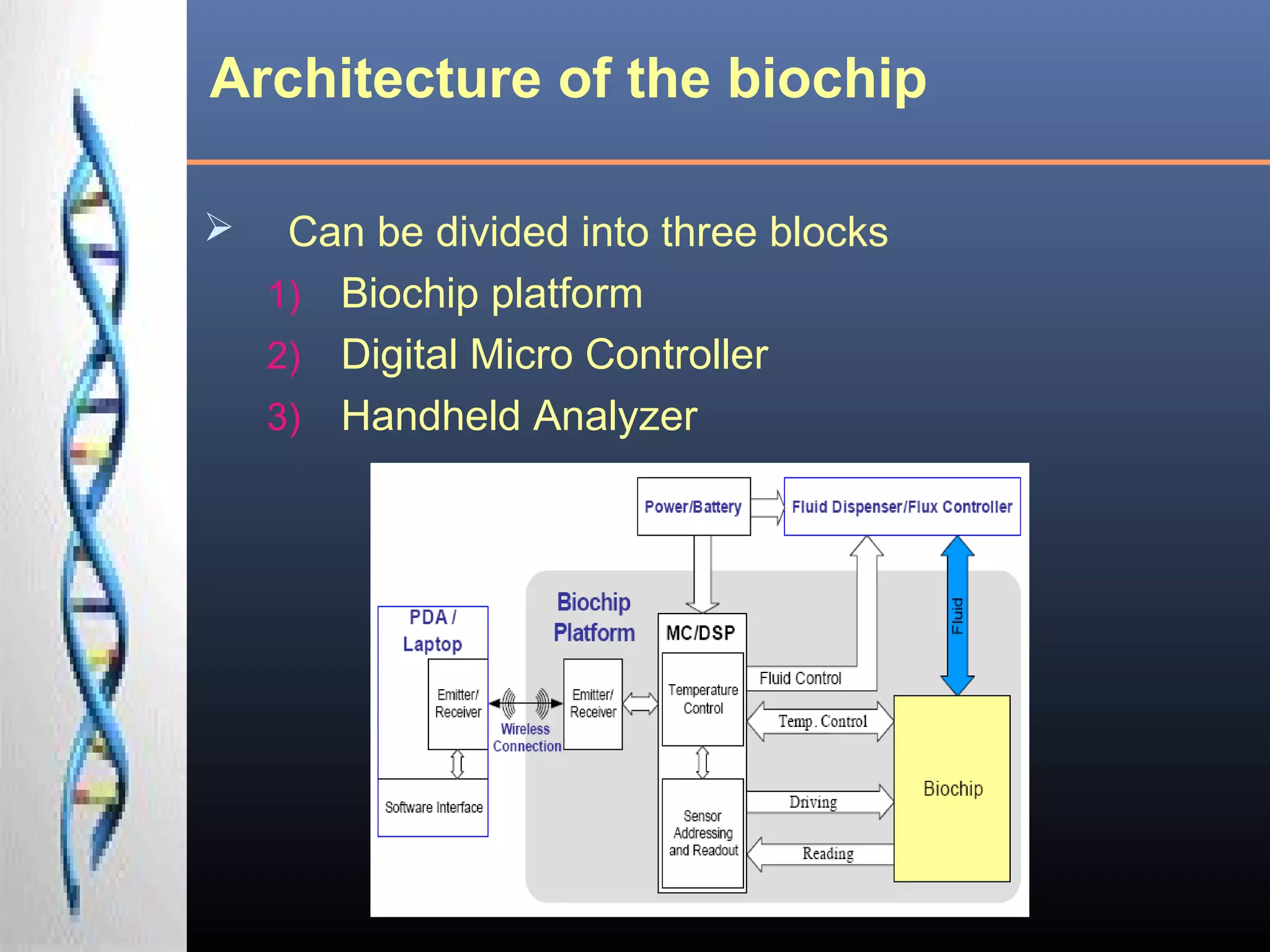
Architecture of the biochip
 Can be divided into three blocks
1) Biochip platform
2) Digital Micro Controller
3) Handheld Analyzer
Applications of biochips
 There are five potential markets for biochips:
1) Pharmaceutical research
2) Medical diagnostics
3) Forensics
4) Transplantation
5) Water and environmental testing
Research & Hypothesis
 Hypothesis for biochip research:
1) Reduce the size of the microarray and use multiple
micro array to reduce resistance hence temperature
2) Use NFC technology rather than 4G for effitient
transmission
3) Use a library to hold unique structure with potential
threat for compare hence quick analysis
4) Use decision tree to deduce the right form of data
analysis
1) Improve storage by Custom installation of a ROM
2) Improve efficiency and efficacy using Multifunctional
biochip
3) Development of 3D biochip could have better,
cheaper yet higher batch production of biochips
Future direction of biochips
 Implantable multifunctional biochip with
personal details and health monitoring
capability
 Bank Account details to use as NFC
 Medicare Identification to alarm necessary
authority if the need be by constantly
monitoring health
 Protecting bank details by storing it in RAM
which is powered by a transducer that converts
the kinetic energy in blood flow.
 Medicare ID and personal info are stored in the
ROM which is easily accessible
THANK YOU
QUESTIONS ?

Bio Chip Presentation

  • 1.
  • 2.
    ITC 571 –Emerging Technology & Innovation  Study Bio-chip: Doctor inside the body  Done by S.Sujanth(11527035)  Supervisor Dr. Ather Saeed IT Coordinator / Lecturer Charles Sturt University
  • 3.
    Outline  Introduction  History& Development of biochips  Architecture of the biochip  Classification of biochips  Applications of biochips  Research & Hypothesis  Future direction of biochips
  • 4.
    Introduction  Biochips aremicroscopic electronic devices  Biochip requires microarray technology, transduction and signal processing technology  Made in a glass or Silicon wafer  Biochips are capable to execute many hundred operations simultaneously on a solid surface  It combines genetics, molecular biology and biochemistry  Biochip Technology is the most significant technology in biotechnology  High throughput, mini size, automated and cost effective  Biochip is an important potential tool in life science
  • 5.
    Development of biochips Since 1983 biochips have been in use.  Advancements of 1980s in semiconductors and biochemistry led to the rise of biochips  Biochips were initially a “platform” based technology  Concept of a biochip was made possible by the work of Fred Sanger and Walter Gilbert.  Scientists have used the Biochip to explore genes since then
  • 6.
    Classification of Biochips DNA Chip -DNA analyze  Protein Chip -Proteome analyze  Antibody Chip -Detecting antigens  Tissue Chip -Tissue analyze
  • 7.
    Biochip Implant  BiochipImplant system consists of two components A Transponder Composed of Microchip, Antenna coil, Tuning capacitor, Glass Capsule A Reader or Scanner  Radio Frequency Identification and communication System  Used commonly in tracking bird migration cycles, tracking spies for national security etc.
  • 8.
    Implant and Scanner Implant Injectedby a syringe beneath skin Injection is safe & simple Usually behind the neck Scanner Transmits a small signal Charges the tuning capacitor ID number transmitted by the transponder
  • 9.
    Architecture of thebiochip  Can be divided into three blocks 1) Biochip platform 2) Digital Micro Controller 3) Handheld Analyzer
  • 10.
    Applications of biochips There are five potential markets for biochips: 1) Pharmaceutical research 2) Medical diagnostics 3) Forensics 4) Transplantation 5) Water and environmental testing
  • 11.
    Research & Hypothesis Hypothesis for biochip research: 1) Reduce the size of the microarray and use multiple micro array to reduce resistance hence temperature 2) Use NFC technology rather than 4G for effitient transmission 3) Use a library to hold unique structure with potential threat for compare hence quick analysis 4) Use decision tree to deduce the right form of data analysis 1) Improve storage by Custom installation of a ROM 2) Improve efficiency and efficacy using Multifunctional biochip 3) Development of 3D biochip could have better, cheaper yet higher batch production of biochips
  • 12.
    Future direction ofbiochips  Implantable multifunctional biochip with personal details and health monitoring capability  Bank Account details to use as NFC  Medicare Identification to alarm necessary authority if the need be by constantly monitoring health  Protecting bank details by storing it in RAM which is powered by a transducer that converts the kinetic energy in blood flow.  Medicare ID and personal info are stored in the ROM which is easily accessible
  • 13.