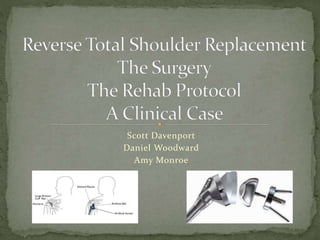
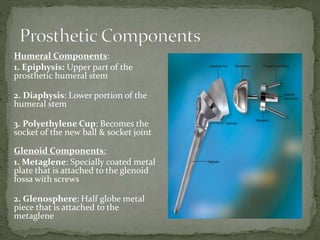
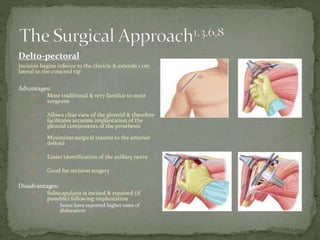
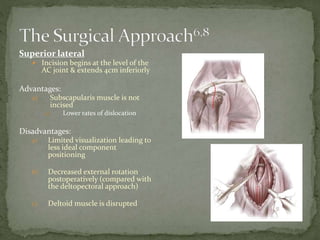
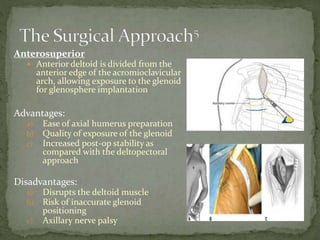
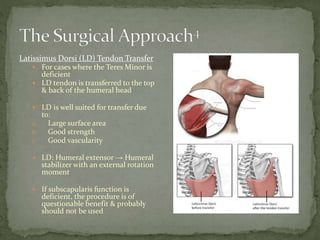
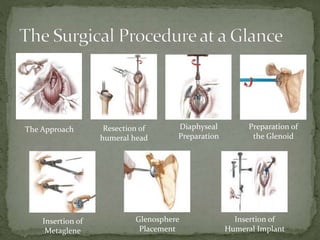
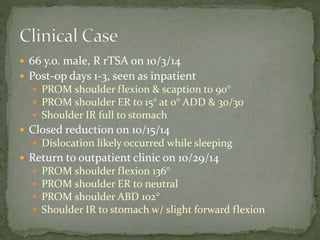
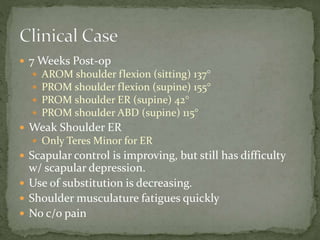
The document discusses reverse total shoulder arthroplasty (rTSA), including:
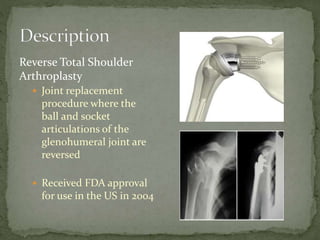
- The procedure reverses the ball and socket of the shoulder joint.
- It was approved for use in the US in 2004.
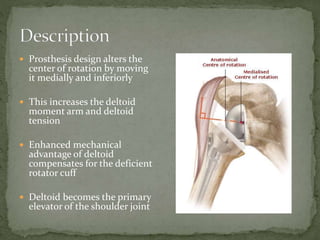
- The new design moves the center of rotation medially and inferiorly, increasing deltoid tension and function as the primary shoulder elevator.
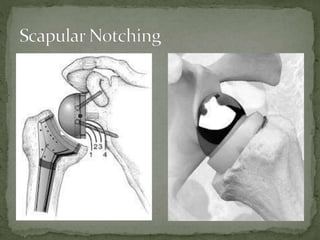
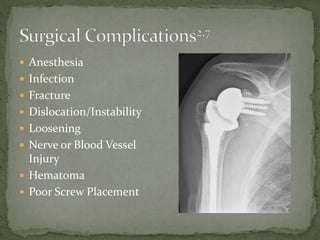
- Indications include severe rotator cuff deficiency or previous TSA failure. Contraindications include infection or inadequate bone stock. Potential complications range from minor issues like stiffness or hematoma to more serious problems like prosthesis loosening or nerve damage.