
Dr Rajesh Purushothaman
Associate Professor
Government Medical College, Kozhikode
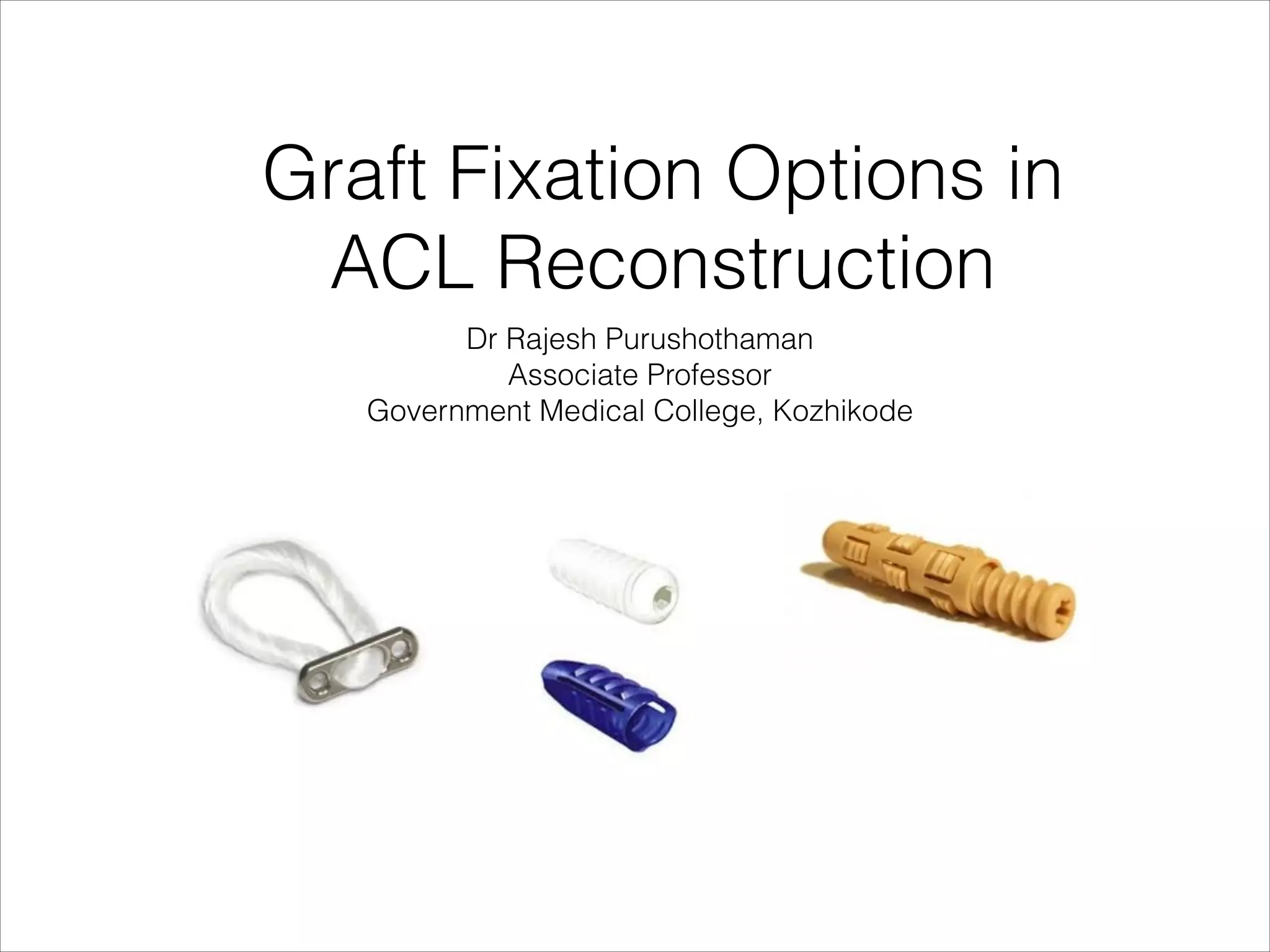
Graft Fixation Options in

ACL Reconstruction
Goal
Functional and anatomical
restoration of ACL in
symptomatic ACL deficiency
Most Important Factors
Under Surgeon's Control
• Graft selection
• Graft positioning
• Graft fixation
• Rehabilitation
Graft Healing
BTB graft heal by bone to bone
healing by 6 weeks

Soft tissue grafts incorporate by
Sharpey fibers by 12weeks

Allografts take longer

Till that time, fixation device should
secure the graft
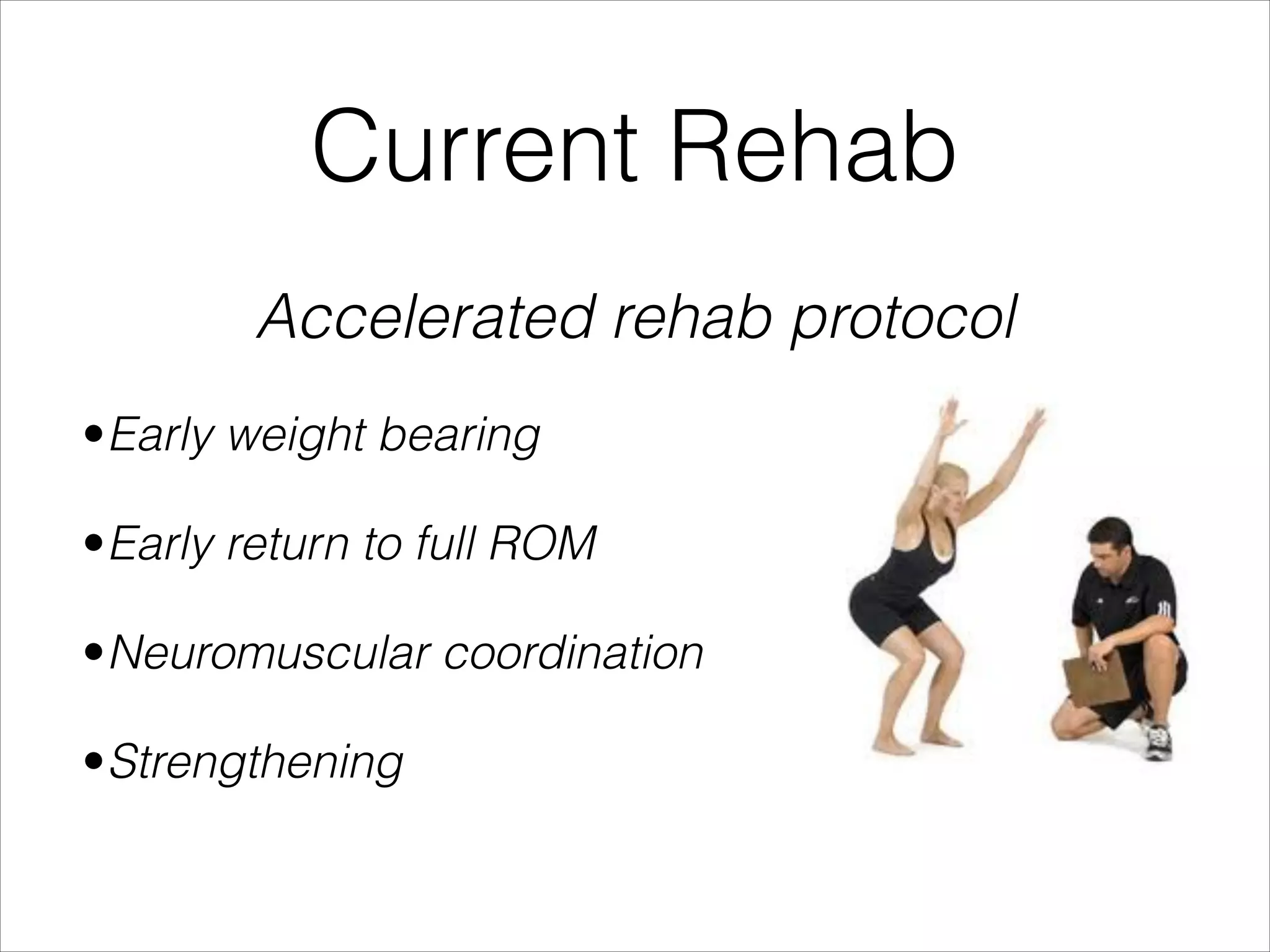
Current Rehab
Accelerated rehab protocol
•Early weight bearing
•Early return to full ROM
•Neuromuscular coordination
•Strengthening
Biomechanics of Rehab
• Reconstructed ACL subjected to
150-500N forces by activities of
daily living and rehab
• Within the first 6 weeks, the graft
is subjected to 2,20,000 such
loading cycles
Noyes FR, Butler DL, Grood ES, Zernicke RF, Hefzy MS. Biomechanical analysis of human ligament
grafts used in knee-ligament repairs and reconstructions. J Bone Joint Surg (Am) 1984;66:344–352.
Biomechanics
•Ultimate load to failure is about 3000N for BPTB
and 4000N for QSTGG
•This far exceeds the usual forces of 150-500N
•Fixation has load to failure of about 500N

Fixation is the weakest link in the early
postoperative period
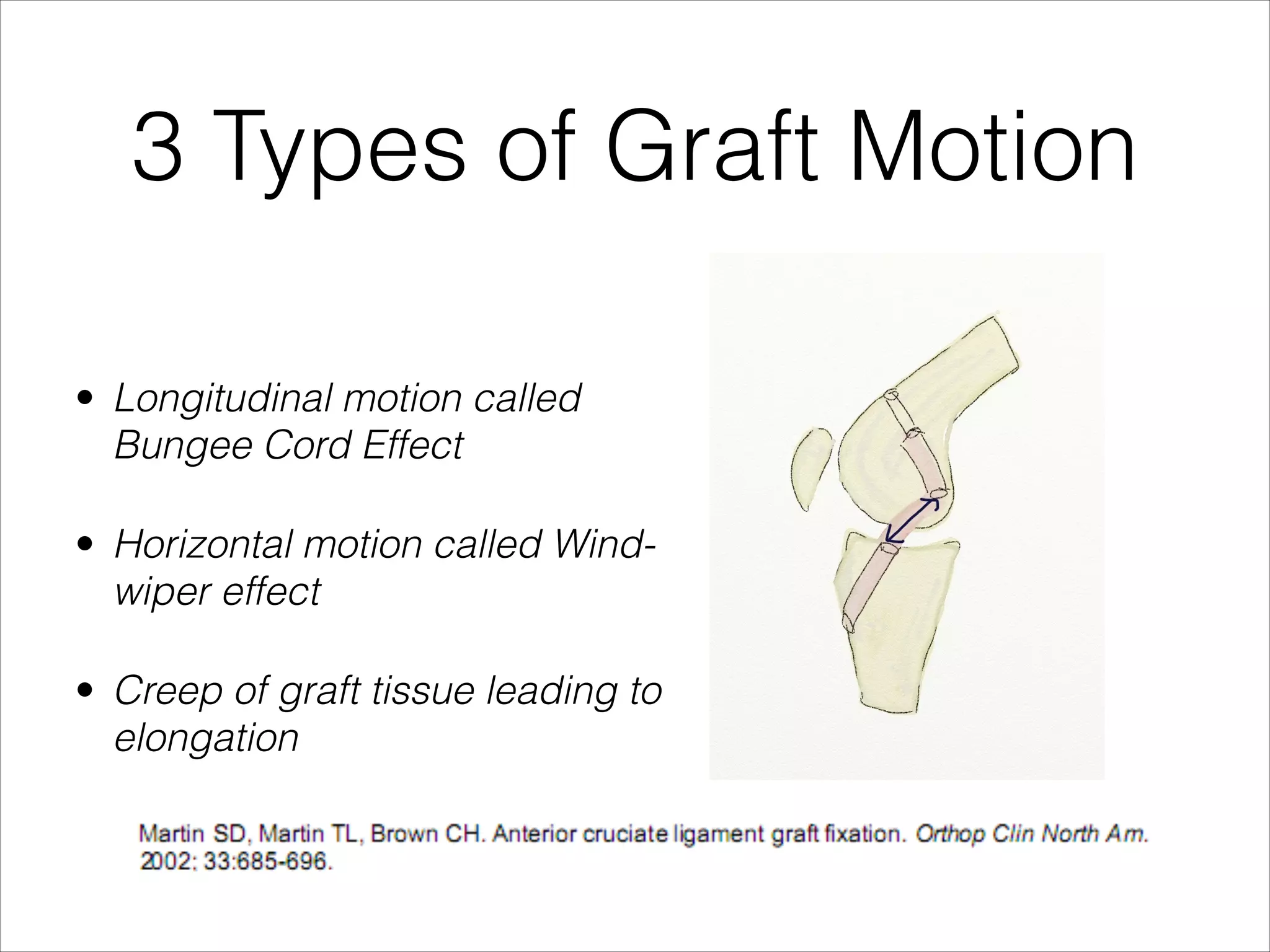
3 Types of Graft Motion
• Longitudinal motion called
Bungee Cord Effect
• Horizontal motion called Wind-
wiper effect
• Creep of graft tissue leading to
elongation
What Does Graft Tunnel
Motion Do?
• >3mm motion interferes with graft
incorporation
• May cause tunnel widening
Tunnel Widening
• Due to biological and mechanical causes
• More with non-aperture fixation
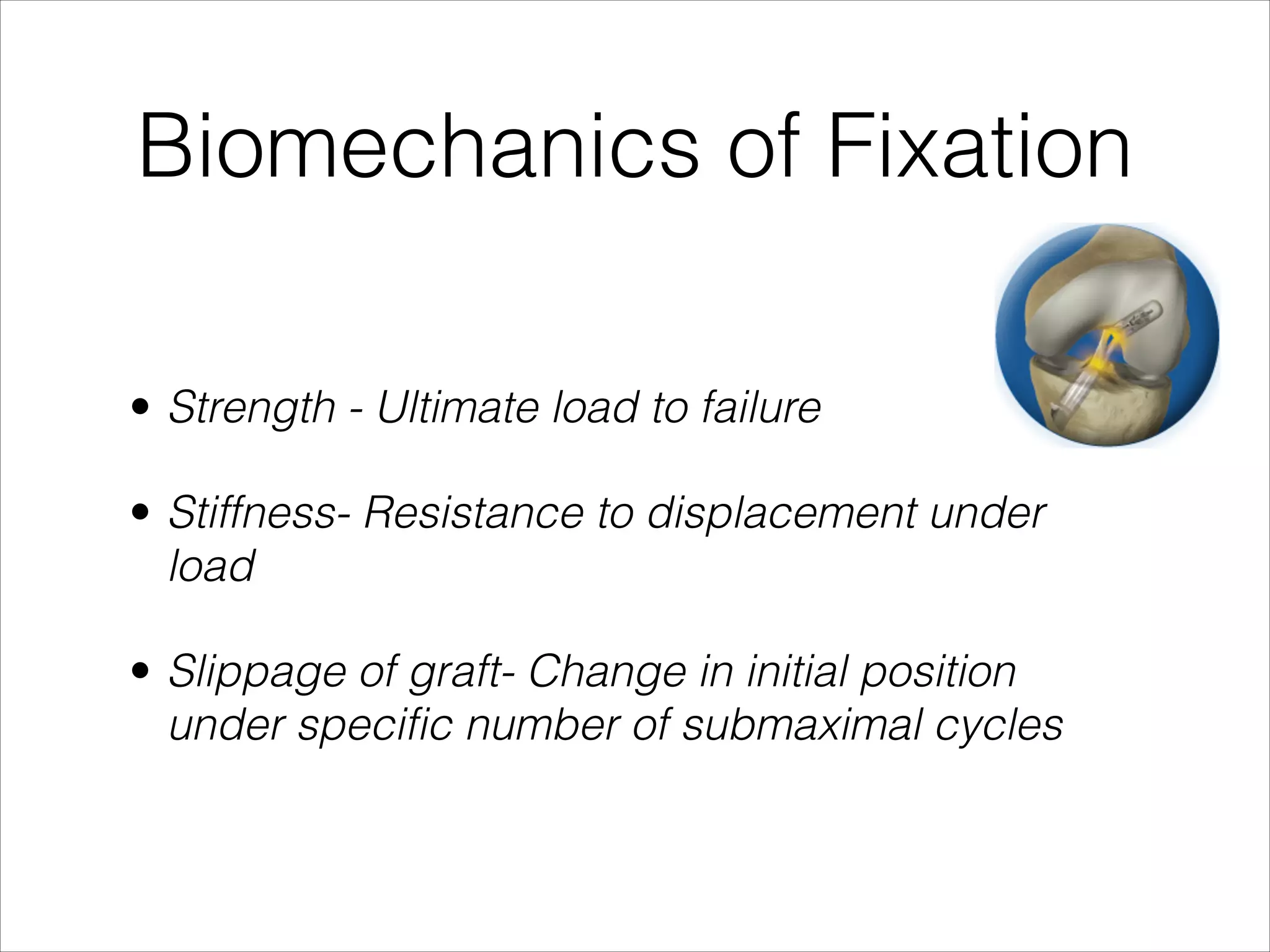
Biomechanics of Fixation
• Strength - Ultimate load to failure
• Stiffness- Resistance to displacement under
load
• Slippage of graft- Change in initial position
under specific number of submaximal cycles
Ideal Fixation
• Strong enough to avoid
failure
• Stiff enough to restore
knee stability
• Secure enough to avoid
slippage
Ideal Graft Fixation
• Anatomic
• Biocompatible
• Safe and reproducible
• MRI compatible
• Allow easy revision
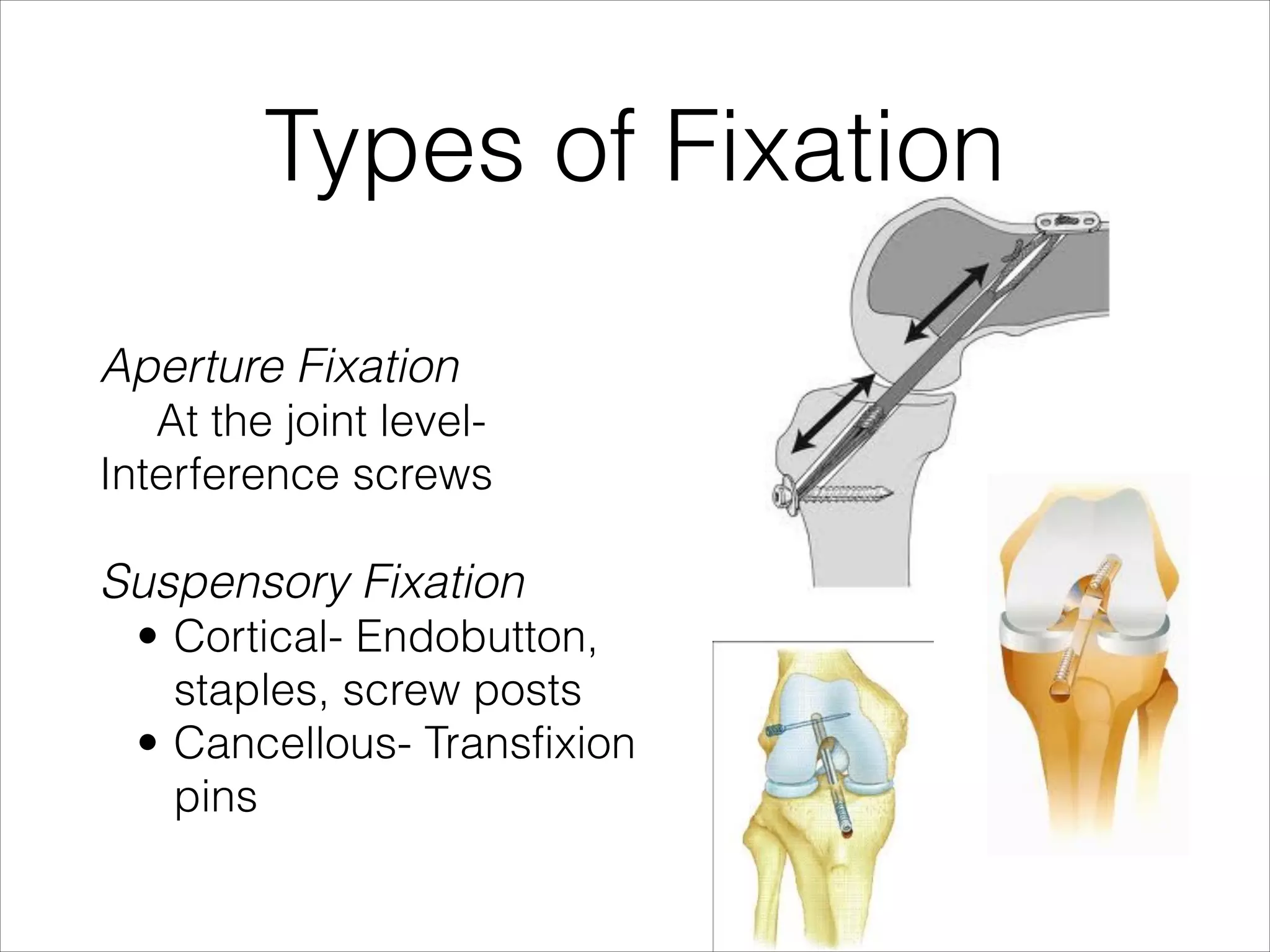
Types of Fixation
Aperture Fixation
At the joint level-
Interference screws
Suspensory Fixation
• Cortical- Endobutton,
staples, screw posts
• Cancellous- Transfixion
pins
Interference Screws
Interference is defined
as the amount by which
diameter of the screw
exceeds the gap
between graft and the
tunnel
Advantages of
Aperture Fixation
• Minimises Graft-
Tunnel motion
• Less femoral canal
widening
• Creep is less
Factors Influencing

Interference Screw Fixation
Length
Size and geometry of
screw
Divergence of screw
• Torque of screw
insertion
• BMD
• Screw Material
Length
• Longer screw provide
better fixation
• In BPTB engage only
the bone plug
Stadelmaier DM, Lowe WR, Elah OA, Noble PC, Kohl HW 3rd. Cyclic pull-out strength
of hamstring tendon graft fixation with soft tissue interference screws: influence of
screw length. Am J Sports Med 1999;27:778-83.
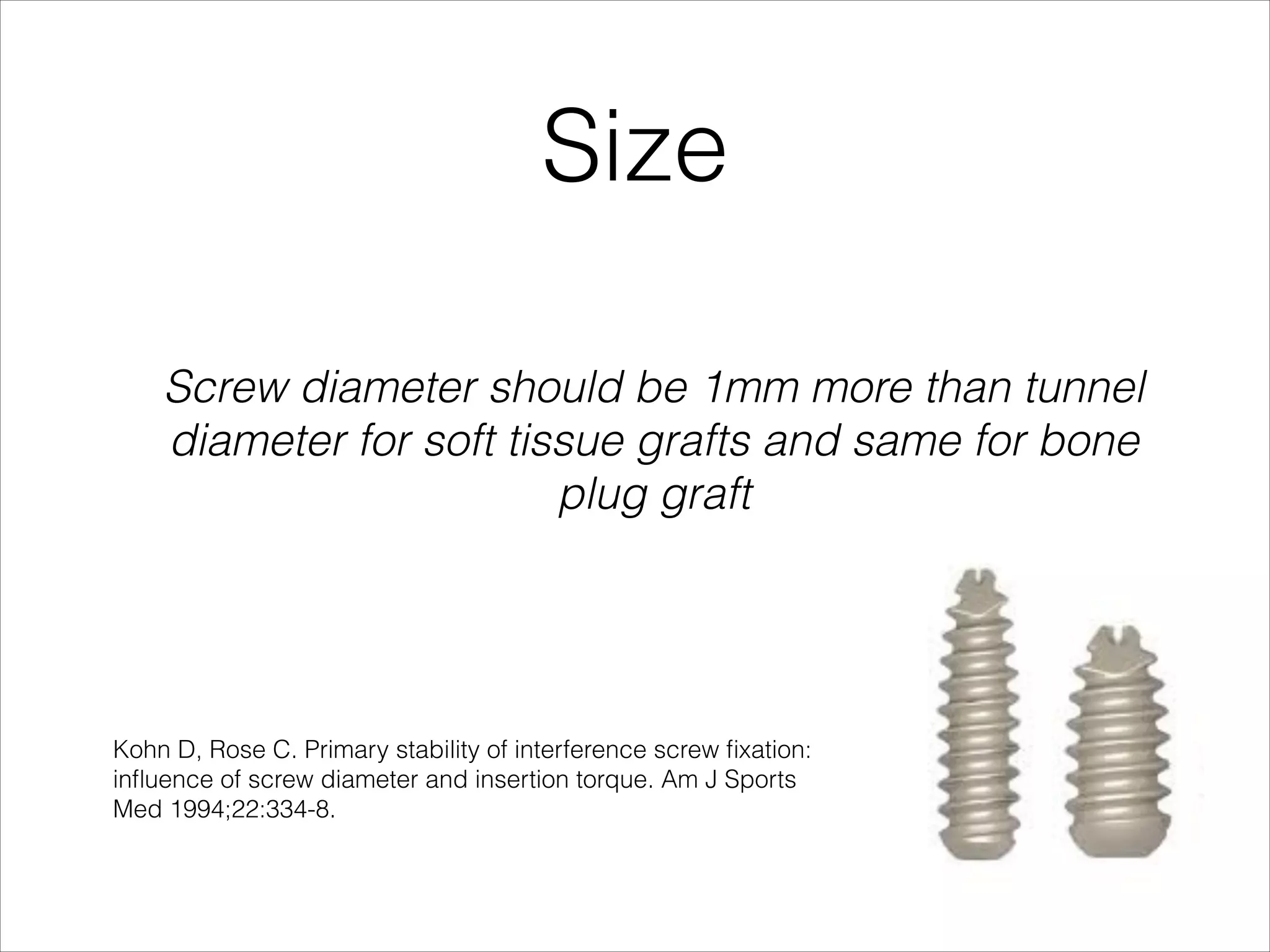
Size
Screw diameter should be 1mm more than tunnel
diameter for soft tissue grafts and same for bone
plug graft
Kohn D, Rose C. Primary stability of interference screw fixation:
influence of screw diameter and insertion torque. Am J Sports
Med 1994;22:334-8.
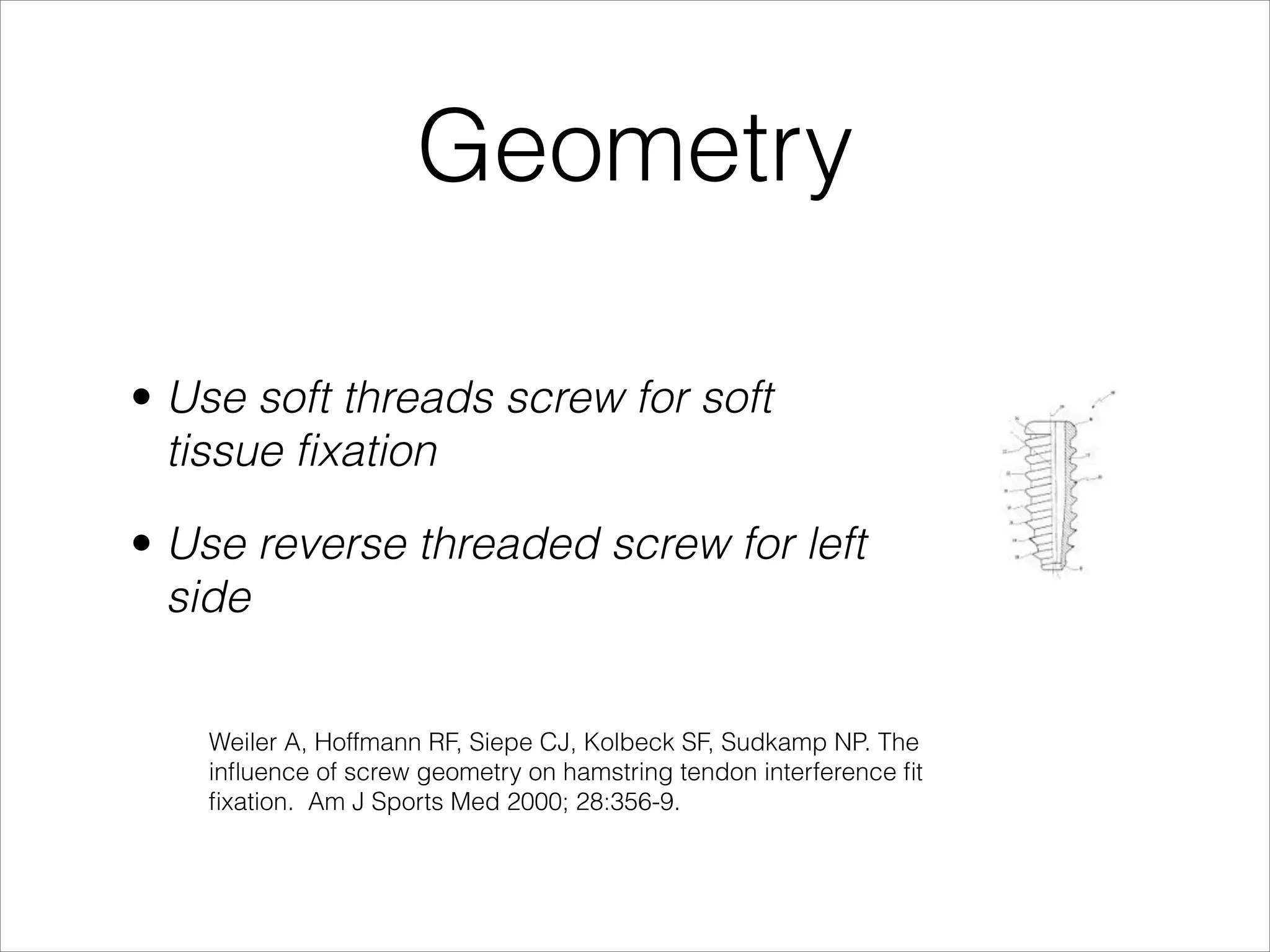
Geometry
• Use soft threads screw for soft
tissue fixation
• Use reverse threaded screw for left
side
Weiler A, Hoffmann RF, Siepe CJ, Kolbeck SF, Sudkamp NP. The
influence of screw geometry on hamstring tendon interference fit
fixation. Am J Sports Med 2000; 28:356-9.
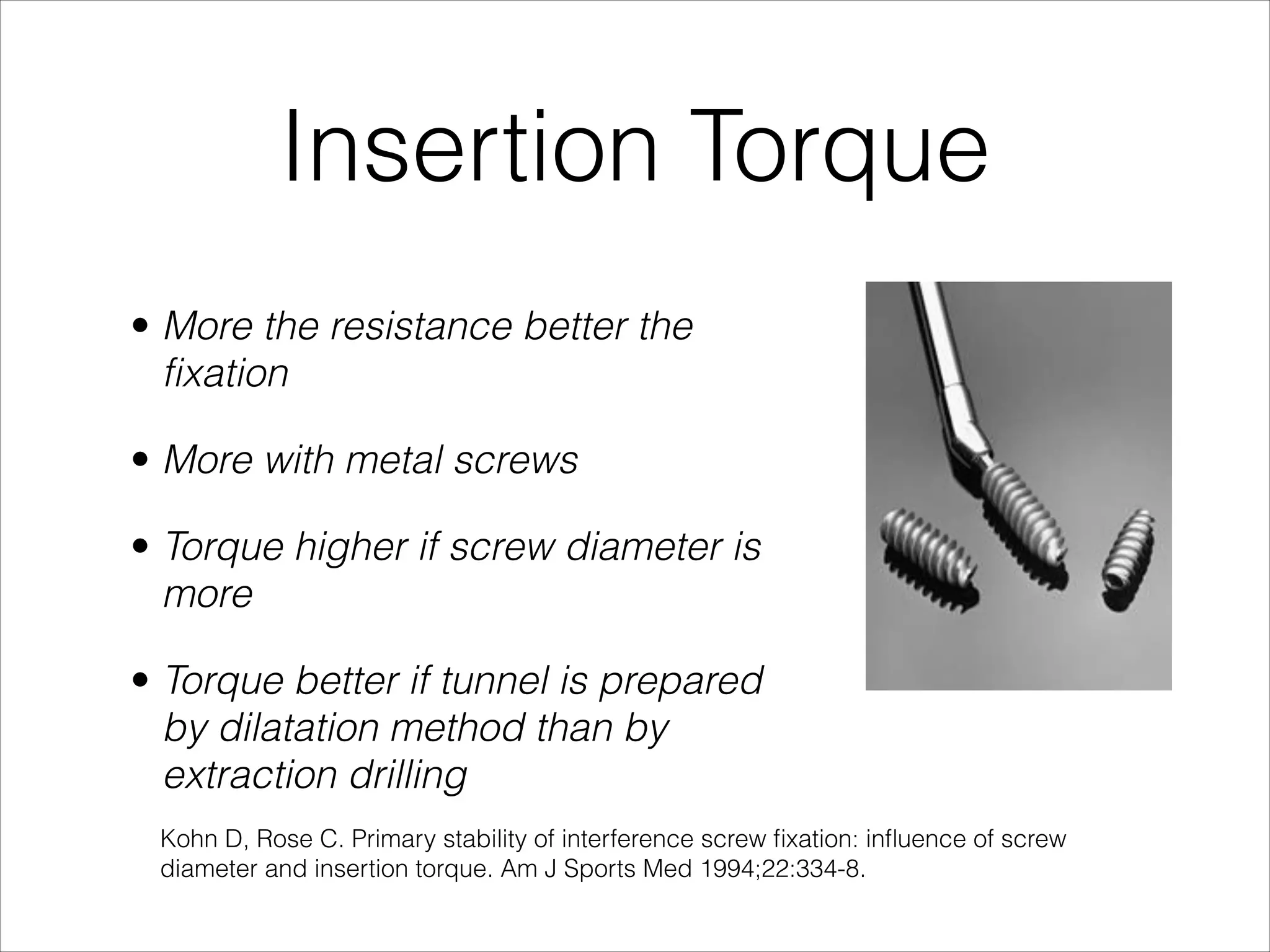
Insertion Torque
• More the resistance better the
fixation
• More with metal screws
• Torque higher if screw diameter is
more
• Torque better if tunnel is prepared
by dilatation method than by
extraction drilling
Kohn D, Rose C. Primary stability of interference screw fixation: influence of screw
diameter and insertion torque. Am J Sports Med 1994;22:334-8.
Tunnel Dilatation
• Under ream by 2mm
• Next 2mm increase done
using dilators
• Compacts the bone than
removing it
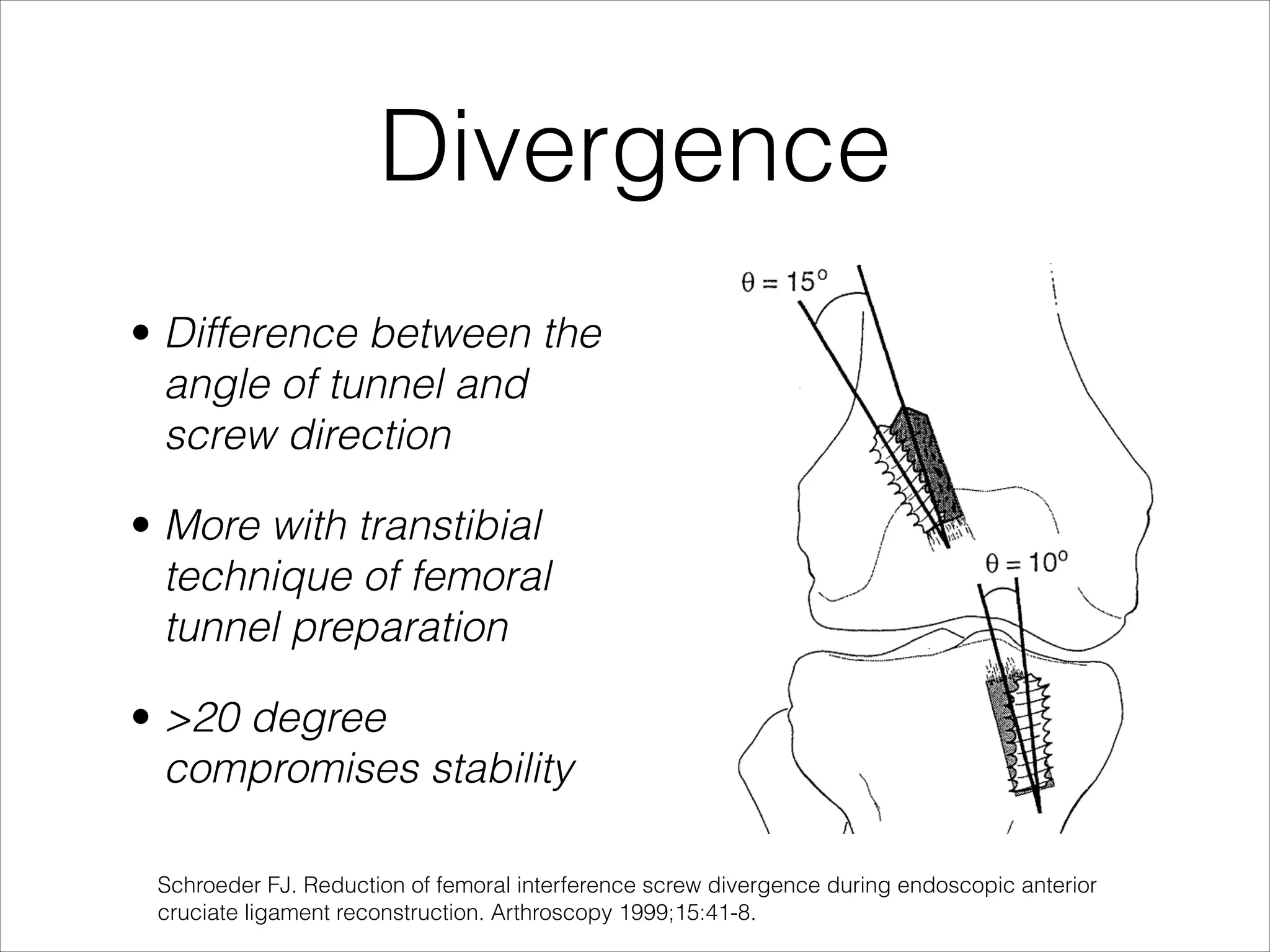
Divergence
• Difference between the
angle of tunnel and
screw direction
• More with transtibial
technique of femoral
tunnel preparation
• >20 degree
compromises stability
Schroeder FJ. Reduction of femoral interference screw divergence during endoscopic anterior
cruciate ligament reconstruction. Arthroscopy 1999;15:41-8.
BMD
• <0.6 gm2 associated
with less pull out
strength
• Use hybrid technique
Brand JC Jr, Pienkowski D, Steenlage E, et al. Interference screw fixation strength of a quadrupled
hamstring tendon graft is directly related to bone mineral density and insertion torque. Am J Sports Med
2000;28:705-10.
Bioabsorbable screws
• Polyglycolide-
absorbs early, hence
loses fixation early
• Crystalline
polylactides take
years to be absorbed
Attractions
• No need for implant
removal
• Does not interfere with
MRI
• Revision easier
But…….
• May break during insertion. Use
with special screw driver only
• Tissue reaction in some
• Fixation lost after partial
degradation
And…
•By 6 weeks, 80% loss of strength and
60% loss of stiffness
•Incidence of effusion is more
•Tunnel widening more
Titanium Or Steel
•Titanium gets covered by bone
•Steel gets enveloped by fibrous
tissue
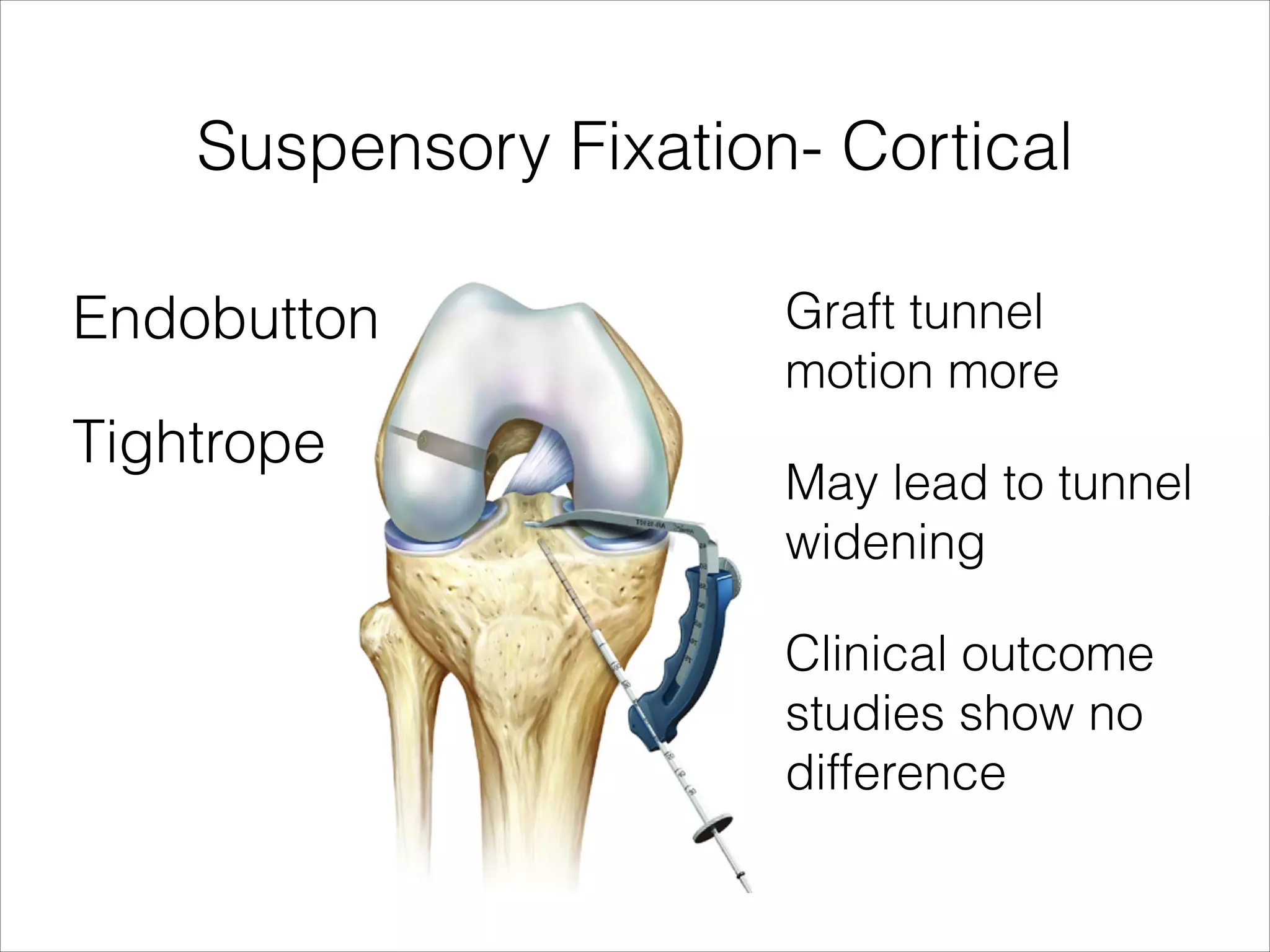
Suspensory Fixation- Cortical
Endobutton
Tightrope
Graft tunnel
motion more
May lead to tunnel
widening
Clinical outcome
studies show no
difference
Endobutton
• First generation suspensory
fixation
• Femoral tunnel has 2 parts-
Insertion & Connection parts
• Insertion part drilled to the
diameter of graft
• Connection part is of 4.5mm
diameter
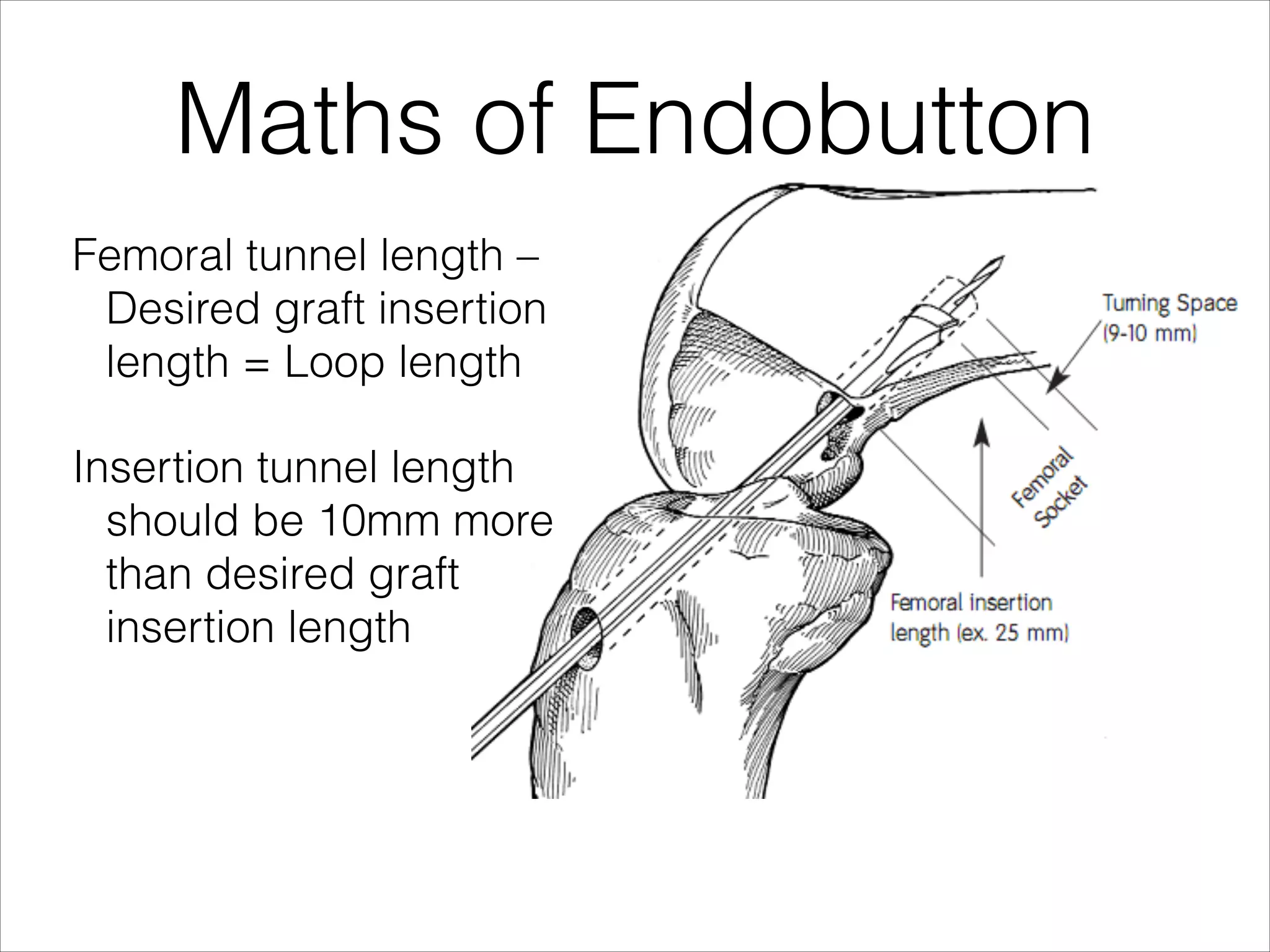
Maths of Endobutton
Femoral tunnel length –
Desired graft insertion
length = Loop length
Insertion tunnel length
should be 10mm more
than desired graft
insertion length
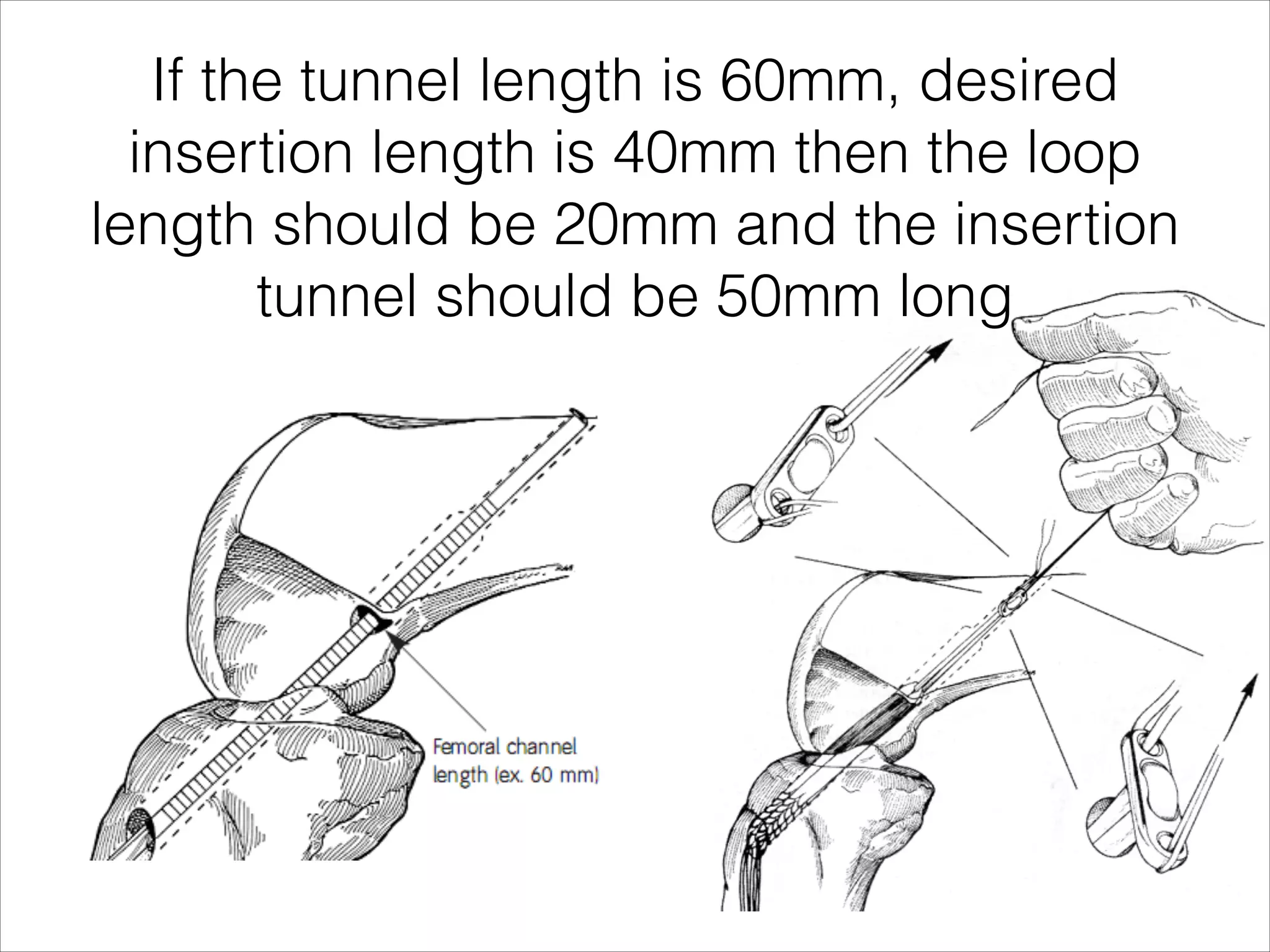
If the tunnel length is 60mm, desired
insertion length is 40mm then the loop
length should be 20mm and the insertion
tunnel should be 50mm long
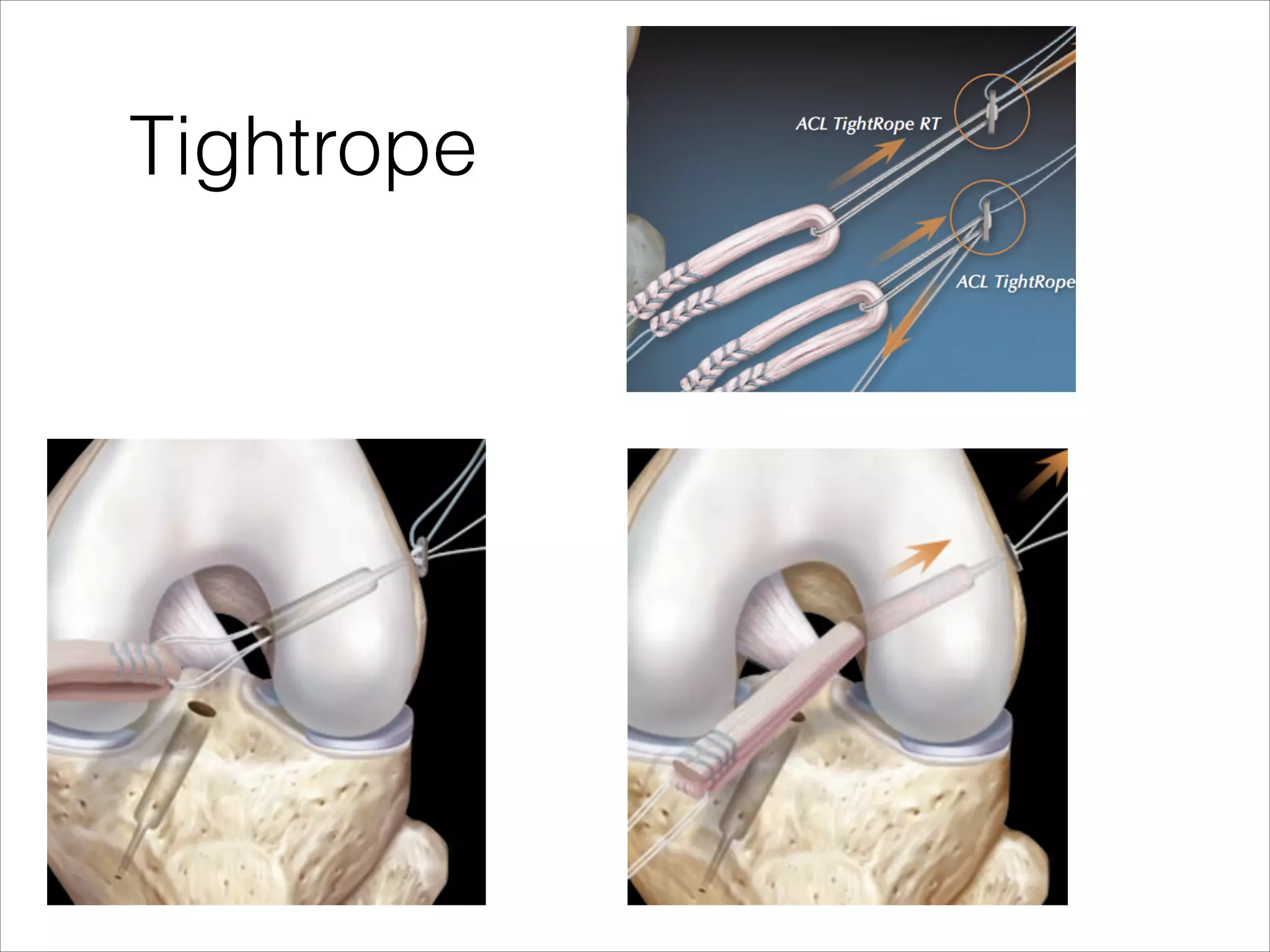
Tightrope
Second generation
suspensory fixation
Loop length reduced
after flipping by
tightening the rope
Allows full length filling
of graft part of the
femoral tunnel
Tightrope
Fixation Options
•Femoral
• Bone plug fixation
• Soft tissue fixation
•Tibial
• Bone plug fixation
• Soft tissue fixation
Bone Plug Fixation-
Femur
• Interference screws-
Gold standard
• Suspension type-
Endobutton BTB,
• Transfixation type-
Transfix
Bone Plug Fixation
Tibia
• Staples with or without
sutures
• Screws as screw
posts
• Interference screws
Soft Tissue Fixation
Femur
• Interference screws
• Suspension type like
Endobutton, Tightrope
• Transfixation type
Interference screw fixation
especially with bioscrews
needs slower rehabilitation
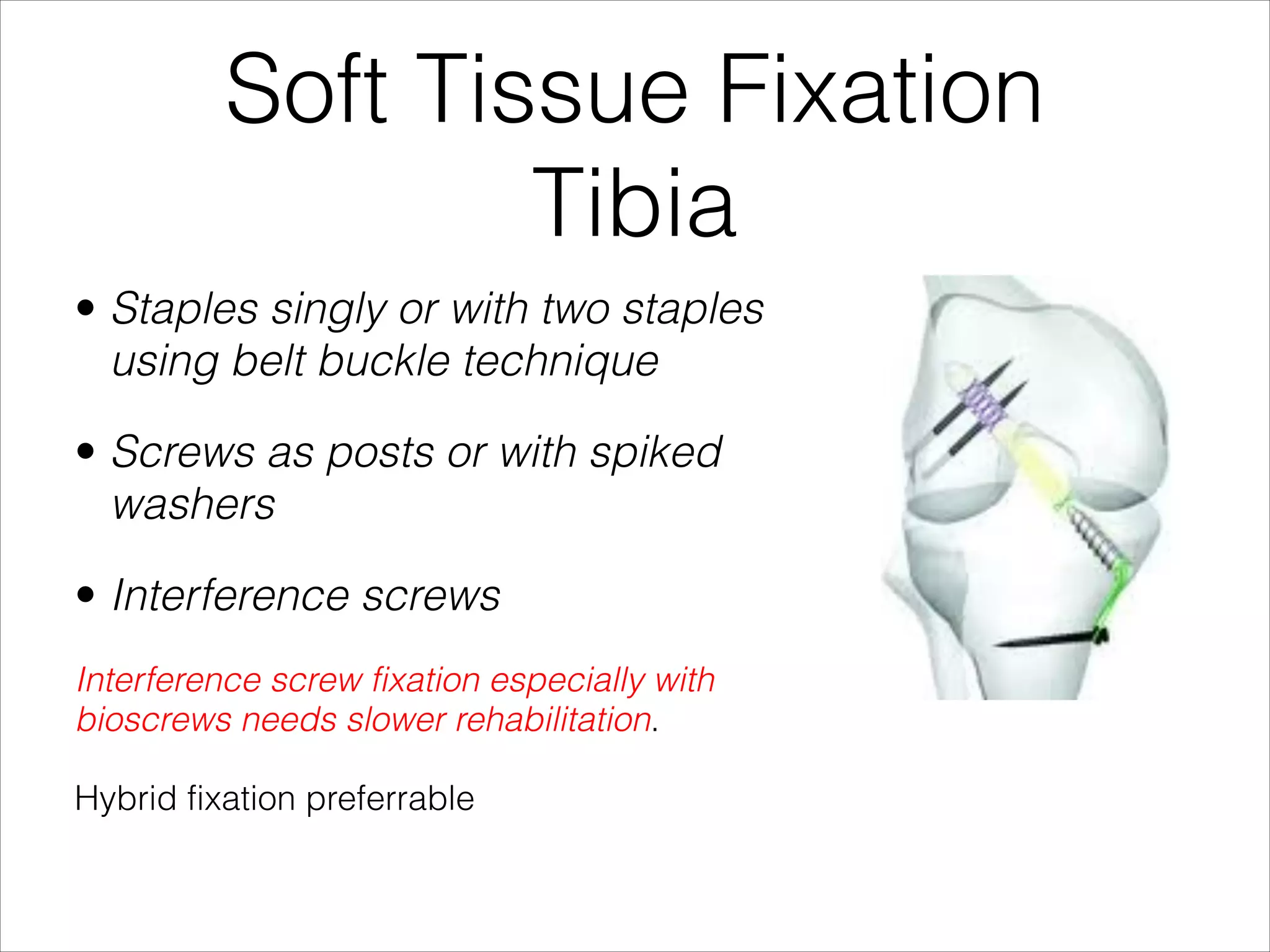
Soft Tissue Fixation
Tibia
• Staples singly or with two staples
using belt buckle technique
• Screws as posts or with spiked
washers
• Interference screws
Interference screw fixation especially with
bioscrews needs slower rehabilitation.
Hybrid fixation preferrable
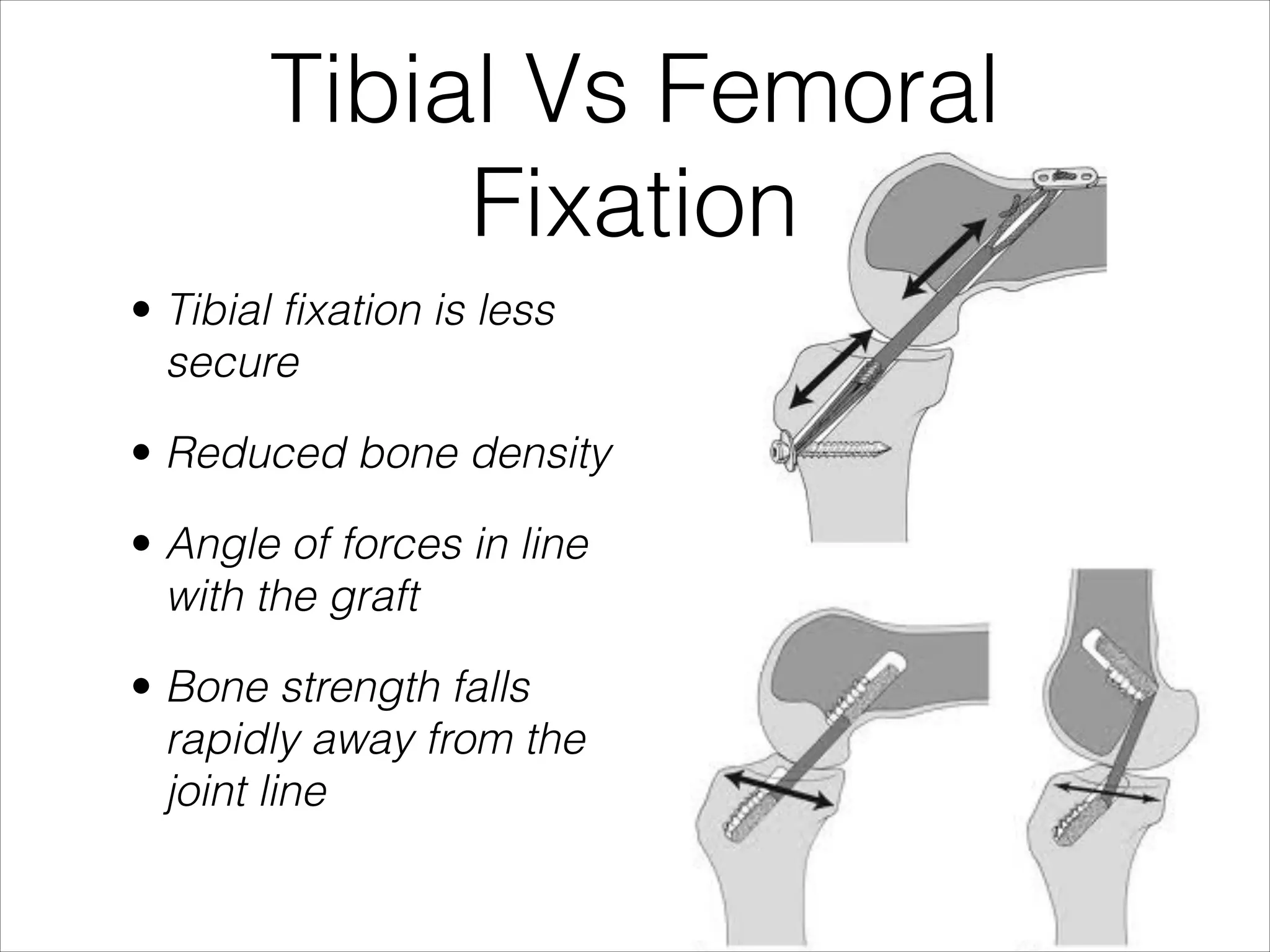
Tibial Vs Femoral
Fixation
• Tibial fixation is less
secure
• Reduced bone density
• Angle of forces in line
with the graft
• Bone strength falls
rapidly away from the
joint line
Conclusions
• In the early postoperative period fixation is the
weakest link
• Tibial fixation is at greater risk of failure
• Clinical results of various methods are
comparable
• Tunnel widening is a growing concern
Conclusions
• Aperture fixation theoretically better
• Interference screws are the gold standard
• Tunnel dilation improves fixation
• Hybrid fixation is becoming more popular
Thank You
Dr Rajesh Purushothaman
Associate Professor of Orthopaedics
Government Medical College,
Kozhikode, Kerala, India
drrajp@gmail.com

Acl graft fixation options

  • 1.
    Dr Rajesh Purushothaman AssociateProfessor Government Medical College, Kozhikode Graft Fixation Options in
 ACL Reconstruction
  • 2.
    Goal Functional and anatomical restorationof ACL in symptomatic ACL deficiency
  • 3.
    Most Important Factors UnderSurgeon's Control • Graft selection • Graft positioning • Graft fixation • Rehabilitation
  • 4.
    Graft Healing BTB graftheal by bone to bone healing by 6 weeks Soft tissue grafts incorporate by Sharpey fibers by 12weeks Allografts take longer Till that time, fixation device should secure the graft
  • 5.
    Current Rehab Accelerated rehabprotocol •Early weight bearing •Early return to full ROM •Neuromuscular coordination •Strengthening
  • 6.
    Biomechanics of Rehab •Reconstructed ACL subjected to 150-500N forces by activities of daily living and rehab • Within the first 6 weeks, the graft is subjected to 2,20,000 such loading cycles Noyes FR, Butler DL, Grood ES, Zernicke RF, Hefzy MS. Biomechanical analysis of human ligament grafts used in knee-ligament repairs and reconstructions. J Bone Joint Surg (Am) 1984;66:344–352.
  • 7.
    Biomechanics •Ultimate load tofailure is about 3000N for BPTB and 4000N for QSTGG •This far exceeds the usual forces of 150-500N •Fixation has load to failure of about 500N Fixation is the weakest link in the early postoperative period
  • 8.
    3 Types ofGraft Motion • Longitudinal motion called Bungee Cord Effect • Horizontal motion called Wind- wiper effect • Creep of graft tissue leading to elongation
  • 9.
    What Does GraftTunnel Motion Do? • >3mm motion interferes with graft incorporation • May cause tunnel widening
  • 10.
    Tunnel Widening • Dueto biological and mechanical causes • More with non-aperture fixation
  • 11.
    Biomechanics of Fixation •Strength - Ultimate load to failure • Stiffness- Resistance to displacement under load • Slippage of graft- Change in initial position under specific number of submaximal cycles
  • 12.
    Ideal Fixation • Strongenough to avoid failure • Stiff enough to restore knee stability • Secure enough to avoid slippage
  • 13.
    Ideal Graft Fixation •Anatomic • Biocompatible • Safe and reproducible • MRI compatible • Allow easy revision
  • 14.
    Types of Fixation ApertureFixation At the joint level- Interference screws Suspensory Fixation • Cortical- Endobutton, staples, screw posts • Cancellous- Transfixion pins
  • 15.
    Interference Screws Interference isdefined as the amount by which diameter of the screw exceeds the gap between graft and the tunnel
  • 16.
    Advantages of Aperture Fixation •Minimises Graft- Tunnel motion • Less femoral canal widening • Creep is less
  • 17.
    Factors Influencing
 Interference ScrewFixation Length Size and geometry of screw Divergence of screw • Torque of screw insertion • BMD • Screw Material
  • 18.
    Length • Longer screwprovide better fixation • In BPTB engage only the bone plug Stadelmaier DM, Lowe WR, Elah OA, Noble PC, Kohl HW 3rd. Cyclic pull-out strength of hamstring tendon graft fixation with soft tissue interference screws: influence of screw length. Am J Sports Med 1999;27:778-83.
  • 19.
    Size Screw diameter shouldbe 1mm more than tunnel diameter for soft tissue grafts and same for bone plug graft Kohn D, Rose C. Primary stability of interference screw fixation: influence of screw diameter and insertion torque. Am J Sports Med 1994;22:334-8.
  • 20.
    Geometry • Use softthreads screw for soft tissue fixation • Use reverse threaded screw for left side Weiler A, Hoffmann RF, Siepe CJ, Kolbeck SF, Sudkamp NP. The influence of screw geometry on hamstring tendon interference fit fixation. Am J Sports Med 2000; 28:356-9.
  • 21.
    Insertion Torque • Morethe resistance better the fixation • More with metal screws • Torque higher if screw diameter is more • Torque better if tunnel is prepared by dilatation method than by extraction drilling Kohn D, Rose C. Primary stability of interference screw fixation: influence of screw diameter and insertion torque. Am J Sports Med 1994;22:334-8.
  • 22.
    Tunnel Dilatation • Underream by 2mm • Next 2mm increase done using dilators • Compacts the bone than removing it
  • 23.
    Divergence • Difference betweenthe angle of tunnel and screw direction • More with transtibial technique of femoral tunnel preparation • >20 degree compromises stability Schroeder FJ. Reduction of femoral interference screw divergence during endoscopic anterior cruciate ligament reconstruction. Arthroscopy 1999;15:41-8.
  • 24.
    BMD • <0.6 gm2associated with less pull out strength • Use hybrid technique Brand JC Jr, Pienkowski D, Steenlage E, et al. Interference screw fixation strength of a quadrupled hamstring tendon graft is directly related to bone mineral density and insertion torque. Am J Sports Med 2000;28:705-10.
  • 25.
    Bioabsorbable screws • Polyglycolide- absorbsearly, hence loses fixation early • Crystalline polylactides take years to be absorbed
  • 26.
    Attractions • No needfor implant removal • Does not interfere with MRI • Revision easier
  • 27.
    But……. • May breakduring insertion. Use with special screw driver only • Tissue reaction in some • Fixation lost after partial degradation
  • 28.
    And… •By 6 weeks,80% loss of strength and 60% loss of stiffness •Incidence of effusion is more •Tunnel widening more
  • 29.
    Titanium Or Steel •Titaniumgets covered by bone •Steel gets enveloped by fibrous tissue
  • 30.
    Suspensory Fixation- Cortical Endobutton Tightrope Grafttunnel motion more May lead to tunnel widening Clinical outcome studies show no difference
  • 31.
    Endobutton • First generationsuspensory fixation • Femoral tunnel has 2 parts- Insertion & Connection parts • Insertion part drilled to the diameter of graft • Connection part is of 4.5mm diameter
  • 32.
    Maths of Endobutton Femoraltunnel length – Desired graft insertion length = Loop length Insertion tunnel length should be 10mm more than desired graft insertion length
  • 33.
    If the tunnellength is 60mm, desired insertion length is 40mm then the loop length should be 20mm and the insertion tunnel should be 50mm long
  • 34.
    Tightrope Second generation suspensory fixation Looplength reduced after flipping by tightening the rope Allows full length filling of graft part of the femoral tunnel
  • 35.
  • 36.
    Fixation Options •Femoral • Boneplug fixation • Soft tissue fixation •Tibial • Bone plug fixation • Soft tissue fixation
  • 37.
    Bone Plug Fixation- Femur •Interference screws- Gold standard • Suspension type- Endobutton BTB, • Transfixation type- Transfix
  • 38.
    Bone Plug Fixation Tibia •Staples with or without sutures • Screws as screw posts • Interference screws
  • 39.
    Soft Tissue Fixation Femur •Interference screws • Suspension type like Endobutton, Tightrope • Transfixation type Interference screw fixation especially with bioscrews needs slower rehabilitation
  • 40.
    Soft Tissue Fixation Tibia •Staples singly or with two staples using belt buckle technique • Screws as posts or with spiked washers • Interference screws Interference screw fixation especially with bioscrews needs slower rehabilitation. Hybrid fixation preferrable
  • 41.
    Tibial Vs Femoral Fixation •Tibial fixation is less secure • Reduced bone density • Angle of forces in line with the graft • Bone strength falls rapidly away from the joint line
  • 42.
    Conclusions • In theearly postoperative period fixation is the weakest link • Tibial fixation is at greater risk of failure • Clinical results of various methods are comparable • Tunnel widening is a growing concern
  • 43.
    Conclusions • Aperture fixationtheoretically better • Interference screws are the gold standard • Tunnel dilation improves fixation • Hybrid fixation is becoming more popular
  • 44.
    Thank You Dr RajeshPurushothaman Associate Professor of Orthopaedics Government Medical College, Kozhikode, Kerala, India drrajp@gmail.com