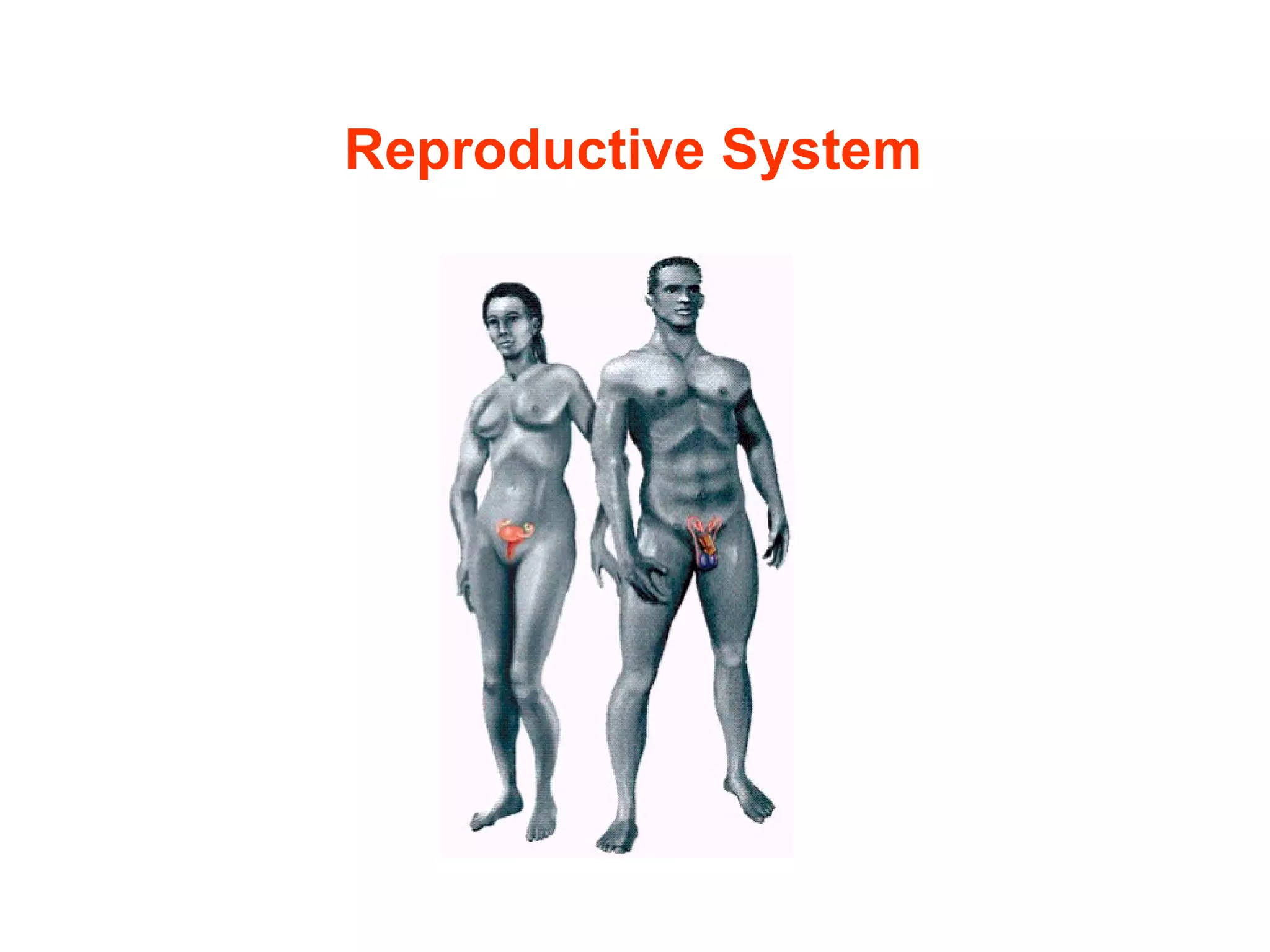
Reproductive System
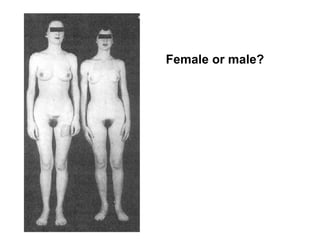
Female or male?
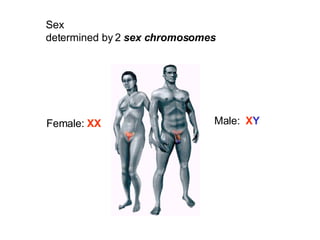
Sex  determined by 2  sex chromosomes Female:  XX Male:  X Y
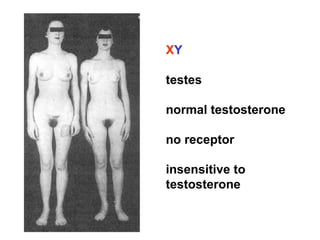
X Y testes normal testosterone no receptor insensitive to testosterone
primary sex organs  secondary sex organs secondary sex characteristics
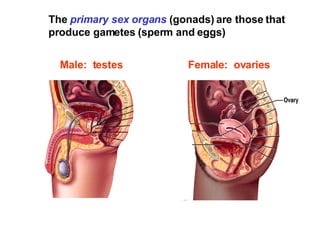
The  primary sex organs  (gonads) are those that produce gametes (sperm and eggs)  Female:  ovaries   Male:  testes
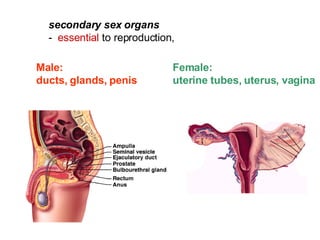
secondary sex organs   -  essential  to reproduction,  Male:  ducts, glands, penis Female:  uterine tubes, uterus, vagina
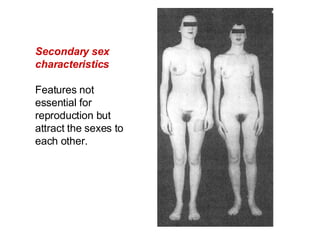
Secondary sex characteristics Features not essential for reproduction but attract the sexes to each other.
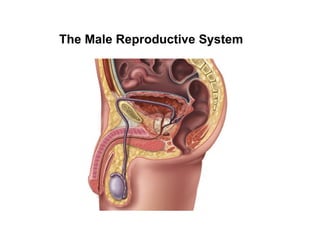
The Male Reproductive System
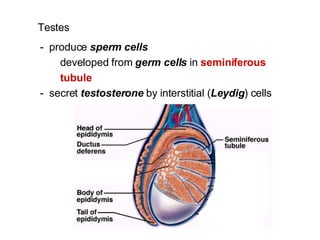
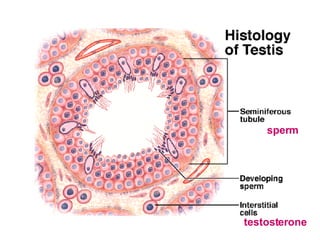
Testes -  produce  sperm cells   developed from  germ cells  in  seminiferous tubule -  secret  testosterone   by interstitial ( Leydig ) cells
sperm testosterone
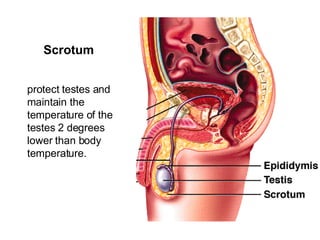
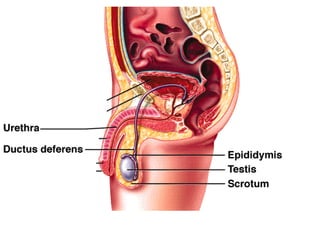
Scrotum   protect testes and maintain the temperature of the testes 2 degrees lower than body temperature.
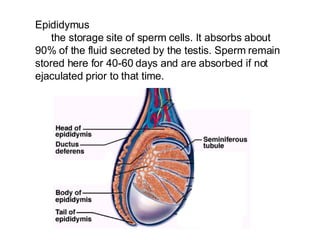
Epididymus the storage site of sperm cells. It absorbs about 90% of the fluid secreted by the testis. Sperm remain stored here for 40-60 days and are absorbed if not ejaculated prior to that time.
 
 
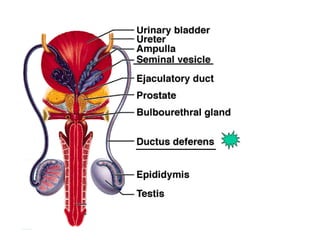
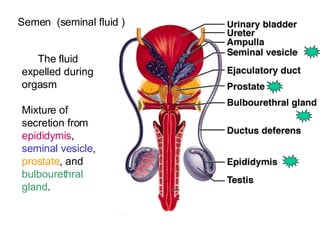
The fluid expelled during orgasm Mixture of secretion from  epididymis ,  seminal vesicle ,  prostate , and  bulbourethral gland .  Semen  (seminal fluid )
Major constituents of semen Sperm Fructose Clotting and anticoagulant factors Prostaglandins Spermine
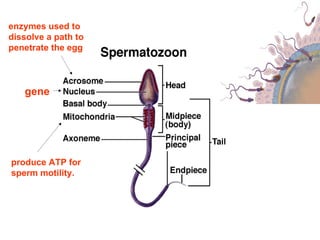
produce ATP for sperm motility. enzymes used to dissolve a path to penetrate the egg gene
Sperm cells from epididymis are present at a count of 50-120 million sperm/mL. Sperm count decreased from 113 million sperm/mL in 1940 to 66 million sperm/mL in 1990. Semen volume dropped by 19%.  < 20-25 million/ml = infertility (sterility)
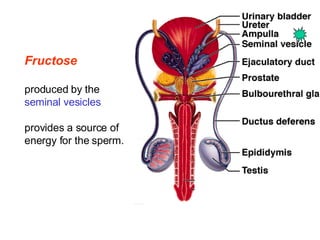
Fructose produced by the  seminal vesicles provides a source of energy for the sperm.
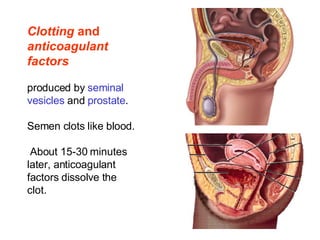
Clotting  and  anticoagulant factors   produced by  seminal vesicles  and  prostate .  Semen clots like blood. About 15-30 minutes later, anticoagulant factors dissolve the clot.
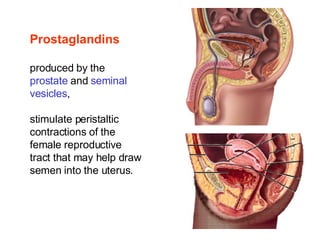
Prostaglandins produced by the  prostate  and  seminal vesicles ,  stimulate peristaltic contractions of the female reproductive tract that may help draw semen into the uterus.
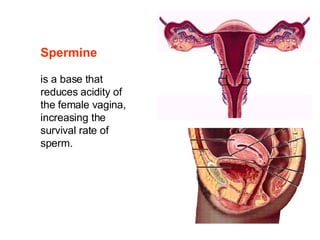
Spermine   is a base that reduces acidity of the female vagina, increasing the survival rate of sperm.
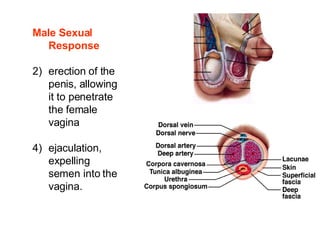
Male Sexual Response erection of the penis, allowing it to penetrate the female vagina ejaculation, expelling semen into the vagina.
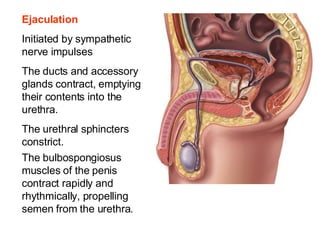
Ejaculation Initiated by sympathetic nerve impulses The ducts and accessory glands contract, emptying their contents into the urethra. The urethral sphincters constrict. The bulbospongiosus muscles of the penis contract rapidly and rhythmically, propelling semen from the urethra.
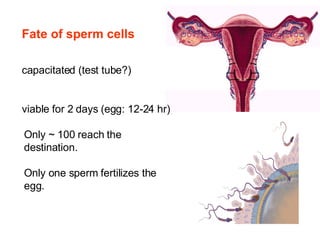
Fate of sperm cells capacitated (test tube?) viable for 2 days (egg: 12-24 hr) Only ~ 100 reach the destination. Only one sperm fertilizes the egg.
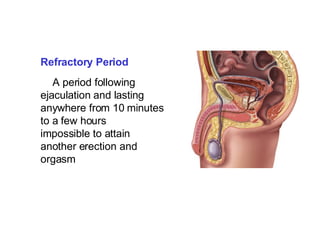
Refractory Period A period following ejaculation and lasting anywhere from 10 minutes to a few hours impossible to attain another erection and orgasm
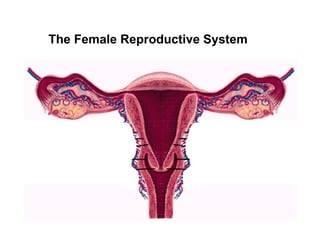
The Female Reproductive System
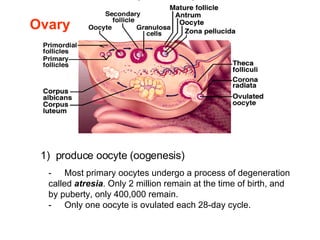
1)  produce oocyte (oogenesis) Ovary - Most primary oocytes undergo a process of degeneration called  atresia . Only 2 million remain at the time of birth, and by puberty, only 400,000 remain.   - Only one oocyte is ovulated each 28-day cycle.
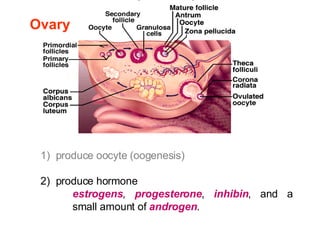
1)  produce oocyte (oogenesis) 2)  produce hormone estrogens ,  progesterone ,  inhibin , and a small amount of  androgen .  Ovary
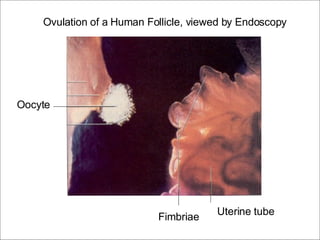
Oocyte Fimbriae Uterine tube Ovulation of a Human Follicle, viewed by Endoscopy
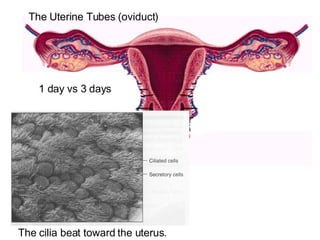
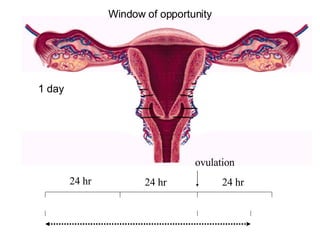
The cilia beat toward the uterus. The Uterine Tubes (oviduct) 1 day vs 3 days
1 day Window of opportunity 24 hr 24 hr 24 hr ovulation
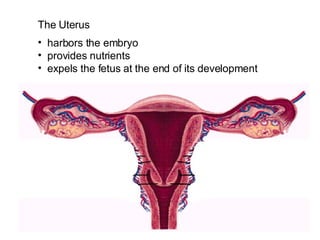
The Uterus  harbors the embryo provides nutrients expels the fetus at the end of its development
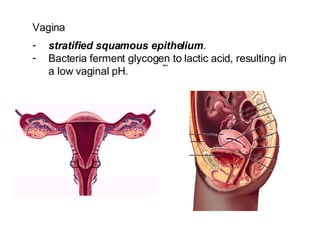
Vagina  stratified squamous epithelium .  Bacteria ferment glycogen to lactic acid, resulting in a low vaginal pH.
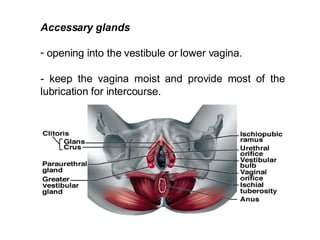
Accessary   glands   opening into the vestibule or lower vagina. - keep the vagina moist and provide most of the lubrication for intercourse.
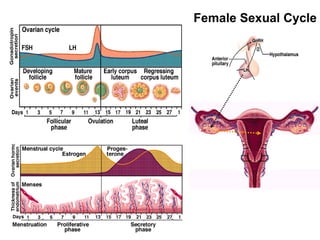
Female Sexual Cycle
 
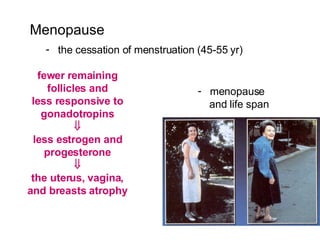
Menopause the cessation of menstruation (45-55 yr) menopause  and life span fewer remaining follicles and less responsive to gonadotropins  less estrogen and progesterone  the uterus, vagina, and breasts atrophy
Oogenesis and the Sexual Cycle
A. Oogenesis  1. Egg production is called  oogenesis , which is a distinctly cyclic event. 2. Most primary oocytes undergo a process of degeneration called  atresia . Only 2 million remain at the time of birth, and by puberty, only 400,000 remain.
3. Beginning in adolescence, FSH stimulates the primary oocytes to complete  meiosis  I, which yields two haploid daughter cells of unequal size. One will become the  egg  with large amounts of cytoplasm. The other, a  polar body , will serve only as a dumping ground for the extra set of chromosomes.
The  secondary oocyte  proceeds as far as metaphase II and then arrests until ovulation. If it is fertilized, it completes meiosis II and produces a second polar body. The large remaining egg unites its chromosomes with those of the sperm and produces a zygote.
B. The Sexual Cycle  a  28-day cycle of sequential changes caused by shifting patterns of hormone secretion.  starts at the first day of menstruation.
Changes in the ovaries constitute the  ovarian cycle  which is subdivided into 3 phases: the follicular phase, ovulation, and luteal phase. The parallel changes in the uterus are called the  menstrual or unterine cycle , which is subdivided into 3 phases: menstruation, proliferative phase, and secretory phase.
Ovarian Cycle 1) The  Follicular Phase   (Day 1-14) The follicular phase extends from the beginning of menstruation until ovulation. It averages 14 days, but is also the most variable portion of the cycle.  FSH causes follicular cells around the oocyte to develop into granulosa cells, and the follicle is now a  primary follicle .  Granulosa cells secrete an estrogen-rich follicular fluid, which pools to form the antrum. The follicle is now called the  secondary follicle . One follicle rapidly outpaces the others and becomes the  dominant follicle .
2)  Ovulation   (Day 14) Ovulation is triggered by a sudden burstlike release of LH (Luteining Hormone) secretion from pituitary when estrogen rises beyond a critical concentration.  The LH surge is the consequence of an exceptional positive feedback of estrogen on hypothalamus-pituitary axis. Only the oocyte in the dominant follicle is released in each ovarian cycle.  Oocytes in other follicles degenerate.
3)   Luteal Phase   (Day 15-28) When the follicle expels the oocyte, it collapses and bleeds into the antrum. Under the influence of LH, this structure now develops into a glandular  corpus   luteum  that secretes  progesterone  and some estrogen.
Corpus luteum also secretes inhibin at this point, which suppresses FSH and further ovulations. In the absence of pregnancy the corpus luteum begins to degenerate in about 10 days because rising progesterone output inhibits further release of FSH and LH. Without LH, the corpus luteum begins to shrink.
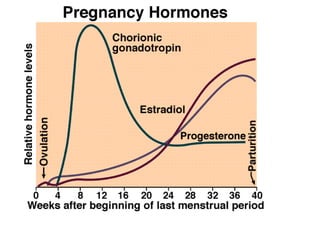
If pregnancy occurs, the corpus luteum continues to secrete progesterone and estrogen for about 3 months under the stimulation of LH-like hormone released by the developing embryo.  The secretion by corpus luteum does not stop until the placenta is ready to take over its homone-producing duties.
Menstrual (Uterine) Cycle 1)  Menstruation  (Day 1-5)  The superficial layer stratum functionalis of the uterus detaches from the uterine wall, accompanied by bleeding for 3-5 days.  Sex hormones are at their lowest normal levels at Day 1 Menstrual fluid contains fibrolysin, therefore it normally does not clot.
2)  Proliferative Phase  (Day 6-14) Estrogen stimulates mitosis, the prolific growth of blood vessels, and the formation of a new stratum functionalis.  Estrogen also stimulates the endometrium to develop progesterone receptors. As ovulation approaches, the uterine tune becomes edematous, its fimbriae develop and caress the ovary, and its cilia create a gentle current in the nearby peritoneal fluid. The ovulated egg is usually caught up in this current and swept into the tube.  An oocyte has only 24 hours to be fertilized. The chance of fertilization is enhanced by changes in the cervical mucus at the time of ovulation. It becomes thinner and more stringy.
3)  Secretory Phase   (Day 15-28) a.  In response to rising level of progesterone, the endometrium of the uterus proliferates further in preparation for possible pregnancy.  Spiral arteries elaborate and coil more tightly Uterine glands enlarge, coil, and begin secreting nutritients into the uterine cavity to sustain the embryo until implantation. The cervical mucus becomes viscous, forming the  cervical plug , which prevents sperm entry.
b.  If pregnancy does not occur towards the end of the secretory phase, LH level drops due to negative feedback of high level of progesterone.  Progesterone level decline following the drop of LH.  Without the support of progesterone, the endometrium undergoes degeneration in the following sequence.
The spiral arteries close due to continuous and intensive constriction (spasm). The superficial layer stratum functionalis of the uterus is deprived of blood supply. The endometrial cells die of ischemia. The spiral arteries suddenly relax and open wide. Blood gushes into the weakened capillary beds, causing the capillaries to fragment and the stratum functionalis to slough off.
c.  The menstrual cycle starts over again on this first day of vaginal discharge.

Reproductive System

  • 1.
  • 2.
  • 3.
    Sex determinedby 2 sex chromosomes Female: XX Male: X Y
  • 4.
    X Y testesnormal testosterone no receptor insensitive to testosterone
  • 5.
    primary sex organs secondary sex organs secondary sex characteristics
  • 6.
    The primarysex organs (gonads) are those that produce gametes (sperm and eggs) Female: ovaries Male: testes
  • 7.
    secondary sex organs - essential to reproduction, Male: ducts, glands, penis Female: uterine tubes, uterus, vagina
  • 8.
    Secondary sex characteristicsFeatures not essential for reproduction but attract the sexes to each other.
  • 9.
  • 10.
    Testes - produce sperm cells developed from germ cells in seminiferous tubule - secret testosterone by interstitial ( Leydig ) cells
  • 11.
  • 12.
    Scrotum protect testes and maintain the temperature of the testes 2 degrees lower than body temperature.
  • 13.
    Epididymus the storagesite of sperm cells. It absorbs about 90% of the fluid secreted by the testis. Sperm remain stored here for 40-60 days and are absorbed if not ejaculated prior to that time.
  • 14.
  • 15.
  • 16.
    The fluid expelledduring orgasm Mixture of secretion from epididymis , seminal vesicle , prostate , and bulbourethral gland . Semen (seminal fluid )
  • 17.
    Major constituents ofsemen Sperm Fructose Clotting and anticoagulant factors Prostaglandins Spermine
  • 18.
    produce ATP forsperm motility. enzymes used to dissolve a path to penetrate the egg gene
  • 19.
    Sperm cells fromepididymis are present at a count of 50-120 million sperm/mL. Sperm count decreased from 113 million sperm/mL in 1940 to 66 million sperm/mL in 1990. Semen volume dropped by 19%. < 20-25 million/ml = infertility (sterility)
  • 20.
    Fructose produced bythe seminal vesicles provides a source of energy for the sperm.
  • 21.
    Clotting and anticoagulant factors produced by seminal vesicles and prostate . Semen clots like blood. About 15-30 minutes later, anticoagulant factors dissolve the clot.
  • 22.
    Prostaglandins produced bythe prostate and seminal vesicles , stimulate peristaltic contractions of the female reproductive tract that may help draw semen into the uterus.
  • 23.
    Spermine is a base that reduces acidity of the female vagina, increasing the survival rate of sperm.
  • 24.
    Male Sexual Responseerection of the penis, allowing it to penetrate the female vagina ejaculation, expelling semen into the vagina.
  • 25.
    Ejaculation Initiated bysympathetic nerve impulses The ducts and accessory glands contract, emptying their contents into the urethra. The urethral sphincters constrict. The bulbospongiosus muscles of the penis contract rapidly and rhythmically, propelling semen from the urethra.
  • 26.
    Fate of spermcells capacitated (test tube?) viable for 2 days (egg: 12-24 hr) Only ~ 100 reach the destination. Only one sperm fertilizes the egg.
  • 27.
    Refractory Period Aperiod following ejaculation and lasting anywhere from 10 minutes to a few hours impossible to attain another erection and orgasm
  • 28.
  • 29.
    1) produceoocyte (oogenesis) Ovary - Most primary oocytes undergo a process of degeneration called atresia . Only 2 million remain at the time of birth, and by puberty, only 400,000 remain. - Only one oocyte is ovulated each 28-day cycle.
  • 30.
    1) produceoocyte (oogenesis) 2) produce hormone estrogens , progesterone , inhibin , and a small amount of androgen . Ovary
  • 31.
    Oocyte Fimbriae Uterinetube Ovulation of a Human Follicle, viewed by Endoscopy
  • 32.
    The cilia beattoward the uterus. The Uterine Tubes (oviduct) 1 day vs 3 days
  • 33.
    1 day Windowof opportunity 24 hr 24 hr 24 hr ovulation
  • 34.
    The Uterus harbors the embryo provides nutrients expels the fetus at the end of its development
  • 35.
    Vagina stratifiedsquamous epithelium . Bacteria ferment glycogen to lactic acid, resulting in a low vaginal pH.
  • 36.
    Accessary glands opening into the vestibule or lower vagina. - keep the vagina moist and provide most of the lubrication for intercourse.
  • 37.
  • 38.
  • 39.
    Menopause the cessationof menstruation (45-55 yr) menopause and life span fewer remaining follicles and less responsive to gonadotropins  less estrogen and progesterone  the uterus, vagina, and breasts atrophy
  • 40.
    Oogenesis and theSexual Cycle
  • 41.
    A. Oogenesis 1. Egg production is called oogenesis , which is a distinctly cyclic event. 2. Most primary oocytes undergo a process of degeneration called atresia . Only 2 million remain at the time of birth, and by puberty, only 400,000 remain.
  • 42.
    3. Beginning inadolescence, FSH stimulates the primary oocytes to complete meiosis I, which yields two haploid daughter cells of unequal size. One will become the egg with large amounts of cytoplasm. The other, a polar body , will serve only as a dumping ground for the extra set of chromosomes.
  • 43.
    The secondaryoocyte proceeds as far as metaphase II and then arrests until ovulation. If it is fertilized, it completes meiosis II and produces a second polar body. The large remaining egg unites its chromosomes with those of the sperm and produces a zygote.
  • 44.
    B. The SexualCycle a 28-day cycle of sequential changes caused by shifting patterns of hormone secretion. starts at the first day of menstruation.
  • 45.
    Changes in theovaries constitute the ovarian cycle which is subdivided into 3 phases: the follicular phase, ovulation, and luteal phase. The parallel changes in the uterus are called the menstrual or unterine cycle , which is subdivided into 3 phases: menstruation, proliferative phase, and secretory phase.
  • 46.
    Ovarian Cycle 1)The Follicular Phase (Day 1-14) The follicular phase extends from the beginning of menstruation until ovulation. It averages 14 days, but is also the most variable portion of the cycle. FSH causes follicular cells around the oocyte to develop into granulosa cells, and the follicle is now a primary follicle . Granulosa cells secrete an estrogen-rich follicular fluid, which pools to form the antrum. The follicle is now called the secondary follicle . One follicle rapidly outpaces the others and becomes the dominant follicle .
  • 47.
    2) Ovulation (Day 14) Ovulation is triggered by a sudden burstlike release of LH (Luteining Hormone) secretion from pituitary when estrogen rises beyond a critical concentration. The LH surge is the consequence of an exceptional positive feedback of estrogen on hypothalamus-pituitary axis. Only the oocyte in the dominant follicle is released in each ovarian cycle. Oocytes in other follicles degenerate.
  • 48.
    3) Luteal Phase (Day 15-28) When the follicle expels the oocyte, it collapses and bleeds into the antrum. Under the influence of LH, this structure now develops into a glandular corpus luteum that secretes progesterone and some estrogen.
  • 49.
    Corpus luteum alsosecretes inhibin at this point, which suppresses FSH and further ovulations. In the absence of pregnancy the corpus luteum begins to degenerate in about 10 days because rising progesterone output inhibits further release of FSH and LH. Without LH, the corpus luteum begins to shrink.
  • 50.
    If pregnancy occurs,the corpus luteum continues to secrete progesterone and estrogen for about 3 months under the stimulation of LH-like hormone released by the developing embryo. The secretion by corpus luteum does not stop until the placenta is ready to take over its homone-producing duties.
  • 51.
    Menstrual (Uterine) Cycle1) Menstruation (Day 1-5) The superficial layer stratum functionalis of the uterus detaches from the uterine wall, accompanied by bleeding for 3-5 days. Sex hormones are at their lowest normal levels at Day 1 Menstrual fluid contains fibrolysin, therefore it normally does not clot.
  • 52.
    2) ProliferativePhase (Day 6-14) Estrogen stimulates mitosis, the prolific growth of blood vessels, and the formation of a new stratum functionalis. Estrogen also stimulates the endometrium to develop progesterone receptors. As ovulation approaches, the uterine tune becomes edematous, its fimbriae develop and caress the ovary, and its cilia create a gentle current in the nearby peritoneal fluid. The ovulated egg is usually caught up in this current and swept into the tube. An oocyte has only 24 hours to be fertilized. The chance of fertilization is enhanced by changes in the cervical mucus at the time of ovulation. It becomes thinner and more stringy.
  • 53.
    3) SecretoryPhase (Day 15-28) a. In response to rising level of progesterone, the endometrium of the uterus proliferates further in preparation for possible pregnancy. Spiral arteries elaborate and coil more tightly Uterine glands enlarge, coil, and begin secreting nutritients into the uterine cavity to sustain the embryo until implantation. The cervical mucus becomes viscous, forming the cervical plug , which prevents sperm entry.
  • 54.
    b. Ifpregnancy does not occur towards the end of the secretory phase, LH level drops due to negative feedback of high level of progesterone. Progesterone level decline following the drop of LH. Without the support of progesterone, the endometrium undergoes degeneration in the following sequence.
  • 55.
    The spiral arteriesclose due to continuous and intensive constriction (spasm). The superficial layer stratum functionalis of the uterus is deprived of blood supply. The endometrial cells die of ischemia. The spiral arteries suddenly relax and open wide. Blood gushes into the weakened capillary beds, causing the capillaries to fragment and the stratum functionalis to slough off.
  • 56.
    c. Themenstrual cycle starts over again on this first day of vaginal discharge.