Presentation on testes
Dept. of Pharmacy
Jessore University Of Science & Technology..
Out line….
 Reproductive system
 Female reproductive system
 Male reproductive system
 Testes
 Anatomy of testes
 Function of testes
 Reference
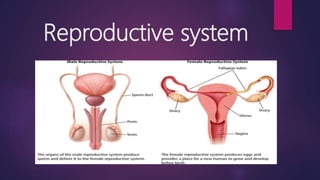
Reproductive system
The reproductive system or genital system is a system of
sex organs within an organism which work together for
the purpose of sexual reproduction. Many non-living
substances such as fluids, hormones, and pheromones
are also important accessories to the reproductive
system.
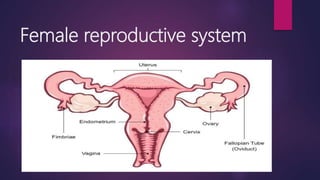
Female reproductive system
The female reproductive system is made up of the internal
and external sex organs that function in reproduction of
new offspring. In the human the female reproductive
system is immature at birth and develops to maturity at
puberty to be able to produce gametes, and to carry
a fetus to full term.
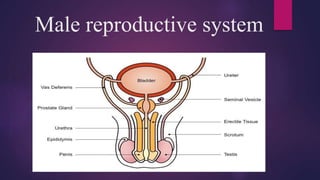
Male reproductive system
The male reproductive system includes the scrotum, testes,
spermatic ducts, sex glands, and penis. These organs work
together to produce sperm, the male gamete, and the other
components of semen. These organs also work together to
deliver semen out of the body and into the vagina where it
can fertilize egg cells to produce offspring.
Testes
The testes (singular: testis), commonly known as the
testicles, are a pair of ovoid glandular organs that are
central to the function of the male reproductive system.
The testes are responsible for the production of sperm
cells and the male sex hormone testosterone. The
testes produce as many as 12 trillion sperm in a male’s
lifetime, about 400 million of which are released in a
single ejaculation.
Anatomy of testes
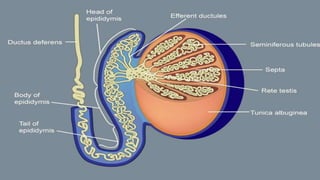
 Each testis is an oval structure about 5 cm long and 3 cm in
diameter
 Covered by: tunica albuginea
 Located in the scrotum
 There are about 250 lobules in each testis. Each contains 1
to 4 -seminiferous tubules that converge to form a single
straight tubule, which leads into the rete testis.
 Short efferent ducts exit the testes.
 Interstitial cells (cells of Leydig), which produce male sex
hormones, are located between the seminiferous tubules
within a lobule.
Function of testes
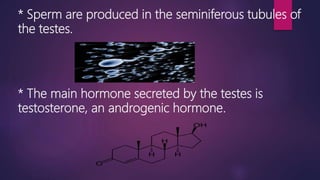
* Sperm are produced in the seminiferous tubules of
the testes.
* The main hormone secreted by the testes is
testosterone, an androgenic hormone.
Reference
 https://www.google.com/search?q=testosterone&source=lnms&t
bm=isch&sa=X&ved=0ahUKEwjgqcSgjKHaAhUBs48KHXdUCT4Q
_AUICigB&biw=1366&bih=613#imgrc=7XwSL9yc0WbzqM:
 https://www.healthline.com/human-body-maps/testis
 http://www.yourhormones.info/glands/testes/
 http://www.innerbody.com/image/repmov.html
 http://www.cancer.ca/en/cancer-information/cancer-
type/testicular/testicular-cancer/the-testicles/?region=on
Presentation on testes ppt

Presentation on testes ppt

  • 2.
    Presentation on testes Dept.of Pharmacy Jessore University Of Science & Technology..
  • 3.
    Out line….  Reproductivesystem  Female reproductive system  Male reproductive system  Testes  Anatomy of testes  Function of testes  Reference
  • 4.
  • 5.
    The reproductive systemor genital system is a system of sex organs within an organism which work together for the purpose of sexual reproduction. Many non-living substances such as fluids, hormones, and pheromones are also important accessories to the reproductive system.
  • 6.
  • 7.
    The female reproductivesystem is made up of the internal and external sex organs that function in reproduction of new offspring. In the human the female reproductive system is immature at birth and develops to maturity at puberty to be able to produce gametes, and to carry a fetus to full term.
  • 8.
  • 9.
    The male reproductivesystem includes the scrotum, testes, spermatic ducts, sex glands, and penis. These organs work together to produce sperm, the male gamete, and the other components of semen. These organs also work together to deliver semen out of the body and into the vagina where it can fertilize egg cells to produce offspring.
  • 10.
  • 11.
    The testes (singular:testis), commonly known as the testicles, are a pair of ovoid glandular organs that are central to the function of the male reproductive system. The testes are responsible for the production of sperm cells and the male sex hormone testosterone. The testes produce as many as 12 trillion sperm in a male’s lifetime, about 400 million of which are released in a single ejaculation.
  • 12.
  • 13.
     Each testisis an oval structure about 5 cm long and 3 cm in diameter  Covered by: tunica albuginea  Located in the scrotum  There are about 250 lobules in each testis. Each contains 1 to 4 -seminiferous tubules that converge to form a single straight tubule, which leads into the rete testis.  Short efferent ducts exit the testes.  Interstitial cells (cells of Leydig), which produce male sex hormones, are located between the seminiferous tubules within a lobule.
  • 15.
  • 16.
    * Sperm areproduced in the seminiferous tubules of the testes. * The main hormone secreted by the testes is testosterone, an androgenic hormone.
  • 17.
    Reference  https://www.google.com/search?q=testosterone&source=lnms&t bm=isch&sa=X&ved=0ahUKEwjgqcSgjKHaAhUBs48KHXdUCT4Q _AUICigB&biw=1366&bih=613#imgrc=7XwSL9yc0WbzqM:  https://www.healthline.com/human-body-maps/testis http://www.yourhormones.info/glands/testes/  http://www.innerbody.com/image/repmov.html  http://www.cancer.ca/en/cancer-information/cancer- type/testicular/testicular-cancer/the-testicles/?region=on