POWERPOINT PRESENTATION
ON
LIFE PROCESSES
(DIGESTION)
BY,
K.R.L. SHRAVAN KARTHICK
IX TOPAZ
SUBJECT:-BIOLOGY
 The mouth is the beginning of the digestive
tract.
 In fact, digestion starts here as soon as you
take the first bite of a meal. Chewing breaks the
food into pieces that are more easily digested,
while saliva mixes with food to begin the
process of breaking it down into a form your
body can absorb and use.
 The mouth, is the first part of the
gastrointestinal tract and is equipped with
several structures that begin the first processes
of digestion.
 These include salivary glands, teeth and the
tongue. The mouth, consists of two regions, the
vestibule and the oral cavity proper. The
vestibule is the area between the teeth, lips and
cheeks and the rest is the oral cavity proper.
 The roof of the mouth is termed the palate and
it separates the oral cavity from the nasal
cavity.
 The palate is hard at the front of the mouth
since the overlying mucosa is covering a plate
of bone; it is softer and more pliable at the back
being made of muscle and connective tissue,
and it can move to swallow food and liquids.
 The pharynx is a part of the digestive system
and also a part of the conducting zone of the
respiratory system.
 It is the part of the throat immediately behind
the nasal cavity at the back of the mouth and
superior to the oesophagus and larynx.
 The pharynx is made up of three parts. The
lower two parts–the oropharynx and the
laryngopharynx are involved in the digestive
system.
 The laryngopharynx connects to the
oesophagus and it serves as a passageway for
both air and food. Air enters the larynx
anteriorly but anything swallowed has priority
and the passage of air is temporarily blocked.
 Muscles in the pharynx push the food into the
oesophagus.The pharynx joins the oesophagus
at the oesophageal inlet which is located
behind the cricoid cartilage.
 The oesophagus commonly known as the
gullet, is an organ which consists of a muscular
tube through which food passes from the
pharynx to the stomach. The oesophagus is
continuous with the laryngeal part of the
pharynx.
 It passes through the posterior mediastinum in
the thorax and enters the stomach through a
hole in the thoracic diaphragm–the
oesophageal hiatus, at the level of the tenth
thoracic vertebra (T10). Its length averages
25 cm, varying with height. It is divided into
cervical, thoracic and abdominal parts. The
pharynx joins the oesophagus at the
oesophageal inlet which is behind the cricoid
cartilage.
 The diaphragm is an important part of the
body's digestive system. The diaphragm
separates the thoracic cavity from the
abdominal cavity where most of the digestive
organs are located.
 The suspensory muscle attaches the ascending
duodenum to the diaphragm.
 This muscle is thought to be of help in the
digestive system in that its attachment offers a
wider angle to the duodenojejunal flexure for
the easier passage of digesting material.
 The diaphragm also attaches to the bare area
of the liver, which it anchors. The oesophagus
enters the abdomen through a hole in the
diaphragm at the level of T10.
 Gastric acid (informally gastric juice), produced
in the stomach plays a vital role in the digestive
process, it mainly contains hydrochloric acid
and sodium chloride. A peptide hormone
gastrin produced by G cells in the gastric
glands, stimulates the production of gastric
juice which activates the digestive enzymes.
 Pepsinogen is a precursor enzyme (zymogen)
produced by the gastric chief cells and gastric
acid activates this to the enzyme pepsin which
begins the digestion of proteins. As these two
chemicals would damage the stomach wall,
mucus is secreted by innumerable gastric
glands in the stomach, to provide a slimy
protective layer against the damaging effects of
the chemicals.
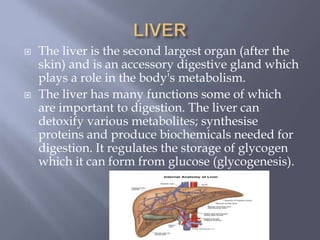
 The liver is the second largest organ (after the
skin) and is an accessory digestive gland which
plays a role in the body's metabolism.
 The liver has many functions some of which
are important to digestion. The liver can
detoxify various metabolites; synthesise
proteins and produce biochemicals needed for
digestion. It regulates the storage of glycogen
which it can form from glucose (glycogenesis).
 The liver can also synthesise glucose from
certain amino acids. Its digestive functions are
largely involved with the breaking down of
carbohydrates.
 It also maintains protein metabolism in its
synthesis and degradation. In lipid metabolism
it synthesises cholesterol. Fats are also
produced in the process of lipogenesis. The
liver synthesises the bulk of lipoproteins.
 The liver is located in the upper right quadrant
of the abdomen and below the diaphragm to
which it is attached at one part.
 The pancreas is a major organ functioning as
accessory digestive gland in the digestive
system. It is both an endocrine gland and an
exocrine gland.
 The endocrine part secretes insulin when the
blood sugar becomes high; insulin moves
glucose from the blood into the muscles and
other tissues for use as energy.
 The exocrine part releases glucagon when the
blood sugar is low; glucagon allows stored
sugar to be broken down into glucose by the
liver in order to re–balance the sugar levels.
Digestive enzymes are also produced. The
pancreas lies below and at the back of the
stomach. It connects to the duodenum via the
pancreatic duct.
 Food eaten, starts to arrive in the small
intestine after one hour, and after two hours
the stomach has emptied. Until this time the
food is termed a bolus. It then becomes the
partially digested semi-liquid termed
chyme.
 In the small intestine, the pH becomes crucial;
it needs to be finely balanced in order to
activate digestive enzymes.
 The chyme is very acidic, with a low pH,
having been released from the stomach and
needs to be made much more alkaline.
 The chyme arrives in the intestines having
been released from the stomach through the
opening of the pyloric sphincter.
 In the large intestine, the passage of the
digesting food in the colon is a lot slower,
taking from 12 to 50 hours until it is removed
by defecation. The colon mainly serves as a site
for the fermentation of digestible matter by the
gut flora. The time taken varies considerably
between individuals.
 The remaining semi-solid waste is termed
faeces and is removed by the coordinated
contractions of the intestinal walls, termed
peristalsis, which propels the excreta forward
to reach the rectum and exit via defecation
from the anus.
 Internet.
 Wikipedia.
 Science book.
digestion process

digestion process

  • 1.
    POWERPOINT PRESENTATION ON LIFE PROCESSES (DIGESTION) BY, K.R.L.SHRAVAN KARTHICK IX TOPAZ SUBJECT:-BIOLOGY
  • 2.
     The mouthis the beginning of the digestive tract.  In fact, digestion starts here as soon as you take the first bite of a meal. Chewing breaks the food into pieces that are more easily digested, while saliva mixes with food to begin the process of breaking it down into a form your body can absorb and use.
  • 4.
     The mouth,is the first part of the gastrointestinal tract and is equipped with several structures that begin the first processes of digestion.  These include salivary glands, teeth and the tongue. The mouth, consists of two regions, the vestibule and the oral cavity proper. The vestibule is the area between the teeth, lips and cheeks and the rest is the oral cavity proper.
  • 5.
     The roofof the mouth is termed the palate and it separates the oral cavity from the nasal cavity.  The palate is hard at the front of the mouth since the overlying mucosa is covering a plate of bone; it is softer and more pliable at the back being made of muscle and connective tissue, and it can move to swallow food and liquids.
  • 6.
     The pharynxis a part of the digestive system and also a part of the conducting zone of the respiratory system.  It is the part of the throat immediately behind the nasal cavity at the back of the mouth and superior to the oesophagus and larynx.  The pharynx is made up of three parts. The lower two parts–the oropharynx and the laryngopharynx are involved in the digestive system.
  • 7.
     The laryngopharynxconnects to the oesophagus and it serves as a passageway for both air and food. Air enters the larynx anteriorly but anything swallowed has priority and the passage of air is temporarily blocked.  Muscles in the pharynx push the food into the oesophagus.The pharynx joins the oesophagus at the oesophageal inlet which is located behind the cricoid cartilage.
  • 8.
     The oesophaguscommonly known as the gullet, is an organ which consists of a muscular tube through which food passes from the pharynx to the stomach. The oesophagus is continuous with the laryngeal part of the pharynx.
  • 9.
     It passesthrough the posterior mediastinum in the thorax and enters the stomach through a hole in the thoracic diaphragm–the oesophageal hiatus, at the level of the tenth thoracic vertebra (T10). Its length averages 25 cm, varying with height. It is divided into cervical, thoracic and abdominal parts. The pharynx joins the oesophagus at the oesophageal inlet which is behind the cricoid cartilage.
  • 10.
     The diaphragmis an important part of the body's digestive system. The diaphragm separates the thoracic cavity from the abdominal cavity where most of the digestive organs are located.  The suspensory muscle attaches the ascending duodenum to the diaphragm.
  • 11.
     This muscleis thought to be of help in the digestive system in that its attachment offers a wider angle to the duodenojejunal flexure for the easier passage of digesting material.  The diaphragm also attaches to the bare area of the liver, which it anchors. The oesophagus enters the abdomen through a hole in the diaphragm at the level of T10.
  • 12.
     Gastric acid(informally gastric juice), produced in the stomach plays a vital role in the digestive process, it mainly contains hydrochloric acid and sodium chloride. A peptide hormone gastrin produced by G cells in the gastric glands, stimulates the production of gastric juice which activates the digestive enzymes.
  • 13.
     Pepsinogen isa precursor enzyme (zymogen) produced by the gastric chief cells and gastric acid activates this to the enzyme pepsin which begins the digestion of proteins. As these two chemicals would damage the stomach wall, mucus is secreted by innumerable gastric glands in the stomach, to provide a slimy protective layer against the damaging effects of the chemicals.
  • 14.
     The liveris the second largest organ (after the skin) and is an accessory digestive gland which plays a role in the body's metabolism.  The liver has many functions some of which are important to digestion. The liver can detoxify various metabolites; synthesise proteins and produce biochemicals needed for digestion. It regulates the storage of glycogen which it can form from glucose (glycogenesis).
  • 15.
     The livercan also synthesise glucose from certain amino acids. Its digestive functions are largely involved with the breaking down of carbohydrates.  It also maintains protein metabolism in its synthesis and degradation. In lipid metabolism it synthesises cholesterol. Fats are also produced in the process of lipogenesis. The liver synthesises the bulk of lipoproteins.  The liver is located in the upper right quadrant of the abdomen and below the diaphragm to which it is attached at one part.
  • 16.
     The pancreasis a major organ functioning as accessory digestive gland in the digestive system. It is both an endocrine gland and an exocrine gland.  The endocrine part secretes insulin when the blood sugar becomes high; insulin moves glucose from the blood into the muscles and other tissues for use as energy.
  • 17.
     The exocrinepart releases glucagon when the blood sugar is low; glucagon allows stored sugar to be broken down into glucose by the liver in order to re–balance the sugar levels. Digestive enzymes are also produced. The pancreas lies below and at the back of the stomach. It connects to the duodenum via the pancreatic duct.
  • 18.
     Food eaten,starts to arrive in the small intestine after one hour, and after two hours the stomach has emptied. Until this time the food is termed a bolus. It then becomes the partially digested semi-liquid termed chyme.
  • 19.
     In thesmall intestine, the pH becomes crucial; it needs to be finely balanced in order to activate digestive enzymes.  The chyme is very acidic, with a low pH, having been released from the stomach and needs to be made much more alkaline.  The chyme arrives in the intestines having been released from the stomach through the opening of the pyloric sphincter.
  • 20.
     In thelarge intestine, the passage of the digesting food in the colon is a lot slower, taking from 12 to 50 hours until it is removed by defecation. The colon mainly serves as a site for the fermentation of digestible matter by the gut flora. The time taken varies considerably between individuals.
  • 21.
     The remainingsemi-solid waste is termed faeces and is removed by the coordinated contractions of the intestinal walls, termed peristalsis, which propels the excreta forward to reach the rectum and exit via defecation from the anus.
  • 22.