Kinnaird college for women lahore
 The lymphatic system is part of the circulatory
system, comprising a network of conduits
called lymphatic vessels that carry a clear fluid
called lymph (from Latin lympha "water goddess)
directionally towards the heart.
 The tissues and organs that produce, store, and
carry white blood cells that fight infections and
other diseases.
 Fighting infection
 Filtering the blood
 Filtering lymph
 Draining fluid into the bloodstream
Lymphatic system components includes :
 Lymph
 Lymph Organs
 Lymph Vessels
 Lymph Tissues
 Lymph means clear water and it is basically the
colorless fluid and protein that has been squeezed out
of the blood.
 Lymph is a fluid similar in composition to blood
plasma.
 Changes in plasma composition will change lymph
composition.
 Protein concentration of lymph is lower than in
plasma and varies inversely proportional to rate of
formation that varies from tissue to tissue.
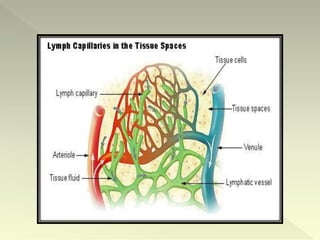
 ISF forms at the arterial end of the capillaries
because of higher pressure of blood,
 Most of it returns to its venous ends and venules; the
rest (10—20%) enters the lymph capillaries as
lymph.
 lymph formed is a watery clear liquid with the same
composition as the ISF.
 As it flows through the lymph nodes, it comes in
contact with blood and tends to accumulate more
cells and proteins.
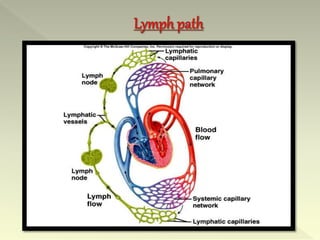
 The lymph is moved through the
body in its own vessels
 lymphatic system does not have a
heart to pump it, its upward
movement depends on the motions of
the muscle and joint pumps.
 The cleansed lymph continues to
travel in only one direction, which is
upward toward the neck.
 At the base of the neck, the cleansed
lymph flows into the subclavian
veins on either side of the neck.
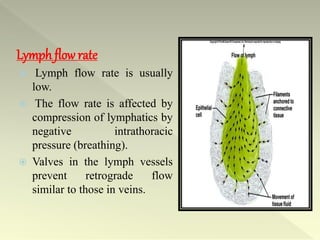
Lymph flow rate
 Lymph flow rate is usually
low.
 The flow rate is affected by
compression of lymphatics by
negative intrathoracic
pressure (breathing).
 Valves in the lymph vessels
prevent retrograde flow
similar to those in veins.
An organ that is characterized by clusters of
lymphocytes and other cells, such as macrophages,
enmeshed in a framework of short, branching
connective tissue fibers.
Formation:
The lymphocytes originate in the red bone marrow
with other types of blood cells and are carried in the
blood from the bone marrow to the lymphatic
organs.
 Primary lymphatic organs
 Thymus gland
 Bone marrow
 Secondary lymphatic organs
 Encapsulated diffuse lymphoid tissue
includes the spleen and lymph nodes.
 Unencapsulated diffuse lymphoid tissue
includes gut-associated lymphoid tissues and the
tonsils.
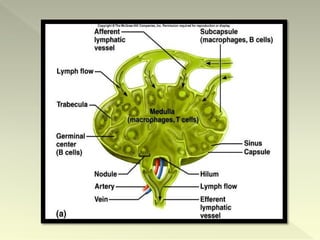
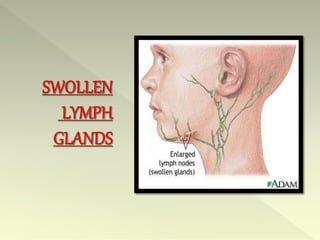
One of a number of small swellings found at
intervals along the lymphatic system.
 They are widely distributed throughout the
body along the lymphatic pathways.
 Lymph nodes are not present in the central
nervous system.
 Composed of lymphoid tissue.
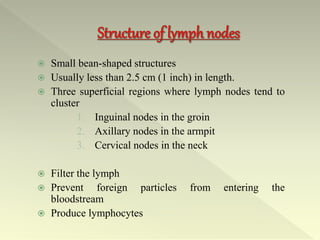
 Small bean-shaped structures
 Usually less than 2.5 cm (1 inch) in length.
 Three superficial regions where lymph nodes tend to
cluster
1. Inguinal nodes in the groin
2. Axillary nodes in the armpit
3. Cervical nodes in the neck
 Filter the lymph
 Prevent foreign particles from entering the
bloodstream
 Produce lymphocytes
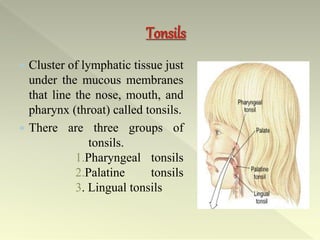
 Cluster of lymphatic tissue just
under the mucous membranes
that line the nose, mouth, and
pharynx (throat) called tonsils.
 There are three groups of
tonsils.
1.Pharyngeal tonsils
2.Palatine tonsils
3. Lingual tonsils
Lymphatic organ that lies behind the stomach, high up
on the left side of the abdomen, on a level with the
ninth to eleventh ribs.
 Similar to a lymph node in shape and structure but is
much larger. In fact, it is the largest lymphatic organ
in the body.
 Consists of two types of tissue called
 White pulp
 Red pulp
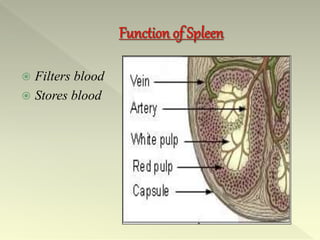
 Filters blood
 Stores blood
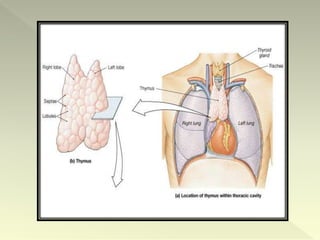
 It is located over the heart and/or in the neck area,
anterior to the ascending aorta and posterior to the
sternum.
 The thymus consists of two lobes enclosed in a
capsule and is further divided internally
 Function of the thymus is the processing and
maturation of special lymphocytes (white blood
cells) called T-lymphocytes which are associated
with antibody production.
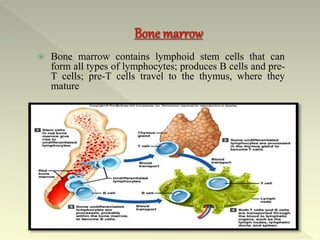
 Bone marrow contains lymphoid stem cells that can
form all types of lymphocytes; produces B cells and pre-
T cells; pre-T cells travel to the thymus, where they
mature
Tubular vessels transport back lymph to
the blood ultimately replacing the
volume lost from the blood during the
formation of the interstitial fluid.
 Lymph capillaries
 Lymph vessels
 Lymphatic ducts
 The main lymph ducts are:
Right lymphatic duct
Thoracic duct
Cysterna chyli
Specialized form of reticular connective tissue that contains various
types of white blood cells enmeshed In it, most numerous being the
lymphocytes.
 Lymphoid tissue can be of three types depending upon the stage of
lymphocyte development and maturation.
Primary(central) lymphoid tissue
Secondary(peripheral) lymphoid tissue
Tertiary lymphoid tissue.
 Makes up the spleen, the thymus, and the tonsils, as
well as visceral nodes, and lacteals which are all
associated with mucous membranes of the gastro-
intestinal tract.
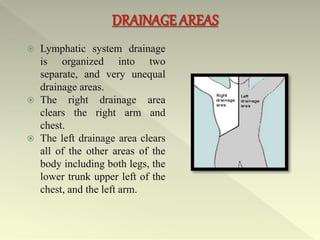
 Lymphatic system drainage
is organized into two
separate, and very unequal
drainage areas.
 The right drainage area
clears the right arm and
chest.
 The left drainage area clears
all of the other areas of the
body including both legs, the
lower trunk upper left of the
chest, and the left arm.
 Lymphedema
 Hodgkin's lymphoma
 Castleman disease
 Lymphangiomatosis
 Elephantiasis,
 Lymphangiosarcoma
 Lymphangioleiomyomatosis
 Lymphoid leukemias and lymphomas
 Lymphatic filiaris
 http://en.wikipedia.org/wiki/Lymphatic_system
 http://www.google.com.pk/search?q=lymphatic+system&hl=en
&tbm=isch&tbo=u&source=univ&sa=X&ei=DG5YUZOPHqK
v7AbP4IHQAg&ved=0CEMQsAQ&biw=1366&bih=667
 http://www.nlm.nih.gov/medlineplus/ency/article/002247.htm
 http://www.lymphnotes.com/article.php/id/151/
 http://www.botany.uwc.ac.za/SCI_ED/grade10/manphys/functio
ns.htm
 http://www.livescience.com/26983-lymphatic-system.html
 http://www.cancerresearchuk.org/cancer-help/about-
cancer/what-is-cancer/body/the-lymphatic-system

Lymphatic system

  • 1.
  • 2.
     The lymphaticsystem is part of the circulatory system, comprising a network of conduits called lymphatic vessels that carry a clear fluid called lymph (from Latin lympha "water goddess) directionally towards the heart.  The tissues and organs that produce, store, and carry white blood cells that fight infections and other diseases.
  • 3.
     Fighting infection Filtering the blood  Filtering lymph  Draining fluid into the bloodstream
  • 4.
    Lymphatic system componentsincludes :  Lymph  Lymph Organs  Lymph Vessels  Lymph Tissues
  • 5.
     Lymph meansclear water and it is basically the colorless fluid and protein that has been squeezed out of the blood.  Lymph is a fluid similar in composition to blood plasma.  Changes in plasma composition will change lymph composition.  Protein concentration of lymph is lower than in plasma and varies inversely proportional to rate of formation that varies from tissue to tissue.
  • 6.
     ISF formsat the arterial end of the capillaries because of higher pressure of blood,  Most of it returns to its venous ends and venules; the rest (10—20%) enters the lymph capillaries as lymph.  lymph formed is a watery clear liquid with the same composition as the ISF.  As it flows through the lymph nodes, it comes in contact with blood and tends to accumulate more cells and proteins.
  • 8.
     The lymphis moved through the body in its own vessels  lymphatic system does not have a heart to pump it, its upward movement depends on the motions of the muscle and joint pumps.  The cleansed lymph continues to travel in only one direction, which is upward toward the neck.  At the base of the neck, the cleansed lymph flows into the subclavian veins on either side of the neck.
  • 9.
    Lymph flow rate Lymph flow rate is usually low.  The flow rate is affected by compression of lymphatics by negative intrathoracic pressure (breathing).  Valves in the lymph vessels prevent retrograde flow similar to those in veins.
  • 10.
    An organ thatis characterized by clusters of lymphocytes and other cells, such as macrophages, enmeshed in a framework of short, branching connective tissue fibers. Formation: The lymphocytes originate in the red bone marrow with other types of blood cells and are carried in the blood from the bone marrow to the lymphatic organs.
  • 11.
     Primary lymphaticorgans  Thymus gland  Bone marrow  Secondary lymphatic organs  Encapsulated diffuse lymphoid tissue includes the spleen and lymph nodes.  Unencapsulated diffuse lymphoid tissue includes gut-associated lymphoid tissues and the tonsils.
  • 12.
    One of anumber of small swellings found at intervals along the lymphatic system.  They are widely distributed throughout the body along the lymphatic pathways.  Lymph nodes are not present in the central nervous system.  Composed of lymphoid tissue.
  • 13.
     Small bean-shapedstructures  Usually less than 2.5 cm (1 inch) in length.  Three superficial regions where lymph nodes tend to cluster 1. Inguinal nodes in the groin 2. Axillary nodes in the armpit 3. Cervical nodes in the neck  Filter the lymph  Prevent foreign particles from entering the bloodstream  Produce lymphocytes
  • 16.
     Cluster oflymphatic tissue just under the mucous membranes that line the nose, mouth, and pharynx (throat) called tonsils.  There are three groups of tonsils. 1.Pharyngeal tonsils 2.Palatine tonsils 3. Lingual tonsils
  • 17.
    Lymphatic organ thatlies behind the stomach, high up on the left side of the abdomen, on a level with the ninth to eleventh ribs.  Similar to a lymph node in shape and structure but is much larger. In fact, it is the largest lymphatic organ in the body.  Consists of two types of tissue called  White pulp  Red pulp
  • 18.
  • 19.
     It islocated over the heart and/or in the neck area, anterior to the ascending aorta and posterior to the sternum.  The thymus consists of two lobes enclosed in a capsule and is further divided internally  Function of the thymus is the processing and maturation of special lymphocytes (white blood cells) called T-lymphocytes which are associated with antibody production.
  • 21.
     Bone marrowcontains lymphoid stem cells that can form all types of lymphocytes; produces B cells and pre- T cells; pre-T cells travel to the thymus, where they mature
  • 22.
    Tubular vessels transportback lymph to the blood ultimately replacing the volume lost from the blood during the formation of the interstitial fluid.  Lymph capillaries  Lymph vessels  Lymphatic ducts
  • 23.
     The mainlymph ducts are: Right lymphatic duct Thoracic duct Cysterna chyli
  • 24.
    Specialized form ofreticular connective tissue that contains various types of white blood cells enmeshed In it, most numerous being the lymphocytes.  Lymphoid tissue can be of three types depending upon the stage of lymphocyte development and maturation. Primary(central) lymphoid tissue Secondary(peripheral) lymphoid tissue Tertiary lymphoid tissue.  Makes up the spleen, the thymus, and the tonsils, as well as visceral nodes, and lacteals which are all associated with mucous membranes of the gastro- intestinal tract.
  • 26.
     Lymphatic systemdrainage is organized into two separate, and very unequal drainage areas.  The right drainage area clears the right arm and chest.  The left drainage area clears all of the other areas of the body including both legs, the lower trunk upper left of the chest, and the left arm.
  • 27.
     Lymphedema  Hodgkin'slymphoma  Castleman disease  Lymphangiomatosis  Elephantiasis,  Lymphangiosarcoma  Lymphangioleiomyomatosis  Lymphoid leukemias and lymphomas  Lymphatic filiaris
  • 28.
     http://en.wikipedia.org/wiki/Lymphatic_system  http://www.google.com.pk/search?q=lymphatic+system&hl=en &tbm=isch&tbo=u&source=univ&sa=X&ei=DG5YUZOPHqK v7AbP4IHQAg&ved=0CEMQsAQ&biw=1366&bih=667 http://www.nlm.nih.gov/medlineplus/ency/article/002247.htm  http://www.lymphnotes.com/article.php/id/151/  http://www.botany.uwc.ac.za/SCI_ED/grade10/manphys/functio ns.htm  http://www.livescience.com/26983-lymphatic-system.html  http://www.cancerresearchuk.org/cancer-help/about- cancer/what-is-cancer/body/the-lymphatic-system