REPORTED
SPEECH
How to…
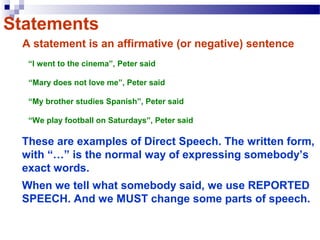
Statements
A statement is an affirmative (or negative) sentence
“I went to the cinema”, Peter said
“Mary does not love me”, Peter said
“My brother studies Spanish”, Peter said
“We play football on Saturdays”, Peter said

These are examples of Direct Speech. The written form,
with “…” is the normal way of expressing somebody’s
exact words.
When we tell what somebody said, we use REPORTED
SPEECH. And we MUST change some parts of speech.
Statements
After reporting, the examples become these…
Peter said (that) he had gone to the cinema
Peter said (that) Mary did (does) not love him
Peter said (that) his brother studied (s) Spanish
Peter said (that) they play(ed) football on Saturdays

As you can see, some changes have been made. The
most important ones are:
•
•

Subject: it must always be the person we are talking
about (name, pronoun, etc.)
Verb tenses: they always shift to the PAST
Statements
Verb Tense Changes
Direct Speech

Reported Speech

Present Simple: “I go to school”

Past Simple: He said he went to school

Present Cont: “They are studying”

Past Cont: She said they were studying

Present Perfect: “She has been in
London”

Past Perfect: John said she had been in
London

Past Simple: “I saw a good film
yesterday ”

Past Perfect: He said he had seen a good film the
day before

Past Cont: “They were watching TV ”

Past Perfect Cont: They said they had been
watching TV.

Past Perfect: “The robber had ran away”

Past Perfect : They said the robber had run away.

Future: “You’ll pass your driving test ”

Conditional: The teacher assured he would pass
his driving test.

Can: “I can ski on that hill”

Could: He said he could ski on that hill.

May: “I may be late”

Might: She said she might be late.

Must (obligation): “You must study
harder”

Had to: My mother said that I had to study harder.

Must (deduction): “He must be ill”

Must: The boss said he must be ill.
Statements
Adverbial Changes
Direct Speech

Reported Speech

now / at the moment

then / at that moment

tomorrow
next week / year / …
yesterday
last week / year / …
this / these
here

the next / following day
the following week / year …
the day before / the previous day
the previous week / year …
that / those
there

Act always as if you were in real life: the
changes are the same in English as in Spanish
Statements
Say & Tell
The introductory verbs are usually Say + Reported
Sentence or Tell + Object + Reported sentence:
“I’m going to the cinema tonight”
He said he was going to the cinema that night
He told me (that) he was going to the cinema that night
You must make changes in PRONOUNS (to agree with the
person (s) we are talking about), VERB TENSES and
ADVERBIALS of time and place, so that it becomes clear
who, or what, or when or where we are talking about
Questions
There are several points in questions:
1.
2.

The introductory verb must be one of
“ASKING”: ask, wonder...
The word order changes: The sentence
becomes an “affirmative sentence”

3.

Both sentences are joined either by “IF” (when
we have a Yes/No Question) or by the
interrogative adverb / pronoun (when we have a
WH-Question)

4.

The changes in tenses, adverbials or pronouns
are the same as in affirmative sentences
Questions
Examples:
“Are you going to the cinema?”
He asked John if he was going to the cinema
“Where are you going?”
He asked John where he was going
Do you prefer coffee or tea?
She asked me whether I preferred coffee or tea
Questions are often introduced by ask, inquire / enquire,
wonder, want to know…
Orders
Orders are always introduced by verbs of “COMMAND”.
They have a special structure in English

Subject+Verb of Command+Object (person to
whom we give the order)+(not) to+infinitive
They are usually introduced by tell, ask, order,
command, instruct, forbid, request, beg, urge.

Examples:
“Go out of class”
The teacher told me / John / her / us to go out of class
“Don’t talk so loud”
The doctor advised them / him / you not to talk so loud
Reporting Verbs
Verb+object+infinitive
Advise
Encourage
Invite
Remind
Warn
Examples:
Jack encouraged me to look for a
new job.
They invited all their friends to attend
the presentation

Verb + infinitive
Agree
Decide
Offer
Promise
Refuse
Threaten
Examples:
She offered to give him a lift to work.
My brother refused to take no for an
answer
Reporting Verbs
Verb+(that)
Admit
Agree
Decide
Deny
Explain
Examples:
Tom admitted (that) he had tried to
leave early.

Insist
Promise
Recommend
Suggest

Examples:
She agreed (that) we needed to
reconsider our plans
Reporting Verbs
Verb+Gerund
Deny
Recommend
Suggest

Examples:
He denied having anything to do with
her .
Ken suggested studying early in the
morning

Verb+Object+Prepositi
on+Gerund
Accuse
Blame
Congratulate

Examples:
They accused the boys of cheating on
the exam.
She blamed her husband for missing
the train.

Reported speech

  • 1.
  • 2.
    Statements A statement isan affirmative (or negative) sentence “I went to the cinema”, Peter said “Mary does not love me”, Peter said “My brother studies Spanish”, Peter said “We play football on Saturdays”, Peter said These are examples of Direct Speech. The written form, with “…” is the normal way of expressing somebody’s exact words. When we tell what somebody said, we use REPORTED SPEECH. And we MUST change some parts of speech.
  • 3.
    Statements After reporting, theexamples become these… Peter said (that) he had gone to the cinema Peter said (that) Mary did (does) not love him Peter said (that) his brother studied (s) Spanish Peter said (that) they play(ed) football on Saturdays As you can see, some changes have been made. The most important ones are: • • Subject: it must always be the person we are talking about (name, pronoun, etc.) Verb tenses: they always shift to the PAST
  • 4.
    Statements Verb Tense Changes DirectSpeech Reported Speech Present Simple: “I go to school” Past Simple: He said he went to school Present Cont: “They are studying” Past Cont: She said they were studying Present Perfect: “She has been in London” Past Perfect: John said she had been in London Past Simple: “I saw a good film yesterday ” Past Perfect: He said he had seen a good film the day before Past Cont: “They were watching TV ” Past Perfect Cont: They said they had been watching TV. Past Perfect: “The robber had ran away” Past Perfect : They said the robber had run away. Future: “You’ll pass your driving test ” Conditional: The teacher assured he would pass his driving test. Can: “I can ski on that hill” Could: He said he could ski on that hill. May: “I may be late” Might: She said she might be late. Must (obligation): “You must study harder” Had to: My mother said that I had to study harder. Must (deduction): “He must be ill” Must: The boss said he must be ill.
  • 5.
    Statements Adverbial Changes Direct Speech ReportedSpeech now / at the moment then / at that moment tomorrow next week / year / … yesterday last week / year / … this / these here the next / following day the following week / year … the day before / the previous day the previous week / year … that / those there Act always as if you were in real life: the changes are the same in English as in Spanish
  • 6.
    Statements Say & Tell Theintroductory verbs are usually Say + Reported Sentence or Tell + Object + Reported sentence: “I’m going to the cinema tonight” He said he was going to the cinema that night He told me (that) he was going to the cinema that night You must make changes in PRONOUNS (to agree with the person (s) we are talking about), VERB TENSES and ADVERBIALS of time and place, so that it becomes clear who, or what, or when or where we are talking about
  • 7.
    Questions There are severalpoints in questions: 1. 2. The introductory verb must be one of “ASKING”: ask, wonder... The word order changes: The sentence becomes an “affirmative sentence” 3. Both sentences are joined either by “IF” (when we have a Yes/No Question) or by the interrogative adverb / pronoun (when we have a WH-Question) 4. The changes in tenses, adverbials or pronouns are the same as in affirmative sentences
  • 8.
    Questions Examples: “Are you goingto the cinema?” He asked John if he was going to the cinema “Where are you going?” He asked John where he was going Do you prefer coffee or tea? She asked me whether I preferred coffee or tea Questions are often introduced by ask, inquire / enquire, wonder, want to know…
  • 9.
    Orders Orders are alwaysintroduced by verbs of “COMMAND”. They have a special structure in English Subject+Verb of Command+Object (person to whom we give the order)+(not) to+infinitive They are usually introduced by tell, ask, order, command, instruct, forbid, request, beg, urge. Examples: “Go out of class” The teacher told me / John / her / us to go out of class “Don’t talk so loud” The doctor advised them / him / you not to talk so loud
  • 10.
    Reporting Verbs Verb+object+infinitive Advise Encourage Invite Remind Warn Examples: Jack encouragedme to look for a new job. They invited all their friends to attend the presentation Verb + infinitive Agree Decide Offer Promise Refuse Threaten Examples: She offered to give him a lift to work. My brother refused to take no for an answer
  • 11.
    Reporting Verbs Verb+(that) Admit Agree Decide Deny Explain Examples: Tom admitted(that) he had tried to leave early. Insist Promise Recommend Suggest Examples: She agreed (that) we needed to reconsider our plans
  • 12.
    Reporting Verbs Verb+Gerund Deny Recommend Suggest Examples: He deniedhaving anything to do with her . Ken suggested studying early in the morning Verb+Object+Prepositi on+Gerund Accuse Blame Congratulate Examples: They accused the boys of cheating on the exam. She blamed her husband for missing the train.