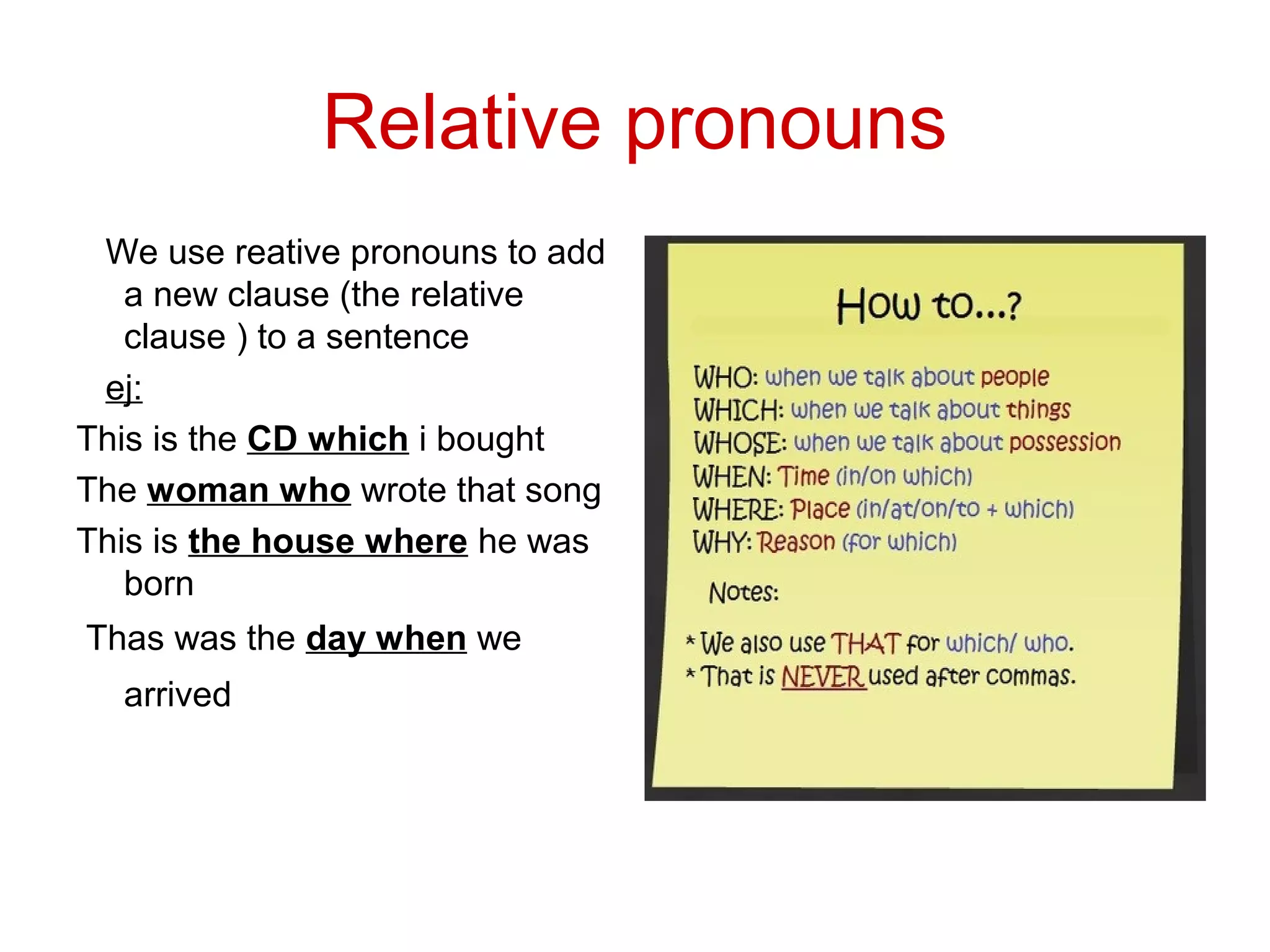
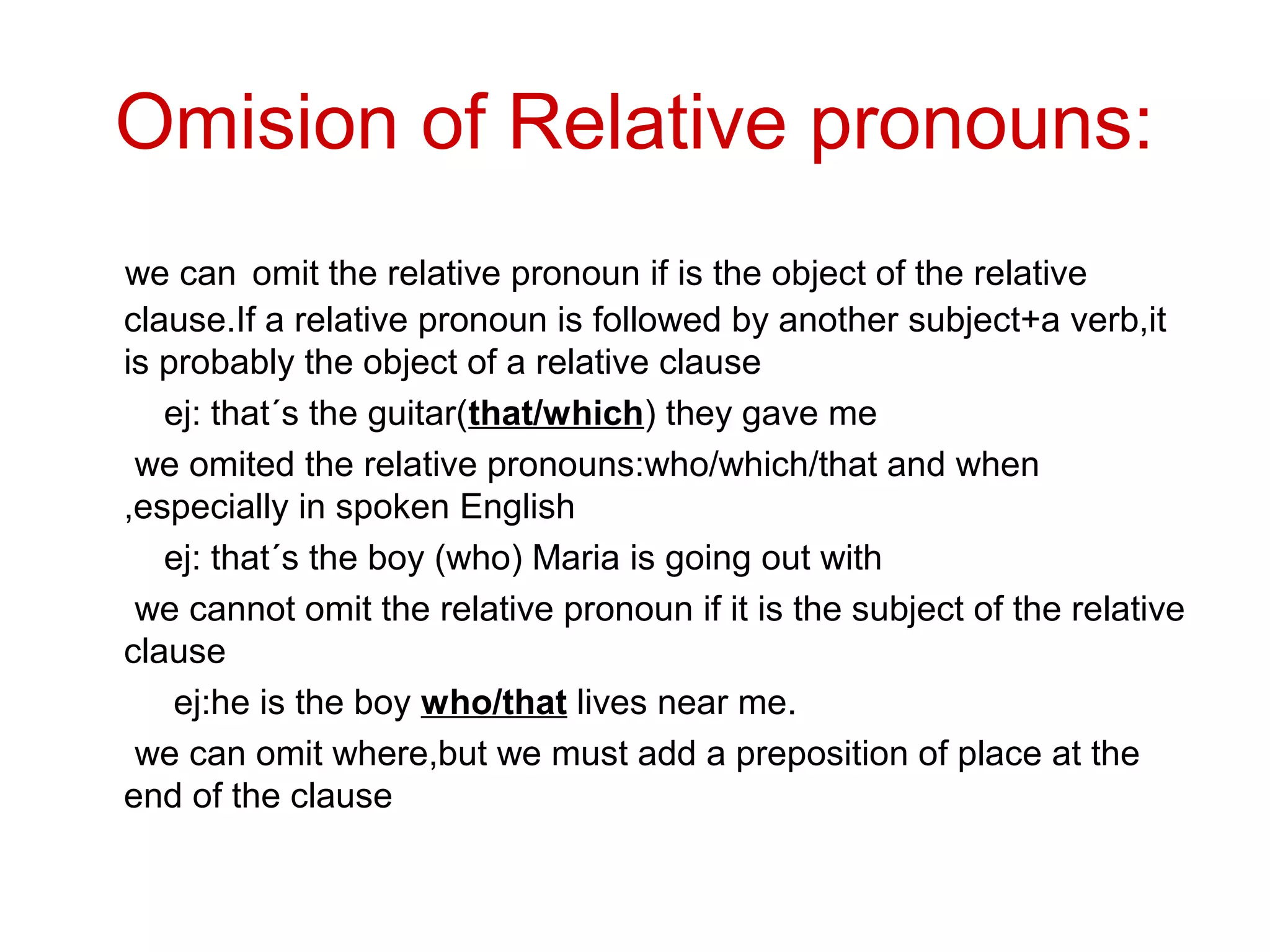
Relative clauses add additional information to a main clause using relative pronouns like who, which, that, when, where, whose. Defining relative clauses are essential to identifying the noun, while non-defining clauses provide extra information and are set off by commas. Relative pronouns can be omitted in some defining clauses if they are the object. Prepositions are sometimes placed at the end of relative clauses involving location or object.