PRESENT
SIMPLE
VS
PRESENT
CONTINUOUS
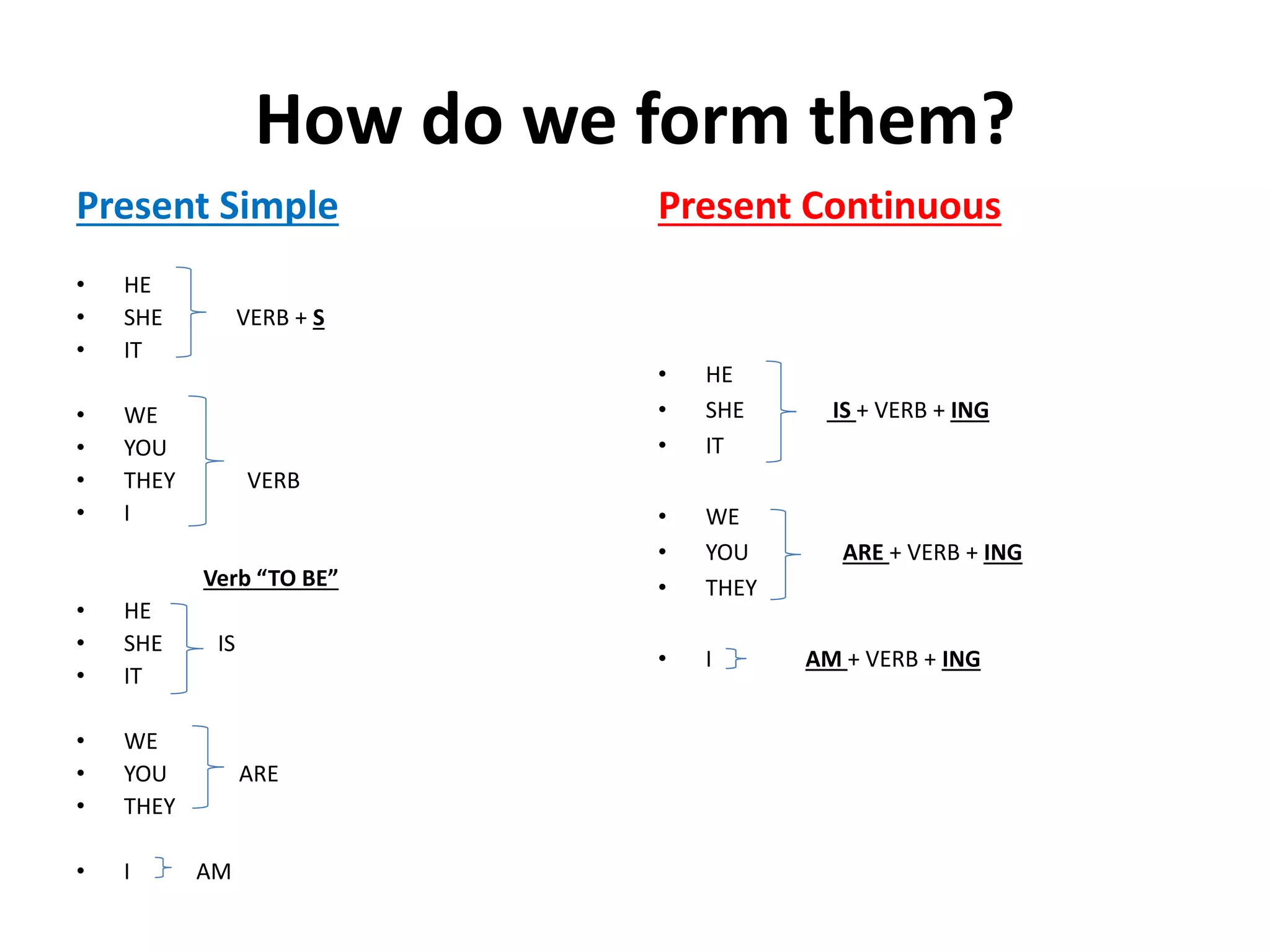
How do we form them?
Present Simple
• HE
• SHE VERB + S
• IT
• WE
• YOU
• THEY VERB
• I
Verb “TO BE”
• HE
• SHE IS
• IT
• WE
• YOU ARE
• THEY
• I AM
Present Continuous
• HE
• SHE IS + VERB + ING
• IT
• WE
• YOU ARE + VERB + ING
• THEY
• I AM + VERB + ING
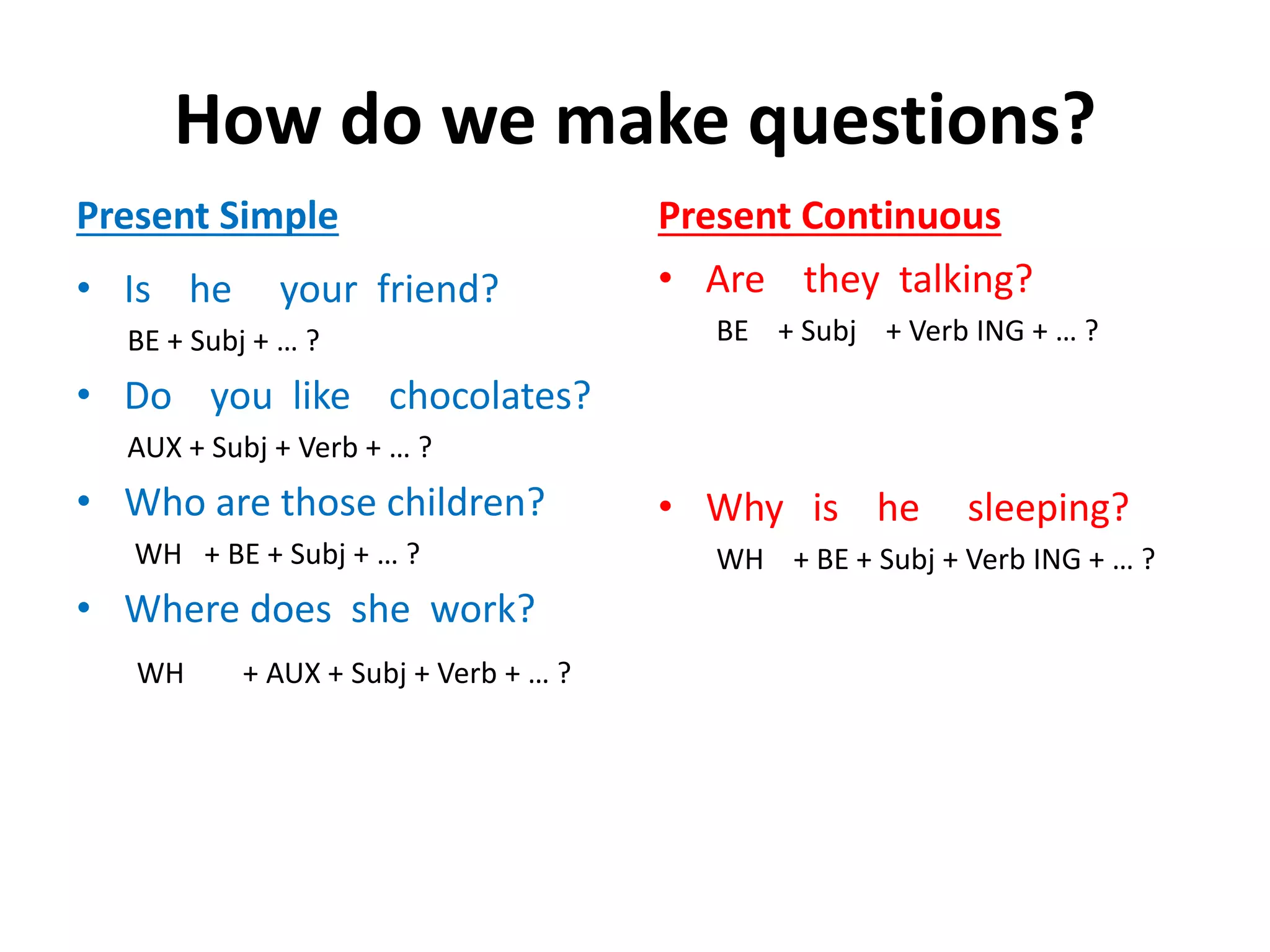
How do we make questions?
Present Simple
• Is he your friend?
BE + Subj + … ?
• Do you like chocolates?
AUX + Subj + Verb + … ?
• Who are those children?
WH + BE + Subj + … ?
• Where does she work?
WH + AUX + Subj + Verb + … ?
Present Continuous
• Are they talking?
BE + Subj + Verb ING + … ?
• Why is he sleeping?
WH + BE + Subj + Verb ING + … ?
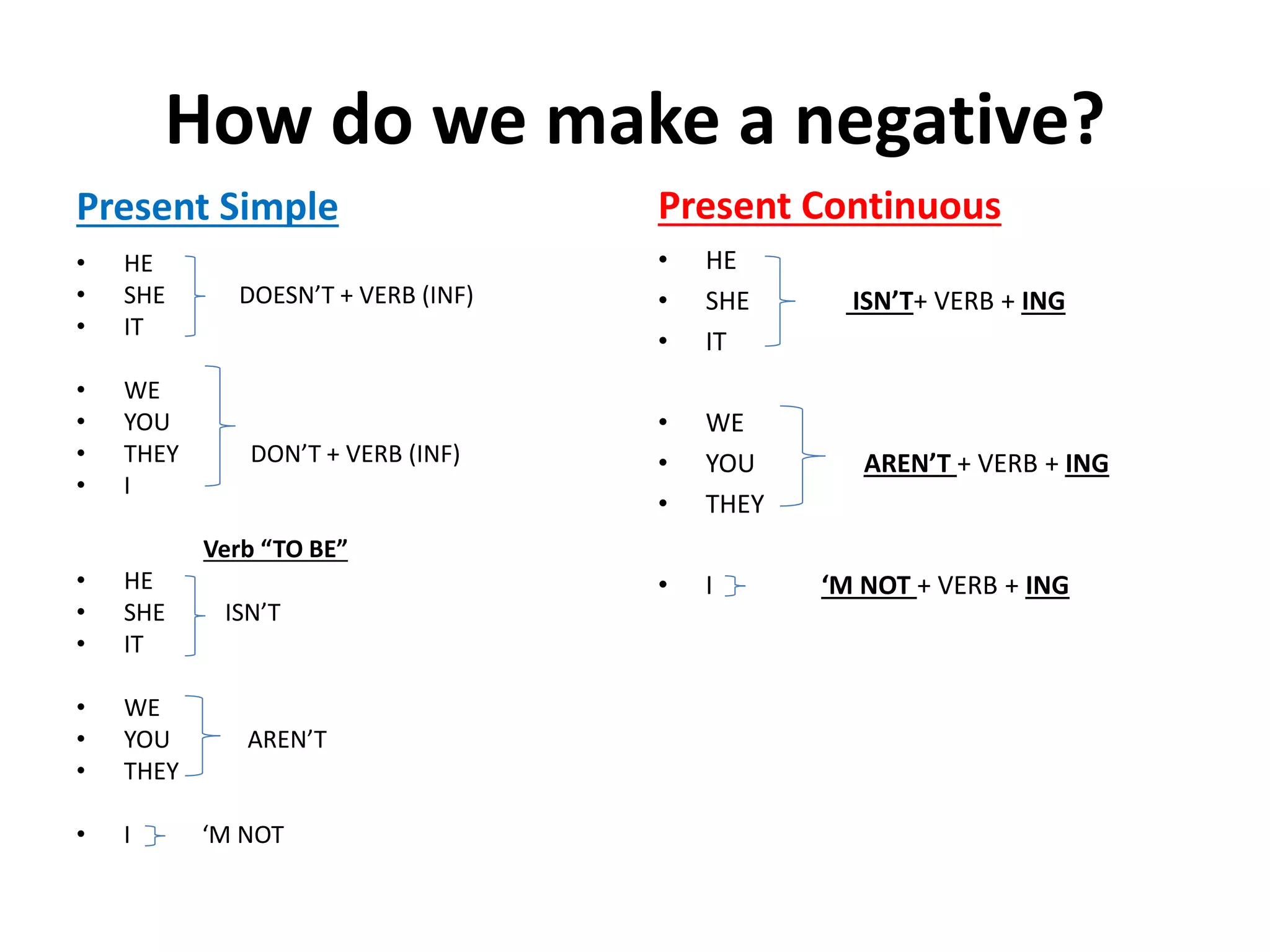
How do we make a negative?
Present Simple
• HE
• SHE DOESN’T + VERB (INF)
• IT
• WE
• YOU
• THEY DON’T + VERB (INF)
• I
Verb “TO BE”
• HE
• SHE ISN’T
• IT
• WE
• YOU AREN’T
• THEY
• I ‘M NOT
Present Continuous
• HE
• SHE ISN’T+ VERB + ING
• IT
• WE
• YOU AREN’T + VERB + ING
• THEY
• I ‘M NOT + VERB + ING
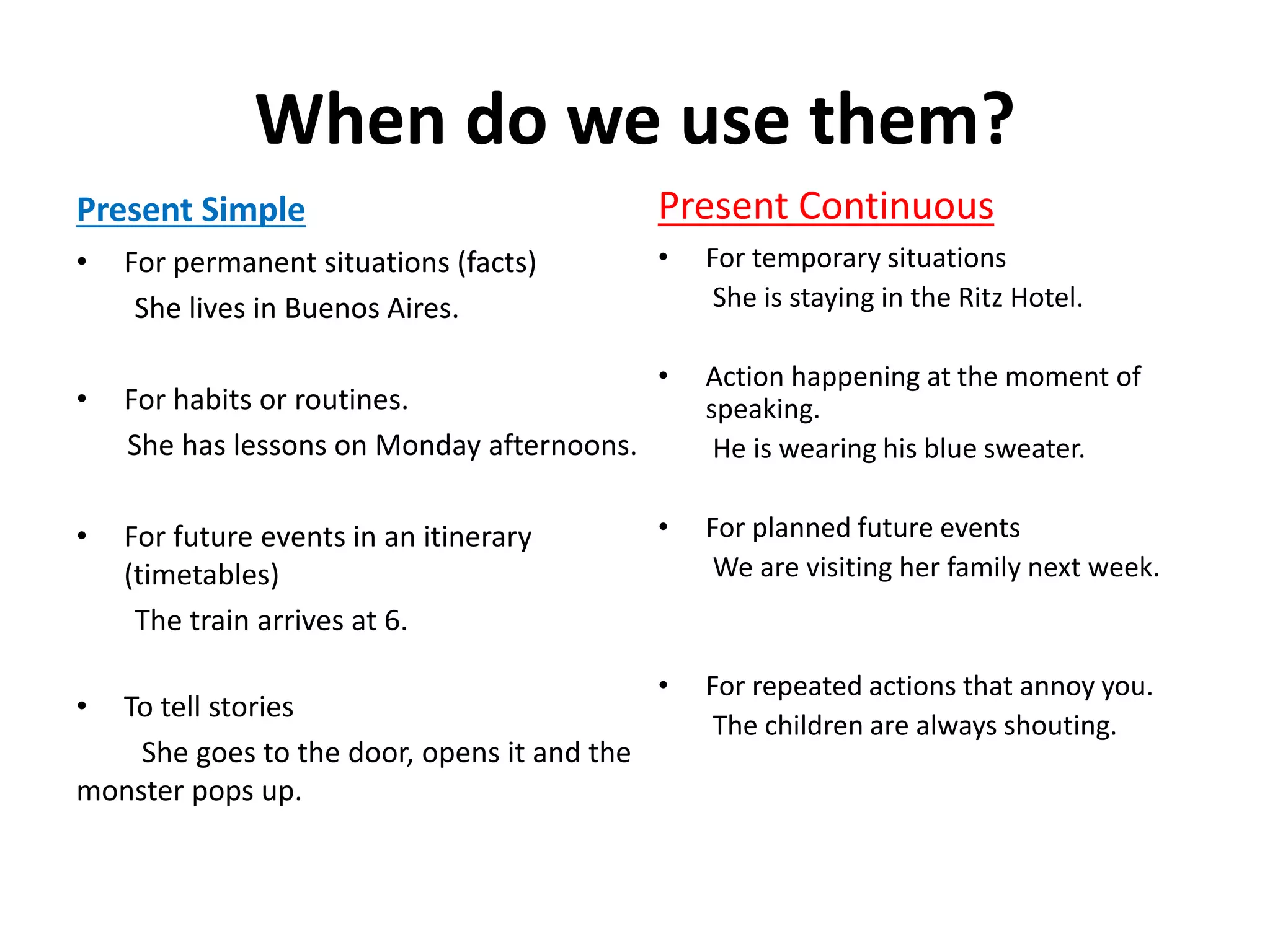
When do we use them?
Present Simple
• For permanent situations (facts)
She lives in Buenos Aires.
• For habits or routines.
She has lessons on Monday afternoons.
• For future events in an itinerary
(timetables)
The train arrives at 6.
• To tell stories
She goes to the door, opens it and the
monster pops up.
Present Continuous
• For temporary situations
She is staying in the Ritz Hotel.
• Action happening at the moment of
speaking.
He is wearing his blue sweater.
• For planned future events
We are visiting her family next week.
• For repeated actions that annoy you.
The children are always shouting.
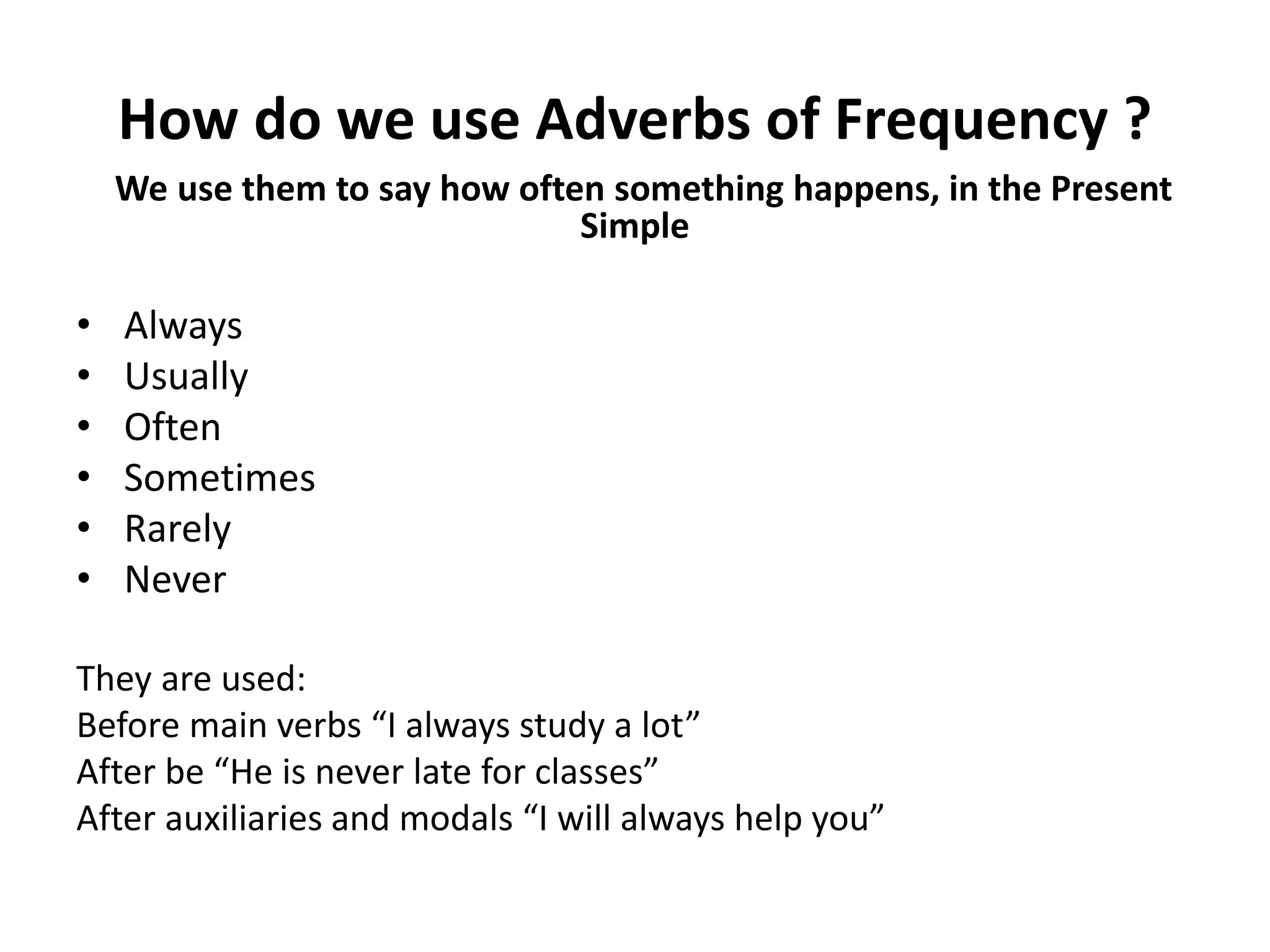
How do we use Adverbs of Frequency ?
We use them to say how often something happens, in the Present
Simple
• Always
• Usually
• Often
• Sometimes
• Rarely
• Never
They are used:
Before main verbs “I always study a lot”
After be “He is never late for classes”
After auxiliaries and modals “I will always help you”
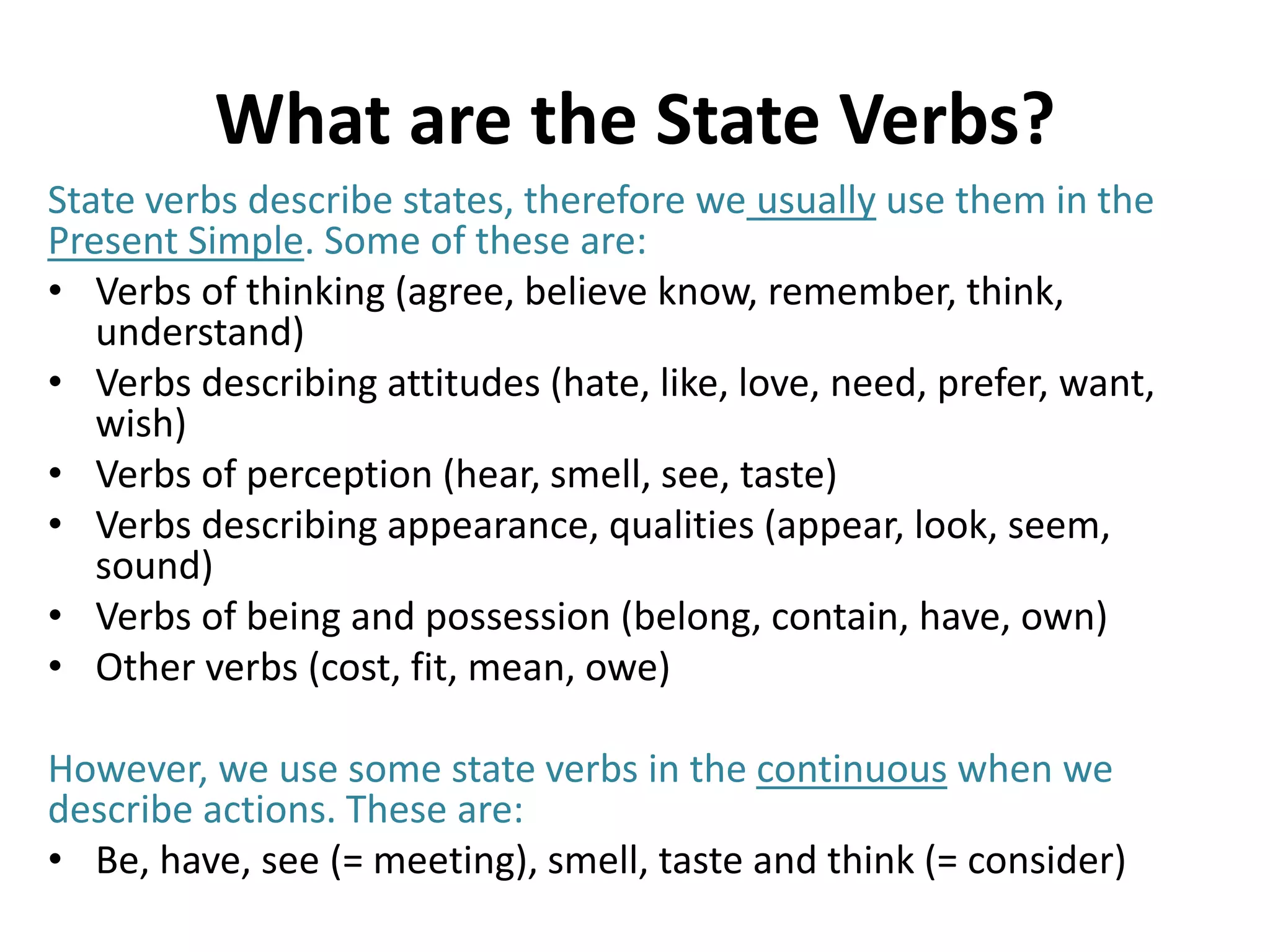
What are the State Verbs?
State verbs describe states, therefore we usually use them in the
Present Simple. Some of these are:
• Verbs of thinking (agree, believe know, remember, think,
understand)
• Verbs describing attitudes (hate, like, love, need, prefer, want,
wish)
• Verbs of perception (hear, smell, see, taste)
• Verbs describing appearance, qualities (appear, look, seem,
sound)
• Verbs of being and possession (belong, contain, have, own)
• Other verbs (cost, fit, mean, owe)
However, we use some state verbs in the continuous when we
describe actions. These are:
• Be, have, see (= meeting), smell, taste and think (= consider)

Present simple vs. present continuous

  • 1.
  • 2.
    How do weform them? Present Simple • HE • SHE VERB + S • IT • WE • YOU • THEY VERB • I Verb “TO BE” • HE • SHE IS • IT • WE • YOU ARE • THEY • I AM Present Continuous • HE • SHE IS + VERB + ING • IT • WE • YOU ARE + VERB + ING • THEY • I AM + VERB + ING
  • 3.
    How do wemake questions? Present Simple • Is he your friend? BE + Subj + … ? • Do you like chocolates? AUX + Subj + Verb + … ? • Who are those children? WH + BE + Subj + … ? • Where does she work? WH + AUX + Subj + Verb + … ? Present Continuous • Are they talking? BE + Subj + Verb ING + … ? • Why is he sleeping? WH + BE + Subj + Verb ING + … ?
  • 4.
    How do wemake a negative? Present Simple • HE • SHE DOESN’T + VERB (INF) • IT • WE • YOU • THEY DON’T + VERB (INF) • I Verb “TO BE” • HE • SHE ISN’T • IT • WE • YOU AREN’T • THEY • I ‘M NOT Present Continuous • HE • SHE ISN’T+ VERB + ING • IT • WE • YOU AREN’T + VERB + ING • THEY • I ‘M NOT + VERB + ING
  • 5.
    When do weuse them? Present Simple • For permanent situations (facts) She lives in Buenos Aires. • For habits or routines. She has lessons on Monday afternoons. • For future events in an itinerary (timetables) The train arrives at 6. • To tell stories She goes to the door, opens it and the monster pops up. Present Continuous • For temporary situations She is staying in the Ritz Hotel. • Action happening at the moment of speaking. He is wearing his blue sweater. • For planned future events We are visiting her family next week. • For repeated actions that annoy you. The children are always shouting.
  • 6.
    How do weuse Adverbs of Frequency ? We use them to say how often something happens, in the Present Simple • Always • Usually • Often • Sometimes • Rarely • Never They are used: Before main verbs “I always study a lot” After be “He is never late for classes” After auxiliaries and modals “I will always help you”
  • 7.
    What are theState Verbs? State verbs describe states, therefore we usually use them in the Present Simple. Some of these are: • Verbs of thinking (agree, believe know, remember, think, understand) • Verbs describing attitudes (hate, like, love, need, prefer, want, wish) • Verbs of perception (hear, smell, see, taste) • Verbs describing appearance, qualities (appear, look, seem, sound) • Verbs of being and possession (belong, contain, have, own) • Other verbs (cost, fit, mean, owe) However, we use some state verbs in the continuous when we describe actions. These are: • Be, have, see (= meeting), smell, taste and think (= consider)