The Future Perfect Tense
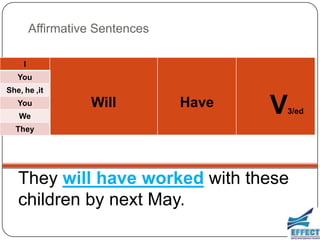
Affirmative Sentences

     I
   You
She, he ,it
   You
   We
                   Will          Have   V
                                        3/ed

  They


   They will have worked with these
   children by next May.
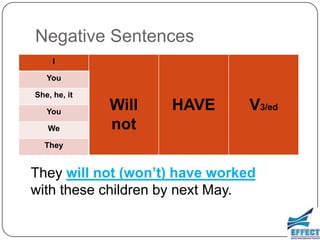
Negative Sentences
     I

   You

She, he, it

   You
              Will   HAVE       V3/ed
   We         not
  They


They will not (won’t) have worked
with these children by next May.
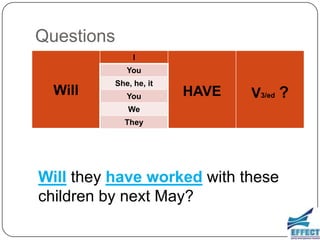
Questions
               I
             You
          She, he, it
  Will       You        HAVE   V3/ed ?
             We
            They


Will they have worked with these
children by next May?
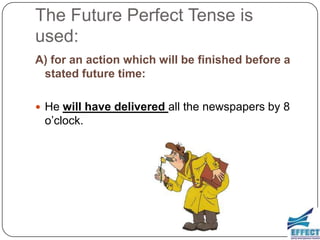
The Future Perfect Tense is
used:
A) for an action which will be finished before a
 stated future time:

 He will have delivered all the newspapers by 8
 o’clock.
The Future Perfect Tense is
used:
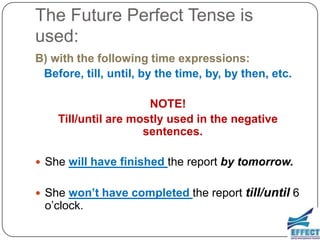
B) with the following time expressions:
 Before, till, until, by the time, by, by then, etc.

                      NOTE!
    Till/until are mostly used in the negative
                     sentences.

 She will have finished the report by tomorrow.


 She won’t have completed the report     till/until 6
 o’clock.
The Future Perfect Tense is
used:
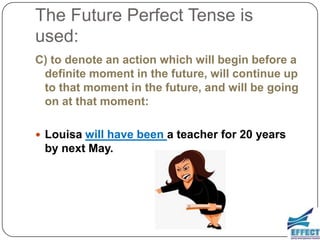
C) to denote an action which will begin before a
 definite moment in the future, will continue up
 to that moment in the future, and will be going
 on at that moment:

 Louisa will have been a teacher for 20 years
 by next May.
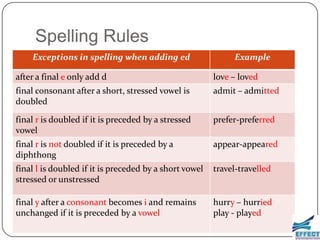
Spelling Rules
    Exceptions in spelling when adding ed                    Example

after a final e only add d                              love – loved
final consonant after a short, stressed vowel is        admit – admitted
doubled

final r is doubled if it is preceded by a stressed      prefer-preferred
vowel
final r is not doubled if it is preceded by a           appear-appeared
diphthong
final l is doubled if it is preceded by a short vowel   travel-travelled
stressed or unstressed

final y after a consonant becomes i and remains         hurry – hurried
unchanged if it is preceded by a vowel                  play - played

The future perfect tense

  • 1.
  • 2.
    Affirmative Sentences I You She, he ,it You We Will Have V 3/ed They They will have worked with these children by next May.
  • 3.
    Negative Sentences I You She, he, it You Will HAVE V3/ed We not They They will not (won’t) have worked with these children by next May.
  • 4.
    Questions I You She, he, it Will You HAVE V3/ed ? We They Will they have worked with these children by next May?
  • 5.
    The Future PerfectTense is used: A) for an action which will be finished before a stated future time:  He will have delivered all the newspapers by 8 o’clock.
  • 6.
    The Future PerfectTense is used: B) with the following time expressions: Before, till, until, by the time, by, by then, etc. NOTE! Till/until are mostly used in the negative sentences.  She will have finished the report by tomorrow.  She won’t have completed the report till/until 6 o’clock.
  • 7.
    The Future PerfectTense is used: C) to denote an action which will begin before a definite moment in the future, will continue up to that moment in the future, and will be going on at that moment:  Louisa will have been a teacher for 20 years by next May.
  • 8.
    Spelling Rules Exceptions in spelling when adding ed Example after a final e only add d love – loved final consonant after a short, stressed vowel is admit – admitted doubled final r is doubled if it is preceded by a stressed prefer-preferred vowel final r is not doubled if it is preceded by a appear-appeared diphthong final l is doubled if it is preceded by a short vowel travel-travelled stressed or unstressed final y after a consonant becomes i and remains hurry – hurried unchanged if it is preceded by a vowel play - played