Downloaded 486 times

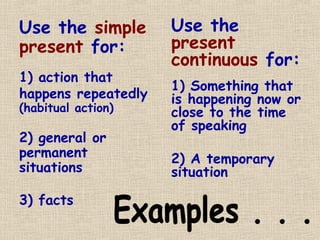


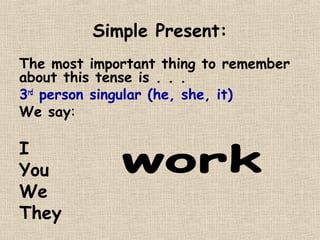
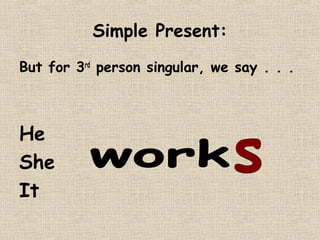

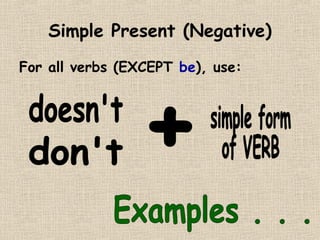


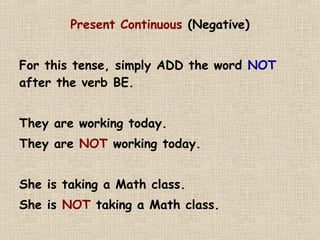
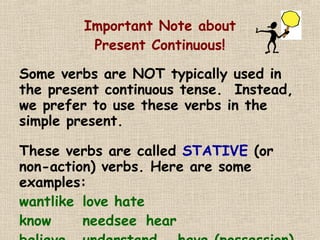





This document provides information on the simple present and present continuous tenses in English grammar. It explains that different tenses are used in different situations and carry distinct meanings. The simple present is used for habitual actions, general truths, and permanent situations, while the present continuous is used for temporary situations and actions happening now. Examples are given for each tense, along with notes on grammar structures like subject-verb agreement and negative forms. Common stative verbs that don't use the present continuous are also listed.


