Remote sensing is the collection and 
interpretation of information about the earth 
from far away. Information from space, the 
air and ships (taking measurements from 
the ocean depth) significantly aids our 
understanding of the Earth. Remote sensing 
is essential to accurately model the 
environment and map the earth for use in 
Geography Information Systems (GIS) and 
global positioning system (gps).
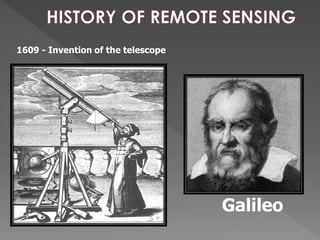
1609 - Invention of the telescope 
Galileo
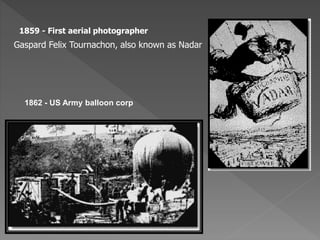
1859 - First aerial photographer 
Gaspard Felix Tournachon, also known as Nadar 
1862 - US Army balloon corp
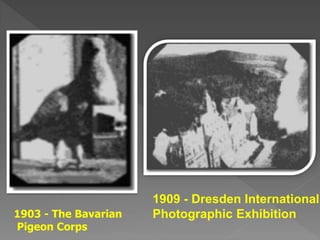
1903 - The Bavarian 
Pigeon Corps 
1909 - Dresden International 
Photographic Exhibition
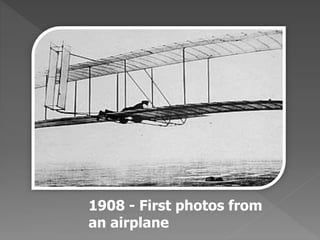
1908 - First photos from 
an airplane
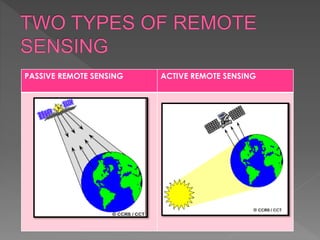
PASSIVE REMOTE SENSING ACTIVE REMOTE SENSING
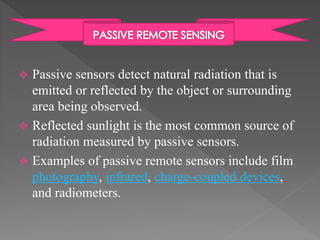
 Passive sensors detect natural radiation that is 
emitted or reflected by the object or surrounding 
area being observed. 
 Reflected sunlight is the most common source of 
radiation measured by passive sensors. 
 Examples of passive remote sensors include film 
photography, infrared, charge-coupled devices, 
and radiometers.
 Active collection, on the other hand, emits 
energy in order to scan objects and areas 
whereupon a sensor then detects and measures 
the radiation that is reflected or backscattered 
from the target. 
 RADAR is an example of active remote sensing 
where the time delay between emission and 
return is measured, establishing the location, 
height, speed and direction of an object.
HOW DOES REMOTE SENSING WORK? 
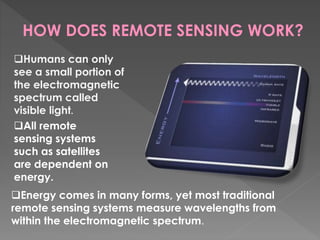
Humans can only 
see a small portion of 
the electromagnetic 
spectrum called 
visible light. 
All remote 
sensing systems 
such as satellites 
are dependent on 
energy. 
Energy comes in many forms, yet most traditional 
remote sensing systems measure wavelengths from 
within the electromagnetic spectrum.
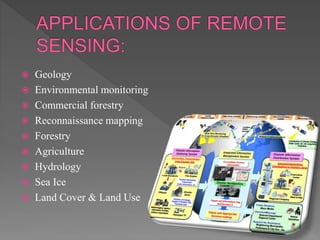
 Geology 
 Environmental monitoring 
 Commercial forestry 
 Reconnaissance mapping 
 Forestry 
 Agriculture 
 Hydrology 
 Sea Ice 
 Land Cover & Land Use
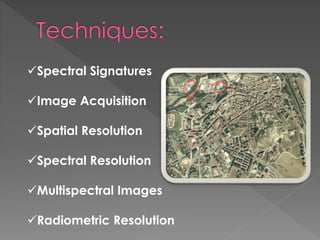
Spectral Signatures 
Image Acquisition 
Spatial Resolution 
Spectral Resolution 
Multispectral Images 
Radiometric Resolution
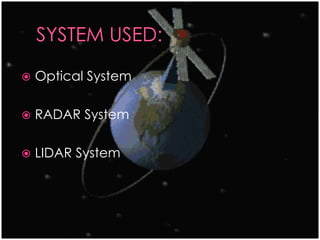
 Optical System 
 RADAR System 
 LIDAR System
 Remote sensing makes it possible to 
collect data on dangerous or 
inaccessible areas and 
 Remote sensing also replaces costly and 
slow data collection on the ground, 
ensuring in the process that areas or 
objects are not disturbed. 
 Other uses include different areas of the 
earth sciences such as natural resource 
management, agricultural fields such as 
land usage and conservation.
A satellite system that projects information to GPS 
receivers on the ground, enabling users to determine 
latitude and longitude coordinates. 
Software program that enable users to store and 
manipulate large amounts of data from GPS and other 
sources.
THE MOST EFFECTIVE TECHNOLOGY TO 
GATHER INFORMATION ON ANY PART OF 
THE EARTH WITHIN A SHORT SPAN OF TIME 
WITHOUT FOOTING THE REGION IS THE 
REMOTE SENSING TECHNOLOGY. 
REMOTE SENSING TECHNOLOGY IS VERY 
USEFUL TO MANKIND!!
KAUSHIKAA.N.J 
SUSHMITHA.R.S

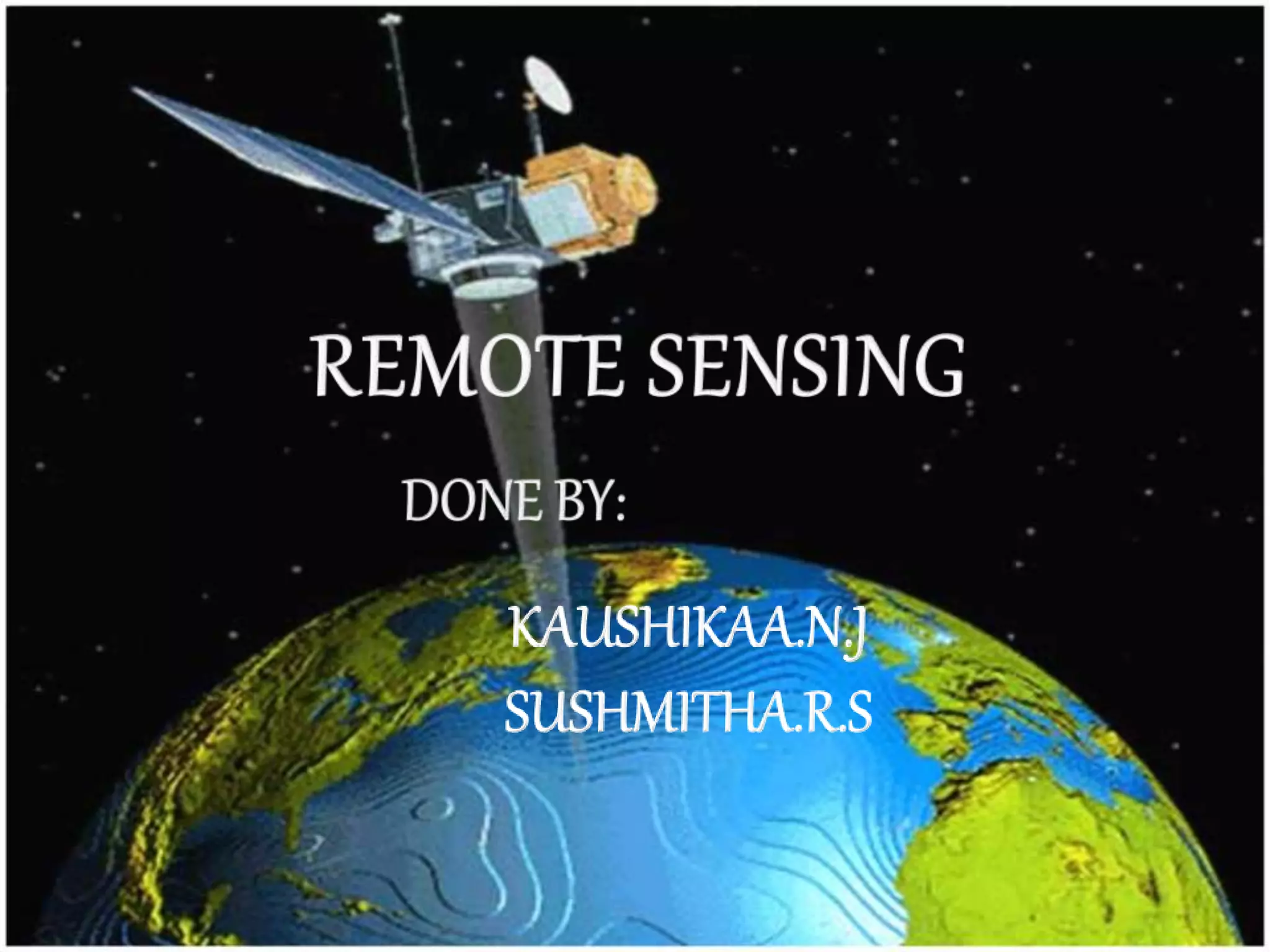
REMOTE SENSING A VERY USEFUL TECHNOLOGY TO MANKIND

  • 2.
    Remote sensing isthe collection and interpretation of information about the earth from far away. Information from space, the air and ships (taking measurements from the ocean depth) significantly aids our understanding of the Earth. Remote sensing is essential to accurately model the environment and map the earth for use in Geography Information Systems (GIS) and global positioning system (gps).
  • 3.
    1609 - Inventionof the telescope Galileo
  • 4.
    1859 - Firstaerial photographer Gaspard Felix Tournachon, also known as Nadar 1862 - US Army balloon corp
  • 5.
    1903 - TheBavarian Pigeon Corps 1909 - Dresden International Photographic Exhibition
  • 6.
    1908 - Firstphotos from an airplane
  • 7.
    PASSIVE REMOTE SENSINGACTIVE REMOTE SENSING
  • 8.
     Passive sensorsdetect natural radiation that is emitted or reflected by the object or surrounding area being observed.  Reflected sunlight is the most common source of radiation measured by passive sensors.  Examples of passive remote sensors include film photography, infrared, charge-coupled devices, and radiometers.
  • 9.
     Active collection,on the other hand, emits energy in order to scan objects and areas whereupon a sensor then detects and measures the radiation that is reflected or backscattered from the target.  RADAR is an example of active remote sensing where the time delay between emission and return is measured, establishing the location, height, speed and direction of an object.
  • 10.
    HOW DOES REMOTESENSING WORK? Humans can only see a small portion of the electromagnetic spectrum called visible light. All remote sensing systems such as satellites are dependent on energy. Energy comes in many forms, yet most traditional remote sensing systems measure wavelengths from within the electromagnetic spectrum.
  • 11.
     Geology Environmental monitoring  Commercial forestry  Reconnaissance mapping  Forestry  Agriculture  Hydrology  Sea Ice  Land Cover & Land Use
  • 12.
    Spectral Signatures ImageAcquisition Spatial Resolution Spectral Resolution Multispectral Images Radiometric Resolution
  • 13.
     Optical System  RADAR System  LIDAR System
  • 14.
     Remote sensingmakes it possible to collect data on dangerous or inaccessible areas and  Remote sensing also replaces costly and slow data collection on the ground, ensuring in the process that areas or objects are not disturbed.  Other uses include different areas of the earth sciences such as natural resource management, agricultural fields such as land usage and conservation.
  • 15.
    A satellite systemthat projects information to GPS receivers on the ground, enabling users to determine latitude and longitude coordinates. Software program that enable users to store and manipulate large amounts of data from GPS and other sources.
  • 16.
    THE MOST EFFECTIVETECHNOLOGY TO GATHER INFORMATION ON ANY PART OF THE EARTH WITHIN A SHORT SPAN OF TIME WITHOUT FOOTING THE REGION IS THE REMOTE SENSING TECHNOLOGY. REMOTE SENSING TECHNOLOGY IS VERY USEFUL TO MANKIND!!
  • 17.