Red blood cell destruction
Recommended Readings Wills’ Biochemical basis of Medicine. Chapter 25  Lippincott’s illustrated reviews biochemistry. Chapter 21
Learning objectives Know the main location and site of haem breakdown Outline the pathway for haem degradation Compare/contrast types of Plasma Bilirubin & types of Hyperbilirubinemia Understand the biochemical basis of different types of jaundice.
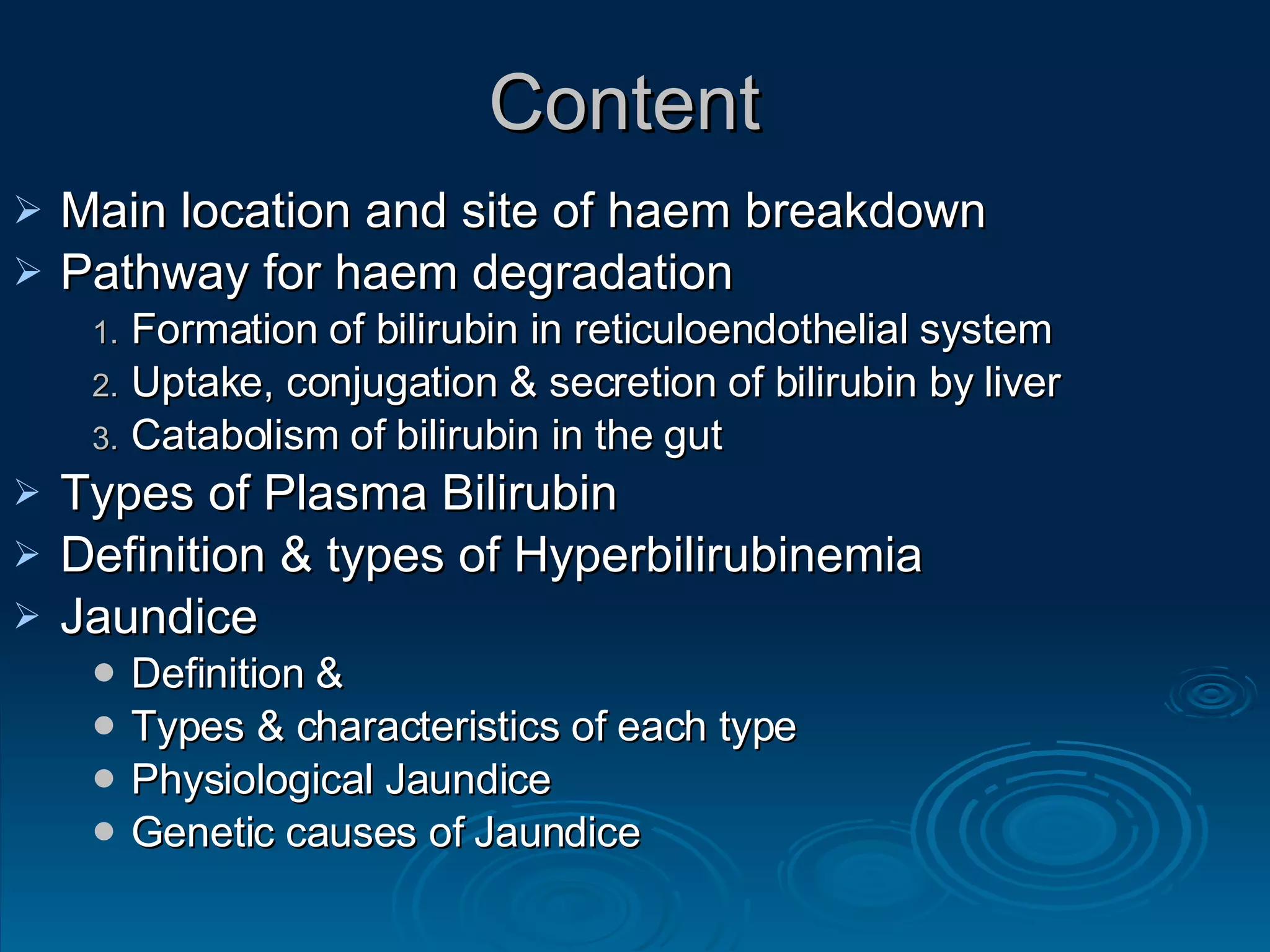
Content  Main location and site of haem breakdown Pathway for haem degradation Formation of bilirubin in reticuloendothelial system  Uptake, conjugation & secretion of bilirubin by liver Catabolism of bilirubin in the gut Types of Plasma Bilirubin Definition & types of Hyperbilirubinemia Jaundice  Definition & Types & characteristics of each type Physiological Jaundice Genetic causes of Jaundice
Degradation of heme   Red blood cells are degraded by the cells of the reticuloendothelial system particularly in the liver and spleen after 120 days in the circulation (RBC life span) Therefore, The principal sites of heme catabolism are the spleen & the liver Bilirubin is the end product of heme catabolism: 75% from hemoglobin of old RBCs,  the rest from hemoglobin of immature RBCs & from cytochromes from extra-erythroid tissues 250-350 mg bilirubin /day is produced in normal adults
Heme catabolism is classified into 3 stages: Formation of bilirubin in reticuloendothelial system   (RES) Uptake, conjugation and secretion of bilirubin by the liver Catabolism of bilirubin in the gut Pathway for haem degradation
( ) Little
CO
 
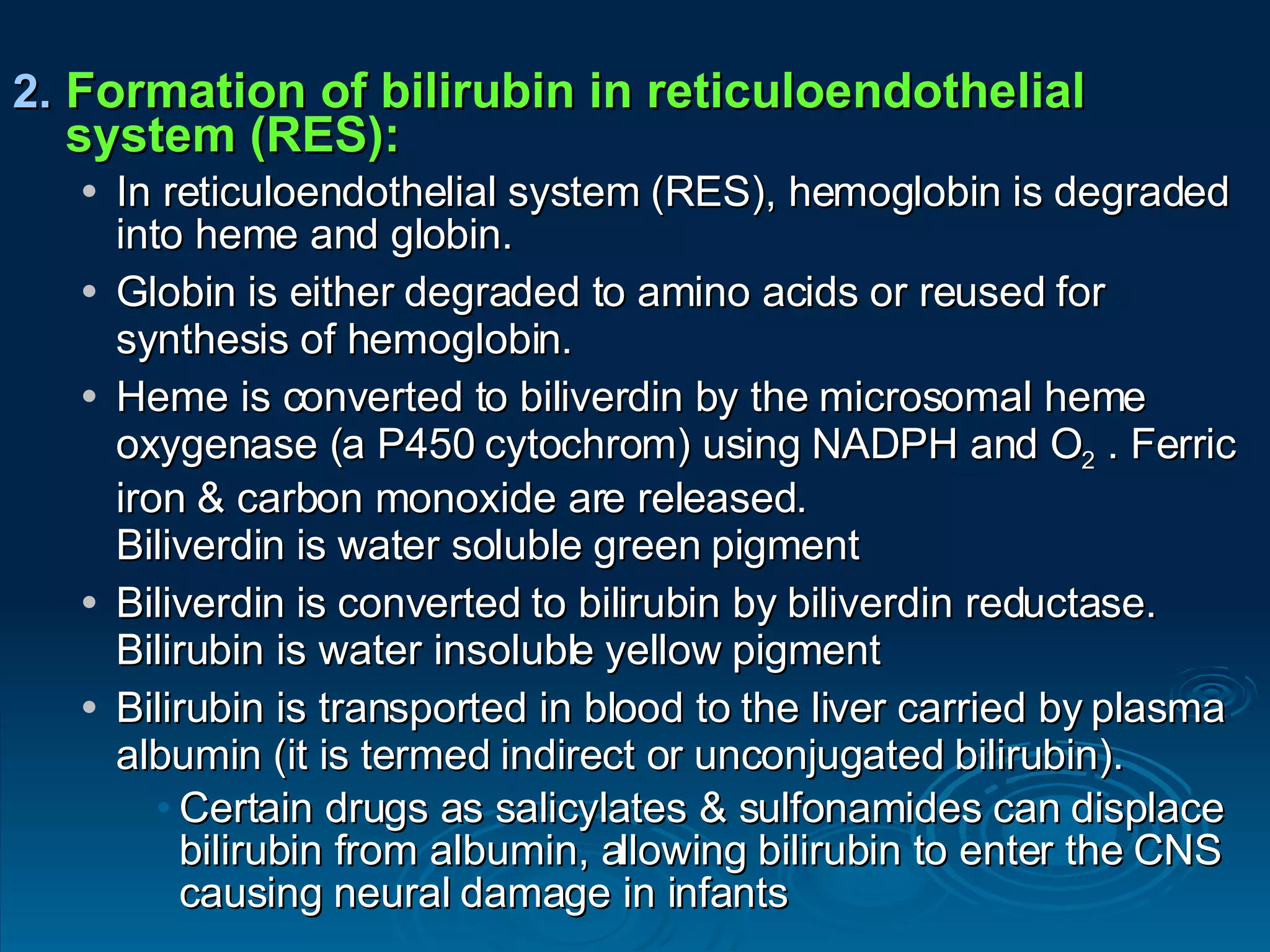
Formation of bilirubin in reticuloendothelial system   (RES): In reticuloendothelial system (RES), hemoglobin is degraded into heme and globin. Globin is either degraded to amino acids or reused for synthesis of hemoglobin. Heme is converted to biliverdin by the microsomal heme oxygenase (a P450 cytochrom) using NADPH and O 2  . Ferric iron & carbon monoxide are released.  Biliverdin is water soluble green pigment Biliverdin is converted to bilirubin by biliverdin reductase. Bilirubin is water insoluble yellow pigment Bilirubin is transported in blood to the liver carried by plasma albumin (it is termed indirect or unconjugated bilirubin). Certain drugs as salicylates & sulfonamides can displace bilirubin from albumin, allowing bilirubin to enter the CNS causing neural damage in infants
Uptake, conjugation and secretion of bilirubin by the liver: Uptake of bilirubin:   Bilirubin leaves albumin & is taken by the hepatocytes  Hepatic uptake of bilirubin is mediated by a carrier, & may be competitively inhibited by other organic anions Synthesis of bilirubin-diglucuronide (Conjugation):   By UDP glucuronyl transferase enzyme, bilirubin is conjugated with glucuronic acid, to form bilirubin diglucuronide (it is termed direct or conjugated bilirubin  & it is water soluble) UDP-glucuronate acts as donor for glucuronate group to form bilirubin monoglucuronide then bilirubin diglucuronide   Conjugated bilirubin is actively secreted by hepatocyte into the biliary canaliculi   (with   bile) to small intestine Secreation is the rate limiting step in bilirubin metabolism
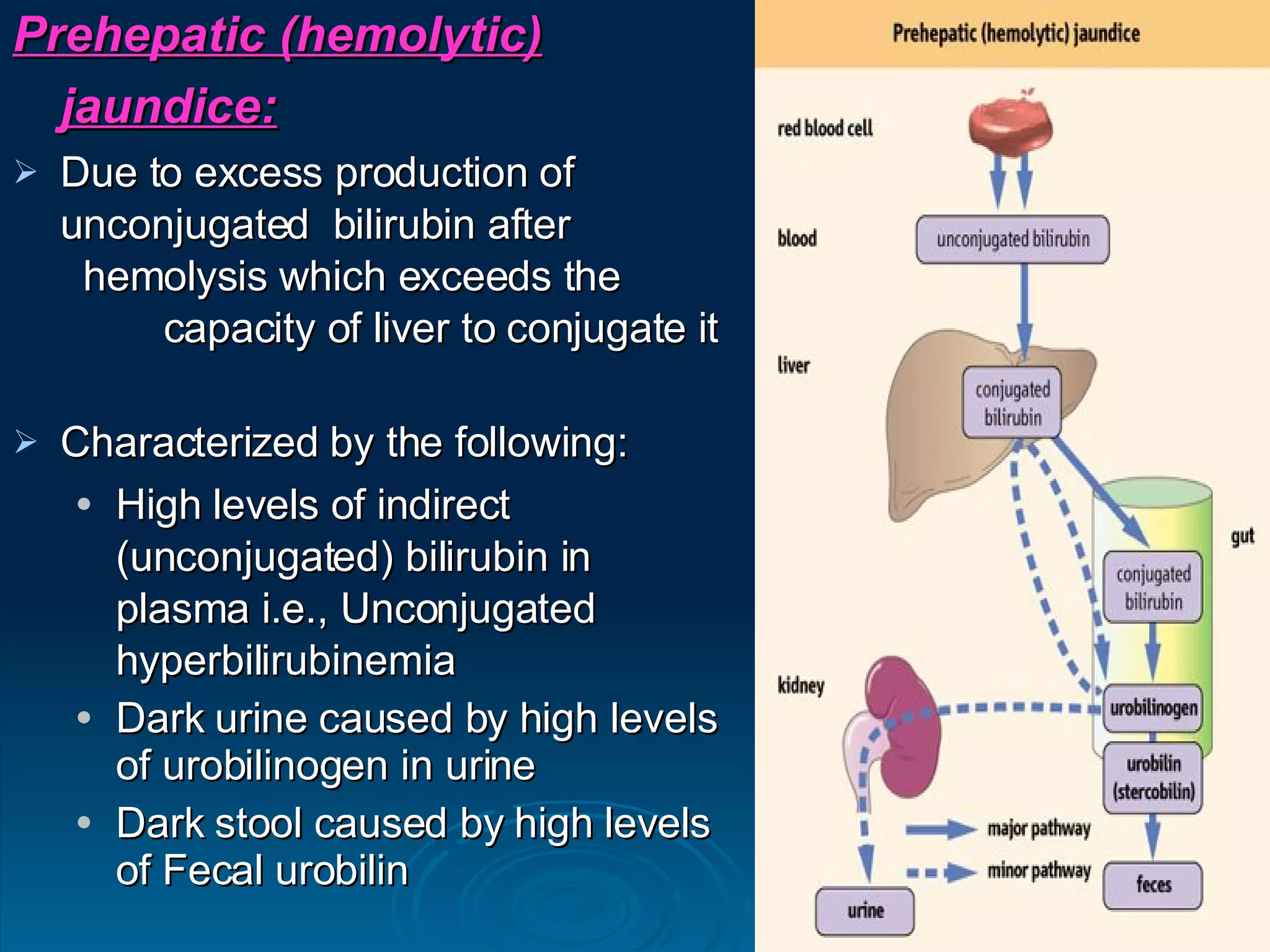
Catabolism of bilirubin in the gut: Conjugated bilirubin is converted by  bacteria to urobilinogen :  Conjugated bilirubin is deconjugated and reduced by intestinal bacteria forming urobilinogen. Most of urobilinogen is oxidized in colon to a brown pigment,  urobilin  (stercobilin ) , which  is excreted in feces  giving feces its color.  Some urobilinogen   (water soluble) is absorbed from gut into portal blood and re-excreted by liver in bile (enterohepatic circulation).  Traces of this urobilinogen reach the systemic blood & are excreated by kidneys in urine
 
Plasma Bilirubin Normal plasma bilirubin level is < 1 mg/dL  (<17  μ mol/L) Plasma bilirubin   is present in 2 forms: Unconjugated bilirubin (Indirect bilirubin) Conjugated bilirubin   (Direct bilirubin)
Unconjugated bilirubin (Indirect bilirubin) Main bilirubin present in plasma normally Water insoluble  Transported in blood as Bilirubin-albumin complex Not excreted in urine  Increases in blood in cases of: Hemolysis  Liver disease: liver fails to uptake or conjugate it. Termed Indirect bilirubin because its estimation by van den Bergh reaction needs addition of methanol to react with the diazo reagent
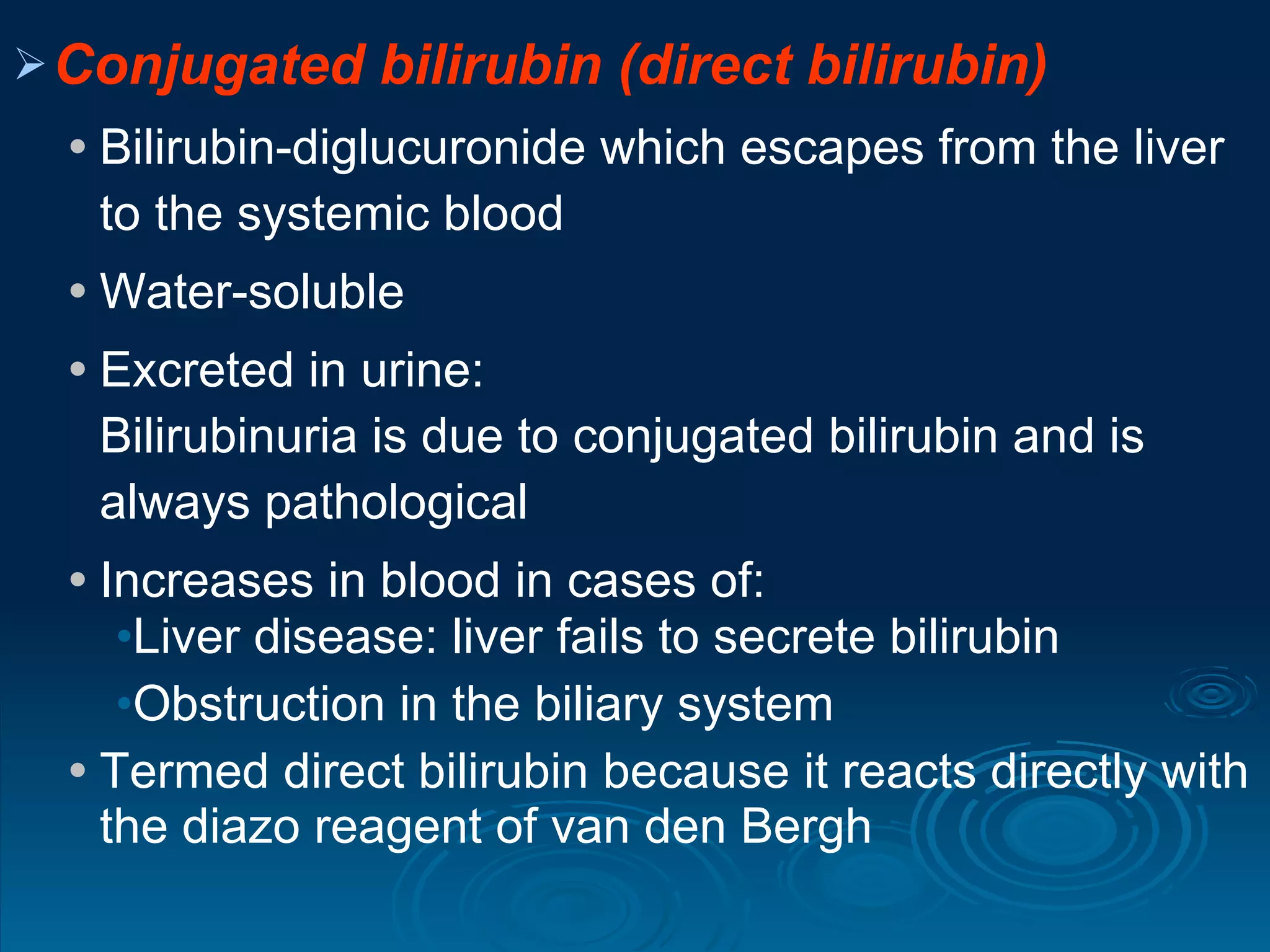
Conjugated bilirubin (direct bilirubin) Bilirubin-diglucuronide which escapes from the liver to the systemic blood Water-soluble Excreted in urine:  Bilirubinuria is due to conjugated bilirubin and is always pathological Increases in blood in cases of: Liver disease: liver fails to secrete bilirubin  Obstruction in the biliary system  Termed direct bilirubin because it reacts directly with the diazo reagent of van den Bergh
Hyperbilirubinemia Increased plasma bilirubin level more than  1mg/dL  (17  μ mol/L) According to the type of bilirubin increased in plasma, hyperbilirubinemias are classified into 2 types: Unconjugated  hyperbilirubinemia  Conjugated hyperbilirubinemia According to the underlying defect, hyperbilirubinemias may be:  Unconjugated ,  Conjugated  Both
Unconjugated hyperbilirubinemia   High level of unconjugated bilirubin in blood. Unconjugated bilirubin can cross the blood-brain barrier & cause severe brain damage (kernicterus) Unconjugated bilirubin is  not  excreted in urine Causes: Hemolysis Immaturity of the enzyme of bilirubin conjugation in neonates (physiological) Genetic defect in the enzyme of bilirubin conjugation   Gilbert's syndrome   Crigler-Najjar syndrome Most common causes are Hemolysis & Gilbert's syndrome
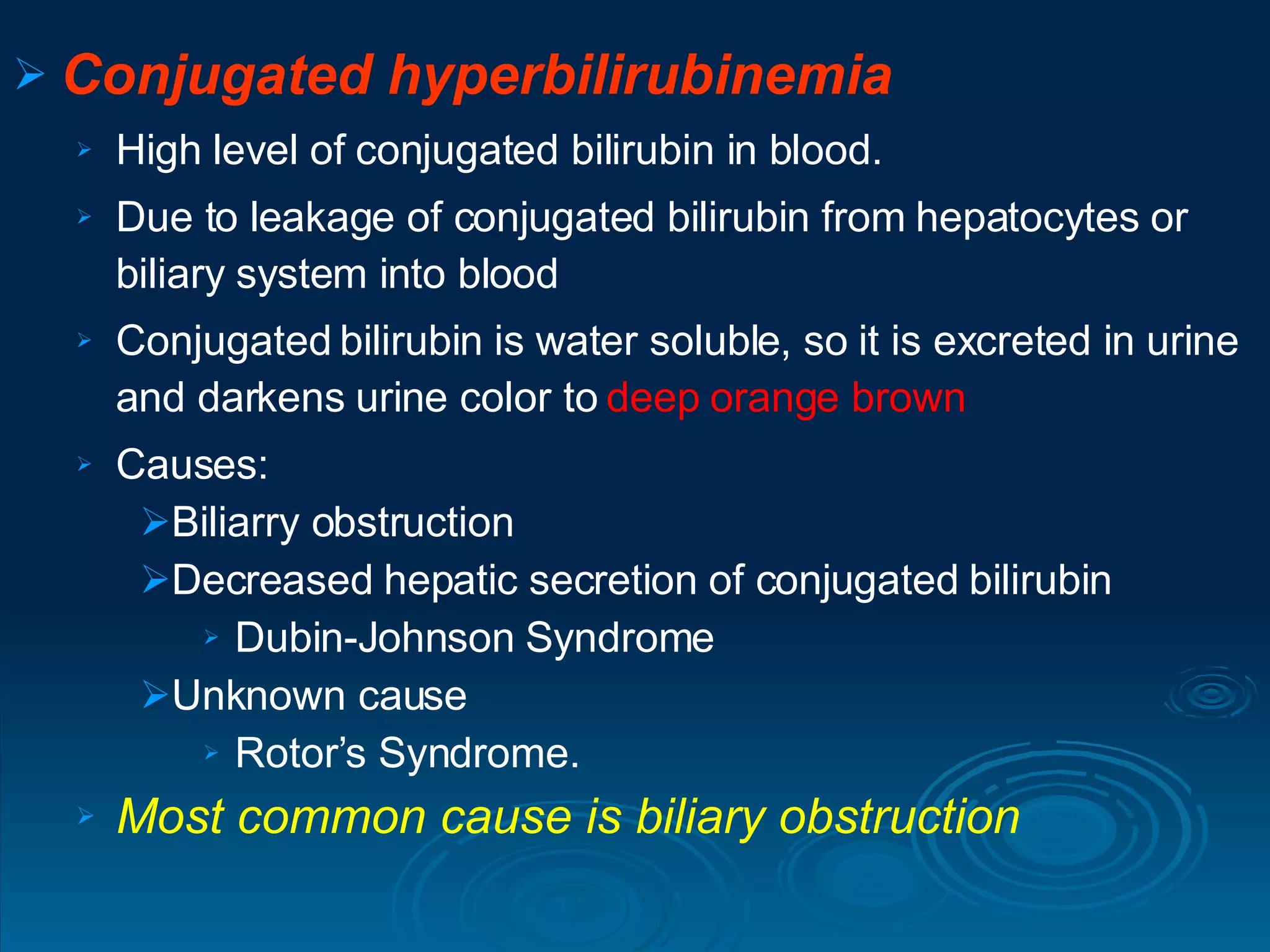
Conjugated hyperbilirubinemia High level of conjugated bilirubin in blood. Due to leakage of conjugated bilirubin from hepatocytes or biliary system into blood  Conjugated bilirubin is water soluble, so it is excreted in urine and darkens urine color to  deep orange brown  Causes: Biliarry obstruction  Decreased hepatic secretion of conjugated bilirubin  Dubin-Johnson Syndrome Unknown cause Rotor’s Syndrome. Most common cause is biliary obstruction
Jaundice Jaundice is clinically seen as yellow color of skin,  nail beds & sclera (due to deposition of bilirubin)  when plasma bilirubin concentration exceeds  3 mg/dL (50 μmol/L) due to imbalance between bilirubin production and excretion. Types of jaundice are:  Prehepatic (hemolytic)  Hepatic   Posthepatic (obstructive)
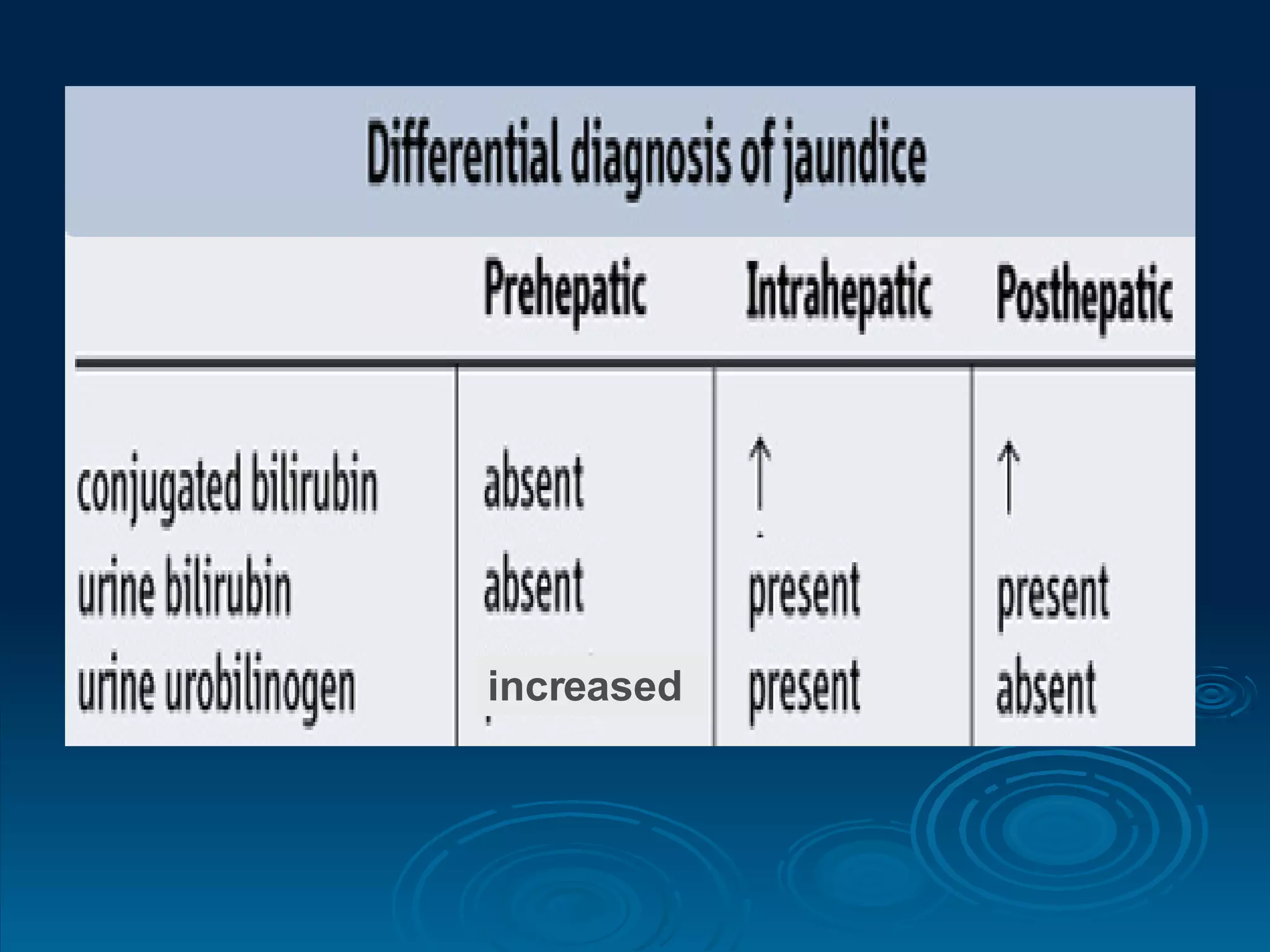
Prehepatic (hemolytic) jaundice:   Due to excess production of unconjugated  bilirubin after  hemolysis which exceeds the  capacity of liver to conjugate it  Characterized by the following: High levels of indirect (unconjugated) bilirubin in plasma i.e., Unconjugated hyperbilirubinemia  Dark urine caused by high levels of urobilinogen in urine  Dark stool caused by high levels of Fecal urobilin
Posthepatic (obstructive) jaundice  Due to biliary obstruction  Characterized by the following: High levels of direct (conjugated) bilirubin in plasma i.e., conjugated hyperbilirubinemia  Dark urine due to presence of conjugated bilirubin.  Urine urobilinogen is absent  Very pale stool (white, clay) due to absence of Fecal urobilin
Hepatic jaundice:  Due to hepatocyte dysfunction that cause impaired hepatic bilirubin uptake, conjugation, or secretion:  impaired uptake -> increased unconjugated bilirubin in blood),  impaired conjugation -> decreased conjugated bilirubin formation in liver-> decreased urobilinogen formation in gut)  impaired secretion->increased conjugated bilirubin in blood & secretion in urine) Characterized by the following:  High levels of direct (conjugated)  & indirect (unconjugated) bilirubin in plasma i.e., conjugated & Unconjugated hyperbilirubinemia Dark urine due to the presence of conjugated bilirubin & urobilinogen  Pale stool due to decreased Fecal urobilin
increased
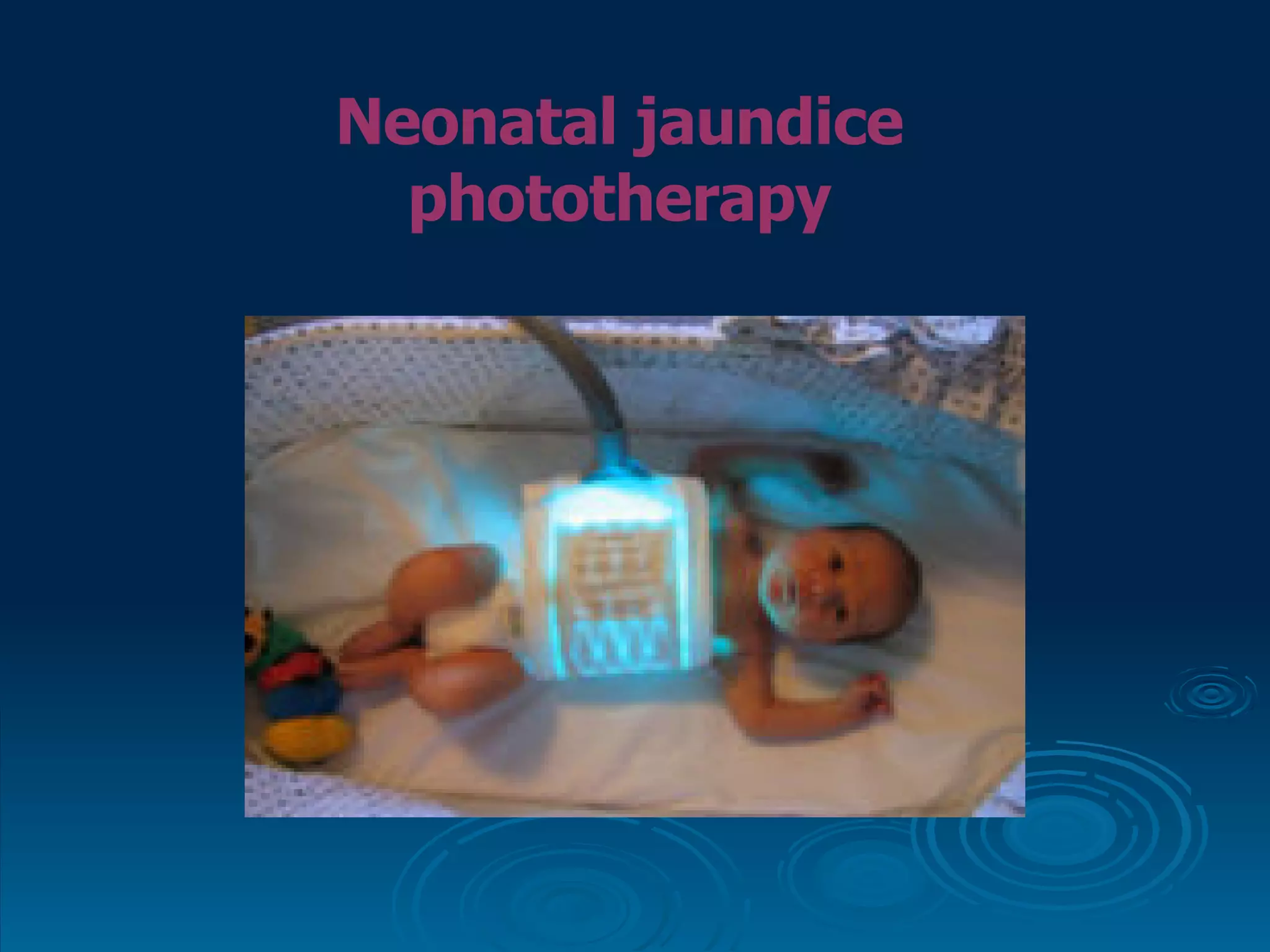
Neonatal (physiologic) jaundice:   Transient jaundice, common in neonates (50% of normal babies) particularly in premature infants  Due to immaturity of the enzymes of bilirubin conjugation leading to unconjugated hyperbilirubinemia Unconjugated bilirubin is toxic to the immature brain, it may cause kernicterus  if it exceeds 20-25 mg/dl,  kernicterus may result in mental retardation. Treatment:   to avoid kernicterus, if plasma bilirubin is too high: Phenobarbital: inducer for UDP-glucuronyl transferase  Phototherapy: converts bilirubin to more soluble derivatives that are easily excreted in bile (detoxifies bilirubin)  Exchange blood transfusion to remove excess bilirubin
Neonatal jaundice phototherapy
Genetic causes of jaundice : Gilbert's syndrome   Crigler-Najjar syndrome Dubin-Johnson syndrome   Rotor's syndrome
Gilbert's syndrome :   Affect up to 5% of population  Due to decreased conjugation of bilirubin &  decreased uptake in some cases  Decreased conjugation of bilirubin is due to moderate deficiency in UDP glucuronyl transferase activity  Mild intermittent  unconjugated hyperbilirubinemia  which is noticed after fasting or infection  Harmless & asymptomatic -> normal lifespan
Crigler-Najjar syndrome:   Type 1:  Severe  unconjugated hyperbilirubinemia  at birth Due to absence of conjugating enzymes   Fatal due to kernicterus Partial response to phototherapy, non to Phenobarbital  Type 2: Severe  unconjugated hyperbilirubinemia  at birth   Due to partial defect of conjugating enzymes  Survive to adulthood Good response to phototherapy & Phenobarbital
Dubin-Johnson syndrome:   Due to decreased hepatic secretion of conjugated bilirubin  Mild intermittent  conjugated hyperbilirubinemia Bilirubinuria  Normal lifespan Rotor's syndrome:   Cause is unknown   Mild intermittent  conjugated hyperbilirubinemia Bilirubinuria Normal lifespan

Red Blood Cell Destruction kau

  • 1.
    Red blood celldestruction
  • 2.
    Recommended Readings Wills’Biochemical basis of Medicine. Chapter 25 Lippincott’s illustrated reviews biochemistry. Chapter 21
  • 3.
    Learning objectives Knowthe main location and site of haem breakdown Outline the pathway for haem degradation Compare/contrast types of Plasma Bilirubin & types of Hyperbilirubinemia Understand the biochemical basis of different types of jaundice.
  • 4.
    Content Mainlocation and site of haem breakdown Pathway for haem degradation Formation of bilirubin in reticuloendothelial system Uptake, conjugation & secretion of bilirubin by liver Catabolism of bilirubin in the gut Types of Plasma Bilirubin Definition & types of Hyperbilirubinemia Jaundice Definition & Types & characteristics of each type Physiological Jaundice Genetic causes of Jaundice
  • 5.
    Degradation of heme Red blood cells are degraded by the cells of the reticuloendothelial system particularly in the liver and spleen after 120 days in the circulation (RBC life span) Therefore, The principal sites of heme catabolism are the spleen & the liver Bilirubin is the end product of heme catabolism: 75% from hemoglobin of old RBCs, the rest from hemoglobin of immature RBCs & from cytochromes from extra-erythroid tissues 250-350 mg bilirubin /day is produced in normal adults
  • 6.
    Heme catabolism isclassified into 3 stages: Formation of bilirubin in reticuloendothelial system (RES) Uptake, conjugation and secretion of bilirubin by the liver Catabolism of bilirubin in the gut Pathway for haem degradation
  • 7.
  • 8.
  • 9.
  • 10.
    Formation of bilirubinin reticuloendothelial system (RES): In reticuloendothelial system (RES), hemoglobin is degraded into heme and globin. Globin is either degraded to amino acids or reused for synthesis of hemoglobin. Heme is converted to biliverdin by the microsomal heme oxygenase (a P450 cytochrom) using NADPH and O 2 . Ferric iron & carbon monoxide are released. Biliverdin is water soluble green pigment Biliverdin is converted to bilirubin by biliverdin reductase. Bilirubin is water insoluble yellow pigment Bilirubin is transported in blood to the liver carried by plasma albumin (it is termed indirect or unconjugated bilirubin). Certain drugs as salicylates & sulfonamides can displace bilirubin from albumin, allowing bilirubin to enter the CNS causing neural damage in infants
  • 11.
    Uptake, conjugation andsecretion of bilirubin by the liver: Uptake of bilirubin: Bilirubin leaves albumin & is taken by the hepatocytes Hepatic uptake of bilirubin is mediated by a carrier, & may be competitively inhibited by other organic anions Synthesis of bilirubin-diglucuronide (Conjugation): By UDP glucuronyl transferase enzyme, bilirubin is conjugated with glucuronic acid, to form bilirubin diglucuronide (it is termed direct or conjugated bilirubin & it is water soluble) UDP-glucuronate acts as donor for glucuronate group to form bilirubin monoglucuronide then bilirubin diglucuronide Conjugated bilirubin is actively secreted by hepatocyte into the biliary canaliculi (with bile) to small intestine Secreation is the rate limiting step in bilirubin metabolism
  • 12.
    Catabolism of bilirubinin the gut: Conjugated bilirubin is converted by bacteria to urobilinogen : Conjugated bilirubin is deconjugated and reduced by intestinal bacteria forming urobilinogen. Most of urobilinogen is oxidized in colon to a brown pigment, urobilin (stercobilin ) , which is excreted in feces giving feces its color. Some urobilinogen (water soluble) is absorbed from gut into portal blood and re-excreted by liver in bile (enterohepatic circulation). Traces of this urobilinogen reach the systemic blood & are excreated by kidneys in urine
  • 13.
  • 14.
    Plasma Bilirubin Normalplasma bilirubin level is < 1 mg/dL (<17 μ mol/L) Plasma bilirubin is present in 2 forms: Unconjugated bilirubin (Indirect bilirubin) Conjugated bilirubin (Direct bilirubin)
  • 15.
    Unconjugated bilirubin (Indirectbilirubin) Main bilirubin present in plasma normally Water insoluble Transported in blood as Bilirubin-albumin complex Not excreted in urine Increases in blood in cases of: Hemolysis Liver disease: liver fails to uptake or conjugate it. Termed Indirect bilirubin because its estimation by van den Bergh reaction needs addition of methanol to react with the diazo reagent
  • 16.
    Conjugated bilirubin (directbilirubin) Bilirubin-diglucuronide which escapes from the liver to the systemic blood Water-soluble Excreted in urine: Bilirubinuria is due to conjugated bilirubin and is always pathological Increases in blood in cases of: Liver disease: liver fails to secrete bilirubin Obstruction in the biliary system Termed direct bilirubin because it reacts directly with the diazo reagent of van den Bergh
  • 17.
    Hyperbilirubinemia Increased plasmabilirubin level more than 1mg/dL (17 μ mol/L) According to the type of bilirubin increased in plasma, hyperbilirubinemias are classified into 2 types: Unconjugated hyperbilirubinemia Conjugated hyperbilirubinemia According to the underlying defect, hyperbilirubinemias may be: Unconjugated , Conjugated Both
  • 18.
    Unconjugated hyperbilirubinemia High level of unconjugated bilirubin in blood. Unconjugated bilirubin can cross the blood-brain barrier & cause severe brain damage (kernicterus) Unconjugated bilirubin is not excreted in urine Causes: Hemolysis Immaturity of the enzyme of bilirubin conjugation in neonates (physiological) Genetic defect in the enzyme of bilirubin conjugation Gilbert's syndrome Crigler-Najjar syndrome Most common causes are Hemolysis & Gilbert's syndrome
  • 19.
    Conjugated hyperbilirubinemia Highlevel of conjugated bilirubin in blood. Due to leakage of conjugated bilirubin from hepatocytes or biliary system into blood Conjugated bilirubin is water soluble, so it is excreted in urine and darkens urine color to deep orange brown Causes: Biliarry obstruction Decreased hepatic secretion of conjugated bilirubin Dubin-Johnson Syndrome Unknown cause Rotor’s Syndrome. Most common cause is biliary obstruction
  • 20.
    Jaundice Jaundice isclinically seen as yellow color of skin, nail beds & sclera (due to deposition of bilirubin) when plasma bilirubin concentration exceeds 3 mg/dL (50 μmol/L) due to imbalance between bilirubin production and excretion. Types of jaundice are: Prehepatic (hemolytic) Hepatic Posthepatic (obstructive)
  • 21.
    Prehepatic (hemolytic) jaundice: Due to excess production of unconjugated bilirubin after hemolysis which exceeds the capacity of liver to conjugate it Characterized by the following: High levels of indirect (unconjugated) bilirubin in plasma i.e., Unconjugated hyperbilirubinemia Dark urine caused by high levels of urobilinogen in urine Dark stool caused by high levels of Fecal urobilin
  • 22.
    Posthepatic (obstructive) jaundice Due to biliary obstruction Characterized by the following: High levels of direct (conjugated) bilirubin in plasma i.e., conjugated hyperbilirubinemia Dark urine due to presence of conjugated bilirubin. Urine urobilinogen is absent Very pale stool (white, clay) due to absence of Fecal urobilin
  • 23.
    Hepatic jaundice: Due to hepatocyte dysfunction that cause impaired hepatic bilirubin uptake, conjugation, or secretion: impaired uptake -> increased unconjugated bilirubin in blood), impaired conjugation -> decreased conjugated bilirubin formation in liver-> decreased urobilinogen formation in gut) impaired secretion->increased conjugated bilirubin in blood & secretion in urine) Characterized by the following: High levels of direct (conjugated) & indirect (unconjugated) bilirubin in plasma i.e., conjugated & Unconjugated hyperbilirubinemia Dark urine due to the presence of conjugated bilirubin & urobilinogen Pale stool due to decreased Fecal urobilin
  • 24.
  • 25.
    Neonatal (physiologic) jaundice: Transient jaundice, common in neonates (50% of normal babies) particularly in premature infants Due to immaturity of the enzymes of bilirubin conjugation leading to unconjugated hyperbilirubinemia Unconjugated bilirubin is toxic to the immature brain, it may cause kernicterus if it exceeds 20-25 mg/dl, kernicterus may result in mental retardation. Treatment: to avoid kernicterus, if plasma bilirubin is too high: Phenobarbital: inducer for UDP-glucuronyl transferase Phototherapy: converts bilirubin to more soluble derivatives that are easily excreted in bile (detoxifies bilirubin) Exchange blood transfusion to remove excess bilirubin
  • 26.
  • 27.
    Genetic causes ofjaundice : Gilbert's syndrome Crigler-Najjar syndrome Dubin-Johnson syndrome Rotor's syndrome
  • 28.
    Gilbert's syndrome : Affect up to 5% of population Due to decreased conjugation of bilirubin & decreased uptake in some cases Decreased conjugation of bilirubin is due to moderate deficiency in UDP glucuronyl transferase activity Mild intermittent unconjugated hyperbilirubinemia which is noticed after fasting or infection Harmless & asymptomatic -> normal lifespan
  • 29.
    Crigler-Najjar syndrome: Type 1: Severe unconjugated hyperbilirubinemia at birth Due to absence of conjugating enzymes Fatal due to kernicterus Partial response to phototherapy, non to Phenobarbital Type 2: Severe unconjugated hyperbilirubinemia at birth Due to partial defect of conjugating enzymes Survive to adulthood Good response to phototherapy & Phenobarbital
  • 30.
    Dubin-Johnson syndrome: Due to decreased hepatic secretion of conjugated bilirubin Mild intermittent conjugated hyperbilirubinemia Bilirubinuria Normal lifespan Rotor's syndrome: Cause is unknown Mild intermittent conjugated hyperbilirubinemia Bilirubinuria Normal lifespan