FORMATION AND EXCRETION OF BILE
PIGMENTS
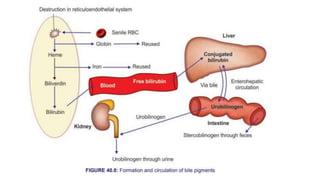
 Stages of formation and circulation of
bile pigments:
1. Senile erythrocytes are destroyed in reticuloen-dothelial system
and haemoglobin is released from them
2. Haemoglobin is broken into Globin And Heme
3. Heme is split into Iron & Pigment Biliverdin
4. Iron goes to Iron Pool And Is Reused
5. First Formed Pigment Biliverdin is reduced to Bilirubin.
6. Bilirubin is released into blood from the reticulo-endothelial cells
7.In blood, THE BILIRUBIN is transported by the plasma protein,
Albumin.
Bilirubin circulating in the blood is called free bilirubin or
UNCONJUGATED BILIRUBIN
8. Within few hours after entering the circulation,
The free bilirubin is taken up by the liver cells
9
9. In The Liver:
Process of Conjugation
It is conjugated with glucuronic acid to form conjugated
bilirubin
FORMULA : DRAW
10. Conjugated bilirubin is then excreted into
intestine through bile.
FATE OF CONJUGATED BILIRUBIN
Stages Of Excretion Of Conjugated Bilirubin:
1. In intestine: 50% of the conjugated bilirubin is
converted into urobilinogen by intestinal
bacteria.
First the conjugated bilirubin is deconjugated
into free bilirubin, which is later reduced into
urobilinogen.
2. Remaining 50% of conjugated bilirubin from
intestine is absorbed into blood and enters the
liver through portal vein (enterohepatic
circulation).
 From liver, it is Re- excreted in bile
3. Most of the urobilinogen from
intestine enters liver
via enterohepatic circulation.
• Later, it IS RE EXCRETED THROUGH BILE
ABOUT
5% OF UROBILINOGEN IS EXCRETED BY
KIDNEY
THROUGH URINE.
IN URINE:
DUE TO EXPOSURE TO AIR,
 The Urobilinogen is converted into
Urobilin by oxidation
5. Some of the urobilinogen is
excreted in feces as Stercobilinogen.
 IN FECES:
Stercobilinogen is oxidized
to Stercobilin.
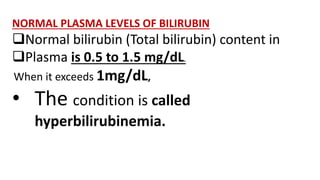
NORMAL PLASMA LEVELS OF BILIRUBIN
Normal bilirubin (Total bilirubin) content in
Plasma is 0.5 to 1.5 mg/dL.
When it exceeds 1mg/dL,
• The condition is called
hyperbilirubinemia.
• When it exceeds
2 mg/dL
jaundice occurs.

BILE PIGMENT.pptx

  • 4.
    FORMATION AND EXCRETIONOF BILE PIGMENTS  Stages of formation and circulation of bile pigments:
  • 5.
    1. Senile erythrocytesare destroyed in reticuloen-dothelial system and haemoglobin is released from them 2. Haemoglobin is broken into Globin And Heme 3. Heme is split into Iron & Pigment Biliverdin 4. Iron goes to Iron Pool And Is Reused 5. First Formed Pigment Biliverdin is reduced to Bilirubin. 6. Bilirubin is released into blood from the reticulo-endothelial cells
  • 6.
    7.In blood, THEBILIRUBIN is transported by the plasma protein, Albumin. Bilirubin circulating in the blood is called free bilirubin or UNCONJUGATED BILIRUBIN 8. Within few hours after entering the circulation, The free bilirubin is taken up by the liver cells 9
  • 7.
    9. In TheLiver: Process of Conjugation It is conjugated with glucuronic acid to form conjugated bilirubin FORMULA : DRAW 10. Conjugated bilirubin is then excreted into intestine through bile.
  • 8.
    FATE OF CONJUGATEDBILIRUBIN Stages Of Excretion Of Conjugated Bilirubin: 1. In intestine: 50% of the conjugated bilirubin is converted into urobilinogen by intestinal bacteria. First the conjugated bilirubin is deconjugated into free bilirubin, which is later reduced into urobilinogen.
  • 9.
    2. Remaining 50%of conjugated bilirubin from intestine is absorbed into blood and enters the liver through portal vein (enterohepatic circulation).  From liver, it is Re- excreted in bile
  • 10.
    3. Most ofthe urobilinogen from intestine enters liver via enterohepatic circulation. • Later, it IS RE EXCRETED THROUGH BILE
  • 11.
    ABOUT 5% OF UROBILINOGENIS EXCRETED BY KIDNEY THROUGH URINE.
  • 13.
    IN URINE: DUE TOEXPOSURE TO AIR,  The Urobilinogen is converted into Urobilin by oxidation
  • 14.
    5. Some ofthe urobilinogen is excreted in feces as Stercobilinogen.  IN FECES: Stercobilinogen is oxidized to Stercobilin.
  • 16.
    NORMAL PLASMA LEVELSOF BILIRUBIN Normal bilirubin (Total bilirubin) content in Plasma is 0.5 to 1.5 mg/dL. When it exceeds 1mg/dL, • The condition is called hyperbilirubinemia.
  • 19.
    • When itexceeds 2 mg/dL jaundice occurs.