Recombinant DNA
technology
• Recombinant DNA technology .where DNA
molecules are extracted from different
sources and chemically joined together , for
example DNA comprising animal gene
recombined with DNA from a bacterium.
What is DNA?
DNA= Deoxyribu-Nucelic Acid
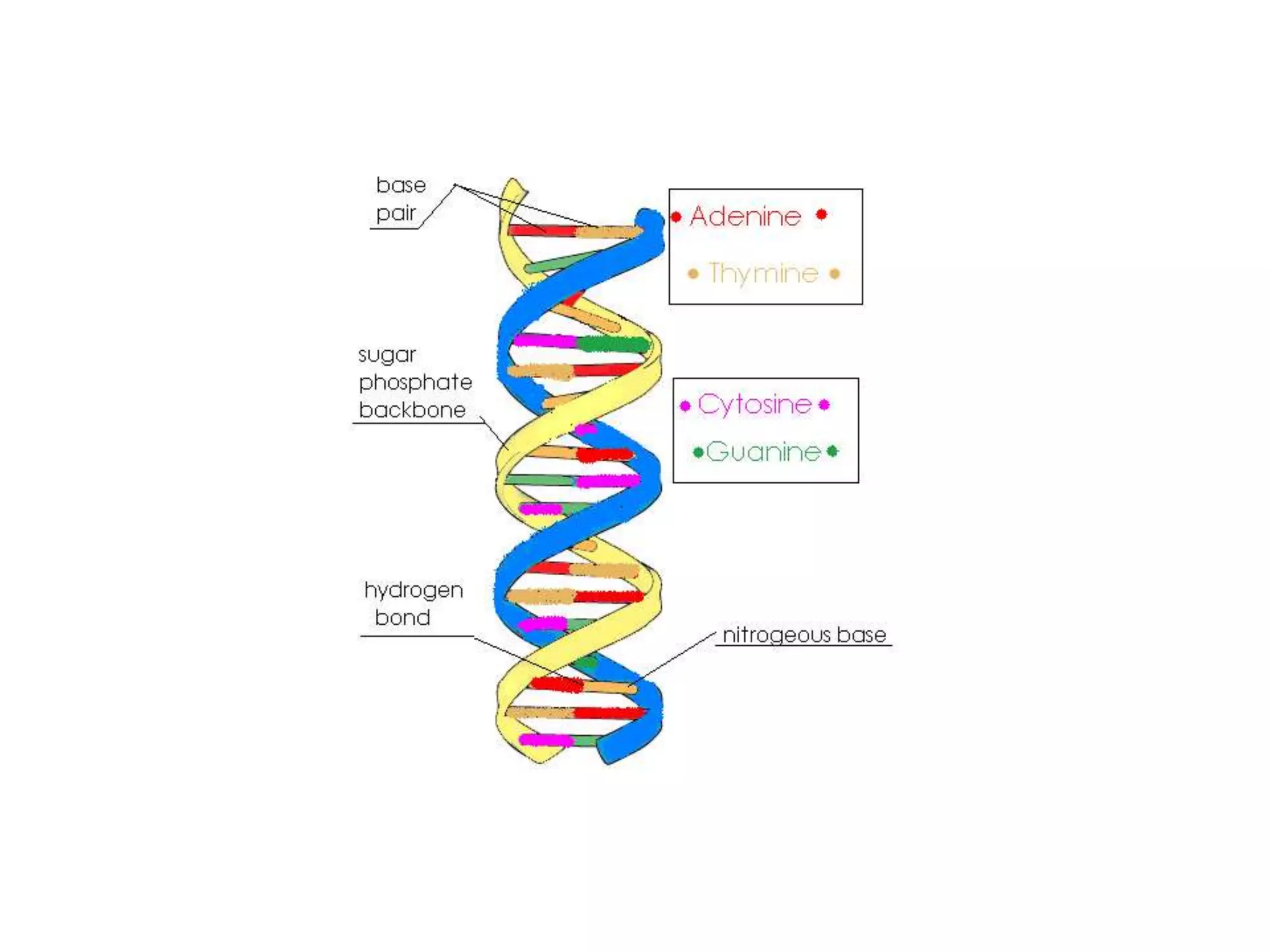
• DNA is a very large molecule, made up of smaller
units called nucleotides
• Each nucleotide has three parts: a sugar (ribose), a
phosphate molecule, and a nitrogenous base.
• The nitrogenous base is the part of the nucleotide
that carries genetic information
• The bases found in DNA are four: adenine, cytosine,
guanine, and thymine ( ATP, CTP, GTP, and TTP)
• A gene is a stretch of DNA that codes for a
type of protein that has a function in the
organism.
• It is a unit of heredity in a living organism..
All living things depend on genes
• Genes hold the information to build and
maintain an organism's cells and pass genetic
traits to offspring.
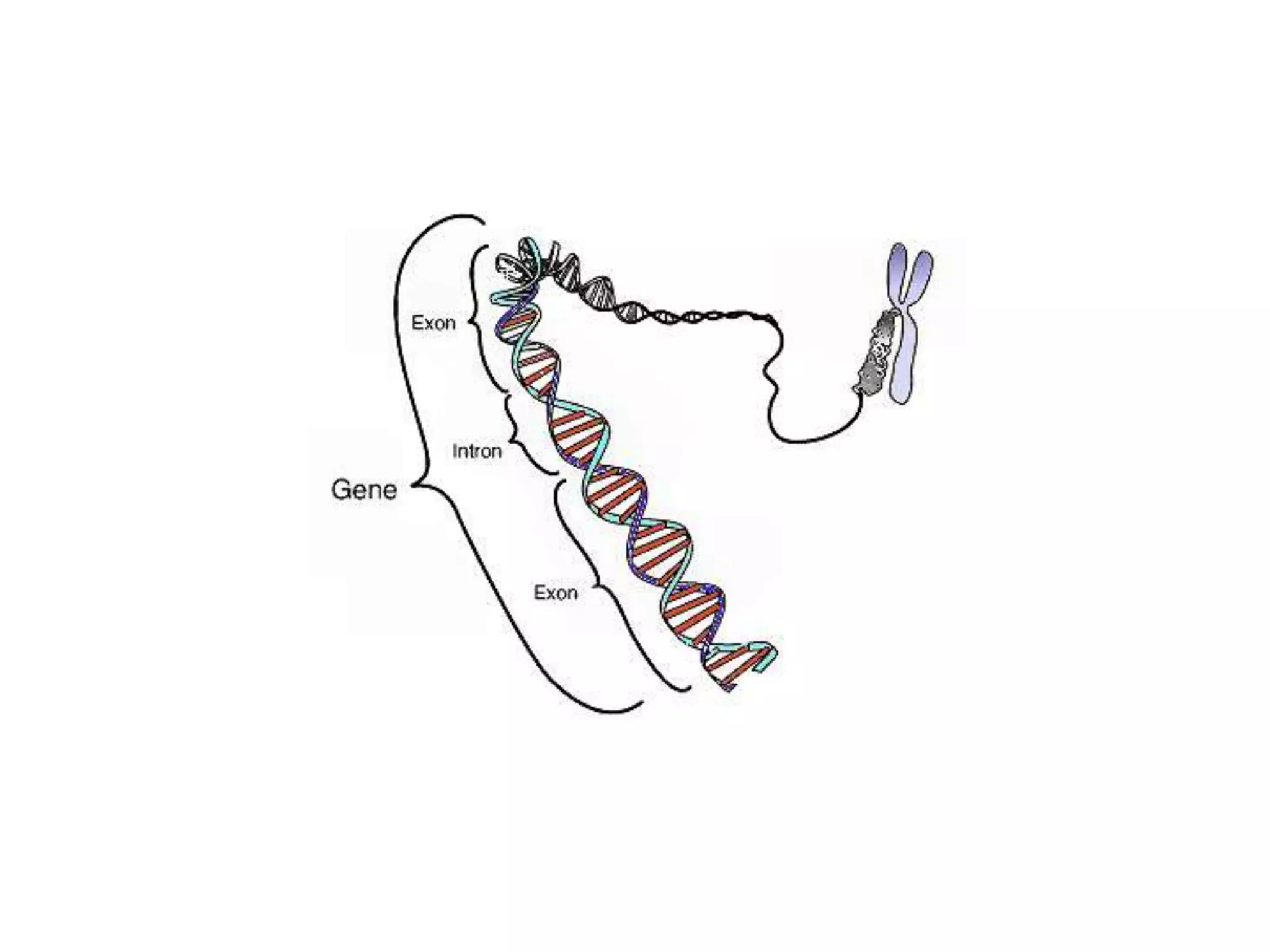
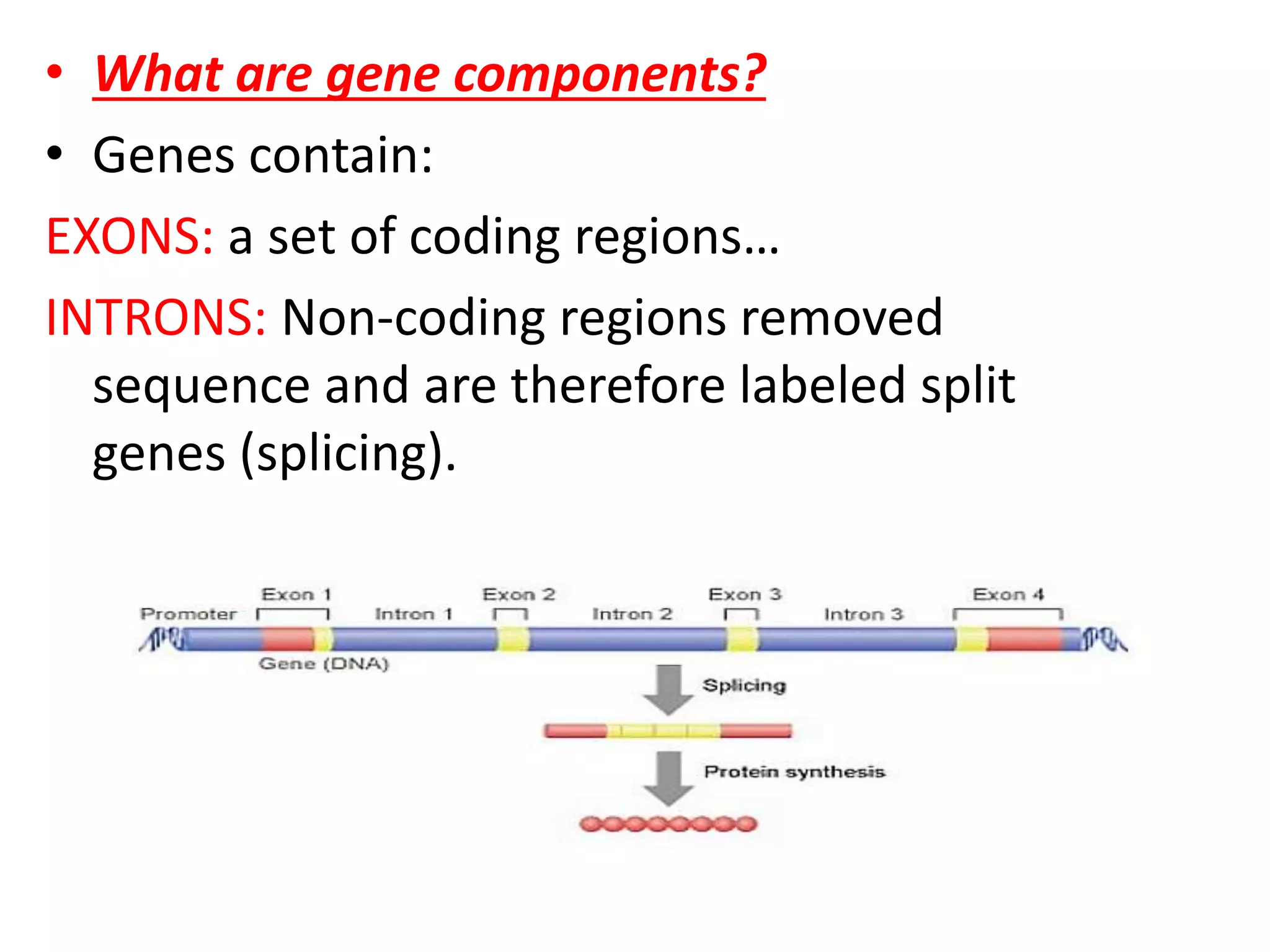
• What are gene components?
• Genes contain:
EXONS: a set of coding regions…
INTRONS: Non-coding regions removed
sequence and are therefore labeled split
genes (splicing).
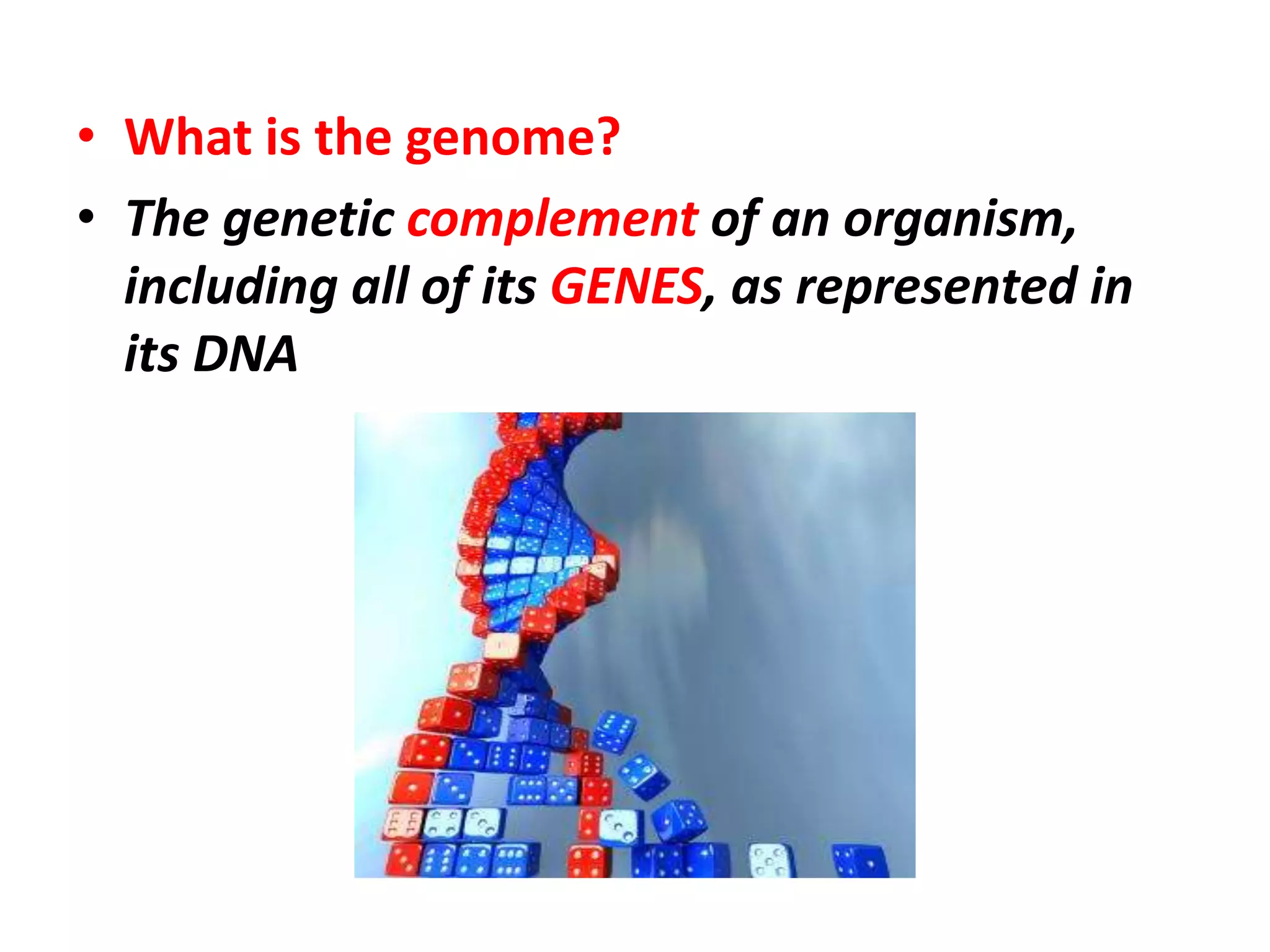
• What is the genome?
• The genetic complement of an organism,
including all of its GENES, as represented in
its DNA
• What is the gene expression?
• Is the process by which information from a
gene is used in the synthesis of a functional
gene product (proteins)
• The process of gene expression is used by all
known life - eukaryotes , prokaryotes , and
viruses - to generate the macromolecular
machinery for life.
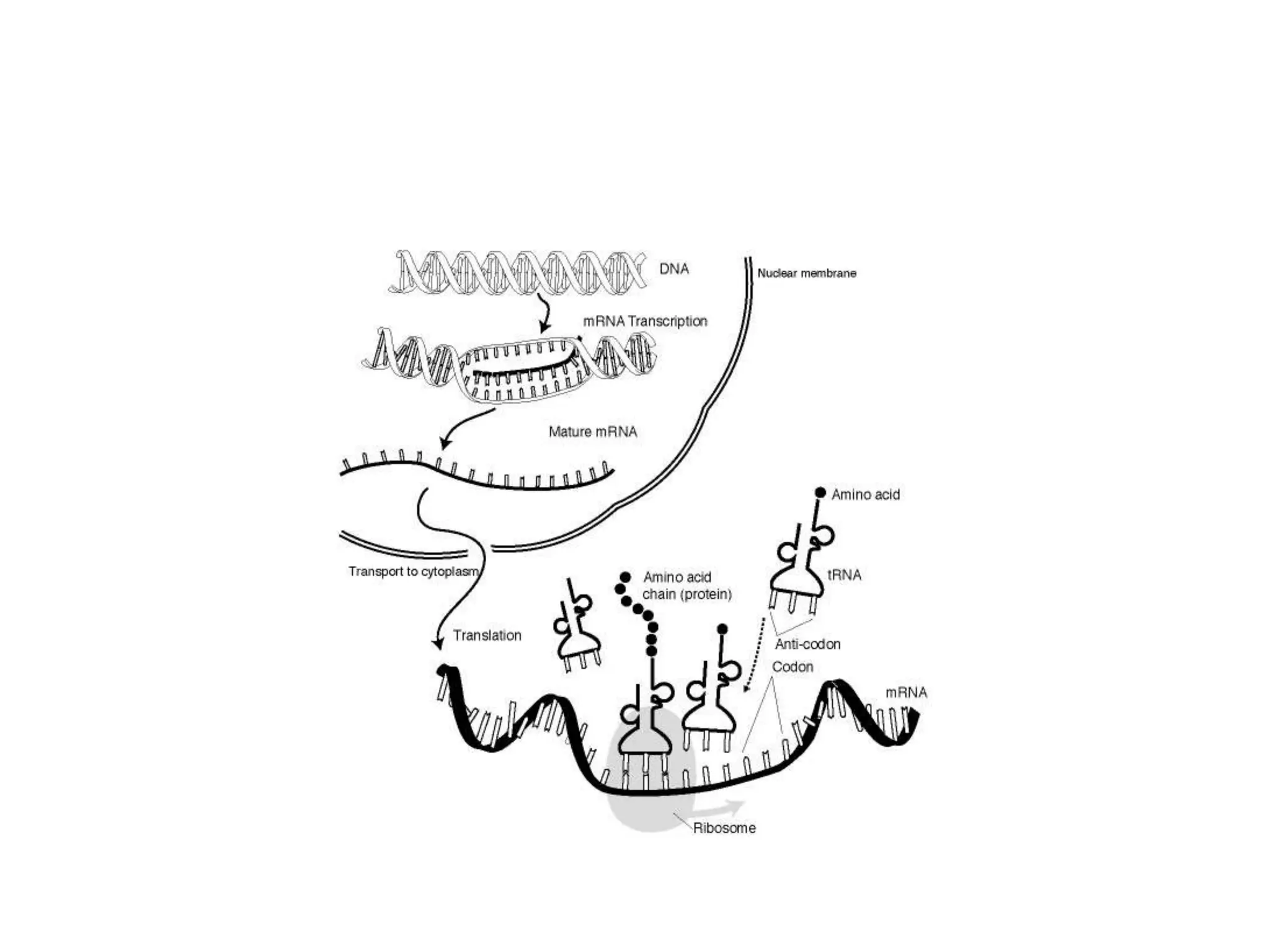
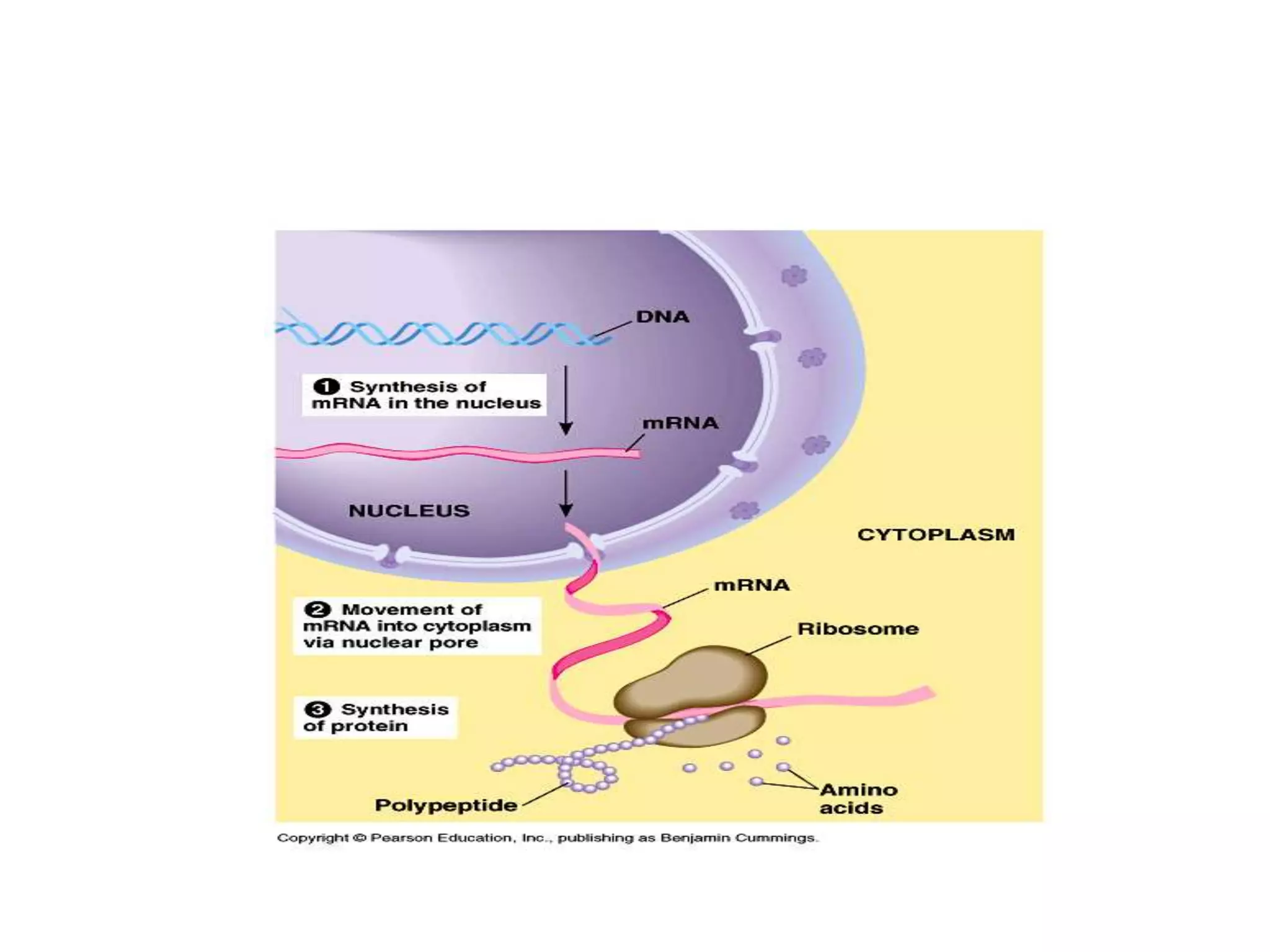
• Steps of gene expression
• (1) Transcription (mRNA synthesis),
• (2) Post-transcriptional process (RNA splicing),
• (3) Translation (protein synthesis)
• (4)post-translational modification of a
protein.
• What are the genetic changes?
• An alteration in a segment of DNA, which can
disturb a gene's behavior and sometimes leads
to disease.
• It may be:
• (1) Small genetic change, genetic drift
(mutation)
• (2) large genetic change, genetic shift
(recombination)
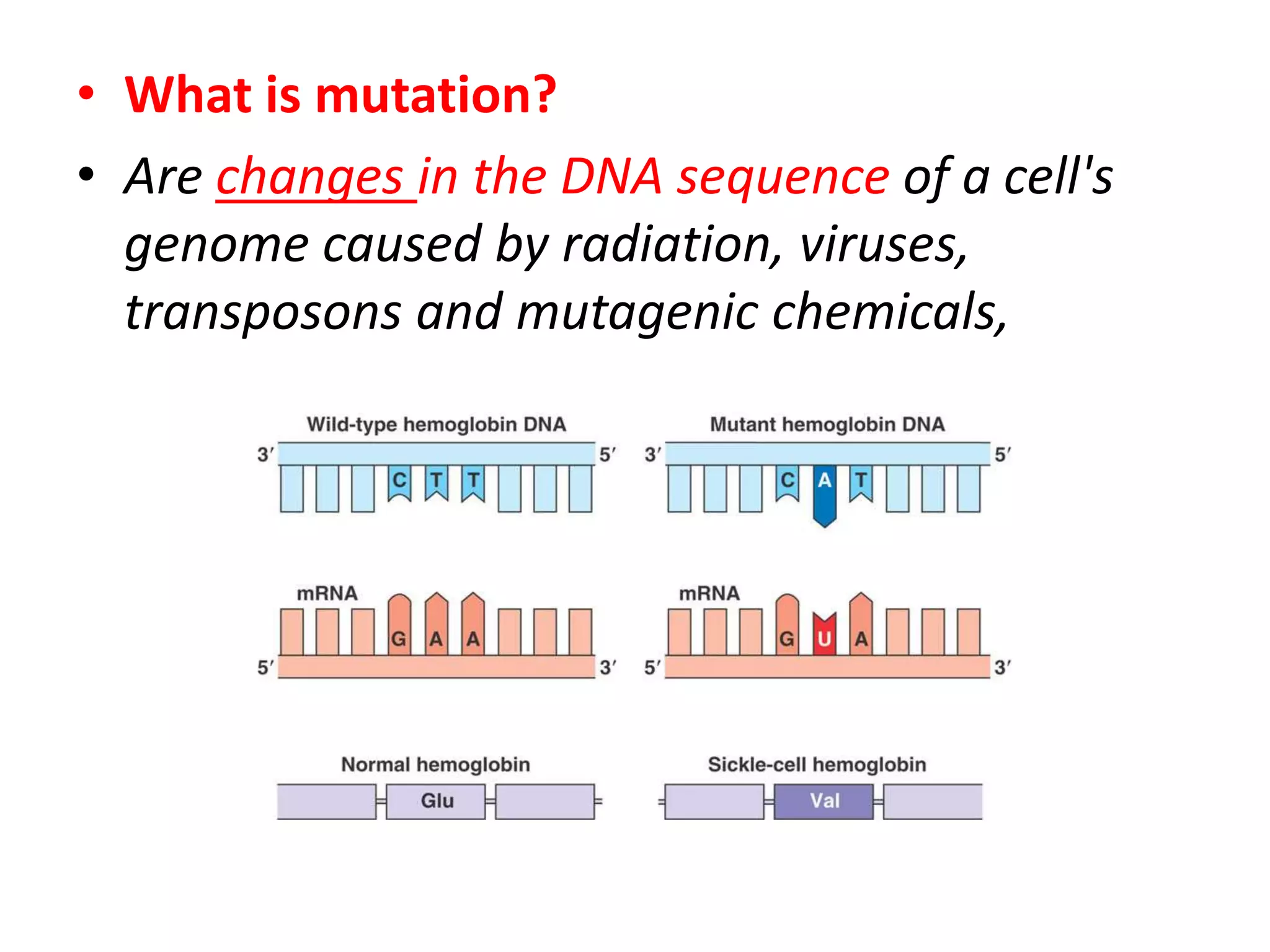
• What is mutation?
• Are changes in the DNA sequence of a cell's
genome caused by radiation, viruses,
transposons and mutagenic chemicals,
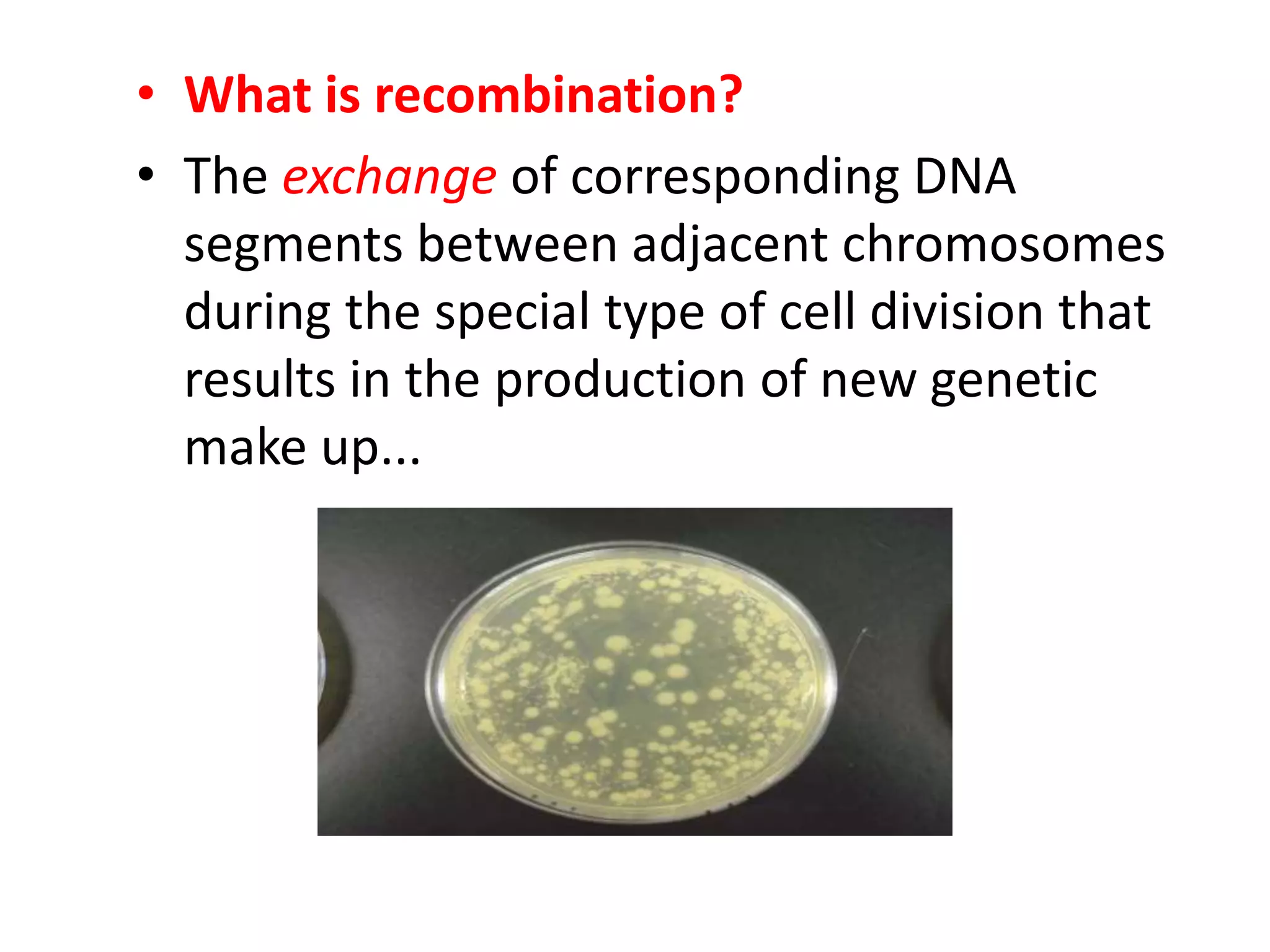
• What is recombination?
• The exchange of corresponding DNA
segments between adjacent chromosomes
during the special type of cell division that
results in the production of new genetic
make up...
Recombinant DNA
technology
In vitro recombination
Genetic engineering
Genetic surgery
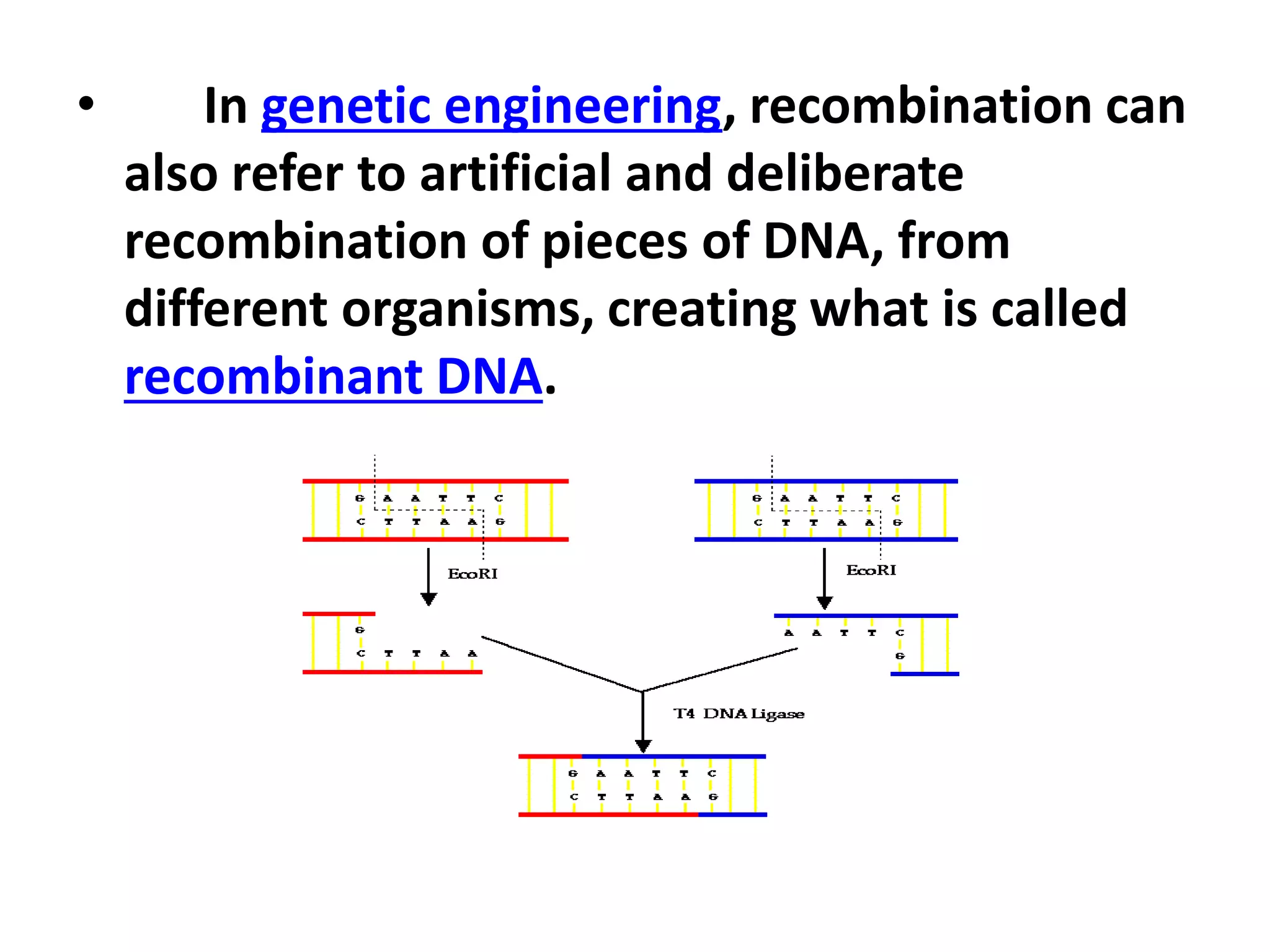
• In genetic engineering, recombination can
also refer to artificial and deliberate
recombination of pieces of DNA, from
different organisms, creating what is called
recombinant DNA.
• Creation Of recombinant DNA
Molecular cloning is the laboratory process used
to create R. DNA . Formation of recombinant DNA
requires a cloning vector, a DNA molecule that
replicates within a living cell. Vectors are generally
derived from plasmid or viruses , and represent
relatively small segment of DNA that contains
necessary genetic signals for replication , as well as
additional element for convenience in inserting
foreign DNA, identifying cells that contain
recombinant DNA, and where appropriate
expressing the foreign DNA
• The choice of vector for a molecular cloning
depends on the choice of host organism , the
size of the DNA to be cloned and whether and
how foreign DNA is to be expressed , The DNA
segment can be combined by using variety of
methods , such as restriction enzymes/ligase
cloning.
• USES
R. DNA is widely used in biotechonlogy
medicine and research. Today recombinant
proteins and other products that result from the
use of DNA technology are found in essentially
every pharmacy. The most common application
of recombinant DNA is in basic research ,in
which the technology is important to most
current work in the biological and biomedical
science.
RECOMBINANT CHYMOSIN
• Found in rennet, chymosin is an enzyme required to
manufacture cheese. It was the first genetically
engineered food additive used commercially.
Traditionally, processors obtained chymosin from
rennet, a preparation derived from the fourth stomach
of milk-fed calves. Scientists engineered a non-
pathogenic strain (K-12) of E. coli bacteria for large-
scale laboratory production of the enzyme. This
microbiologically produced recombinant enzyme,
identical structurally to the calf derived enzyme, costs
less and is produced in abundant quantities. Today
about 60% of U.S. hard cheese is made with genetically
engineered chymosin. In 1990, FDA granted chymosin
"generally recognized as safe" (GRAS) status based on
data showing that the enzyme was safe
• Recombinant human insulin
• Almost completely replaced insulin obtained
from animal sources (e.g. pigs and cattle) for
the treatment of insulin-dependent diabetes.
A variety of different recombinant insulin
preparations are in widespread
use. Recombinant insulin is synthesized by
inserting the human insulin gene into E. coli,
or yeast (Saccharomyces cerevisiae) which
then produces insulin for human use
• Recombinant blood clotting factor viii
• A blood-clotting protein that is administered to
patients with forms of the bleeding disorder
hemophilia, who are unable to produce factor VIII
in quantities sufficient to support normal blood
coagulation. Before the development of
recombinant factor VIII, the protein was obtained
by processing large quantities of human blood
from multiple donors, which carried a very high
risk of transmission of blood borne infectious
diseases, for example HIV and hepatitis B.
• Recombinant hepatitis B vacine
• Hepatitis B infection is controlled through the
use of a recombinant hepatitis B vaccine,
which contains a form of the hepatitis B virus
surface antigen that is produced in yeast cells.
The development of the recombinant subunit
vaccine was an important and necessary
development because hepatitis B virus, unlike
other common viruses such as polio virus,
cannot be grown in vitro. Vaccine information
from Hepatitis B Foundation
(2) Vaccines production
• Firstly, the gene in a pathogenic virus that
stimulates protective immunity should be
identified.
• That portion of DNA is then isolated and
incorporated into an established harmless
virus (e.g. vaccinia virus).
• This new recombinant virus is used as a
vaccine.
• These vaccines are much safer since they do
not expose the patients to the actual virus and
do not risk to infection.
• This method may be useful in vaccines against
malaria and schistosomiasis and many viruses
(e.g. HBV)
• (4) Pharmacogenomics
Deals with the influence of genetic
variation on drug response in patients by
correlating gene expression with a drug's
efficacy or toxicity
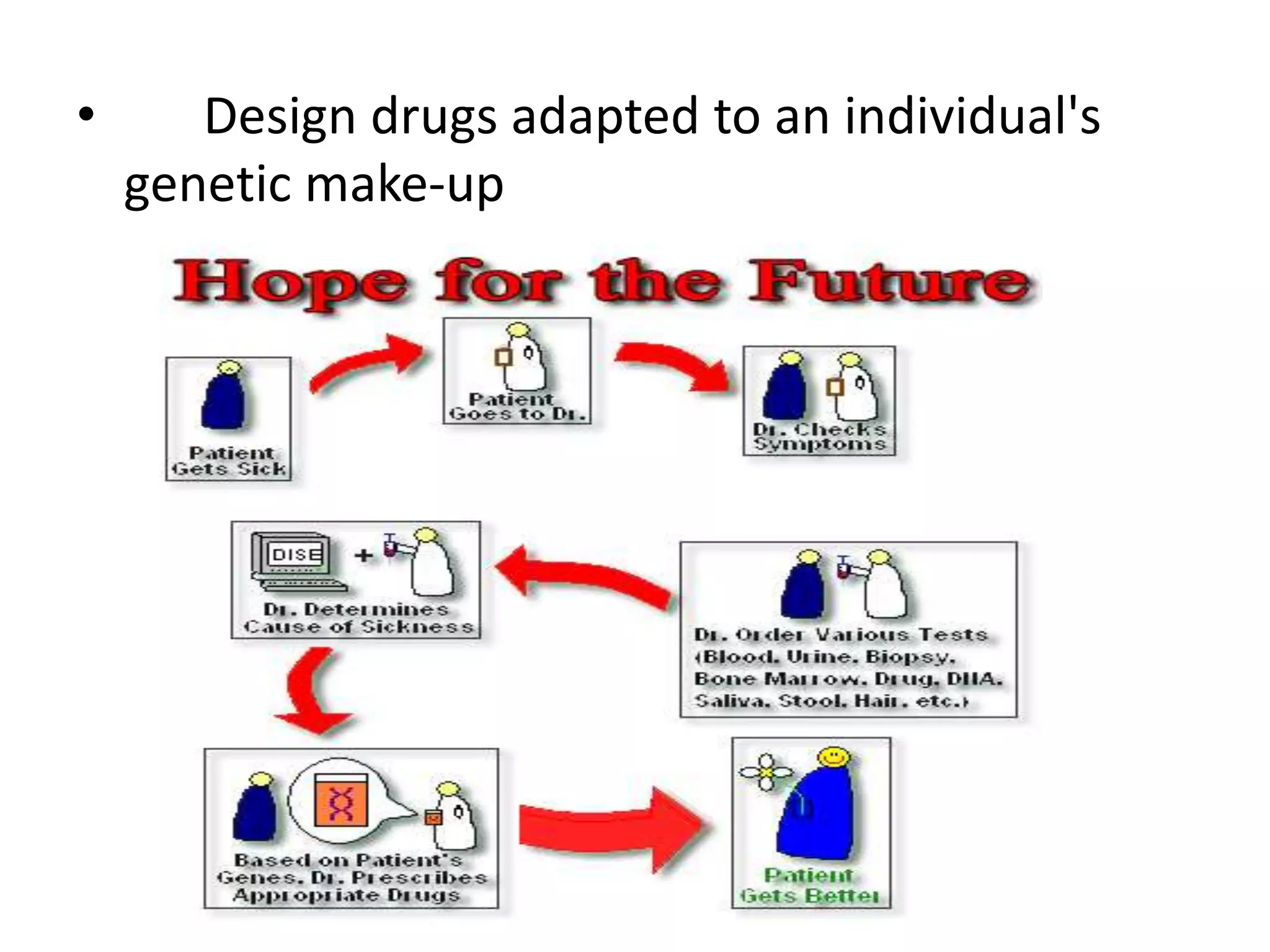
• Design drugs adapted to an individual's
genetic make-up
Thank you

Recombinant of DNA technology

  • 2.
  • 3.
    • Recombinant DNAtechnology .where DNA molecules are extracted from different sources and chemically joined together , for example DNA comprising animal gene recombined with DNA from a bacterium.
  • 4.
    What is DNA? DNA=Deoxyribu-Nucelic Acid • DNA is a very large molecule, made up of smaller units called nucleotides • Each nucleotide has three parts: a sugar (ribose), a phosphate molecule, and a nitrogenous base. • The nitrogenous base is the part of the nucleotide that carries genetic information • The bases found in DNA are four: adenine, cytosine, guanine, and thymine ( ATP, CTP, GTP, and TTP)
  • 6.
    • A geneis a stretch of DNA that codes for a type of protein that has a function in the organism. • It is a unit of heredity in a living organism.. All living things depend on genes • Genes hold the information to build and maintain an organism's cells and pass genetic traits to offspring.
  • 8.
    • What aregene components? • Genes contain: EXONS: a set of coding regions… INTRONS: Non-coding regions removed sequence and are therefore labeled split genes (splicing).
  • 9.
    • What isthe genome? • The genetic complement of an organism, including all of its GENES, as represented in its DNA
  • 10.
    • What isthe gene expression? • Is the process by which information from a gene is used in the synthesis of a functional gene product (proteins) • The process of gene expression is used by all known life - eukaryotes , prokaryotes , and viruses - to generate the macromolecular machinery for life.
  • 12.
    • Steps ofgene expression • (1) Transcription (mRNA synthesis), • (2) Post-transcriptional process (RNA splicing), • (3) Translation (protein synthesis) • (4)post-translational modification of a protein.
  • 14.
    • What arethe genetic changes? • An alteration in a segment of DNA, which can disturb a gene's behavior and sometimes leads to disease. • It may be: • (1) Small genetic change, genetic drift (mutation) • (2) large genetic change, genetic shift (recombination)
  • 16.
    • What ismutation? • Are changes in the DNA sequence of a cell's genome caused by radiation, viruses, transposons and mutagenic chemicals,
  • 17.
    • What isrecombination? • The exchange of corresponding DNA segments between adjacent chromosomes during the special type of cell division that results in the production of new genetic make up...
  • 18.
    Recombinant DNA technology In vitrorecombination Genetic engineering Genetic surgery
  • 19.
    • In geneticengineering, recombination can also refer to artificial and deliberate recombination of pieces of DNA, from different organisms, creating what is called recombinant DNA.
  • 20.
    • Creation Ofrecombinant DNA Molecular cloning is the laboratory process used to create R. DNA . Formation of recombinant DNA requires a cloning vector, a DNA molecule that replicates within a living cell. Vectors are generally derived from plasmid or viruses , and represent relatively small segment of DNA that contains necessary genetic signals for replication , as well as additional element for convenience in inserting foreign DNA, identifying cells that contain recombinant DNA, and where appropriate expressing the foreign DNA
  • 21.
    • The choiceof vector for a molecular cloning depends on the choice of host organism , the size of the DNA to be cloned and whether and how foreign DNA is to be expressed , The DNA segment can be combined by using variety of methods , such as restriction enzymes/ligase cloning.
  • 22.
    • USES R. DNAis widely used in biotechonlogy medicine and research. Today recombinant proteins and other products that result from the use of DNA technology are found in essentially every pharmacy. The most common application of recombinant DNA is in basic research ,in which the technology is important to most current work in the biological and biomedical science.
  • 23.
    RECOMBINANT CHYMOSIN • Foundin rennet, chymosin is an enzyme required to manufacture cheese. It was the first genetically engineered food additive used commercially. Traditionally, processors obtained chymosin from rennet, a preparation derived from the fourth stomach of milk-fed calves. Scientists engineered a non- pathogenic strain (K-12) of E. coli bacteria for large- scale laboratory production of the enzyme. This microbiologically produced recombinant enzyme, identical structurally to the calf derived enzyme, costs less and is produced in abundant quantities. Today about 60% of U.S. hard cheese is made with genetically engineered chymosin. In 1990, FDA granted chymosin "generally recognized as safe" (GRAS) status based on data showing that the enzyme was safe
  • 24.
    • Recombinant humaninsulin • Almost completely replaced insulin obtained from animal sources (e.g. pigs and cattle) for the treatment of insulin-dependent diabetes. A variety of different recombinant insulin preparations are in widespread use. Recombinant insulin is synthesized by inserting the human insulin gene into E. coli, or yeast (Saccharomyces cerevisiae) which then produces insulin for human use
  • 25.
    • Recombinant bloodclotting factor viii • A blood-clotting protein that is administered to patients with forms of the bleeding disorder hemophilia, who are unable to produce factor VIII in quantities sufficient to support normal blood coagulation. Before the development of recombinant factor VIII, the protein was obtained by processing large quantities of human blood from multiple donors, which carried a very high risk of transmission of blood borne infectious diseases, for example HIV and hepatitis B.
  • 26.
    • Recombinant hepatitisB vacine • Hepatitis B infection is controlled through the use of a recombinant hepatitis B vaccine, which contains a form of the hepatitis B virus surface antigen that is produced in yeast cells. The development of the recombinant subunit vaccine was an important and necessary development because hepatitis B virus, unlike other common viruses such as polio virus, cannot be grown in vitro. Vaccine information from Hepatitis B Foundation
  • 27.
    (2) Vaccines production •Firstly, the gene in a pathogenic virus that stimulates protective immunity should be identified. • That portion of DNA is then isolated and incorporated into an established harmless virus (e.g. vaccinia virus).
  • 28.
    • This newrecombinant virus is used as a vaccine. • These vaccines are much safer since they do not expose the patients to the actual virus and do not risk to infection. • This method may be useful in vaccines against malaria and schistosomiasis and many viruses (e.g. HBV)
  • 29.
    • (4) Pharmacogenomics Dealswith the influence of genetic variation on drug response in patients by correlating gene expression with a drug's efficacy or toxicity
  • 30.
    • Design drugsadapted to an individual's genetic make-up
  • 31.