Download to read offline
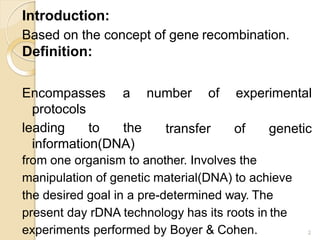
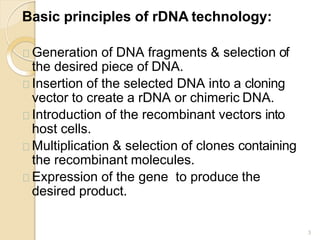
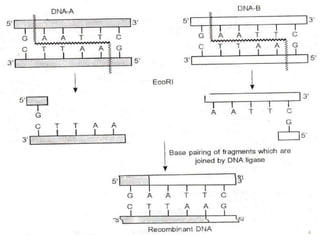
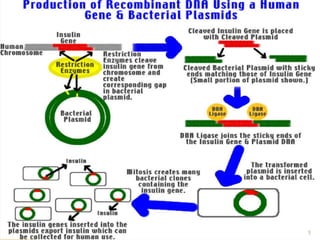
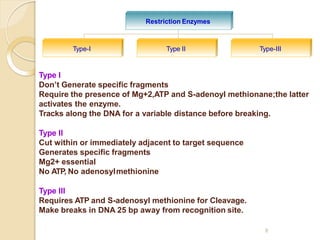
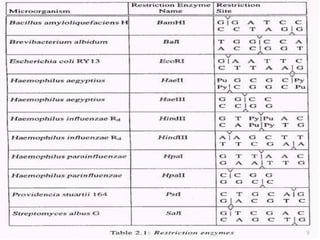
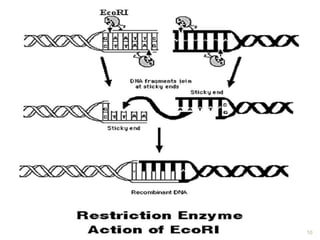
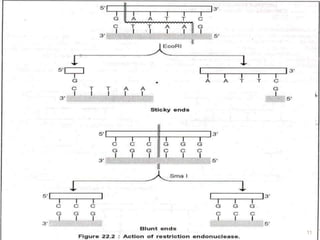
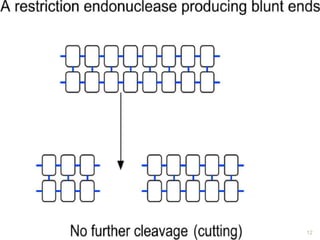
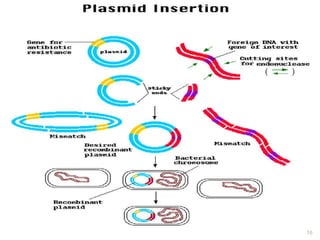
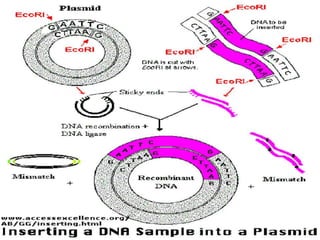
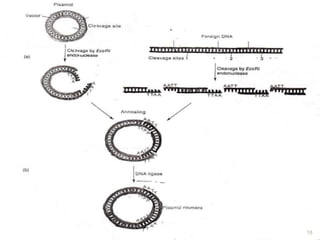
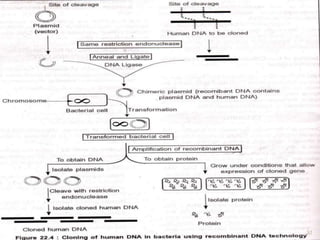
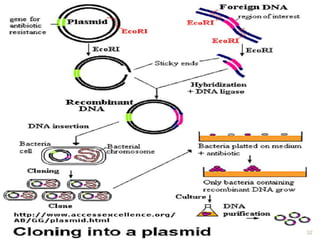


Recombinant DNA technology involves the manipulation of genetic material to achieve desired goals. It works by generating DNA fragments, inserting the fragments into cloning vectors, introducing the vectors into host cells, multiplying the clones containing recombinant molecules, and expressing genes to produce desired products. Key aspects include restriction endonucleases that cut DNA at specific sites, DNA ligases that join cut fragments, and various host cells like E.coli and eukaryotic cells. Vectors like plasmids, bacteriophages, and artificial chromosomes are used to carry foreign DNA. The technology has applications in research, medicine, agriculture, and industry.


