Functional Genomics
Seminar
By
Farah Kayed Al-Hyari
Supervisor
Dr. Mohammad Shatnawi
What is Functional Genomics?
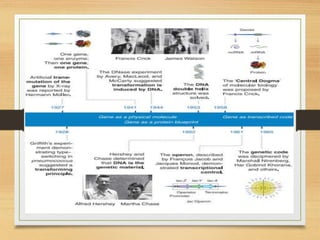
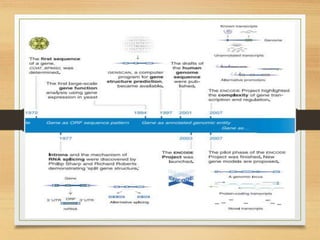
 Study of how genes and intergenic regions of the
genome contribute to different biological processes.
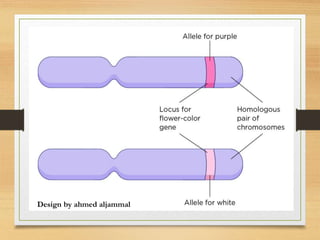
 Studies genes (locus) on a “genome- wide” scale.
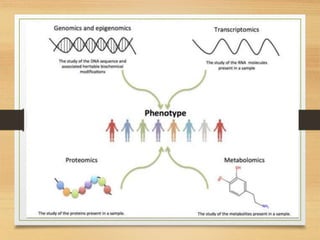
 To determine how the individual components of a
biological system work together to produce a particular
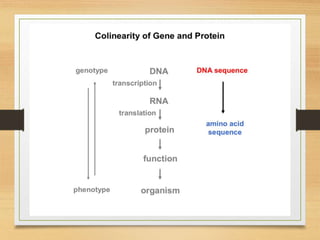
phenotype from gene by transcription and translation

 Dynamics expression of gene products in a specific
context (protein function)
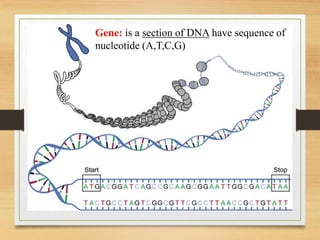
Gene: is a section of DNA have sequence of
nucleotide (A,T,C,G)
Design by ahmed aljammal
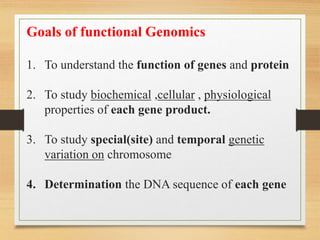
Goals of functional Genomics
1. To understand the function of genes and protein
2. To study biochemical ,cellular , physiological
properties of each gene product.
3. To study special(site) and temporal genetic
variation on chromosome
4. Determination the DNA sequence of each gene
Techniques used in Functional Genomics
 At the DNA level :
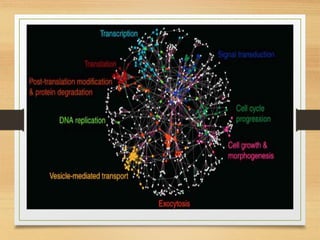
1- Genetic interaction mapping
 is a powerful technique to systematically reveal functional
relationships between genes which often also reveal the
presence of a physical interaction
 GI mapping involves the pairwise perturbation of genes
(e.g. knockout, knockdown or overexpression) in order to
elucidate how one gene modulates the phenotype of the other
 GI mapping is often used to uncover new functions of genes,
enabling a hierarchical organization of gene products into
functional complexes and pathways
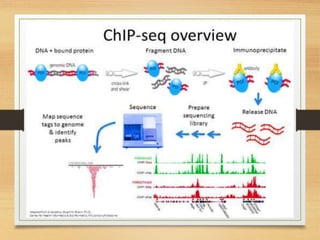
2-DNA/protein interaction (chip-sequencing)
 is a powerful method for identifying genome-wide DNA
binding sites for transcription factors and other proteins
(purified, and sequenced).
 The application of next-generation sequencing (NGS) to
ChIP has revealed insights into gene regulation events that
play a role in various diseases and biological pathways, such
as development and cancer progression.
 ChIP-Seq enables thorough examination of the interactions
between proteins and nucleic acids on a genome-wide
scale.
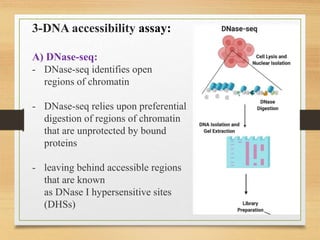
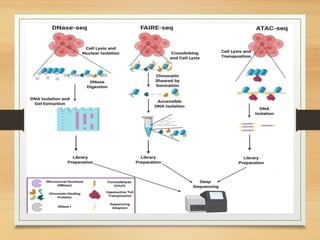
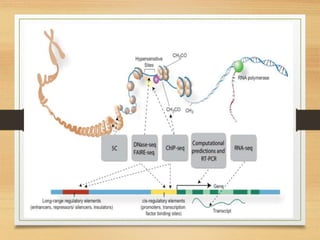
3-DNA accessibility assay:
A) DNase-seq:
- DNase-seq identifies open
regions of chromatin
- DNase-seq relies upon preferential
digestion of regions of chromatin
that are unprotected by bound
proteins
- leaving behind accessible regions
that are known
as DNase I hypersensitive sites
(DHSs)
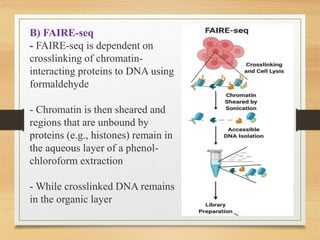
B) FAIRE-seq
- FAIRE-seq is dependent on
crosslinking of chromatin-
interacting proteins to DNA using
formaldehyde
- Chromatin is then sheared and
regions that are unbound by
proteins (e.g., histones) remain in
the aqueous layer of a phenol-
chloroform extraction
- While crosslinked DNA remains
in the organic layer
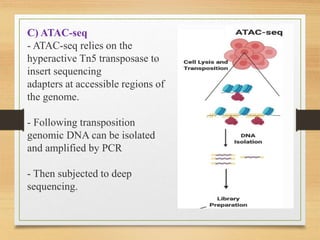
C) ATAC-seq
- ATAC-seq relies on the
hyperactive Tn5 transposase to
insert sequencing
adapters at accessible regions of
the genome.
- Following transposition
genomic DNA can be isolated
and amplified by PCR
- Then subjected to deep
sequencing.
 At the RNA level :
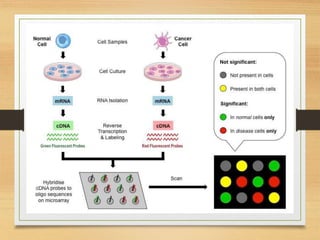
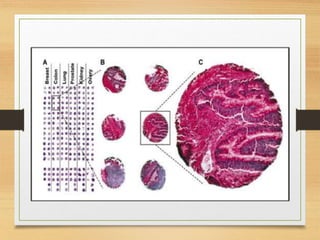
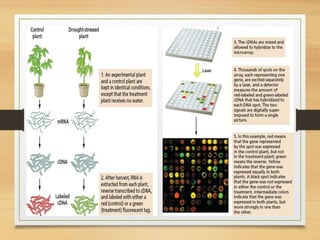
1- Microarrays:
 Is one of the most recent advances being used for cancer
research it provides assistance in pharmacological approach
to treat various diseases including oral lesions.
 Microarray helps in analyzing large amount of samples
which have either been recorded previously or new samples
it even helps to test the incidence of a particular marker in
tumors.
 Microarray analysis is a well-known method for studying
the expression profiles of protein-coding genes it has also
been adopted to detect the expression of small RNA genes
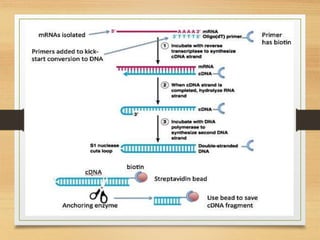
2-SAGE (Serial Analysis of Gene Expression)
 is a powerful tool which provides quantitative
and comprehensive expression profile of genes
in a given cell population.
 It works by isolating short fragments of genetic
information from the expressed genes that are
present in the cell being studied
 Produces a snapshot of the mRNA population
in the sample of interest
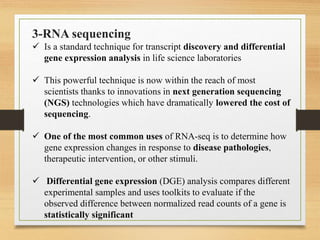
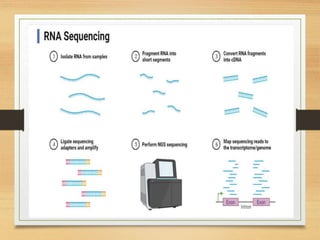
3-RNA sequencing
 Is a standard technique for transcript discovery and differential
gene expression analysis in life science laboratories
 This powerful technique is now within the reach of most
scientists thanks to innovations in next generation sequencing
(NGS) technologies which have dramatically lowered the cost of
sequencing.
 One of the most common uses of RNA-seq is to determine how
gene expression changes in response to disease pathologies,
therapeutic intervention, or other stimuli.
 Differential gene expression (DGE) analysis compares different
experimental samples and uses toolkits to evaluate if the
observed difference between normalized read counts of a gene is
statistically significant
 At the protein level :
1- Yeast two-hybrid system
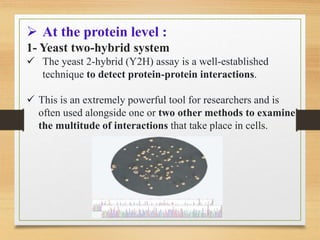
 The yeast 2-hybrid (Y2H) assay is a well-established
technique to detect protein-protein interactions.
 This is an extremely powerful tool for researchers and is
often used alongside one or two other methods to examine
the multitude of interactions that take place in cells.
PRINCIPLES
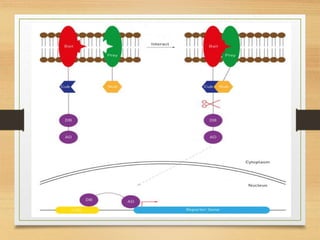
1.Y2H assay relies on the expression of a reporter gene (such as
lacZ or GFP), which is activated by the binding of a particular
transcription factor.
2.The transcription factor is comprised of a DNA-binding
domain (BD) and an activation domain (AD).
3.The query protein of interest fused with the BD is known as
the Bait, and the protein library fused with the AD is referred to
as the Prey.
4.In order to activate the reporter gene expression a
transcriptional unit must be present at the gene locus which is
only possible if Bait and Prey interact.
THEORY
 Expression of a reporter gene requires the binding
of a transcription factor which normally consists
of two functionally and structurally independent
domains: DNA-binding (DB) and activation (AD)
domains
 The DB domain binds to the particular DNA
sequence upstream of the reporter gene, while the
AD domain activates reporter gene expression
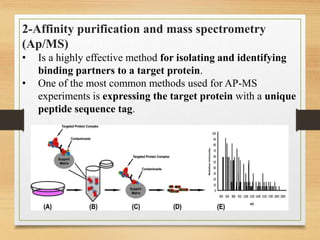
2-Affinity purification and mass spectrometry
(Ap/MS)
• Is a highly effective method for isolating and identifying
binding partners to a target protein.
• One of the most common methods used for AP-MS
experiments is expressing the target protein with a unique
peptide sequence tag.
Projects on Functional Genomics
1- The ENCODE project – The ENCODE (Encyclopedia
of DNA elements)
Project is an in-depth analysis of the human genome whose
goal is to identify all the functional elements of genomics
DNA , in both coding and noncoding regions.
2-The Genotype –Tissue Expression (GTEx) project
Human genetics project aimed at understanding the role of
genetic variation in shaping variation in the transcriptome
across tissue .
Conclusion
1. By reaching the structure of the gene, we were able to solve many
problems, the most important of which are diseases and their
treatment
2. Also through these techniques some taxonomy researchers were
able to distinguish between cell types and their physiological
behavior
3. Through the development of these technologies scientists have been
able to find simpler ways than before to understand biotechnologies
and transfer genes to target cells
4. Also one of the most important of these technologies is microarray
which is a very important technique used in pharmacology and
medicine to know the response of cancer cells to treatment
functional genomics.ppt

functional genomics.ppt

  • 1.
    Functional Genomics Seminar By Farah KayedAl-Hyari Supervisor Dr. Mohammad Shatnawi
  • 2.
    What is FunctionalGenomics?  Study of how genes and intergenic regions of the genome contribute to different biological processes.  Studies genes (locus) on a “genome- wide” scale.  To determine how the individual components of a biological system work together to produce a particular phenotype from gene by transcription and translation  Dynamics expression of gene products in a specific context (protein function)
  • 4.
    Gene: is asection of DNA have sequence of nucleotide (A,T,C,G)
  • 5.
  • 10.
    Goals of functionalGenomics 1. To understand the function of genes and protein 2. To study biochemical ,cellular , physiological properties of each gene product. 3. To study special(site) and temporal genetic variation on chromosome 4. Determination the DNA sequence of each gene
  • 12.
    Techniques used inFunctional Genomics  At the DNA level : 1- Genetic interaction mapping  is a powerful technique to systematically reveal functional relationships between genes which often also reveal the presence of a physical interaction  GI mapping involves the pairwise perturbation of genes (e.g. knockout, knockdown or overexpression) in order to elucidate how one gene modulates the phenotype of the other  GI mapping is often used to uncover new functions of genes, enabling a hierarchical organization of gene products into functional complexes and pathways
  • 14.
    2-DNA/protein interaction (chip-sequencing) is a powerful method for identifying genome-wide DNA binding sites for transcription factors and other proteins (purified, and sequenced).  The application of next-generation sequencing (NGS) to ChIP has revealed insights into gene regulation events that play a role in various diseases and biological pathways, such as development and cancer progression.  ChIP-Seq enables thorough examination of the interactions between proteins and nucleic acids on a genome-wide scale.
  • 16.
    3-DNA accessibility assay: A)DNase-seq: - DNase-seq identifies open regions of chromatin - DNase-seq relies upon preferential digestion of regions of chromatin that are unprotected by bound proteins - leaving behind accessible regions that are known as DNase I hypersensitive sites (DHSs)
  • 17.
    B) FAIRE-seq - FAIRE-seqis dependent on crosslinking of chromatin- interacting proteins to DNA using formaldehyde - Chromatin is then sheared and regions that are unbound by proteins (e.g., histones) remain in the aqueous layer of a phenol- chloroform extraction - While crosslinked DNA remains in the organic layer
  • 18.
    C) ATAC-seq - ATAC-seqrelies on the hyperactive Tn5 transposase to insert sequencing adapters at accessible regions of the genome. - Following transposition genomic DNA can be isolated and amplified by PCR - Then subjected to deep sequencing.
  • 20.
     At theRNA level : 1- Microarrays:  Is one of the most recent advances being used for cancer research it provides assistance in pharmacological approach to treat various diseases including oral lesions.  Microarray helps in analyzing large amount of samples which have either been recorded previously or new samples it even helps to test the incidence of a particular marker in tumors.  Microarray analysis is a well-known method for studying the expression profiles of protein-coding genes it has also been adopted to detect the expression of small RNA genes
  • 24.
    2-SAGE (Serial Analysisof Gene Expression)  is a powerful tool which provides quantitative and comprehensive expression profile of genes in a given cell population.  It works by isolating short fragments of genetic information from the expressed genes that are present in the cell being studied  Produces a snapshot of the mRNA population in the sample of interest
  • 26.
    3-RNA sequencing  Isa standard technique for transcript discovery and differential gene expression analysis in life science laboratories  This powerful technique is now within the reach of most scientists thanks to innovations in next generation sequencing (NGS) technologies which have dramatically lowered the cost of sequencing.  One of the most common uses of RNA-seq is to determine how gene expression changes in response to disease pathologies, therapeutic intervention, or other stimuli.  Differential gene expression (DGE) analysis compares different experimental samples and uses toolkits to evaluate if the observed difference between normalized read counts of a gene is statistically significant
  • 29.
     At theprotein level : 1- Yeast two-hybrid system  The yeast 2-hybrid (Y2H) assay is a well-established technique to detect protein-protein interactions.  This is an extremely powerful tool for researchers and is often used alongside one or two other methods to examine the multitude of interactions that take place in cells.
  • 30.
    PRINCIPLES 1.Y2H assay relieson the expression of a reporter gene (such as lacZ or GFP), which is activated by the binding of a particular transcription factor. 2.The transcription factor is comprised of a DNA-binding domain (BD) and an activation domain (AD). 3.The query protein of interest fused with the BD is known as the Bait, and the protein library fused with the AD is referred to as the Prey. 4.In order to activate the reporter gene expression a transcriptional unit must be present at the gene locus which is only possible if Bait and Prey interact.
  • 32.
    THEORY  Expression ofa reporter gene requires the binding of a transcription factor which normally consists of two functionally and structurally independent domains: DNA-binding (DB) and activation (AD) domains  The DB domain binds to the particular DNA sequence upstream of the reporter gene, while the AD domain activates reporter gene expression
  • 33.
    2-Affinity purification andmass spectrometry (Ap/MS) • Is a highly effective method for isolating and identifying binding partners to a target protein. • One of the most common methods used for AP-MS experiments is expressing the target protein with a unique peptide sequence tag.
  • 34.
    Projects on FunctionalGenomics 1- The ENCODE project – The ENCODE (Encyclopedia of DNA elements) Project is an in-depth analysis of the human genome whose goal is to identify all the functional elements of genomics DNA , in both coding and noncoding regions. 2-The Genotype –Tissue Expression (GTEx) project Human genetics project aimed at understanding the role of genetic variation in shaping variation in the transcriptome across tissue .
  • 36.
    Conclusion 1. By reachingthe structure of the gene, we were able to solve many problems, the most important of which are diseases and their treatment 2. Also through these techniques some taxonomy researchers were able to distinguish between cell types and their physiological behavior 3. Through the development of these technologies scientists have been able to find simpler ways than before to understand biotechnologies and transfer genes to target cells 4. Also one of the most important of these technologies is microarray which is a very important technique used in pharmacology and medicine to know the response of cancer cells to treatment