Downloaded 57 times
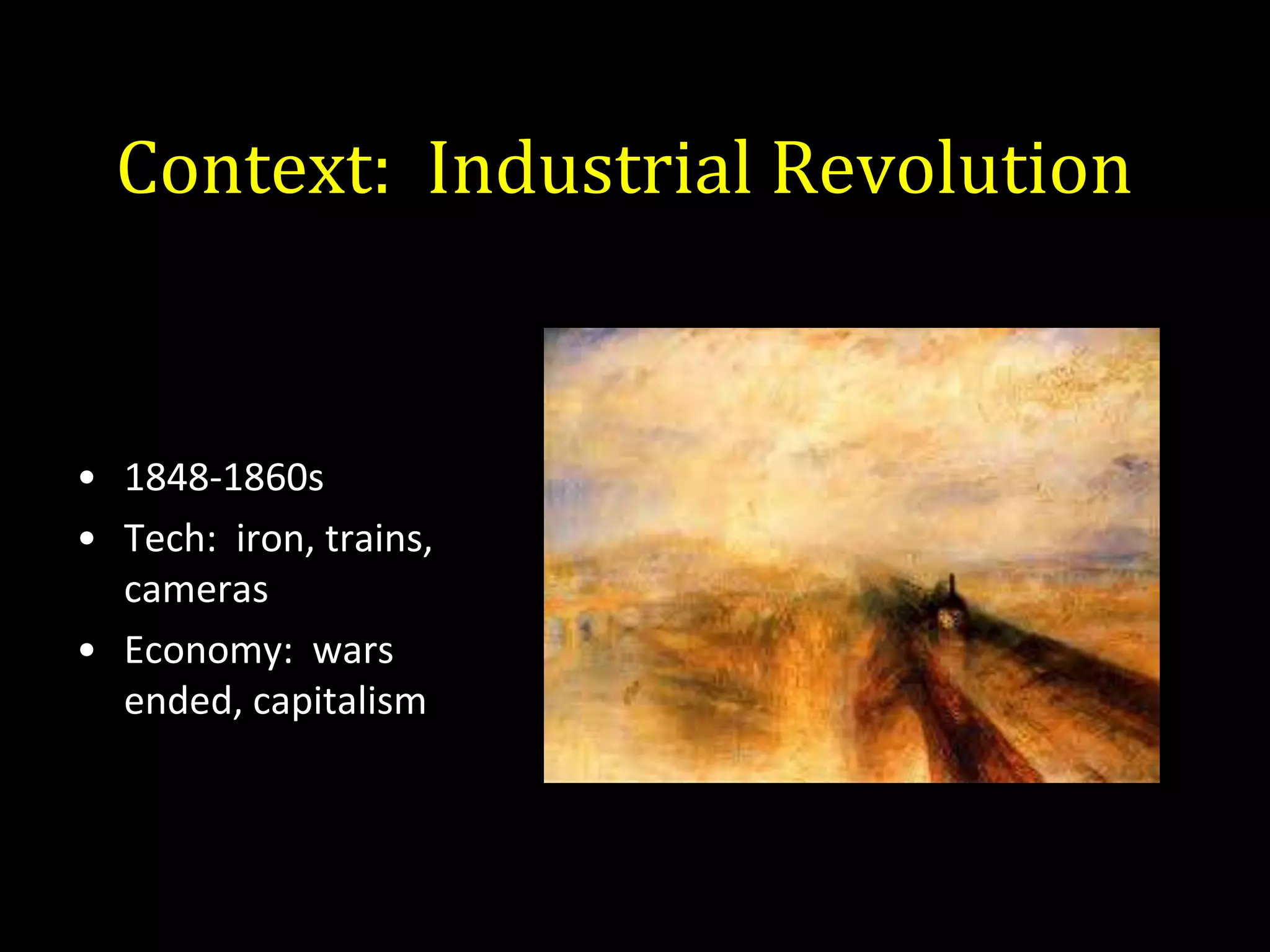
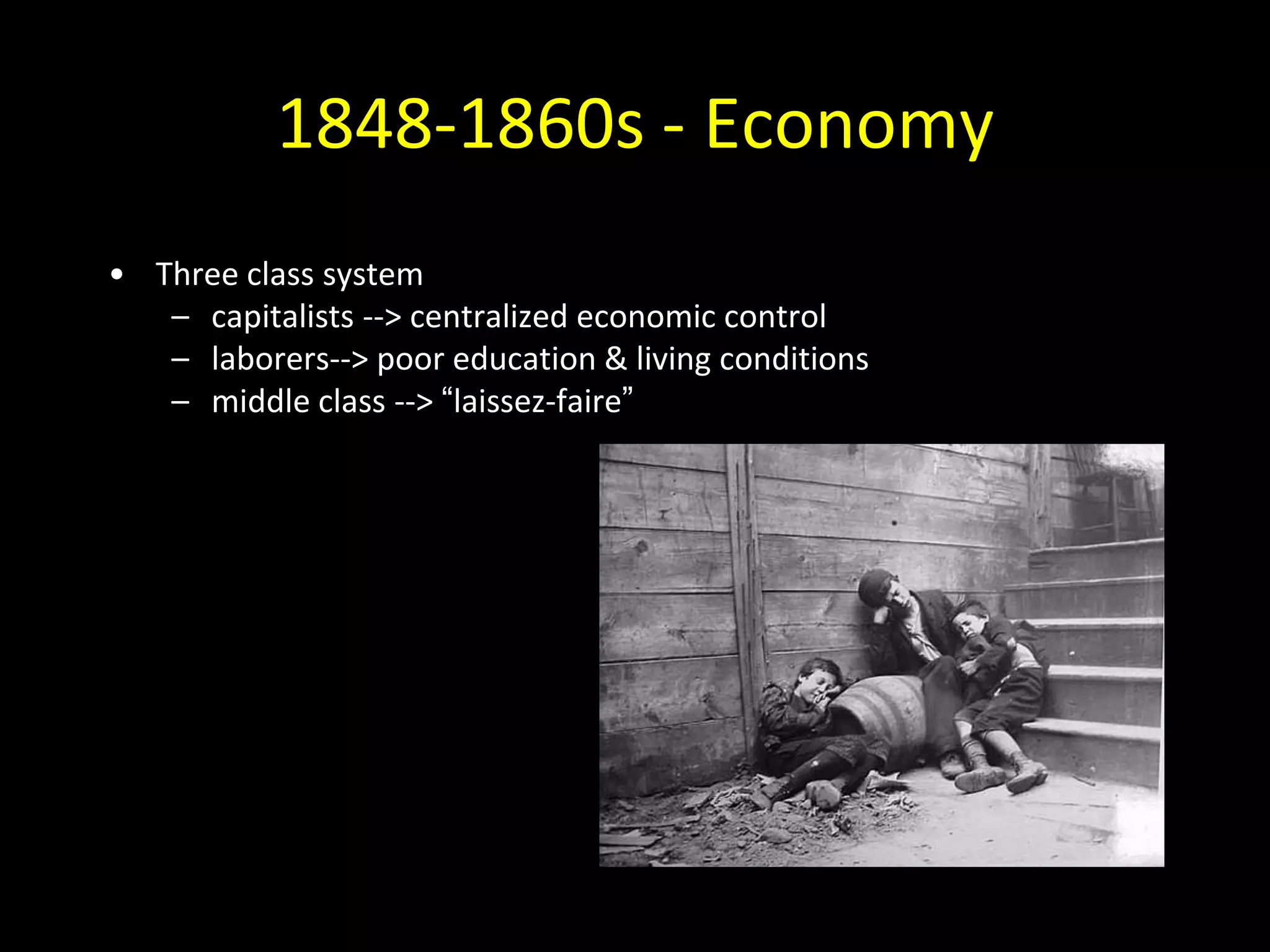

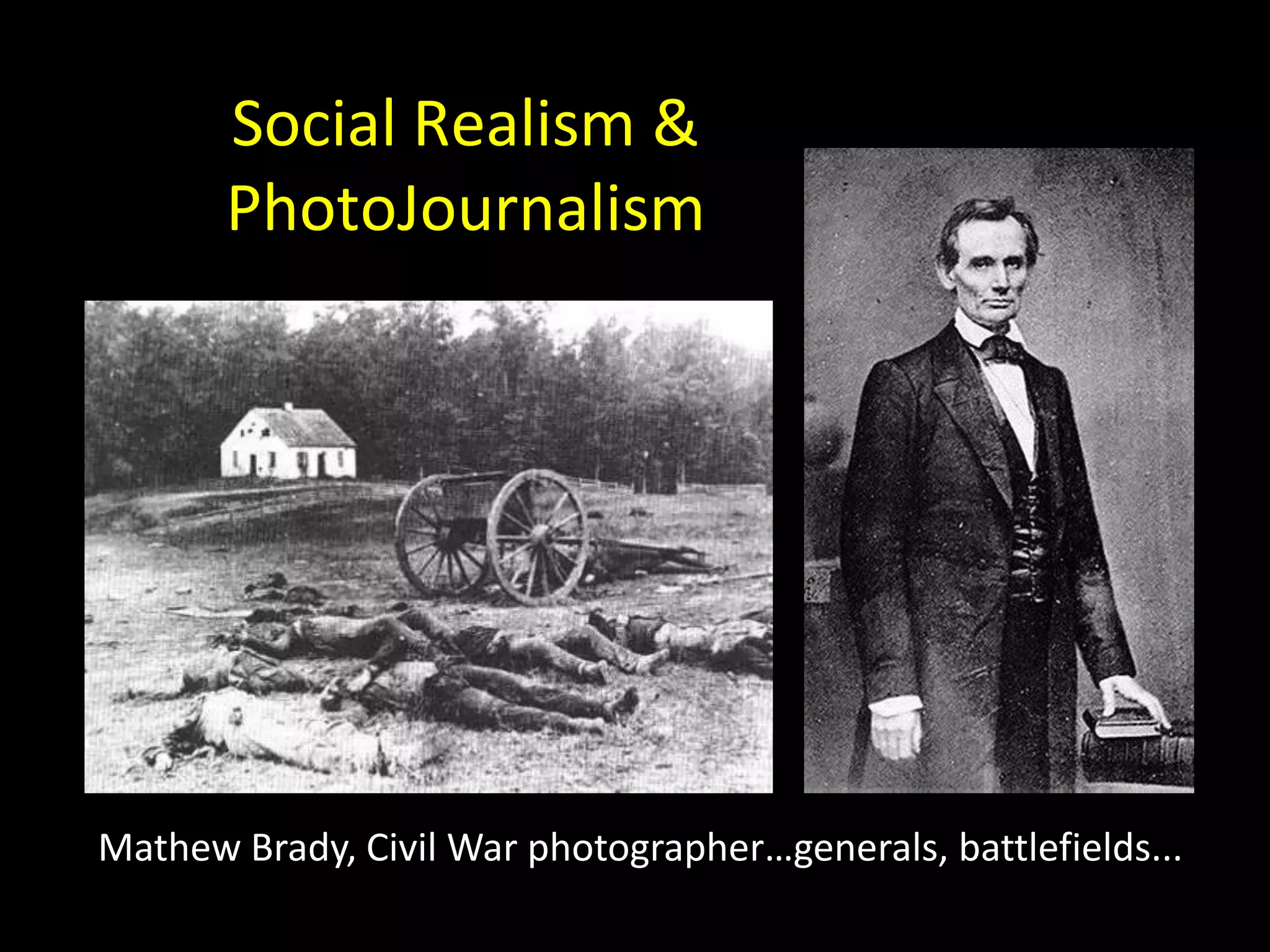
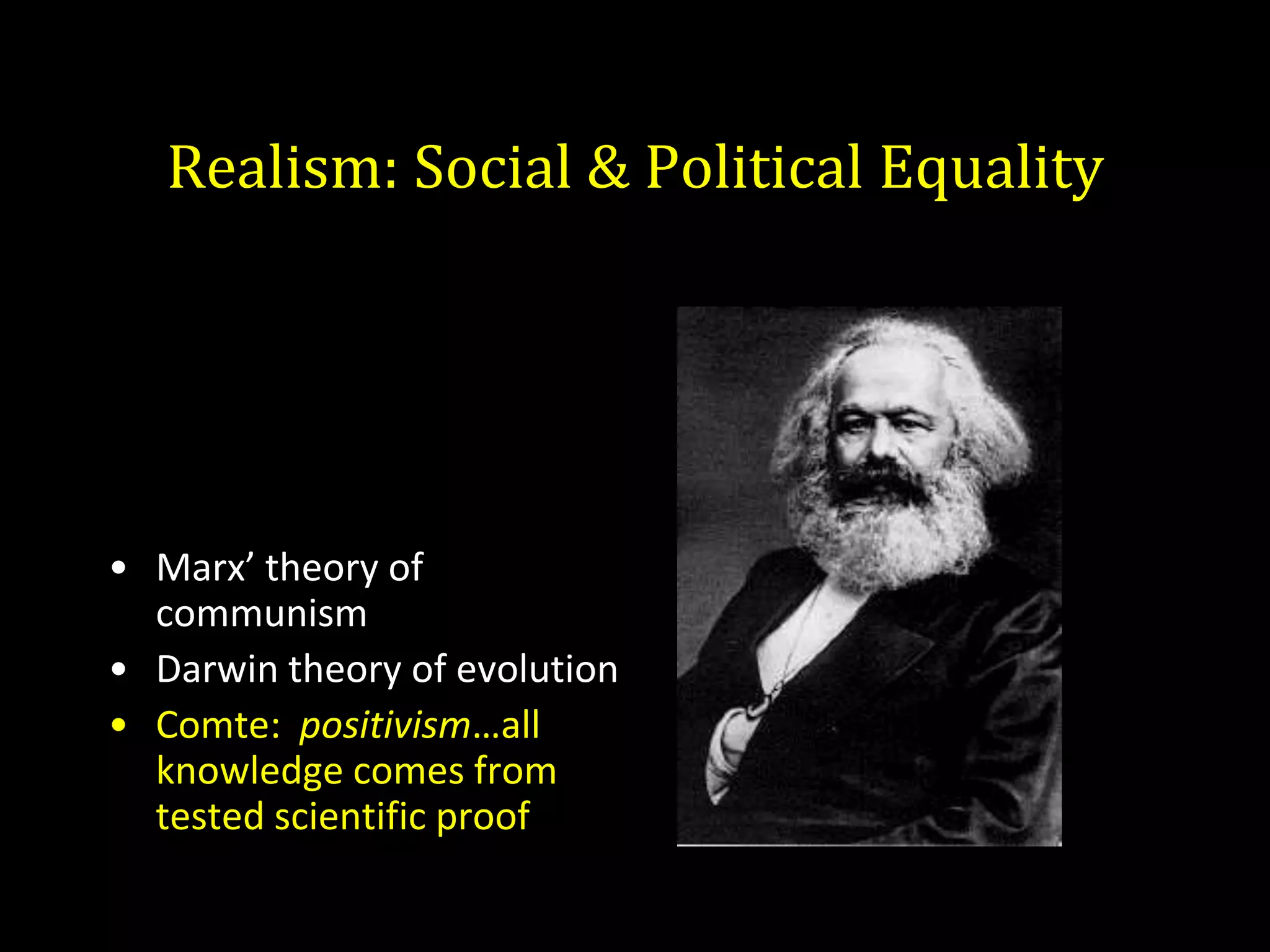
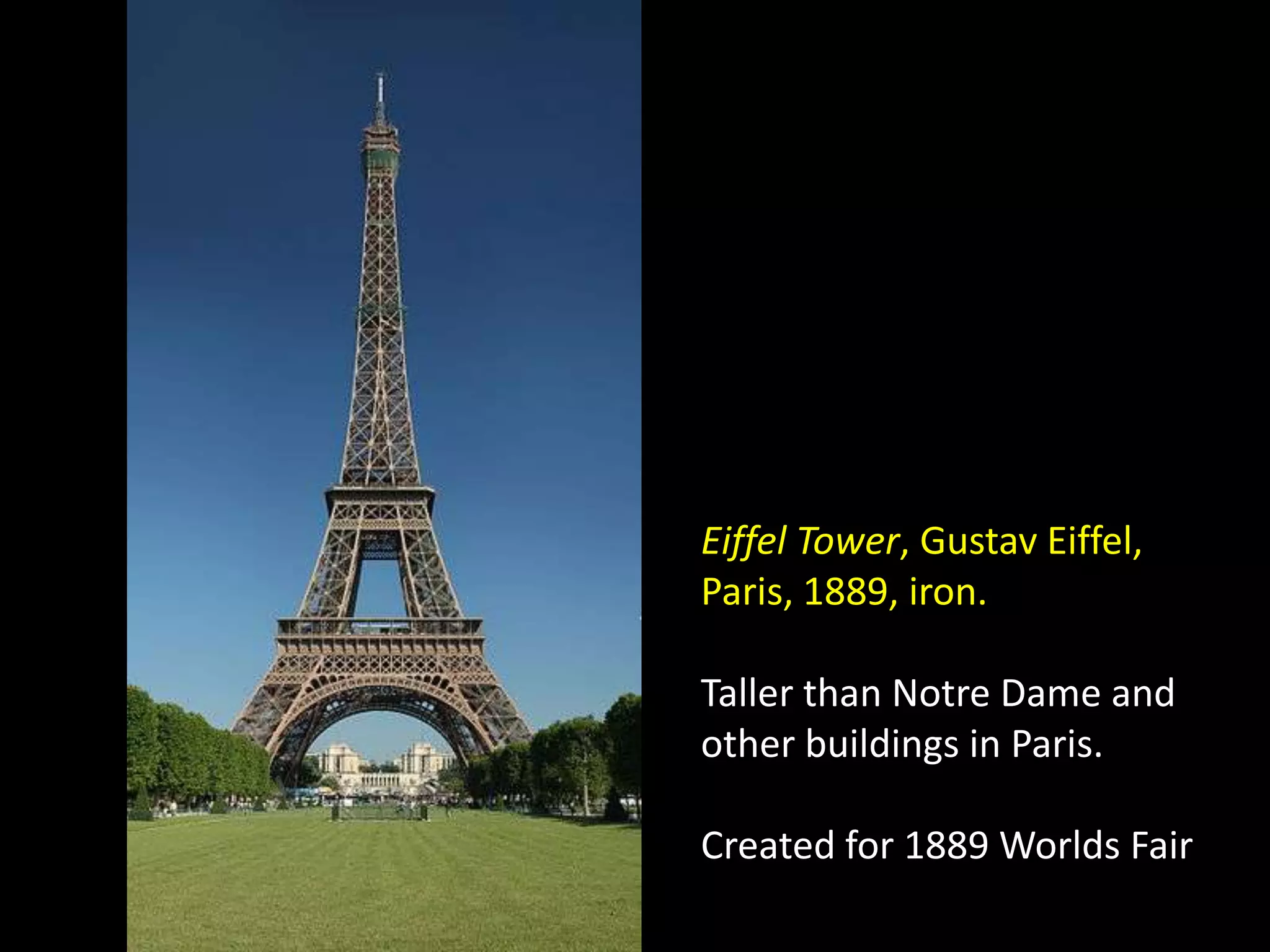
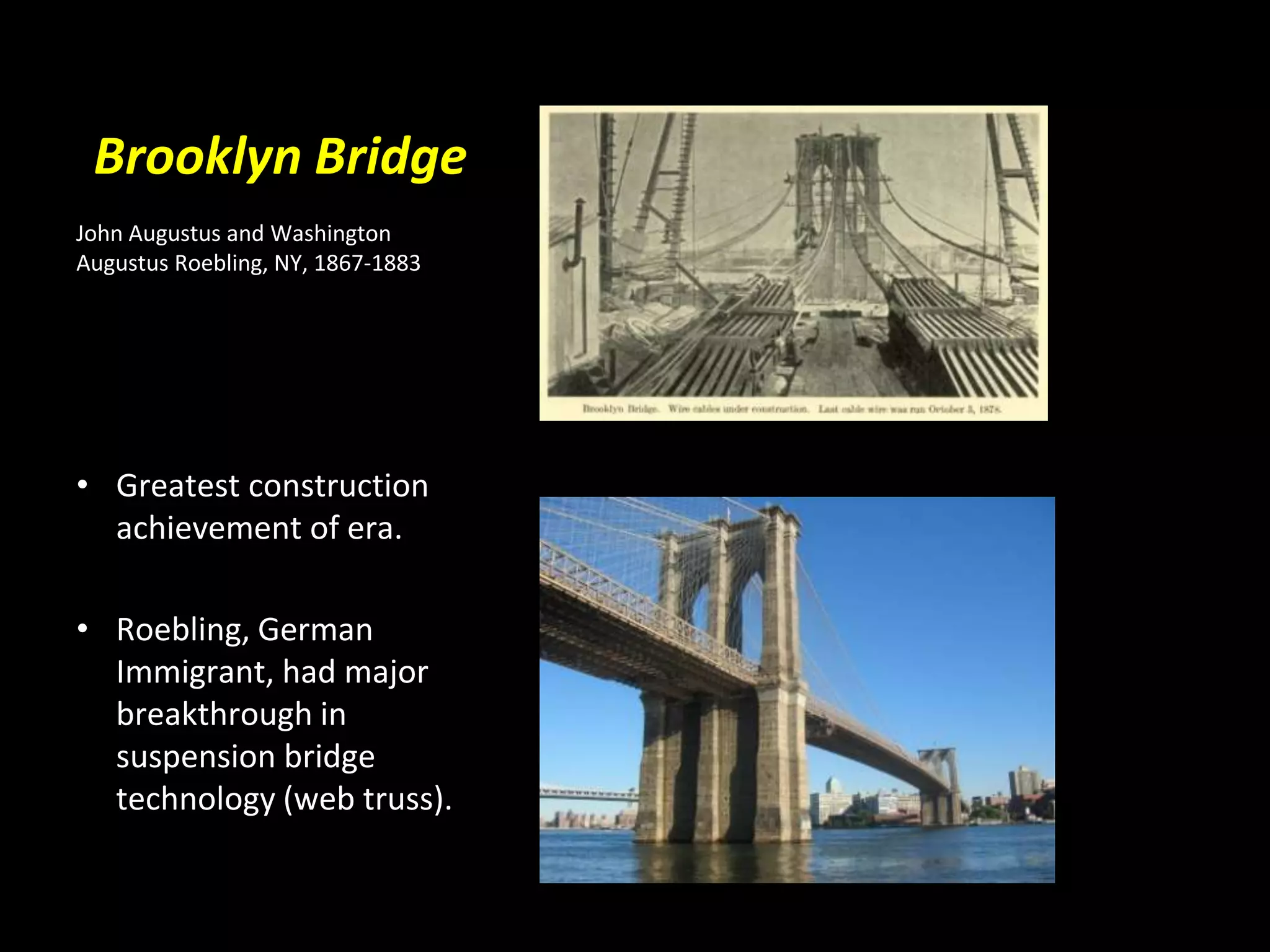
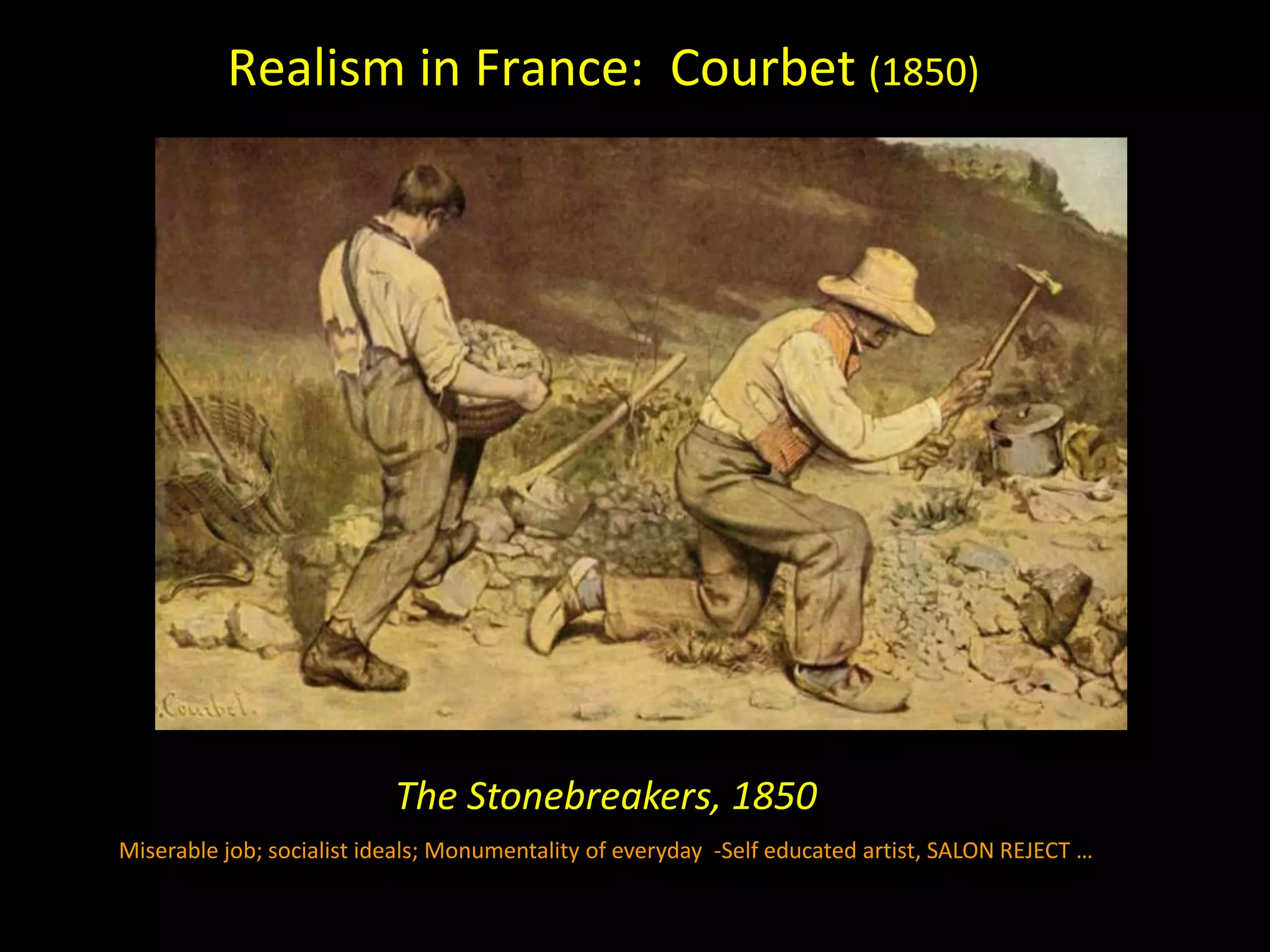
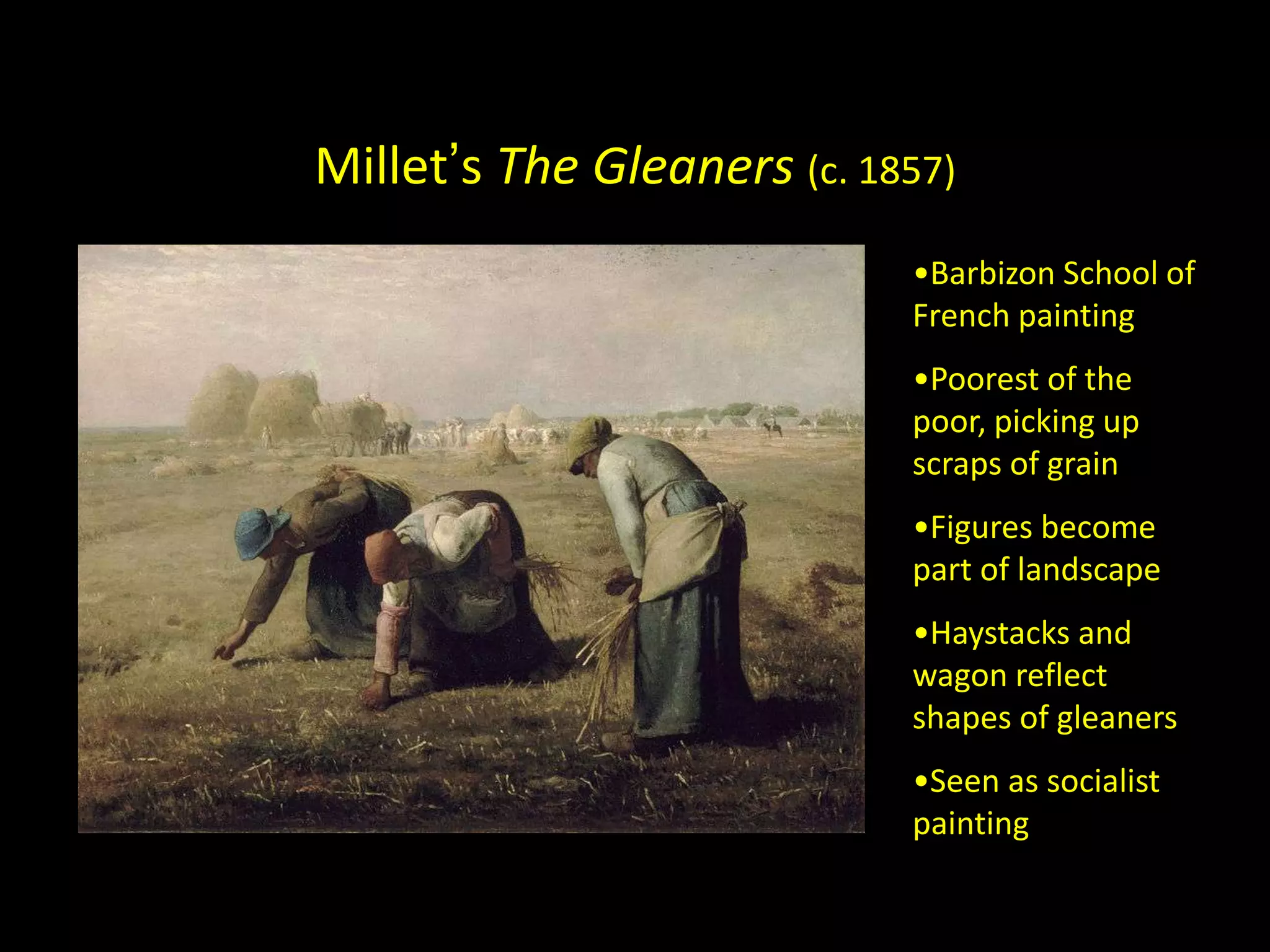
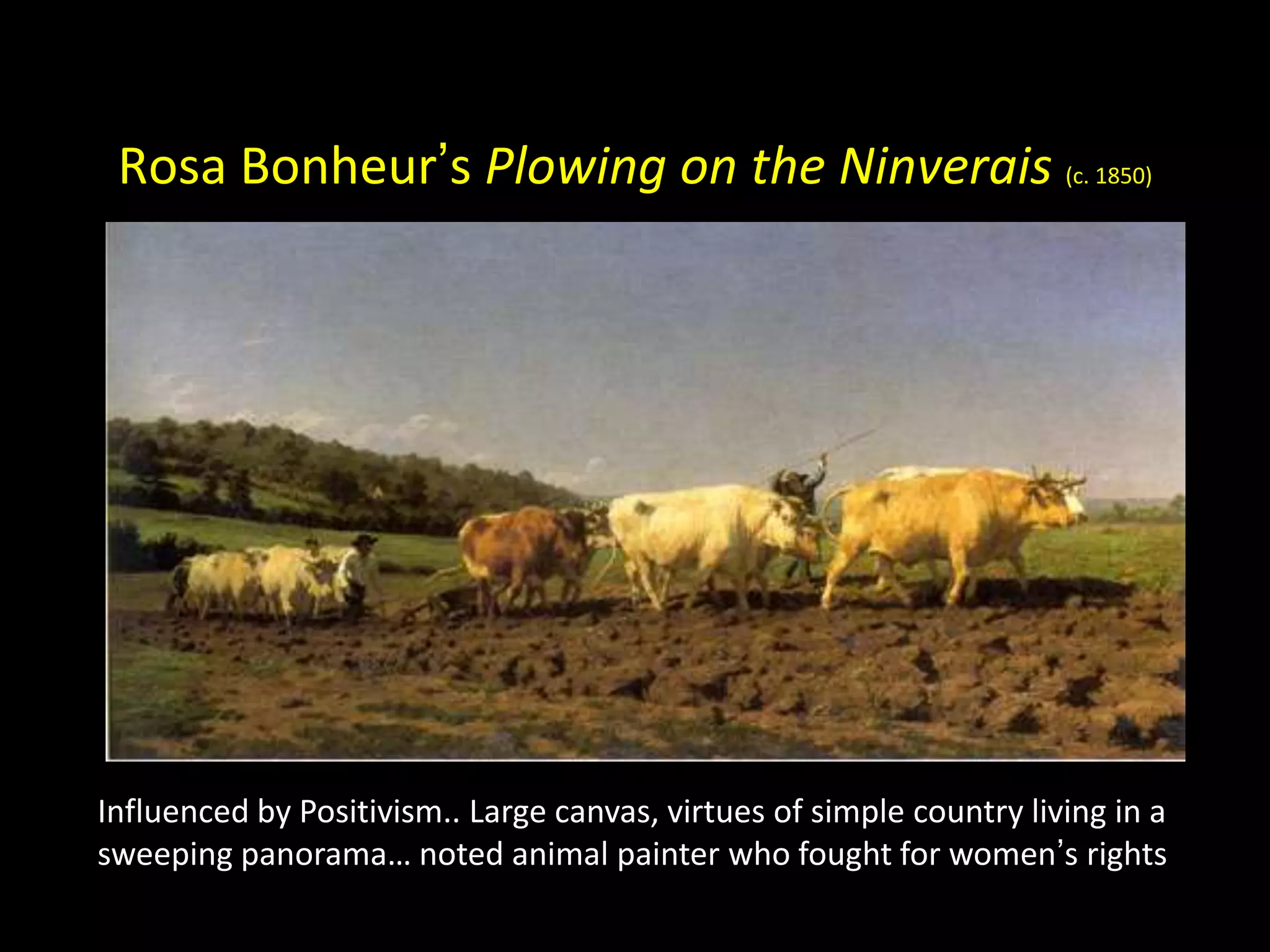
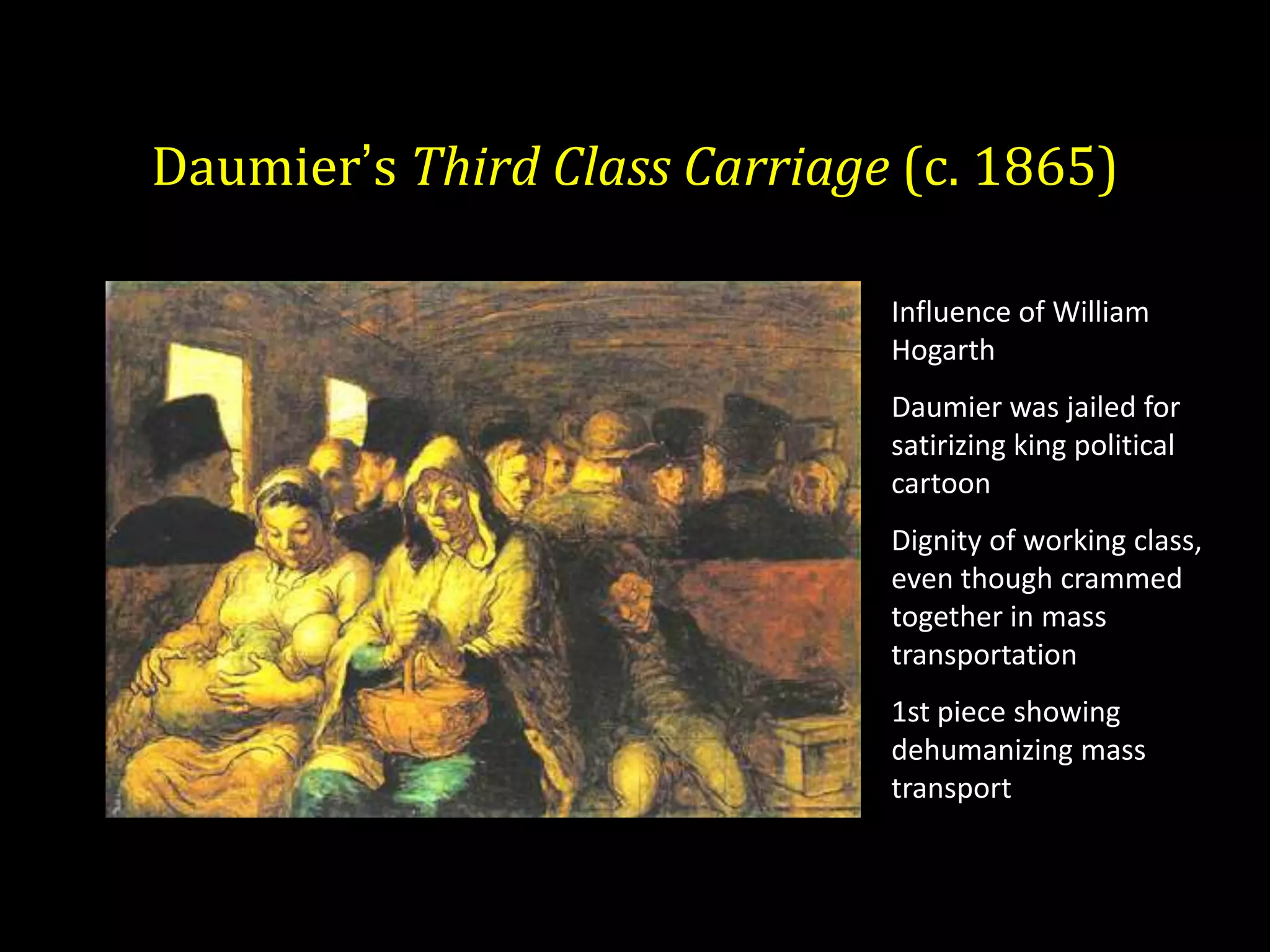
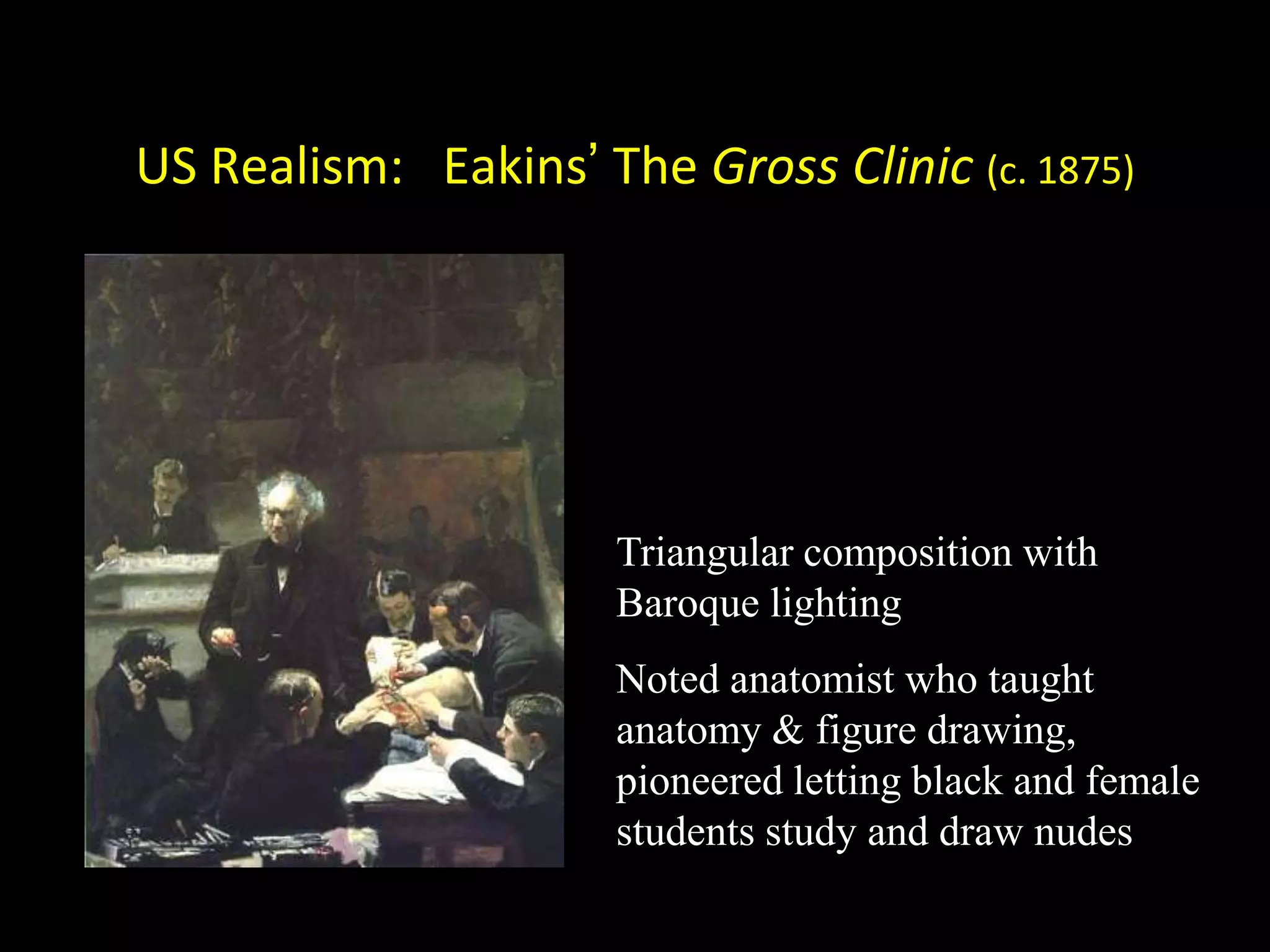
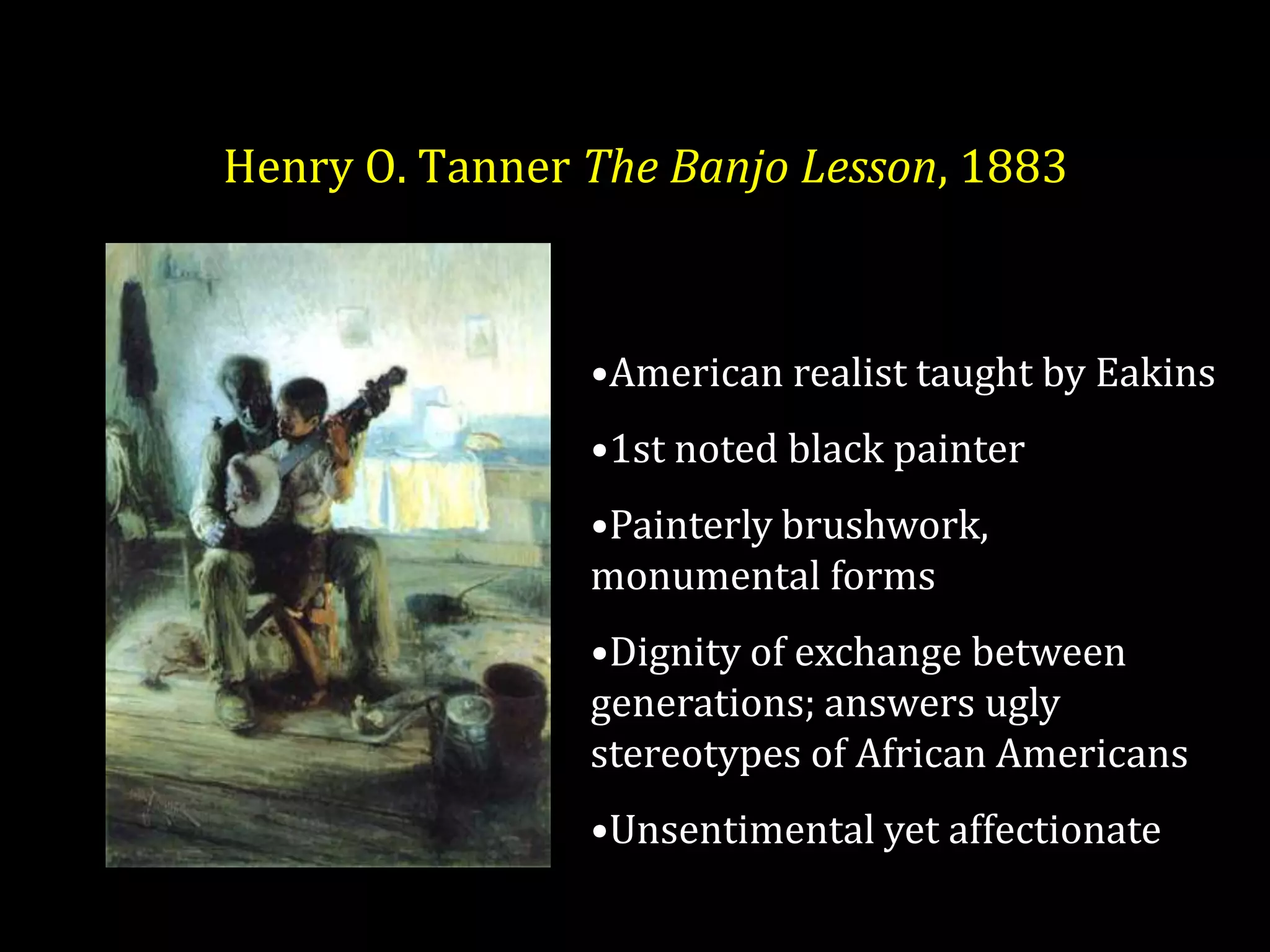
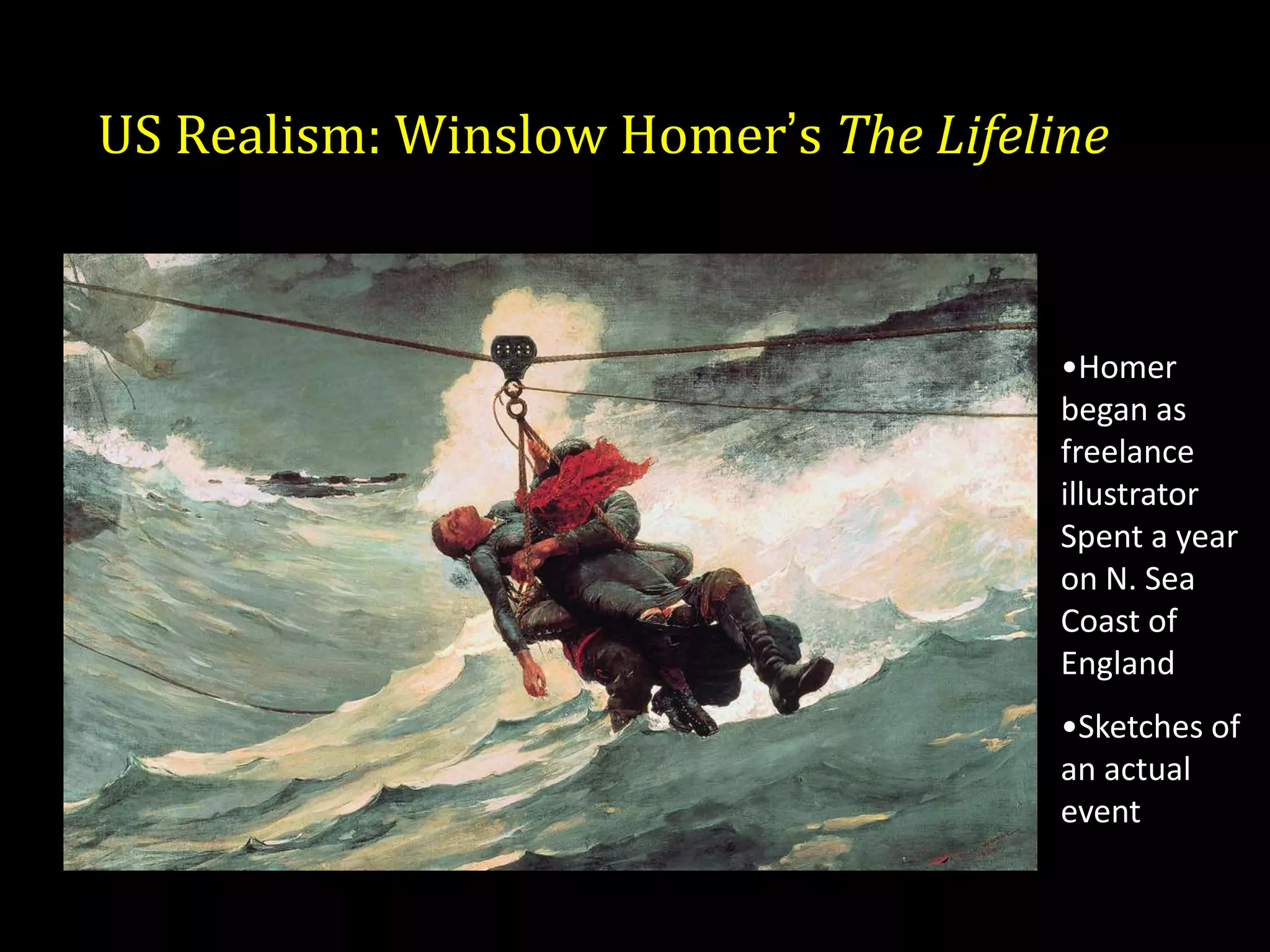
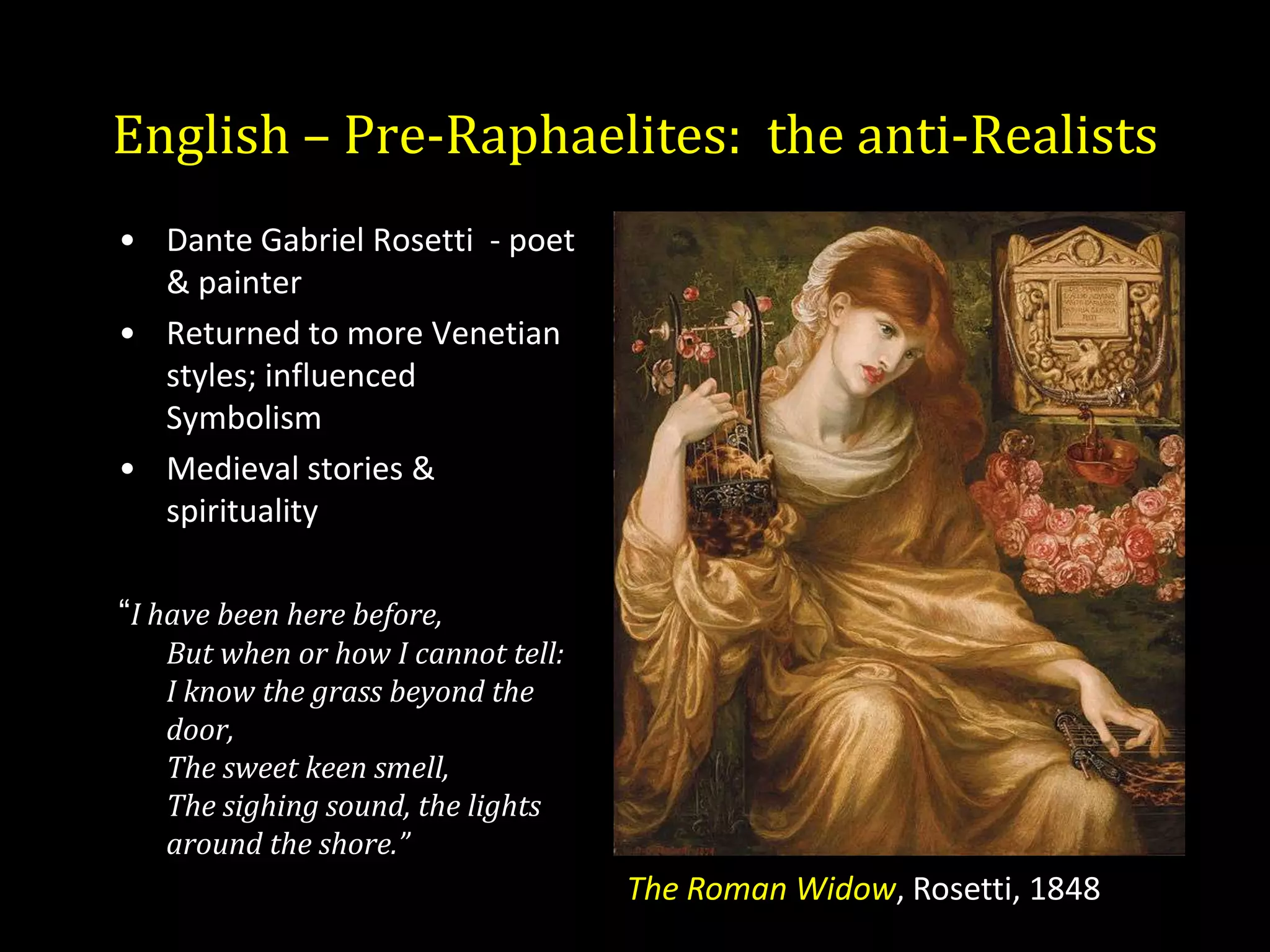

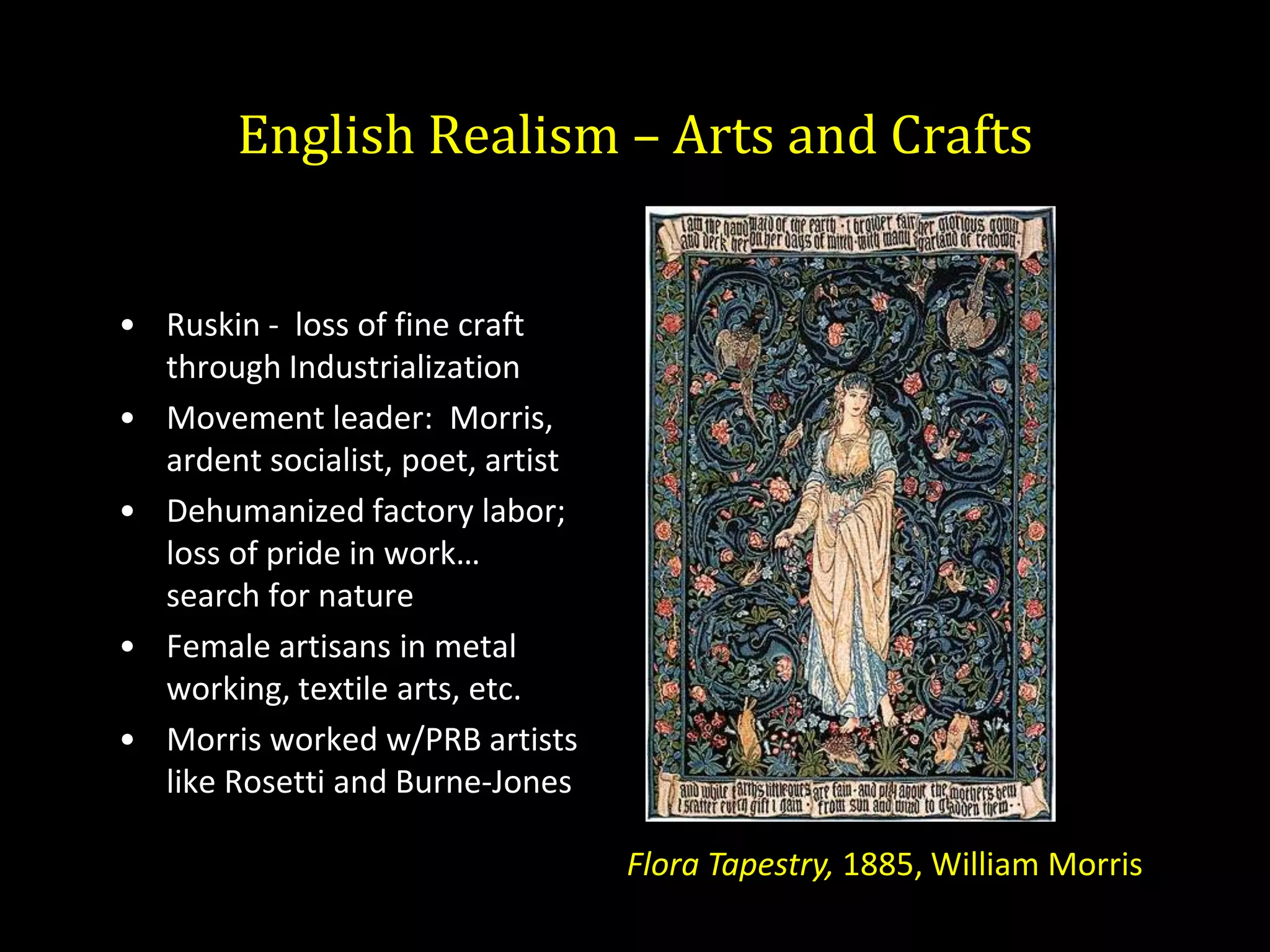

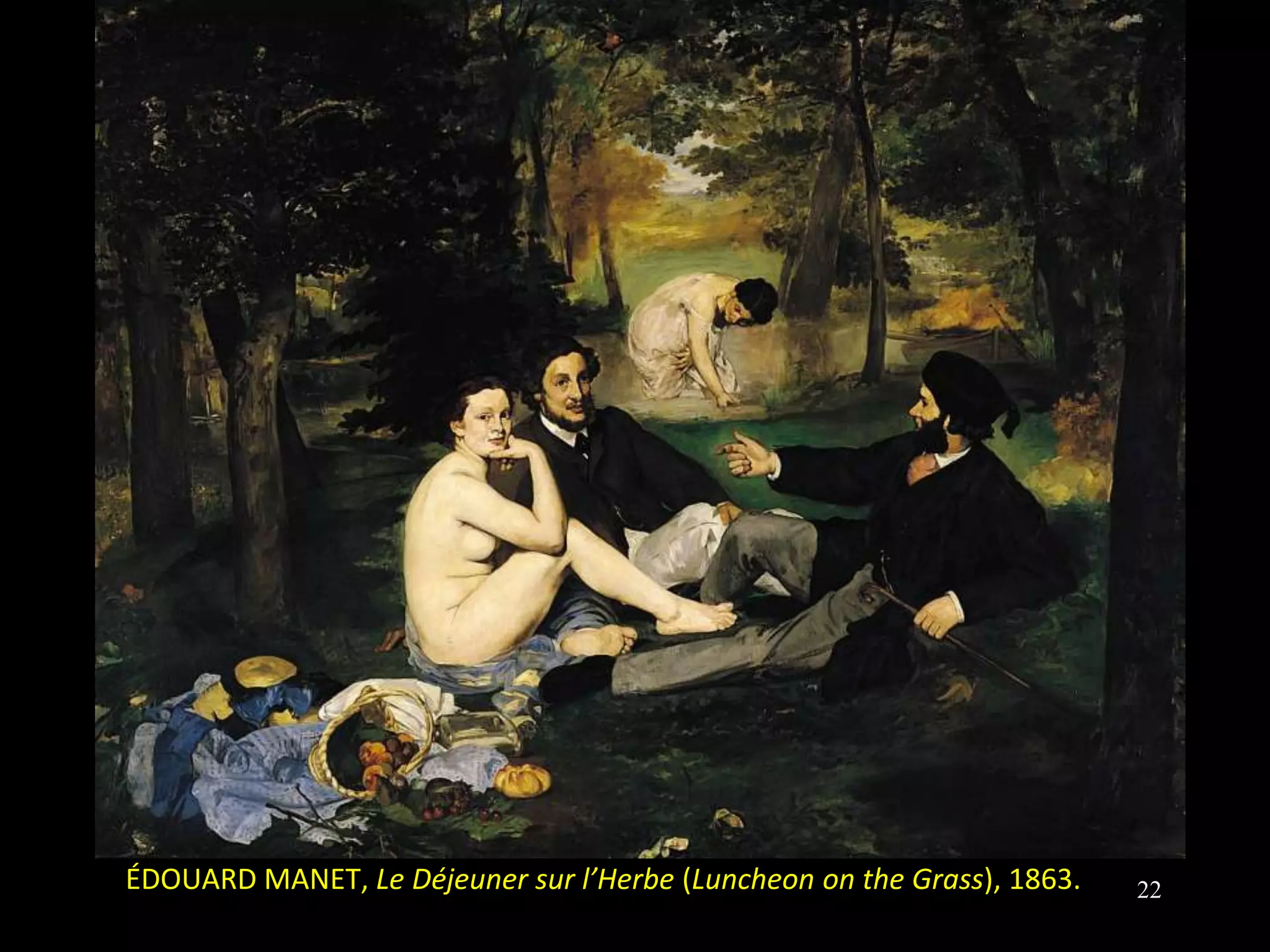
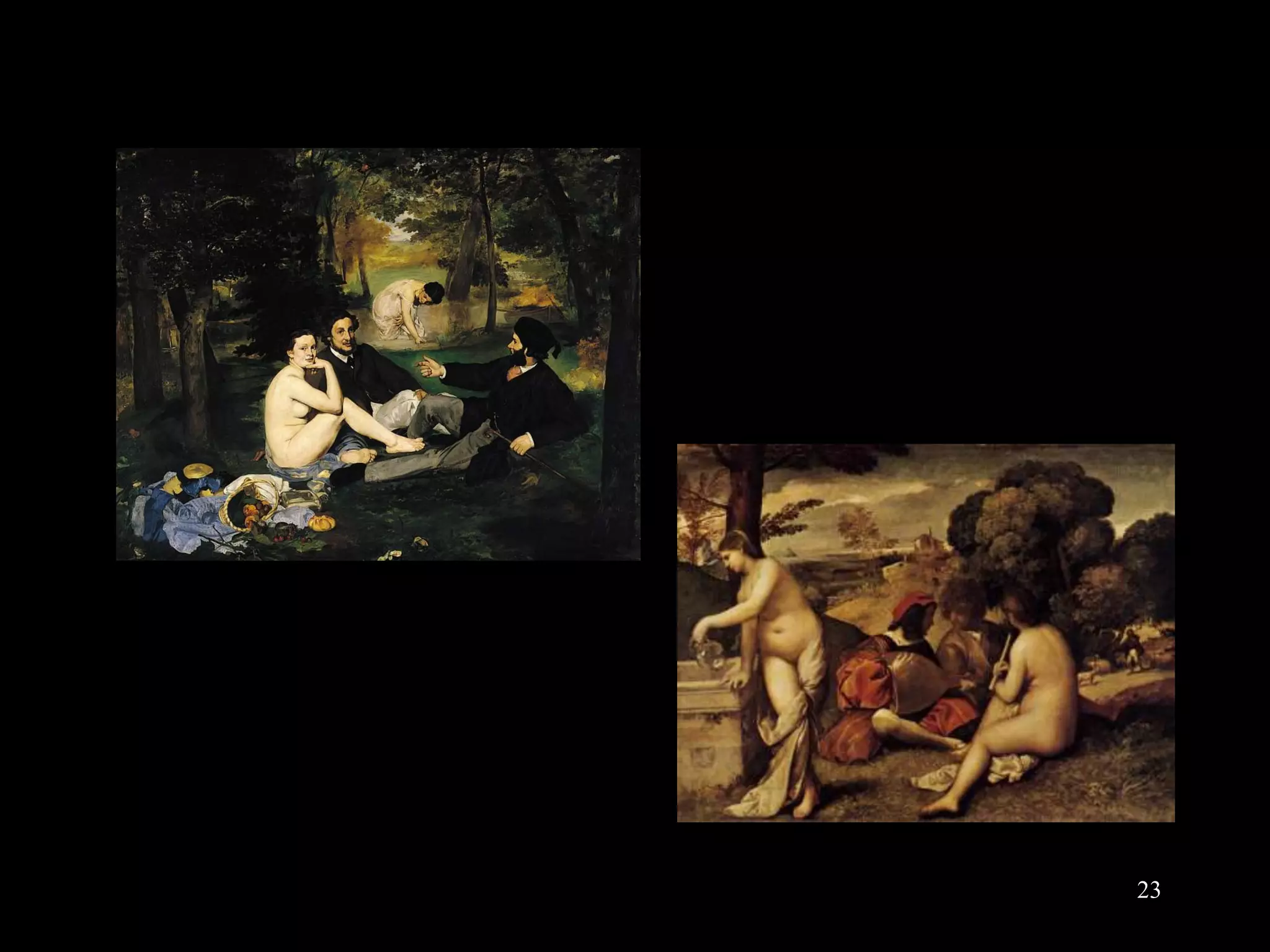
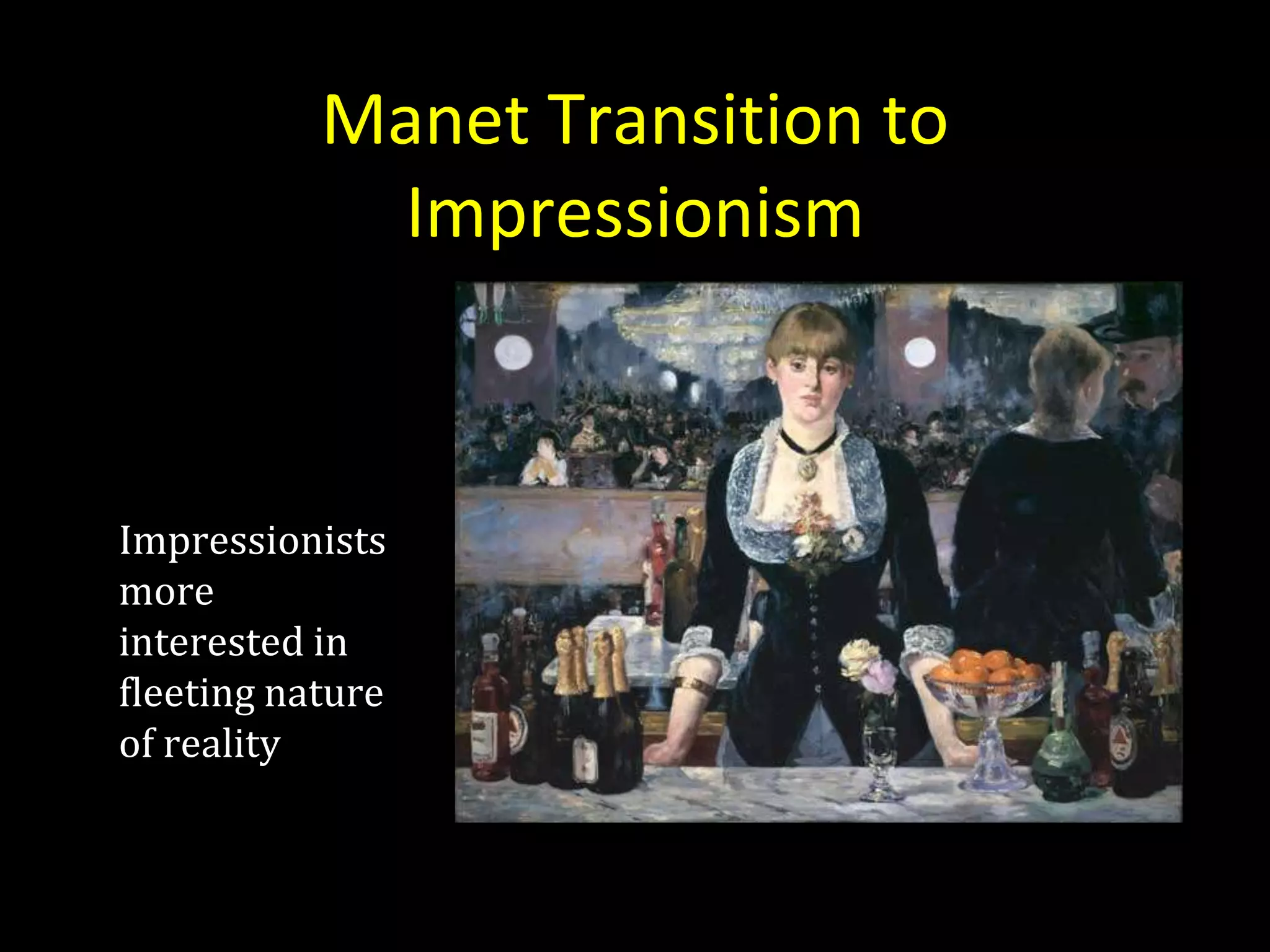

The mid-19th century saw major social, economic, and technological changes with the Industrial Revolution that influenced art and architecture. Artists began focusing on realistic depictions of everyday life, especially the working classes, informed by theories like Marxism, Darwinism, and positivism. This led to the development of realist styles like Courbet's in France and Eakins' in the US. New engineering technologies allowed ambitious projects like the Eiffel Tower and Brooklyn Bridge. The Arts and Crafts movement sought to preserve craftsmanship and dignity of labor. Manet's Luncheon on the Grass was a transition to Impressionism's interest in fleeting reality over academic ideals.


