18th Century :
              Rococo to Roman Revival

 Rococo and The Enlightenment


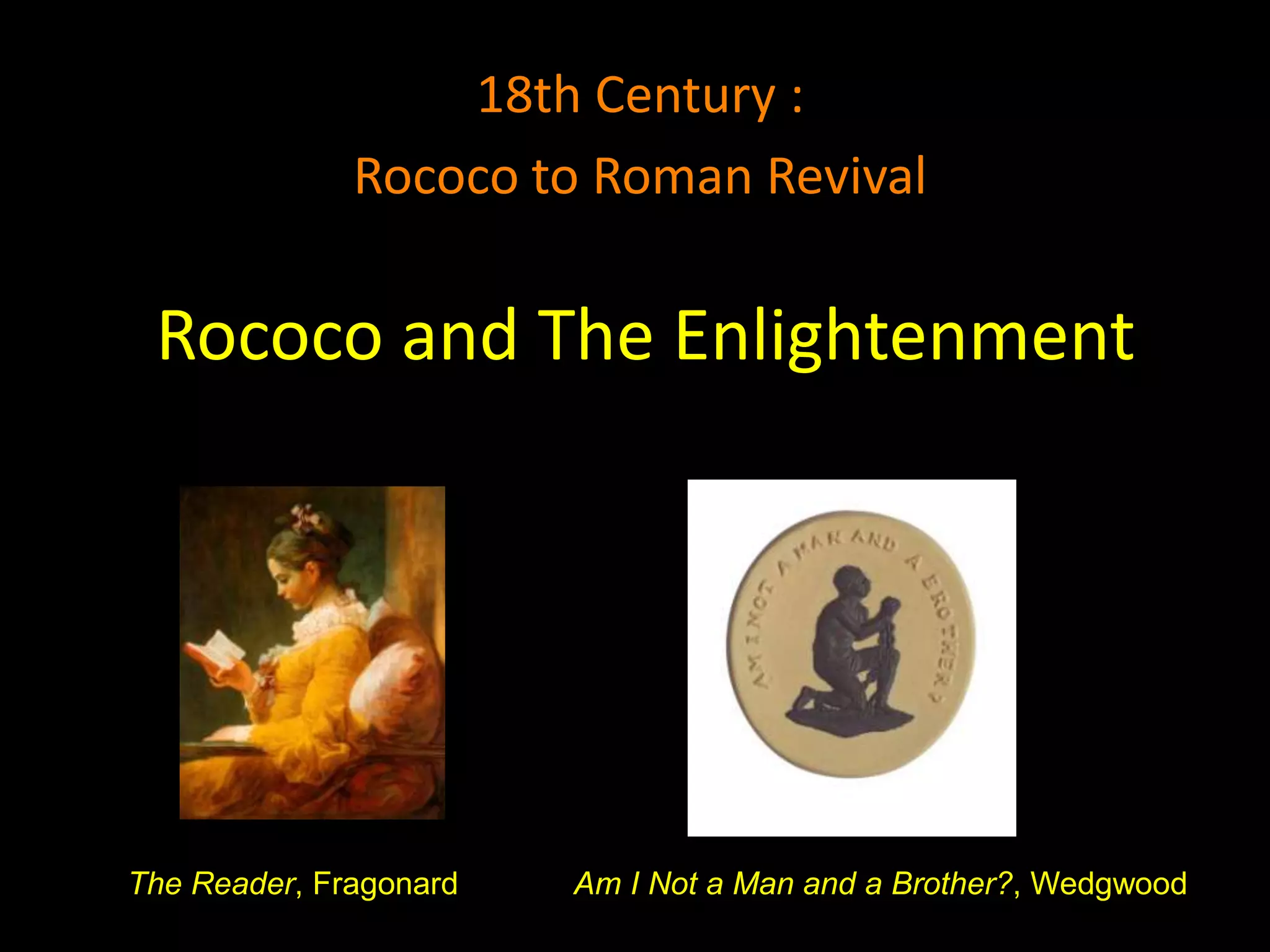
The Reader, Fragonard   Am I Not a Man and a Brother?, Wedgwood
Early 18th Century Rococo Architecture

• Shift of power after
  Louis XIV died
• Emerging middle class
• Paris townhouses
  (Rococo style hôtels)
• Style spread to
  European painting and
  sculpture

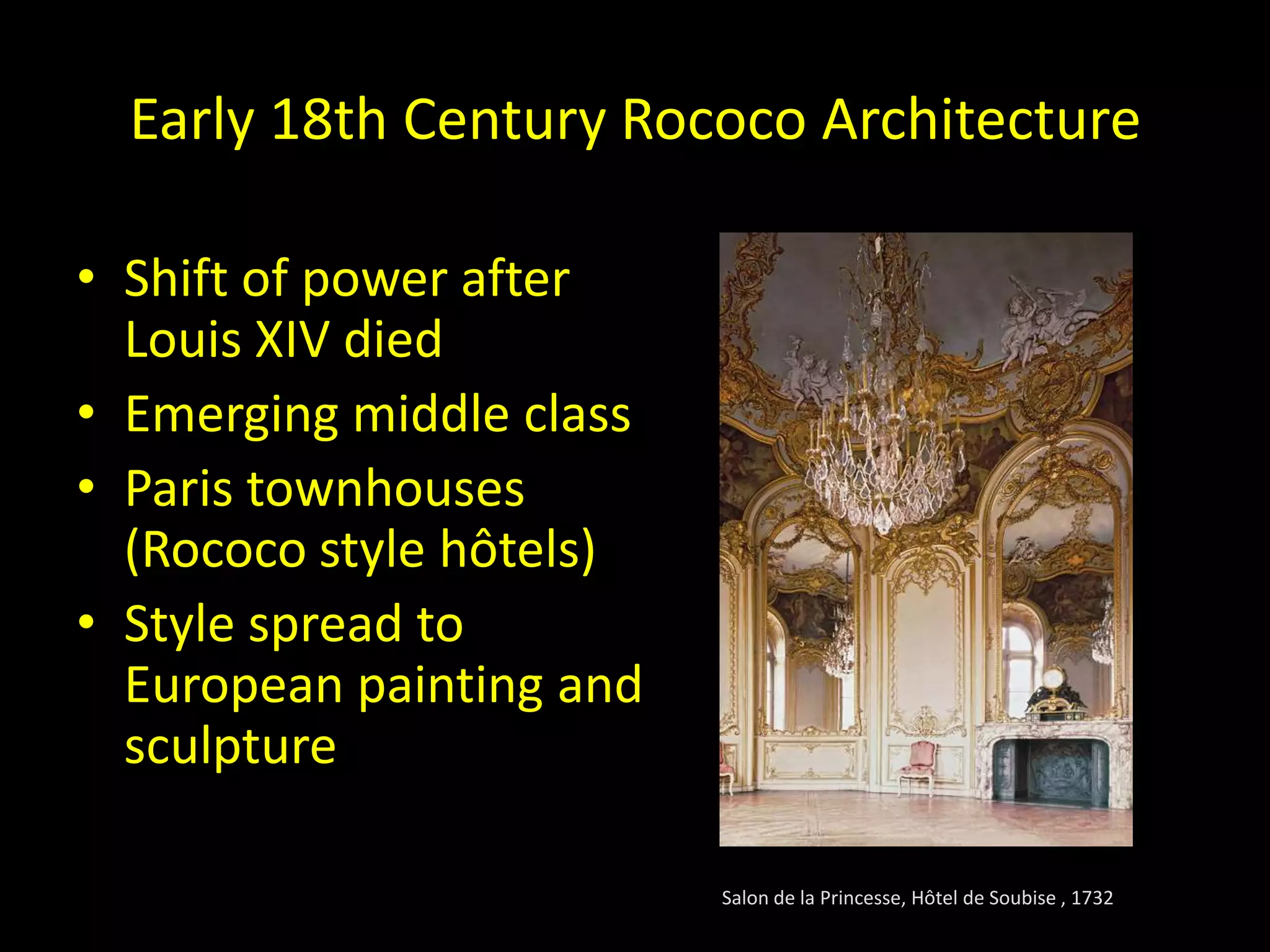
                          Salon de la Princesse, Hôtel de Soubise , 1732
Rococo Architecture: More is MORE


                                                                        Dynamic and
                                                                        moving spatial
                                                                        environment
                                                                        No empty
                                                                        spaces
                                                                        Unified art &
                                                                        architecture


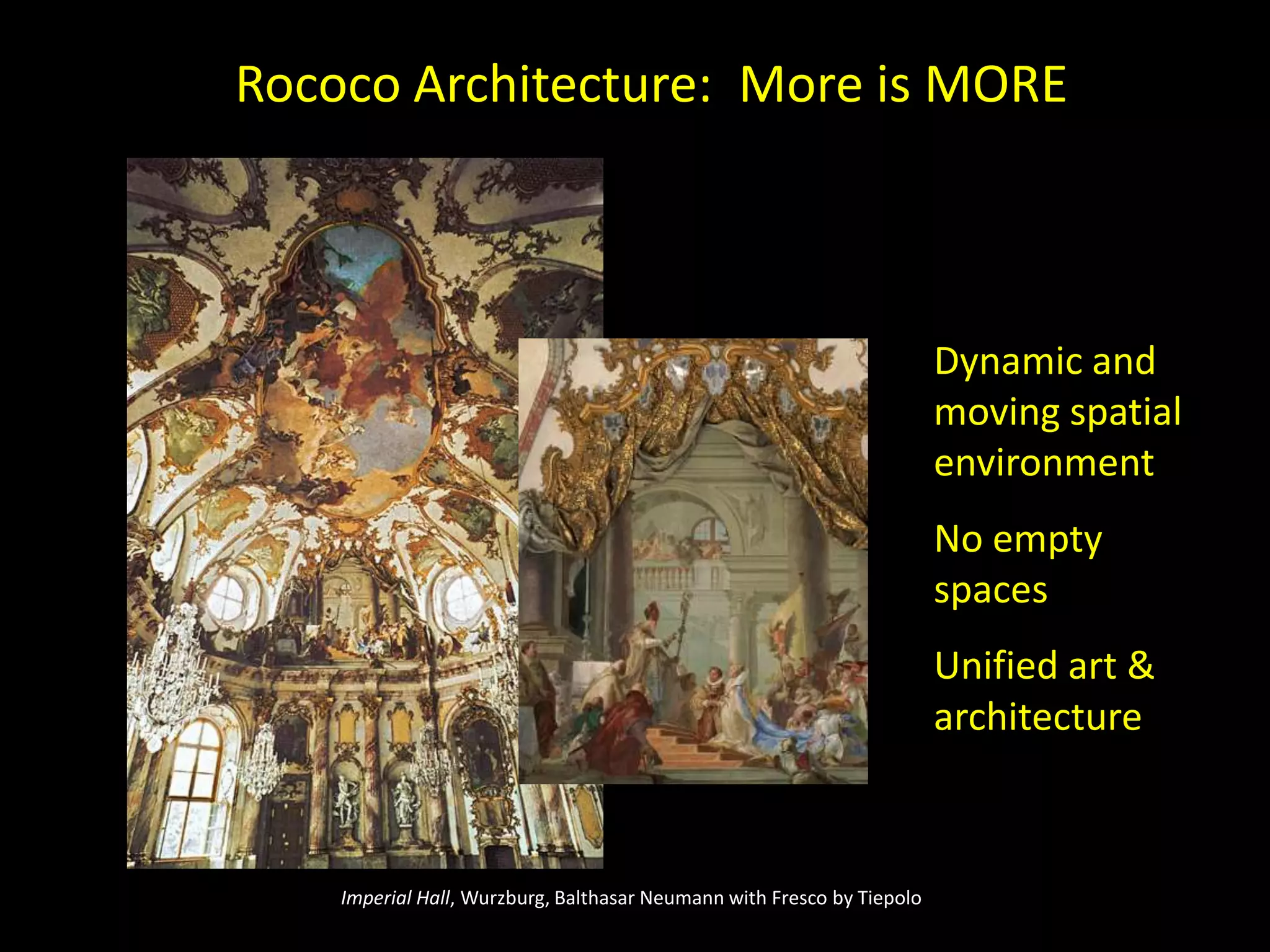
    Imperial Hall, Wurzburg, Balthasar Neumann with Fresco by Tiepolo
Rococo Painting: Elegant parties?


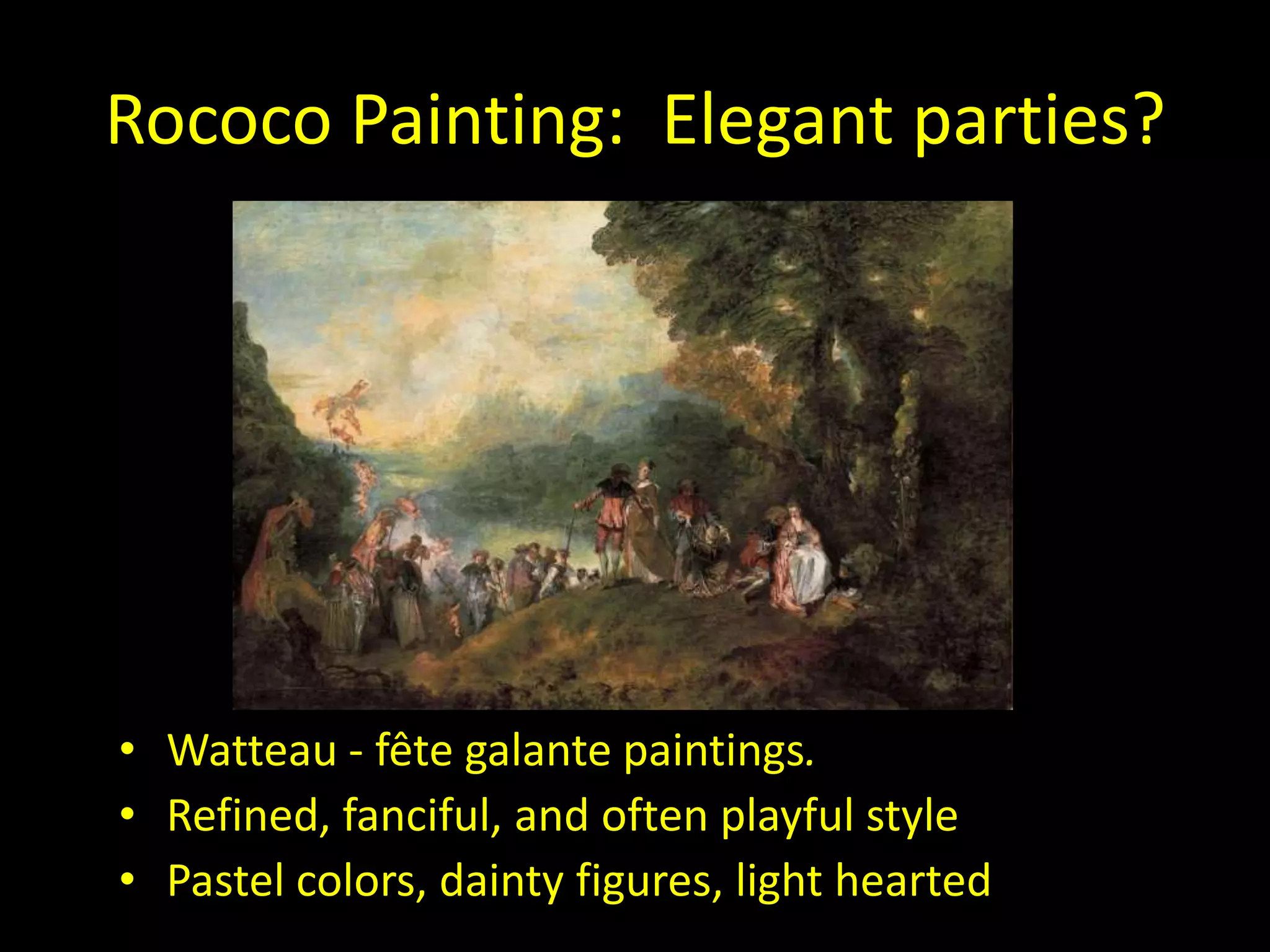
• Watteau - fête galante paintings.
• Refined, fanciful, and often playful style
• Pastel colors, dainty figures, light hearted
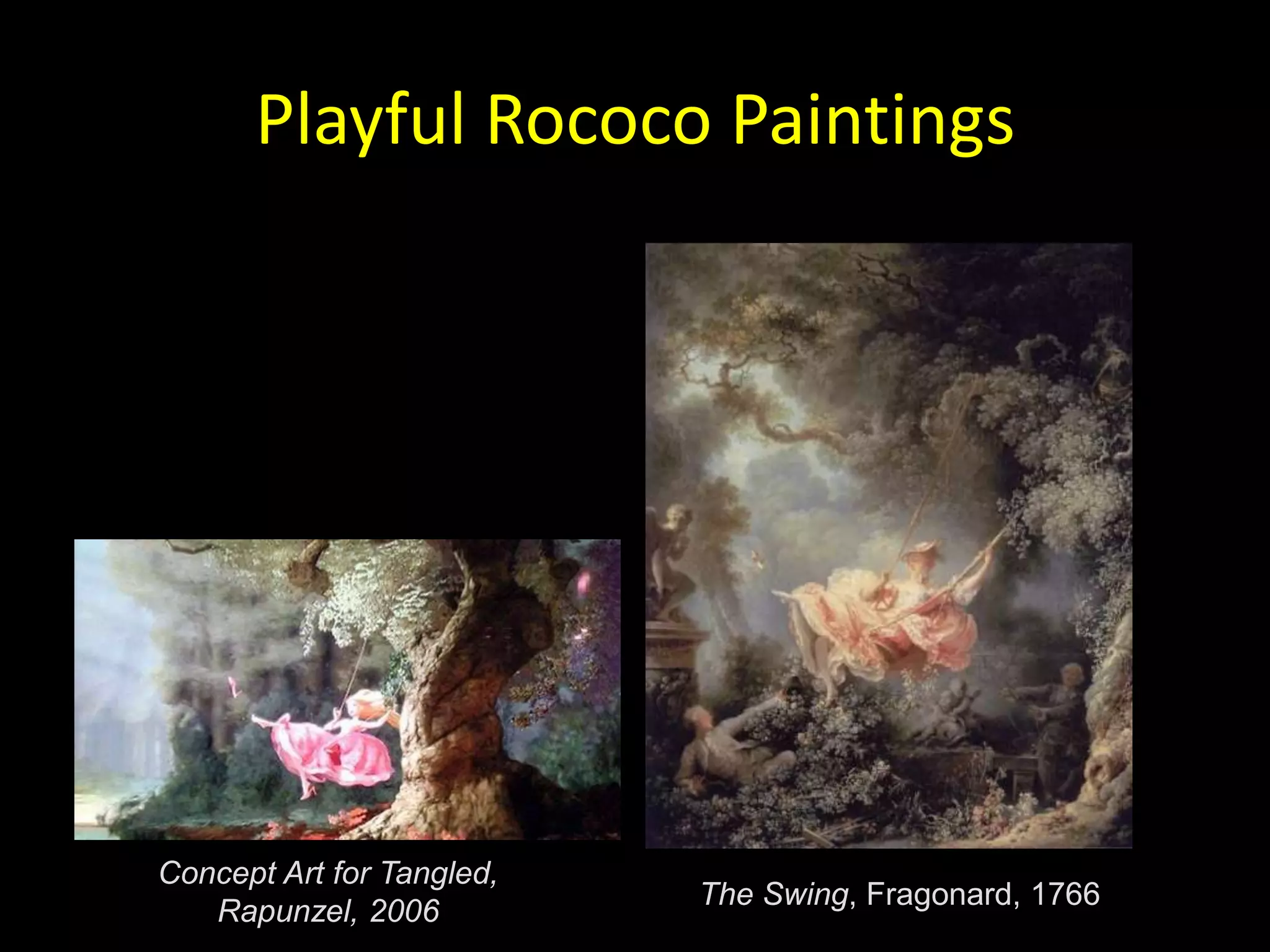
Playful Rococo Paintings


Concept Art for Tangled,
                           The Swing, Fragonard, 1766
   Rapunzel, 2006
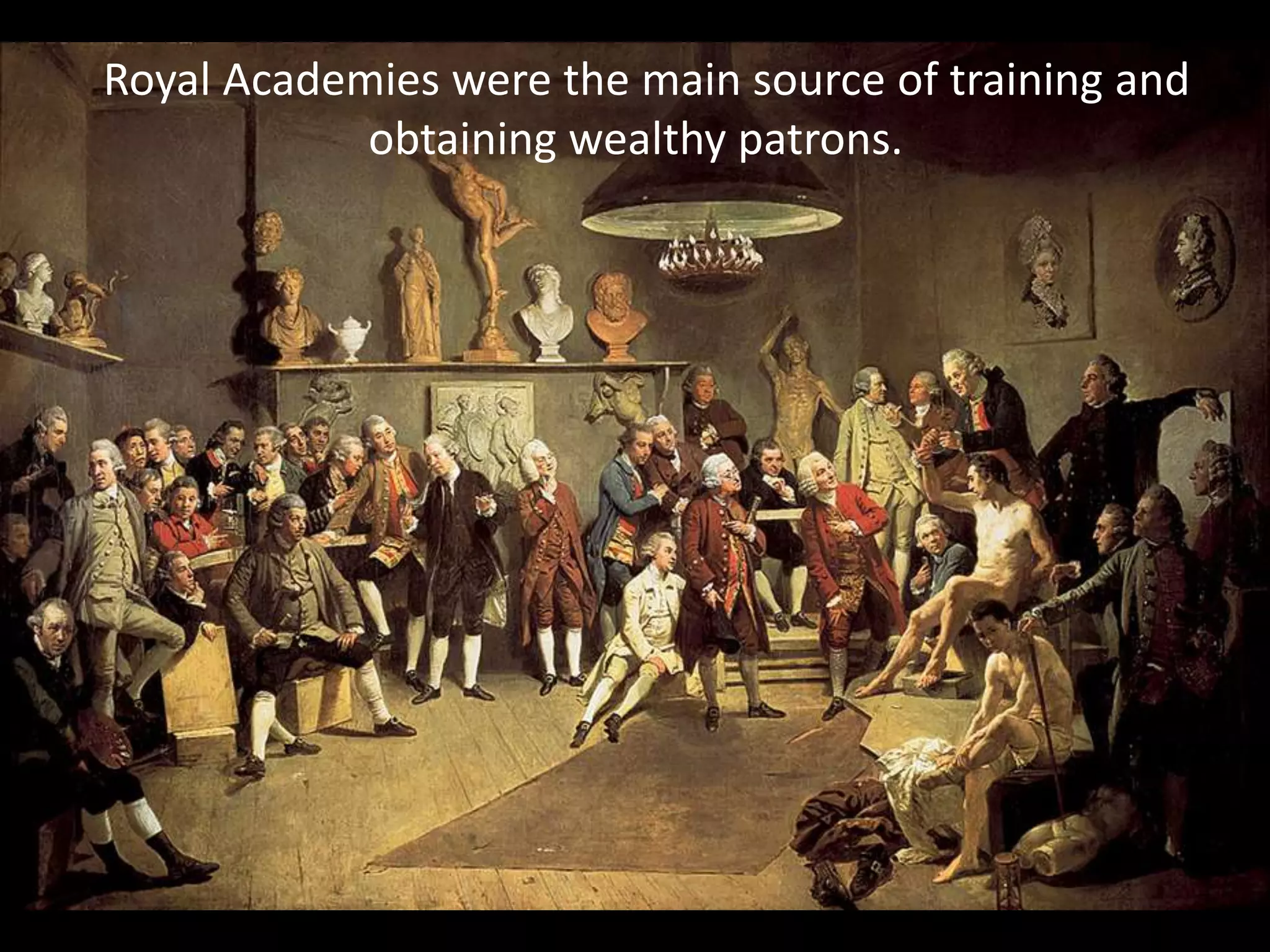
Royal Academies were the main source of training and
            obtaining wealthy patrons.
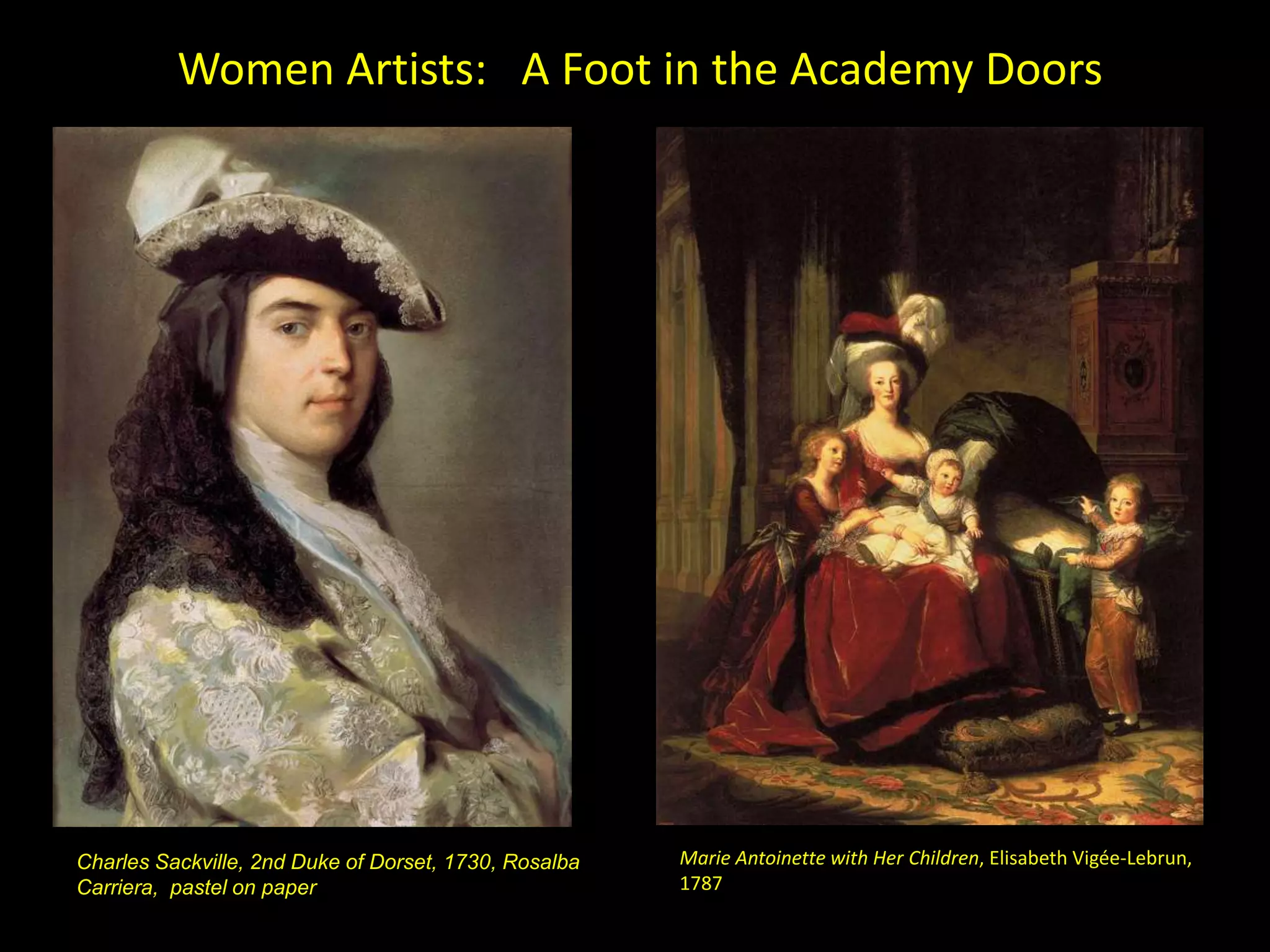
Women Artists: A Foot in the Academy Doors


Charles Sackville, 2nd Duke of Dorset, 1730, Rosalba   Marie Antoinette with Her Children, Elisabeth Vigée-Lebrun,
Carriera, pastel on paper                              1787
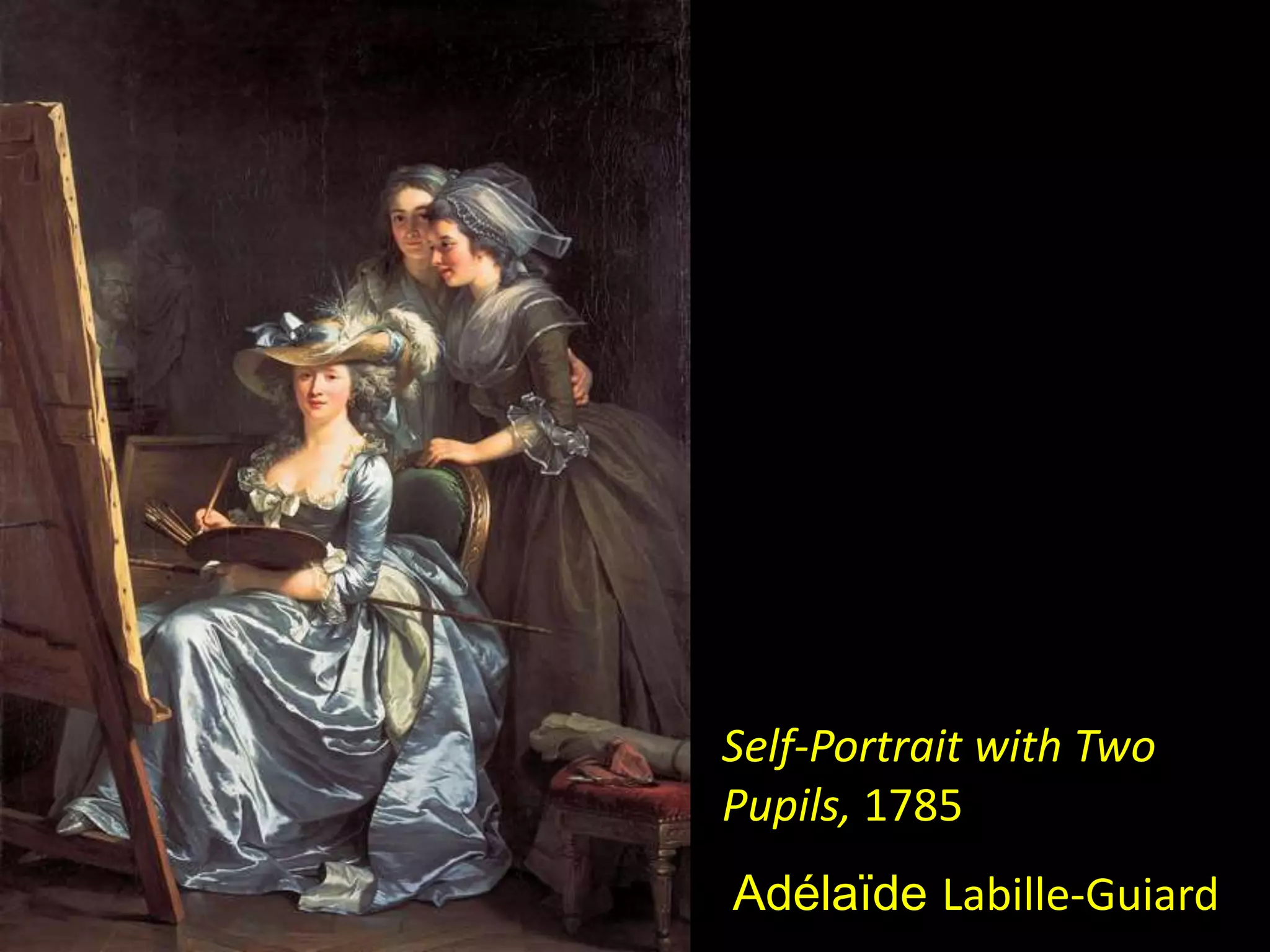
Self-Portrait with Two
Pupils, 1785
Adélaïde Labille-Guiard
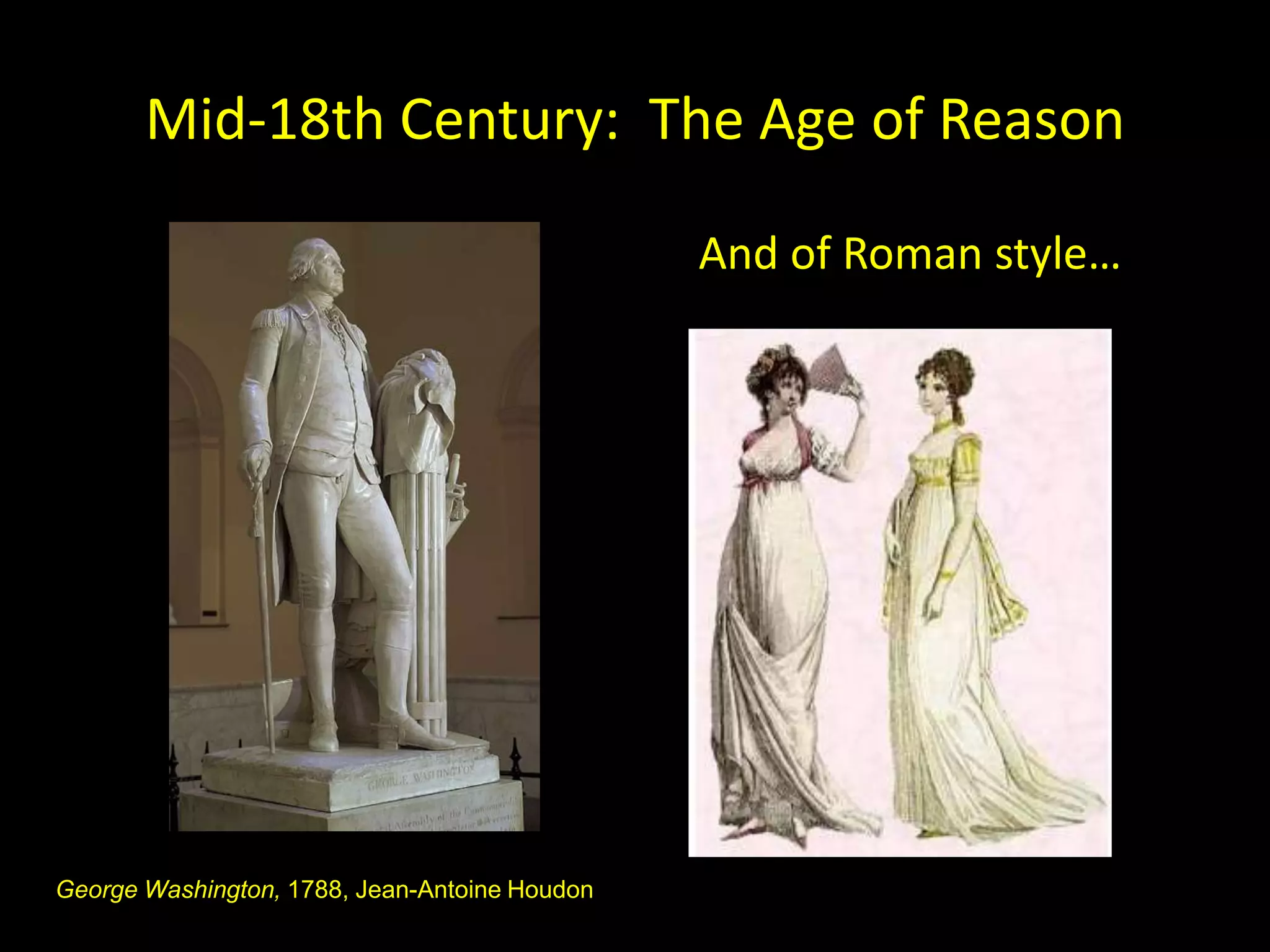
Mid-18th Century: The Age of Reason

                                               And of Roman style…


George Washington, 1788, Jean-Antoine Houdon
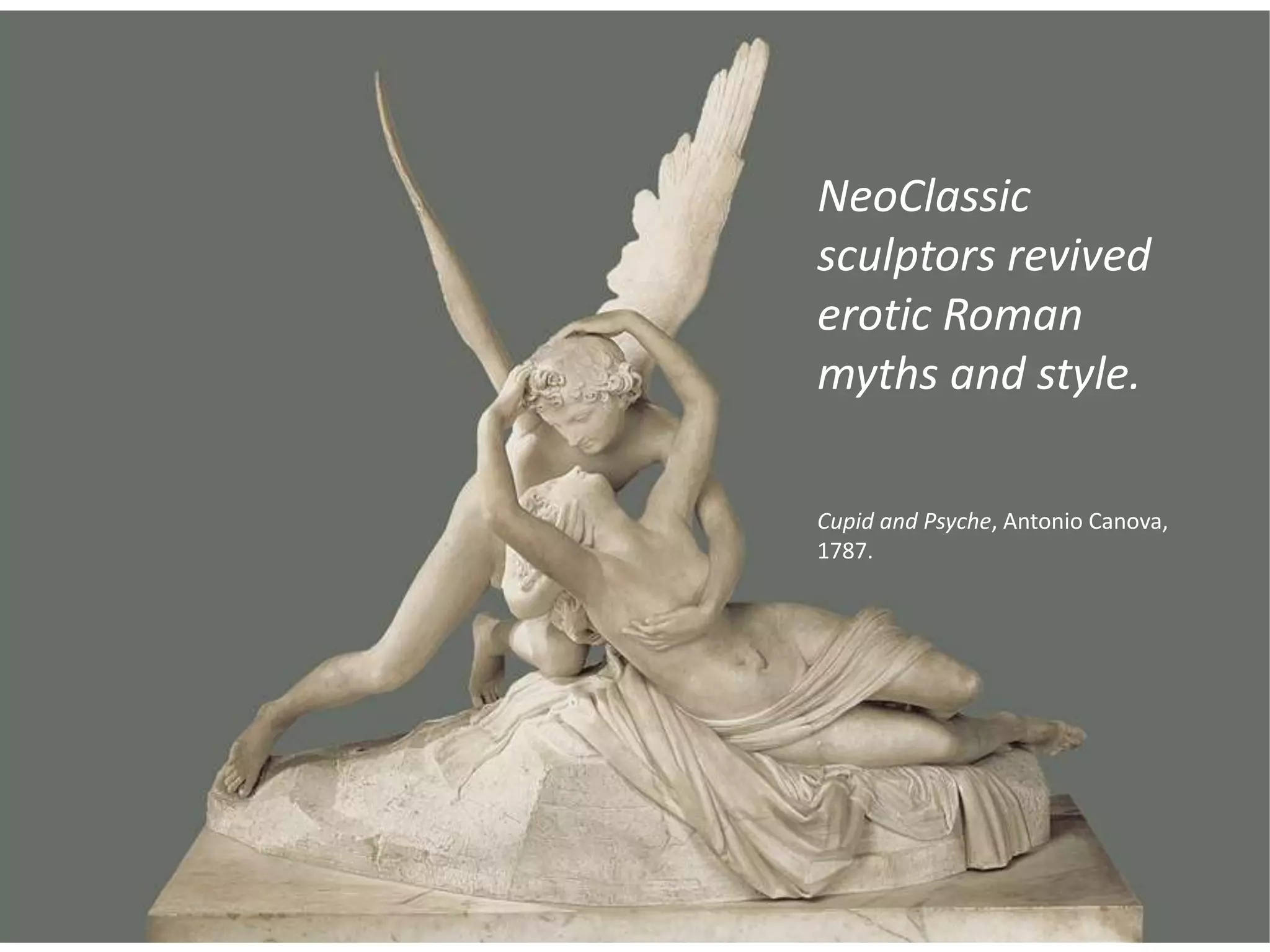
NeoClassic
sculptors revived
erotic Roman
myths and style.

Cupid and Psyche, Antonio Canova,
1787.
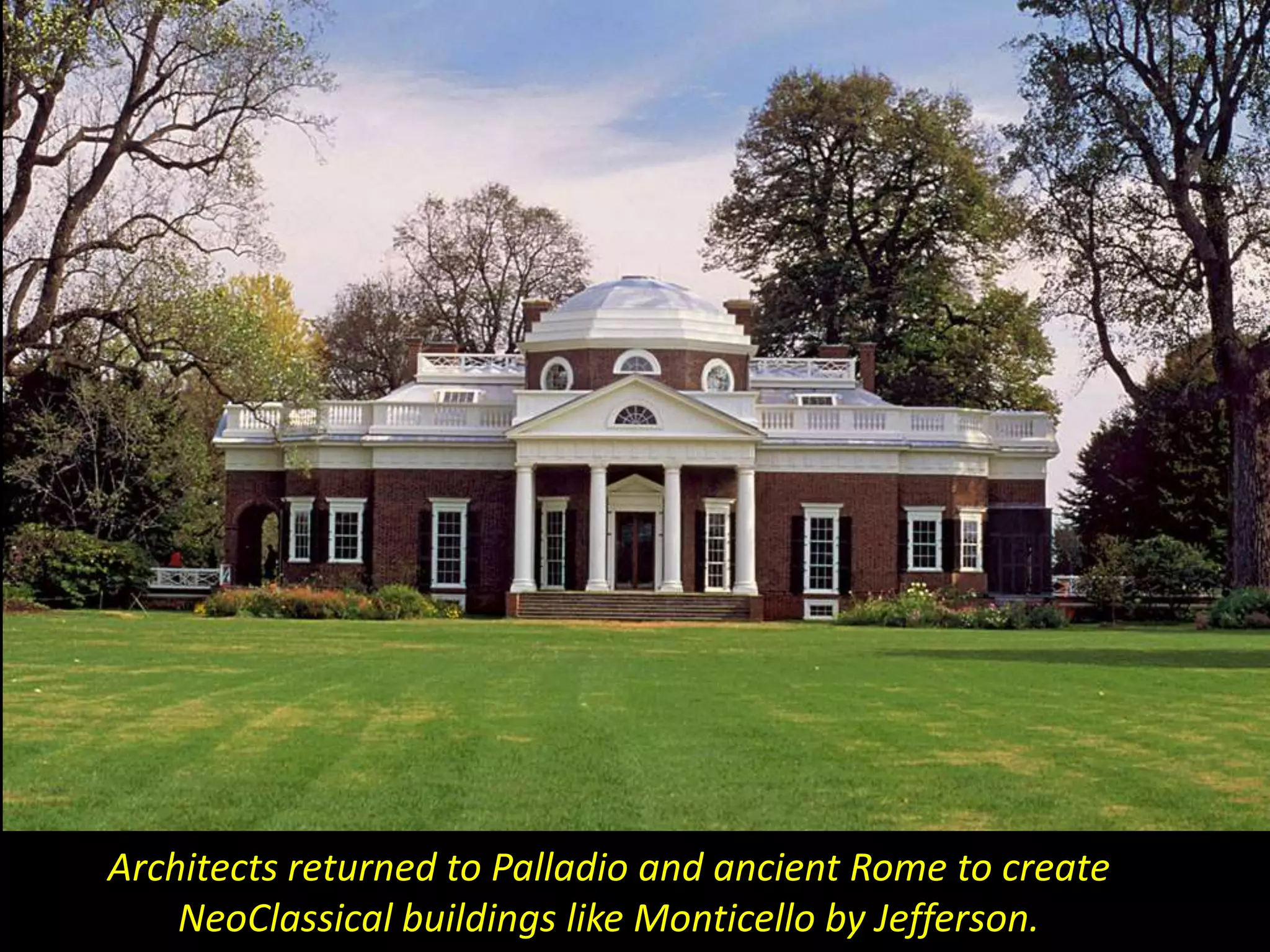
Architects returned to Palladio and ancient Rome to create
    NeoClassical buildings like Monticello by Jefferson.
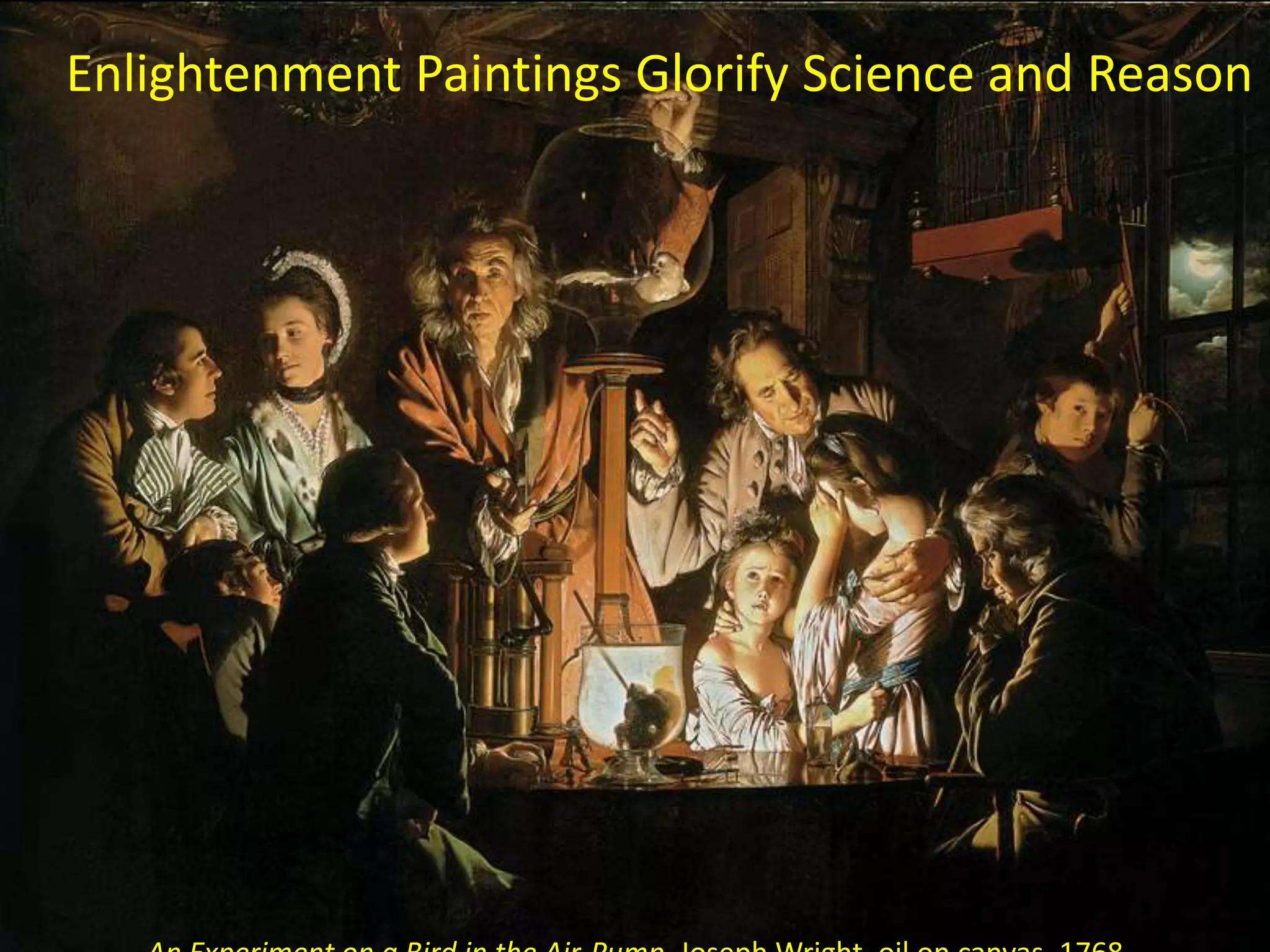
Enlightenment Paintings Glorify Science and Reason
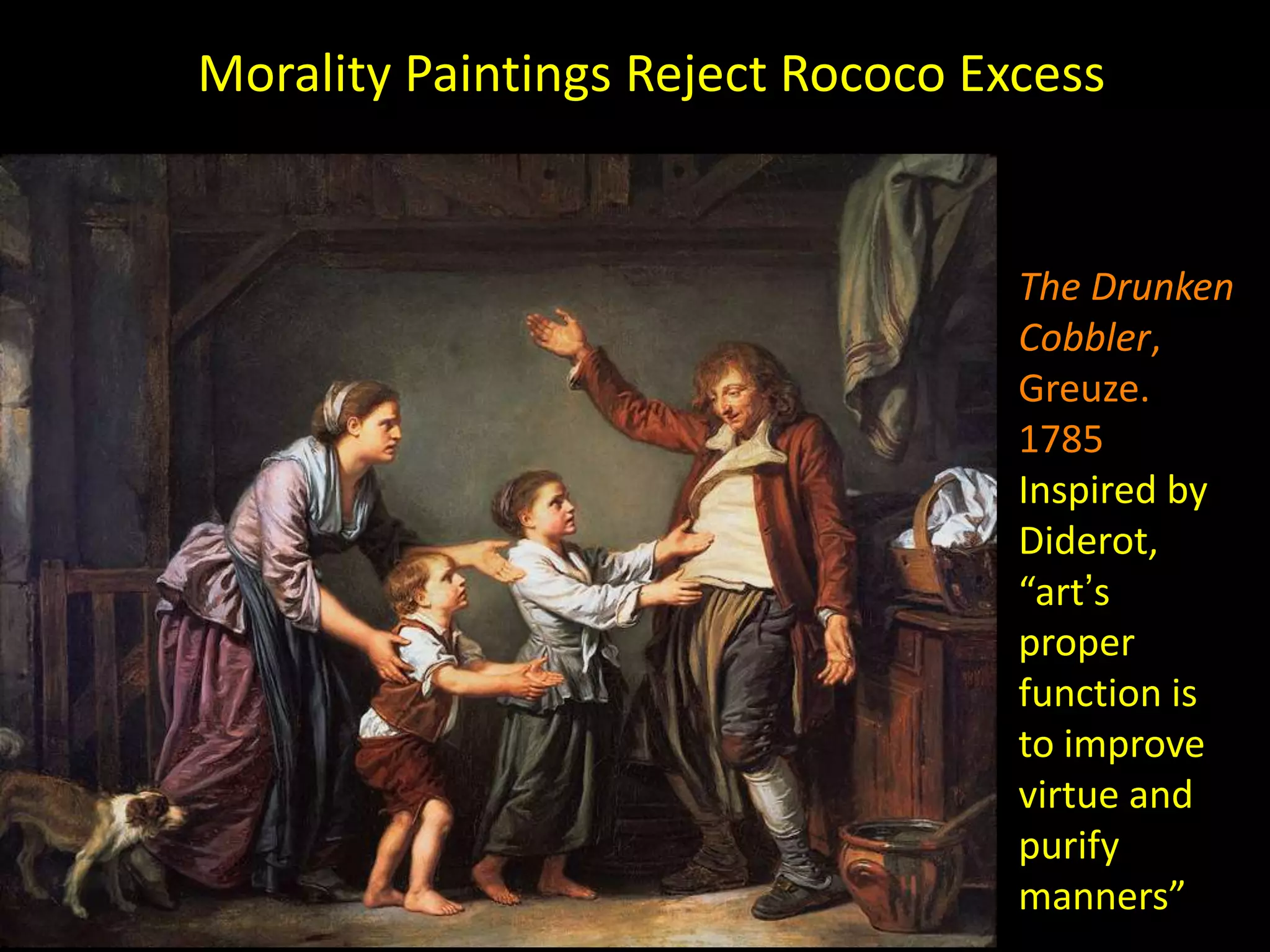
Morality Paintings Reject Rococo Excess


                                   The Drunken
                                   Cobbler,
                                   Greuze.
                                   1785
                                   Inspired by
                                   Diderot,
                                   “art’s
                                   proper
                                   function is
                                   to improve
                                   virtue and
                                   purify
                                   manners”
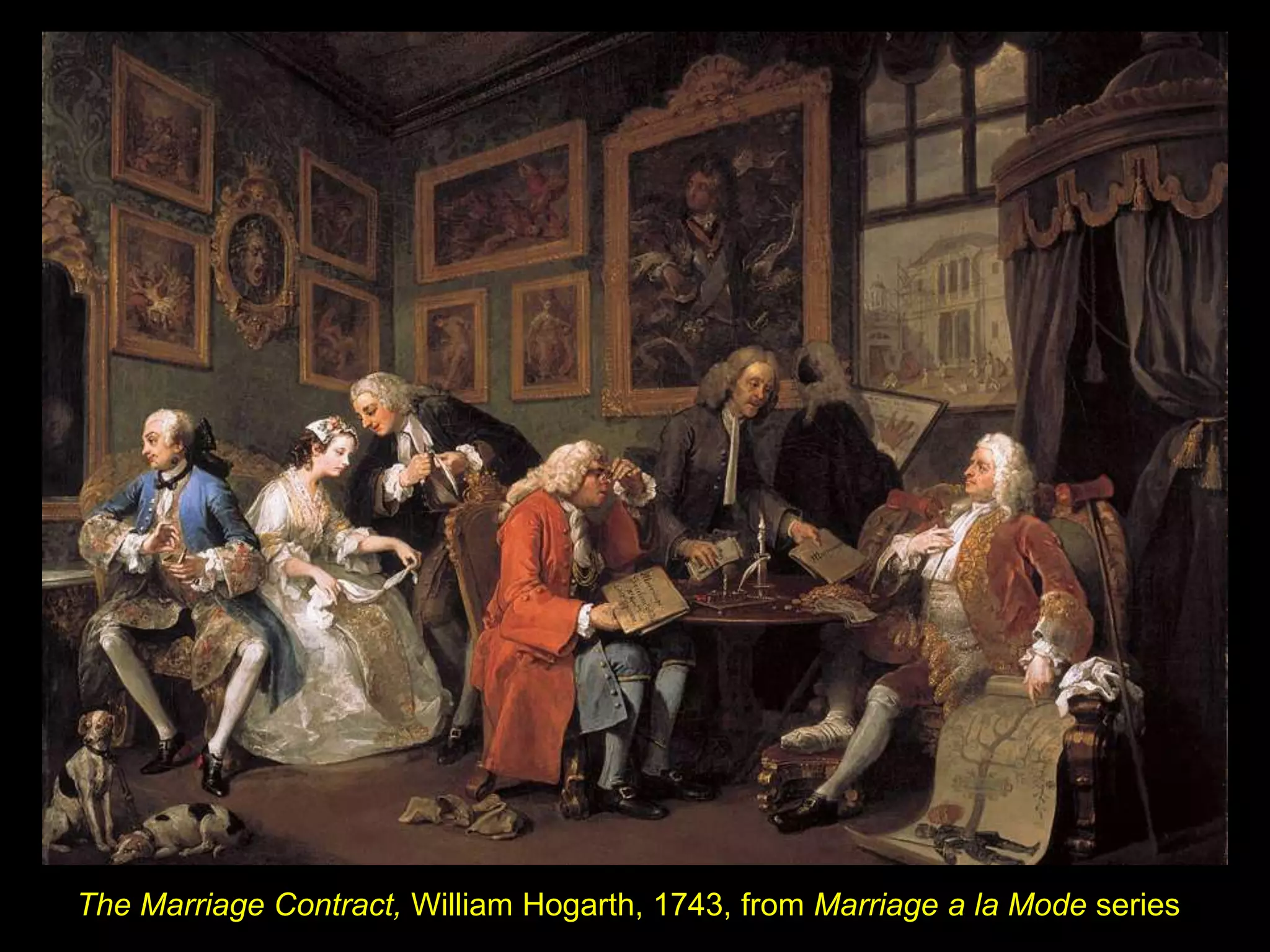
The Marriage Contract, William Hogarth, 1743, from Marriage a la Mode series
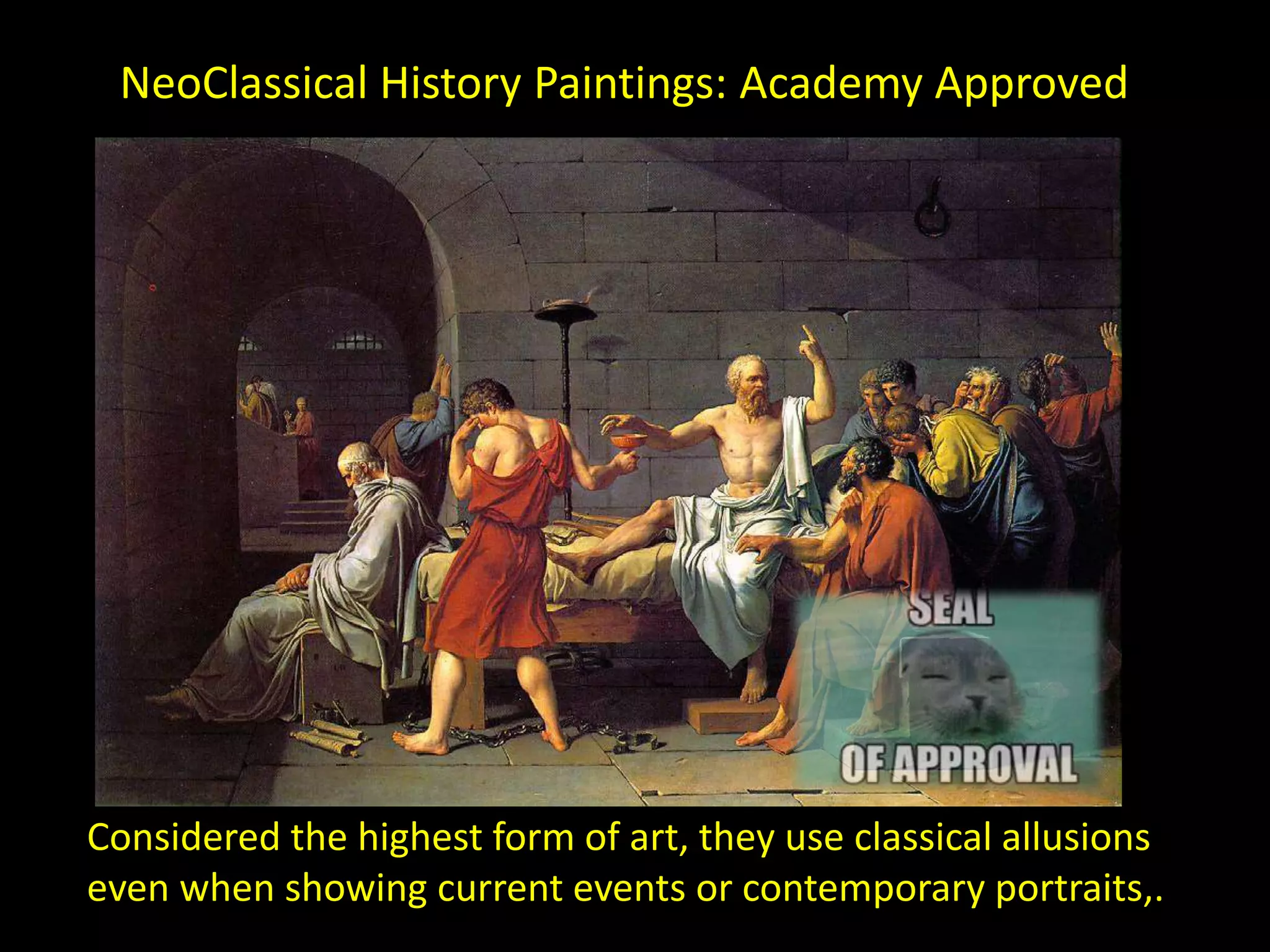
NeoClassical History Paintings: Academy Approved


Considered the highest form of art, they use classical allusions
even when showing current events or contemporary portraits,.
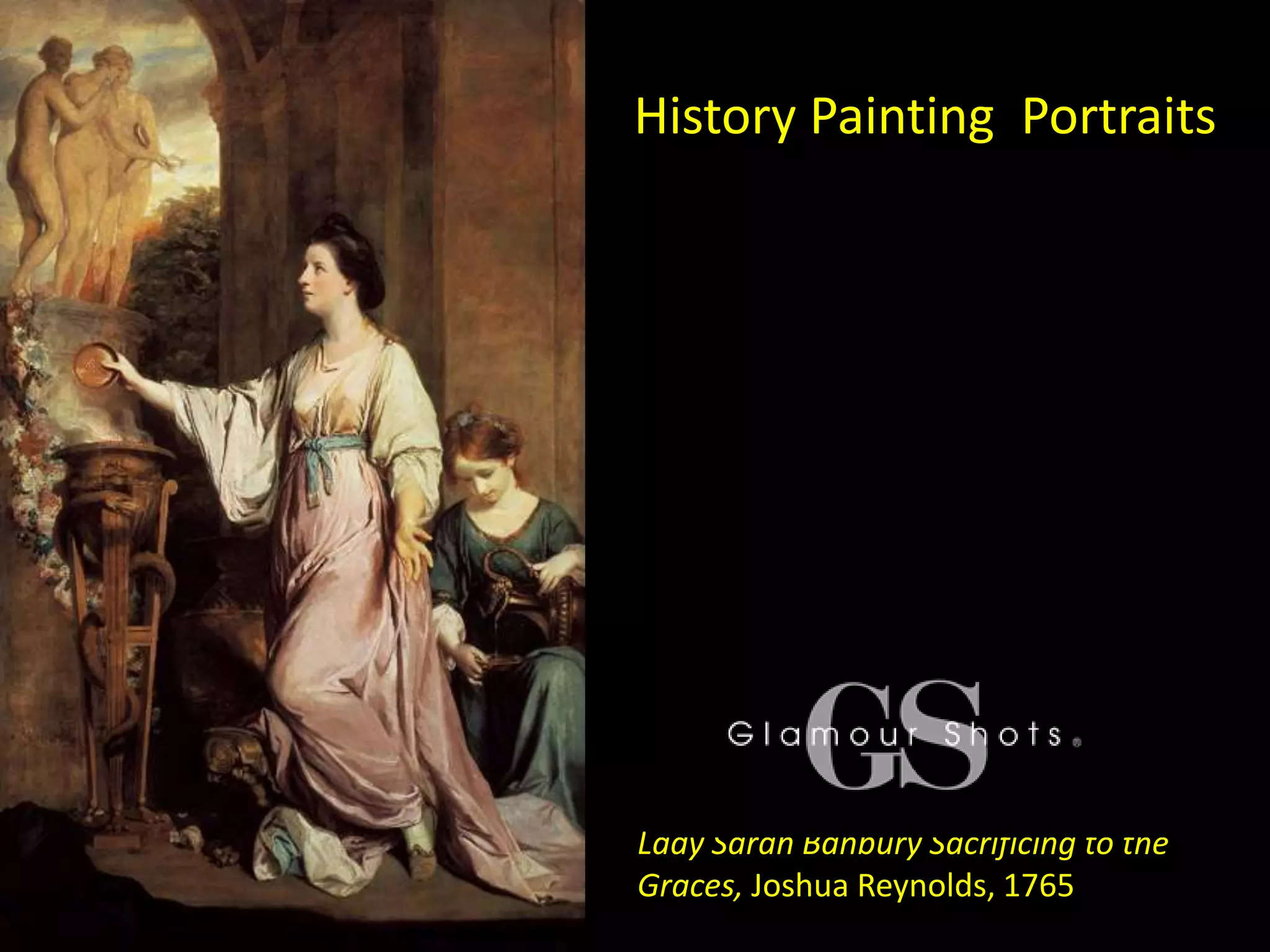
History Painting Portraits


Lady Sarah Banbury Sacrificing to the
Graces, Joshua Reynolds, 1765
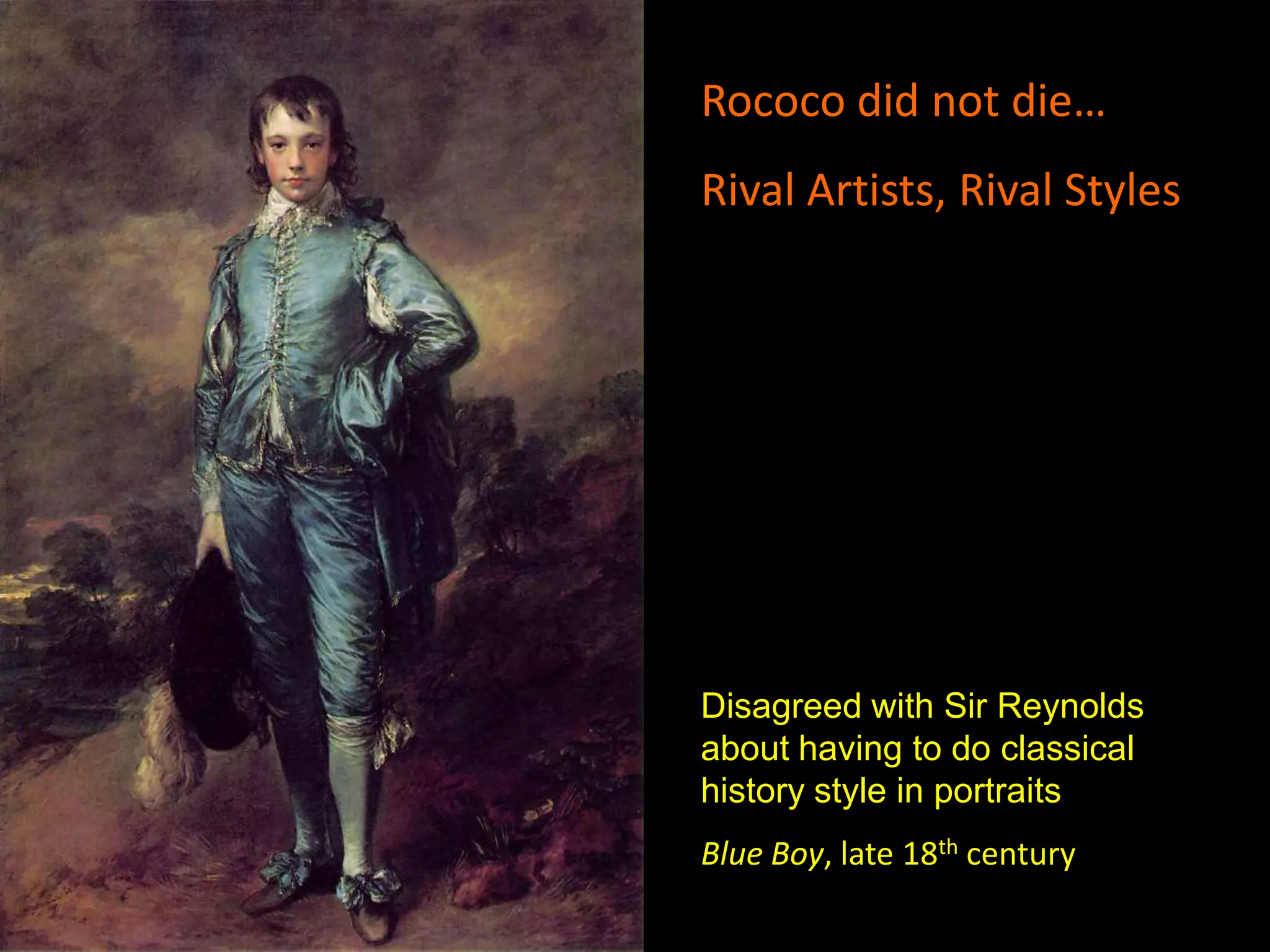
Rococo did not die…
Rival Artists, Rival Styles


Disagreed with Sir Reynolds
about having to do classical
history style in portraits
Blue Boy, late 18th century

Rococoandreasonoverview

  • 1.
    18th Century : Rococo to Roman Revival Rococo and The Enlightenment The Reader, Fragonard Am I Not a Man and a Brother?, Wedgwood
  • 2.
    Early 18th CenturyRococo Architecture • Shift of power after Louis XIV died • Emerging middle class • Paris townhouses (Rococo style hôtels) • Style spread to European painting and sculpture Salon de la Princesse, Hôtel de Soubise , 1732
  • 3.
    Rococo Architecture: Moreis MORE Dynamic and moving spatial environment No empty spaces Unified art & architecture Imperial Hall, Wurzburg, Balthasar Neumann with Fresco by Tiepolo
  • 4.
    Rococo Painting: Elegantparties? • Watteau - fête galante paintings. • Refined, fanciful, and often playful style • Pastel colors, dainty figures, light hearted
  • 5.
    Playful Rococo Paintings ConceptArt for Tangled, The Swing, Fragonard, 1766 Rapunzel, 2006
  • 6.
    Royal Academies werethe main source of training and obtaining wealthy patrons.
  • 7.
    Women Artists: AFoot in the Academy Doors Charles Sackville, 2nd Duke of Dorset, 1730, Rosalba Marie Antoinette with Her Children, Elisabeth Vigée-Lebrun, Carriera, pastel on paper 1787
  • 8.
    Self-Portrait with Two Pupils,1785 Adélaïde Labille-Guiard
  • 9.
    Mid-18th Century: TheAge of Reason And of Roman style… George Washington, 1788, Jean-Antoine Houdon
  • 10.
    NeoClassic sculptors revived erotic Roman mythsand style. Cupid and Psyche, Antonio Canova, 1787.
  • 11.
    Architects returned toPalladio and ancient Rome to create NeoClassical buildings like Monticello by Jefferson.
  • 12.
  • 13.
    Morality Paintings RejectRococo Excess The Drunken Cobbler, Greuze. 1785 Inspired by Diderot, “art’s proper function is to improve virtue and purify manners”
  • 14.
    The Marriage Contract,William Hogarth, 1743, from Marriage a la Mode series
  • 15.
    NeoClassical History Paintings:Academy Approved Considered the highest form of art, they use classical allusions even when showing current events or contemporary portraits,.
  • 16.
    History Painting Portraits LadySarah Banbury Sacrificing to the Graces, Joshua Reynolds, 1765
  • 17.
    Rococo did notdie… Rival Artists, Rival Styles Disagreed with Sir Reynolds about having to do classical history style in portraits Blue Boy, late 18th century

Editor's Notes

  • #2 Hello. Let’s take a look at a time of drastic change, the 18th century in Europe and the New World. Art and architecture reflected and mediated these changes in philosophy, politics, and even fashion. The YOLO values of the pampered aristocracy gave way to revolts against the Empires of France and Great Britain. The scientific advances of the 17th century, laid the groundwork for the Industrial Revolution. And the philosophy of Rationalism reduced the role of the church, even as the middle class grew stronger.
  • #3 In the French royal court, Louis XIV died and some power began to shift to the emerging middle class. The Sun King ran a very stuffy and boring court, so the upper class was glad to have a more relaxed approach to enjoying their lives. The Baroque interest in royal palaces shifted to Paris style hotels, or townhouses, which build on the elaborate Baroque style.
  • #5 In painting, the artworks have lovely pastel colors, delicate forms, and shimmering fabrics. The subjects are light hearted, like romance or the rich enjoying a beautiful picnic, as seen in the Pilgrimage to Cythera by Watteau.
  • #6 Artists like Fragonard had upper class women as patrons, for example, Mme Du Barry, the mistress of Louis XV. Fragonard’s beautiful color palette and brushstrokes inspired Disney animators in make the movie Tangled. In The Swing, we see the beautiful young lady enjoying a swing in the garden, and giving the young man in the bushes, a little peek up her skirt.
  • #10 By the middle 1700s, Enlightenment philosophers like Diderot, John Locke, and Jefferson were promoting life, liberty, and the pursuit of happiness. This philosophy rejected royal and aristocratic authority, which eventually led to revolutions in America and France. At the same time, the ruins of the Roman town of Pompeii were discovered, which led to a revival of the classical Greek and Roman styles in art and ladies’ fashions.
  • #16 The Salons and Academies ruled that History Paintings were the highest form of art, and artists such as David made this a lasting trend. Even portraits used classical allusions or classical dress.