Art Nouveau 
Cabrera 
Patrimonio 
Laperal 
Naoe 
Reyes, C 
Kaluag
Art Nouveau 
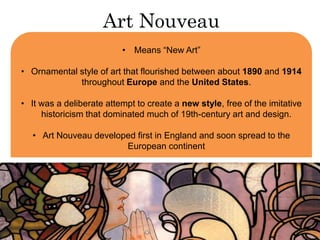
• Means “New Art” 
• Ornamental style of art that flourished between about 1890 and 1914 
throughout Europe and the United States. 
• It was a deliberate attempt to create a new style, free of the imitative 
historicism that dominated much of 19th-century art and design. 
• Art Nouveau developed first in England and soon spread to the 
European continent
Other names of Art 
Nouveau 
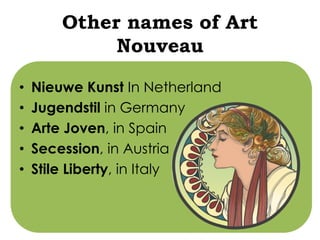
• Nieuwe Kunst In Netherland 
• Jugendstil in Germany 
• Arte Joven, in Spain 
• Secession, in Austria 
• Stile Liberty, in Italy
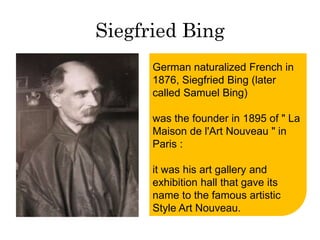
Siegfried Bing 
German naturalized French in 
1876, Siegfried Bing (later 
called Samuel Bing) 
was the founder in 1895 of " La 
Maison de l'Art Nouveau " in 
Paris : 
it was his art gallery and 
exhibition hall that gave its 
name to the famous artistic 
Style Art Nouveau.
• Art Nouveau was aimed at modernizing design, 
seeking to escape the eclectic historical styles that 
had previously been popular. 
• The movement was committed to abolishing the 
traditional hierarchy of the arts, which viewed so-called 
liberal arts, such as painting and 
sculpture, as superior to craft-based decorative 
arts. 
• The practitioners of Art Nouveau sought to revive 
good workmanship, raise the status of craft, and 
produce genuinely modern design.
Inspirations 
Arts and Crafts 
Movement 
Japanese 
Art 
• Led by William Morris 
• reaction against the 
cluttered designs and 
compositions of Victorian-era 
decorative art 
• Handcraftsmanship 
• Highly expressive 
paintings of post 
impressionist 
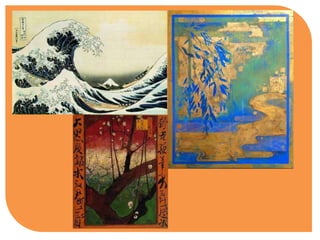
• the flat perspective 
and strong colors 
of Japanese wood 
block prints 
• (Olive green, 
carnation pink and 
periwinkle blue) 
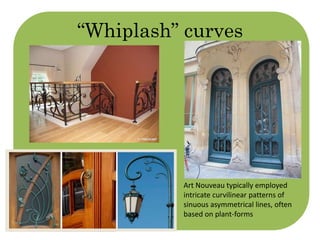
• “Whiplash” curves 
were derived
“Whiplash” curves 
Art Nouveau typically employed 
intricate curvilinear patterns of 
sinuous asymmetrical lines, often 
based on plant-forms
Other Influences and prominent 
features: 
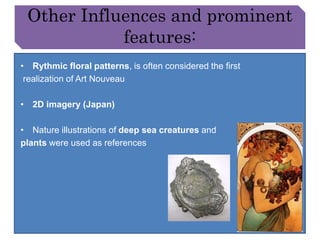
• Rythmic floral patterns, is often considered the first 
realization of Art Nouveau 
• 2D imagery (Japan) 
• Nature illustrations of deep sea creatures and 
plants were used as references
Characteristics 
• Moved away from imitation of real subjects and moved 
towards flowing and twisting lines of nature 
• Inspired by the lines and shapes of nature 
• united flowing, natural forms with more angular contours 
• Art Nouveau designers also believed that all the arts should 
work in harmony to create a "total work of art“ 
• Art Nouveau was a short-lived movement whose brief 
incandescence was a precursor of modernism, which 
emphasized function over form and the elimination of 
superfluous ornament.
Art Nouveau embraced all forms of art and 
design: 
• architecture 
• furniture 
• glassware 
• graphic design 
• jewelry 
• painting 
• pottery 
• metalwork 
• textile
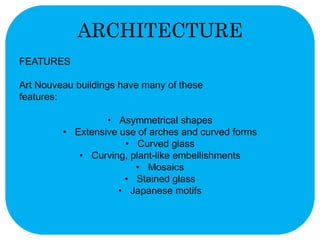
ARCHITECTURE 
FEATURES 
Art Nouveau buildings have many of these 
features: 
• Asymmetrical shapes 
• Extensive use of arches and curved forms 
• Curved glass 
• Curving, plant-like embellishments 
• Mosaics 
• Stained glass 
• Japanese motifs
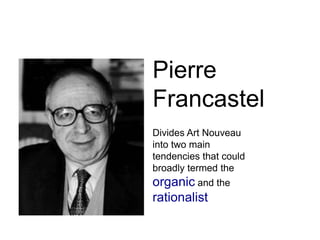
Pierre 
Francastel 
Divides Art Nouveau 
into two main 
tendencies that could 
broadly termed the 
organic and the 
rationalist
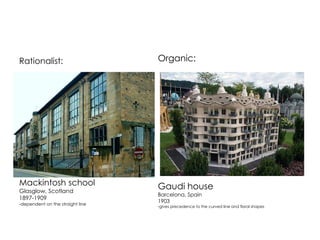
Rationalist: 
Mackintosh school 
Glasglow, Scotland 
1897-1909 
-dependent on the straight line 
Organic: 
Gaudi house 
Barcelona, Spain 
1903 
-gives precedence to the curved line and floral shapes
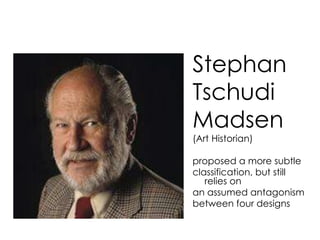
Stephan 
Tschudi 
Madsen 
(Art Historian) 
proposed a more subtle 
classification, but still 
relies on 
an assumed antagonism 
between four designs
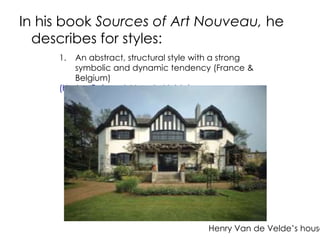
In his book Sources of Art Nouveau, he 
describes for styles: 
1. An abstract, structural style with a strong 
symbolic and dynamic tendency (France & 
Belgium) 
(Horta, Guimard, Van de Velde) 
Henry Van de Velde’s house
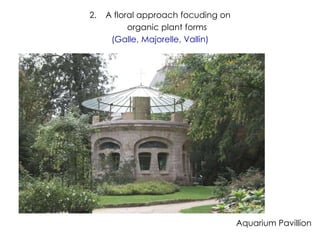
2. A floral approach focuding on 
organic plant forms 
(Galle, Majorelle, Vallin) 
Aquarium Pavillion
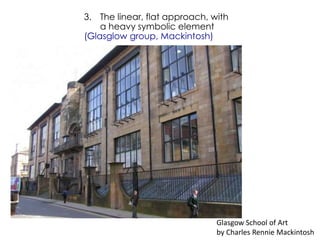
3. The linear, flat approach, with 
a heavy symbolic element 
(Glasglow group, Mackintosh) 
Glasgow School of Art 
by Charles Rennie Mackintosh
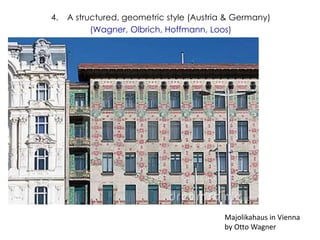
4. A structured, geometric style (Austria & Germany) 
(Wagner, Olbrich, Hoffmann, Loos) 
Majolikahaus in Vienna 
by Otto Wagner
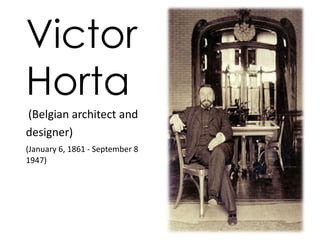
Victor 
Horta 
(Belgian architect and 
designer) 
(January 6, 1861 - September 8 
1947)
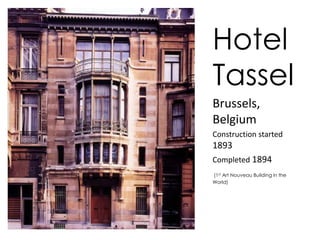
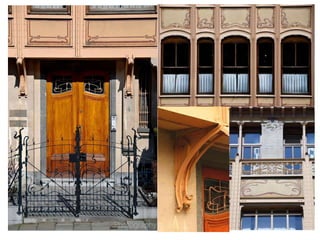
Hotel 
Tassel 
Brussels, 
Belgium 
Construction started 
1893 
Completed 1894 
(1st Art Nouveau Building in the 
World)
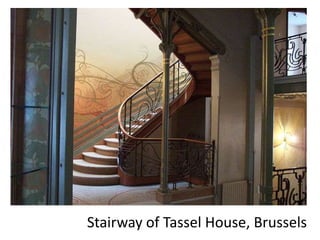
Stairway of Tassel House, Brussels
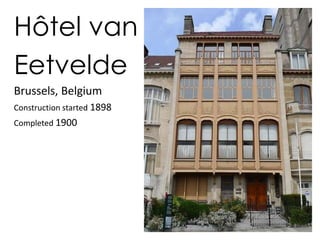
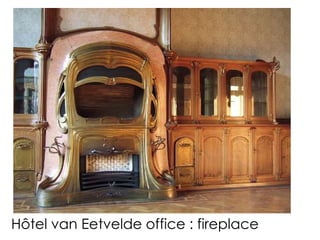
Hôtel van 
Eetvelde 
Brussels, Belgium 
Construction started 1898 
Completed 1900
Hôtel van Eetvelde office : fireplace
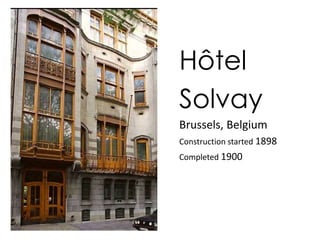
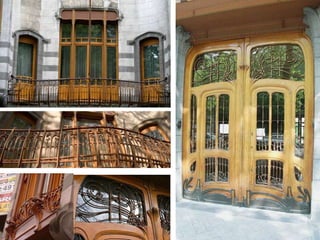
Hôtel 
Solvay 
Brussels, Belgium 
Construction started 1898 
Completed 1900
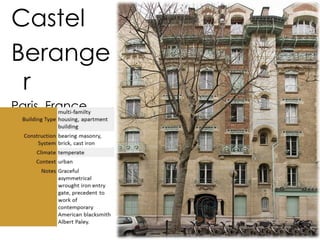
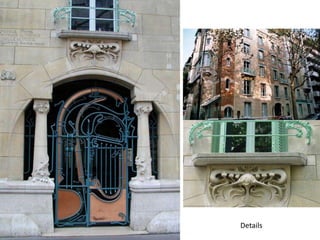
Castel 
Berange 
r 
Paris, France 
1890 circa
Details
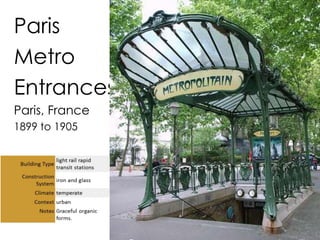
Paris 
Metro 
Entrances 
Paris, France 
1899 to 1905
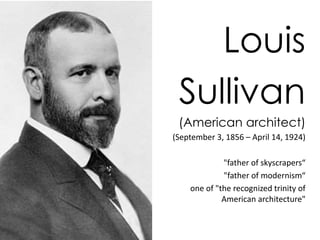
Louis 
Sullivan 
(American architect) 
(September 3, 1856 – April 14, 1924) 
"father of skyscrapers“ 
"father of modernism“ 
one of "the recognized trinity of 
American architecture"
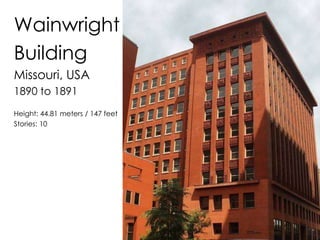
Wainwright 
Building 
Missouri, USA 
1890 to 1891 
Height: 44.81 meters / 147 feet 
Stories: 10
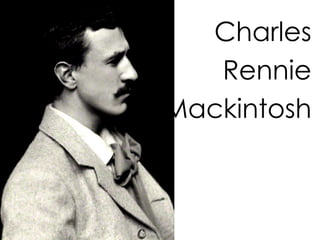
Charles 
Rennie 
Mackintosh
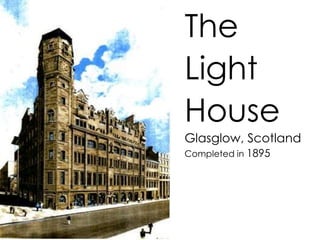
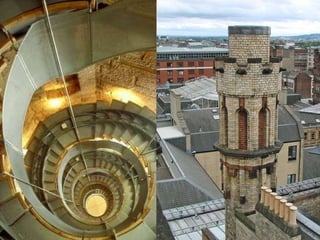
The 
Light 
House 
Glasglow, Scotland 
Completed in 1895
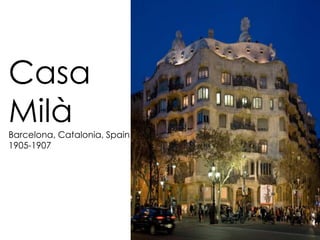
Casa 
Milà 
Barcelona, Catalonia, Spain 
1905-1907
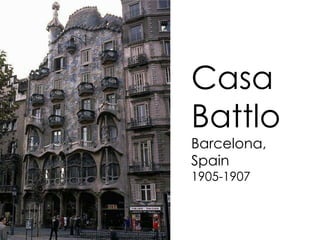
Casa 
Battlo 
Barcelona, 
Spain 
1905-1907
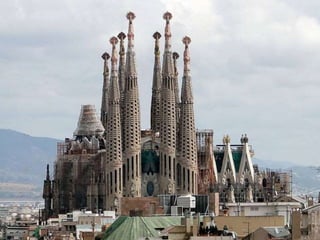
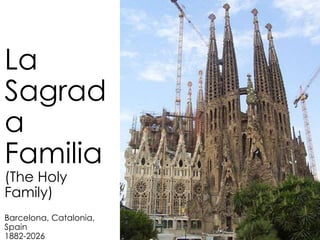
La 
Sagrad 
a 
Familia 
(The Holy 
Family) 
Barcelona, Catalonia, 
Spain 
1882-2026
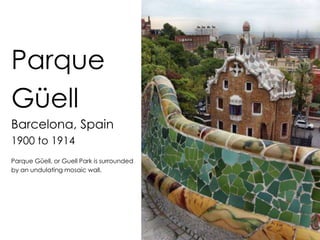
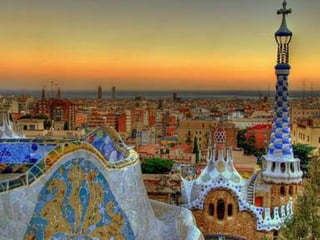
Parque 
Güell 
Barcelona, Spain 
1900 to 1914 
Parque Güell, or Guell Park is surrounded 
by an undulating mosaic wall.
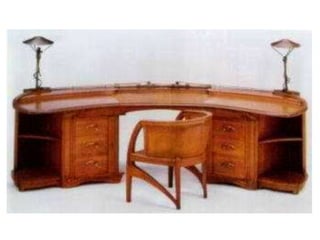
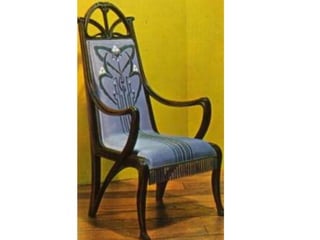
FURNITURE 
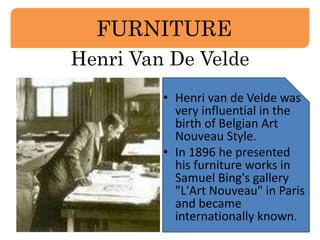
Henri Van De Velde 
• Henri van de Velde was 
very influential in the 
birth of Belgian Art 
Nouveau Style. 
• In 1896 he presented 
his furniture works in 
Samuel Bing's gallery 
"L'Art Nouveau" in Paris 
and became 
internationally known.
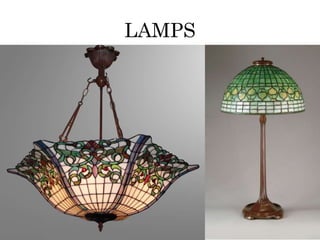
LAMPS
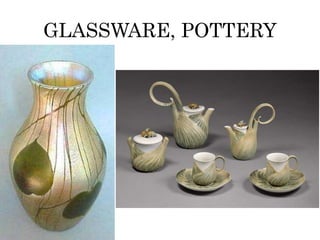
GLASSWARE, POTTERY
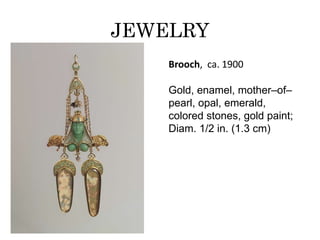
JEWELRY 
Brooch, ca. 1900 
Gold, enamel, mother–of– 
pearl, opal, emerald, 
colored stones, gold paint; 
Diam. 1/2 in. (1.3 cm)
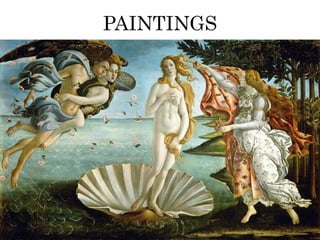
PAINTINGS
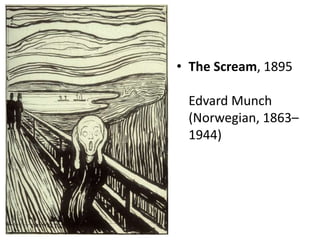
• The Scream, 1895 
Edvard Munch 
(Norwegian, 1863– 
1944)
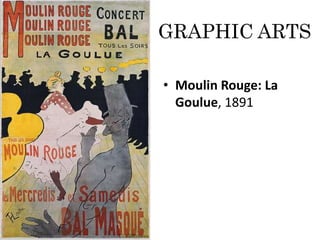
GRAPHIC ARTS 
• Moulin Rouge: La 
Goulue, 1891
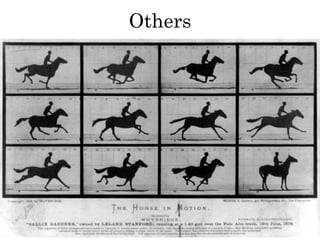
Others
Fall of Art Nouveau & Birth of 
Art Deco 
• When Art Nouveau fell out of fashion in the 
1920s and 1930s, it was replaced by 
the clean, simple geometries of Art 
Deco. 
• The extravagant curves of Art Nouveau 
were seen as old-fashioned and viewed 
with contempt.
• Many Art Nouveau products were put 
away, spurned, or destroyed. 
• Rooms once decorated in what had 
been the height of fashion were 
redecorated to conform to the 
latest taste.
• http://www.metmuseum.org/toah/hd/artn/hd_artn.ht 
m 
• http://www.britannica.com/EBchecked/topic/36571/Ar 
t-Nouveau 
• http://en.wikipedia.org/wiki/Art_Nouveau 
• http://www.nga.gov/feature/nouveau/exhibit_intro.sh 
tm 
• http://www.theartstory.org/movement-art-nouveau. 
htm 
• http://www.metmuseum.org/toah/hd/artn/hd_artn.ht 
m

Art nouveau

  • 1.
    Art Nouveau Cabrera Patrimonio Laperal Naoe Reyes, C Kaluag
  • 2.
    Art Nouveau •Means “New Art” • Ornamental style of art that flourished between about 1890 and 1914 throughout Europe and the United States. • It was a deliberate attempt to create a new style, free of the imitative historicism that dominated much of 19th-century art and design. • Art Nouveau developed first in England and soon spread to the European continent
  • 3.
    Other names ofArt Nouveau • Nieuwe Kunst In Netherland • Jugendstil in Germany • Arte Joven, in Spain • Secession, in Austria • Stile Liberty, in Italy
  • 4.
    Siegfried Bing Germannaturalized French in 1876, Siegfried Bing (later called Samuel Bing) was the founder in 1895 of " La Maison de l'Art Nouveau " in Paris : it was his art gallery and exhibition hall that gave its name to the famous artistic Style Art Nouveau.
  • 5.
    • Art Nouveauwas aimed at modernizing design, seeking to escape the eclectic historical styles that had previously been popular. • The movement was committed to abolishing the traditional hierarchy of the arts, which viewed so-called liberal arts, such as painting and sculpture, as superior to craft-based decorative arts. • The practitioners of Art Nouveau sought to revive good workmanship, raise the status of craft, and produce genuinely modern design.
  • 6.
    Inspirations Arts andCrafts Movement Japanese Art • Led by William Morris • reaction against the cluttered designs and compositions of Victorian-era decorative art • Handcraftsmanship • Highly expressive paintings of post impressionist • the flat perspective and strong colors of Japanese wood block prints • (Olive green, carnation pink and periwinkle blue) • “Whiplash” curves were derived
  • 8.
    “Whiplash” curves ArtNouveau typically employed intricate curvilinear patterns of sinuous asymmetrical lines, often based on plant-forms
  • 9.
    Other Influences andprominent features: • Rythmic floral patterns, is often considered the first realization of Art Nouveau • 2D imagery (Japan) • Nature illustrations of deep sea creatures and plants were used as references
  • 10.
    Characteristics • Movedaway from imitation of real subjects and moved towards flowing and twisting lines of nature • Inspired by the lines and shapes of nature • united flowing, natural forms with more angular contours • Art Nouveau designers also believed that all the arts should work in harmony to create a "total work of art“ • Art Nouveau was a short-lived movement whose brief incandescence was a precursor of modernism, which emphasized function over form and the elimination of superfluous ornament.
  • 11.
    Art Nouveau embracedall forms of art and design: • architecture • furniture • glassware • graphic design • jewelry • painting • pottery • metalwork • textile
  • 12.
    ARCHITECTURE FEATURES ArtNouveau buildings have many of these features: • Asymmetrical shapes • Extensive use of arches and curved forms • Curved glass • Curving, plant-like embellishments • Mosaics • Stained glass • Japanese motifs
  • 13.
    Pierre Francastel DividesArt Nouveau into two main tendencies that could broadly termed the organic and the rationalist
  • 14.
    Rationalist: Mackintosh school Glasglow, Scotland 1897-1909 -dependent on the straight line Organic: Gaudi house Barcelona, Spain 1903 -gives precedence to the curved line and floral shapes
  • 15.
    Stephan Tschudi Madsen (Art Historian) proposed a more subtle classification, but still relies on an assumed antagonism between four designs
  • 16.
    In his bookSources of Art Nouveau, he describes for styles: 1. An abstract, structural style with a strong symbolic and dynamic tendency (France & Belgium) (Horta, Guimard, Van de Velde) Henry Van de Velde’s house
  • 17.
    2. A floralapproach focuding on organic plant forms (Galle, Majorelle, Vallin) Aquarium Pavillion
  • 18.
    3. The linear,flat approach, with a heavy symbolic element (Glasglow group, Mackintosh) Glasgow School of Art by Charles Rennie Mackintosh
  • 19.
    4. A structured,geometric style (Austria & Germany) (Wagner, Olbrich, Hoffmann, Loos) Majolikahaus in Vienna by Otto Wagner
  • 20.
    Victor Horta (Belgianarchitect and designer) (January 6, 1861 - September 8 1947)
  • 21.
    Hotel Tassel Brussels, Belgium Construction started 1893 Completed 1894 (1st Art Nouveau Building in the World)
  • 22.
    Stairway of TasselHouse, Brussels
  • 23.
    Hôtel van Eetvelde Brussels, Belgium Construction started 1898 Completed 1900
  • 25.
    Hôtel van Eetveldeoffice : fireplace
  • 26.
    Hôtel Solvay Brussels,Belgium Construction started 1898 Completed 1900
  • 28.
    Castel Berange r Paris, France 1890 circa
  • 29.
  • 30.
    Paris Metro Entrances Paris, France 1899 to 1905
  • 31.
    Louis Sullivan (Americanarchitect) (September 3, 1856 – April 14, 1924) "father of skyscrapers“ "father of modernism“ one of "the recognized trinity of American architecture"
  • 32.
    Wainwright Building Missouri,USA 1890 to 1891 Height: 44.81 meters / 147 feet Stories: 10
  • 33.
  • 34.
    The Light House Glasglow, Scotland Completed in 1895
  • 36.
    Casa Milà Barcelona,Catalonia, Spain 1905-1907
  • 37.
    Casa Battlo Barcelona, Spain 1905-1907
  • 38.
    La Sagrad a Familia (The Holy Family) Barcelona, Catalonia, Spain 1882-2026
  • 40.
    Parque Güell Barcelona,Spain 1900 to 1914 Parque Güell, or Guell Park is surrounded by an undulating mosaic wall.
  • 42.
    FURNITURE Henri VanDe Velde • Henri van de Velde was very influential in the birth of Belgian Art Nouveau Style. • In 1896 he presented his furniture works in Samuel Bing's gallery "L'Art Nouveau" in Paris and became internationally known.
  • 45.
  • 46.
  • 47.
    JEWELRY Brooch, ca.1900 Gold, enamel, mother–of– pearl, opal, emerald, colored stones, gold paint; Diam. 1/2 in. (1.3 cm)
  • 48.
  • 50.
    • The Scream,1895 Edvard Munch (Norwegian, 1863– 1944)
  • 51.
    GRAPHIC ARTS •Moulin Rouge: La Goulue, 1891
  • 52.
  • 55.
    Fall of ArtNouveau & Birth of Art Deco • When Art Nouveau fell out of fashion in the 1920s and 1930s, it was replaced by the clean, simple geometries of Art Deco. • The extravagant curves of Art Nouveau were seen as old-fashioned and viewed with contempt.
  • 56.
    • Many ArtNouveau products were put away, spurned, or destroyed. • Rooms once decorated in what had been the height of fashion were redecorated to conform to the latest taste.
  • 57.
    • http://www.metmuseum.org/toah/hd/artn/hd_artn.ht m • http://www.britannica.com/EBchecked/topic/36571/Ar t-Nouveau • http://en.wikipedia.org/wiki/Art_Nouveau • http://www.nga.gov/feature/nouveau/exhibit_intro.sh tm • http://www.theartstory.org/movement-art-nouveau. htm • http://www.metmuseum.org/toah/hd/artn/hd_artn.ht m

Editor's Notes

  • #3 1st bullet – Definition 2nd – time na nagflourish and end 3rd – gusto nila mabago ung nakasanayang style ng art. 4th – other terms/ names ng Art nouveau
  • #6 (since napansin nila na masyadong ornamental ung mga design, gusto nilang iavoid ung mga frivolous decorations) Ecletic means - noting or pertaining to works of architecture, decoration, landscaping,etc., produced by a certain person or during a certain period, thatderive from a wide range of historic styles, the style in each instanceoften being chosen for its fancied appropriateness to local tradition,local geography, the purpose to be served, or the cultural backgroundof the client. (kaya ayaw nila sa mass production kasi poorly made ung mga products. mabilis nga gawin pero nawawala ung quality ng gawa) 1st – “RIPPLING” effect ung prominent sa art nila. Ung mga curvy, and parang splash ng water. parang tinuro ni ma’am cece 2nd – self explanatory 3rd – important mabanggit ung function over form
  • #7 Open Foreign relationship with japan Common characteristics ung colors
  • #11 Art Nouveau was a new art form, an original artistic and decorative movement inspired by the idea of "total art"