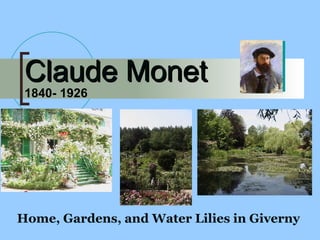
Claude Monet Home, Gardens, and Water Lilies in Giverny  1840- 1926
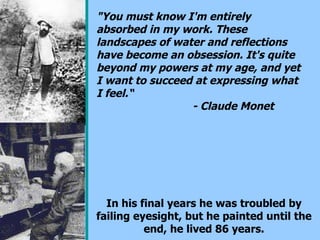
"You must know I'm entirely absorbed in my work. These landscapes of water and reflections have become an obsession. It's quite beyond my powers at my age, and yet I want to succeed at expressing what I feel.“ - Claude Monet   In his final years he was troubled by failing eyesight, but he painted until the end, he lived 86 years. ___________
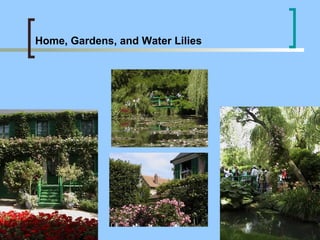
Home, Gardens, and Water Lilies
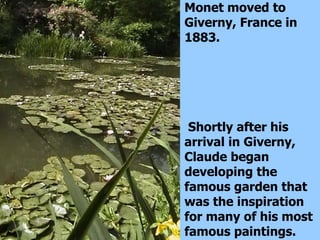
Monet moved to Giverny, France in 1883. Shortly after his arrival in Giverny, Claude began developing the famous garden that was the inspiration for many of his most famous paintings.
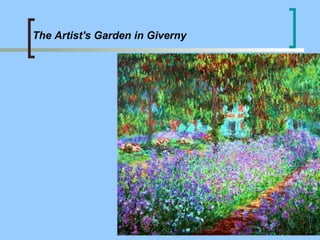
The Artist's Garden in Giverny
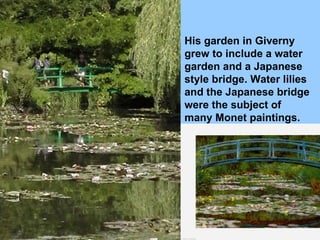
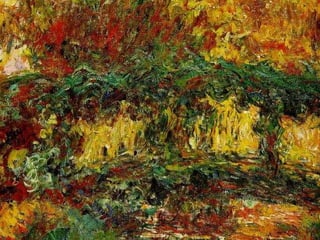
His garden in Giverny grew to include a water garden and a Japanese style bridge. Water lilies and the Japanese bridge were the subject of many Monet paintings.
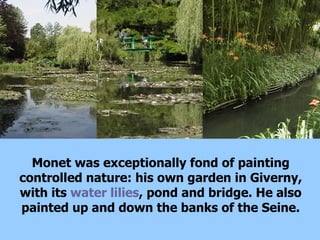
Monet was exceptionally fond of painting controlled nature: his own garden in Giverny, with its  water lilies , pond and bridge. He also painted up and down the banks of the Seine.
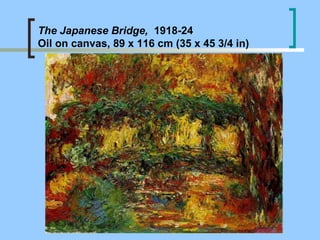
The Japanese Bridge,  1918-24  Oil on canvas, 89 x 116 cm (35 x 45 3/4 in)
 
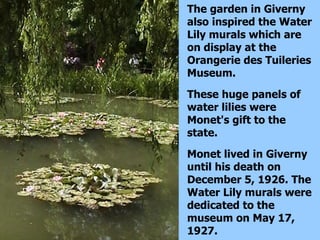
The garden in Giverny also inspired the Water Lily murals which are on display at the Orangerie des Tuileries Museum.  These huge panels of water lilies were Monet's gift to the state.  Monet lived in Giverny until his death on December 5, 1926. The Water Lily murals were dedicated to the museum on May 17, 1927.
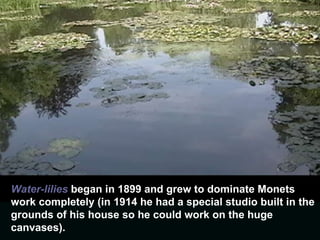
Water-lilies  began in 1899 and grew to dominate Monets work completely (in 1914 he had a special studio built in the grounds of his house so he could work on the huge canvases).
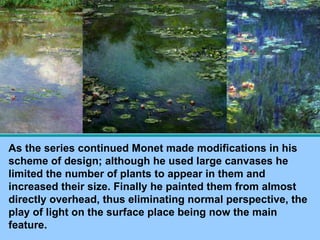
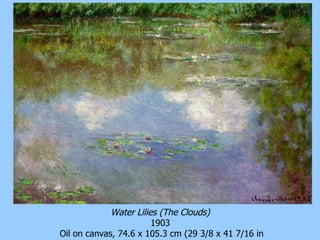
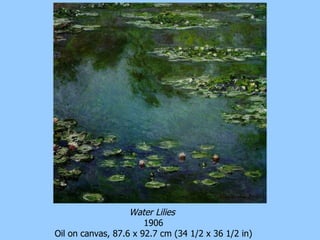
As the series continued Monet made modifications in his scheme of design; although he used large canvases he limited the number of plants to appear in them and increased their size. Finally he painted them from almost directly overhead, thus eliminating normal perspective, the play of light on the surface place being now the main feature. _______________
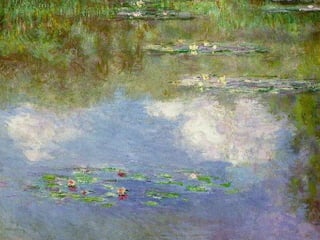
Water Lilies (The Clouds)   1903  Oil on canvas, 74.6 x 105.3 cm (29 3/8 x 41 7/16 in
 
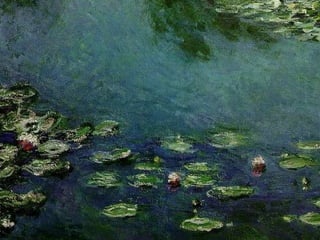
Water Lilies  1906 Oil on canvas, 87.6 x 92.7 cm (34 1/2 x 36 1/2 in)
 
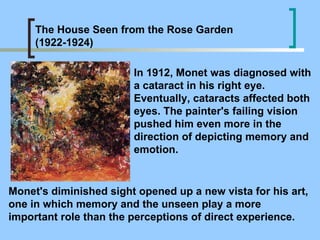
In 1912, Monet was diagnosed with a cataract in his right eye. Eventually, cataracts affected both eyes. The painter's failing vision pushed him even more in the direction of depicting memory and emotion.  The House Seen from the Rose Garden (1922-1924) Monet's diminished sight opened up a new vista for his art, one in which memory and the unseen play a more important role than the perceptions of direct experience.
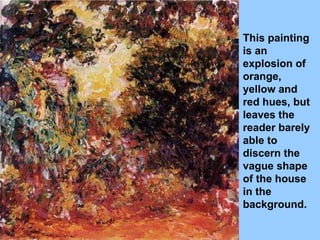
This painting is an explosion of orange, yellow and red hues, but leaves the reader barely able to discern the vague shape of the house in the background.
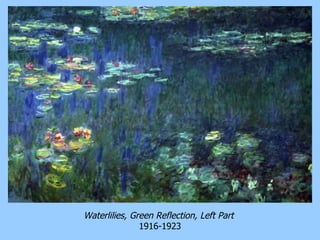
Waterlilies, Green Reflection, Left Part   1916-1923
 
Claude Monet Home, Gardens, and Water Lilies in ?? 1840- 19?? When was Monet born? When did he die? Where did Monet live? When did he begin painting Water Lilies? T/F Monet liked to work on large canvases? What affected Monet’s eyesight?
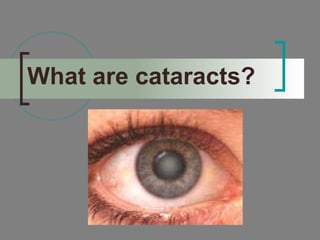
What are cataracts?
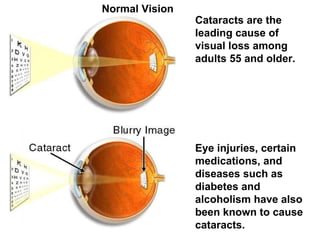
Normal Vision   Cataracts are the leading cause of visual loss among adults 55 and older.  Eye injuries, certain medications, and diseases such as diabetes and alcoholism have also been known to cause cataracts.
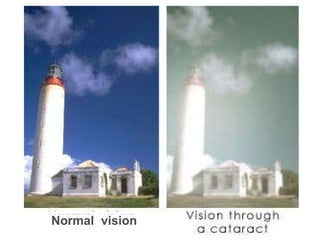
_____ _____ _____ _____ Normal  vision
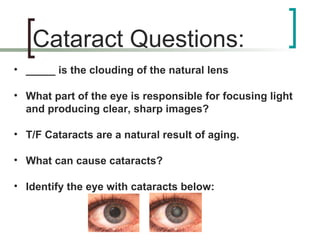
Cataract Questions: _____ is the clouding of the natural lens What part of the eye is responsible for focusing light and producing clear, sharp images? T/F Cataracts are a natural result of aging. What can cause cataracts? Identify the eye with cataracts below:

Monet's water lilies

  • 1.
    Claude Monet Home,Gardens, and Water Lilies in Giverny 1840- 1926
  • 2.
    "You must knowI'm entirely absorbed in my work. These landscapes of water and reflections have become an obsession. It's quite beyond my powers at my age, and yet I want to succeed at expressing what I feel.“ - Claude Monet In his final years he was troubled by failing eyesight, but he painted until the end, he lived 86 years. ___________
  • 3.
    Home, Gardens, andWater Lilies
  • 4.
    Monet moved toGiverny, France in 1883. Shortly after his arrival in Giverny, Claude began developing the famous garden that was the inspiration for many of his most famous paintings.
  • 5.
  • 6.
    His garden inGiverny grew to include a water garden and a Japanese style bridge. Water lilies and the Japanese bridge were the subject of many Monet paintings.
  • 7.
    Monet was exceptionallyfond of painting controlled nature: his own garden in Giverny, with its water lilies , pond and bridge. He also painted up and down the banks of the Seine.
  • 8.
    The Japanese Bridge, 1918-24 Oil on canvas, 89 x 116 cm (35 x 45 3/4 in)
  • 9.
  • 10.
    The garden inGiverny also inspired the Water Lily murals which are on display at the Orangerie des Tuileries Museum. These huge panels of water lilies were Monet's gift to the state. Monet lived in Giverny until his death on December 5, 1926. The Water Lily murals were dedicated to the museum on May 17, 1927.
  • 11.
    Water-lilies beganin 1899 and grew to dominate Monets work completely (in 1914 he had a special studio built in the grounds of his house so he could work on the huge canvases).
  • 12.
    As the seriescontinued Monet made modifications in his scheme of design; although he used large canvases he limited the number of plants to appear in them and increased their size. Finally he painted them from almost directly overhead, thus eliminating normal perspective, the play of light on the surface place being now the main feature. _______________
  • 13.
    Water Lilies (TheClouds) 1903 Oil on canvas, 74.6 x 105.3 cm (29 3/8 x 41 7/16 in
  • 14.
  • 15.
    Water Lilies 1906 Oil on canvas, 87.6 x 92.7 cm (34 1/2 x 36 1/2 in)
  • 16.
  • 17.
    In 1912, Monetwas diagnosed with a cataract in his right eye. Eventually, cataracts affected both eyes. The painter's failing vision pushed him even more in the direction of depicting memory and emotion. The House Seen from the Rose Garden (1922-1924) Monet's diminished sight opened up a new vista for his art, one in which memory and the unseen play a more important role than the perceptions of direct experience.
  • 18.
    This painting isan explosion of orange, yellow and red hues, but leaves the reader barely able to discern the vague shape of the house in the background.
  • 19.
    Waterlilies, Green Reflection,Left Part 1916-1923
  • 20.
  • 21.
    Claude Monet Home,Gardens, and Water Lilies in ?? 1840- 19?? When was Monet born? When did he die? Where did Monet live? When did he begin painting Water Lilies? T/F Monet liked to work on large canvases? What affected Monet’s eyesight?
  • 22.
  • 23.
    Normal Vision Cataracts are the leading cause of visual loss among adults 55 and older. Eye injuries, certain medications, and diseases such as diabetes and alcoholism have also been known to cause cataracts.
  • 24.
    _____ _____ __________ Normal vision
  • 25.
    Cataract Questions: _____is the clouding of the natural lens What part of the eye is responsible for focusing light and producing clear, sharp images? T/F Cataracts are a natural result of aging. What can cause cataracts? Identify the eye with cataracts below: