Raabta: Low-cost Video
Conferencing for the
Developing World
Zubair Nabi
zubair.nabi@cantab.net
Information Technology University, Pakistan*
MobiCom Workshop on
Lowest Cost Denominator Networking for Universal Access
30 September, 2013
* Now at IBM Research, Dublin
Raabta
●

Leverage existing analog cable TV networks to
provide video conferencing

●

Raspberry-Pi instances as end-hosts

●

Video conferencing application co-design
–

●

Multi-layered encoding and dynamic recovery

Simple text-free interface
Outline
●

Motivation

●

Background

●

Design Goals

●

Raabta

●

Beyond Raabta

●

Conclusion and Future Work
Motivation
●
●

●

●

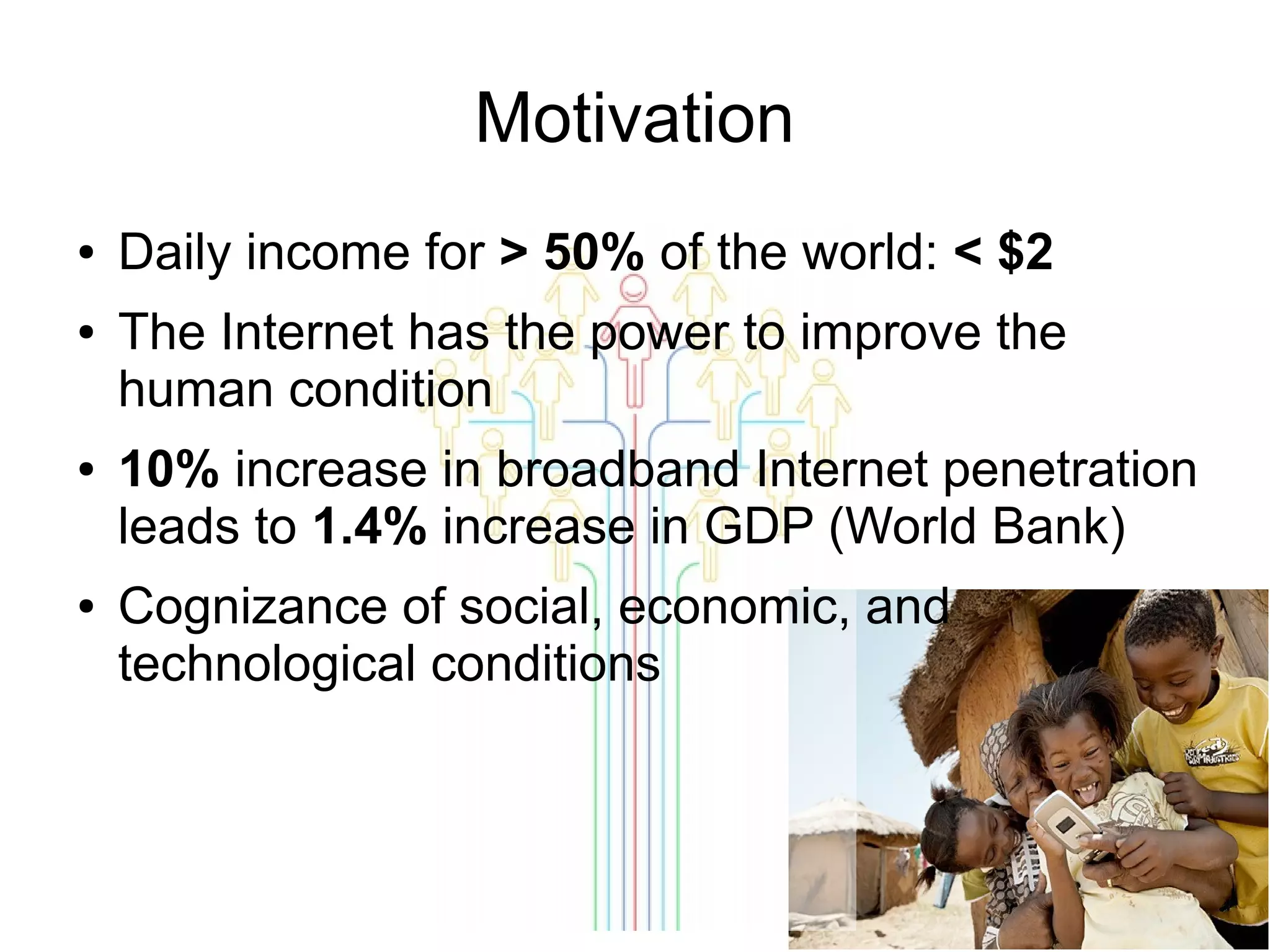
Daily income for > 50% of the world: < $2
The Internet has the power to improve the
human condition
10% increase in broadband Internet penetration
leads to 1.4% increase in GDP (World Bank)
Cognizance of social, economic, and
technological conditions
Proposed Solutions
●

Challenges:
–
–

Intermittent and bad power

–

Extreme weather conditions: dust, humidity, etc.

–

Frequent equipment failure

–

Lack of trained local workforce

–
●

Monetary and engineering costs

Rolling investment required

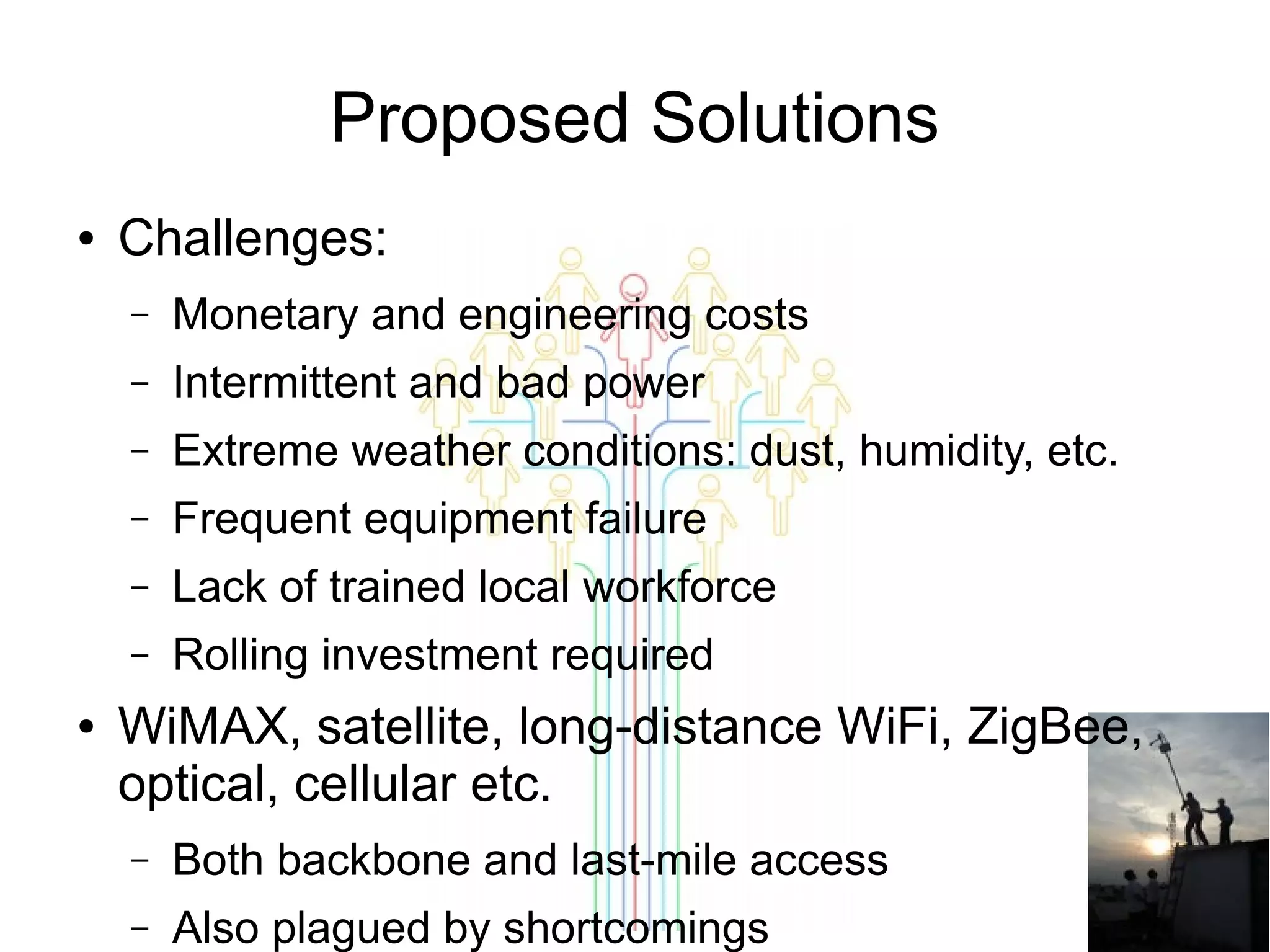
WiMAX, satellite, long-distance WiFi, ZigBee,
optical, cellular etc.
–

Both backbone and last-mile access

–

Also plagued by shortcomings
Observations
●

Internet access not an underpinning technology
–

●
●

Backbone access extremely expensive

Basic, community-wide communication required
Systems designed for the developing world illsuited due to fundamental differences, such as
low population density
Design Goals
●

Cost: as low as possible

●

Power: low power draw

●

Failure: norm rather than exception

●

User-interface: simple enough to be used by
low-literate people

●

Internet connectivity: not a requirement

●

Infrastructure: leverage existing

●

Operational sustainability: self-managing
Background: Analog Cable
Networks
●

Broadcast-based shared medium

●

Downstream traffic (Gbps): [4.9, 6.6]

●

Cable modem as MAC layer bridge

●

Link-layer protocol can be offloaded

●

At least 12 million people in rural areas in
Pakistan own a TV and 3.9 million have cable
connections (Gallup)
Background: Raspberry Pi
●
●

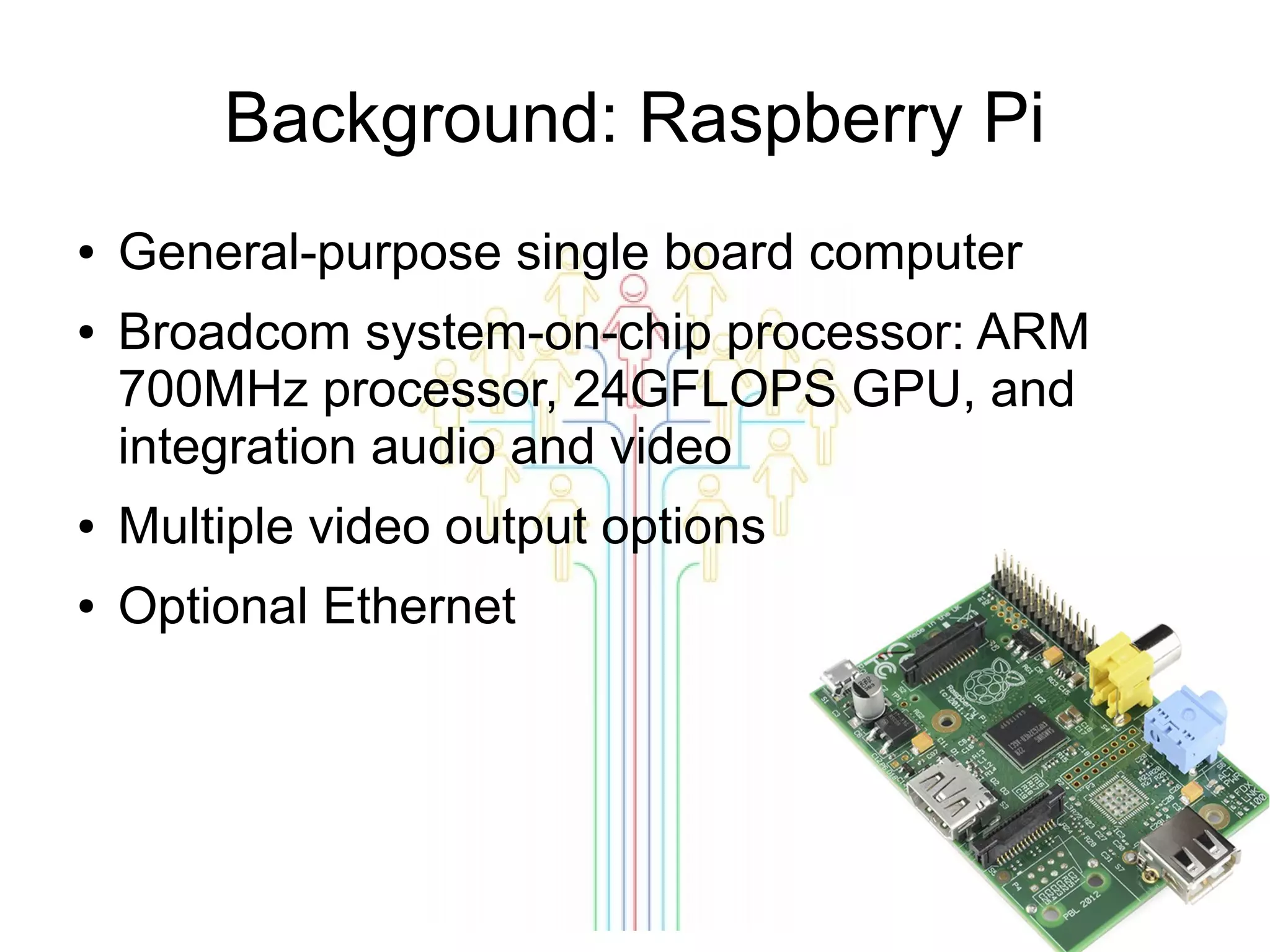
General-purpose single board computer
Broadcom system-on-chip processor: ARM
700MHz processor, 24GFLOPS GPU, and
integration audio and video

●

Multiple video output options

●

Optional Ethernet
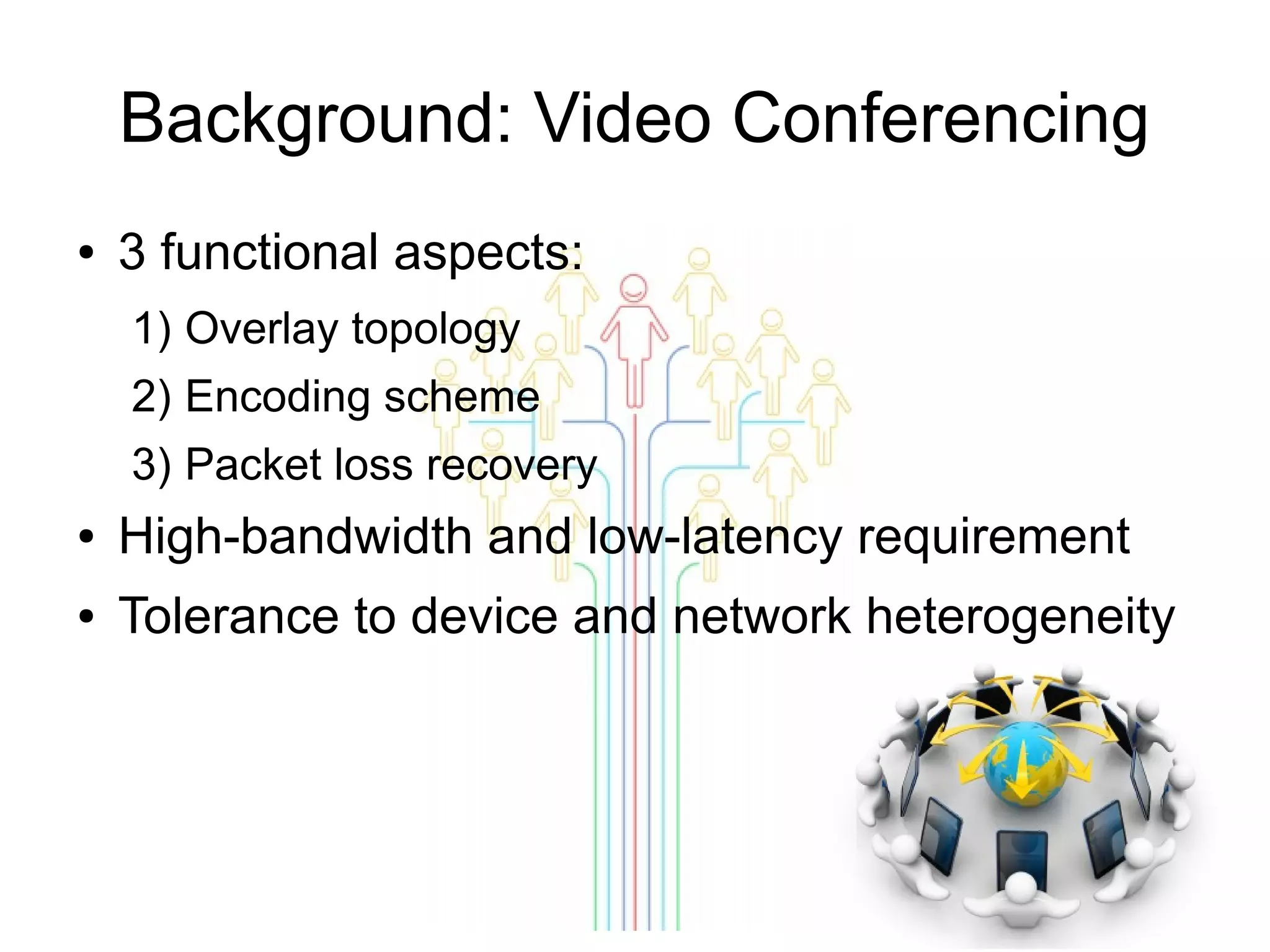
Background: Video Conferencing
●

3 functional aspects:
1) Overlay topology
2) Encoding scheme
3) Packet loss recovery

●

High-bandwidth and low-latency requirement

●

Tolerance to device and network heterogeneity
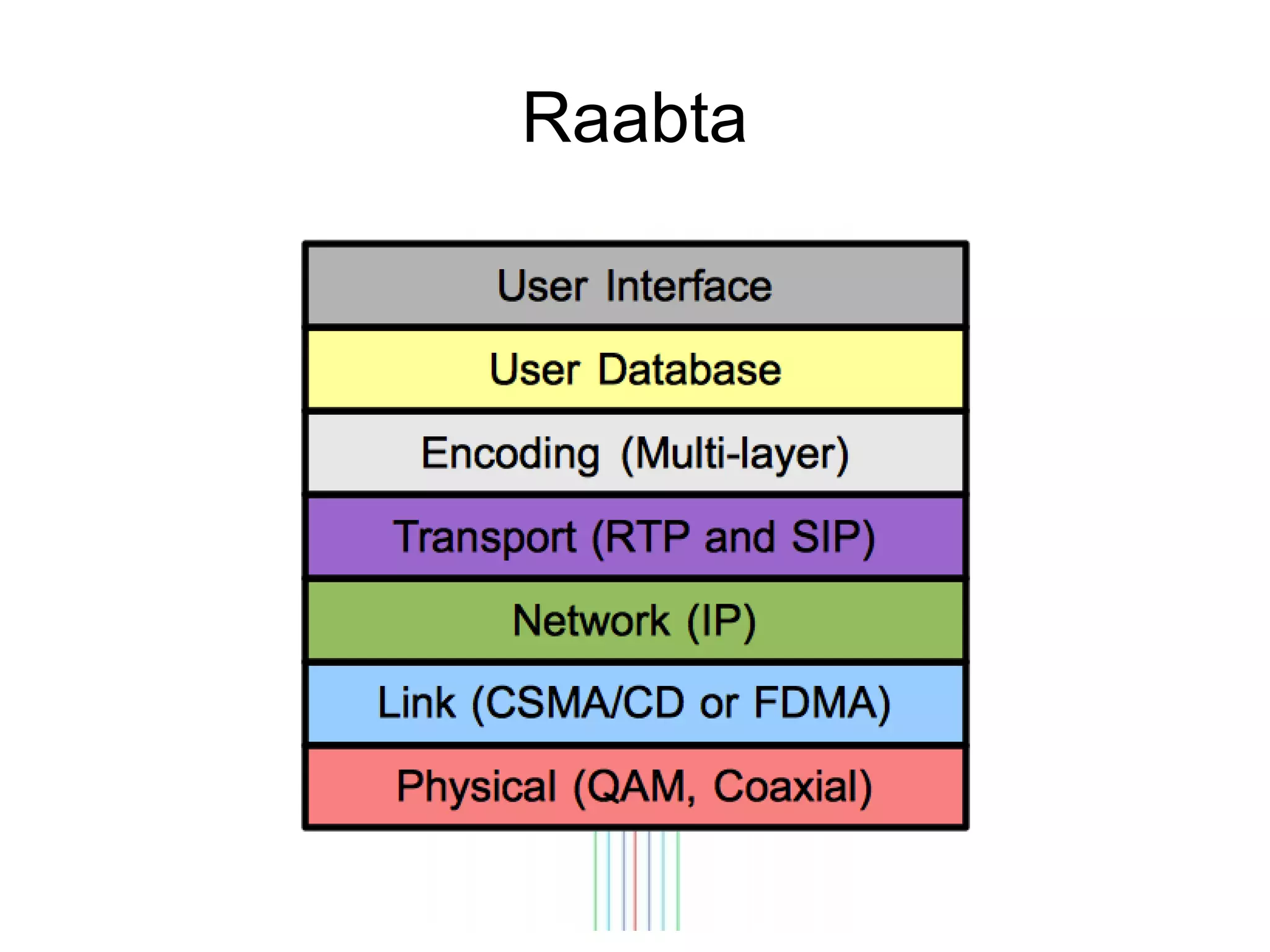
Raabta
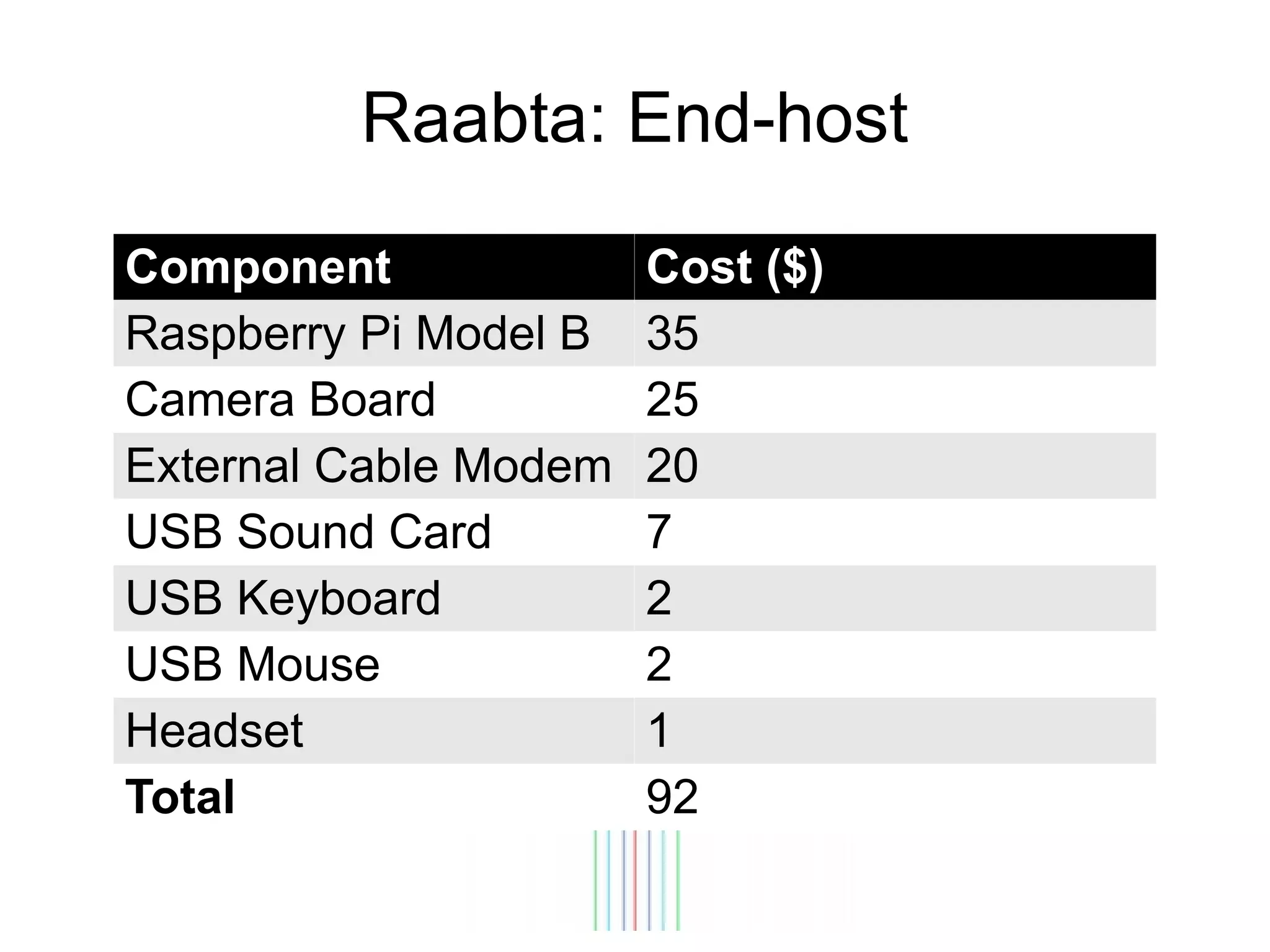
Raabta: End-host
Component
Raspberry Pi Model B
Camera Board
External Cable Modem
USB Sound Card
USB Keyboard
USB Mouse
Headset
Total

Cost ($)
35
25
20
7
2
2
1
92
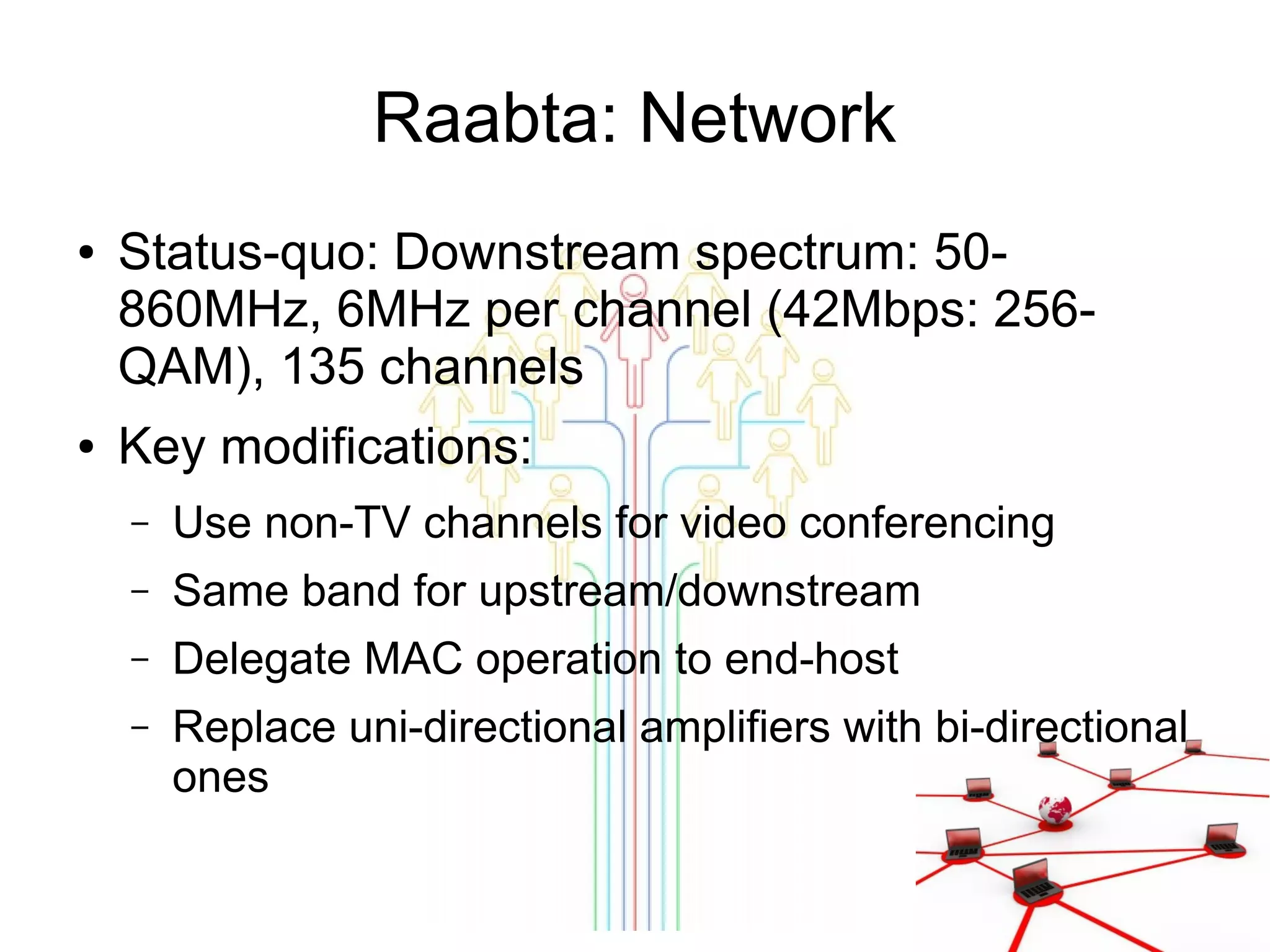
Raabta: Network
●

●

Status-quo: Downstream spectrum: 50860MHz, 6MHz per channel (42Mbps: 256QAM), 135 channels
Key modifications:
–

Use non-TV channels for video conferencing

–

Same band for upstream/downstream

–

Delegate MAC operation to end-host

–

Replace uni-directional amplifiers with bi-directional
ones
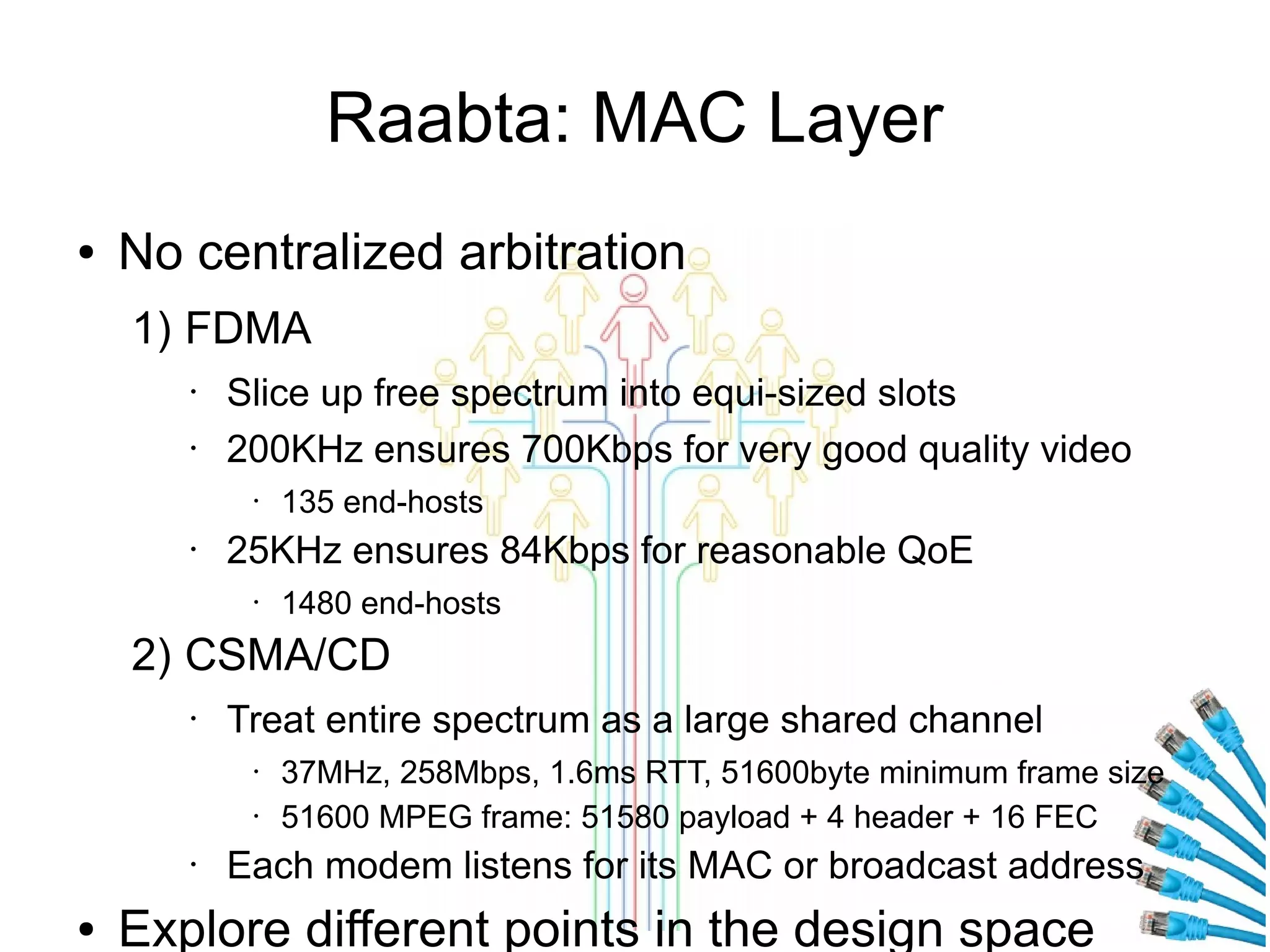
Raabta: MAC Layer
●

No centralized arbitration
1) FDMA
•
•

Slice up free spectrum into equi-sized slots
200KHz ensures 700Kbps for very good quality video
•

•

135 end-hosts

25KHz ensures 84Kbps for reasonable QoE
•

1480 end-hosts

2) CSMA/CD
•

Treat entire spectrum as a large shared channel
•
•

•

●

37MHz, 258Mbps, 1.6ms RTT, 51600byte minimum frame size
51600 MPEG frame: 51580 payload + 4 header + 16 FEC

Each modem listens for its MAC or broadcast address

Explore different points in the design space
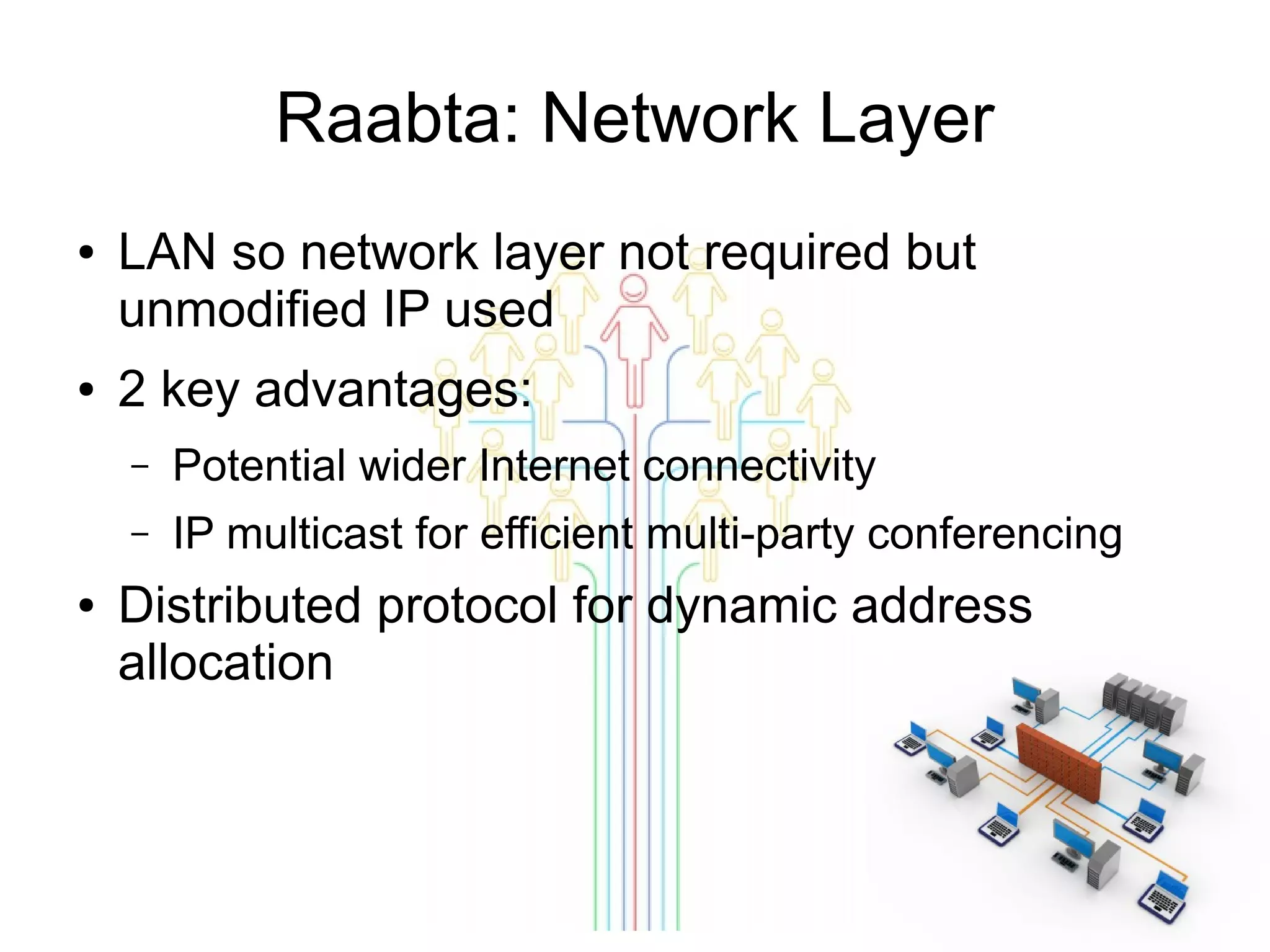
Raabta: Network Layer
●

●

LAN so network layer not required but
unmodified IP used
2 key advantages:
–
–

●

Potential wider Internet connectivity
IP multicast for efficient multi-party conferencing

Distributed protocol for dynamic address
allocation
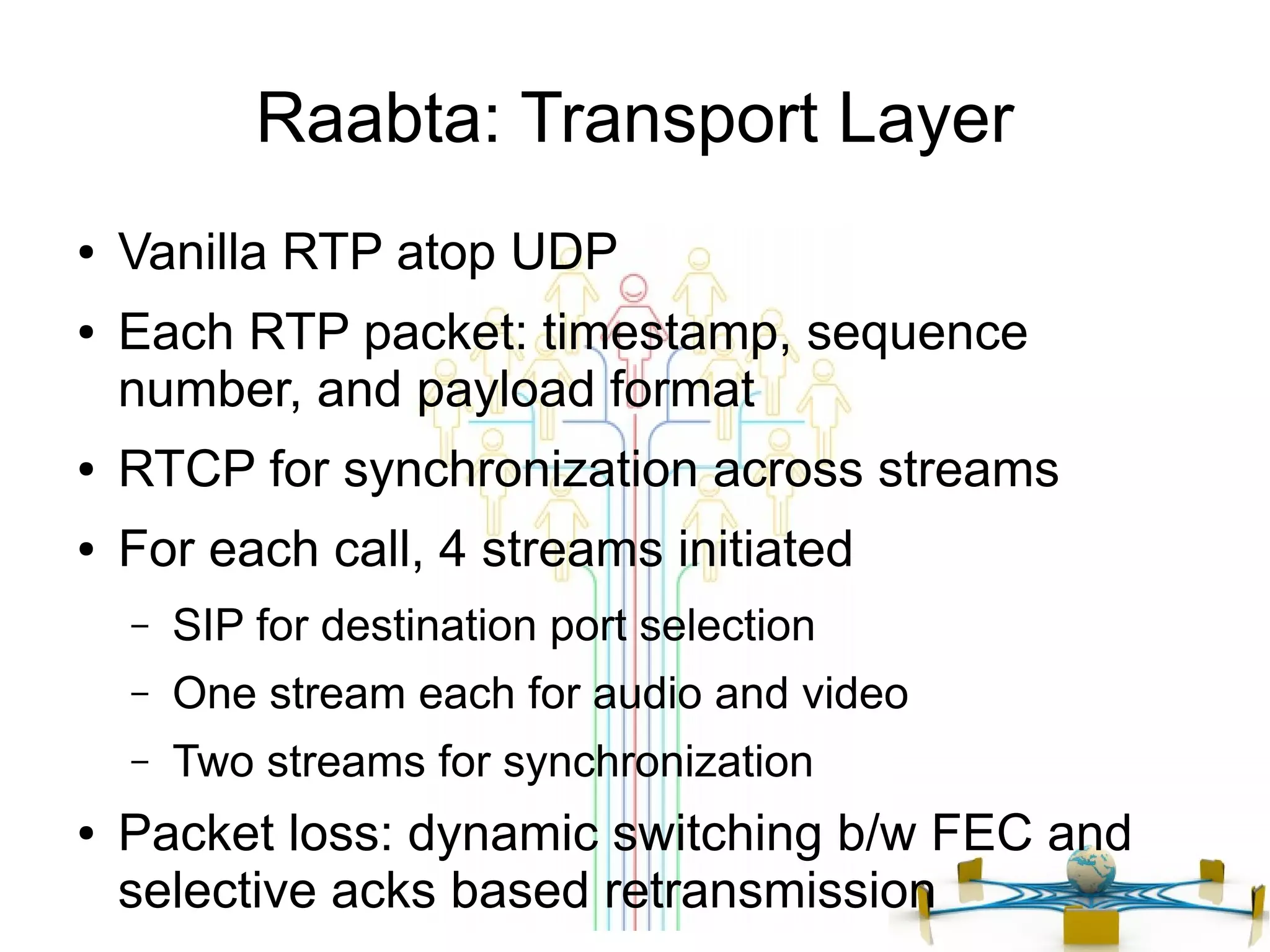
Raabta: Transport Layer
●
●

Vanilla RTP atop UDP
Each RTP packet: timestamp, sequence
number, and payload format

●

RTCP for synchronization across streams

●

For each call, 4 streams initiated
–
–

One stream each for audio and video

–
●

SIP for destination port selection
Two streams for synchronization

Packet loss: dynamic switching b/w FEC and
selective acks based retransmission
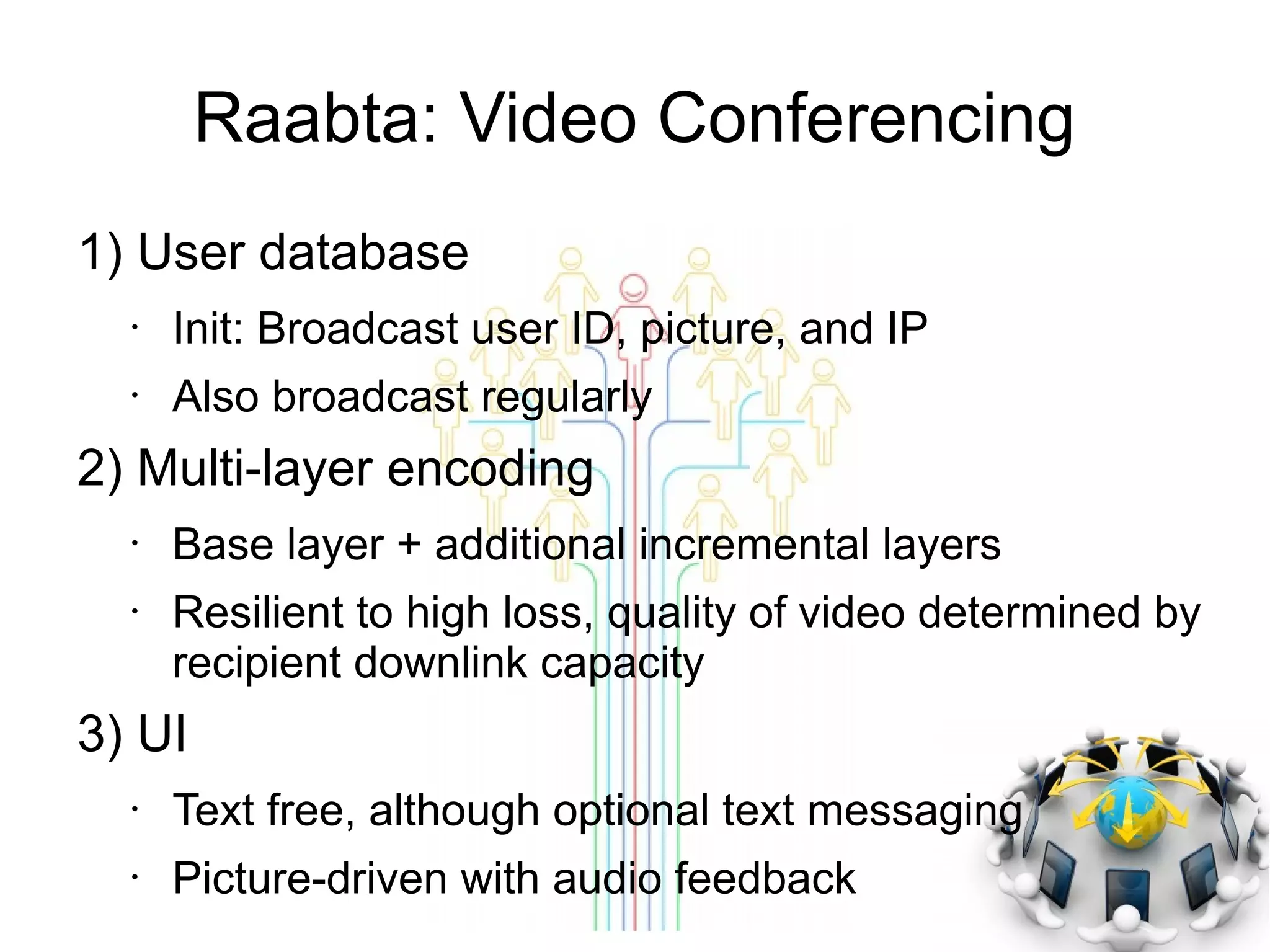
Raabta: Video Conferencing
1) User database
•

Init: Broadcast user ID, picture, and IP

•

Also broadcast regularly

2) Multi-layer encoding
•
•

Base layer + additional incremental layers
Resilient to high loss, quality of video determined by
recipient downlink capacity

3) UI
•

Text free, although optional text messaging

•

Picture-driven with audio feedback
Beyond Raabta
●

Internet connectivity
–

●

Community-wide applications
–

●

Simple to extend using low-cost solutions
Telemedicine, distance learning, etc

Operator incentive
–
–

Simple management due to decentralization

–
●

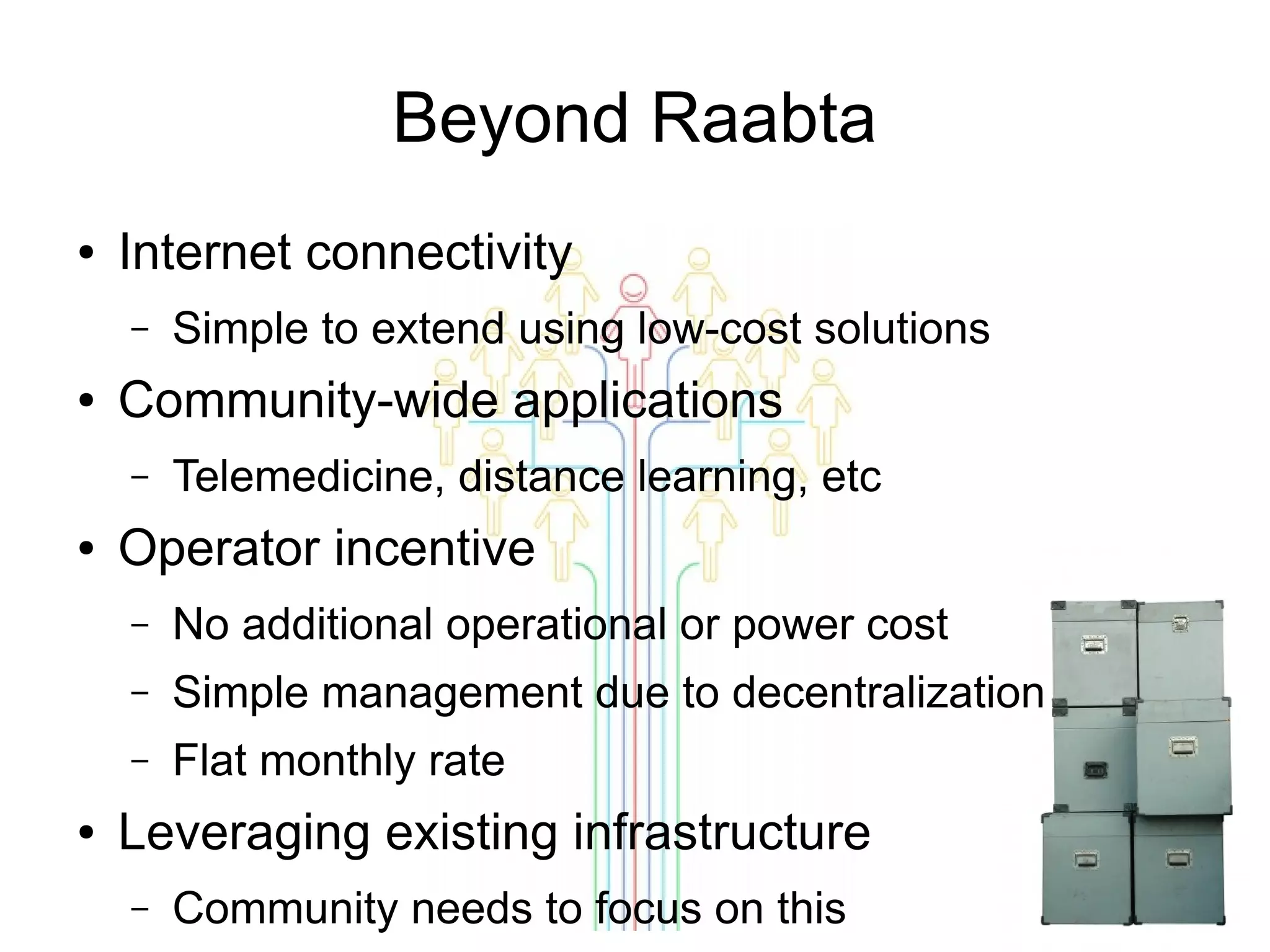
No additional operational or power cost
Flat monthly rate

Leveraging existing infrastructure
–

Community needs to focus on this
Conclusion and Future Work
●

●

Possible to provide low-cost video conferencing
using existing infrastructure and simple
components
Future work:
–

Implementation and evaluation of the system

–

Closer inspection and analysis of MAC

–

Deployment in the wild
Q?

●

Acknowledgments:
–

Anil Madhavapeddy
for comments and
suggestions

–

Arjuna Sathiaseelan
and Jon Crowcroft
for arranging remote
talk

–

Images:
FreeDigitalPhotos.net,
Berkeley TIER,
wikimedia.org, and
evidence4action.net

Raabta: Low-cost Video Conferencing for the Developing World

  • 1.
    Raabta: Low-cost Video Conferencingfor the Developing World Zubair Nabi zubair.nabi@cantab.net Information Technology University, Pakistan* MobiCom Workshop on Lowest Cost Denominator Networking for Universal Access 30 September, 2013 * Now at IBM Research, Dublin
  • 2.
    Raabta ● Leverage existing analogcable TV networks to provide video conferencing ● Raspberry-Pi instances as end-hosts ● Video conferencing application co-design – ● Multi-layered encoding and dynamic recovery Simple text-free interface
  • 3.
  • 4.
    Motivation ● ● ● ● Daily income for> 50% of the world: < $2 The Internet has the power to improve the human condition 10% increase in broadband Internet penetration leads to 1.4% increase in GDP (World Bank) Cognizance of social, economic, and technological conditions
  • 5.
    Proposed Solutions ● Challenges: – – Intermittent andbad power – Extreme weather conditions: dust, humidity, etc. – Frequent equipment failure – Lack of trained local workforce – ● Monetary and engineering costs Rolling investment required WiMAX, satellite, long-distance WiFi, ZigBee, optical, cellular etc. – Both backbone and last-mile access – Also plagued by shortcomings
  • 6.
    Observations ● Internet access notan underpinning technology – ● ● Backbone access extremely expensive Basic, community-wide communication required Systems designed for the developing world illsuited due to fundamental differences, such as low population density
  • 7.
    Design Goals ● Cost: aslow as possible ● Power: low power draw ● Failure: norm rather than exception ● User-interface: simple enough to be used by low-literate people ● Internet connectivity: not a requirement ● Infrastructure: leverage existing ● Operational sustainability: self-managing
  • 8.
    Background: Analog Cable Networks ● Broadcast-basedshared medium ● Downstream traffic (Gbps): [4.9, 6.6] ● Cable modem as MAC layer bridge ● Link-layer protocol can be offloaded ● At least 12 million people in rural areas in Pakistan own a TV and 3.9 million have cable connections (Gallup)
  • 9.
    Background: Raspberry Pi ● ● General-purposesingle board computer Broadcom system-on-chip processor: ARM 700MHz processor, 24GFLOPS GPU, and integration audio and video ● Multiple video output options ● Optional Ethernet
  • 10.
    Background: Video Conferencing ● 3functional aspects: 1) Overlay topology 2) Encoding scheme 3) Packet loss recovery ● High-bandwidth and low-latency requirement ● Tolerance to device and network heterogeneity
  • 11.
  • 12.
    Raabta: End-host Component Raspberry PiModel B Camera Board External Cable Modem USB Sound Card USB Keyboard USB Mouse Headset Total Cost ($) 35 25 20 7 2 2 1 92
  • 13.
    Raabta: Network ● ● Status-quo: Downstreamspectrum: 50860MHz, 6MHz per channel (42Mbps: 256QAM), 135 channels Key modifications: – Use non-TV channels for video conferencing – Same band for upstream/downstream – Delegate MAC operation to end-host – Replace uni-directional amplifiers with bi-directional ones
  • 14.
    Raabta: MAC Layer ● Nocentralized arbitration 1) FDMA • • Slice up free spectrum into equi-sized slots 200KHz ensures 700Kbps for very good quality video • • 135 end-hosts 25KHz ensures 84Kbps for reasonable QoE • 1480 end-hosts 2) CSMA/CD • Treat entire spectrum as a large shared channel • • • ● 37MHz, 258Mbps, 1.6ms RTT, 51600byte minimum frame size 51600 MPEG frame: 51580 payload + 4 header + 16 FEC Each modem listens for its MAC or broadcast address Explore different points in the design space
  • 15.
    Raabta: Network Layer ● ● LANso network layer not required but unmodified IP used 2 key advantages: – – ● Potential wider Internet connectivity IP multicast for efficient multi-party conferencing Distributed protocol for dynamic address allocation
  • 16.
    Raabta: Transport Layer ● ● VanillaRTP atop UDP Each RTP packet: timestamp, sequence number, and payload format ● RTCP for synchronization across streams ● For each call, 4 streams initiated – – One stream each for audio and video – ● SIP for destination port selection Two streams for synchronization Packet loss: dynamic switching b/w FEC and selective acks based retransmission
  • 17.
    Raabta: Video Conferencing 1)User database • Init: Broadcast user ID, picture, and IP • Also broadcast regularly 2) Multi-layer encoding • • Base layer + additional incremental layers Resilient to high loss, quality of video determined by recipient downlink capacity 3) UI • Text free, although optional text messaging • Picture-driven with audio feedback
  • 18.
    Beyond Raabta ● Internet connectivity – ● Community-wideapplications – ● Simple to extend using low-cost solutions Telemedicine, distance learning, etc Operator incentive – – Simple management due to decentralization – ● No additional operational or power cost Flat monthly rate Leveraging existing infrastructure – Community needs to focus on this
  • 19.
    Conclusion and FutureWork ● ● Possible to provide low-cost video conferencing using existing infrastructure and simple components Future work: – Implementation and evaluation of the system – Closer inspection and analysis of MAC – Deployment in the wild
  • 20.
    Q? ● Acknowledgments: – Anil Madhavapeddy for commentsand suggestions – Arjuna Sathiaseelan and Jon Crowcroft for arranging remote talk – Images: FreeDigitalPhotos.net, Berkeley TIER, wikimedia.org, and evidence4action.net