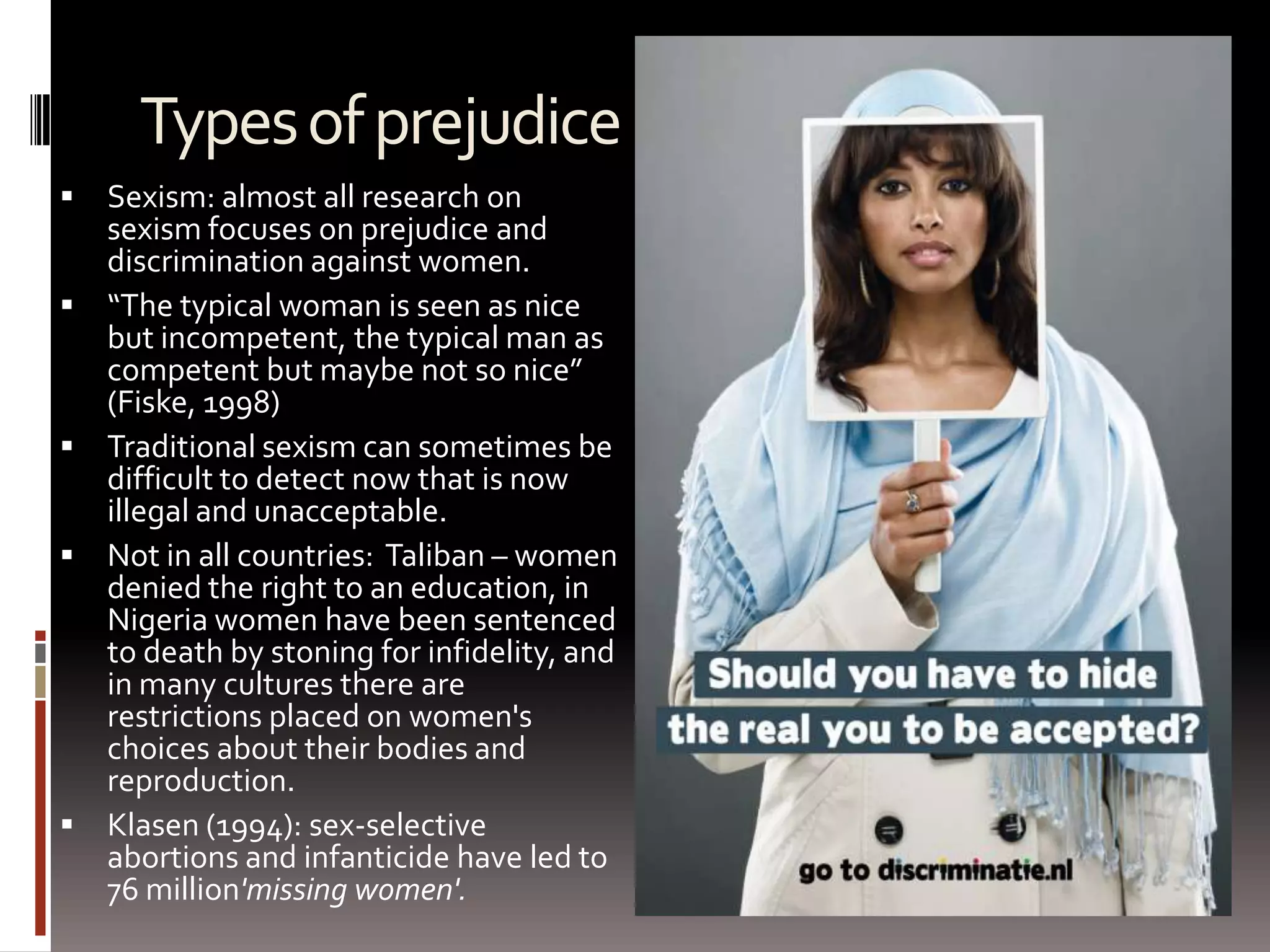
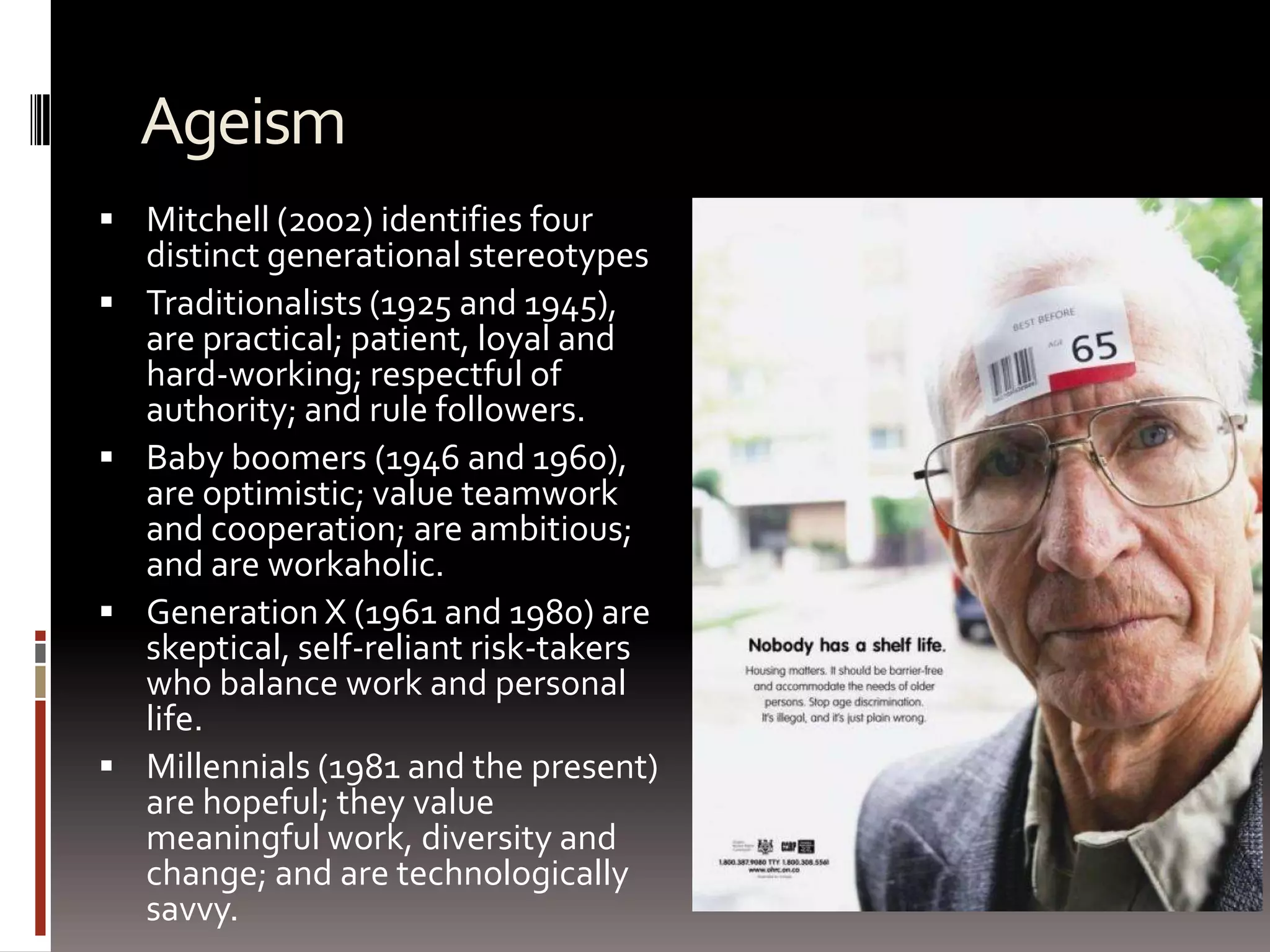
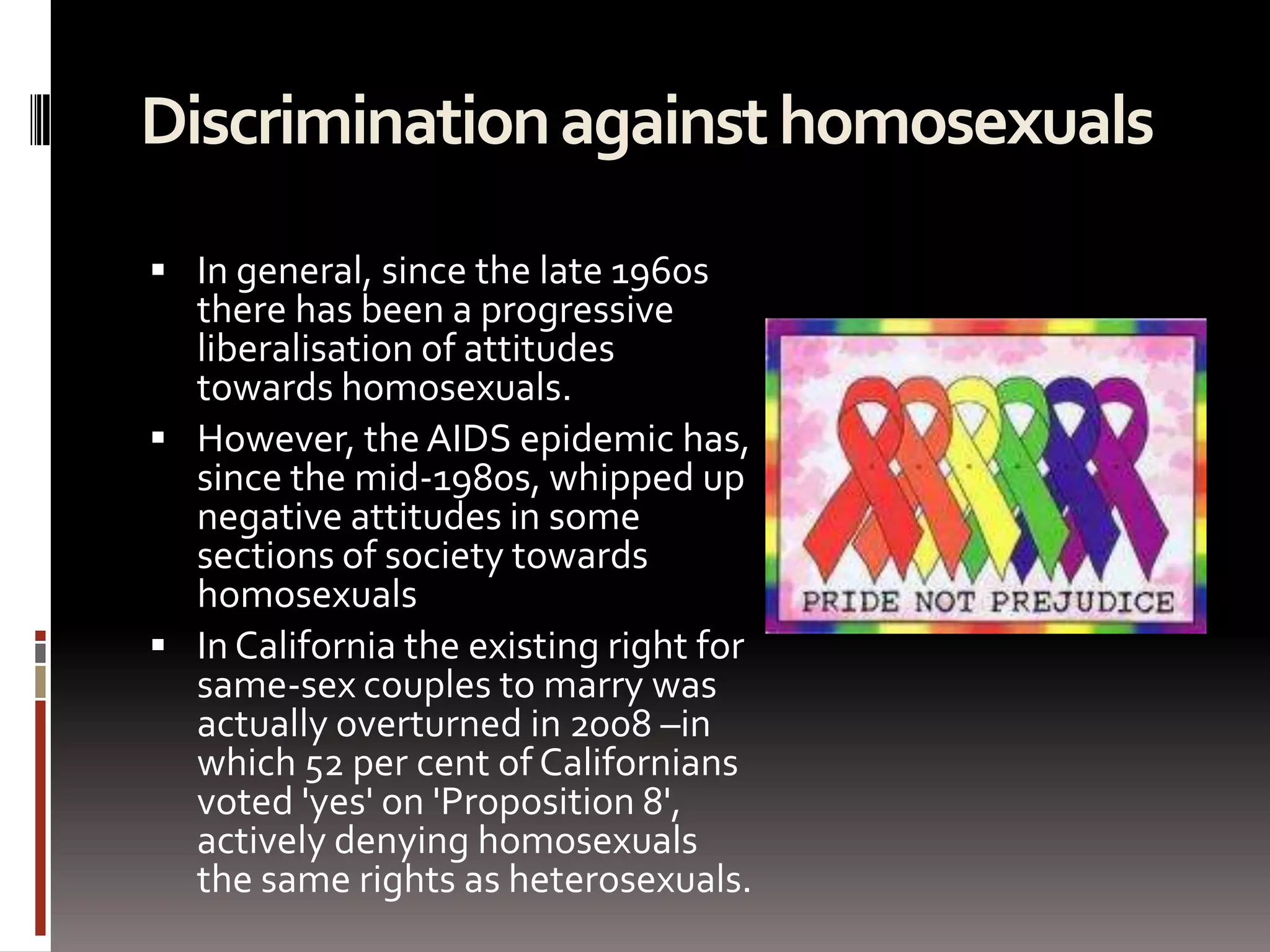
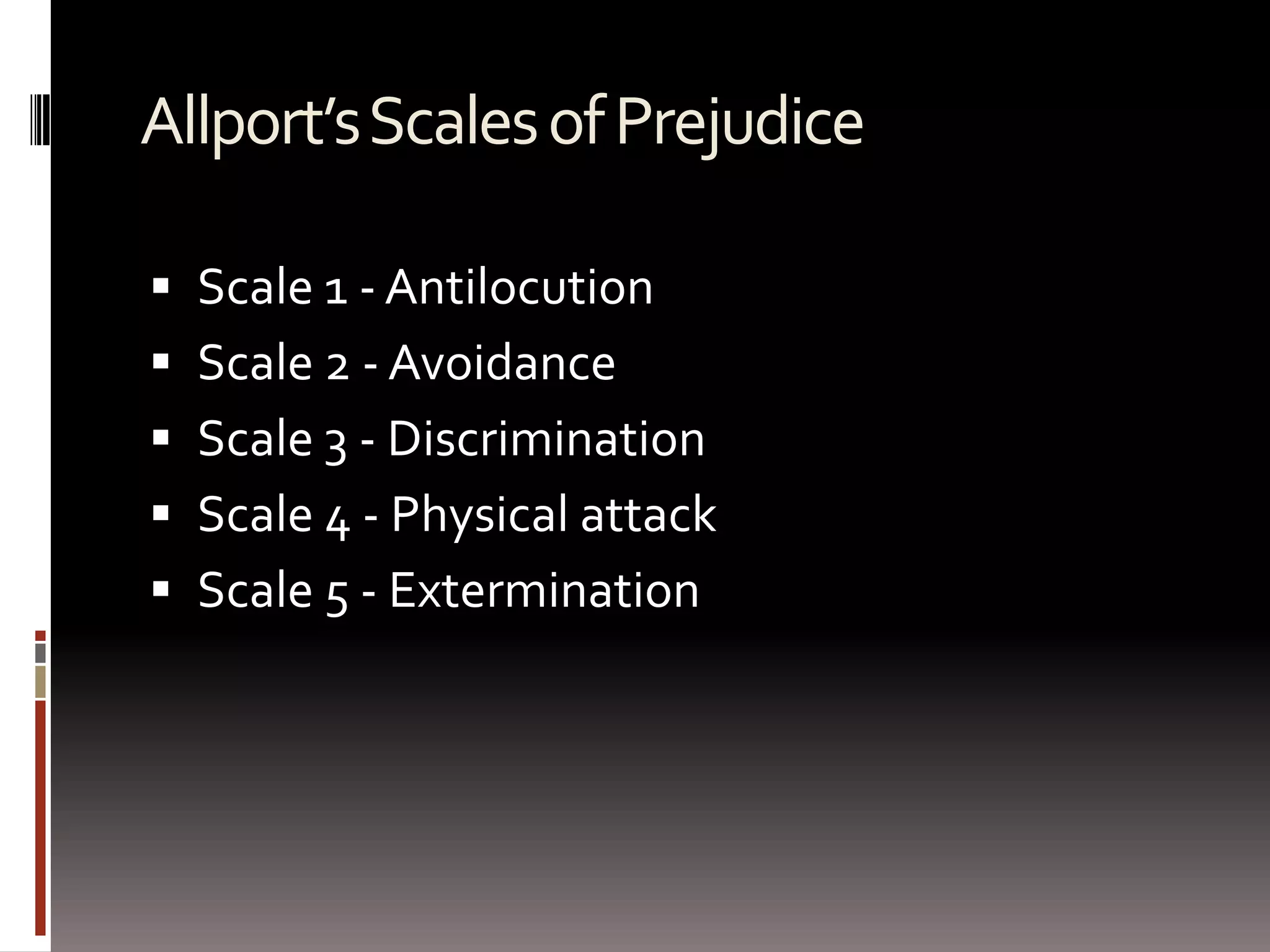
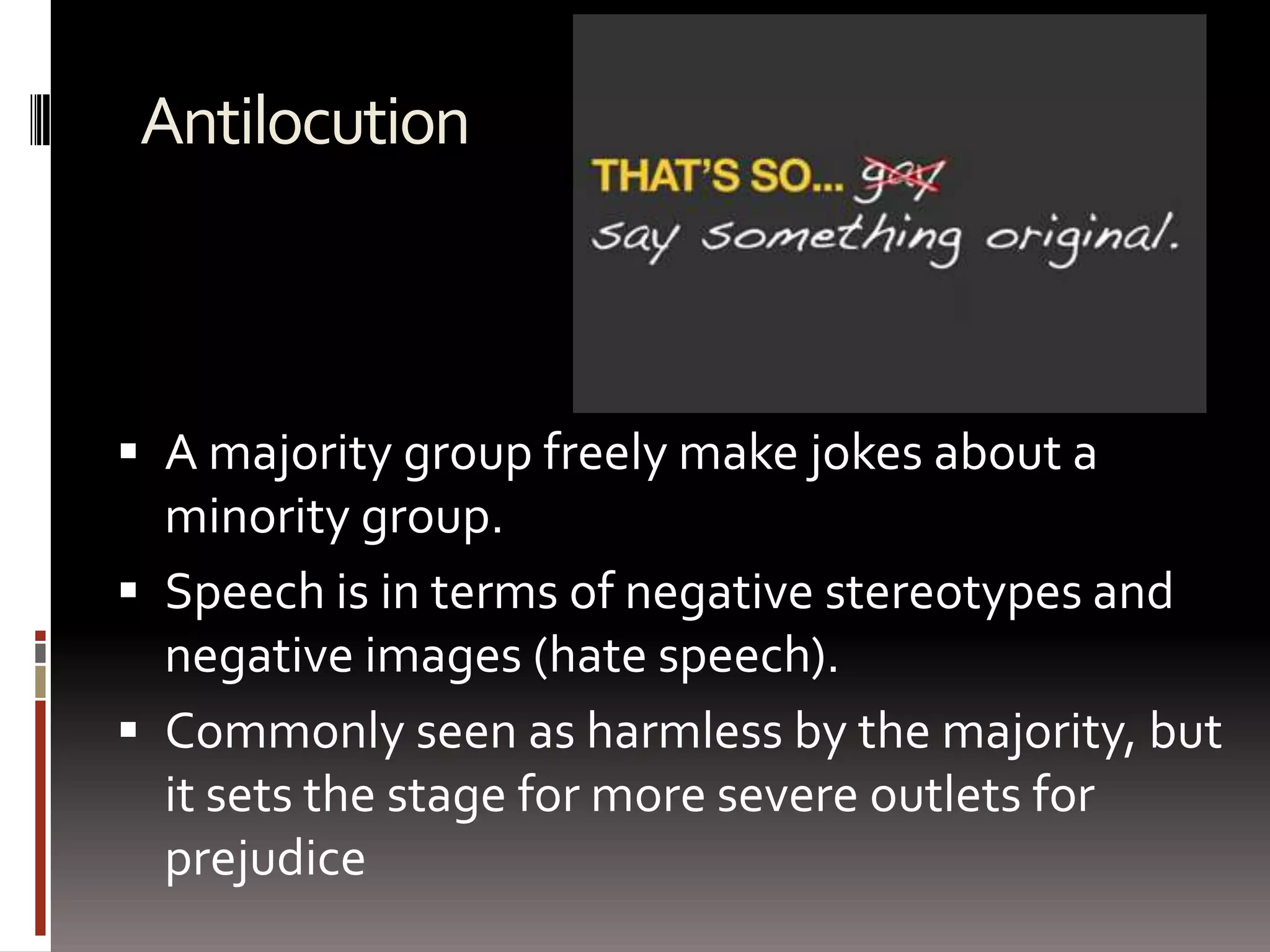
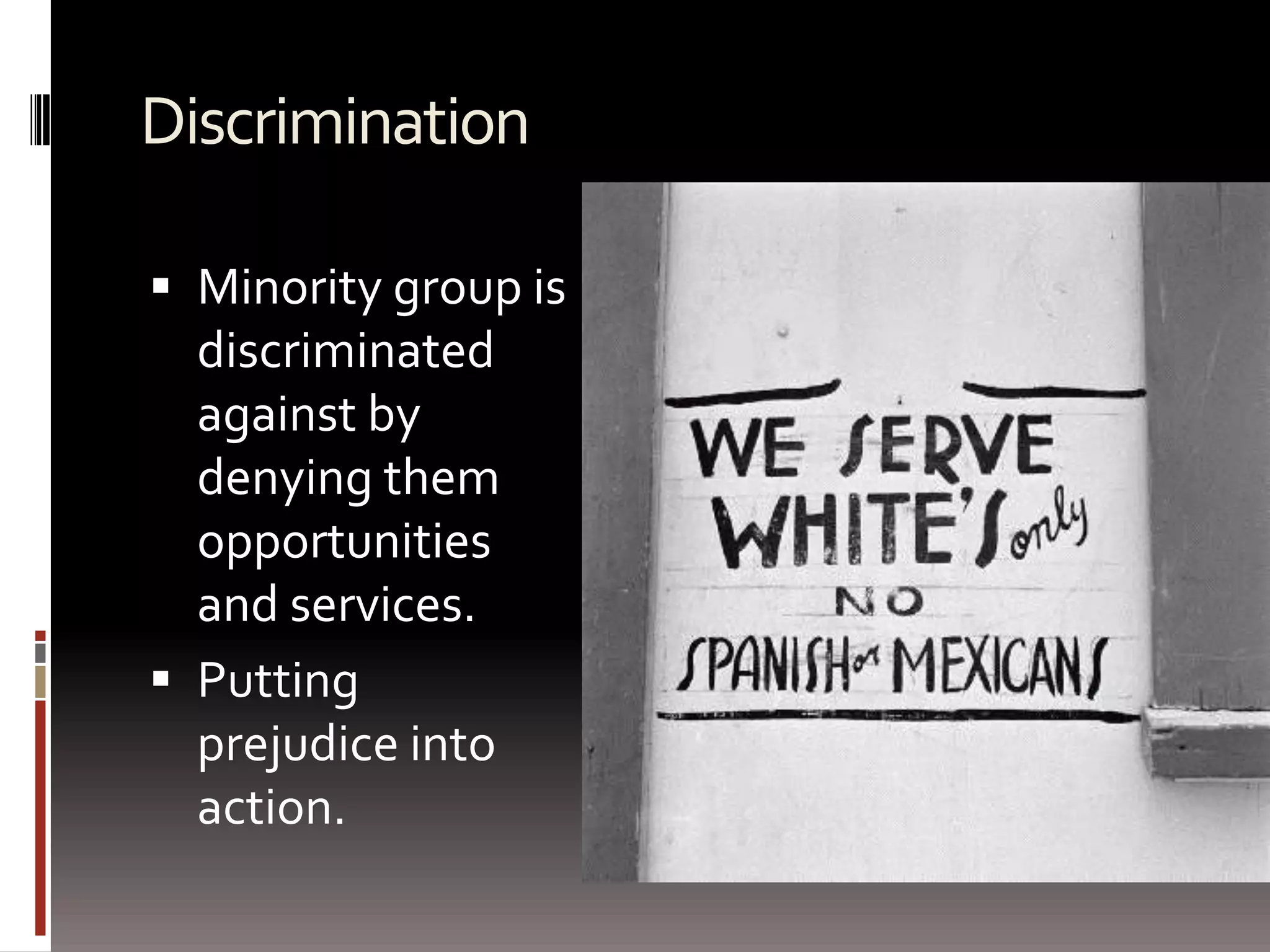
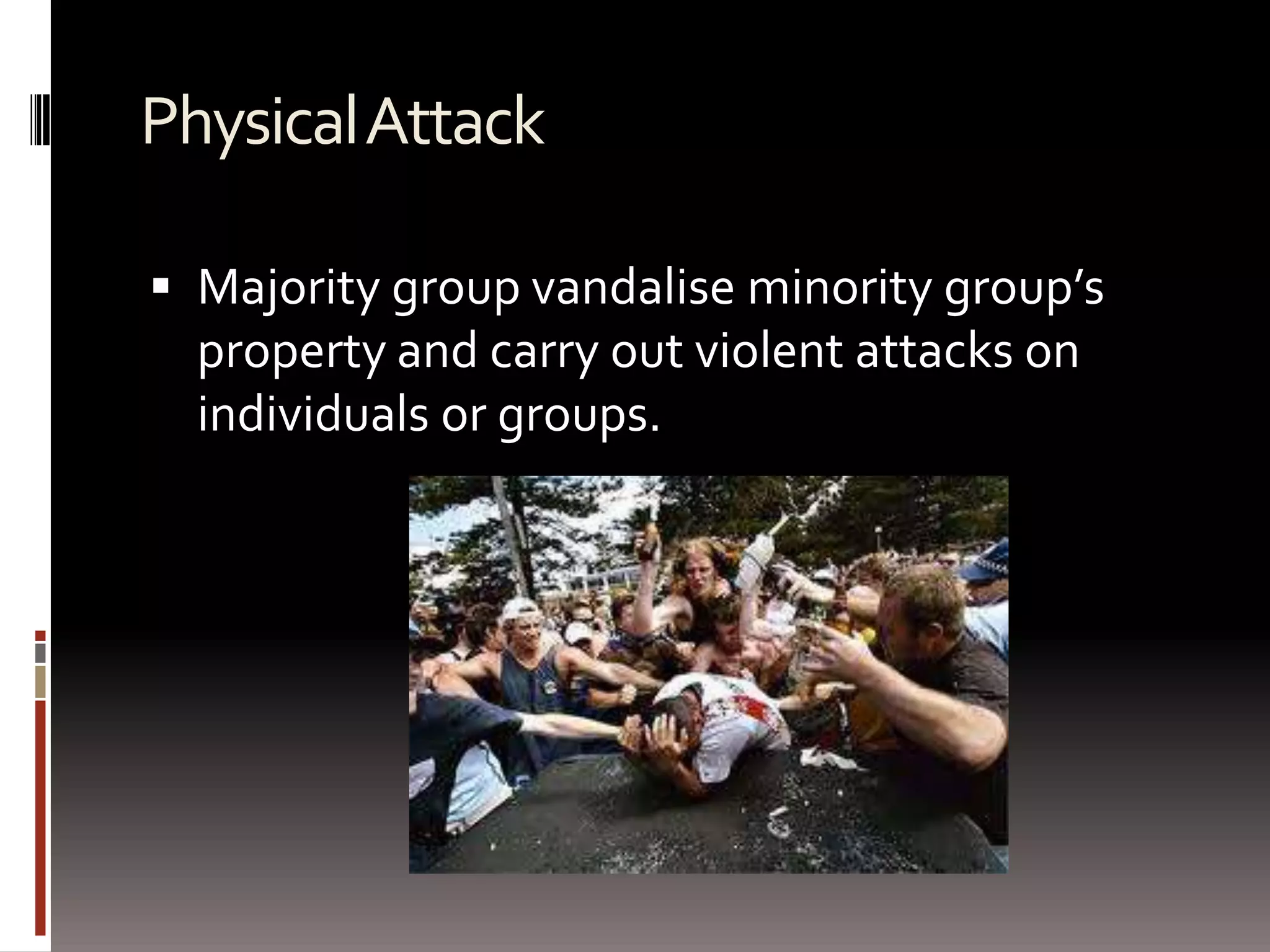
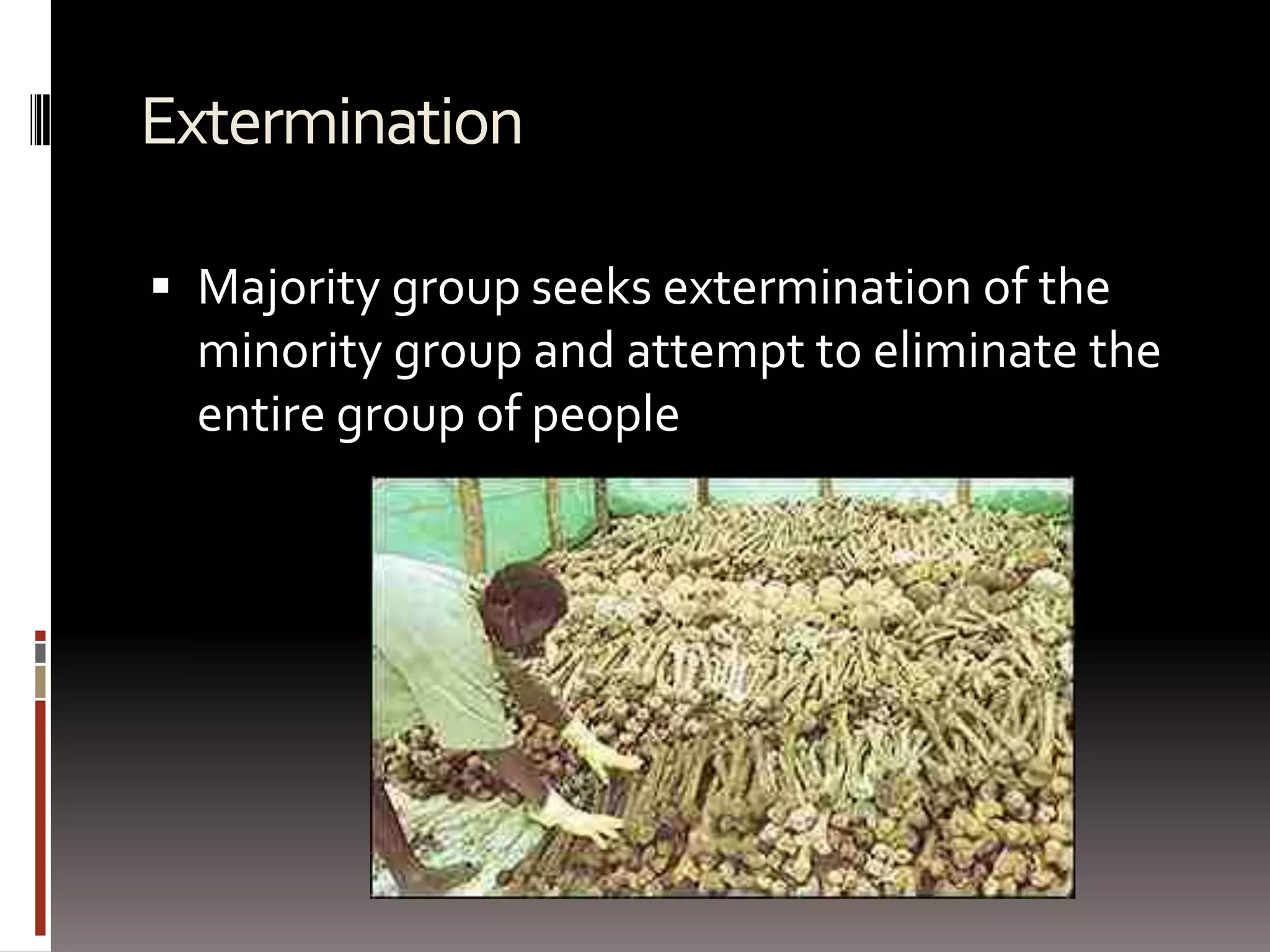
Prejudice and discrimination can take many forms, from subtle to extreme. Prejudice involves unfavorable attitudes toward social groups, while discrimination involves harmful actions directed at those groups. Studies have found discrimination in areas like housing (LaPiere, 1934) and implicit biases in automatic cognition (IAT). Prejudice can be based on attributes such as sex, race, age, sexual orientation, and disability status. It may take overt forms like hate speech or physical attack, or more subtle forms like tokenism or reluctance to help. Discrimination has damaging effects and is illegal in many places, but implicit or unconscious biases still exist and can influence behavior.