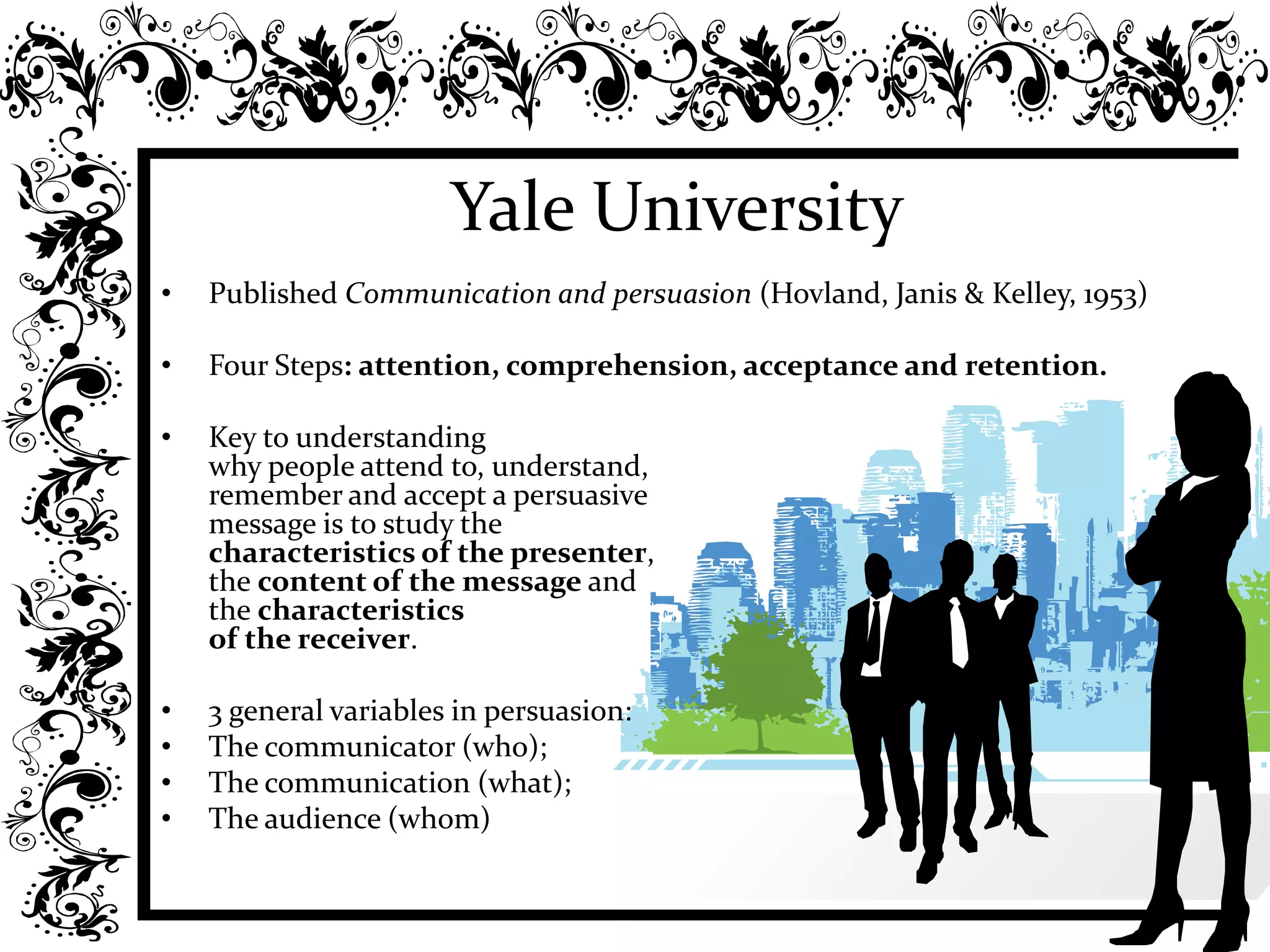
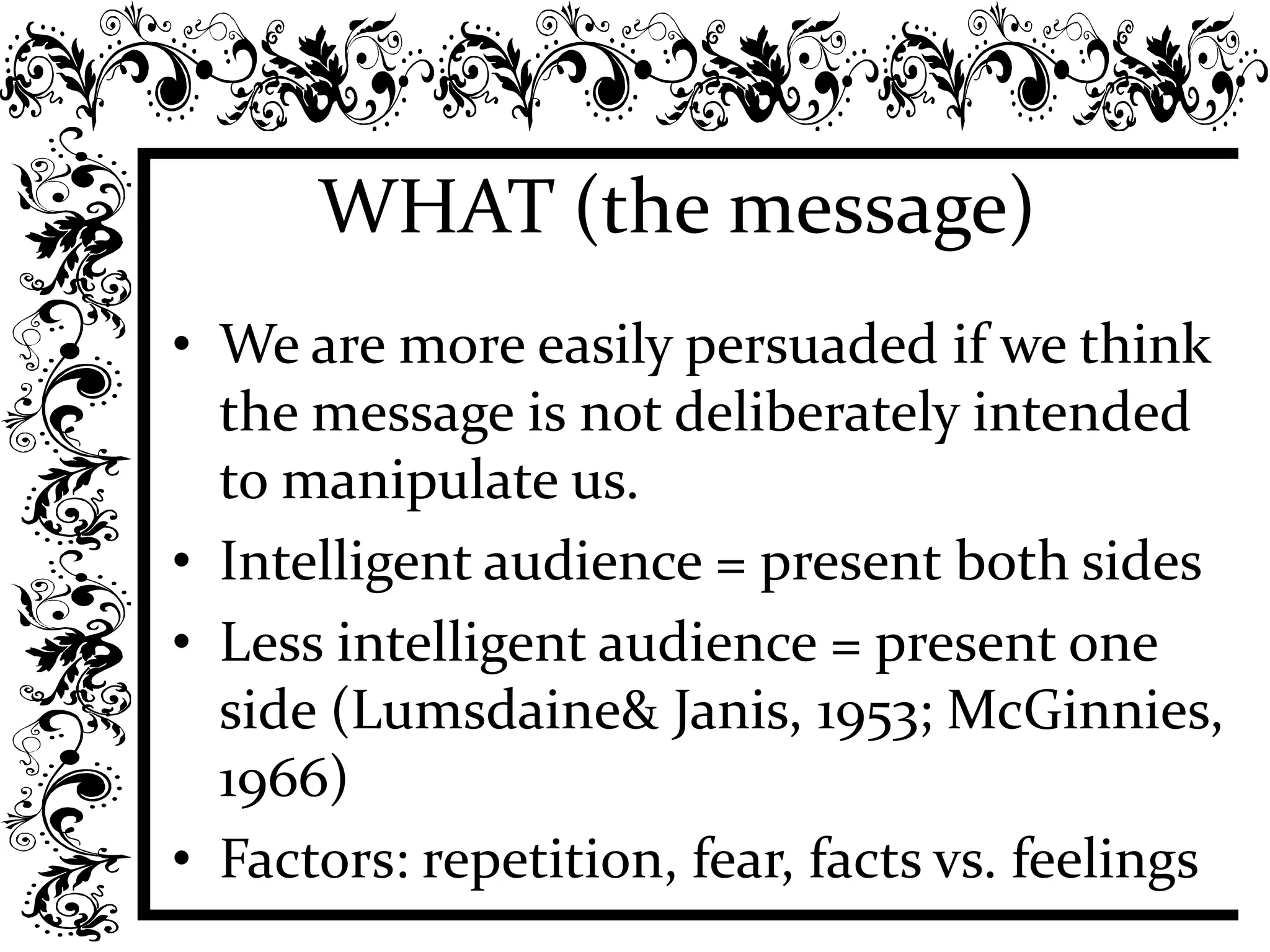
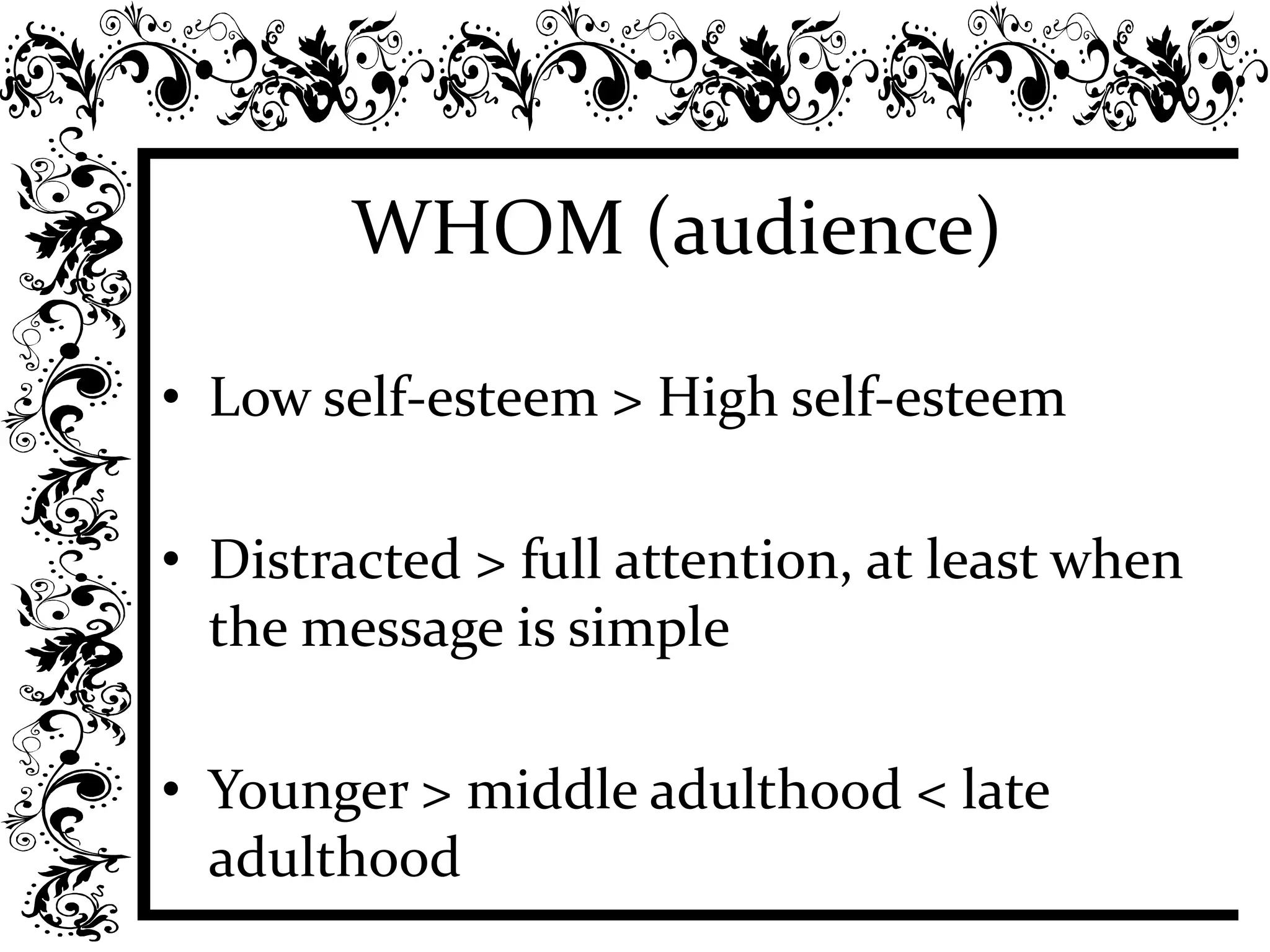
The document summarizes key concepts from research on persuasion and compliance conducted at Yale University in the 1950s. It outlines four steps to persuasion: attention, comprehension, acceptance, and retention. Persuasion is influenced by characteristics of the communicator, message content, and the audience. Tactics to increase compliance include intimidation, exemplification, supplication, self-promotion, and ingratiation. Multiple request techniques like foot-in-the-door and door-in-the-face use an initial request to set up a subsequent, larger request to increase compliance. Central and peripheral routes of persuasion target message recipients' thinking styles.