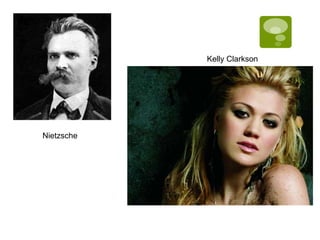
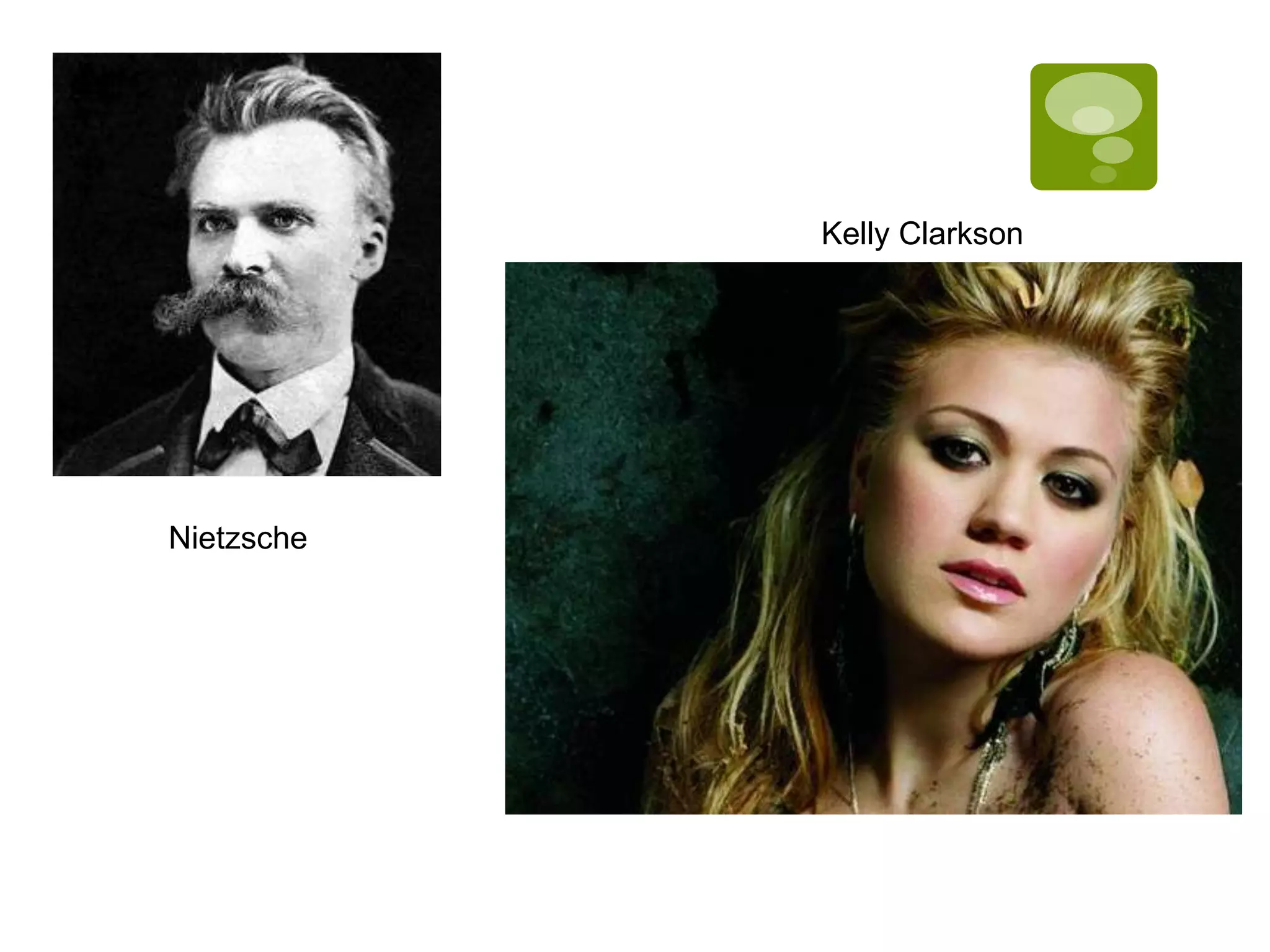
Kelly Clarkson


Nietzsche
Stress, Traum
 a, Coping &
  Resilience
Stress - types

   FRUSTRATION

   CONFLICT

   CHANGE

   PRESSURE
FRUSTRATION

   We feel frustration in a situation where we are
    prevented from reaching our goals.

   > goal, > frustration we feel if we cannot reach it

   E.g. flat tyre on the way to a job interview
CONFLICT

   We experience conflict when we need to
    make a difficult decision between two or
    more alternatives.

   The uncertainty and indecision caused by
    the conflict situation results in stress.

   E.g. getting accepted into a university in
    another city. It is a good uni but nervous
    about leaving home and friends
CHANGE

   We experience change when something in our life
    changes in an important way.

   This change makes it necessary for us to adjust and
    adapt.

   Change can be mainly negative (i.e. divorce) or mainly
    positive (i.e. graduating)
PRESSURE

   We are under pressure when we have to conform to or
    fit in with the expectations or demands of other people

   Pressure to conform can come from family, friends and
    broader society.

   i.e. Mario‟s father wants him to be a baker like him and
    his father before him. Mario doesn‟t know how to tell his
    father that he does not want to be a baker.
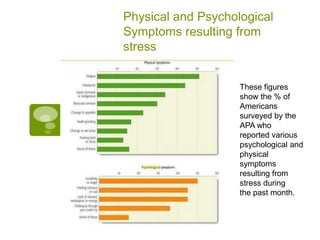
Physical and Psychological
Symptoms resulting from
stress


                    These figures
                    show the % of
                    Americans
                    surveyed by the
                    APA who
                    reported various
                    psychological and
                    physical
                    symptoms
                    resulting from
                    stress during
                    the past month.
CHRONIC STRESS

   State of persistent tension or pressure that
    can lead us to feel exhausted, irritable and
    depressed.

   Can include ongoing financial problems, job-
    related problems, marital or relationship
    conflicts and persistent pain

   Post-Traumatic Stress Disorder
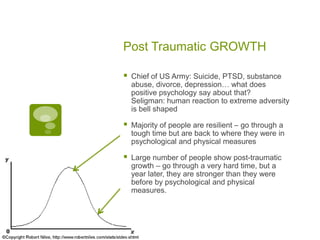
Post Traumatic GROWTH

   Chief of US Army: Suicide, PTSD, substance
    abuse, divorce, depression… what does
    positive psychology say about that?
    Seligman: human reaction to extreme adversity
    is bell shaped

   Majority of people are resilient – go through a
    tough time but are back to where they were in
    psychological and physical measures

   Large number of people show post-traumatic
    growth – go through a very hard time, but a
    year later, they are stronger than they were
    before by psychological and physical
    measures.
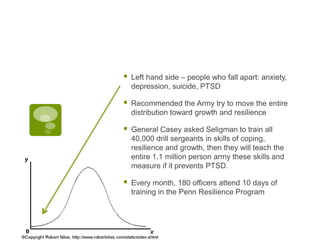
   Left hand side – people who fall apart: anxiety,
    depression, suicide, PTSD

   Recommended the Army try to move the entire
    distribution toward growth and resilience

   General Casey asked Seligman to train all
    40,000 drill sergeants in skills of coping,
    resilience and growth, then they will teach the
    entire 1.1 million person army these skills and
    measure if it prevents PTSD.

   Every month, 180 officers attend 10 days of
    training in the Penn Resilience Program
Penn Resilience Program

   3 parts:

   1. Mental toughness

   2. Leading with strengths

   3. New social skills for leadership


   First learn how to use skills in own lives,
    then learn how to teach them.

   Heavily based on Albert Ellis‟ ABC model…
ABC

   A = adversity

   B= beliefs

   C = emotional consequences


   A+B =C

   Work through professional As (i.e. fall out of a 3 mile
    run) and personal A (return from deployment and son
    does not want to play with you)

   Goal is to separate the A from what the thoughts in
    the heat of the moment (B) and from the emotions or
    actions the thoughts generate (C)
Techniques/Strategies

   Educating Mental literacy

   Identifying thinking traps:

   Soldiers learn about:

   overgeneralisation (judging a person‟s worth or ability based
    on a single action),

   „icebergs‟ (deeply held belief that often lead to destructive
    emotional reactions). Once the iceberg is identified, they are
    asked if the iceberg continues to be meaningful to them, is it
    is accurate in the given situation, if the iceberg is overly rigid.

   Minimising catastrophic thinking – “Putting it into
    Perspective”. Worst case, best case, most likely case. Plan
    is then developed for coping with the situation and placed
    with both professional and personal examples
Optimism

   2009 review of 103 studies of post-traumatic
    growth found that optimism was a major
    contributor to growth.

   Important that mental toughness skills
    capture the skills of learned optimism to
    resist learned helplessness.
COPING
Coping strategies

   No single method of coping method is right
    for everyone or every stressor.

   Coping strategies can be learned.

   Strategies can be
    cognitive, emotional, behavioural or
    physical.
Cognitive restructuring

   Changing the way we think – thinking more
    calmly, rationally and constructively in the
    face of stressors that may lead to a more
    hopeful emotional outlook.

   E.g. “What if I fail”  “all I can do is the best
    I can”

   Doesn‟t remove stressors but helps us
    perceive them as less threatening and
    therefore less disruptive.
Emotional

   Seeking social support and getting advice.

   Feeling cared about and valued by others
    can be a buffer against the ill effects of
    stressors, which can lead to enhanced
    immune functioning and quicker recovery
    from illness.
Behaviour

   Changing behaviour in order to minimise the
    –ve impact of stressors.

   E.g. time management – know how you
    spend your time and then schedule it for
    following weeks.
Physical

   Can be used to alter the undesirable
    physical responses that occur before, during
    or after the appearance of stressors.

   Drug use, relaxation training, physical
    exercise, biofeedback, meditation, tai chi.
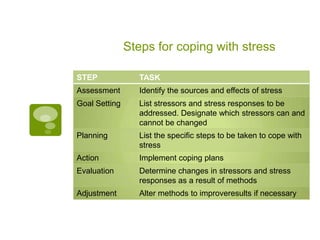
Steps for coping with stress

STEP             TASK
Assessment       Identify the sources and effects of stress
Goal Setting     List stressors and stress responses to be
                 addressed. Designate which stressors can and
                 cannot be changed
Planning         List the specific steps to be taken to cope with
                 stress
Action           Implement coping plans
Evaluation       Determine changes in stressors and stress
                 responses as a result of methods
Adjustment       Alter methods to improveresults if necessary

08 stress, coping, trauma, resilience

  • 1.
  • 2.
    Stress, Traum a,Coping & Resilience
  • 3.
    Stress - types  FRUSTRATION  CONFLICT  CHANGE  PRESSURE
  • 4.
    FRUSTRATION  We feel frustration in a situation where we are prevented from reaching our goals.  > goal, > frustration we feel if we cannot reach it  E.g. flat tyre on the way to a job interview
  • 5.
    CONFLICT  We experience conflict when we need to make a difficult decision between two or more alternatives.  The uncertainty and indecision caused by the conflict situation results in stress.  E.g. getting accepted into a university in another city. It is a good uni but nervous about leaving home and friends
  • 6.
    CHANGE  We experience change when something in our life changes in an important way.  This change makes it necessary for us to adjust and adapt.  Change can be mainly negative (i.e. divorce) or mainly positive (i.e. graduating)
  • 7.
    PRESSURE  We are under pressure when we have to conform to or fit in with the expectations or demands of other people  Pressure to conform can come from family, friends and broader society.  i.e. Mario‟s father wants him to be a baker like him and his father before him. Mario doesn‟t know how to tell his father that he does not want to be a baker.
  • 8.
    Physical and Psychological Symptomsresulting from stress These figures show the % of Americans surveyed by the APA who reported various psychological and physical symptoms resulting from stress during the past month.
  • 9.
    CHRONIC STRESS  State of persistent tension or pressure that can lead us to feel exhausted, irritable and depressed.  Can include ongoing financial problems, job- related problems, marital or relationship conflicts and persistent pain  Post-Traumatic Stress Disorder
  • 10.
    Post Traumatic GROWTH  Chief of US Army: Suicide, PTSD, substance abuse, divorce, depression… what does positive psychology say about that? Seligman: human reaction to extreme adversity is bell shaped  Majority of people are resilient – go through a tough time but are back to where they were in psychological and physical measures  Large number of people show post-traumatic growth – go through a very hard time, but a year later, they are stronger than they were before by psychological and physical measures.
  • 12.
    Left hand side – people who fall apart: anxiety, depression, suicide, PTSD  Recommended the Army try to move the entire distribution toward growth and resilience  General Casey asked Seligman to train all 40,000 drill sergeants in skills of coping, resilience and growth, then they will teach the entire 1.1 million person army these skills and measure if it prevents PTSD.  Every month, 180 officers attend 10 days of training in the Penn Resilience Program
  • 13.
    Penn Resilience Program  3 parts:  1. Mental toughness  2. Leading with strengths  3. New social skills for leadership  First learn how to use skills in own lives, then learn how to teach them.  Heavily based on Albert Ellis‟ ABC model…
  • 14.
    ABC  A = adversity  B= beliefs  C = emotional consequences  A+B =C  Work through professional As (i.e. fall out of a 3 mile run) and personal A (return from deployment and son does not want to play with you)  Goal is to separate the A from what the thoughts in the heat of the moment (B) and from the emotions or actions the thoughts generate (C)
  • 15.
    Techniques/Strategies  Educating Mental literacy  Identifying thinking traps:  Soldiers learn about:  overgeneralisation (judging a person‟s worth or ability based on a single action),  „icebergs‟ (deeply held belief that often lead to destructive emotional reactions). Once the iceberg is identified, they are asked if the iceberg continues to be meaningful to them, is it is accurate in the given situation, if the iceberg is overly rigid.  Minimising catastrophic thinking – “Putting it into Perspective”. Worst case, best case, most likely case. Plan is then developed for coping with the situation and placed with both professional and personal examples
  • 16.
    Optimism  2009 review of 103 studies of post-traumatic growth found that optimism was a major contributor to growth.  Important that mental toughness skills capture the skills of learned optimism to resist learned helplessness.
  • 17.
  • 18.
    Coping strategies  No single method of coping method is right for everyone or every stressor.  Coping strategies can be learned.  Strategies can be cognitive, emotional, behavioural or physical.
  • 19.
    Cognitive restructuring  Changing the way we think – thinking more calmly, rationally and constructively in the face of stressors that may lead to a more hopeful emotional outlook.  E.g. “What if I fail”  “all I can do is the best I can”  Doesn‟t remove stressors but helps us perceive them as less threatening and therefore less disruptive.
  • 20.
    Emotional  Seeking social support and getting advice.  Feeling cared about and valued by others can be a buffer against the ill effects of stressors, which can lead to enhanced immune functioning and quicker recovery from illness.
  • 21.
    Behaviour  Changing behaviour in order to minimise the –ve impact of stressors.  E.g. time management – know how you spend your time and then schedule it for following weeks.
  • 22.
    Physical  Can be used to alter the undesirable physical responses that occur before, during or after the appearance of stressors.  Drug use, relaxation training, physical exercise, biofeedback, meditation, tai chi.
  • 23.
    Steps for copingwith stress STEP TASK Assessment Identify the sources and effects of stress Goal Setting List stressors and stress responses to be addressed. Designate which stressors can and cannot be changed Planning List the specific steps to be taken to cope with stress Action Implement coping plans Evaluation Determine changes in stressors and stress responses as a result of methods Adjustment Alter methods to improveresults if necessary