Download to read offline
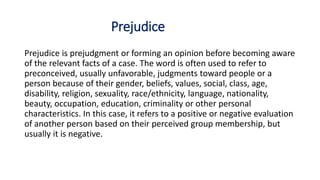
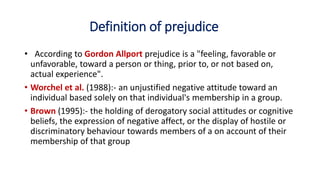
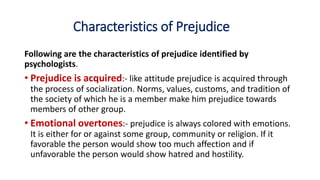
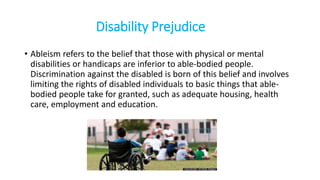


This document defines and discusses various types of prejudice. It begins by defining prejudice as forming an opinion about someone before knowing the relevant facts, typically based on their group membership. Prejudice is characterized as being acquired through socialization, emotional, irrational, and disconnected from reality. The document then discusses three types of prejudice - cognitive (beliefs), affective (likes/dislikes), and conative (behaviors). Specific examples of prejudice discussed include those based on gender, ethnicity/race, sexual orientation, age, class, and disability.


