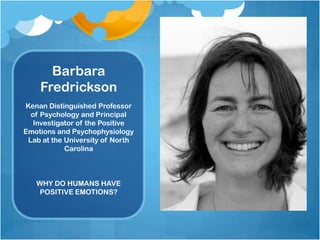
Barbara
    Fredrickson
Kenan Distinguished Professor
  of Psychology and Principal
   Investigator of the Positive
Emotions and Psychophysiology
 Lab at the University of North
            Carolina


   WHY DO HUMANS HAVE
    POSITIVE EMOTIONS?
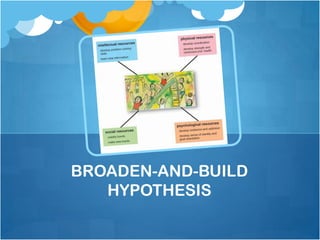
BROADEN-AND-BUILD
   HYPOTHESIS
Specific-Action
Tendencies
 The idea that emotions prepare the body both
 physically and psychologically to act in
 particular ways.

 E.g. Anger  attack; fear  escape; disgust 
 expel

 WHAT ABOUT POSITIVE EMOTIONS???
Importance to Survival
 If +ve emotions are irrelevant to survival, what
 good are they?


 According to Fredrickson’s theory, +ve emotions
 EXPAND cognition and behavioural tendencies.
 Argues that +ve emotions increase the number
 of potential behavioural options
Momentary thought-action
repertoires
 A range of potential actions the body and mind are
 prepared to take

 +ve emotional states  expanded cognitive flexibility
  resource building that becomes useful over time

 Resources outlast the transient emotional state 
 functions to improve coping and odds of survival
Broaden Hypothesis
 Central hypothesis

 +ve emotions broaden scopes of attention and
 cognition and lead to a widened array of
 thoughts and action impulses in the mind.

 Therefore

 -ve emotions shrink these same things
Evidence?
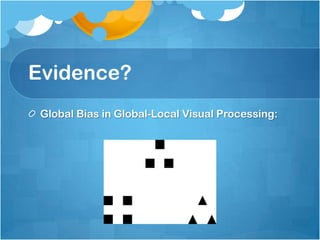
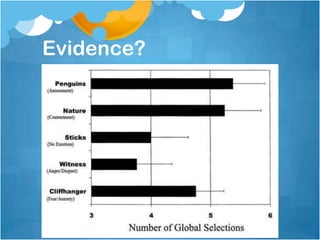
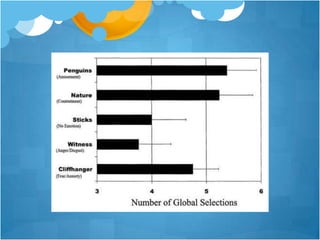
 Global Bias in Global-Local Visual Processing:
Evidence?
Enlarging Though-Action
Repertoires
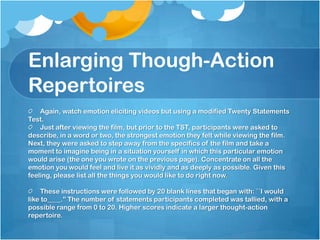
    Again, watch emotion eliciting videos but using a modified Twenty Statements
Test.
    Just after viewing the film, but prior to the TST, participants were asked to
describe, in a word or two, the strongest emotion they felt while viewing the film.
Next, they were asked to step away from the specifics of the film and take a
moment to imagine being in a situation yourself in which this particular emotion
would arise (the one you wrote on the previous page). Concentrate on all the
emotion you would feel and live it as vividly and as deeply as possible. Given this
feeling, please list all the things you would like to do right now.

     These instructions were followed by 20 blank lines that began with: ``I would
like to____.'' The number of statements participants completed was tallied, with a
possible range from 0 to 20. Higher scores indicate a larger thought-action
repertoire.
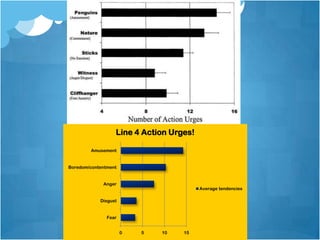
Line 4 Action Urges!

        Amusement


Boredom/contentment


             Anger
                                         Average tendencies

            Disgust


               Fear


                      0   5   10   15
Inclusive social thinking
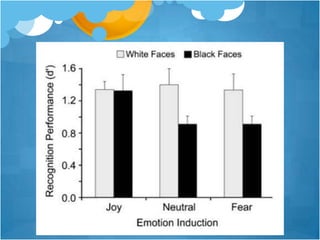
 Own Race Bias:

 Caucasians viewed Black and White faces and
 later asked to recall if they had seen the faces
 previously.

 By random assignment, they viewed an emotion-
 eliciting video.
The Build Hypothesis
 If we accept that +ve emotions broaden people’s
 mindsets – what is its purpose?

 Build hypothesis suggests an adaptive value that
 is put in reserve over the long-term.

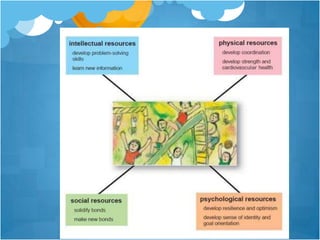
 Resources gained through +ve emotional
 experiences may be
 physical, social, psychological or intellectual.
Evidence?
 Fredrickson recently found experimental support for
 the build hypothesis.

 In a 2 month study, participants either attended a
 workshop cultivating positive emotions through
 meditation or had no intervention whatsoever.

 Results indicated that increasing the level of positive
 emotions leads to numerous benefits to health and
 well-being.
What we know:
 Anger, fear and sadness elicit distinct responses in
 the autonomic nervous system.

 Positive emotions appear to have no autonomic
 responses.

 BUT

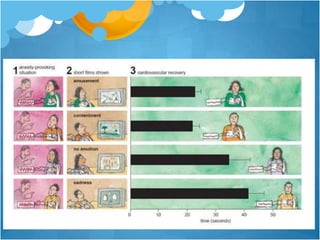
 They help put an end to any existing cardiovascular
 reactivity caused by –ve emotions!.. UNDO!
Proof?
 Fredrickson gave participants a stressor – the
 possibility of giving a public speech.
 During preparation – bodies increased sympathetic
 nervous system activation (sweaty palms, increased
 heart rate, increased blood pressure)
 After a minute or so of this state of
 arousal, participants were told they do not have to
 perform the speech and instead view a randomly
 assigned video clip to elicit a +ve, -ve or neutral
 emotion.
Confirmed
 +ve emotions hold clear benefits.

 How much should we cultivate in our lives?

 What is an optimal amount of positive emotion
 relative to negative emotion?
Research
 Fredrickson’s research into businesses, marriages, and depression
 shows:

 Depression, failing marriages and unsuccessful business teams are
 characterised by very low ratios of positive to –ve emotions (less
 than 1-1). That is, for every –ve emotion, there is on average, less
 than one +ive

 Optimal well-being, happy marriages and successful business teams
 show much higher positivity ratios (above 3-to-1) – that is, for every
 one –ve emotions, on average there are three or more +ve!

 Fredrickson and Losada (2005) suggests 3:1 – 11:1 are what humans
 need to flourish.

03 broaden and build

  • 2.
    Barbara Fredrickson Kenan Distinguished Professor of Psychology and Principal Investigator of the Positive Emotions and Psychophysiology Lab at the University of North Carolina WHY DO HUMANS HAVE POSITIVE EMOTIONS?
  • 3.
  • 4.
    Specific-Action Tendencies The ideathat emotions prepare the body both physically and psychologically to act in particular ways. E.g. Anger  attack; fear  escape; disgust  expel WHAT ABOUT POSITIVE EMOTIONS???
  • 5.
    Importance to Survival If +ve emotions are irrelevant to survival, what good are they? According to Fredrickson’s theory, +ve emotions EXPAND cognition and behavioural tendencies. Argues that +ve emotions increase the number of potential behavioural options
  • 8.
    Momentary thought-action repertoires Arange of potential actions the body and mind are prepared to take +ve emotional states  expanded cognitive flexibility  resource building that becomes useful over time Resources outlast the transient emotional state  functions to improve coping and odds of survival
  • 10.
    Broaden Hypothesis Centralhypothesis +ve emotions broaden scopes of attention and cognition and lead to a widened array of thoughts and action impulses in the mind. Therefore -ve emotions shrink these same things
  • 11.
    Evidence? Global Biasin Global-Local Visual Processing:
  • 12.
  • 14.
    Enlarging Though-Action Repertoires Again, watch emotion eliciting videos but using a modified Twenty Statements Test. Just after viewing the film, but prior to the TST, participants were asked to describe, in a word or two, the strongest emotion they felt while viewing the film. Next, they were asked to step away from the specifics of the film and take a moment to imagine being in a situation yourself in which this particular emotion would arise (the one you wrote on the previous page). Concentrate on all the emotion you would feel and live it as vividly and as deeply as possible. Given this feeling, please list all the things you would like to do right now. These instructions were followed by 20 blank lines that began with: ``I would like to____.'' The number of statements participants completed was tallied, with a possible range from 0 to 20. Higher scores indicate a larger thought-action repertoire.
  • 15.
    Line 4 ActionUrges! Amusement Boredom/contentment Anger Average tendencies Disgust Fear 0 5 10 15
  • 16.
    Inclusive social thinking Own Race Bias: Caucasians viewed Black and White faces and later asked to recall if they had seen the faces previously. By random assignment, they viewed an emotion- eliciting video.
  • 19.
    The Build Hypothesis If we accept that +ve emotions broaden people’s mindsets – what is its purpose? Build hypothesis suggests an adaptive value that is put in reserve over the long-term. Resources gained through +ve emotional experiences may be physical, social, psychological or intellectual.
  • 21.
    Evidence? Fredrickson recentlyfound experimental support for the build hypothesis. In a 2 month study, participants either attended a workshop cultivating positive emotions through meditation or had no intervention whatsoever. Results indicated that increasing the level of positive emotions leads to numerous benefits to health and well-being.
  • 23.
    What we know: Anger, fear and sadness elicit distinct responses in the autonomic nervous system. Positive emotions appear to have no autonomic responses. BUT They help put an end to any existing cardiovascular reactivity caused by –ve emotions!.. UNDO!
  • 24.
    Proof? Fredrickson gaveparticipants a stressor – the possibility of giving a public speech. During preparation – bodies increased sympathetic nervous system activation (sweaty palms, increased heart rate, increased blood pressure) After a minute or so of this state of arousal, participants were told they do not have to perform the speech and instead view a randomly assigned video clip to elicit a +ve, -ve or neutral emotion.
  • 27.
    Confirmed +ve emotionshold clear benefits. How much should we cultivate in our lives? What is an optimal amount of positive emotion relative to negative emotion?
  • 28.
    Research Fredrickson’s researchinto businesses, marriages, and depression shows: Depression, failing marriages and unsuccessful business teams are characterised by very low ratios of positive to –ve emotions (less than 1-1). That is, for every –ve emotion, there is on average, less than one +ive Optimal well-being, happy marriages and successful business teams show much higher positivity ratios (above 3-to-1) – that is, for every one –ve emotions, on average there are three or more +ve! Fredrickson and Losada (2005) suggests 3:1 – 11:1 are what humans need to flourish.