Postural reflexes
Dr. KJG
Professor of Physiology
MGMCRI
Objectives
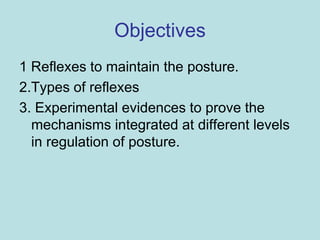
1 Reflexes to maintain the posture.
2.Types of reflexes
3. Experimental evidences to prove the
mechanisms integrated at different levels
in regulation of posture.
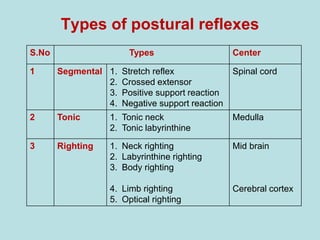
Types of postural reflexes
S.No Types Center
1 Segmental 1. Stretch reflex
2. Crossed extensor
3. Positive support reaction
4. Negative support reaction
Spinal cord
2 Tonic 1. Tonic neck
2. Tonic labyrinthine
Medulla
3 Righting 1. Neck righting
2. Labyrinthine righting
3. Body righting
4. Limb righting
5. Optical righting
Mid brain
Cerebral cortex
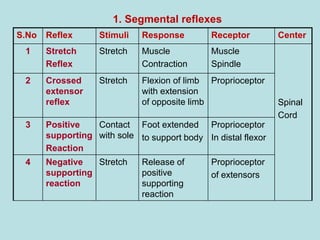
S.No Reflex Stimuli Response Receptor Center
1 Stretch
Reflex
Stretch Muscle
Contraction
Muscle
Spindle
Spinal
Cord
2 Crossed
extensor
reflex
Stretch Flexion of limb
with extension
of opposite limb
Proprioceptor
3 Positive
supporting
Reaction
Contact
with sole
Foot extended
to support body
Proprioceptor
In distal flexor
4 Negative
supporting
reaction
Stretch Release of
positive
supporting
reaction
Proprioceptor
of extensors
1. Segmental reflexes
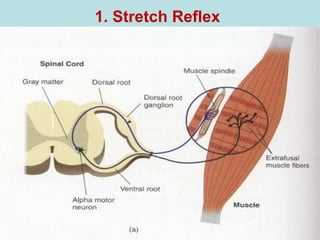
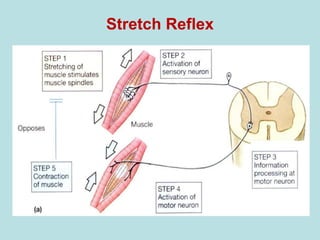
1. Stretch Reflex
Stretch Reflex
Spinal
cord
Dorsal root
ganglion
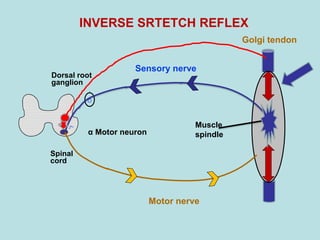
INVERSE SRTETCH REFLEX
Muscle
spindle
Sensory nerve
Motor nerve
α Motor neuron
Golgi tendon
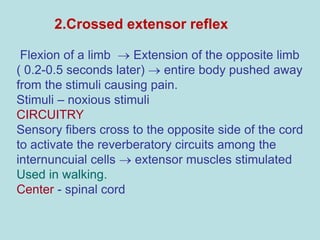
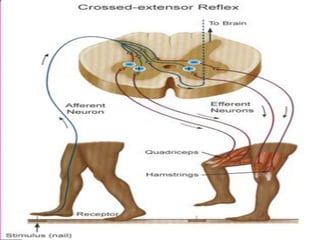
2.Crossed extensor reflex
Flexion of a limb  Extension of the opposite limb
( 0.2-0.5 seconds later)  entire body pushed away
from the stimuli causing pain.
Stimuli – noxious stimuli
CIRCUITRY
Sensory fibers cross to the opposite side of the cord
to activate the reverberatory circuits among the
internuncuial cells  extensor muscles stimulated
Used in walking.
Center - spinal cord
3.Positive supporting reaction
Used to support the body.
Magnet reaction ( locus of pressure determines
the direction of extension)
• Stimuli = Press the pads of (fingers, toes) and
dorsiflex the (hand, foot)
• Afferent = from the skin & muscle.
• Effect = Hand, foot extended to support the
body.
• Limbs become as solid rigid pillars.
• CAT & DOG can stand up to 3 minutes.
4.Negative supporting reaction
Opposite to the positive supporting reaction.
• Stimulus - stretch
• Receptor - Proprioceptor in extensors
• Center - spinal cord
• Response - Release of positive supporting
reaction.(the limb no longer supports the body
weight.)
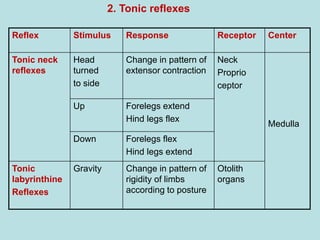
Reflex Stimulus Response Receptor Center
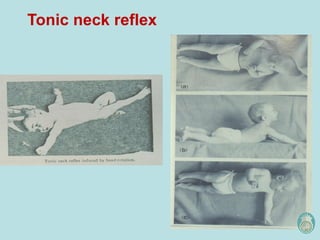
Tonic neck
reflexes
Head
turned
to side
Change in pattern of
extensor contraction
Neck
Proprio
ceptor
Medulla
Up Forelegs extend
Hind legs flex
Down Forelegs flex
Hind legs extend
Tonic
labyrinthine
Reflexes
Gravity Change in pattern of
rigidity of limbs
according to posture
Otolith
organs
2. Tonic reflexes
Tonic neck reflex
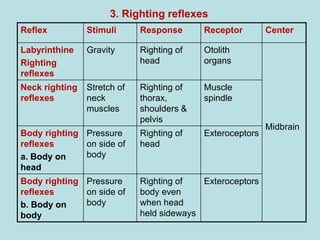
Reflex Stimuli Response Receptor Center
Labyrinthine
Righting
reflexes
Gravity Righting of
head
Otolith
organs
Midbrain
Neck righting
reflexes
Stretch of
neck
muscles
Righting of
thorax,
shoulders &
pelvis
Muscle
spindle
Body righting
reflexes
a. Body on
head
Pressure
on side of
body
Righting of
head
Exteroceptors
Body righting
reflexes
b. Body on
body
Pressure
on side of
body
Righting of
body even
when head
held sideways
Exteroceptors
3. Righting reflexes
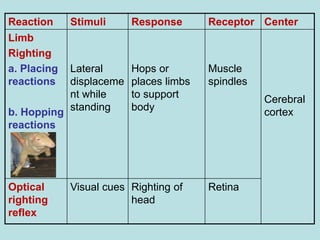
Reaction Stimuli Response Receptor Center
Limb
Righting
a. Placing
reactions
b. Hopping
reactions
Lateral
displaceme
nt while
standing
Hops or
places limbs
to support
body
Muscle
spindles
Cerebral
cortex
Optical
righting
reflex
Visual cues Righting of
head
Retina
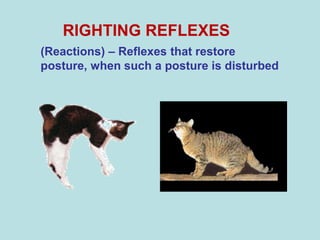
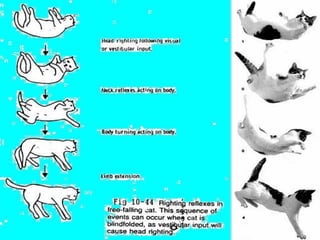
RIGHTING REFLEXES
(Reactions) – Reflexes that restore
posture, when such a posture is disturbed
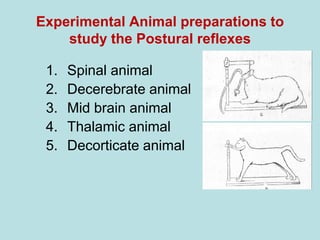
Experimental Animal preparations to
study the Postural reflexes
1. Spinal animal
2. Decerebrate animal
3. Mid brain animal
4. Thalamic animal
5. Decorticate animal
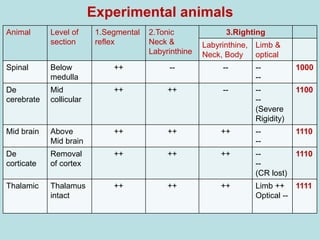
Experimental animals
Animal Level of
section
1.Segmental
reflex
2.Tonic
Neck &
Labyrinthine
3.Righting
Labyrinthine,
Neck, Body
Limb &
optical
Spinal Below
medulla
++ -- -- --
--
1000
De
cerebrate
Mid
collicular
++ ++ -- --
--
(Severe
Rigidity)
1100
Mid brain Above
Mid brain
++ ++ ++ --
--
1110
De
corticate
Removal
of cortex
++ ++ ++ --
--
(CR lost)
1110
Thalamic Thalamus
intact
++ ++ ++ Limb ++
Optical --
1111
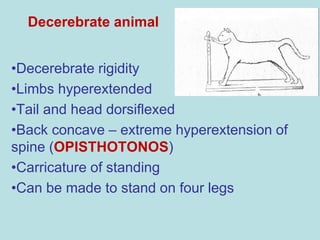
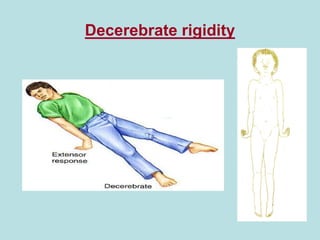
Decerebrate animal
•Decerebrate rigidity
•Limbs hyperextended
•Tail and head dorsiflexed
•Back concave – extreme hyperextension of
spine (OPISTHOTONOS)
•Carricature of standing
•Can be made to stand on four legs
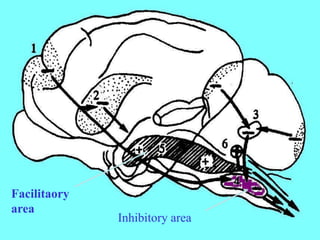
Decerebrate rigidity
Facilitaory
area
Inhibitory area
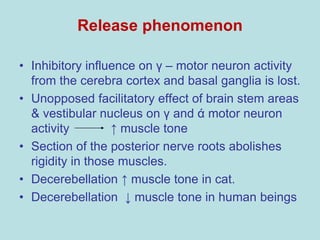
Release phenomenon
• Inhibitory influence on γ – motor neuron activity
from the cerebra cortex and basal ganglia is lost.
• Unopposed facilitatory effect of brain stem areas
& vestibular nucleus on γ and ά motor neuron
activity ↑ muscle tone
• Section of the posterior nerve roots abolishes
rigidity in those muscles.
• Decerebellation ↑ muscle tone in cat.
• Decerebellation ↓ muscle tone in human beings
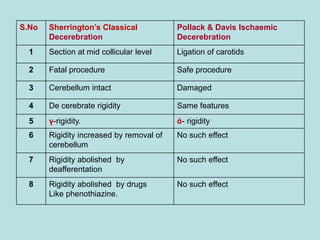
S.No Sherrington’s Classical
Decerebration
Pollack & Davis Ischaemic
Decerebration
1 Section at mid collicular level Ligation of carotids
2 Fatal procedure Safe procedure
3 Cerebellum intact Damaged
4 De cerebrate rigidity Same features
5 γ-rigidity. ά- rigidity
6 Rigidity increased by removal of
cerebellum
No such effect
7 Rigidity abolished by
deafferentation
No such effect
8 Rigidity abolished by drugs
Like phenothiazine.
No such effect
Thank You

12.postural reflexes kjg

  • 1.
  • 2.
    Objectives 1 Reflexes tomaintain the posture. 2.Types of reflexes 3. Experimental evidences to prove the mechanisms integrated at different levels in regulation of posture.
  • 3.
    Types of posturalreflexes S.No Types Center 1 Segmental 1. Stretch reflex 2. Crossed extensor 3. Positive support reaction 4. Negative support reaction Spinal cord 2 Tonic 1. Tonic neck 2. Tonic labyrinthine Medulla 3 Righting 1. Neck righting 2. Labyrinthine righting 3. Body righting 4. Limb righting 5. Optical righting Mid brain Cerebral cortex
  • 4.
    S.No Reflex StimuliResponse Receptor Center 1 Stretch Reflex Stretch Muscle Contraction Muscle Spindle Spinal Cord 2 Crossed extensor reflex Stretch Flexion of limb with extension of opposite limb Proprioceptor 3 Positive supporting Reaction Contact with sole Foot extended to support body Proprioceptor In distal flexor 4 Negative supporting reaction Stretch Release of positive supporting reaction Proprioceptor of extensors 1. Segmental reflexes
  • 5.
  • 6.
  • 7.
    Spinal cord Dorsal root ganglion INVERSE SRTETCHREFLEX Muscle spindle Sensory nerve Motor nerve α Motor neuron Golgi tendon
  • 8.
    2.Crossed extensor reflex Flexionof a limb  Extension of the opposite limb ( 0.2-0.5 seconds later)  entire body pushed away from the stimuli causing pain. Stimuli – noxious stimuli CIRCUITRY Sensory fibers cross to the opposite side of the cord to activate the reverberatory circuits among the internuncuial cells  extensor muscles stimulated Used in walking. Center - spinal cord
  • 10.
    3.Positive supporting reaction Usedto support the body. Magnet reaction ( locus of pressure determines the direction of extension) • Stimuli = Press the pads of (fingers, toes) and dorsiflex the (hand, foot) • Afferent = from the skin & muscle. • Effect = Hand, foot extended to support the body. • Limbs become as solid rigid pillars. • CAT & DOG can stand up to 3 minutes.
  • 11.
    4.Negative supporting reaction Oppositeto the positive supporting reaction. • Stimulus - stretch • Receptor - Proprioceptor in extensors • Center - spinal cord • Response - Release of positive supporting reaction.(the limb no longer supports the body weight.)
  • 12.
    Reflex Stimulus ResponseReceptor Center Tonic neck reflexes Head turned to side Change in pattern of extensor contraction Neck Proprio ceptor Medulla Up Forelegs extend Hind legs flex Down Forelegs flex Hind legs extend Tonic labyrinthine Reflexes Gravity Change in pattern of rigidity of limbs according to posture Otolith organs 2. Tonic reflexes
  • 13.
  • 14.
    Reflex Stimuli ResponseReceptor Center Labyrinthine Righting reflexes Gravity Righting of head Otolith organs Midbrain Neck righting reflexes Stretch of neck muscles Righting of thorax, shoulders & pelvis Muscle spindle Body righting reflexes a. Body on head Pressure on side of body Righting of head Exteroceptors Body righting reflexes b. Body on body Pressure on side of body Righting of body even when head held sideways Exteroceptors 3. Righting reflexes
  • 15.
    Reaction Stimuli ResponseReceptor Center Limb Righting a. Placing reactions b. Hopping reactions Lateral displaceme nt while standing Hops or places limbs to support body Muscle spindles Cerebral cortex Optical righting reflex Visual cues Righting of head Retina
  • 16.
    RIGHTING REFLEXES (Reactions) –Reflexes that restore posture, when such a posture is disturbed
  • 18.
    Experimental Animal preparationsto study the Postural reflexes 1. Spinal animal 2. Decerebrate animal 3. Mid brain animal 4. Thalamic animal 5. Decorticate animal
  • 19.
    Experimental animals Animal Levelof section 1.Segmental reflex 2.Tonic Neck & Labyrinthine 3.Righting Labyrinthine, Neck, Body Limb & optical Spinal Below medulla ++ -- -- -- -- 1000 De cerebrate Mid collicular ++ ++ -- -- -- (Severe Rigidity) 1100 Mid brain Above Mid brain ++ ++ ++ -- -- 1110 De corticate Removal of cortex ++ ++ ++ -- -- (CR lost) 1110 Thalamic Thalamus intact ++ ++ ++ Limb ++ Optical -- 1111
  • 20.
    Decerebrate animal •Decerebrate rigidity •Limbshyperextended •Tail and head dorsiflexed •Back concave – extreme hyperextension of spine (OPISTHOTONOS) •Carricature of standing •Can be made to stand on four legs
  • 21.
  • 22.
  • 23.
    Release phenomenon • Inhibitoryinfluence on γ – motor neuron activity from the cerebra cortex and basal ganglia is lost. • Unopposed facilitatory effect of brain stem areas & vestibular nucleus on γ and ά motor neuron activity ↑ muscle tone • Section of the posterior nerve roots abolishes rigidity in those muscles. • Decerebellation ↑ muscle tone in cat. • Decerebellation ↓ muscle tone in human beings
  • 24.
    S.No Sherrington’s Classical Decerebration Pollack& Davis Ischaemic Decerebration 1 Section at mid collicular level Ligation of carotids 2 Fatal procedure Safe procedure 3 Cerebellum intact Damaged 4 De cerebrate rigidity Same features 5 γ-rigidity. ά- rigidity 6 Rigidity increased by removal of cerebellum No such effect 7 Rigidity abolished by deafferentation No such effect 8 Rigidity abolished by drugs Like phenothiazine. No such effect
  • 25.