PYOTHORAX OR
EMPYEMIA
Diseases of Respiratory system
By
Prof Dr. Mohamed Ghanem
PYOTHORAX OR EMPYEMIA
 Definition:
it is the accumulation of pus and infected
material and fluids within the pleural
sac characterized clinically by fever,
shortness of breath and loss of weight.
 History: of surgery, hospitalization due
to other disease or being out home for
several days
Causes
Incubation period 5-10 days:
1. Direct introduction
 By penetrating trauma.
 Surgery
 Thoracocentesis or thoracostomy.
2. Haematogenous:
 Systemic sepsis, which reaches the pleural sac
via lymphatics or blood
3. by extension:
 From rupture of oesophagus
 Penumonia with bronchopleural
communication
 Mediastinitis or subphrenic infection
Clinical symptoms:
It usually occurs in acute or subacute form
1. Fever
2. Anorexia - Loss of weight
3. Shortness of breath,
4. Abduction of forelimbs, arched back
5. Microbiological examination of effusion
by acid- fast stain or Gram stain or by
culture reveals presence of
1. mycobacterium, bacteroids, actinomycetes,
2. E. coli or pasteurella.
Hemogram
1. Leucocytosis 27000 in cats and 32000 in
dog patients.
2. Elevated serum globulin N: 3.7% it
reaches 5.2 mg % 
3. PCV may be elevated N: 37 % in dogs, 26
% cats .
4. These animals may show normocytic,
normochormic anaemia.
Radiography
The X-ray reveals:
 Moderate to large pleural effusion.
 Obscure cardiac silhouette (shadow)
and a large portion of pulmonary and
pleural details.
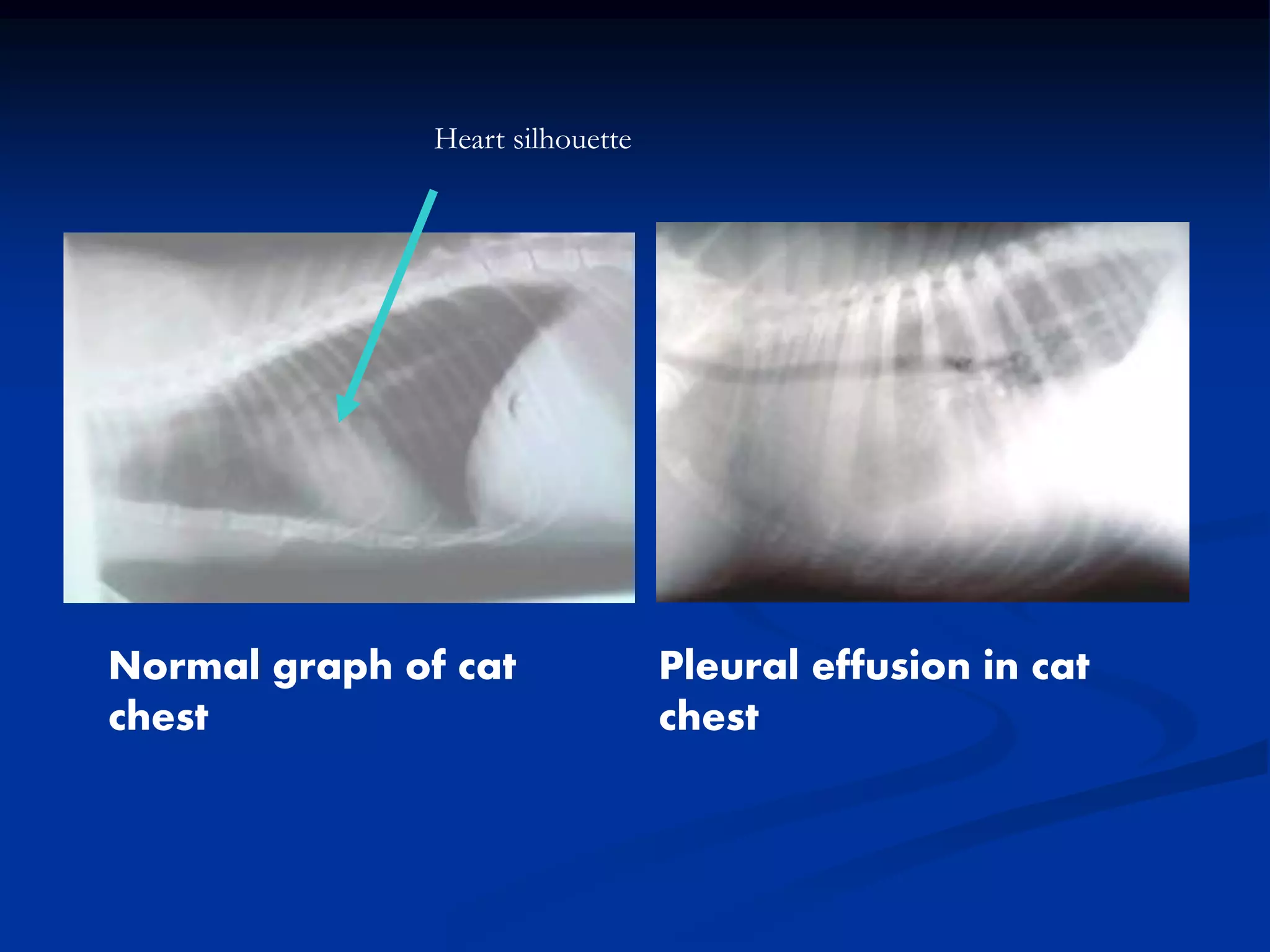
Normal graph of cat
chest
Pleural effusion in cat
chest
Heart silhouette
Diagnosis:
1. By history
2. Symptoms
3. Special examinations:
1. Laboratory tests:
1. WBCs, PCV
2. Culture and stain examination.
3. Radiograph
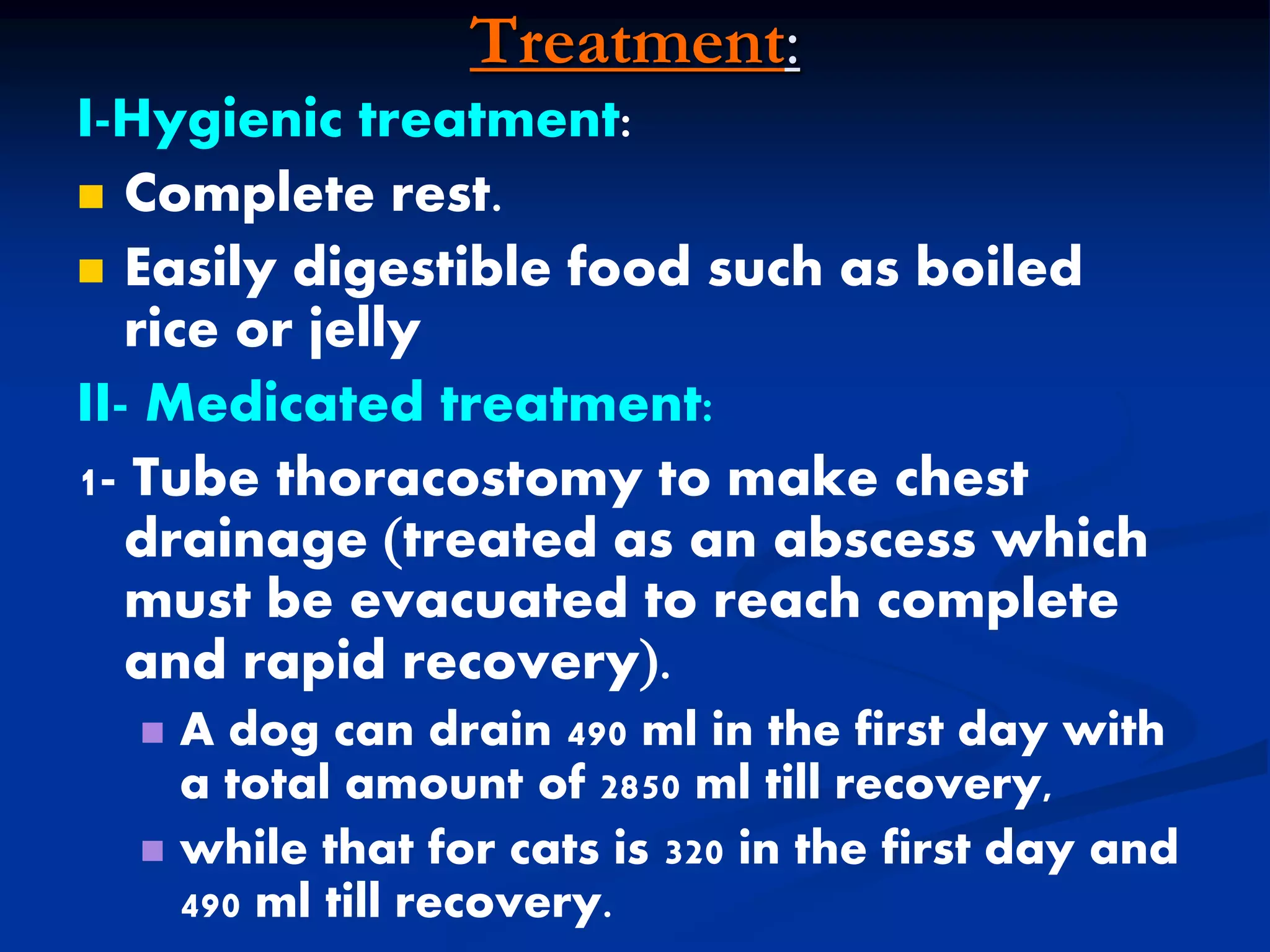
Treatment:
I-Hygienic treatment:
 Complete rest.
 Easily digestible food such as boiled
rice or jelly
II- Medicated treatment:
1- Tube thoracostomy to make chest
drainage treated as an abscess which
must be evacuated to reach complete
and rapid recovery.
 A dog can drain 490 ml in the first day with
a total amount of 2850 ml till recovery,
 while that for cats is 320 in the first day and
490 ml till recovery.
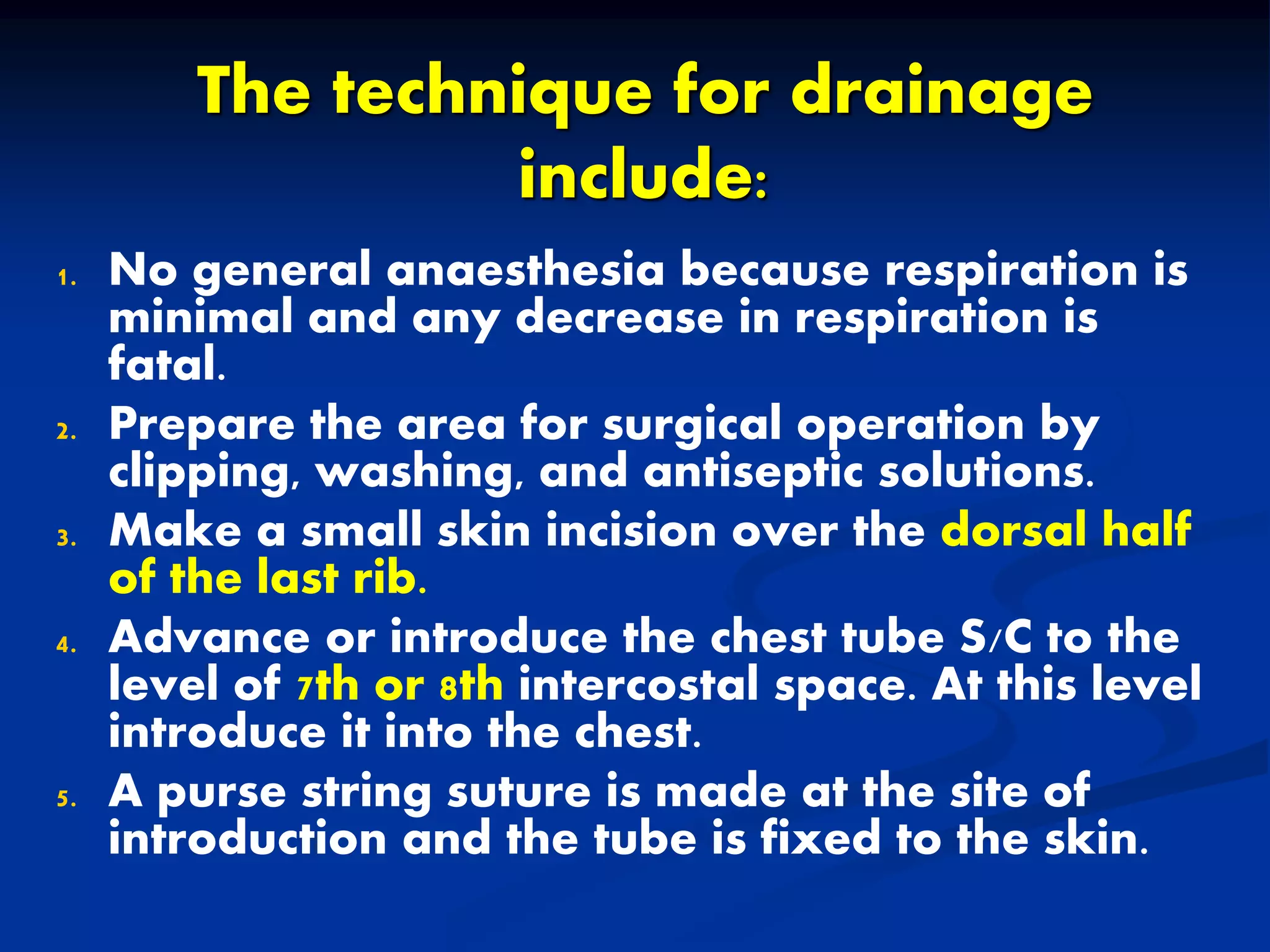
The technique for drainage
include:
1. No general anaesthesia because respiration is
minimal and any decrease in respiration is
fatal.
2. Prepare the area for surgical operation by
clipping, washing, and antiseptic solutions.
3. Make a small skin incision over the dorsal half
of the last rib.
4. Advance or introduce the chest tube S/C to the
level of 7th or 8th intercostal space. At this level
introduce it into the chest.
5. A purse string suture is made at the site of
introduction and the tube is fixed to the skin.
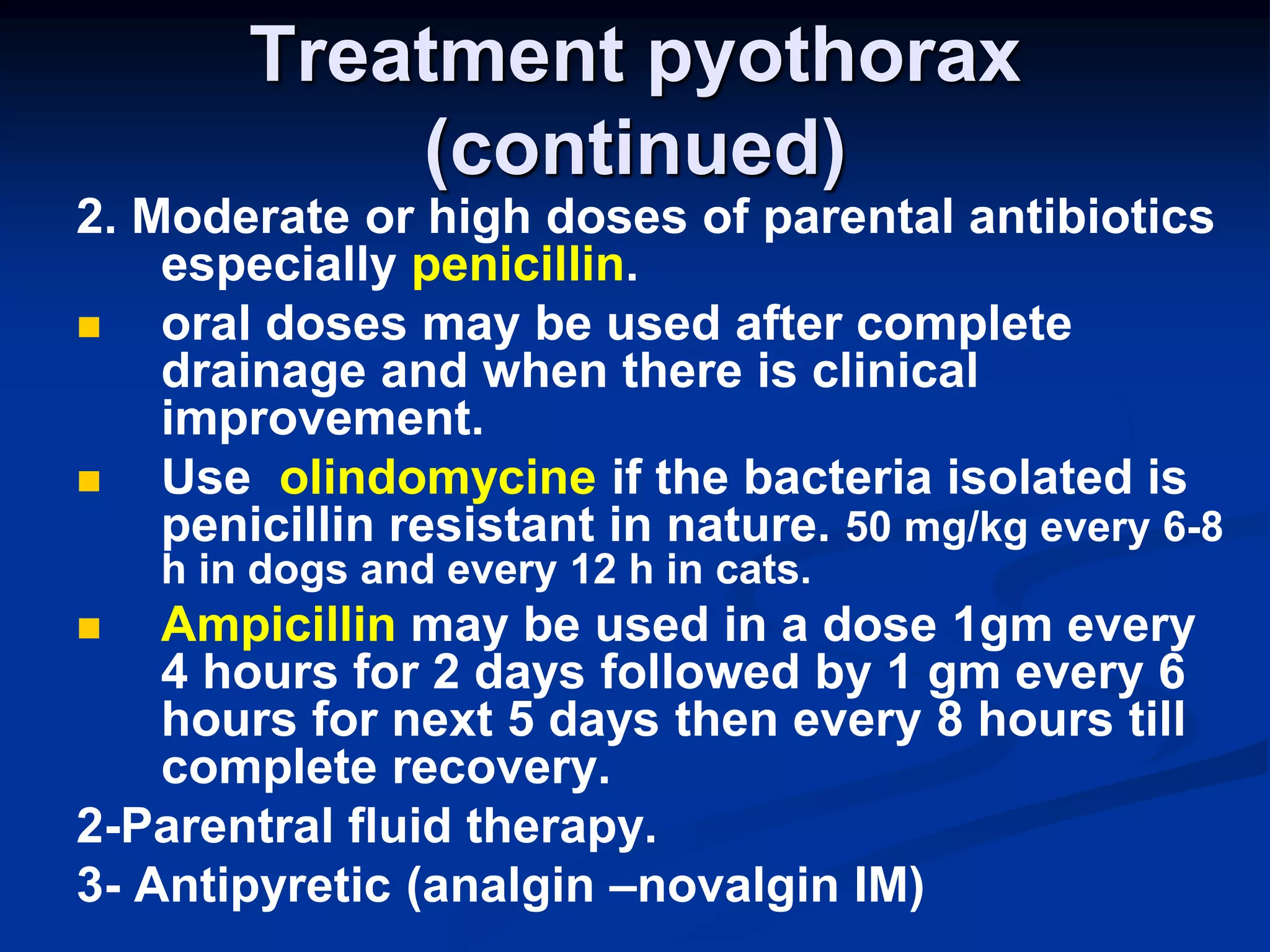
Treatment pyothorax
(continued)
2. Moderate or high doses of parental antibiotics
especially penicillin.
 oral doses may be used after complete
drainage and when there is clinical
improvement.
 Use olindomycine if the bacteria isolated is
penicillin resistant in nature. 50 mg/kg every 6-8
h in dogs and every 12 h in cats.
 Ampicillin may be used in a dose 1gm every
4 hours for 2 days followed by 1 gm every 6
hours for next 5 days then every 8 hours till
complete recovery.
2-Parentral fluid therapy.
3- Antipyretic (analgin –novalgin IM)
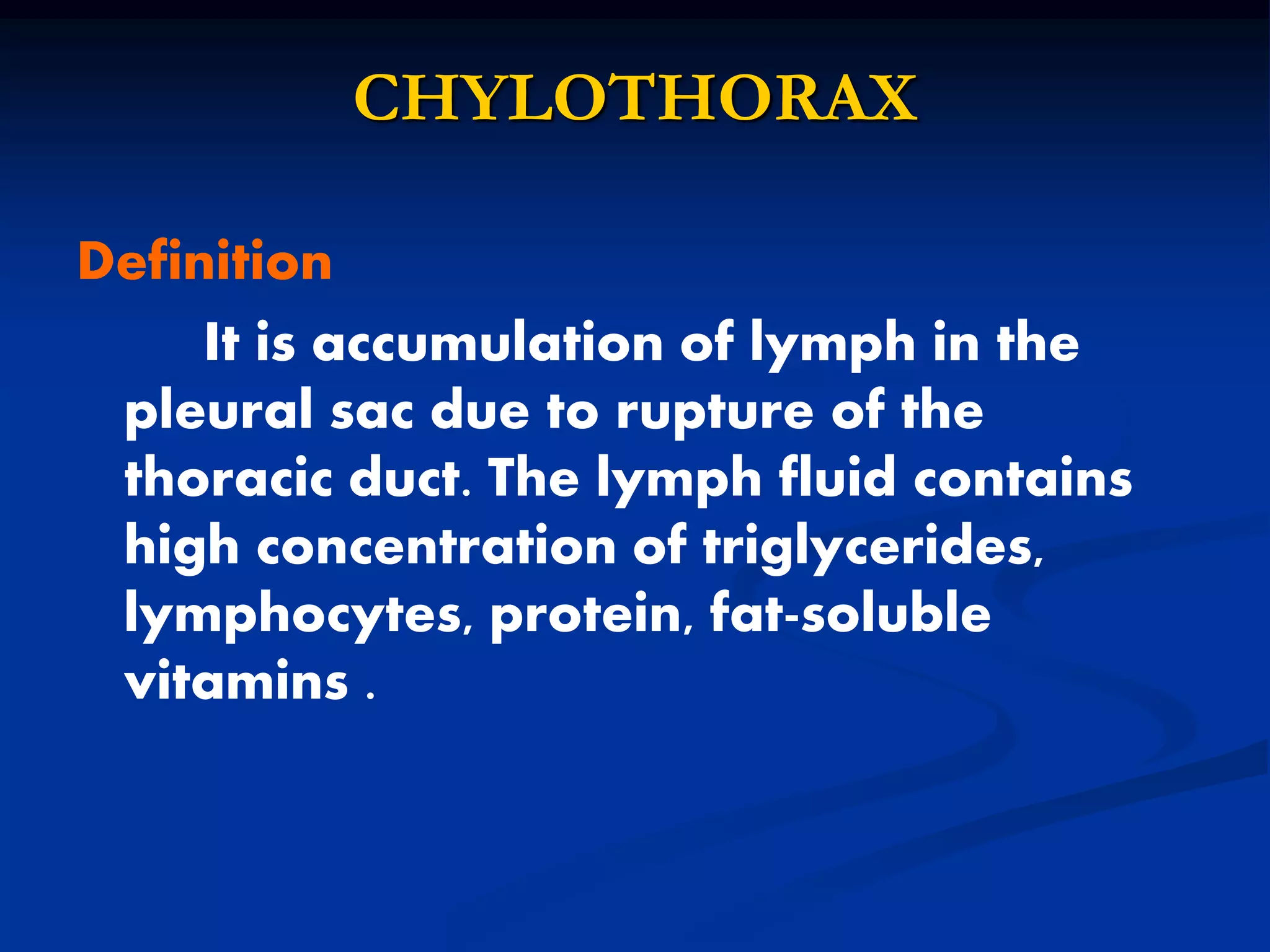
CHYLOTHORAX
Definition
It is accumulation of lymph in the
pleural sac due to rupture of the
thoracic duct. The lymph fluid contains
high concentration of triglycerides,
lymphocytes, protein, fat-soluble
vitamins .
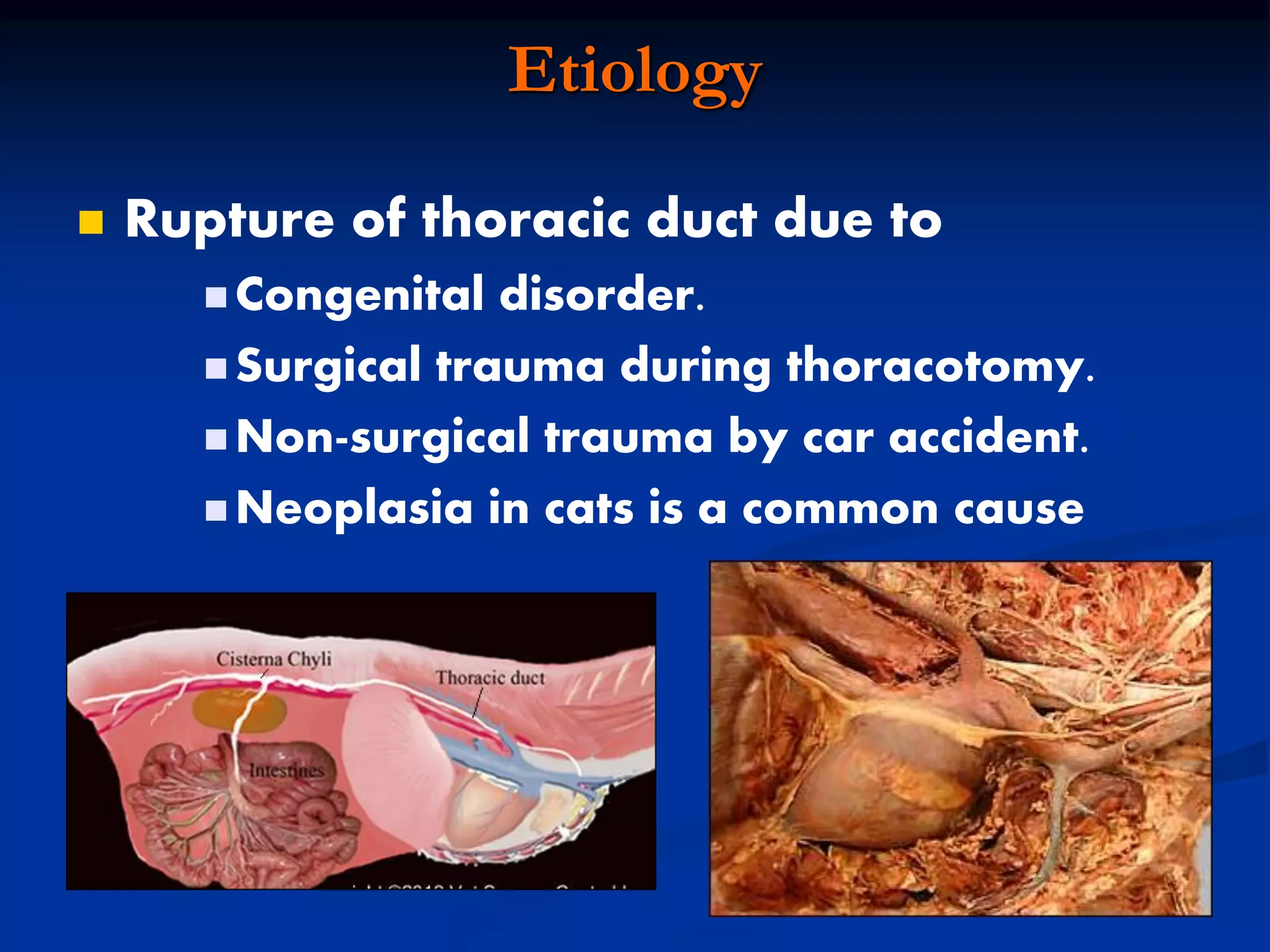
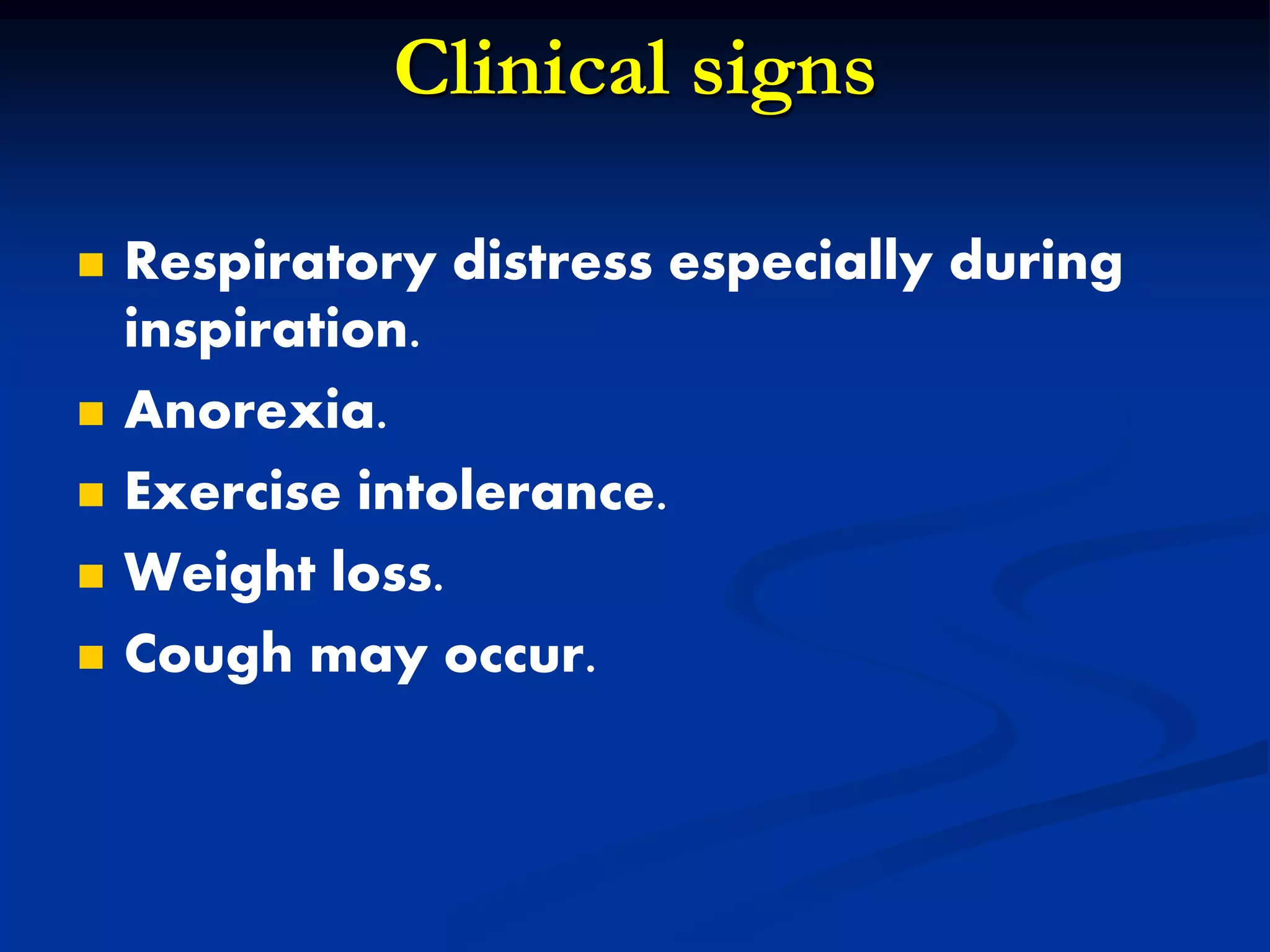
Etiology
 Rupture of thoracic duct due to
 Congenital disorder.
 Surgical trauma during thoracotomy.
 Non-surgical trauma by car accident.
 Neoplasia in cats is a common cause
Clinical signs
 Respiratory distress especially during
inspiration.
 Anorexia.
 Exercise intolerance.
 Weight loss.
 Cough may occur.
Diagnosis
 History
 Clinical signs.
 Radiography. To document the fluid
 Examination of pleural fluid collected
by thoracocentesis
 Blood test: lymphopenia and
panhypoproteinemia in peripheral
blood
Treatment:
 A-Hygienic Treatment
 Rest
 Fluid therapy
 B-Medicated therapy:
 by draining the chyle by chest tube using a
constant suction.
 This drainage may maintain direct contact
between the parietal and visceral pleura
that may decrease leakage of chyle from
the chest.
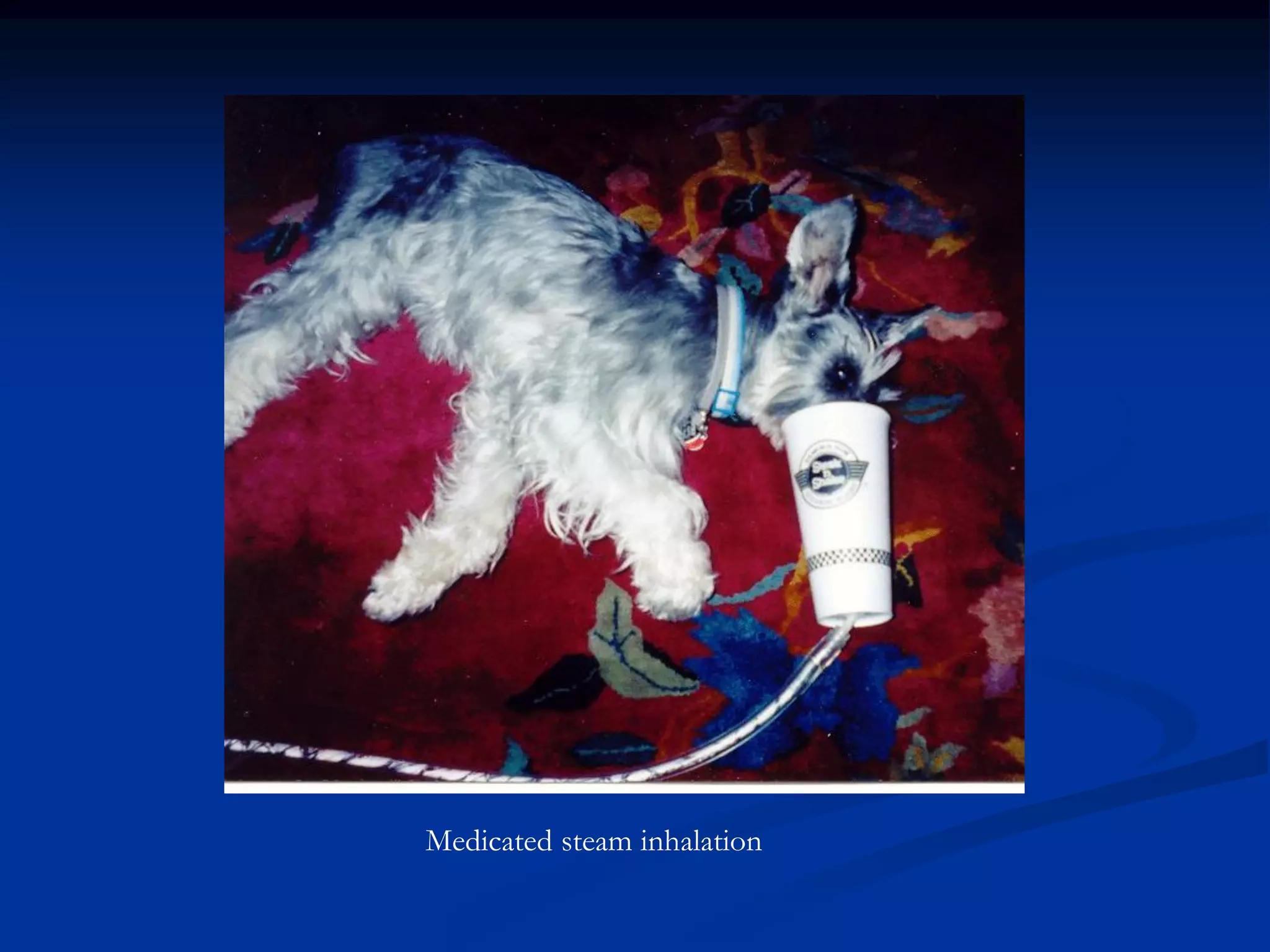
Medicated steam inhalation

Pyothorax and chylothorax

  • 1.
    PYOTHORAX OR EMPYEMIA Diseases ofRespiratory system By Prof Dr. Mohamed Ghanem
  • 2.
    PYOTHORAX OR EMPYEMIA Definition: it is the accumulation of pus and infected material and fluids within the pleural sac characterized clinically by fever, shortness of breath and loss of weight.  History: of surgery, hospitalization due to other disease or being out home for several days
  • 3.
    Causes Incubation period 5-10days: 1. Direct introduction  By penetrating trauma.  Surgery  Thoracocentesis or thoracostomy. 2. Haematogenous:  Systemic sepsis, which reaches the pleural sac via lymphatics or blood 3. by extension:  From rupture of oesophagus  Penumonia with bronchopleural communication  Mediastinitis or subphrenic infection
  • 4.
    Clinical symptoms: It usuallyoccurs in acute or subacute form 1. Fever 2. Anorexia - Loss of weight 3. Shortness of breath, 4. Abduction of forelimbs, arched back 5. Microbiological examination of effusion by acid- fast stain or Gram stain or by culture reveals presence of 1. mycobacterium, bacteroids, actinomycetes, 2. E. coli or pasteurella.
  • 5.
    Hemogram 1. Leucocytosis 27000in cats and 32000 in dog patients. 2. Elevated serum globulin N: 3.7% it reaches 5.2 mg %  3. PCV may be elevated N: 37 % in dogs, 26 % cats . 4. These animals may show normocytic, normochormic anaemia.
  • 6.
    Radiography The X-ray reveals: Moderate to large pleural effusion.  Obscure cardiac silhouette (shadow) and a large portion of pulmonary and pleural details.
  • 7.
    Normal graph ofcat chest Pleural effusion in cat chest Heart silhouette
  • 8.
    Diagnosis: 1. By history 2.Symptoms 3. Special examinations: 1. Laboratory tests: 1. WBCs, PCV 2. Culture and stain examination. 3. Radiograph
  • 9.
    Treatment: I-Hygienic treatment:  Completerest.  Easily digestible food such as boiled rice or jelly II- Medicated treatment: 1- Tube thoracostomy to make chest drainage treated as an abscess which must be evacuated to reach complete and rapid recovery.  A dog can drain 490 ml in the first day with a total amount of 2850 ml till recovery,  while that for cats is 320 in the first day and 490 ml till recovery.
  • 10.
    The technique fordrainage include: 1. No general anaesthesia because respiration is minimal and any decrease in respiration is fatal. 2. Prepare the area for surgical operation by clipping, washing, and antiseptic solutions. 3. Make a small skin incision over the dorsal half of the last rib. 4. Advance or introduce the chest tube S/C to the level of 7th or 8th intercostal space. At this level introduce it into the chest. 5. A purse string suture is made at the site of introduction and the tube is fixed to the skin.
  • 11.
    Treatment pyothorax (continued) 2. Moderateor high doses of parental antibiotics especially penicillin.  oral doses may be used after complete drainage and when there is clinical improvement.  Use olindomycine if the bacteria isolated is penicillin resistant in nature. 50 mg/kg every 6-8 h in dogs and every 12 h in cats.  Ampicillin may be used in a dose 1gm every 4 hours for 2 days followed by 1 gm every 6 hours for next 5 days then every 8 hours till complete recovery. 2-Parentral fluid therapy. 3- Antipyretic (analgin –novalgin IM)
  • 12.
    CHYLOTHORAX Definition It is accumulationof lymph in the pleural sac due to rupture of the thoracic duct. The lymph fluid contains high concentration of triglycerides, lymphocytes, protein, fat-soluble vitamins .
  • 13.
    Etiology  Rupture ofthoracic duct due to  Congenital disorder.  Surgical trauma during thoracotomy.  Non-surgical trauma by car accident.  Neoplasia in cats is a common cause
  • 14.
    Clinical signs  Respiratorydistress especially during inspiration.  Anorexia.  Exercise intolerance.  Weight loss.  Cough may occur.
  • 15.
    Diagnosis  History  Clinicalsigns.  Radiography. To document the fluid  Examination of pleural fluid collected by thoracocentesis  Blood test: lymphopenia and panhypoproteinemia in peripheral blood
  • 16.
    Treatment:  A-Hygienic Treatment Rest  Fluid therapy  B-Medicated therapy:  by draining the chyle by chest tube using a constant suction.  This drainage may maintain direct contact between the parietal and visceral pleura that may decrease leakage of chyle from the chest.
  • 17.