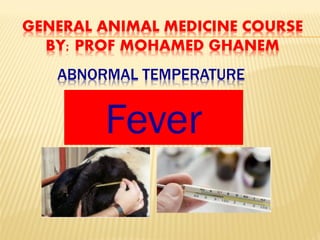

ABNORMAL TEMPERATURE
GENERAL ANIMAL MEDICINE COURSE
BY: PROF MOHAMED GHANEM
Fever
FEVER (PYREXIA)
 Rise of core body temperature above normal
limit independent to the effect of the
ambient conditions.
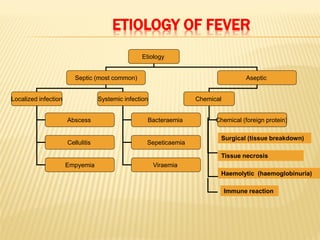
Etiology
Septic (most common) Aseptic
Localized infection Systemic infection
Abscess
Cellulitis
Empyemia
Bacteraemia
Sepeticaemia
Viraemia
Chemical
Chemical (foreign protein)
Surgical (tissue breakdown)
Tissue necrosis
Haemolytic (haemoglobinuria)
ETIOLOGY OF FEVER
Immune reaction
PATHOGENESIS OF FEVER
 Fever may be provoked by many stimuli. Most often, they are
bacteria and their endotoxins, viruses, protozoa, immune
reactions,
 These substances are commonly called exogenic pyrogens.
Cells stimulated by exogenic pyrogens to produce cytokines
called endogenic pyrogens.
 Endogenic pyrogens centrally affect the thermosensitive
neurons in the hypothalamus increase the production of
heat and decrease in heat loss
 The most important endogenic pyrogens are interleukins IL-
1, IL-6 and the tumour necrosis factor- (TNF- ) produced
especially by monocytes and macrophages but also by
endothelial cells
 Interleukin-1 initiates fever by increasing the
synthesis of prostaglandins, especially PG E2
in the anterior hypothalamus.
 This raises the thermostatic set point and
induces the mechanism of heat conservation
and heat production until the blood and core
temp. are elevated to match the
hypothalamic set point.
 Therefore, antipyretics containing
prostaglandin synthetase inhibitor lower
fever by blocking the PG synthesis
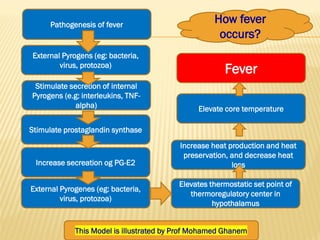
Pathogenesis of fever
External Pyrogens (eg: bacteria,
virus, protozoa)
Stimulate secretion of internal
Pyrogens (e.g: interleukins, TNF-
alpha)
Stimulate prostaglandin synthase
Increase secreation og PG-E2
External Pyrogenes (eg: bacteria,
virus, protozoa)
Elevates thermostatic set point of
thermoregulatory center in
hypothalamus
Increase heat production and heat
preservation, and decrease heat
loss
Elevate core temperature
Fever
This Model is illustrated by Prof Mohamed Ghanem
How fever
occurs?
STAGES OF FEVER
 1- increment stage
 Cutaneous vasoconstriction
 Absence of sweating
 Cold skin and extremities
 Reduced respiration
 Muscle shivering
 Reduced respiration
 Oliguria
 Rectal temperature is elevated
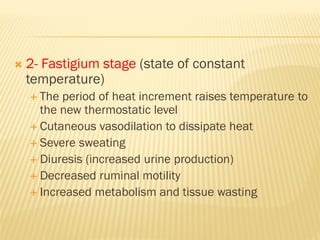
 2- Fastigium stage (state of constant
temperature)
 The period of heat increment raises temperature to
the new thermostatic level
 Cutaneous vasodilation to dissipate heat
 Severe sweating
 Diuresis (increased urine production)
 Decreased ruminal motility
 Increased metabolism and tissue wasting
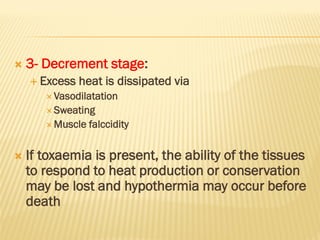
 3- Decrement stage:
 Excess heat is dissipated via
 Vasodilatation
 Sweating
 Muscle falccidity
 If toxaemia is present, the ability of the tissues
to respond to heat production or conservation
may be lost and hypothermia may occur before
death
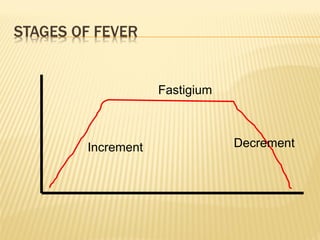
STAGES OF FEVER
Increment Decrement
Fastigium
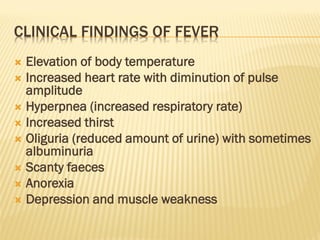
CLINICAL FINDINGS OF FEVER
 Elevation of body temperature
 Increased heart rate with diminution of pulse
amplitude
 Hyperpnea (increased respiratory rate)
 Increased thirst
 Oliguria (reduced amount of urine) with sometimes
albuminuria
 Scanty faeces
 Anorexia
 Depression and muscle weakness
FORMS OF FEVER
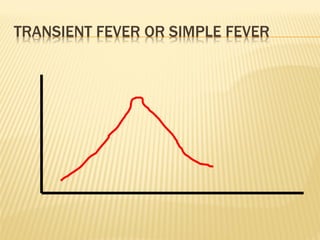
 Transient : fever for short periods (hours)
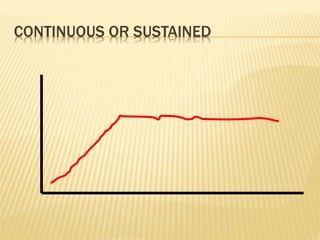
 Continuous or sustained: without diurnal
variations
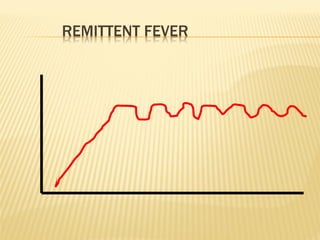
 Remittent: with diurnal variation
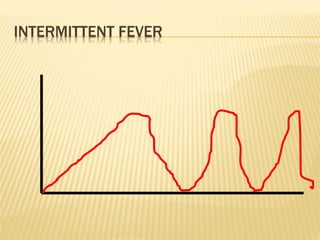
 Intermittent when fever peaks last for 2-3 days
and interspersed with normal period
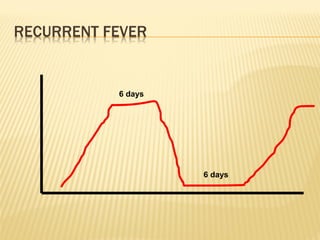
 Recurrent fever: peaks of fever for about 6 days
interspersed with equal period of normal temp.
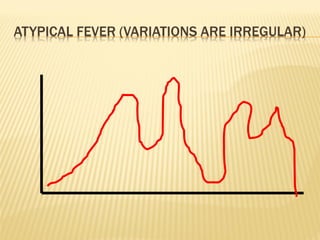
 Atypical: when temperature variations are irregular
TRANSIENT FEVER OR SIMPLE FEVER
CONTINUOUS OR SUSTAINED
REMITTENT FEVER
INTERMITTENT FEVER
RECURRENT FEVER
6 days
6 days
ATYPICAL FEVER (VARIATIONS ARE IRREGULAR)
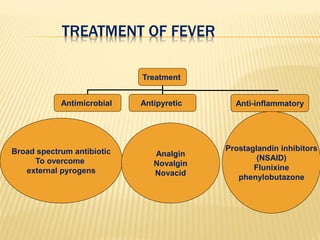
TREATMENT OF FEVER
Treatment
Antimicrobial Antipyretic Anti-inflammatory
Broad spectrum antibiotic
To overcome
external pyrogens
Analgin
Novalgin
Novacid
Prostaglandin inhibitors
(NSAID)
Flunixine
phenylobutazone
Questions

Fever by prof mohamed ghanem

  • 1.
    ABNORMAL TEMPERATURE GENERAL ANIMALMEDICINE COURSE BY: PROF MOHAMED GHANEM Fever
  • 2.
    FEVER (PYREXIA)  Riseof core body temperature above normal limit independent to the effect of the ambient conditions.
  • 4.
    Etiology Septic (most common)Aseptic Localized infection Systemic infection Abscess Cellulitis Empyemia Bacteraemia Sepeticaemia Viraemia Chemical Chemical (foreign protein) Surgical (tissue breakdown) Tissue necrosis Haemolytic (haemoglobinuria) ETIOLOGY OF FEVER Immune reaction
  • 5.
    PATHOGENESIS OF FEVER Fever may be provoked by many stimuli. Most often, they are bacteria and their endotoxins, viruses, protozoa, immune reactions,  These substances are commonly called exogenic pyrogens. Cells stimulated by exogenic pyrogens to produce cytokines called endogenic pyrogens.  Endogenic pyrogens centrally affect the thermosensitive neurons in the hypothalamus increase the production of heat and decrease in heat loss  The most important endogenic pyrogens are interleukins IL- 1, IL-6 and the tumour necrosis factor- (TNF- ) produced especially by monocytes and macrophages but also by endothelial cells
  • 6.
     Interleukin-1 initiatesfever by increasing the synthesis of prostaglandins, especially PG E2 in the anterior hypothalamus.  This raises the thermostatic set point and induces the mechanism of heat conservation and heat production until the blood and core temp. are elevated to match the hypothalamic set point.  Therefore, antipyretics containing prostaglandin synthetase inhibitor lower fever by blocking the PG synthesis
  • 7.
    Pathogenesis of fever ExternalPyrogens (eg: bacteria, virus, protozoa) Stimulate secretion of internal Pyrogens (e.g: interleukins, TNF- alpha) Stimulate prostaglandin synthase Increase secreation og PG-E2 External Pyrogenes (eg: bacteria, virus, protozoa) Elevates thermostatic set point of thermoregulatory center in hypothalamus Increase heat production and heat preservation, and decrease heat loss Elevate core temperature Fever This Model is illustrated by Prof Mohamed Ghanem How fever occurs?
  • 8.
    STAGES OF FEVER 1- increment stage  Cutaneous vasoconstriction  Absence of sweating  Cold skin and extremities  Reduced respiration  Muscle shivering  Reduced respiration  Oliguria  Rectal temperature is elevated
  • 9.
     2- Fastigiumstage (state of constant temperature)  The period of heat increment raises temperature to the new thermostatic level  Cutaneous vasodilation to dissipate heat  Severe sweating  Diuresis (increased urine production)  Decreased ruminal motility  Increased metabolism and tissue wasting
  • 10.
     3- Decrementstage:  Excess heat is dissipated via  Vasodilatation  Sweating  Muscle falccidity  If toxaemia is present, the ability of the tissues to respond to heat production or conservation may be lost and hypothermia may occur before death
  • 11.
    STAGES OF FEVER IncrementDecrement Fastigium
  • 12.
    CLINICAL FINDINGS OFFEVER  Elevation of body temperature  Increased heart rate with diminution of pulse amplitude  Hyperpnea (increased respiratory rate)  Increased thirst  Oliguria (reduced amount of urine) with sometimes albuminuria  Scanty faeces  Anorexia  Depression and muscle weakness
  • 13.
    FORMS OF FEVER Transient : fever for short periods (hours)  Continuous or sustained: without diurnal variations  Remittent: with diurnal variation  Intermittent when fever peaks last for 2-3 days and interspersed with normal period  Recurrent fever: peaks of fever for about 6 days interspersed with equal period of normal temp.  Atypical: when temperature variations are irregular
  • 14.
    TRANSIENT FEVER ORSIMPLE FEVER
  • 15.
  • 16.
  • 17.
  • 18.
  • 19.
  • 20.
    TREATMENT OF FEVER Treatment AntimicrobialAntipyretic Anti-inflammatory Broad spectrum antibiotic To overcome external pyrogens Analgin Novalgin Novacid Prostaglandin inhibitors (NSAID) Flunixine phenylobutazone
  • 21.