
LARYNGEAL
DISEASES
(dogs and cats)
Prof. Dr. Mohamed Ghanem
Manifestations of laryngeal affection
 A raw dry cough : occurs in fits and may
be interrupted with few swallowing
attempts.
 Stridor (an inspiratory or expiratory
wheeze) due to a sort of obstruction.
 The change in voice indicates severe
laryngeal affection especially vocal
cords.
 Painful swallowing is apparent
because of the irritation to the
pharynx.
 Dyspnea (difficult breathing) occurs at
intervals (spasms).
A-Laryngeal malformation
 Congenital laryngeal malformation
occurs in both dogs and cats and may
be seen at any part of the larynx.
 This malformation may be
 1-stenosis,
 2-inadequate development of laryngeal
cartilage, and
 3-laryngeal collapse
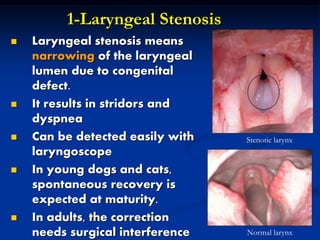
1-Laryngeal Stenosis
 Laryngeal stenosis means
narrowing of the laryngeal
lumen due to congenital
defect.
 It results in stridors and
dyspnea
 Can be detected easily with
laryngoscope
 In young dogs and cats,
spontaneous recovery is
expected at maturity.
 In adults, the correction
needs surgical interference
Stenotic larynx
Normal larynx
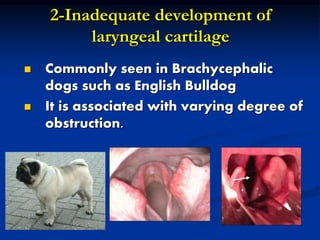
2-Inadequate development of
laryngeal cartilage
 Commonly seen in Brachycephalic
dogs such as English Bulldog
 It is associated with varying degree of
obstruction.
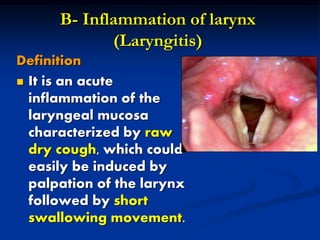
B- Inflammation of larynx
(Laryngitis)
Definition
 It is an acute
inflammation of the
laryngeal mucosa
characterized by raw
dry cough, which could
easily be induced by
palpation of the larynx
followed by short
swallowing movement.
Etiology
1. Canine infection tracheobronchitis (kennel
cough)
2. Bacterial and viral infection in dogs that result
in inflammation of laryngeal, tracheal, or
bronchial mucosa.
3. May occur after a day of continuous barking
and panting.
4. Viral tracheitis and calcivirus in cats.
5. After inhalation of burning gas in dogs and cats.
6. After intubation for anesthesia in dogs and cats
Clinical signs
1. Signs are restricted to raw dry cough
with interrupted swallowing
movements.
2. By laryngoscopic examination,
profuse local edema and
laryngospasm may be visualized.
3. Excitement and anxiety manifested by
resistance to examination.
Treatment
 Complete rest and avoiding excitement.
 Expectorant (biselvon).
 Syrup containing ephedrine.
 Anti-inflammatory: predinosolone
 Antibiotics are indicated only if animal
encounters a fever.
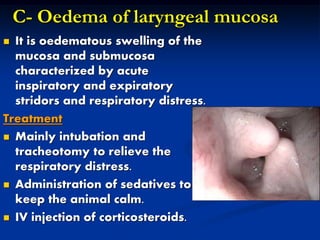
C- Oedema of laryngeal mucosa
 It is oedematous swelling of the
mucosa and submucosa
characterized by acute
inspiratory and expiratory
stridors and respiratory distress.
Treatment
 Mainly intubation and
tracheotomy to relieve the
respiratory distress.
 Administration of sedatives to
keep the animal calm.
 IV injection of corticosteroids.
C- Laryngeal abscess
Etiology
 A rare disease that occur secondary to
penetration of the larynx by a needle, fish
bone or stick
Symptoms
 Are those of obstructive laryngeal disease
Treatment
 The abscess should be opened and drained
under general anesthesia.
 Care should be taken to avoid aspiration of
exudates into the trachea.
 Antibiotic course should be given based upon
sensitivity test
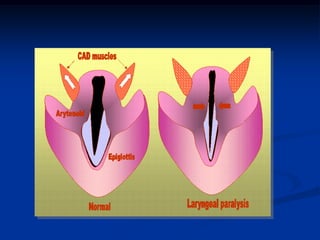
D- Laryngeal paralysis
Definition
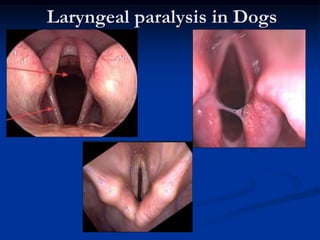
 It is the failure of the arytenoids
cartilage to abduct during inspiration
creating an upper airway obstruction. It
may be partial or complete loss of
function.
Etiology
1. Neurologic: due to trauma or neoplasia of
the neck or to both the recurrent laryngeal
nerves that innervates the arytenoids
cartilage.
2. Muscular disease: in association with
polymyositis or generalized muscular disease
(myasthenia gravis).
3. Ankylosis of the cricoarytenoid muscle.
4. Congenital laryngeal paralysis appears to be
inherited in young dogs of several breeds
(such as Dalmatian and afghan Hound) due
to an autosomal dominant gene.
Pathophysiology
 Failure of abduction of the arytenoids and the
vocal folds during inspiration produces
narrowing the size of the lumen and increasing
airflow resistance.
 vocal folds oscillate which produces the
characteristic `roaring` or wheeze known as
stridor.
Laryngeal paralysis in Dogs
Clinical signs
1. Respiratory distress (roaring) due to
narrowing of the airway at the
arytenoid cartilage.
2. Stridor or change in barking voice.
3. Cyanosis particularly after exercise or
excitement.
4. Laryngeal edema or inflammation
may occur as a secondary disease.
Diagnosis:
 Clinical signs
 History of trauma
 Laryngoscopy for definitive diagnosis:
arytenoids cartilages and focal cords
remain closed during inspiration.
Treatment
 Glucocorticoid such as prednisone
0.5mg/kg every 12 h to reduce
secondary inflammation and edema.
 Surgical enlargement of the airway is
the treatment of choice to maintain
adequate opening for the flow of air.
Questions
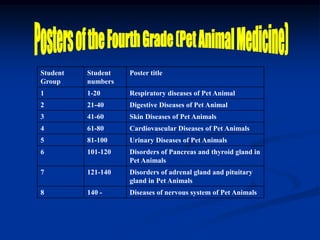
Poster titleStudent
numbers
Student
Group
Respiratory diseases of Pet Animal1-201
Digestive Diseases of Pet Animal21-402
Skin Diseases of Pet Animals41-603
Cardiovascular Diseases of Pet Animals61-804
Urinary Diseases of Pet Animals81-1005
Disorders of Pancreas and thyroid gland in
Pet Animals
101-1206
Disorders of adrenal gland and pituitary
gland in Pet Animals
121-1407
Diseases of nervous system of Pet Animals140 -8
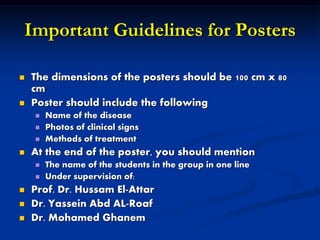
Important Guidelines for Posters
 The dimensions of the posters should be 100 cm x 80
cm
 Poster should include the following
 Name of the disease
 Photos of clinical signs
 Methods of treatment
 At the end of the poster, you should mention
 The name of the students in the group in one line
 Under supervision of:
 Prof. Dr. Hussam El-Attar
 Dr. Yassein Abd AL-Roaf
 Dr. Mohamed Ghanem

Laryngeal diseases

  • 1.
  • 2.
    Manifestations of laryngealaffection  A raw dry cough : occurs in fits and may be interrupted with few swallowing attempts.  Stridor (an inspiratory or expiratory wheeze) due to a sort of obstruction.
  • 3.
     The changein voice indicates severe laryngeal affection especially vocal cords.  Painful swallowing is apparent because of the irritation to the pharynx.  Dyspnea (difficult breathing) occurs at intervals (spasms).
  • 4.
    A-Laryngeal malformation  Congenitallaryngeal malformation occurs in both dogs and cats and may be seen at any part of the larynx.  This malformation may be  1-stenosis,  2-inadequate development of laryngeal cartilage, and  3-laryngeal collapse
  • 5.
    1-Laryngeal Stenosis  Laryngealstenosis means narrowing of the laryngeal lumen due to congenital defect.  It results in stridors and dyspnea  Can be detected easily with laryngoscope  In young dogs and cats, spontaneous recovery is expected at maturity.  In adults, the correction needs surgical interference Stenotic larynx Normal larynx
  • 6.
    2-Inadequate development of laryngealcartilage  Commonly seen in Brachycephalic dogs such as English Bulldog  It is associated with varying degree of obstruction.
  • 7.
    B- Inflammation oflarynx (Laryngitis) Definition  It is an acute inflammation of the laryngeal mucosa characterized by raw dry cough, which could easily be induced by palpation of the larynx followed by short swallowing movement.
  • 8.
    Etiology 1. Canine infectiontracheobronchitis (kennel cough) 2. Bacterial and viral infection in dogs that result in inflammation of laryngeal, tracheal, or bronchial mucosa. 3. May occur after a day of continuous barking and panting. 4. Viral tracheitis and calcivirus in cats. 5. After inhalation of burning gas in dogs and cats. 6. After intubation for anesthesia in dogs and cats
  • 9.
    Clinical signs 1. Signsare restricted to raw dry cough with interrupted swallowing movements. 2. By laryngoscopic examination, profuse local edema and laryngospasm may be visualized. 3. Excitement and anxiety manifested by resistance to examination.
  • 10.
    Treatment  Complete restand avoiding excitement.  Expectorant (biselvon).  Syrup containing ephedrine.  Anti-inflammatory: predinosolone  Antibiotics are indicated only if animal encounters a fever.
  • 11.
    C- Oedema oflaryngeal mucosa  It is oedematous swelling of the mucosa and submucosa characterized by acute inspiratory and expiratory stridors and respiratory distress. Treatment  Mainly intubation and tracheotomy to relieve the respiratory distress.  Administration of sedatives to keep the animal calm.  IV injection of corticosteroids.
  • 12.
    C- Laryngeal abscess Etiology A rare disease that occur secondary to penetration of the larynx by a needle, fish bone or stick Symptoms  Are those of obstructive laryngeal disease Treatment  The abscess should be opened and drained under general anesthesia.  Care should be taken to avoid aspiration of exudates into the trachea.  Antibiotic course should be given based upon sensitivity test
  • 13.
    D- Laryngeal paralysis Definition It is the failure of the arytenoids cartilage to abduct during inspiration creating an upper airway obstruction. It may be partial or complete loss of function.
  • 14.
    Etiology 1. Neurologic: dueto trauma or neoplasia of the neck or to both the recurrent laryngeal nerves that innervates the arytenoids cartilage. 2. Muscular disease: in association with polymyositis or generalized muscular disease (myasthenia gravis). 3. Ankylosis of the cricoarytenoid muscle. 4. Congenital laryngeal paralysis appears to be inherited in young dogs of several breeds (such as Dalmatian and afghan Hound) due to an autosomal dominant gene.
  • 16.
    Pathophysiology  Failure ofabduction of the arytenoids and the vocal folds during inspiration produces narrowing the size of the lumen and increasing airflow resistance.  vocal folds oscillate which produces the characteristic `roaring` or wheeze known as stridor.
  • 17.
  • 18.
    Clinical signs 1. Respiratorydistress (roaring) due to narrowing of the airway at the arytenoid cartilage. 2. Stridor or change in barking voice. 3. Cyanosis particularly after exercise or excitement. 4. Laryngeal edema or inflammation may occur as a secondary disease.
  • 19.
    Diagnosis:  Clinical signs History of trauma  Laryngoscopy for definitive diagnosis: arytenoids cartilages and focal cords remain closed during inspiration.
  • 20.
    Treatment  Glucocorticoid suchas prednisone 0.5mg/kg every 12 h to reduce secondary inflammation and edema.  Surgical enlargement of the airway is the treatment of choice to maintain adequate opening for the flow of air.
  • 21.
  • 22.
    Poster titleStudent numbers Student Group Respiratory diseasesof Pet Animal1-201 Digestive Diseases of Pet Animal21-402 Skin Diseases of Pet Animals41-603 Cardiovascular Diseases of Pet Animals61-804 Urinary Diseases of Pet Animals81-1005 Disorders of Pancreas and thyroid gland in Pet Animals 101-1206 Disorders of adrenal gland and pituitary gland in Pet Animals 121-1407 Diseases of nervous system of Pet Animals140 -8
  • 23.
    Important Guidelines forPosters  The dimensions of the posters should be 100 cm x 80 cm  Poster should include the following  Name of the disease  Photos of clinical signs  Methods of treatment  At the end of the poster, you should mention  The name of the students in the group in one line  Under supervision of:  Prof. Dr. Hussam El-Attar  Dr. Yassein Abd AL-Roaf  Dr. Mohamed Ghanem